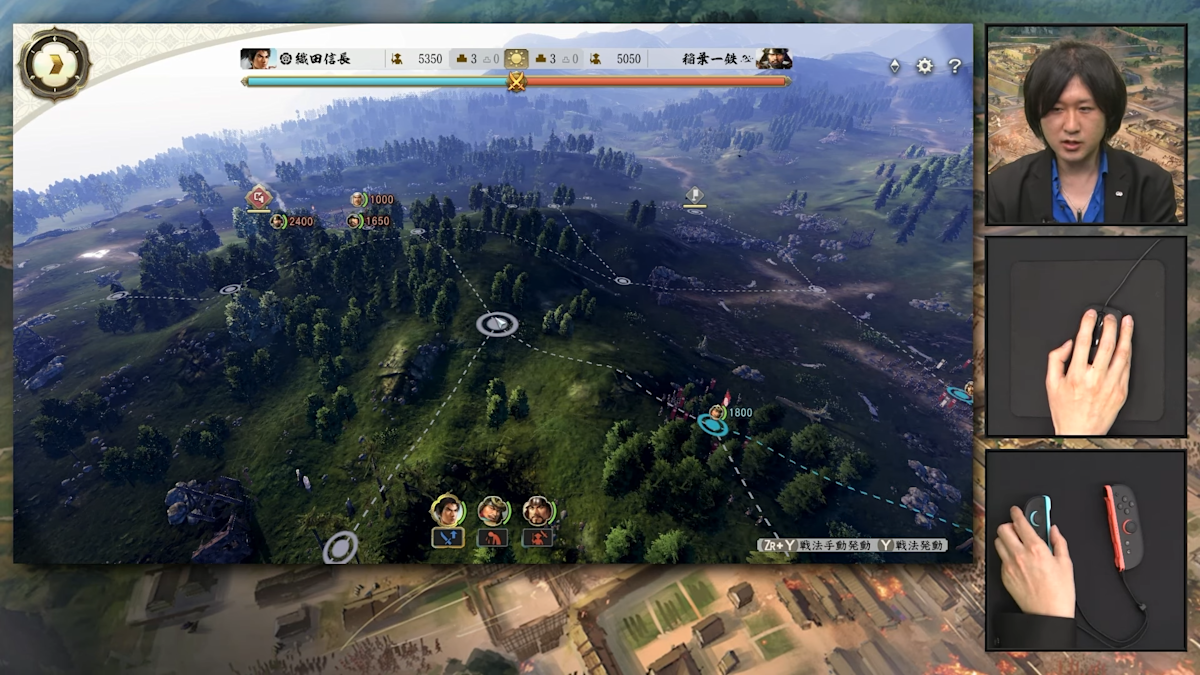
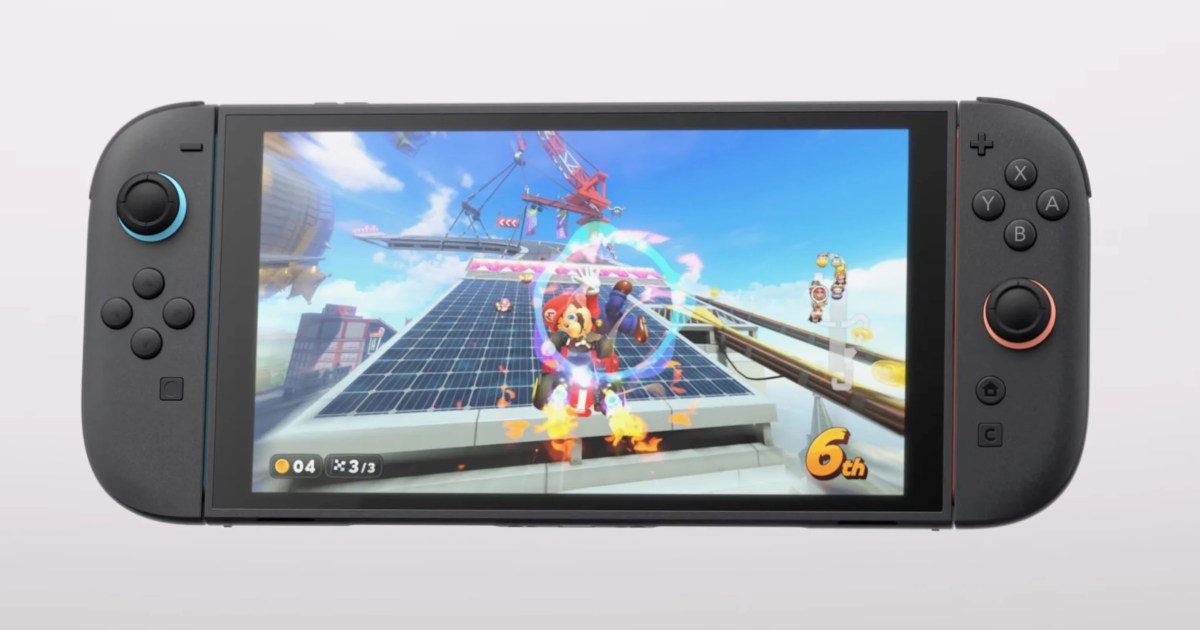
The Switch 2’s Joy-Con “mouse” has some competition. At least one launch game for Nintendo’s new console includes USB mouse support. Nobunga’s Ambition: Awakening CE lets you plug in a traditional pointing device and get down to business. According to developer Koei Tecmo, the mouse will “work seamlessly.”
Nobunga’s Ambition will let you switch between controller and USB mouse on the fly. “Once you connect the USB mouse, a message will appear in the top left indicating that the mouse is connected,” Michi Ryu said in a video (translated from Japanese). “When the USB mouse is connected, it takes priority over the Joy-Con 2. As you can see, you can switch instantly. It’s very smooth.”
To view this content, you’ll need to update your privacy settings. Please click here and view the “Content and social-media partners” setting to do so.
So, what does that mean for other mouse-friendly Switch 2 games? Civilization VII, another launch title, comes to mind. We emailed 2K Games to ask and will update this story if we hear back.
To be fair, the Switch 2’s Joy-Con mouse support is solid. Engadget’s Sam Rutherford was pleasantly surprised with it in his hands-on. Still, it’s nice to have options. (And let’s be honest, a real mouse will be hard to beat.)
Although it wasn’t a well-known fact, the original Switch also supported USB mice. For example, Nintendo’s visual programming tool Game Builder Garage worked with them. But the number of games supporting the Joy-Con mouse makes it a bigger deal on the Switch 2.
WizKids is offering refunds for its Baldur’s Gate 3 miniature set after fans criticized the quality of the pre-painted figurines. The $50 D&D Icons of the Realms: Baldur’s Gate 3 set, which includes the six origin characters as well as Withers, drew backlash over its paint jobs, which lack detail and precision according to photos posted by customers.
WizKids acknowledged the situation in a statement, saying it “seeks to create products that enhance and add to the enjoyment of game play,” but that “unfortunately, we missed the mark on this goal.” To remedy the situation, customers who bought the set directly from WizKids can request a refund through the company’s customer service email. Those who purchased the set from a local retailer can seek a refund at that point of sale. There is also a product replacement option available through WizKids’ website for anyone who wishes to roll the dice again with WizKids.
Images of the melty-faced miniatures have been circulating online recently since they were sent out. A senior cinematic artist for Larian Studios who worked on Baldur’s Gate 3 took to X to share the disappointing distortion from expectations to reality. For some, the melty pre-painted faces were not the biggest cause for concern, because the miniature set they received didn’t even have a head for Shadowheart!
The set’s quality issues are surely disappointing for Baldur’s Gate 3 fans who were hoping for collectible-quality figures of the game’s beloved cast. Although seven pre-painted figures for $50 is not that expensive in the hobby, even those with modest expectations have been surprised by how poorly they turned out. For others, though, these flawed minis might end up as collectibles in their own right. Misprints and errors have occasionally gained value over time in other collectible hobbies, and with refunds and replacements already underway, the original run of these figures could ironically become a desired oddity for collectors.
Update May 14, 6:38PM ET: Valve has confirmed that Steam systems were not breached and identifying user data has not been stolen or accessed by hackers. The company provided clarification in a Steam blog post:
“We’re still digging into the source of the leak, which is compounded by the fact that any SMS messages are unencrypted in transit, and routed through multiple providers on the way to your phone. The leak consisted of older text messages that included one-time codes that were only valid for 15-minute time frames and the phone numbers they were sent to. The leaked data did not associate the phone numbers with a Steam account, password information, payment information or other personal data. Old text messages cannot be used to breach the security of your Steam account.”
Our original story follows.
Steam has allegedly suffered a data breach in the past week. Details are scant and difficult to confirm, but a known hacker has claimed to be selling a database of more than 89 million user records for the gaming platform with one-time access codes obtained from a third-party vendor used by Steam. If accurate, that would include information about more than two-thirds of Steam’s audience.
The original LinkedIn post identifying a breach suggested that the leaked information came from cloud communication company Twilio. However, a Steam rep said the platform doesn’t use Twilio, so if there has been a breach, it may be through a different vendor providing SMS codes for access.
While we’re genuinely not sure what’s happening at this stage, the whole kerfuffle is a timely reminder to check in on your online security practices. In the case of Steam, Valve has a mobile authentication program called Steam Guard that can help keep your account secure. It’s also a good practice to make sure you’re regularly changing your pass codes, especially when it’s possible that some component of Steam Guard was at the root of this week’s security drama. A password manager can streamline that process. Since phone numbers appear to have been compromised, be extra alert to possible phishing attempts via text.
If you buy something through a link in this article, we may earn commission.
When Rockstar Games delayedGrand Theft Auto 6 into 2026, it likely came as a big relief to publishers who had anything on their slate for the back half of 2025. But 2026 is already shaping up to be an exciting, crowded year of big game releases, even without GTA 6.
Beyond sequels, there are plenty of promising original games on the horizon, like role-playing game SacriFire, Warren Spector’s stealth-action PvPvE game Thick As Thieves, and Animal Crossing-but-make-it-vampires indie Moonlight Peaks.
Game release dates are always in flux, though, so Polygon’s guide to the new video games coming out in 2026 will be regularly updated with new titles, release dates, and (inevitable) delays.
Remedy’s first foray into co-op shooters, FBC: Firebreak, is officially launching on June 17. Following employees tasked with cleaning up The Oldest House, the mysterious headquarters of the Federal Bureau of Control, the game balances team-based action with the supernatural abilities and enemies that made Control so interesting.
In our hands-on with the game, the biggest and most positive point of comparison for Firebreak’‘s chaotic action was Left 4 Dead, but the game’s unique collection of “jobs” (Remedy’s name for missions) includes plenty of weirder tasks, too, like dealing with ominously multiplying sticky notes. Remedy plans to support Firebreak with new jobs after launch and into 2026. All new playable content will be for free, save for cosmetics, which Remedy plans to charge for.
FBC: Firebreak will be available on June 17 for $39.99 on Xbox Series X/S, PlayStation 5 and PC. A $49.99 “deluxe edition” will also be available with exclusive cosmetics. If you subscribe to Game Pass Ultimate, PC Game Pass or PlayStation Plus Premium or Extra, you’ll be able to download and play the game for no additional cost.
When Diablo 4’s eighth season launches on April 29, the battle pass will look completely different. Instead of a linear track, it will be split into categories, or Reliquaries, for you to chase after specific types of cosmetic tweaks for your demon slayer. Like a lot of popular live service games that have introduced more choices in their battle passes, Blizzard’s goal is to make it fit with how people actually play Diablo 4.
There were three problems with the old battle passes, senior manager of game design Dan Tanguay told Polygon in a recent interview: The rewards “didn’t feel meaningful enough,” they were “intrinsically tied to seasons,” and they had a general “lack of agency.”
In my experience, this is all true. I’d hop into a new Diablo 4 season, maybe take a peek at the battle pass page, then inevitably forget about it until I felt like clearing the notification telling me something new had unlocked. And a lot of times, the new cosmetic was for a class I wasn’t actively playing, which made me care about it even less.
That seems to be the kind of experience Blizzard is trying to avoid with Reliquaries, a reinvention of the battle pass that lets you pick the rewards you want first. There’s still a price attached. Three of the four categories have an up-front cost before you can start unlocking their rewards, like mini premium battle passes. But if all you care about is the glowing tiger from the Beasts Reliquary instead of the fancy sword from the Weapons Reliquary, you can just skip it. And players who don’t bother starting a new character every season will now have access to the system on the game’s Eternal Realm, too.
Tanguay said the team felt the old battle pass stuck out in an action RPG that’s all about satisfying decision-making. “You’re choosing basically all the choices that comprise your build, you’re choosing how you look, and we then have a battle pass that’s just highly, highly linear and very deterministic, and it’s like, ‘Wow, there’s just not a lot of choice here,’” he said.
Each Reliquary reward costs Favor, a new currency you can only earn by mowing down monsters as you play. Everyone will be able to spend it on cosmetics from the free Reliquary for the duration of the season. Event Reliquaries, like the one launching with Diablo 4’s Berserk collab in May, will show up for a limited time and require a unique currency. Tanguay couldn’t confirm whether returning events will have their own Reliquaries, but said the team is still “talking through” those opportunities.
The Reliquary system is another step in Blizzard’s ongoing approach to reworking parts of the game that have fallen behind. Tanguay added that by disconnecting battle passes from seasons, Blizzard can do more with the Season Journey, which is a free set of challenges, like killing bosses and completing dungeons, that reward loot and cosmetics. These were often so straightforward that you’d complete them accidentally. But Tanguay said the team is trying to get players to “stretch and do more aspirational type of content” to complete the later chapters. I spotted one for season 8 that asks you to defeat one of the endgame bosses using a specific seasonal power, which should be fun to figure out how to accomplish once the new season opens.
Finding a laptop that can juggle both gaming and schoolwork isn’t as tricky as it used to be. These days, you don’t have to choose between a machine that can handle your homework and one that can keep up with your favorite games. Whether you’re diving into an essay, editing video for a project or hopping into a round of Fortnite or Baldur’s Gate 3 after class, there are plenty of laptops that strike the right balance between performance, portability and price.
The key is knowing what to look for. A solid gaming and schoolwork laptop should have enough processing power for multitasking, a GPU that can handle modern games (even if you’re not cranking settings to ultra) and decent battery life to get you through a day of classes or study sessions. Some are sleek and lightweight enough to slip into a backpack while others double as full-on gaming rigs when you’re home and plugged in. We’ve tested a range of laptops to help you find one that fits your student schedule and your Steam library.
The Zephyrus G14 has been our go-to laptop recommendation for gaming performance for years, but it’s better than ever this year thanks to a refined unibody aluminum case, a gorgeous OLED screen and a weight reduction to just 3.3 pounds. It feels curiously light for a machine with an AMD Ryzen 9 8945HS CPU and NVIDIA RTX 4070 graphics. While the new Zephyrus G14 loses the RTX 4080 option from the previous model, that’s not a big problem. You’ll be better off with a lighter and more attractive model that doesn’t cost a ton.
Razer’s flagship Blade laptops have been the closest PC analog to Apple’s MacBook Pro since their debut, and the latest Blade 14 doesn’t change that one bit. It features the company’s signature build quality with a rock-solid aluminum case, but now it sports AMD’s Ryzen 9 8945HS CPU and your choice of NVIDIA’s RTX 4060 and 4070. The new LCD with a 240Hz refresh rate will also let you play just about everything at eye-bleeding speeds (or, at the very least, it’ll give you a helpful accuracy bump while sniping in Overwatch 2). While we would have liked to see an OLED screen like what’s on the Zephyrus G14, the Blade 14 remains a tremendous gaming notebook. Just be ready to pay a premium for its fantastic hardware.
While Alienware has established itself as a solid premium brand, Dell’s cheaper G-series notebooks are worth a look for anyone that needs a budget-friendly machine. In particular, the G15 continues the trend of delivering very capable hardware – including Intel’s latest 13th-gen CPUs, AMD’s Ryzen 7000 CPUs and NVIDIA’s RTX 30- and 40-series GPUs – for under $1,000. Sure, the case is mostly plastic, and the laptop’s screen doesn’t offer all of the latest niceties (at least there’s finally a 165Hz option!). But for the price it’s hard to find anything more powerful.
After just one year on the market, Dell went back to the drawing board with its latest Alienware m16 and redesigned it from the ground up. The result is the m16 R2, a lighter and more affordable gaming notebook that can still pack a punch in Cyberpunk 2077 with its RTX 4070 GPU. At 5.75 pounds, it’s a chunky beast, but it’s still 20 percent lighter than the previous 7.28-pound model. And for some, the weight will be worth it to live with the m16 R2’s gorgeous 16-inch 240Hz LCD panel.
Sometimes, a 16-inch or even 17-inch screen won’t cut it. For the most demanding gamer and media editor, there’s the ROG Strix G18, an 18-inch beast sporting Intel’s latest 14th-gen CPU and NVIDIA’s RTX 40-series family (which of course includes the top-end RTX 4080). The Strix G18 screams “gaming laptop” more so than anything else in this guide, but it’s a solid choice for anyone who wants a big-screen machine at a relatively affordable price.
As we’ve mentioned, gaming laptops are especially helpful if you’re doing any demanding work. Their big promise is powerful graphics performance, which isn’t just limited to PC gaming. Video editing and 3D rendering programs can also tap into their GPUs to handle laborious tasks. While you can find decent GPUs on some productivity machines, like Dell’s XPS 15, you can sometimes find better deals on gaming laptops. My general advice for any new workhorse: Pay attention to the specs; get at least 16GB of RAM and the largest solid state drive you can find (ideally 1TB or more). Those components are both typically hard to upgrade down the line, so it’s worth investing what you can up front to get the most out of your PC gaming experience long term. Also, don’t forget the basics like a webcam, which will likely be necessary for the schoolwork portion of your activities.
The one big downside to choosing a gaming notebook is portability. For the most part, we’d recommend 15-inch models to get the best balance of size and price. Those typically weigh in around 4.5 pounds, which is significantly more than a three-pound ultraportable. Today’s gaming notebooks are still far lighter than older models, though, so at least you won’t be lugging around a 10-pound brick. If you’re looking for something lighter, there are plenty of 14-inch options these days. And if you’re not into LED lights and other gamer-centric bling, keep an eye out for more understated models that still feature essentials like a webcam (or make sure you know how to turn those lights off).
Do gaming laptops last longer than standard laptops?
Not necessarily — it really depends on how you define “last longer.” In terms of raw performance, gaming laptops tend to pack more powerful components than standard laptops, which means they can stay relevant for longer when it comes to handling demanding software or modern games. That makes them a solid choice if you need a system that won’t feel outdated in a couple of years, especially for students or creators who also game in their downtime.
But there’s a trade-off. All that power generates heat, and gaming laptops often run hotter and put more strain on internal components than typical ultraportables. If they’re not properly cooled or regularly maintained (think dust buildup and thermal paste), that wear and tear can shorten their lifespan. They’re also usually bulkier and have shorter battery life, which can impact long-term usability depending on your daily needs.
Gaming laptops can last longer performance-wise, but only if you take good care of them. If your needs are light — browsing, writing papers and streaming — a standard laptop may actually last longer simply because it’s under less stress day-to-day.
What is the role of GPU in a computer for gaming and school?
The GPU plays a big role in how your laptop handles visuals — and it’s especially important if you’re using your computer for both gaming and school.
For gaming, the GPU is essential. It’s responsible for rendering graphics, textures, lighting and all the visual effects that make your favorite titles look smooth and realistic. A more powerful GPU means better frame rates, higher resolutions and the ability to play modern games without lag or stuttering.
For schoolwork, the GPU matters too — but its importance depends on what you’re doing. If your school tasks mostly involve writing papers, browsing the web or using productivity tools like Google Docs or Microsoft Office, you don’t need a high-end GPU. But if you’re working with graphic design, video editing, 3D modeling or anything else that’s visually demanding, a good GPU can speed things up significantly and improve your workflow.
The New York Times has introduced the next title coming to its Games catalog following Wordle’s continued success — and it’s all about math. Digits has players adding, subtracting, multiplying, and dividing numbers. You can play its beta for free online right now. In Digits, players are presented with a target number that they need to match. Players are given six numbers and have the ability to add, subtract, multiply, or divide them to get as close to the target as they can. Not every number needs to be used, though, so this game should put your math skills to the test as you combine numbers and try to make the right equations to get as close to the target number as possible.
Players will get a five-star rating if they match the target number exactly, a three-star rating if they get within 10 of the target, and a one-star rating if they can get within 25 of the target number. Currently, players are also able to access five different puzzles with increasingly larger numbers as well. I solved today’s puzzle and found it to be an enjoyable number-based game that should appeal to inquisitive minds that like puzzle games such as Threes or other The New York Times titles like Wordle and Spelling Bee. In an article unveiling Digits and detailing The New York Time Games team’s process to game development, The Times says the team will use this free beta to fix bugs and assess if it’s worth moving into a more active development phase “where the game is coded and the designs are finalized.” So play Digits while you can, as The New York Times may move on from the project if it doesn’t get the response it is hoping for. Digits’ beta is available to play for free now on The New York Times Games’ website
If you’re a gamer who has been on Facebook or YouTube in the past week, there’s probably a good chance you’ve seen people arguing about the Nintendo Switch 2’s pricing. My Facebook algorithm has interpreted my interest in the system as a sign that I want to see a constant stream of angry memes about how much it costs. While I’ve seen concerns over the hardware itself dying down, the one complaint that’s stuck is the price of its games. My feeds are filled with engagement memes daring commenters to justify Mario Kart World‘s $90 price tag.
There’s just one problem: Mario Kart World does not cost $90, at least based on what we know right now. No currently announced Nintendo Switch 2 game appears to either, but it hasn’t stopped that detail from spreading on a fundamentally broken internet.
If you’re confused about that claim because you’ve heard the price repeated as fact 100 times by now, I can’t blame you. In the immediate chaos following the Switch 2’s reveal, players were left to dig up information themselves. Last week’s Switch 2 Direct didn’t even state the console’s price; I only found out about it through an email after the stream ended. That was confusing enough, but Nintendo’s lack of transparency caused even more confusion around games. It didn’t take long for players to discover that Mario Kart World and some Nintendo Switch 2 Editions of original Switch games will retail for $80. Variable pricing for games only made matters harder to understand, as heavy hitters like Donkey Kong Bananza will cost $70 instead.
Somewhere in that rapid learning process, word began to spread that the physical editions of some Switch 2 games would cost 90 Euros. That fact quickly mutated into a different one entirely: That physical Switch 2 games cost $90. It’s hard to pinpoint where exactly that jump originated from, but it’s easy to see how someone could have misinterpreted it. Maybe they assumed the Euro symbol was a dollar sign. Maybe they mistakenly assumed that those two things are 1:1. Whatever happened, it should have been a detail that was debunked within a day.
Instead, it spread like wildfire. And it has yet to stop.
How does something like this happen on the internet, a repository of readily available information? After all, it’s not hard to find Mario Kart World‘s official price. Its website has listed an $80 MSRP since day one. That question leads to an unfortunate answer: The internet is becoming more harmful than helpful by the day. Social media platforms built to drive engagement through outrage and an increasing reliance on inaccurate AI tools to source our news are making us dumber, and the Switch 2 pricing rumor is only one small example of that.
Reddit
Let’s break down the misinformation pipeline here. A quick Google search along the lines of “Switch 2 games $90” will inevitably bring up a Reddit thread from /Games titled “Nintendo Switch 2 Games Will Cost $80 For Digital, $90 For Physical.” The post includes a link to an article from Insider Gaming, a website known as a source for video game leaks. Insider Gaming was among a small handful of sites to run with the story that physical Switch 2 games cost $90 early on. Websites like Forbes reported the same information on April 2 in an article that includes no source for the claim and even mentions the 90 Euro detail. The article has not been corrected in the week following its publication.
Insider Gaming, on the other hand, did change its article. If you go into that Reddit thread and click the linked story, you’ll instead land on “Nintendo Switch 2 Games Will Cost Up To $98 For Physical Games When Converted From Euros.” There’s a correction midway down the article now, but that change isn’t reflected in the Reddit thread that now dominates search results on the topic.
That telephone game only gets worse. Exacerbating the confusion is Google’s own AI overview, a tool that dominates the top of the page when it populates. If you were to Google “how much are Switch 2 games?” right now, there’s a good chance you will get an AI overview that tells you that physical games either could or do cost $90. In my current search results, Google says “Nintendo Switch 2 games are expected to be priced higher than previous Nintendo Switch titles, with many games potentially costing $79.99 or even $89.99.” Other results I’ve seen cut the “potentially entirely” and say they “will” cost that much.
That information comes with a few links, citing where the news came from. A link on a blurb about the $90 price point goes to an article from Indy100, which says outright that Mario Kart World costs $90 with no source to back it up. Other cited links point to articles from Mashable and CNET. The latter actually debunks the $90 claim, but that hasn’t stopped Google’s AI for using it as a source to back up its faulty information.
Google
In sleuthing around to find who else misreported the price, I searched “Digital Trends Switch 2 $90” to see if we had mistakenly published it. The results turn up an AI overview that says “Yes, there are reports that some Nintendo Switch 2 games will be priced at $90 for physical copies and $80 for digital.” It does not link to Digital Trends, but rather a video from YouTuber DreamCast guy complaining about the made up price. The second source? The Reddit thread linking a now corrected Insider Gaming story. Scroll down past the overview and you’ll find that Reddit thread surfaced first before a Digital Trends article explaining the hardware price. It is followed by the false Forbes article, one from Game Rant, and a NeoGaf forum post — all of which state the unconfirmed information as fact.
This is the world we’re currently living in. The internet has always been loaded with misinformation, but it used to be that sites like Google would weed out the bad information and surface reputable sources first. That last line of defense has gone away in the wake of constant algorithm changes that prioritize sites like Reddit and AI tools that then regurgitate what’s on those sites and spits them back out as facts. That then bleeds back out into angry social media posts and YouTube videos that are designed to rack up views and engagement, and then fed back into Google’s AI tools to complete the cycle. There’s no putting the genie back in the bottle once information like that becomes accepted. I’ve had conversations with people offline where I’ve been asked what I think about the $90 games. It’s just something people believe now and it will continue to be reinforced by the tools that we rely on to inform us. We’re all left a little angrier for it.
The Nintendo Switch 2’s pricing woes are very real. The console’s $450 price tag is a big leap over its predecessor, $80 for Mario Kart World is still steep, and even the system’s digital instruction manual costs $10. You might even end up spending $90 if you buy The Legend of Zelda: Breath of the Wild — Switch 2 Edition and then throw in its additional DLC. And who knows, physical games could end up costing $90 once launch day actually comes. President Donald Trump’s current tariff roulette means that everything is in flux. We will update this article if the game pricing does in fact change.
But as of right now, there’s no hard information indicating that Switch 2 games actually do cost $90, no matter how many Facebook memes tell you it does. Be vigilant about where you get your information. Do your research when you come across something that sounds wrong. Knowledge isn’t just power in today’s world; it’s your only defense.
What kind of person would you be in the face of a disaster that’s beyond explanation? Would you help distressed neighbors and open your home even to sketchy-looking strangers in the hope that there’s strength in numbers, or go it alone regardless of how heavily the odds are stacked against you? Would you still brush your teeth every day?
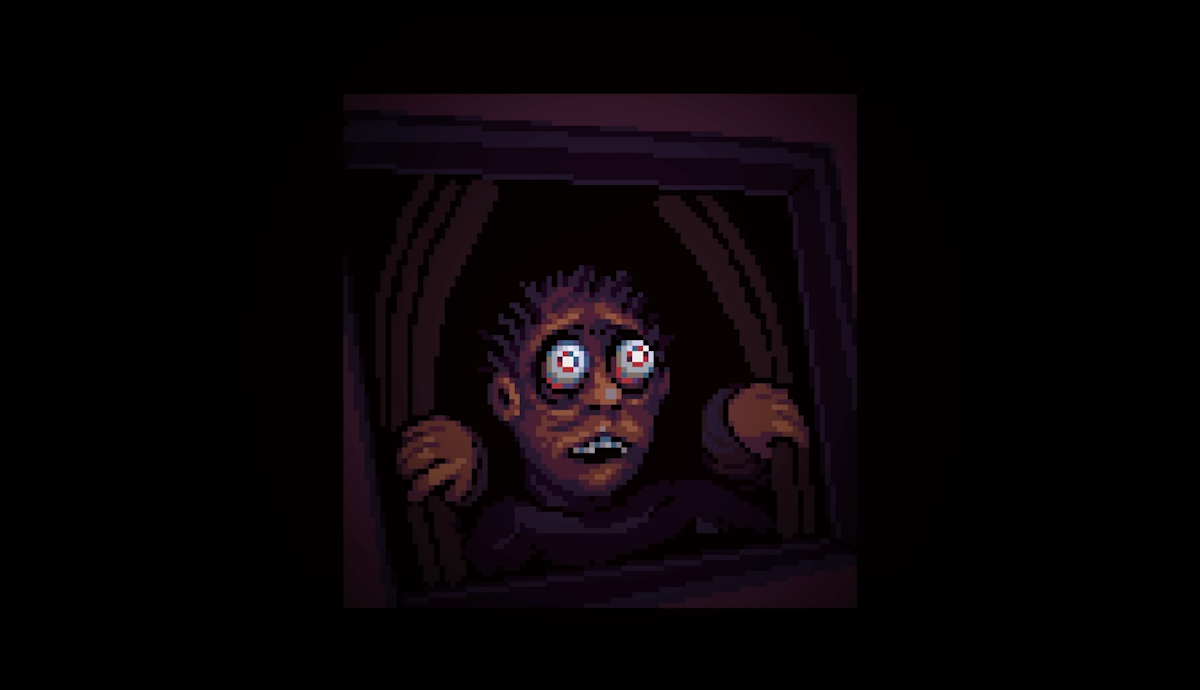
The horror in Francis Coulombe’s RPG Look Outside is all encompassing. There is the cosmic element: something incomprehensible is happening beyond the walls of your apartment building and it’s in your best interest to not even look outside, let alone go there. And as you quickly learn, anyone who has looked or been outside is transformed in unimaginable ways, making for some extreme (and extraordinarily creative) body horror. But in much of the game leading up to its multiple climactic endings, the unease also stems from how it makes you look inside — at the choices you’ve made and the person you’ve become in order to survive.
Despite trying to take an empathetic approach, I still found myself in situations that left my character (and me) wracked with guilt. There is a gnawing sense of doubt that grows over the course of the game, repeatedly making me question whether I’d, say, made a bad call and been too quick to kill that neighbor whose entire head is teeth, or if my hand was really forced into making a very upsetting sacrifice.
After a while, the most unnerving thing is looking in the mirror. And you have to do that a lot in this game, because hygiene affects your stats.
Francis Coulombe/Devolver Digital
It all begins with your character, Sam (you can change the name, if you want), waking up after a strange dream with a strong urge to look outside. You are immediately given the choice between satisfying your curiosity and listening to your gut, and you’ll find yourself grappling with that dilemma time and time again.
At this point, you also meet Sybil, the mysterious next-door neighbor who only speaks to you through the wall, with one glaring eyeball peering out of a large crack. Sybil, whom it’s unclear if you should trust, tells you that everything will blow over in 15 days if you just wait it out. You need to scavenge for resources if you’re going to make it that long, though, and once you leave your apartment and get a chance to talk to some other neighbors, you may decide you want to take a more active role in getting to the bottom of the catastrophe.
Some neighbors, particularly a few robed amateur astronomers who appear to be in a cult, seem to know quite a bit about what’s going on, and it’s insinuated that doing tasks for them will help you figure out the how and why of the phenomena around you. Others are more focused on addressing their immediate needs and will try to rope you into their causes: locating missing people, picking up laundry, cleaning the messes left behind by eldritch horrors, etc. There’s a full on war happening somewhere in the building, which you can choose to play a part in if you’re so inclined. Your landlord will unsurprisingly still demand you pay him rent despite the circumstances.
If you choose to play in Normal mode, like I did, Sybil is your only save point, so you’ll have to return home regularly. Easy mode autosaves.
To view this content, you’ll need to update your privacy settings. Please click here and view the “Content and social-media partners” setting to do so.
All interactions are turn-based, and as you explore the apartment building, you’ll run into tons of enemies and potential allies — but the line between the two isn’t always easy to distinguish. Sometimes you can only attack or try to escape, which answers the question for you, but other times, you have the opportunity to talk and ask questions. The turn-based nature allows you to take a moment and evaluate each new encounter, but there’s always an air of ambiguity about everyone’s trustworthiness. Even when you’re back at your apartment, where you can shower, rest, do some cooking and crafting, and play video games, people will come along and knock on your door, and you’ll have to make up your mind about whether you should let them in.
The thing is, surviving can be pretty difficult once you really get going if you’re on your own. Enemies will outnumber and overpower you. That’s where it becomes helpful to have a few allies. With as many as three other people in your party, the scale tips heavily in your favor. I took the trusting approach, for better or worse. This resulted in me having a pretty solid group of fighters on my side, but a pair of those same allies kicked me out of my own bedroom and complained about my cooking.
The creature designs come disgustingly, beautifully alive in the pixel art style. Body horror can be really hard to stomach, and something is often lost for me in the process of consuming it when it’s intended to seem realistic — either because I’m hiding behind my hands and only taking tiny peeks through my fingers, or because it ends up achieving the opposite effect and just looks ridiculous without meaning to. But Coulombe’s art equally embraces the horrifying and the absurd, and the effect of that balance is powerful.
Nothing was ever so disturbing that I couldn’t look straight at it, but there were certainly moments that gave me a genuine scare or made my skin crawl. Even the characters that aren’t being transformed, like the protagonist, look a little grotesque, which adds to how unsettling everything feels. But just when the dread would reach a fever pitch, something overtly silly would be thrown in almost as if to splash some cold water on the whole thing and say, yes this is the apocalypse but we’re still human, we still have a sense of humor.
Francis Coulombe/Devolver Digital
So much of the joy of playing this game is discovering all the tricks it has up its sleeve, so I won’t get into any descriptions of bosses, puzzles or the building itself, other than to say that the latter has a whole House of Leaves thing going on that is unbelievably frustrating at times, but in a way that only adds to the brilliance of it all. There is no map to guide you, either. The soundtrack, composed by Eric Shumaker, keeps in perfect step with every emotion the environment evokes, and I could probably write an entire separate review about how good it is.
All of this builds up to an absolute cosmic gut-punch of an ending (or endings, there are several) that completely changed the way I felt about the game up until that point. In the end, it becomes something much, much bigger than it once seemed, and the feelings were almost overwhelming. I can’t stop thinking about it.
By now I’ve played Look Outside many hours beyond what a typical run would be, just picking apart every detail and turning over every stone to try and figure out all the secrets, reach all the conclusions. I have died in all sorts of strange ways, and lived to see wildly different fates pan out.
I went into this only with the expectation of cool art and a relatively unique approach to survival horror, and came away shook from what turned out to be one of the best cosmic horror games I’ve played in a while, maybe ever. Look Outside, published by Devolver Digital, is only available on Steam for now, but I sure hope it makes its way to other platforms soon so more people can experience it.