5 Reasons Freelancing Studios Are the Future of 3D Visualization Services


The 3D visualization industry is rapidly evolving with freelance studios, which are increasing sharply in numbers. Long ago, big firms captured markets in the architectural, product design, and gaming sectors while offering in-house 3D visualizations. However, this is no longer the case. Freelance studios are showing themselves as viable alternatives as well as future solutions in terms of high-quality requirements for 3D visualizations.

As demands for complex 3D content grow, businesses require flexibility, innovation, and cost-effectiveness. Freelance studios fill this gap. From better access to talent to cost-effective operation, freelancing studios are revolutionizing the face of 3D visualization.

Cad Crowd is an industry-leading platform working with design firms to help them find the best designers and 3D architectural visualization outsourcing services. Here are five key reasons freelancing studios are the future of this industry.


🚀 Table of contents


3D visualizer of a stadium and a dome

Access to a global pool of specialized talent

One of the strongest advantages of freelancing studios is that they are able to tap into a global talent pool. Traditional firms are usually confined by geographical location and hiring constraints. Freelance studios can source the best 3D artists, modelers, and animators from all around the globe. This creates a possibility for both the client and the creative to work across borders.

Breaking the barriers to specialization

Cad Crowd and other freelance marketplaces and platforms have made it possible to reach highly specialized 3D freelancers ready to help with any type of project. Freelance studios allow for the putting together of the most complex projects, for example, from hyper-realistic architectural renderings to the highest level of product visualizations or even immersive VR environments. These platforms offer full-profiled, portfolio-based, review-based platforms that make vetting talent quite easy.

Diversity of skills

Freelance studios are always pliable to the requirements of the projects, as they possess the talent network that they may use for different projects. Thus, the limitations related to in-house staff do not restrain them, and consequently, they are free to take assistance from specialists for the niche requirements of a project. Flexibility makes freelancing studios competitively strong in order to deliver new, latest, and more professional 3D visualization services beyond the competency of traditional architectural design firms that possess rigid structures.

RELATED: Architectural illustrations vs. architectural visualization services

Cost-effective solutions with no compromise on quality

Another significant reason why freelance studios are gaining popularity is that they are cost-effective. For companies in search of high-quality 3D visualization services, a traditional firm can be pretty expensive because of overhead costs such as office space, full-time salaries, and administrative costs. Freelance studios work on leaner structures, so cost-effective solutions are delivered without compromising on quality.

Overhead costs reduced

They also do their work from home, reducing the cost of maintaining office space. They also have no permanent staff since they engage on a project basis. This way, clients end up paying only for the needs they have. Hence, it is a more expensive process.

Flexible pricing models

Freelance studios can work according to any scope of a project and a budget while presenting their model of pricing. For huge enterprises, this benefits a small startup as well since that requires a business to choose fast turnaround marketing campaign delivery or a long-term agreement over a new product release with freelancing studios whose services can be customized through respective pricing.

Quality control

Freelancing studios are often reputation-based. Freelancers depend on reviews and portfolios to get future work; therefore, they are always motivated to deliver excellent work. For example, in architectural 3D modeling services, 3D modelers need to have both speed and the required portfolio to be effective for certain projects. The performance-driven approach ensures that quality is never compromised, often leading to final outputs that surpass clients’ expectations.

RELATED: Top 6 architectural visualization and 3D rendering trends for your company to follow

More flexibility and scalability of projects

In the world of fast-paced 3D visualization, project requirements may change in the blink of an eye. Freelance studios are inherently more agile and adaptable than traditional firms, which makes them the perfect partner for businesses demanding flexibility.

Fast adaptation to project needs

Scalable or up or down, whatever is required for the scale of the project. There could be a client need that requires a small group to start off with developing a concept but will rapidly expand when it requires more intense production. Freelance services can do this far more easily than a traditional company, which is fixed on staff and resources.

Quick turnarounds

Because freelance studios aren’t bogged down by bureaucratic processes, they can often deliver their projects much faster. Specifically, for each project, the teams are assembled, so communication is generally more efficient. For industries such as real estate marketing, gaming, and product design, this agility is often what will make or break a project.

24/7 productivity

With freelancers in every corner of the globe, studios can work round the clock. This 24/7 productivity model keeps projects going continuously, so there is little downtime, and delivery schedules are speeded up. Thus, clients can complete projects more quickly without compromising quality.

3D visualization of a lake-side resort and luxury home

RELATED: How to outsource 3D rendering services for your company to visualization studios for 2025

Innovation and new creative perspectives

The key concepts of freelance studios have always been innovation and creativity. Since backgrounds and exposure are different, the perspective will be a bit different among freelance 3D artists and CAD designers. So, it provides new perspectives that would never have appeared in those houses.

Diverse perceptions boost creativity

Since freelancing studios collect talent from every corner of the globe, they are likely to have a healthy, good cross-section of cultural and creative influences. Such diversity usually brings innovation and leads to creative, interesting 3D visualizations. From architectural visualization to virtual reality environments, input from creatives with diverse backgrounds is likely to yield richer and more engaging outputs.

Awareness of trends

Freelancers are well in advance of the trends and innovations in 3D visualization. CAD designers update their skills and keep abreast of software improvements constantly. This makes freelancing studios offer projects with the latest available tools and techniques, including real-time rendering, AI-driven design, and virtual reality.

Risk-taking and experimentation

Freelance studios tend to take creative risks and test new concepts. They have the liberty to be creative in ways that are less restricted by corporate structures, allowing them to explore alternative approaches and innovative workflows. This attitude towards experimentation is usually associated with outstanding 3D visualizations in terms of creativity and effectiveness.

Tailored and client-focused services

In a customer experience-based world, freelancing studios deliver custom-made services for the job at hand with attention paid to each project and, thereby, a greater percentage of client satisfaction along with extended durations of relationship building.

Freelance studios work less hierarchically. This brings the client closer to contacting the 3D visualizer service and leads, for instance, to have a better understanding or to get quicker feedback loops about getting things done in a more efficient and effective manner.

Customized solutions

With a freelance studio not bound by standard procedures, more leeway is there for customizing a solution close to the specific vision and goal of the client. A very personal approach toward achieving highly customized and effective 3D visualization solutions for either real estate marketing, product design, or entertainment is what it does.

Many freelance studios aim to establish long-term relations with their clients. The reason behind this is the fact that client satisfaction and repeat business determine the success of a business. Relationship building in itself leads to better collaboration, trust, and quality.

RELATED: How expert 3D landscape visualization and rendering services revolutionize outdoor spaces

Tips to choose freelancing studios providing 3D visualization services

The freelancing studio that you choose for 3D visualization expert can be the difference between making it or breaking it. What they provide directly impacts the quality, efficiency, and creativity of your final product. Here are some necessary tips to guide you toward the right choice.

1. Check their portfolio

A good portfolio speaks for itself about the experience and capabilities of a studio. There should be variety in the work they do: various styles, industries, and complexities. Whether architectural renderings, product visualizations, or virtual tours, a diverse portfolio shows adaptability and skill.

2. Technical proficiency

Ideally, they have enough knowledge of sophisticated software such as 3ds Max, Blender, Cinema 4D, or Unreal Engine. Please pass this along with their usage of tools and experience working with complicated projects, photorealistic high-quality renderings, and animations.

3. Testimonials from clients

Client feedback is a superb reliability indicator. Good testimonials will reveal that the studio meets deadlines, is informed of its clients on what is going on with regards to their projects, and the quality of the output is good. References or direct contacts with prior clients will also give firsthand information. Client feedback is essential for everything from interior design services to landscape design.

4. Know their workflow

A professional 3D visualization studio should have a clear workflow, from conceptualization to final delivery. Ask about their process, milestones, and how they handle revisions. A transparent workflow ensures you’re on the same page throughout the project.

5. Compare costs and flexibility

Freelance studios may be more aggressive with pricing than full-scale agencies, but prices vary. Get detailed quotes and know what is included. Flexibility with pricing, revisions, and timelines may indicate a client-focused service.

6. Communication is key

Effective communication is important, especially when working remotely. Ensure the studio provides frequent updates, is responsive, and makes use of project management tools to keep everyone on the same page. Proper evaluation of these factors will guarantee that you settle for the best freelance studio in terms of CAD expert designers.

RELATED: Unlocking visual potential: The strategic edge of 3D architectural rendering for businesses, restaurants, and bars

3D visualization of a building along a highway and an interior of a home

The future is freelance

Freelance studios redefine how the delivery of 3D visualization services would be; in reality, being able to find global talents, deliver cheap solutions to clients, work according to the requirements, drive innovations, and individualize your services would serve quite well towards meeting changing requirements of an industry.

With more companies still running after flexibility, efficiency, and creativity in their business, freelancing studios will not be unattractive. World-class services in 3D visualization may be accessed to better-fit agility and future requirements if companies embrace the model.

How Cad Crowd can help

The future of 3D visualization is here. Cad Crowd is a leading provider of freelancer services. You can rest assured of getting top-class 3D visualization services that are nothing less than perfect. Use our platform with over 125,000 members to bring you the best possible results. Get a quote today.

author avatar

MacKenzie Brown is the founder and CEO of Cad Crowd. With over 18 years of experience in launching and scaling platforms specializing in CAD services, product design, manufacturing, hardware, and software development, MacKenzie is a recognized authority in the engineering industry. Under his leadership, Cad Crowd serves esteemed clients like NASA, JPL, the U.S. Navy, and Fortune 500 companies, empowering innovators with access to high-quality design and engineering talent.

Connect with me: LinkedInXCad Crowd

WizKids offers full refund on Baldur’s Gate 3 minis


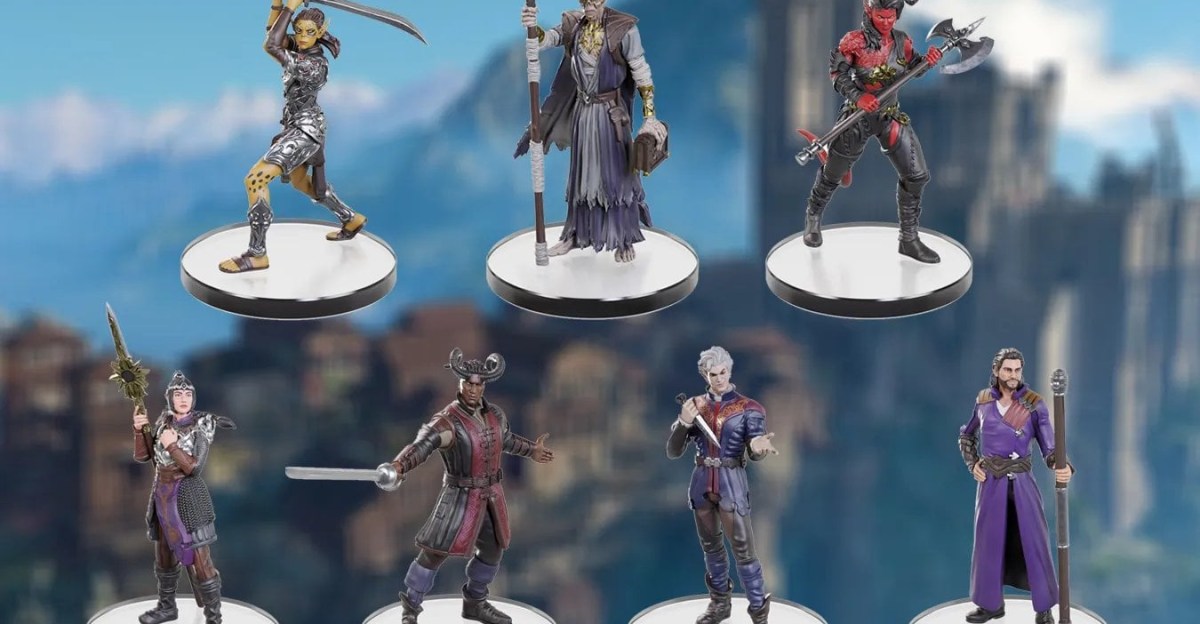
WizKids is offering refunds for its Baldur’s Gate 3 miniature set after fans criticized the quality of the pre-painted figurines. The $50 D&D Icons of the Realms: Baldur’s Gate 3 set, which includes the six origin characters as well as Withers, drew backlash over its paint jobs, which lack detail and precision according to photos posted by customers.

WizKids acknowledged the situation in a statement, saying it “seeks to create products that enhance and add to the enjoyment of game play,” but that “unfortunately, we missed the mark on this goal.” To remedy the situation, customers who bought the set directly from WizKids can request a refund through the company’s customer service email. Those who purchased the set from a local retailer can seek a refund at that point of sale. There is also a product replacement option available through WizKids’ website for anyone who wishes to roll the dice again with WizKids.

Images of the melty-faced miniatures have been circulating online recently since they were sent out. A senior cinematic artist for Larian Studios who worked on Baldur’s Gate 3 took to X to share the disappointing distortion from expectations to reality. For some, the melty pre-painted faces were not the biggest cause for concern, because the miniature set they received didn’t even have a head for Shadowheart!

The set’s quality issues are surely disappointing for Baldur’s Gate 3 fans who were hoping for collectible-quality figures of the game’s beloved cast. Although seven pre-painted figures for $50 is not that expensive in the hobby, even those with modest expectations have been surprised by how poorly they turned out. For others, though, these flawed minis might end up as collectibles in their own right. Misprints and errors have occasionally gained value over time in other collectible hobbies, and with refunds and replacements already underway, the original run of these figures could ironically become a desired oddity for collectors.

VS Code: Open Source AI Editor


May 19th, 2025 by the VS Code team

We believe that the future of code editors should be open and powered by AI. For the last decade, VS Code has been one of the most successful OSS projects on GitHub. We are grateful for our vibrant community of contributors and users who choose VS Code because it is open source. As AI becomes core to the developer experience in VS Code, we intend to stay true to our founding development principles: open, collaborative, and community-driven.

We will open source the code in the GitHub Copilot Chat extension under the MIT license, then carefully refactor the relevant components of the extension into VS Code core. This is the next and logical step for us in making VS Code an open source AI editor. It’s a reflection that AI-powered tools are core to how we write code; a reaffirmation of our belief that working in the open leads to a better product for our users and fosters a diverse ecosystem of extensions.

Why open source now?

Over the last few months, we’ve observed shifts in AI development that motivated us to transition our AI development in VS Code from closed to open source:

  • Large language models have significantly improved, mitigating the need for “secret sauce” prompting strategies.
  • The most popular and effective UX treatments for AI interactions are now common across editors. We want to enable the community to refine and build on these common UI elements by making them available in a stable, open codebase.
  • An ecosystem of open source AI tools and VS Code extensions has emerged. We want to make it easier for these extension authors to build, debug, and test their extensions. This is especially challenging today without access to the source code in the Copilot Chat extension.
  • We’ve gotten a lot of questions about the data that is collected by AI editors. Open sourcing the Copilot Chat extension enables you to see the data we collect, increasing transparency.
  • Malicious actors are increasingly targeting AI developer tools. Throughout VS Code’s history as OSS, community issues and PRs have helped us find and fix security issues quickly.

Next steps

In the coming weeks, we will work to open source the code in the GitHub Copilot Chat extension and refactor AI features from the extension into VS Code core. Our core priorities remain intact: delivering great performance, powerful extensibility, and an intuitive, beautiful user interface.

Open source works best when communities build around a stable, shared foundation. Thus, our goal is to make contributing AI features as simple as contributing to any part of VS Code. The stochastic nature of large language models makes it especially challenging to test AI features and prompt changes. To ease this, we will also make our prompt test infrastructure open source to ensure that community PRs can build and pass tests.

As usual, you can follow along on our iteration plan, where we will provide more information on this work. We will also keep our FAQ updated with answers to questions from the community. We welcome your feedback as we bring this vision to life.

We’re excited to shape the future of development as an open source AI editor – and we hope you’ll join us on this journey to build in the open.

Happy coding!

The VS Code team

Where to Sell Short Stories: 7 Places That Pay


If you are a fiction writer looking to get paid to write short stories, grow your career, and build your audience, you’re not alone.

Selling your high-quality short stories can be a powerful way to earn money as a writer. Perhaps you are testing out the waters before expanding your short story into a full-length book, or you are aiming to build your portfolio in hopes of landing more freelance writing jobs.

Whatever your goals are, this guide will show you why you should monetize your writing, how and where to submit short stories for money, and give you some tips for success.

Why you should sell your short stories

If you’re trying to make it as a writer, or trying to make some side income from it, you may want to consider selling short stories.

If you’ve already been writing short stories for some time, there’s a good chance there are people out there who would pay writers like you to read them. Whether you write literary fiction, speculative fiction or flash fiction, you can get paid for short stories through a variety of online platforms and literary magazines.

Here are some reasons why selling short stories might be right for you.

Building a writing resume

For any writer who wants to get paid to write or eventually become a full-time author, you will want to have some published pieces in your portfolio. The more published content you have, the more credibility you build with readers and potential short story publishers. It is a way to show people that you are a serious writer, and it can prove that other people should invest in your art, too.

Networking opportunities

You never know who will read your short story and want to work with you. You might even be hired for things like ghostwriting or freelance writing opportunities. The more you get your short stories out there, the better chance you have for your work to make its way in front of the right people.

Exposure to a greater audience

Most writers have a small following online, but when you are published in new marketplaces, you have the chance of reaching even more readers. Getting your creative writing published on a high-traffic online platform or a well-known journal has the potential to expose your short stories to thousands or even millions of readers!

Ideally, you will choose places to publish your writing that have the greatest reach to new audiences, but in the beginning, you might not be able to be as picky as you will be later on.

Testing the market

Thinking of turning your short story into a book? Selling and testing how a short story does can help confirm whether it’s a good path to pursue or not. If your short story receives a strong response, it is a good indicator that your idea has the potential to successfully be expanded into a full-length novel.

Many successful books (and even blockbuster movies) started as short stories that became popular among readers and critics.

Short turnaround

As the name suggests, short stories have a relatively short turnaround compared to novels or other forms of long-form writing. Taking less time to write, edit, revise, and submit means you can complete more short stories in a shorter period of time (though be careful not to sacrifice quality over quantity).

The advantages of this are that you can learn faster, quickly improve your writing skills, submit multiple short stories throughout the year, and increase your chances of getting published.

Multiple income streams

Whether writing is your full-time job or a passion you pursue on the side, selling short stories can help you create multiple streams of income. While selling a single story won’t make you rich, selling multiple stories to different publishers, literary magazines, and online platforms can add up fast.

If rights allow, you may even be able to sell the same short story to multiple publications as well as self-publish it in a collection of short stories as an eBook to create active and passive income.

Sharpen your skills

Whether or not writing short stories for a living is your end goal, it is a great way to hone your craft. Writing short stories means you have to have excellent technique, tight structure, and clean prose, all within a limited word count.

Regularly writing short stories is a great way to keep your writing skills sharp and help you grow as a storyteller—you might as well get paid to do it!

How much can you make from selling short stories?

Though not easy, it is absolutely possible to earn money writing short stories, with rates ranging from a few bucks to thousands of dollars, depending on where you submit your work.

Many short story publishers pay per word—with “pro” rates starting at $0.08/word—and freelance writers often earn even more.

When you first start selling your writing, you will likely find more opportunities on the lower end of the spectrum. However, don’t forget that almost every famous author out there started by selling their short stories.

It is more about what you do with your growing audience and your stories that can have a huge impact on your career down the line. With a practical mindset and a determined attitude, you can start to earn money online and build a following that can lead to bigger and better opportunities.

How to get paid to write short stories

Now that you know the benefits of selling your short stories, you may be wondering how to actually get started. Luckily, you’ve got options! There are several proven ways you can try to start turning your short stories into income.

This guide will walk you through why you should consider selling your short stories in the first place, some tips to submission, and then dive into actual places to submit your short stories.This guide will walk you through why you should consider selling your short stories in the first place, some tips to submission, and then dive into actual places to submit your short stories.

Where to sell short stories

Online platforms

1. Amazon KDP

The Amazon KDP program is a great place for creative writers to self-publish their short stories and earn money online.

As a bookseller, you can earn up to 70% of royalties, depending on the publishing option you choose from them. This program also offers publishing options for a wide variety of genres, which is not something you will always find from various publishers.

For example, some magazines will only publish particular kinds of genres and stories.

Amazon also has the biggest book market in the world, making it a good way to reach a wider audience, but you will still have to work hard to get your short story to stand out.

2. The Threepenny Review

The Threepenny Review is a literary magazine that generally publishes essays, fiction, non-fiction, poetry, memoirs, and more.

They have various word count preferences for each type of story they choose to publish, but they do pay for pieces they publish.

On the higher end, they can pay $400 per piece, and for shorter ones (such as poems), $200.

3. Poets & Writers

Poets & Writers have a few various ways to help writers make money.

One option is to pitch directly to the magazine, which you can do through their submission guidelines page.

After that, they also have a subscription you can join to keep on top of various short shorty contests and other opportunities for other paid writing gigs.

4. One Story

If you are looking to publish a short story, you have probably come across One Story as an option.

They only have a short window of time when they accept submissions, but they do pay $500 for 25 contributor copies.

Check out their submission page to stay on top of when the next opening is happening.

5. Flash Fiction Online

If you love writing short stories that are between 500-1000 words, you will want to check out the Flash Fiction Online submission guidelines.

Flash Fiction Online is a great place to get paid to write short stories, where you can expect to make $60 per accepted story.

6. Short Story Lovers

Short Story Lovers is a website that gives authors their own dedicated platform to share their stories to subscribers.

This platform allows you to publish your short stories, build a following of readers, and keep 100% of the commission with their “Pro Author Plan.”

7. Reedsy Discovery

Reedsy Discovery is an online platform that helps authors gain exposure for their books and short stories by launching them out to their community of readers and reviewers.

Each submission is given its own landing page where you get to be in charge of your own pricing and marketing.

Literary magazines

1. The New Yorker

When it comes to literary magazines, The New Yorker is one of the most reputable and prestigious. They are known to publish high-quality content, including short stories, literary fiction, and poetry from many of the world’s most famous creative writers, as well as talented emerging writers.

A dream market for many writers, getting a short story published by The New Yorker is a big accomplishment that is not easy to achieve, but don’t let that scare you. The New Yorker accepts short story submissions all year round and pays writers competitive rates for accepted pieces.

2. The Atlantic

Another well-respected name in the world of literary magazines, The Atlantic, publishes many different genres from non-fiction political journalism and STEM, to fiction and poetry. Though a lot of its content is non-fiction, The Atlantic has a reputation for publishing powerful, thought-provoking short stories at competitive rates.

3. Harper’s Magazine

Harper’s Magazine is an American institution that pays writers well, publishing essays, journalism, poetry, and fiction. This literary magazine is another one that fiction writers should have on their radar, where having a short story published in Harper’s Magazine would be a major achievement that can really elevate your writing career.

Science fiction and fantasy markets

1. Asimov’s Science Fiction

If you are looking for a place to sell your science fiction stories, then look no further. Asimov’s Science Fiction is an award-winning magazine that has published some of the biggest names in science fiction.

This is a go-to platform for both new and established authors. They pay writers $0.08 to $0.10 per word and typically look for character-oriented stories between 1,000 and 20,000 words.

2. Clarkesworld Magazine

Clarkesworld Magazine mainly focuses on publishing short stories in the science fiction and fantasy world, but they also consider art, non-fiction, and other types of short stories, as well.

They currently pay $0.14/word, which is on the higher end of platforms that pay for short stories.

3. East of the Web

Following the science fiction genre, East of the Web is currently accepting short stories that are at least 7.000 words. They currently have over 100,000 mobile devices that have their short story app installed, which can be good for your story to help reach a wider audience.

At the time of writing this, they are currently paying $0.05 per word to publish stories, but they are open to submissions of previously published stories, which not all places do.

Short story competitions

One way to stand out in the crowded field of writing is by winning short story contents. A story that places or wins a contest carries a lot of weight and credibility when pitching to editors, agents, and short story publishers.

Many of the short story contests out there are run by reputable literary magazines, journals, and publishers that offer cash prizes or other opportunities like publication, mentorship, or exposure.

There are tons of national and international short story contests out there, but here are a few to get you started:

Each short story contest has its own unique eligibility requirements, so be sure to carefully read all guidelines for each contest before submitting. Even the most talented writers can miss out on cash prizes by not following these guidelines carefully.

Tips for success

Write high-quality short stories

The most important thing you can do is consistently produce high-quality content. You never know who is going to be reading your submissions and published work, so you always want to be sure to put your best foot forward. Publishers, editors, and readers are always looking for original ideas, emotional depth, complex characters, and rich storytelling, so keep challenging yourself to produce your best work.

The world of short story and fiction writing is a crowded market, so if you want to get paid to write short stories, you will need to find ways to stand out. Prioritizing quality writing boosts your chances of being published and reaching your goal of getting paid to write short stories.

Follow submission guidelines

Most writing contests and literary magazines have specific submission guidelines. No matter what you are submitting, be it science fiction stories or flash fiction, make sure to always check their policies, requirements, and deadlines.

One thing you will want to particularly note is that most websites have rules about whether they will accept stories published in other publications before or not. Some publications want the first rights to your story, and some will accept stories you have published before. That is something you will want to take seriously and keep an eye out for.

You will want to double-check (and even triple-check) any submission guidelines before entering so you are not automatically disqualified from consideration. Some publications have rigid rules, and some have looser rules, so do your research before submission.

Be persistent and patient

Becoming a successful short story writer does not happen overnight. Rejection is part of being a writer, but it may be helpful to instead see it as redirection. Even the most renowned and celebrated writers had their submissions turned down countless times.

Just because your first (or first dozen) submissions are rejected does not mean that the next one will be too. Stay consistent, keep submitting, and remember that every “no” brings you one step closer to a “yes.”

FAQs

1. Where to send short stories for money?

You can submit your short stories to various literary magazines like The New Yorker and Harper’s Magazine, short story contests like The Bedford Competition and the Reader’s Digest Short Story Competition, and online platforms such as Amazon KDP and Reedsy Discovery.

2. What websites pay you to write?

There are many reputable websites that pay writers for short stories. Websites like Flash Fiction Online, The Threepenny Review, One Story, and Short Story Lovers pay writers for their short stories.

3. Can I get paid for writing short stories?

Yes, you can earn money writing short stories through a variety of platforms. A few options are to submit your short stories to publishers and publications that pay writers, self-publish, or enter short story competitions.

Recession-Proof-Freelance Writing - MAKEALIVINGWRITING.COmRecession-Proof-Freelance Writing - MAKEALIVINGWRITING.COm

You won’t want to miss out on our Recession-Proof Writing Guide! This will give you the steps you need to make sure you are building a writing career that will allow you to get paid to write in any economy.

Sign up below and get your guide today!