Bullet heaven games can already be fairly chaotic. Starting with Vampire Survivors, it’s a genre that joyously fills your screen with thousands of enemies and tasks you with somehow killing them all before they reach your character in the centre. While Warhammer Survivors treads much of the same ground of Poncle’s original, there is a small mechanical twist at its centre that adds a meaningful extra drip of chaos to the action.
Rather than control a single character, as you pick up weapons, you assemble a small squad, all of whom act independently of you.
The Indus app is powered by Sarvam’s locally trained 105-billion-parameter model — a measure of the AI’s scale and sophistication — andlaunched at the AI summit. The app supports 22 Indic languages and mid-sentence code-switching (the ability to fluidly mix languages mid-conversation, like switching between Hindi and English), which helps the assistant better understand the context of a query. Currently, the application doesn’t support offline usage, and it doesn’t have any integrated feature with the device to invoke the AI assistant through a shortcut.
The partnership is a potential testing ground for both companies to gauge the appetite for an India-focused chatbot.
“With this partnership, the first thing we want to do is get the Indus app to consumers,” said Ravi Kunwar, HMD’s CEO and Vice President for India and APAC, in an interview with TechCrunch. “Once they start using it, we will move to phase two to focus on driving more traction and stickiness. Right now, by pre-loading the app, we want to be more accessible to users,” he said.
The Vibe 2 5G is a mid-range Android phone with a 6,000mAh battery and a price tag of ₹10,999($114). Kunwar added the devices in the Vibe series of smartphones will also get the chatbot, and the company is also expected to launch a feature phone with Sarvam AI integration in the coming months.
That feature phone integration may ultimately prove more significant for both companies. HMD held a 4% share of India’s feature phone market in 2025, but its smartphone share was negligible — the company doesn’t even appear in the top 15, according to analyst firm IDC.
While it’s early days for Indus, the download numbers reflect that. Nearly three months after its launch, the app has been downloaded just over 293,000 times in India across platforms, according to Appfigures. By comparison, ChatGPT was downloaded 43.9 million times in the country.
It’s a big gap, but the strategy behind the HMD deal may matter more than the early numbers. Bundling a regional AI assistant with affordable hardware — particularly feature phones — is one of the more direct distribution plays available in a market as large and linguistically diverse as India, where English-language AI tools have limited reach. For investors and operators watching how AI adoption gets seeded in emerging markets, this partnership is worth tracking.
Sarvam has been one of India’s marquee AI startups. Beyond the Indus app launch, the company has focused on enterprise partnerships, especially for voice-based solutions. It is on track to become one of the most funded AI startups in the country, with reportssuggesting a funding round of $300 million at a $1.5 billion valuation is in the works.
When you purchase through links in our articles, we may earn a small commission. This doesn’t affect our editorial independence.
There was a time when home luxury was easy to identify. Oversized chandeliers. Highly formal living rooms. Furniture that looked impressive but rarely invited anyone to actually sit down and stay awhile. Luxury interiors were often designed for presentation first and comfort second.
That definition has changed dramatically.
Today, modern home luxury feels quieter. More personal. More connected to how people actually live. Homeowners are moving away from spaces that feel overly styled and toward interiors that create atmosphere, rooms that feel calm, layered, and deeply livable at the same time. And honestly, that shift has changed contemporary interior design in some very interesting ways.
Modern Loft sits directly in the middle of this evolution.
Why AtmosphereMatters More Than Excess
Source: Billiani
Rather than chasing trend-heavy aesthetics, Modern Loft has become known for creating interiors that balance architectural structure with warmth. The difference is noticeable immediately. Softer silhouettes replace rigid lines. Textured upholstery takes priority over flashy finishes. Furniture feels intentional instead of excessive.
And yes, the difference is unmistakable in person.
What makes this shift particularly interesting is that it reflects something much larger happening culturally. Over the last several years, people have become more emotionally connected to their homes. Living spaces are no longer treated as purely visual environments. They’ve become places for recovery, focus, gathering, and everyday comfort.
That emotional connection has reshaped what consumers expect from luxury furniture brands.
Contemporary Interior Design Feels More Human Now
Today’s homeowners want interiors that feel elevated without feeling intimidating. They want spaces that photograph beautifully but also function beautifully on a random Tuesday night. That balance is much harder to achieve than most people realize.
Modern Loft understands this better than many brands in the contemporary interior design space.
Instead of overcrowding rooms with statement pieces competing for attention, the focus shifts toward restraint and proportion. A sculptural sofa. A textured lounge chair. A warm wood dining table with enough visual weight to anchor the room without overpowering it. These choices create atmosphere naturally rather than forcing it.
We’ve seen this play out again and again.
Some of the most luxurious homes today are actually the simplest ones — not because they lack personality, but because every piece feels considered.
The Return of Furniture Classics
That’s also why furniture classics are becoming important again. Homeowners are moving back toward timeless silhouettes and investment pieces instead of constantly replacing trend-driven furniture every few years. The emphasis is now on longevity, craftsmanship, and materials that age well over time.
A few elements defining modern home luxury right now include:
Warm neutral palettes instead of stark whites
Natural materials like walnut, linen, stone, and boucle
Curved or sculptural furniture silhouettes
Softer lighting and layered textures
Fewer but better furniture pieces
This approach creates rooms that feel composed without feeling rigid.
Modern Loft reflects this movement particularly well because the focus remains on balance. The rooms feel elevated without becoming untouchable. Refined without losing warmth. That distinction matters more now than ever.
Why Modern Loft Resonates With Today’s Homeowners
Perhaps that’s the biggest difference in modern home luxury today. It no longer feels performative. The goal is not to impress people with excess, but to create spaces people genuinely want to spend time in.
That’s a major reason brands like Modern Loft continue resonating with modern homeowners. The aesthetic feels refined, but still approachable. Elevated, but comfortable. Thoughtful, but never overly decorated.
In many ways, contemporary interior design is finally becoming more human again.
And honestly, that may be the most luxurious thing of all.
Credit: Midj
Q&A
What Is the Difference Between Classic and Modern Furniture?
Classic furniture emphasizes ornate detailing and traditional craftsmanship, while modern furniture focuses on clean lines, simplicity, and functionality.
Which Luxury Furniture Brands Are Made in the USA?
Many luxury furniture brands manufacture in the United States, particularly in North Carolina and California, where high-end upholstery and woodworking remain strong.
What Are “Accessible” Luxury Brands?
Accessible luxury brands offer elevated materials and refined design at a more attainable price point than ultra-exclusive designer labels.
What Is the Difference Between Modern and Contemporary Design?
Modern design refers to a specific historical movement, while contemporary interior design reflects current styles and evolving trends.
How Do I Add Warmth to a Contemporary Space?
Layering warm woods, textured fabrics, soft lighting, and natural materials helps contemporary interiors feel more inviting.
What Is the 2/3 Rule in Interior Design?
The 2/3 rule suggests furniture and decor should fill roughly two-thirds of the surrounding space to create visual balance.
What Is the 4-inch Rule?
The 4-inch rule commonly refers to spacing artwork or furniture slightly away from surrounding elements for cleaner proportions.
Why Does Luxury Furniture Cost so Much?
Luxury furniture costs more because of premium materials, skilled craftsmanship, higher-quality construction, and longer-lasting durability.
Popular Interior Design Styles
Scandinavian
A clean, nature-inspired style centered around simplicity, light woods, and neutral tones.
Japandi
A calming blend of Japanese and Scandinavian aesthetics focused on minimalism and natural materials.
Boho
An eclectic style featuring layered textures, vintage pieces, and artistic individuality.
Mediterranean
A warm, coastal-inspired style defined by earthy tones, rustic materials, and relaxed elegance.
Farmhouse
A cozy aesthetic built around natural wood, vintage character, and comfortable living.
Midcentury
A retro-modern style known for organic shapes, warm woods, and iconic furniture classics.
Industrial
An urban-inspired style featuring exposed brick, steel, concrete, and weathered textures.
Bauhaus
A functional design movement emphasizing geometry, simplicity, and practical form.
Minimalism
A pared-back style focused on intentional living and uncluttered spaces.
Traditional
A timeless style featuring classic furnishings, rich wood tones, and elegant detailing.
Art Deco
A glamorous style recognized for geometric patterns, metallic finishes, and bold accents.
Contemporary
A trend-forward style blending multiple influences to create fresh, current interiors.
Transitional
A balanced mix of traditional and contemporary interior design elements.
Victorian
A richly layered style featuring ornate details, jewel tones, and decorative patterns.
Coastal
A relaxed style inspired by ocean tones, natural textures, and airy interiors.
Conclusion
Home luxury no longer revolves around filling a room with expensive objects simply for the sake of appearance. Today, the most memorable interiors are the ones that feel intentional, calming, and genuinely livable. Atmosphere has replaced excess, and contemporary interior design is better for it.
That shift in home luxury explains why brands like Modern Loft continue resonating with modern homeowners. The focus is no longer on creating spaces that feel untouchable. Instead, it’s about thoughtful furniture, layered textures, timeless silhouettes, and rooms people actually want to live in every single day.
And in many ways, that softer, more personal approach to luxury may prove far more lasting than any passing design trend.
ANBERNIC has quietly released an 8GB/128GB version of the RG577 handheld.
This model is on sale for ~$229, making it ~$50 cheaper than the previously released 256GB option.
Expect a MediaTek Dimensity 8300 processor, an OLED screen, and a 5,500mAh battery.
The ANBERNIC RG557 launched last year, and it was the company’s most powerful Android handheld at the time. It’s still worth a look in 2026, albeit with a few caveats. However, there’s good news if pricing was your biggest concern.
ANBERNIC quietly announced (h/t: r/ANBERNIC) that the RG577 is now available in an 8GB/128GB variant. This joins the 12GB/256GB option which has been available since launch.
Don’t want to miss the best from Android Authority?
The 8GB/128GB RG577 has a recommended retail price (RRP) of $249.99, but it’s currently being sold on ANBERNIC’s website for $229.02. By contrast, the 256GB model has a $299.99 RRP but is currently available for $279.02.
In any event, you’re getting some good specs for the price. It has the same MediaTek Dimensity 8300 chipset as the well-received RG477M, which means you’ve got plenty of horsepower for PS2 and GameCube emulation. However, the Mali GPU means you might struggle with PC and Switch emulation. It also stands out by offering a 5.48-inch OLED screen instead of the RG477M’s 4.7-inch LCD panel. Other notable specs include a 5,500mAh battery, 27W wired charging, a microSD card slot, Hall Effect triggers, and a 3.5mm port.
In saying so, the RG577 faces stiff competition from rivals like the Retroid Pocket 5 and 6, as well as the AYN Thor and Odin 2 Portal. These handhelds all have OLED screens and Snapdragon chipsets. Furthermore, some users have criticized the RG577 for its cheap materials and small analog sticks. Nevertheless, ANBERNIC’s 128GB device still warrants a look if you want a capable Android handheld without breaching the $250 mark.
Thank you for being part of our community. Read our Comment Policy before posting.
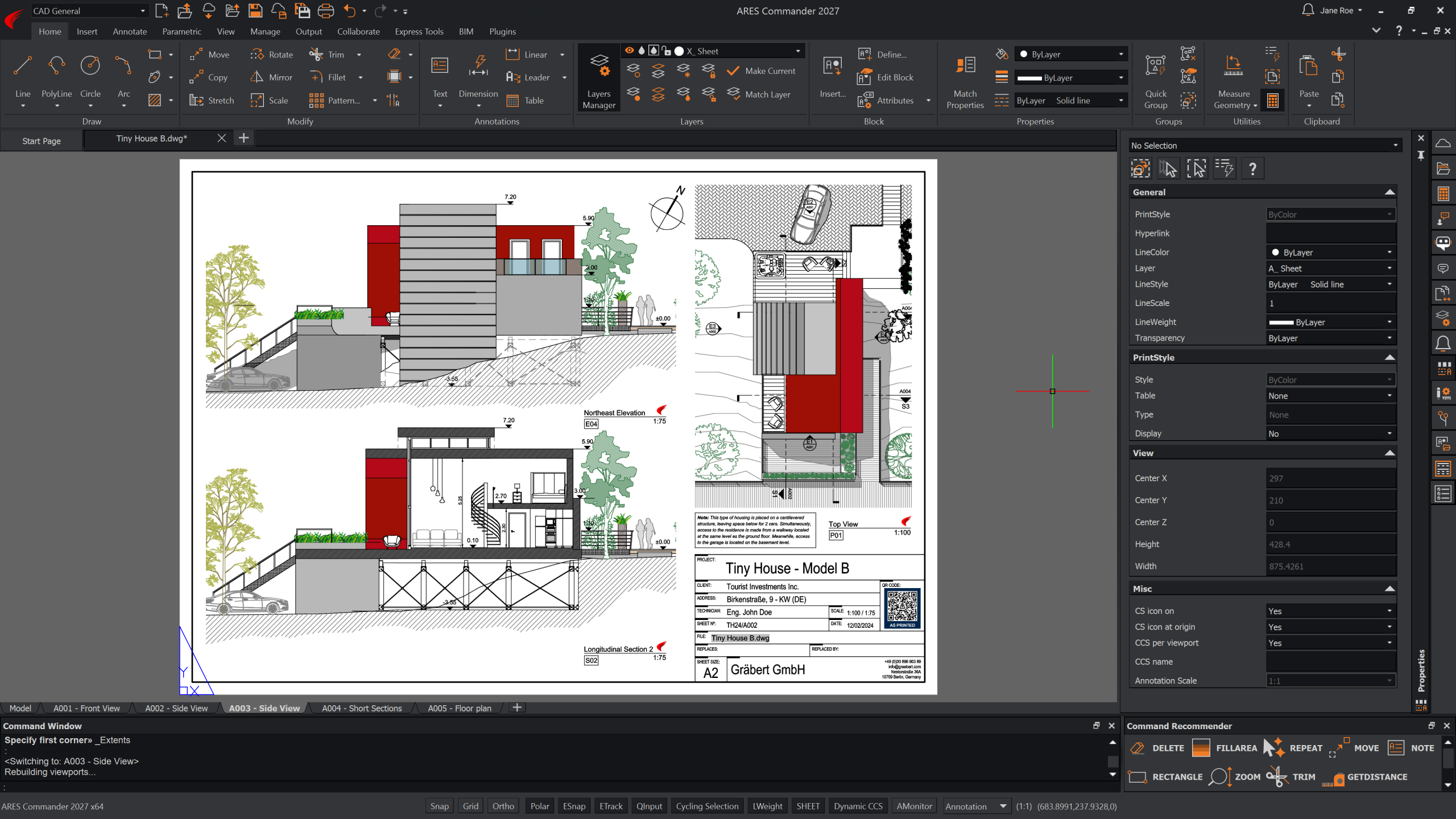
Architosh periodically publishes Deep Dives: in-depth product reviews examining CAD, BIM, and 3D technologies. In the newest one, “ARES 2027 Deep Dive: AI, Automation and BIM-to-DWG Workflows,” Architosh’s Anthony Frausto-Robledo explores how ARES 2027 is expanding what DWG-based CAD can become in an AI-accelerated, cloud-connected era. As he writes, “The larger story in this release is AI,” with the ARES AI Assist feature, known as A3, evolving from a help assistant into “an active participant in the CAD workflow.”
Anthony also highlights the strength of Graebert’s Trinity strategy, noting that ARES delivers a unified “One CAD” experience across desktop, web, and mobile — including Windows, macOS, Linux, browsers, tablets, and smartphones. This consistency helps teams keep working in all locations, and across all kinds of devices, while staying connected to the same DWG workflows.
Beyond AI, the article takes a closer look at online Drawings Automation, BIM-to-DWG improvements, Autodesk Forma integration, and the growing capabilities of ARES Kudo Professional. As Anthony concludes, “ARES 2027 demonstrates how a focused [Autodesk] competitor can move quickly, differentiate boldly, and continue expanding what native DWG CAD can become.”
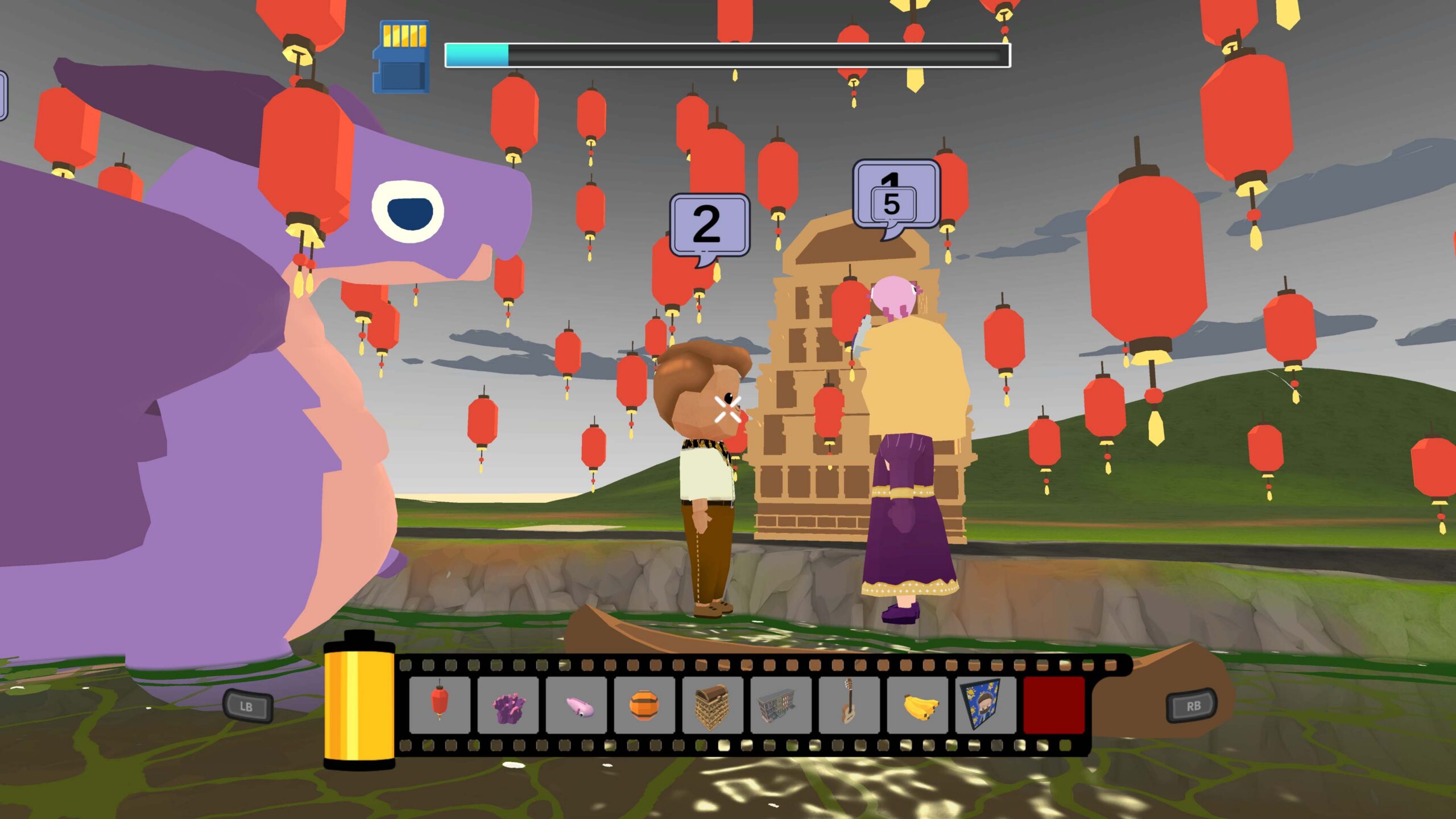
Table Flip Simulator starts off with a simple idea: smashing stuff is fun and dials it up to eleven. The story begins with you working at DullMart and your boss demands you work overtime on your birthday. Naturally, this sets off a heroic journey where you end up becoming the President of Antarctica. How did this wacky game go from flipping tables to 50 chaotic levels? We spoke with the development team at YummyYummyTummy to discuss making this comedic, physics-powered puzzle game.
Where did the idea for Table Flip Simulator come from?
Spencer Yip, Director: I wanted to make a game where players could de-stress and laugh by causing a little harmless chaos. One of the early ideas was a playable rage room and then I remembered a table flipping arcade game I saw in Japan. Watching objects shatter into pieces felt cathartic and I wanted to see how far we could run with destruction as a core mechanic.
There are a lot of different levels in the game and each one has unique goals too. I played the level where you’re a barista making coffee and another level where you work at a grocery store.
SY: We thought it would be fun to take real world jobs and turn them into absurd situations. In the grocery store level, you’re breaking packages and tossing fruit at customers. Later in the game, you’re throwing clothes at models as a fashion show judge, stopping a zombie apocalypse, and making futuristic sushi.
Completing objectives charges your rage bar and when its full you can unleash a massive table flip! It’s the game’s Super Saiyan moment.
How did you come up with the story for Table Flip Simulator? What inspired you?
Geoffrey Golden, Narrative Director: The story was a highly collaborative process with Spencer. I loved the room trashing mechanic and figured we needed a player character with a deep well of anger to justify all those flipped tables and chucked cups of steaming hot coffee. We let the player character’s heightening emotions guide the plot forward, from annoyance to righteous indignation to power mad fury, and synchronized those emotions to the gameplay.
What was the wackiest scene you wrote?
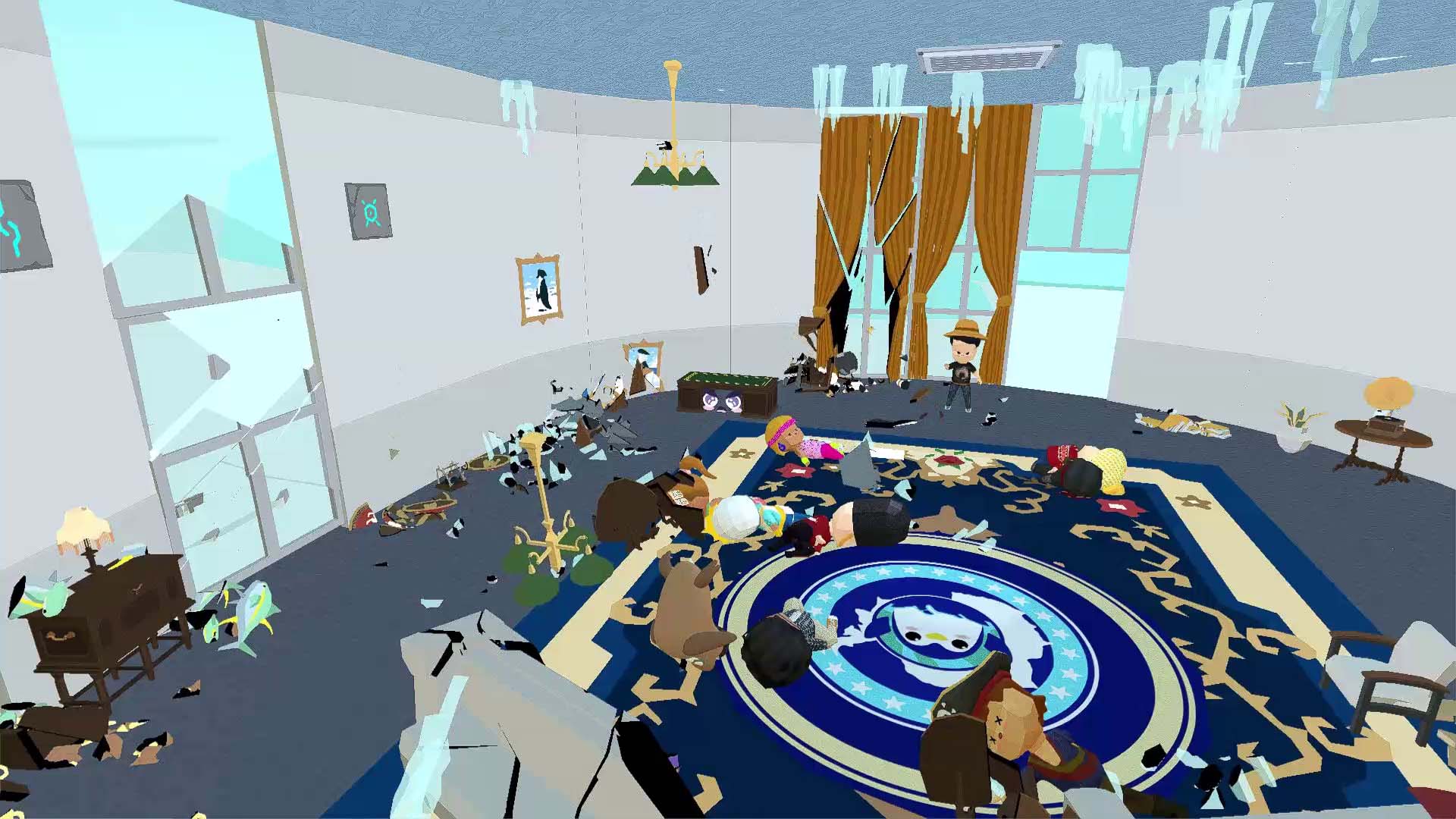
GG: It’s hard to choose. I wrote scenes where the player angrily destroys a K-Pop fan meetup, a Wild West town, and an alien planet, but the most surreal might be a presidential debate between the player and their penguin rival for the future of Antarctica. It’s a wild ride!
Hang on, how do you debate with a penguin?
SY: Hahaha. It’s actually a boss fight with Pecky Penguin! She throws fish and you can defend yourself by blocking with the LB button. When you block items, you can pick them up and throw them back at her or the senator seals she summons. Pecky is one of the bosses you’ll encounter on your big flipping journey. Watch out for a college professor, a wrestler, and even a kaiju.
What is it like creating a game with an indie team?
SY: The best part is everyone gets a chance to shape the game with their ideas. Eric, who made behavior trees for the actors, thought it would be funny to have characters freak out when they touched fire so he added that as a feature. Raisa, who modeled a lot of the characters, had the brilliant idea to turn the table into a character by giving it eyes. Then, our sound designer found a voice for Table-kun who became the game’s mascot. Each creative and strange idea made the game wackier and more fun to play.
How does the level editor enhance gameplay?
SY: Good question! The level editor is one of the features we’re most excited about because we’re sure players can make memes playable and design their own ridiculous situations! Every time you complete a level, you unlock that level and its items to use in the editor. You can start from scratch and fill a stage with wizards, furniture, penguins, flying cars or whatever delightfully weird combination makes sense to you. Or you can remix one of the levels we made.
Think of it as a physics-powered playground with over 3000 items and 200 characters to experiment with. After you make a level, you can share it online through CurseForge or browse levels created by the community. We built 50 levels for the main game and known players are going to come up with ideas we couldn’t imagine. All of us are excited to see the unhinged levels that only players can dream up and we can’t wait to play them.
Any last thoughts you want to share?
SY: I hope everyone that plays Table Flip Simulatorgets a good laugh. We made this game to turn everyday frustrations into ridiculous gameplay. You’re breaking stuff, you’re solving puzzles to hunt for secret objectives, and watching your score climb while fragments of cars unexpectedly fly everywhere because of physics said “let’s do this.” Most of all, we want players to smile as they watch a sentient table plow through the world.
Table Flip Simulator
PM-Studios, Inc.
☆☆☆☆☆ 1
★★★★★
$14.99
This physics-based puzzler turns everyday frustration into cathartic destruction as you throw, smash, and flip tables through levels inspired by modern life. Your adventure begins with a bad day at work, when your boss demands you work overtime on your birthday, and escalates into a heroic journey to become the President of the most powerful nation on Earth: Antarctica.
Wreck the world to unlock dozens of costumes and new playable levels. Make coffee as a barista, survive teaching a class of high school students, and prove your throwing mastery in ridiculous boss battles where you can tussle with a college professor. Each imaginative level encourages experimentation, creative destruction to rack up points, all alongside a cast of quirky characters.
Want to crank the chaos even higher? Build your own fully destructible stages with the in-game level editor. Turn real-life frustrations into unhinged playgrounds of destruction! Then share your masterpieces online for other players to play.
Features:
● Flip tables, throw objects, and enjoy the consequences.
● Unlock costumes to create your own custom flipper.
● Battle memorable bosses that are both silly and epic.
● Chase high scores across a huge variety of stages.
● Solve optional objectives to unlock bonus levels.
● Explore retro-cool visuals and knock out over 200 characters.
● Build fully destructible levels with the in-game editor.
● Share your creations online and play levels made by other players.
● Did we mention smashing things?
Given the fact that this website is quite literally a one man band there is absolutely no way I can keep up with the camera market.
That’s why you don’t see any camera reviews or even all that much camera news here… its just all a bit much for little ol’ me!
Anyhoo, what I do know are a few pretty good sources for that kind of thing and one of them is the crew at Think Media.
Recently they covered some choices for cameras or “devices” suitable for Vlogging in the present market.
If you are looking for something like that then this would be a good start.
IsoBuster 5.8 Released
Good news from Peter at Isobuster for this week with the release of Isobuster 5.8.
If you are not familiar with it, this is my absolute “go to” software for file recovery from just about any form of media going.
I originally started using it years ago for CD and DVD files recovery but since then Peter has expanded the capabilities of it way beyond those early days.
These days it can deal with all forms of optical disc, flash media, hard drives, SSDs and disc image files which in itself is astounding given the vast range of variations that are used for those items.
Sketch Animation in PowerDirector
Sketch Animations is a feature in CyberLink PowerDirector that many users probably overlook.
I would say the reason for this is that like many features, unless you have already seen it in action, you just never think of it as a possibility.
So here’s a demonstration in PowerDirector of just one way that you can use this feature to enhance an existing title or written instruction.
Edit Videos Faster with AI (Filmora Speed Editing Guide)
If you have been following along with the Friday Roundup over the past few years you would know that I am quite specific in how I approach A.I. and video editing.
Originally I pretty much dismissed it as it was largely useless in the overall task of editing.
Its main value was to make cool looking stuff for the marketing department so that people would buy software!
As far as actually using it went… not much use at all!
However over time as the A.I. models have developed we now have a decent set of tools to make editing easier faster.
What we don’t have is a replacement for you and I getting an idea, shooting the majority of footage for that idea and editing it into a watchable video.
Here’s a look at using A.I as a tool in Filmora and not an end unto itself.
How to Film YouTube Videos on Your Phone (Start to Finish)
When I was first roped into becoming the official videographer in my family, the gear available to me was pretty basic.
I did OK with that level of stuff for quite a while until my brother-in-law decided to conspire with my wife to make my life hell.
I guess they thought I was getting just a little too comfortable so he convinced my wife that the way to improve the videos we were making was to buy a good camera.
Until then I had been using a Samsung phone for all the shooting that needed to be done.
Two years later I am now very, very well educated thanks to YouTube on dealing with the intricacies of shooting with my Sony ZV-E10!
Unfortunately through that process of learning, I have discovered that the problem was never the phone!
The actual problem was that I wasn’t using the phone as well as it could be used.
So in the spirit of not making your life miserable, here’s a full start to finish rundown on how to use a smartphone to shoot quality video.
How to Create Cinematic A.I. Transitions
This is a great introduction into using A.I to produce assets that are tailor-made for your projects.
The example used here is the creation of transitions but it doesn’t have to stop there.
Now be warned, this video uses a number of A.I. models that are in the “paid for” category but that doesn’t mean you have to use those ones exclusively.
The important point here is the work flow, what you need to provide to the A.I. model and most importantly, the prompt you write to get it to do what you want.
Tom Antos Creates a Disaster Scene With a Leaf blower and AI!
It’s been a while since I added anything from Tom Antos the reason being that his output dropped for a long time because he has been making movies!
I’m sure he feels that’s good for him but personally I think it’s a bit selfish really.
Anyway I wanted to post this one because it is a great insight into how at a professional level, A.I. is viewed.
As you watch the video which is pretty cool in itself, notice that Tom mentions two main concerns or cautions using A.I.
First is that his own creativity is not usurped by the use of A.I and a second point which is more of an ethical argument.
He actually says a few time that he wants to direct the A.I. based on his own ideas and creativity rather than letting the A.I. model base it results on the work of others.
A Teleprompter Setup with a Twist
This is an interesting take on doing live presentations especially those where you have one or more people Zooming or using OBS in on a call.
The difficulty in that scenario is that the audience will show on a computer monitor to the side while your camera will usually be setup directly in front of you.
That results in your eyes constantly making and breaking contact with the audience each time you look at the monitor then back at the camera.
The solution to this given in the video you can see below completely solves that problem but of course comes at a cost.
I think he mentions that the prompter he uses comes in at around U.S. $300 because it includes a small monitor screen as well, which is pricey unless this is your livelihood.
However the entire thing got me thinking and I realized you don’t need to go that crazy!
If you have a one of those teleprompters that mounts in front of your camera or phone then you are off to a good start!
If not you can always get one and they are quite cheap like this one HERE.
At least look for something that will accommodate a small tablet sized remote screen.
Then look for a cheap camera monitor that takes HDMI connection like this one HERE.
That’s the camera monitor I use and it suits this purpose perfectly.
The fact that it connects by HDMI means you can add it as a second monitor to your computer, mount it on the teleprompter and you have effectively reproduced what’s in the video for about $200 less.
Negative Space: The Key to Cinematic Composition
No I haven’t lost my mind and have become so deluded that I think I am talking to a bunch of fully pro cinematographers on this site!
The video below explores and explains the use of negative space in cinema and the effect it has on scenes and subsequently the audience.
You and I will not be shooting vast landscapes with the tiny figure of our protagonist located somewhere in the void BUT!
What this does teach us from our point of view is that it is not necessary to fill our frames with unnecessary clutter just for the sake of filling it!
Key Takeaways
This week we discuss vlogging camera recommendations for 2026, referencing Think Media as a key resource.
The release of Isobuster 5.8, which is essential software for file recovery across various media types.
Exploring the Sketch Animation feature in PowerDirector and how it’s often overlooked by users.
Insights on using AI in Filmora for faster video editing without replacing the creative process.
Lastly, emphasizing the importance of negative space in cinematic composition for effective storytelling.
You ask Copilot to tackle something big, it gets to work, and a dozen file changes later you realize you had a completely different approach in mind. The code isn’t wrong… it just isn’t what you were going for.
Last year, we introduced planning as a feature in Agent mode to help with exactly this. Since then, you’ve told us you wanted more control over when planning happens, the ability to edit plans directly, and a way to save and share them. Your feedback shaped what came next: the new Plan agent.
Instead of jumping straight into implementation, the Plan agent starts with a deeper understanding of what you’re trying to build: asking questions, clarifying your intent, and enabling you to iterate on the plan before making a single change.
How it works
Here’s how it works:
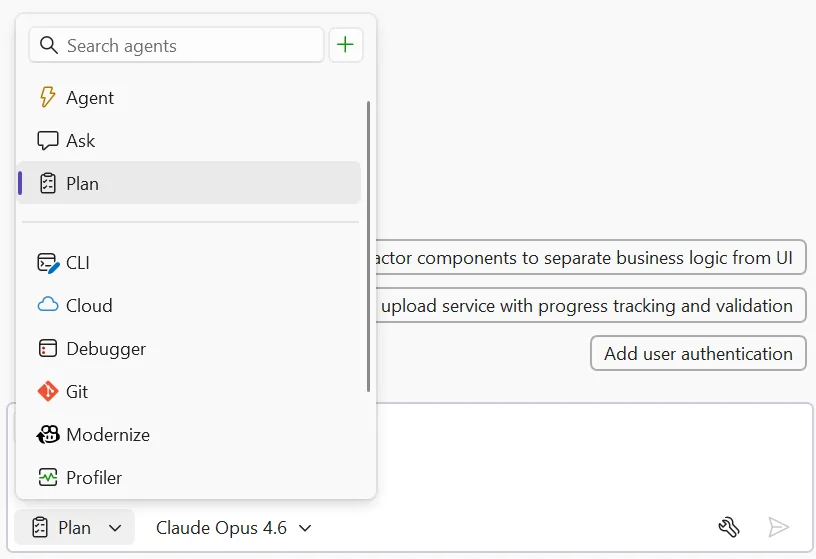
Select the Plan agent and describe what you want to build — Choose Plan from the agent picker in Copilot Chat, then tell Copilot what you’re trying to do. You can be as broad as “add authentication to this app” or as specific as “refactor the payment module to support multiple providers.” The more context you give, the better the plan.
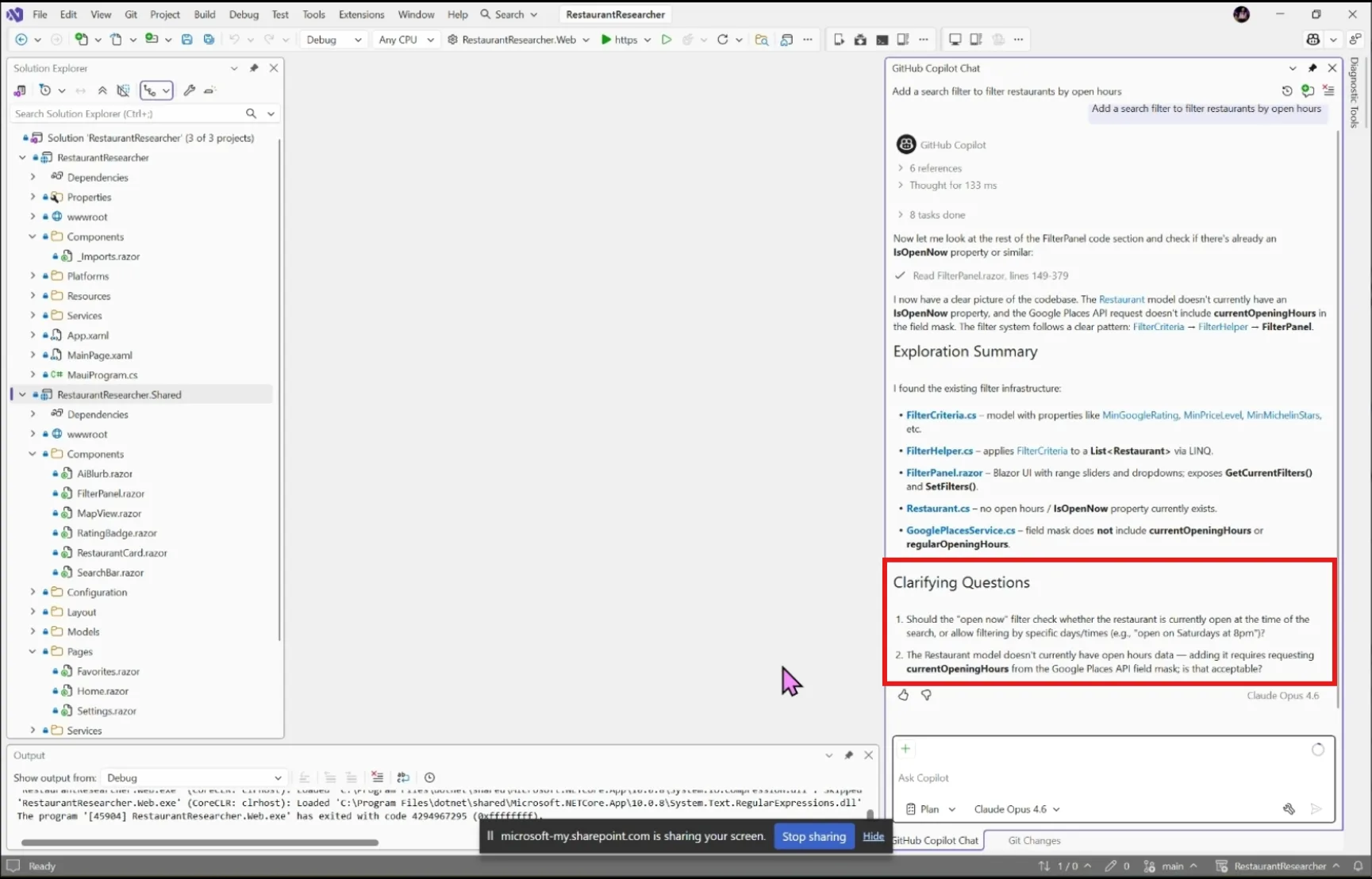
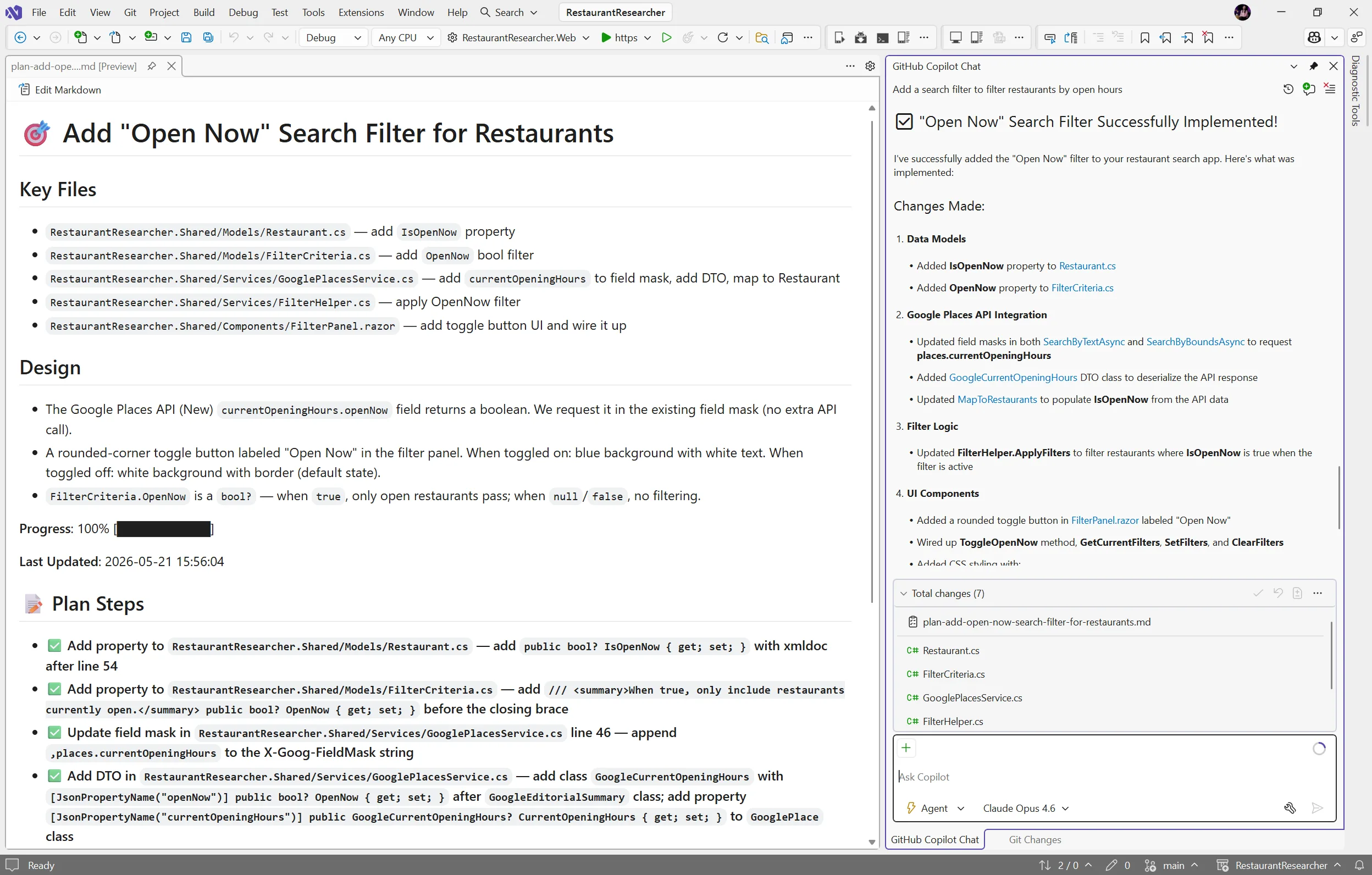
Explore and clarify — Copilot scans your codebase using read-only tools and asks clarifying questions when something is ambiguous. Answer these to help Copilot understand what you’re going for. For straightforward tasks, it moves straight to drafting.
Draft and refine — Copilot creates a detailed implementation plan you can review together. Ask it to rethink an approach, add edge cases, split a step into smaller pieces, or reconsider which files to touch.
Edit the plan directly — Every plan is saved as a markdown file at .copilot/plans/plan-{title}.md. Edit it in your editor, refine it through chat, or share it with your team for review. Copilot picks up your changes and keeps everything in sync.
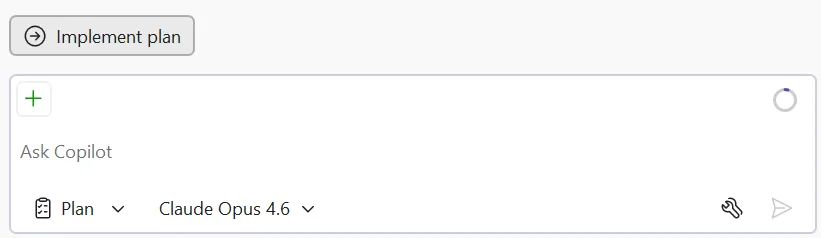
Implement — When you’re satisfied, click Implement plan to hand it off to Agent mode to build. No code changes happen until you say so. Copilot works through the plan step by step, creating and editing files while you watch the progress in real time.
Try it today
The Plan agent helps you figure out what to build before you start building it. Give it a try on your next feature or refactoring task, and let us know how it goes!
Share your feedback on Developer Community and let us know what’s working, what’s not, and what you’d like to see next!
Google announced that it’s opening Gemini for Home’s doors to service providers, hardware makers, and more.
A major highlight is its new Gemini built-in program, which targets partners who are creating hardware for consumers, so they can leverage Gemini’s capabilities for their speakers and cameras.
Google is also integrating its Home Premium subscription with carriers, ISPs, and security companies.
I/O has given us a lot to go over this week; however, Google’s smart home sector isn’t quite done, as it announces a major step for Gemini.
Google states in a press release that it has opened up Gemini for Home into a “full-stack AI offering.” This sounds technical, but all it means is that Google is “empowering service providers and hardware manufacturers to create monetizable, proactive services for customers and their homes.” A developers post shared more, announcing the start of the “Google Home Gemini built-in” program.
Android Central’s Take
The Gemini built-in program is a huge part of Google’s announcement today. This is basically opening its Gemini doors to other companies—think third-party device makers. Now, Gemini isn’t so restricted. These other companies can partner with Google and begin bringing that same, high-quality AI assistance to even more people through their products. This doesn’t sound like a bad thing to me.
This is targeting Google’s partners who create smart home hardware for consumers. Google states hardware makers won’t have to stress about the research; they need only “focus on delivering an exceptional service experience.” Through the “Gemini built in” program, companies can create and launch Gemini-capable smart cameras, thanks to Google’s Camera Reference Design. Moreover, makers can now leverage the full force of Gemini’s voice capabilities for smart speakers in 2026.
Latest Videos From
(Image credit: Google)
Similarly, we have what Google is doing with service providers, like AT&T. The company says it is integrating its Google Home Premium subscription plan with carriers, ISPs, and security companies. This brings in daily household features, such as Home Brief: a daily roundup of what’s gone on around your home. “Advanced deterrence” methods are also included, letting users make it appear as though they’re home for extra home protection.
Companies will also benefit from better protection for smart cameras. This technology makes cameras smarter, so they only alert you to the important things: deliveries, someone at the door, etc. Google says AT&T is spearheading this movement, using Home’s APIs and Gemini in its Connect Life app and security services.
Gemini arrives for more people & devices
(Image credit: Google)
This announcement for a better, smarter home for consumers that companies can leverage includes Gemini for Home’s availability for developers. These are a set of tools that developers can utilize to begin creating for their ecosystems and consumers. Many of these features we’re already privy to. Google highlights Home Brief and Ask Home as “core capabilities.”
Smart cameras have been upgraded for Google Home. These keen eyes around the home can “see” what’s happening. This lets them “describe” what’s going on, so the homeowner is well-informed, instead of delivering generic responses like before.
Get the latest news from Android Central, your trusted companion in the world of Android
Google’s update for smarter cameras arrived earlier this month. A major part of that update was what the company highlighted today: AI. Combined with its software, cameras could “see” and describe to the homeowner what was going on for the full story. Google also rolled out skip buttons to jump through clips and a new option to help swipe between views. Users should also know that the Event feeds got a visual boost, too.
Clearer, zoomed previews help you focus on the action for a particular clip (event). Additionally, users can filter out these events based on “person seen” or “glass break.”
Waymo has now paused service in four cities because its robotaxis are struggling to deal with heavy rain and flooded roads, a problem that already prompted the company to issue a recall last week.
One of Waymo’s robotaxis was spotted driving through a flooded street in Atlanta, Georgia, on Wednesday before it ultimately got stuck for about an hour, according to local news reports. The vehicle was recovered and removed from the scene, Waymo told TechCrunch. Waymo says it paused service in the city, just like it has in San Antonio, Texas, while it figures out a solution.
“Safety is Waymo’s top priority, both for our riders and everyone we share the road with. During a period of intense rain yesterday in Atlanta, an unoccupied Waymo vehicle encountered a flooded road and stopped,” the company said in a statement.
Waymo also halted service in Dallas and Houston because of severe weather across Texas this week, the company confirmed to TechCrunch late Thursday. The expansion was first reported by Bloomberg News.
A Waymo spokesperson said the company also paused service in Dallas and Houston out of an abundance of caution for the forecasted severe weather.
Waymo admitted that it hadn’t finished developing a “final remedy” for avoiding flooded areas when it issued its software recall last week. Instead, the company said that it shipped an update to its fleet that placed “restrictions at times and in locations where there is an elevated risk of encountering a flooded, higher-speed roadway,” according to documents released by the National Highway Traffic Safety Administration (NHTSA).
But even those precautions apparently were not enough to stop the Waymo robotaxi from entering a flooded intersection in Atlanta. Waymo told TechCrunch on Thursday that the storm in Atlanta produced so much rainfall that flooding was happening before the National Weather Service had issued a flash flood warning, watch, or advisory. The company said those alerts are part of a larger set of signals it relies on to prepare the vehicles for poor weather.
“NHTSA is aware of this incident, is in communication with Waymo, and will take appropriate action if necessary,” a spokesperson for the safety regulator told TechCrunch regarding the robotaxi that got stuck in Atlanta.
This is not the first time Waymo has struggled to quickly stamp out problematic behavior with its robotaxis. When people started to notice Waymo robotaxis illegally passing stopped school buses last year, the company shipped a fix that was supposed to address the issue — only for its fleet to continue making illegal maneuvers around school buses.
Waymo’s behavior around school buses is at the center of one of two sets of active investigations into the company.
Both the NHTSA and the National Transportation Safety Board (NTSB) are looking into this problem. Waymo has already produced a batch of documents for the NHTSA, all of which were redacted to the public. On May 15, the NHTSA sent a second document request to Waymo because the company’s initial response “necessitates that [NHTSA] receive further data and information.”
The other set of investigations from the NHTSA and NTSB involve a January 23 incident where a Waymo robotaxi crashed into a child in Santa Monica, California. Waymo has said that its robotaxi braked to around six miles per hour before it struck that child and that she suffered minor injuries.
This story has been updated with more information about how Waymo uses National Weather Service alerts, and to include new service pauses in Houston and Dallas.
When you purchase through links in our articles, we may earn a small commission. This doesn’t affect our editorial independence.