Think of a professional athlete. What separates elite performers is what happens between games: continuous refinement, adjusting to new opponents and sharpening skills based on what the last game exposed.
Agentic AI works the same way. A model is no longer asked for an answer. It’s given a goal and has to keep adapting as environments shift, edge cases emerge and tools change. Unlike a generative model responding to a prompt, an agentic model must plan, use different tools and recover from problems it encounters mid-run.
That’s why post-training, the phase that refines a model after initial training on raw data, is no longer a one-time finishing step. It’s continuous, because the environment that agentic models operate in shifts fast. The tools an agent uses can change week to week. Edge cases surface in production that no test set anticipated. Each deployment brings its own codebase, policies and environment.
Post-training runs loop back from production as new problems surface. The compute footprint grows not because any single run is larger, but because the runs never stop. Agentic AI introduces a new compute pattern for post-training, making it the central workload of the agentic era and the primary driver of intelligence per dollar.
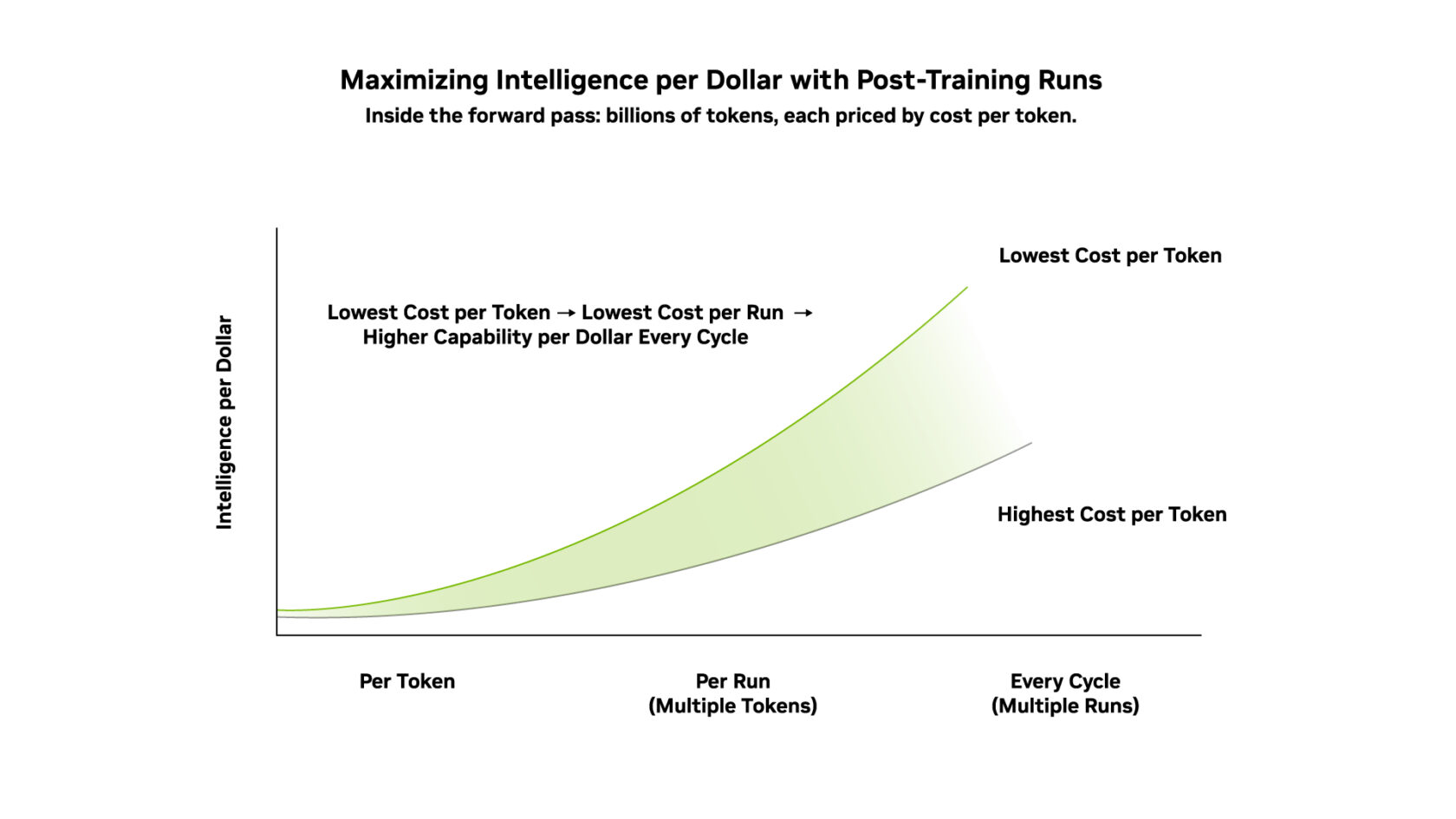
The goal of post-training is to maximize intelligence per dollar by maximizing the yield of every forward and backward pass in the continuous learning cycle. The forward pass — inference — is measured in cost per token. That means that every improvement to cost per token flows directly into intelligence per dollar.
Agentic Post-Training Demystified
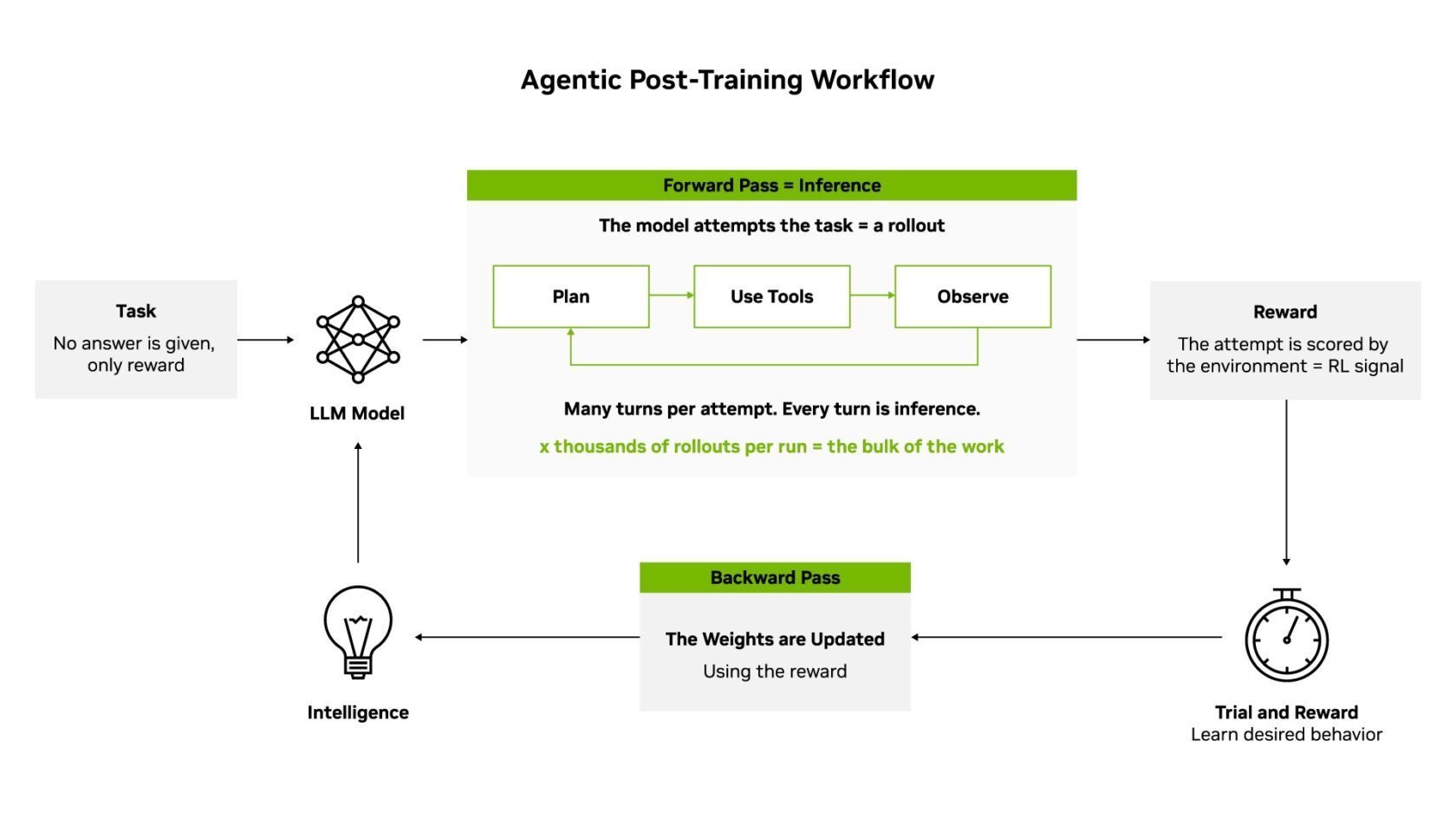
Post-training is where intelligence is built. In pretraining, the model learns to predict the next token, which gives it fluency but not intelligence. Post-training is where it learns to write code, plan a multistep task, use a search tool and recover when something goes wrong. Inference is what comes after: the model working on the job, priced in cost per token.
Because there’s no answer key to memorize, only a reward, the model learns by reinforcement learning (RL) techniques. When given a task, it writes out an attempt — the forward pass — the same work it does on the job. The attempt is scored, and the lesson updates the model’s weights — the backward pass. Across millions of attempts, intelligence grows.
Each step is compute intensive, and running this loop at scale is an orchestration problem: thousands of environments generating rollouts in parallel, rewards being verified and updated weights flowing back into training with accelerators fully utilized. NVIDIA NeMo open libraries, such as NeMo Gym for training environments and NeMo RL for distributed post-training, turn post-training from bespoke research code into repeatable infrastructure.
Why Intelligence per Dollar Extends Cost per Token
If inference is the revenue engine, post-training is the multiplier: the more capable the model, the higher the value of every token served.
Cost per token is the key metric for the inference factory: the all-in cost of delivering 1 million tokens. Intelligence per dollar sits one layer up, answering a different question: what does it cost to build a model worth serving, and keep it worth serving as its environment changes?
The two are nested, not competing. AI infrastructure that lowers cost per token also lowers the cost of every point of intelligence built into the model. And every point of intelligence built in raises the value of every token the inference factory serves.
In other words, cost per token measures operating yield; intelligence per dollar measures whether the investment in model intelligence is paying off.
Maximizing Intelligence per Dollar: Post-Training Nemotron 3 Ultra
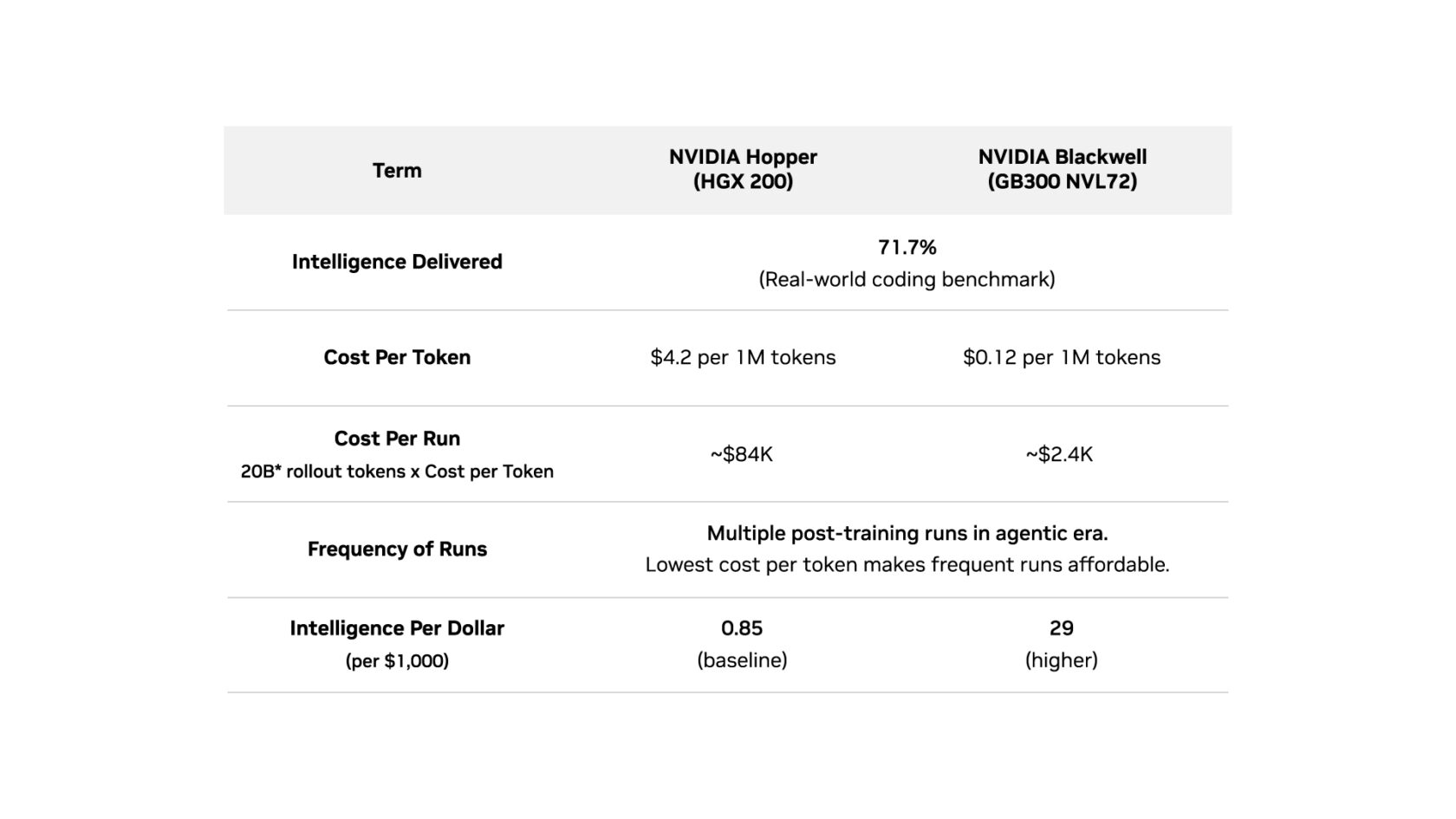
NVIDIA Nemotron 3 Ultra — an open weight, 550-billion-parameter mixture-of-experts (MoE) model, offers verifiable benchmarks and a fully disclosed post-training recipe run on NeMo RL. It scored 71.7% on a standard real-world coding benchmark, SWE-bench verified, where it produced a working fix for roughly seven in 10 real software bugs from open source projects, each one checked against the project’s own tests.
Illustrative 20 billion rollout tokens, based on prior-generation Nemotron 3 Super’s ~1.2 million rollouts at ~10,000 tokens each, scaled up for the larger Ultra model. Intelligence per dollar between platforms is independent of this assumption; the absolute values scale with the token count.
The NVIDIA Blackwell platform lowers cost per run and makes the frequent post-training the agentic era demands economically viable. That intelligence is reaped across every token served.
The NVIDIA Vera Rubin platform extends the trajectory further, training the largest models with one-fourth the GPUs of the Blackwell generation. It was codesigned from end to end to maximize intelligence per dollar for the agentic post-training load: more rollouts per run, more environments in play and post-training cycles that never stop.
Post-Training Workflows in Action
Prime Intellect’s Lab continuously post-trains frontier open models on NVIDIA Blackwell and uses NVIDIA Dynamo for inference orchestration. With Vera Rubin, Prime Intellect plans to scale reinforcement learning environments, generate more rollouts per run and accelerate training-to-inference iteration loops to maximize intelligence per dollar for businesses.
Prime Intellect has optimized its sandbox infrastructure to integrate with NVIDIA Vera CPUs, enabling low-latency, energy-efficient reinforcement learning. Open source tools and models such as NVIDIA Nemotron and NVIDIA NeMo Gym are also integrated into its software stack. When comparing realistic RL sandbox workloads against alternative x86 architectures, Prime Intellect found that Vera delivers, on average, 30% greater throughput per CPU.
Perplexity’s RL post-training stack runs asynchronously across hundreds of NVIDIA GPUs, with an RDMA-based weight transfer engine that syncs trillion-parameter models in under two seconds between training and inference compute nodes. The resulting post-trained Qwen3 235B models are then served on NVIDIA GB200 NVL72 systems.
Together AI provides post-training as a service, including supervised fine-tuning, RL and direct preference optimization. The service is delivered via a feature-rich application programming interface and software development kit that supports the full range of post-training on its AI Native Cloud platform. It has been running on NVIDIA’s platform and optimized kernel libraries, and is looking to harness the Vera Rubin platform next.
Learn more about NVIDIA Vera Rubin, the platform for AI factories to maximize intelligence per dollar across workloads. And explore NVIDIA’s full-stack platform for training frontier models.
The smart speakers above are our current favorites, but you still have other options if you’re looking for something specific in audio performance. Options that didn’t make this list include:
Apple HomePod: I really like the HomePod’s sound, which is possibly the best in the business, but it’s simply too expensive for the average budget at over $250 to $300 — which is why Apple released a mini version. The smaller HomePod doesn’t have quite the same incredible sound, but it’s a whole lot more affordable, which is why it ended up on the list.
Echo Dot 4: I really like this Echo Dot and use it in my house, but it’s starting to become an older model and I’m not sure how much longer Amazon is going to sell it since there are new models like the Echo Dot Max.
Echo Show 11: This smart display offers surprisingly good sound with its updated design, but it’s more focused on the 11-inch screen, which is why it ended up on my picks for best smart displays instead.
Sonos Era 100: The Sonor Era 100 has incredible sound for its $199 price, but if you really want an elite model, why not go all the way and get the better Sonos Era 300? I chose the highest-end Sonos option for this list if your budget isn’t a problem, but the 100 is still an option for those who like Sonos features but want a lower cost.
Bose SoundLink Home: Bose’s home speaker sounds great but the “Home” moniker is a bit misleading. This is a portable Bluetooth speaker that doesn’t have any smart capabilities and can’t even link with the Bose app, so it’s a thumbs down for this list.
Wiim Pro: The Wiim Pro is an interesting smart speaker receiver if you already have speakers you like and want to give Alexa/Google/Siri capabilities, but it’s not actually a smart speaker itself, so it didn’t make this list. I’m also waiting on the Wiim Sound, which is its own standalone smart speaker and could win a spot if it tests well.
Google Nest Audio: The Google Nest Audio is Nest’s latest larger smart speaker attempt. There’s nothing wrong with it, especially with its $100 price tag, but I liked the design and sound of other larger smart speakers if you want to go big. For Nest fans, it’s still a viable option. Ultimately, I chose the smaller Nest Mini as a great desk side companion.
Denon Home 150: I chose the more versatile Sonos over the A/V-friendly Denon brand for this list. However, if your home entertainment system uses Denon products and you’re very happy with them, it’s well worth investigating this $199 smart speaker from the same maker.
Palworld has now hit full release, and whether you’re stepping onto Palpagos for the first time or returning after a long break, there’s a lot to get your head around. Underneath the chaos, monster-catching, base-building, and occasional legal drama, Palworld is still a survival game at heart. That means preparation matters.
To help you get off to a strong start in Palworld 1.0, we’ve put together some practical beginner tips covering world settings, base building, Pal catching, gear, travel, and a few easy mistakes to avoid.
Check Your World Settings First
Before you properly dive in, take a minute to look through your world settings. Palworld gives you a surprising amount of control over how forgiving, grindy, or chaotic your world can be.
You can adjust things like experience gain, resource gathering, damage, stamina, and what happens when you die. If you don’t want to spend hours farming basic materials, or you’d rather focus on exploring and catching Pals, there’s no shame in tuning the experience to suit you.
The best part is that you can adjust many settings after creating a world, as long as you do it before loading back in. So if the game starts feeling too slow, too punishing, or too easy, tweak it rather than forcing yourself through a version you’re not enjoying.
Returning Players Should Check Mods And Saves
If you’re coming back for Palworld 1.0 and previously used mods, take extra care before loading an old world. Major updates can break outdated mods, and Pocketpair has specifically warned players to remove incompatible mods before playing the new version.
It’s also worth backing up your save before jumping in, especially if you’ve spent dozens of hours building bases, breeding Pals, or clearing bosses. A few minutes of caution can save a lot of heartbreak later.
Pick Your Base Location Carefully
Your first base doesn’t need to be perfect, but it should make your life easier. Look for somewhere with nearby resources, enough flat space to build, and a layout that won’t constantly trap your Pals on rocks, cliffs, or awkward terrain.
A good early base location should ideally have access to wood, stone, ore, and open building space. Being close to resources saves time, and time is one of the most valuable things in Palworld. The less you have to sprint back and forth carrying basic materials, the faster you can build, craft, and explore.
Defensibility matters too. Avoid placing your base somewhere too exposed if raids are enabled, and try not to build in a spot where enemies can easily swarm every angle.
Build For Workflow, Not Just Looks
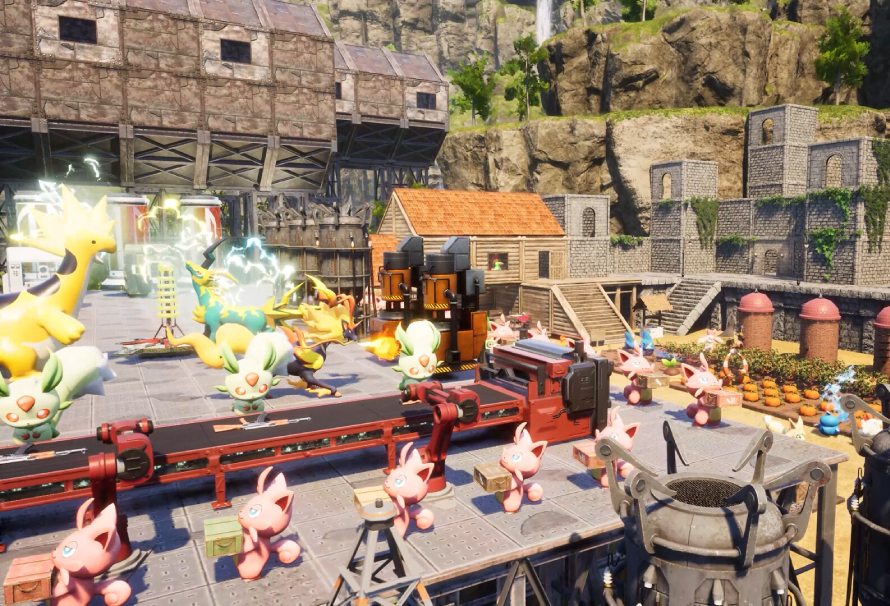
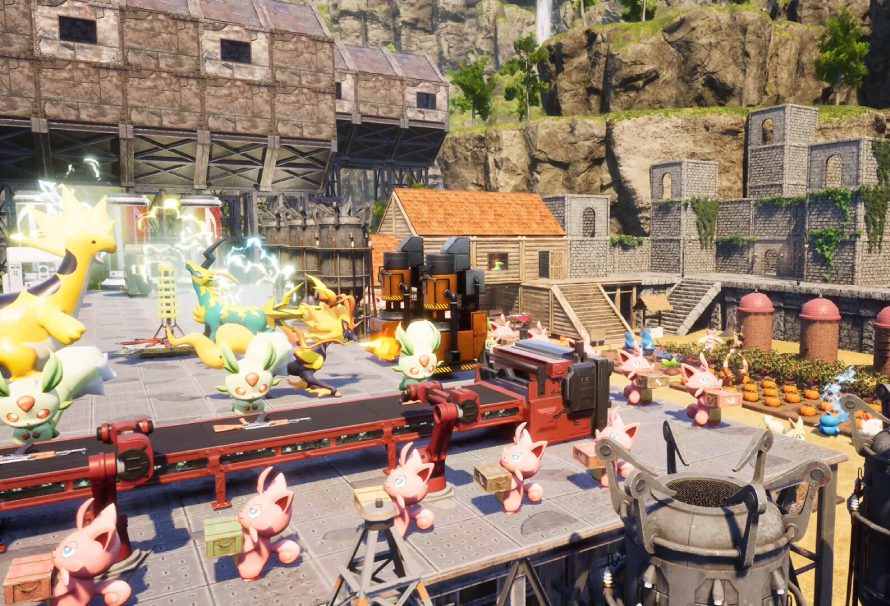
A tidy base is nice, but a functional base is better. Your Pals need to move between beds, food, workstations, storage, and resource nodes without getting stuck or wasting time.
Place storage close to production areas. Keep food accessible. Give your Pals enough room around crafting benches, farms, and mining spots. If workers keep stopping, wandering, or failing to reach tasks, your layout may be the problem rather than the Pals themselves.
As your base grows, think of it less like a house and more like a little production line. The smoother the layout, the less you’ll have to babysit it.
Follow Your Base Missions
If you’re ever unsure what to do next, check your base missions. These objectives are more than a tutorial checklist. Completing them increases your base level, which unlocks more working Pal slots and expands what your settlement can do.
A higher base level means more production, more flexibility, and more room to specialise. It also gives you a clear path through the early game, especially when Palworld starts throwing a dozen possible distractions at you.
When in doubt, progress the missions, improve the base, then head back out stronger.
Catch Plenty Of Pals
Yes, you should absolutely catch loads of Pals. Different Pals have different elements, work suitabilities, passive traits, and partner skills, so variety is incredibly useful.
Catching duplicates is also worthwhile. Extra catches can provide experience bonuses, give you better passive skill options, and help you find stronger workers or fighters. Even if you already have one of a species, another might have better traits or be more useful for breeding later.
Try to build a team that covers different elements and roles. You’ll want combat Pals, base workers, mounts, gatherers, miners, kindling specialists, and more. The broader your collection, the easier it is to respond to whatever the game throws at you.
Learn The Element Matchups
Palworld’s elemental system matters, especially once fights start getting tougher. Pals and attacks have elemental strengths and weaknesses, so bringing the right team can make a huge difference.
You don’t need to memorise everything immediately, but you should start paying attention to what works. If a boss or wild Pal is giving you trouble, swap in Pals with a better elemental matchup rather than brute-forcing the same fight over and over.
A balanced team will save you resources, reduce failed captures, and make boss fights far less stressful.
Upgrade Your Gear Regularly
Your Pals will do a lot of fighting, but you still need to look after yourself. Better armour can improve survivability, and some gear offers protection against environmental hazards like heat or cold.
Weapons matter too. Even if you prefer letting your Pals handle combat, your own damage can help finish fights, weaken targets for capture, or save you when things go sideways. Keep an eye on new crafting options as you unlock technology, and don’t forget to repair or replace gear before heading into dangerous areas.
A good rule is simple: if you’re entering a new biome or fighting stronger enemies, check your equipment first.
Travel Smart
Palworld’s map is big, and walking everywhere gets old quickly. Early on, activate every fast travel statue you find. Even if you don’t need it immediately, you’ll thank yourself later when you need to return to an area for resources, bosses, dungeons, or rare Pals.
Mounts are just as important. A reliable ground mount makes exploration faster, while a flying mount can completely change how you move through the world. Once you have access to rideable Pals, prioritise the ones you’ll actually use and craft the relevant saddle.
The less time you spend trudging across familiar ground, the more time you can spend doing the fun stuff.
Don’t Hoard Technology Points Blindly
Technology points unlock new structures, weapons, gear, saddles, and base tools, but not every unlock is equally useful right away. Prioritise upgrades that solve immediate problems.
Need better movement? Unlock a saddle for a Pal you actually own. Struggling with production? Unlock better workstations. Taking too much damage? Look at armour. Running out of food? Improve farming and cooking.
It’s easy to unlock something just because it looks shiny, but practical upgrades usually pay off faster.
Prepare Before Bosses And Dungeons
Before heading into a boss fight, dungeon, or dangerous new area, do a quick checklist. Bring food, repair your gear, rest your Pals, check your ammo or weapon durability, and make sure your team has sensible elemental coverage.
Palworld can go from peaceful resource gathering to absolute disaster very quickly. A little preparation makes those disasters much easier to survive.
Final Thoughts
Palworld gives you a lot of freedom, and that’s part of the fun. You can build a cosy production hub, chase rare Pals, optimise your team, explore every corner of the map, or simply cause a bit of creative chaos.
The best beginner advice is to make the game work for you. Adjust the settings, build somewhere practical, catch more Pals than you think you need, and keep upgrading your base, gear, and travel options. Do that, and your first steps into Palworld’s full release should be much smoother.
Jason Coles
Jason likes to focus on roguelikes and co-op games; in a dream world he’d make a living writing about Dark Souls. As well as being a writer he also does personal training and accounting and can occasionally be seen on other people’s streams. Being a big fan of fluffy things means he has two cats, both of whom refuse to let him sleep, but at least they are cute.
Remember that photo which stirred all sorts of talk about Amazon’s upcoming God of War TV series? Well, the show won’t look like that anymore—the role of Kratos is set to be recast since actor Ryan Hurst tore a bicep on set, according to Deadline. Anonymous sources in that story claim Hurst has had surgery and is recovering.
As Deadline points out, this comes after Hurst “underwent a physical transformation” and put on 40 pounds of muscle specifically to play Kratos. But for such a physical role and with a child actor (who’s in every scene with the character, one assumes) to consider, it seems starting over is the simplest way forward for Amazon.
Production paused right after the injury and is planned to restart by mid-October with someone new in the role. In other words, any scenes that have already been shot will have to be redone—with four episodes already wrapped, that’s a huge reset. After a mixed reaction to that initial photo, Hurst won’t get the chance to prove his naysayers wrong in the end.
Latest Videos From
Hurst is also in Christopher Nolan’s new Odyssey movie as Mentor, and theater-avoidant gamers may know him as Thor in God of War: Ragnarok or Beta in AMC’s Walking Dead series. It’s not clear who will take his place, but given the reported production schedule, we won’t be waiting long to find out.
Setbacks aside, at least the show will be easier to experience on your PC than God of War Laufey, which seems likely to forego the PC.
Keep up to date with the most important stories and the best deals, as picked by the PC Gamer team.
The original lawsuit was filed in 2023 and claimed Twitter hosted thousands of cases of copyright infringement.
Donny Hery/Shutterstock
A three-years-long legal battle between X and major music publishers has quietly come to an end. In court documents filed by both X and a group of music publishers, both sides opted to dismiss their opposing lawsuits while not disclosing the terms of the settlement (via Reuters).
The feud began in 2023 when a group of music publishers led by the National Music Publishers Association (NMPA) sued the social media platform, which was still known as Twitter at the time. The $250 million lawsuit claimed that Twitter allowed for rampant cases of copyright infringement from its users, while also not doing anything to stop it. Notably, Twitter was one of the only major social media platforms that didn’t have a licensing agreement with music publishers.
In response, Twitter, now known as X, countered with its own lawsuit nearly three years later, claiming that these music publishers engaged in anticompetitive practices that would force the platform to license their songs for higher rates. Even before the latest agreement to dismiss both suits, X requested as recently as last month that the court dismiss the case claiming it shouldn’t be held responsible for user piracy.
So far, neither side has offered any explanation for the dismissals. However, court documents show that X and the music publishers requested to dismiss both suits “with prejudice,” so that they’re permanently dismissed and won’t be refiled. We’ve reached out to NMPA for comment and will update the story if we hear back.
If you didn’t know any better, you would think the cast of The Odyssey risked life and limb to bring Homer’s epic to life on the big screen. Waves crash around its actors, armor is lugged up hilltops, and – for one final sting in the tail – they were some ferocious cameos during the movie’s feted Cyclops sequence.
For Himesh Patel, who plays Odysseus’ second-in-command Eurylochus, that sense of peril only enhanced his performance – aided by the trust of director Christopher Nolan.
“I mean it adds a sort of visceral quality to it, which you see on screen that you don’t really see that often,” Patel recounts to GamesRadar+. “He’s a rare filmmaker, in that he trusts we have a certain level of common sense to keep ourselves safe, but also that he’s got the best stunt teams around, the best marine teams around, that kept us safe and kept us from ever being in any real danger.”
Latest Videos From
Patel adds, “That allows him to capture that sort of visceral reality of what it was like to be on the boat or be in the cave, that sort of thing. And then you have things like that swarm of bees outside the Cyclops cave, that was just real.”
Ah, yes, the bees. While your eyes may have been focused on Bill Irwin’s lumbering, titanic Cyclops as Odysseus and his men bid to escape the cave it calls home, you may have noticed the low buzz of bees that soundtrack much of their entry into the precarious situation.
Far from being something added in post-production, their presence was something that occurred naturally in a moment of serendipity that wouldn’t look out of place in one of the Greek myths’ many godly interjections.
“When we broke for lunch and they were like, ‘Just wait five minutes.’ The sound team captured the sound of the bees. Sometimes you have these beautiful accidents.”
Bringing all the latest movie news, features, and reviews to your inbox
Patel also reveals that the set-piece was filmed in Nestor’s Cave in Greece, otherwise known as the “birthplace of Zeus.”
On his arrival to ‘set’, Patel was taken aback by how the setting of perhaps the audience’s most-anticipated moments was transformed for The Odyssey.
“The first day we got there, we basically turned it into a soundstage,” Patel recalls. “They’d found a tiny gap at the top where they could run some cables in, and basically harness a rig of lighting. It was just kind of amazing to be going there and reminding ourselves that we’re in an actual cave, we look outside and there’s actually the Mediterranean around us.”
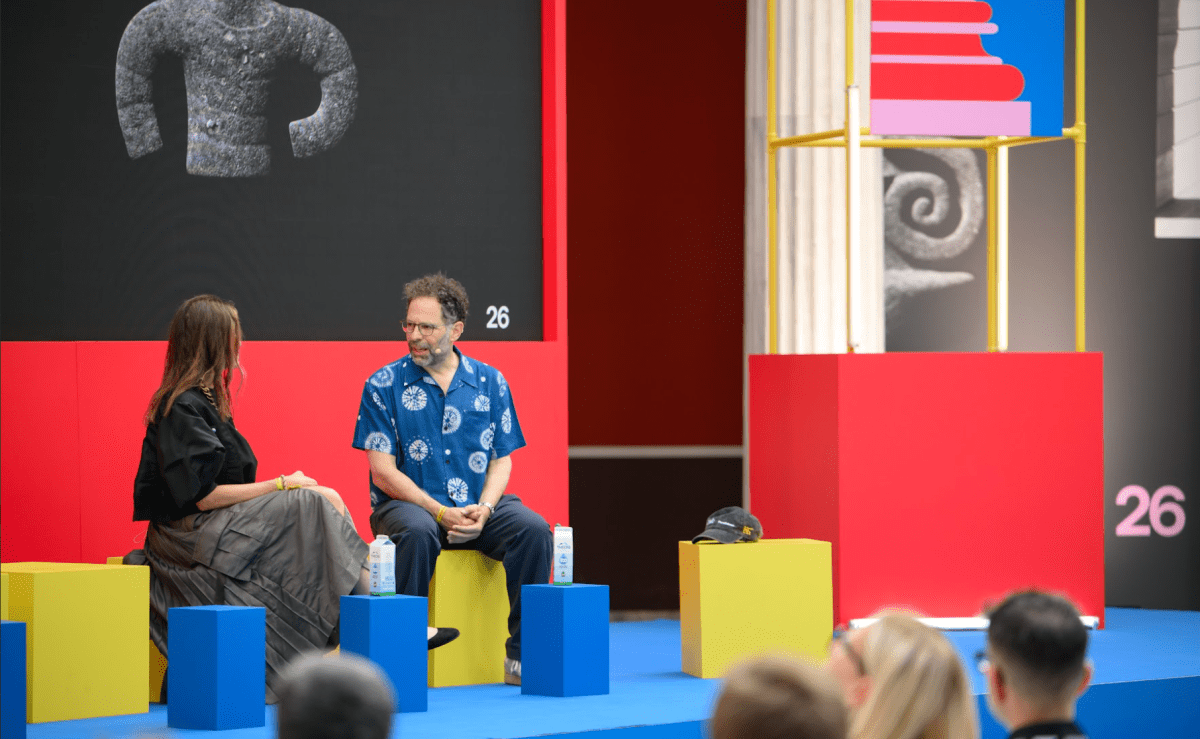
In late May, Neil Rimer said something during a sit-down I had with him in Athens that I haven’t been able to shake. At a vibrant new tech festival in the city, talking about the wealth piling up around AI, he said he has “a strong sense that there will be some sort of a redistribution.” He continued on. “It’ll either be voluntary or it’ll be involuntary, but it’ll happen, and I hope it’s voluntary,” he told me, adding that he thinks tech leaders “can play a leading role in seeing that through.”
Coming from most people, that would sound like standard-issue populism. Coming from Rimer, a co-founder of Index Ventures, one of the most successful venture firms of the last three decades, it seemed a striking thing to say in public.
Rimer stepped back from day-to-day investing in 2021, and these days spends much of his time in Athens, where his wife is from and where his children treasure their Greek passports. He turned up to our interview in a rumpled button-down and jeans, not the quarter-zips and fine knitwear that mark so many of his peers. Yet Index’s returns in recent years have been exceptional: the firm has raised roughly $15 billion from outside investors since its founding, and last year’s exits including Figma’s IPO and Google’s purchase of the cybersecurity firm Wiz reportedly netted Index roughly $9 billion.
Rimer has found ways to give back. He sits on the board of Endeavor Greece, which mentors entrepreneurs in emerging markets, and chaired the board of Human Rights Watch from 2019 to 2025. In late 2021, he and his father and two brothers gave $13 million to McGill University to renovate a campus building, now the Rimer Building, and found a new Institute for Indigenous Research and Knowledges.
In the meantime, his comment about redistribution comes at an odd moment, to be charitable, for giving. The Giving Pledge, the promise Warren Buffett and Bill Gates launched in 2010 to get billionaires to commit half their fortunes to charity, is becoming increasingly irrelevant. One hundred and thirteen families signed in its first five years, then 72, then 43, then just four in all of 2024, per a New York Times report in March that underscored how out-of-fashion philanthropy has become among some of the richest people in tech. (Noted that piece: “Elon Musk, the world’s wealthiest person, has said that his businesses ‘are philanthropy.’”)
The pattern appears to hold beyond the Pledge. Total American charitable giving hit a record $592.5 billion in 2024, but the number of Americans actually giving has fallen for five straight years, down 4.5% in 2024 alone, according to the Stanford Social Innovation Review. Two-thirds of households donated in 2000; roughly half do now, and Bank of America and Lilly Family School data shows even affluent-household giving has slipped, from 90% in 2017 to 81% last year.
The pattern shows up in Index’s own portfolio, too, which includes Anthropic. Business Insider recently asked a financial planner, Alex Caswell, whether his newly wealthy clients, many of them Anthropic employees tied to effective altruism, were pledging to give away the bulk of their fortunes. Anthropic matches employee donations of up to 25% of their equity to charity, and some of Caswell’s clients have used it, he told BI, but most weren’t building philanthropy into their plans at all; they were focused on angel investing or starting their own companies. “That’s what I’m seeing more than the desire to become philanthropic,” he told the outlet.
Unsurprisingly, the absence of voluntary giving is now running up against attempts to legislate the outcome instead. California voters will decide this year on a 5% one-time wealth tax that targets the state’s billionaires. Some, including Google founders Sergey Brin and Larry Page, have already moved their primary residences to South Florida to be on the safe side.
OpenAI is reportedly considering going public in 2027, and cynically, one reason among others may be that the tax, if passed, will calculate net worth based on an individual’s worldwide assets as of the end of this calendar year.
As unsurprisingly, there is plenty of opposition to any kind of wealth-redistribution measure of this scale, including by Governor Gavin Newsom, and including by economists who point out that many industrialized countries have repealed similar wealth taxes since 1990 after watching their wealthy residents skedaddle.
Other options on the table are as controversial. OpenAI has reportedly discussed handing the federal government a 5% equity stake, an idea CEO Sam Altman has framed as sharing AI’s upside with the public, but critics see it instead as a way to buy political cover in Washington. In either case, Silicon Valley has never been eager to put Uncle Sam on the cap table. Joked veteran investor Roelof Botha during a separate sit-down with this editor last year: “[Some] of the most dangerous words in the world are: ‘I’m from the government, and I’m here to help.’”
It’s worth thinking through how much wealth sits outside these mechanisms. Musk is worth just over $1 trillion, after SpaceX’s IPO last month made him the first person to reach that mark. Forbes counted 45 new AI billionaires in its 2026 rankings alone, worth a combined $2.9 trillion, and that’s before either Anthropic or OpenAI has gone public. In that same BI story about Anthropic employees, BI notes that once Anthropic and OpenAI complete their IPOs, their combined employees will hold enough wealth to buy nearly a third of all homes in the San Francisco metro area.
It feels unprecedented, but whether it represents an historic extreme is a matter of some debate. The share of wealth held by the top 1% of U.S. households hit 31.7% in the third quarter of last year, a record since the Federal Reserve began tracking the data in 1989, and roughly equal to what the other 90% of households outside the top decile held combined.
That’s still below the 45% the top 1% commanded at the Gilded Age peak in 1916. But narrow the lens to the tippy top, and the picture flips. Renowned economist Gabriel Zucman calculates that at the height of the Gilded Age, around 1910, America’s four largest fortunes were worth a combined 4% of U.S. GDP. Today, that same sliver of the population — now 19 households instead of four — is worth 14%.
Rimer’s two paths, voluntary or forced, have precedent from the last time American wealth concentration reached this level. In 1889, at the peak of the first Gilded Age, Andrew Carnegie published an essay arguing that a rich man should treat his fortune as a trust to be distributed for the public good within his own lifetime, calling it a disgrace to die wealthy. That essay, “The Gospel of Wealth,” became the founding document of modern philanthropy and the intellectual ancestor of the Giving Pledge.
It didn’t hold off the other path for long, though. By the mid-1930s, Louisiana Senator Huey Long had built a national following behind a program called Share Our Wealth, demanding steep taxes on the rich to fund a guaranteed income for every American. Worried about losing working-class support to Long, Franklin Roosevelt pushed through what the press called the “soak-the-rich tax,” raising the top marginal income tax rate as high as 79%. It redistributed less than Long wanted, but it remains the clearest example in American history of politically forced redistribution arriving once voluntary giving failed to adequately address the pressure building underneath it.
None of this is news to Rimer, who has spent his career in tech. What’s more curious to him is “the moral center of tech companies,” a fascination he traced to being a Stanford undergrad in 1984, when Apple discounted the first Macintosh for students and Steve Jobs and Apple’s other founders were, in his words, “heroes” for building something he felt was genuinely good for the world.
What troubles him now, he said, is hearing his own children talk about certain tech companies the way an earlier generation talked about defense contractors or cigarette makers.
Critics may note that Rimer — as an investor in Anthropic and other tech companies — is a direct beneficiary of the windfall he says will eventually need to be shared. But he’d rather see his fellow beneficiaries choose to give some of the money back than have it taken from them. There’s an easy way to do this and a hard way, and Rimer is betting on people picking the easy one before history picks it for them.
When you purchase through links in our articles, we may earn a small commission. This doesn’t affect our editorial independence.
People loitering around your home can be quite scary. Even if you haven’t experienced a specific crime as of yet, you might worry about what the people hanging around might do, especially if there’s some crime in your area.
The good news is that there are solutions that will move people along non-confrontationally. In this guide, learn about 3 great devices that prevent loitering around your home.
1. The Mosquito Anti-Loitering Alarm
The best way to prevent any loitering around your home is with the Mosquito Anti-Loitering Alarm from Mosquito Loitering Solutions. This is a type of electronic siren that emits a unique sound that pulses four times per second, which is very irritating (but safe) to listen to. It doesn’t harm animals or travel through walls, but instead ensures groups of people do not linger in one specific area for too long. So, it can stop rough sleeping, homeless encampments, and general loitering. When strategically placed, this makes any home safer.
There are a couple of settings on this anti-loitering device, including an all-age and a teenager setting. The device itself comes in a discreetly coloured durable casing, and the sound itself can travel up to 30 meters in whichever direction it is facing (with a spread of 60 degrees). It won’t travel through walls, though, so you won’t hear it while you’re at home!
With Mosquito Loitering Solutions, you can also purchase additional protection and devices such as:
A protective cage for the alarm
Mounting brackets
A remote control fob
A timer
A detector
With these, you can create an all-around mosquito alarm system that fully protects your home whenever you need it to.
2. The Wall Mountable Ultrasonic Antisocial Deterrent from Brocott
Next is the Ultrasonic Antisocial Deterrent, which is a powerful unit that emits a high frequency that is particularly annoying to people under the age of 25. This annoys them a lot, so they are more likely to move on from around your home.
This device has an ultrasonic output, an acoustic range of 50m, and a weatherproof casing so that it stands the test of time. Keep in mind that, while powerful, this device from Brocott doesn’t have as many settings and comes preset, so it should only really be used if you want to target teenagers specifically.
3. The High-Pitched Noise Deterrent System from ABC Fire and Security
If you specifically have a problem with younger people loitering around your home, such as teenagers, then the high-pitched noise deterrent system from ABC Fire and Security may be a good option for you. It has a 100m range, which is much higher than the others listed in this guide, so it works best if you have a larger area around your home where there is a lot of loitering going on.
This device has a generator that produces a very high-pitched sound around it. While it’s predominantly for targeting young people, there are also adjustable settings if you want it to target people more generally. The device is shipped from the UK/France, but can be sent anywhere, as it’s legal in all countries around the world.
AI labs are shipping new models nonstop. Besides being better and faster than their predecessors, every new model isn’t guaranteed to be a major step change, despite how the company’s PR may wax poetic about them. Model strengths really emerge in context: Where are competitor models lacking or excelling? Which models have outstanding specialties, and which are just catching up to industry standards?
Our Model Release Tracker helps you make sense of where models stand relative to each other, and whether they’re worth a deeper look. While we don’t test every model or model update on this list, we’ll always include the key elements you need to know, along with our hands-on expert test, where applicable. We also include an Expert Score for certain models. Curious about how we test AI? Check out this breakdown of our process.
Here are the biggest model releases of 2026 so far and what to know about them. We’ll update this list whenever a notable new model arrives.
Kimi K3
Moonshot | July 16, 2026
What it does: At 2.8 trillion parameters, Kimi K3 is the largest open-source model on the market, designed for “long-horizon coding, knowledge work, and reasoning,” according to Moonshot’s announcement. For context, that’s bigger than DeepSeek V4 Pro, from the company that first made US AI labs nervous back in January 2025, at 1.6 trillion.
Most notably, Kimi K3 topped Anthropic’s Fable 5 on the Arena benchmark for front-end coding, which measures complex agentic coding tasks. That said, Moonshot itself noted that Kimi K3’s overall performance doesn’t top Fable 5, though the model does rival it and OpenAI’s GPT-5.6 in several individual benchmarks.
Moonshot plans to release the model’s weights by July 27.
Why it matters: Kimi K3’s competitive performance and record-breaking open-source size revive discourse on whether proprietary American frontier models are worth the cost. Fable 5 is $50 per million output tokens, while Kimi K3 is just $15. Still, open-source models lack the safety guardrails that proprietary models have; those risks are amplified by the fact that Moonshot is a Chinese startup (the US government is consistently suspicious of Chinese tech).
GPT-5.6
OpenAI | July 9, 2026
What it does: Fresh on the heels of its new voice model, OpenAI released the GPT-5.6 family, which the company said it cleared with the government a few days earlier. The family includes Sol, a new flagship model, as well as Terra, built for everyday use, and Luna, the economical choice of the three. OpenAI said Sol should optimize cost without sacrificing performance, and works with a new “ultra” setting that calls on several agents to speed up task completion.
Sol beat Fable 5, the current darling of the AI race, in adaptive and medium reasoning on UC Berkeley’s Agents Last Exam benchmark. Terra and Luna also “outperform Fable 5 at around one-sixteenth the cost,” OpenAI said in the release. The model family is about on par with Fable 5 in most major performance areas, though, including coding, work tasks, and general applications, but is still faster and cheaper, according to OpenAI.
Why it matters: That the government was involved in the timing of GPT-5.6’s release signifies a shift — not in explicit regulation, perhaps, but around a sort of informal partnership between labs and the Center for AI Standards and Innovation (CAIS). Set in motion by the back-and-forth around Anthropic’s Mythos and Fable 5, the voluntary testing agreement laid out in the Trump administration’s June executive order seems to be going swimmingly.
(Disclosure: Ziff Davis, ZDNET’s parent company, filed an April 2025 lawsuit against OpenAI, alleging it infringed Ziff Davis copyrights in training and operating its AI systems.)
Muse Spark 1.1
Meta | July 9, 2026
What it does: An upgrade to Meta’s first model, Muse Spark, which it released in April, 1.1 scored above Anthropic’s Opus 4.8 and OpenAI’s GPT-5.5 — both impressive models — for job tasks humans delegate to AI and financial analysis. While the rest of its benchmark results were more scattered, those areas are especially relevant to AI’s potential impact on white-collar work and the broader job market.
Why it matters: Unlike GPT-5.6, Muse Spark 1.1 doesn’t rival Anthropic’s Fable 5, but it does appear to focus on advancing “personal superintelligence,” Mark Zuckerberg’s somewhat open-ended niche in the agentic assistant world. For example, Meta’s release mentions using Spark 1.1 for “agentic dinner party organization,” peeling off from Anthropic and OpenAI’s focus on professional use cases and aligning itself more with autonomous capability for personal use, similar to Gemini Spark. Keeping pace with new models from other major labs will allow for better simultaneous testing, which should put the race at an interesting inflection point.
GPT-Live-1
OpenAI | July 8, 2026
What it does: OpenAI said in the release that the new model, which is accompanied by a light version (GPT-Live-1 mini), should make talking to ChatGPT in Voice Mode seem”more like having a real conversation.” Because GPT-Live can listen and speak simultaneously, according to OpenAI, that means you should be able to seamlessly interrupt the assistant with questions, pause mid-sentence, and ask ChatGPT to respond more slowly if you need.
OpenAI added that with GPT-Live, ChatGPT Voice can delegate more complex asks to models like GPT-5.5 if Live can’t handle them. Everyone can access GPT-Live-1 and GPT-Live-1 mini in ChatGPT for Android, iOS, and in the browser.
Why it matters: While technically a narrower upgrade than a brand-new, highly capable general model, GPT-Live-1 should improve the user experience of talking to AI assistants, an increasingly popular way to engage with them on the go. Eventually, a better voice model could also handle longer, more complex tasks, but we’ll have to wait and see.
Fable 5 costs more to use, but Anthropic included it as a promotion at no extra cost for paid users, including those on Pro, Max, Team, andselect users on Enterprise plans. Anthropic had originally set Fable 5 to shift to token-based usage on July 7 for paid users, but has extended paid plan access to July 12.
“As before, you can use up to 50% of your weekly usage limit on Claude Fable 5. After that, you can keep using Fable 5 with usage credits, or switch to another model to keep working within your remaining limits,” Anthropic explained in an X post.
After Fable 5 and Mythos 5 were pulled on advisement from the government just days after their release, the government re-allowed access to Mythos 5 for certain partners on June 26. On June 30, the Department of Commerce lifted export controls on both Mythos 5 and Fable 5, and Anthropic began restoring global access to Fable 5 on July 1 (Mythos 5 is still only available to specific institutions).
Sonnet 5
Anthropic | June 30, 2026
What itdoes: Pivoting from its recent focus on Opus models, Anthropic released Sonnet 5. According to Anthropic, Sonnet 5 can “make plans, use tools like browsers and terminals, and run autonomously at a level that, just a few months ago, required larger and more expensive models.” The company said it performs similarly to Opus 4.8, released a month ago, but costs less. Sonnet 5 starts at $2 per million input tokens but will jump to $3 per million in September. It’s now the default in Free and Pro plans and available to all other plan types (Max, Team, and Enterprise).
In keeping with the agentic focus of the AI industry at large, Sonnet 5 scores notably high on computer use benchmarks and agentic coding — testing found it completed complex tasks that earlier Sonnet models couldn’t. It also comes with safeguards implemented automatically, a nod to both recent PR around Mythos and overall improvements in general intelligence.
Why it matters: With the rate of AI model development continuing to accelerate, it’s a fair bet that Sonnet 5 is in fact a significant upgrade over Sonnet 4.6, which was released back in February (eons ago in current shipping time). The timing of this release is also significant; Anthropic noted that Sonnet 5 “has a much lower ability to perform dangerous cybersecurity tasks than our current Opus models,” perhaps a stabilizing mention after the complex rollout of its powerful Fable 5 and Mythos 5 models. Ironically, however, Sonnet 5 showed a higher rate of misaligned behavior than Mythos Preview.
Fable 5 and Mythos 5
Anthropic | June 9, 2026
What it does: ZDNET senior contributing editor David Gewirtz called Fable 5 a “defanged” version of Mythos, made safe for public use. Anthropic released Mythos 5 to those who already had Mythos Preview access through Project Glasswing. Fable 5 is restricted from responding to high-risk queries about topics like cybersecurity and biological weapons, but still “Mythos-class,” which, by Anthropic’s telling, means a step change in capability. As for Mythos 5, Anthropic said it had plans to expand access beyond initial partners through a systematic program. But both models were pulled barely four days after their release on orders from the US government.
Why it matters: The models have created plenty of commotion, not just because of their supposed basis in Mythos and temporary restriction. Fable 5 beguiled safety testers who were unaware that the model was set to downgrade to Opus in response to certain questions, which created trust issues between researchers and Anthropic. Despite being guardrailed, we now know Amazon researchers jailbroke Fable 5 and communicated with the White House to alert Anthropic, though Anthropic framed this incident as “narrow” in their understanding.
While the details remain unclear, it’s a rare instance of government authorities intervening in an American AI product in public, which could mean Mythos-level models have caused a shift in the relatively hands-off approach to AI labs the Trump administration has had thus far.
MAI-Thinking-1
Microsoft AI | June 2, 2026
What it does: At its Build developer conference, Microsoft said that this new 35-billion-parameter model is, unsurprisingly, designed for multi-step agentic tasks. It scored similarly on the SWE Bench Pro benchmark test for coding as Anthropic Opus 4.6. The company also noted that enterprise users can trust this model for any use because it was trained only on clean, commercially safe data — an important tidbit given mounting AI copyright lawsuits.
Why it matters: This is the first reasoning model from Microsoft AI, a notable milestone for any AI lab, but especially so this late in this race. Most labs have created multiple advanced reasoning models at this point, so it’s unclear yet where Microsoft’s approach stands relative to those, though the company is focusing on appealing to enterprise clients specifically.
Claude Opus 4.8
Anthropic | May 28, 2026
What it does: Replacing Opus 4.7 starting May 28 (at the same price), Opus 4.8 offers faster thinking modes for one-third the cost of the earlier version, according to Anthropic. Like most of Anthropic’s models, 4.8 prioritizes coding abilities, scoring higher than 4.7 on two coding benchmarks but not fully besting OpenAI’s GPT 5.5. It also “reaches new highs on our measures of prosocial traits like supporting user autonomy and acting in the user’s best interest,” the company noted in the release, though definitions for what that means remain murky.
Why it matters: Anthropic has always prioritized model safety and interpretability, but appears to be further emphasizing that standard with this release. The company said Opus 4.7 had a 92% honesty rate, in addition to being less sycophantic and hallucination-prone overall. The fact that it claims 4.8 shows “substantially” lower rates of misalignment than 4.7 indicates an increasingly high standard for model safety, especially because Anthropic compared 4.8’s alignment to that of Mythos Preview.
Gemini 3.5 Flash
Google | May 19, 2026
What it does: At Google I/O, the company launched its 3.5 model family, designed for building agents (following suit with where all of the AI industry is focused at the moment). The first model available now is Gemini 3.5 Flash, which beat Gemini 3.1 Pro on a few coding and agentic benchmarks and now undergirds AI Mode in Search and the Gemini App as the default model. Like all Flash models, it’s optimized for speed and a cheaper, more lightweight user experience, but can still handle “long-horizon” agentic tasks, Google noted. 3.5 Pro should roll out in June.
Why it matters: The most important place 3.5 will operate is in Search. As Google doubles down on an AI-first search experience, the models running it shape the responses people will passively consume every day, meaning it has to be especially up to snuff in terms of accuracy and hallucinations. Notably, though, the System Card for 3.5 Flash lacks any mention of hallucination rate or sycophancy.
GPT-5.5 Instant
OpenAI | May 5, 2026
What it does: OpenAI said in its announcement that the lighter version of OpenAI’s just-released GPT-5.5 is less verbose than its predecessor, GPT-5.3 Instant. It also touted fewer hallucinations and improved factuality, saying “GPT‑5.5 Instant produced 52.5% fewer hallucinated claims than GPT‑5.3 Instant on high-stakes prompts covering areas like medicine, law, and finance.”
Why itmatters: GPT-5.5 Instant replaces GPT-5.3 as the default model in ChatGPT. Again, while the expectation is that each new AI model gets more efficient, easier to use, and makes up less stuff, a significant improvement in hallucinations for a model most people use for fast queries could mean less misinformation spreading among the masses. That’s especially critical given how many people are using ChatGPT for everyday health questions, for example.
(Disclosure: Ziff Davis, ZDNET’s parent company, filed an April 2025 lawsuit against OpenAI, alleging it infringed Ziff Davis copyrights in training and operating its AI systems.)
Nemotron 3 Nano Omni
Nvidia | April 28, 2026
What it does: The latest in Nvidia’s open Nemotron family, this model provides agents with multimodal input. That means they can “perceive and reason across visual, audio, and textual inputs within a single shared perception‑to‑action loop,” according to Nvidia, thereby unifying multiple capabilities into a single system.
Why itmatters: Normally, systems of agents need to use separate models for speech, vision, and text, meaning they jump across documents, video, and audio to complete multi-step tasks. That slows down workflows, undermines the context agents gather, and racks up inference costs. Nvidia’s approach, if it works, would streamline this process and reduce token use, saving you money. Try it on Hugging Face.
GPT-5.5
OpenAI | April 23, 2026
Expert Score: 93/100
What it does: ZDNET tester-in-residence David Gewirtz technically gave GPT-5.5 an A- score, but said it “can be reductively described as better and faster than GPT-5.4,” which is hopefully the bare-minimum expectation for a new model. Specifically, though, the model got better at agentic coding, clearly identifying concepts, scientific research, and factual accuracy.
Why it matters: While the model itself may not be leaps and bounds ahead of its immediate predecessor, the quick turnaround from 5.4 to 5.4 — less than two months — indicates how rapidly agentic coding is accelerating OpenAI’s model release cycle. As ZDNET’s David Gewirtz breaks down, the company, much like other frontier labs using AI to build AI, is shipping updates at an exponentially increasing rate.
ChatGPT Images 2
OpenAI | April 23, 2026
What it does: Soon after sunsetting Sora, its generative video model and social platform, OpenAI somewhat confusingly announced Images 2. ZDNET model tester David Gewirtz got an early look at Images 2 before its release and was impressed. While he didn’t give this model a formal Expert Score, he said it’s fun, a huge leap, and actually useful for work.
Why it matters: OpenAI seemed to be getting out of the more consumer-minded AI product game when it discontinued Sora, having been beaten by Anthropic at securing lucrative enterprise contracts. That OpenAI still came out with Images 2 within that redirection narrative indicates that it sees image generators as relevant enough to enterprise AI — especially on the heels of Anthropic’s Claude Design.
Claude Opus 4.7
Anthropic | April 16, 2026
What itdoes: Arriving relatively quickly after Opus 4.6, this model boasts new highs in honesty, reduced sycophancy, and hallucinations. It also appears to have a knack for cybersecurity, as it backs the new Claude Security, released shortly after the model itself — but no, it’s not Mythos, as many suspected.
Why it matters: Hallucinations and honesty are among the most difficult, hard-to-solve issues plaguing even the best models. For Anthropic to claim such significant gains in those areas is no small feat for an AI lab that takes safety seriously.
Claude Mythos (Preview)
Anthropic | April 7, 2026
What itdoes: This is a tough one because Mythos isn’t actually available to the public. Anthropic created quite a media storm when it positioned the new general-purpose model as too powerful to release as usual. While the model is apparently a step change from earlier Anthropic models, the company was especially alarmed because of the security threat it posed, stating that “it is strikingly capable at computer security tasks.”
In response to that, Anthropic spearheaded Project Glasswing, a collaborative effort with several rival AI labs, including Google, Nvidia, and Microsoft, as well as security authorities like Palo Alto Networks, “to help secure the world’s most critical software, and to prepare the industry for the practices we all will need to adopt to keep ahead of cyberattackers.”
Why it matters: If we’re to believe Anthropic’s guidance that Mythos poses a significant threat to the world’s software — so much so that only a select few partners can access it — cybersecurity apparatuses as they stand may not be prepared to meet the rapidly evolving frontier of model capabilities. Mythos may not be the only model of its caliber, but simply the first of many to come once other labs achieve similar breakthroughs.
What itdoes: OpenAI framed this new model, released barely three months after GPT-5.2, as specifically designed for professional work. According to the company’s own testing (which should always be taken with a grain of salt until verified by a third party), GPT-5.4 matches or outperforms human professionals 83% of the time.
Why it matters: As AI companies focus more on gaining enterprise trust (and contracts) while lauding what agentic AI can do, they need models that can handle complex work-related tasks with minimal risk, delay, or prohibitively high costs. Any model advancement that shows prowess in professional workflows has a better chance of being taken seriously by companies struggling to adopt AI, though nothing guarantees seamless integration.
What itdoes: This model quickly redefined the standard for autonomous agentic work, especially for coding. That’s no surprise given Anthropic’s authority in building models especially adept at programming tasks. Opus 4.6 also demonstrated improvement in complex, longer-running tasks overall.
Why it matters: Opus 4.6’s ability to handle tasks better on its own means you can reliably offload more of your workflow to it — something agentic offerings usually struggle with.
What itdoes: This new coding model — which OpenAI said helped build and debug itself — can be interrupted and redirected mid-task, which, if true, is a huge boon for developers using it on complex or shifting projects with tons of trial-and-error. GPT-5.3-Codex also boasts run times of over a day and a better grasp on user intent.
Why it matters: OpenAI is trying to catch up to Anthropic’s lead in agentic coding (and, coincidentally or not, released 5.3 Codex on the same day as Anthropic launched Opus 4.6). While ZDNET experts often prefer Claude Code to other tools for vibe coding, OpenAI’s rumored shift toward enterprise clients and away from fun consumer tools could eventually close that gap.
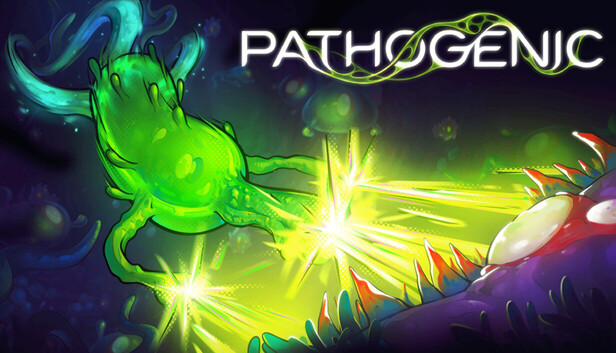
In Pathogenic, you are the disease. Experience a visceral 2D roguelike twin-stick shooter where you play as a lone parasite fighting a desperate war against the immune system. Your goal is simple: infect and conquer your human host. To survive, you must adapt. Hunt down enemy cells, rip out their organelles, and graft them onto your own body. Evolve from a simple cell into a complex engine of destruction. Create powerful, game-breaking builds and become the ultimate pathogen.
CREATE YOUR OWN PATHOGEN Loot, graft, and assemble your parasite from dozens of unique organelles. Combine flagella for movement, mitochondria for power, secretors for ranged attacks, and spikes for melee combat. Chain organelle effects and discover powerful synergies to build an unstoppable disease vector.
FIGHT THE IMMUNE SYSTEM Battle a diverse roster of enemies, from basic immune cells like macrophages and T cells to rival parasites such as tapeworms or protozoa. Formidable bosses are lurking deep within the host’s organs.
METAPROGRESSION Collect plasmid fragments to permanently upgrade your parasite’s plasmid tree between runs. Each parasite will have it’s own upgrade tree allowing for a range of builds to suit your preferred playstyle.
EXPLORE A MICROSCOPIC WORLD Navigate the procedurally generated organic landscape of the human body. Travel through distinct biomes like the branching pathways of the lungs, the pulsating chambers of the heart, and the complex neural network of the brain..
Screenshots
SystemRequirements
Minimum Requires a 64-bit processor and operating system
OS: Windows 10 64-bit
Processor: Intel Core i5-6500 / AMD Ryzen 3 1200 or equivalent
Memory: 8 GB RAM
Graphics: GeForce GTX 1050 / Radeon RX 560
DirectX: Version 12
Storage: 2 GB available space
Support the game developers by purchasing the game on Steam
InstallationGuide
TurnOff Your Antivirus Before Installing Any Game
1 :: Download Game 2 :: Extract Game 3 :: Launch The Game 4 :: Have Fun 🙂