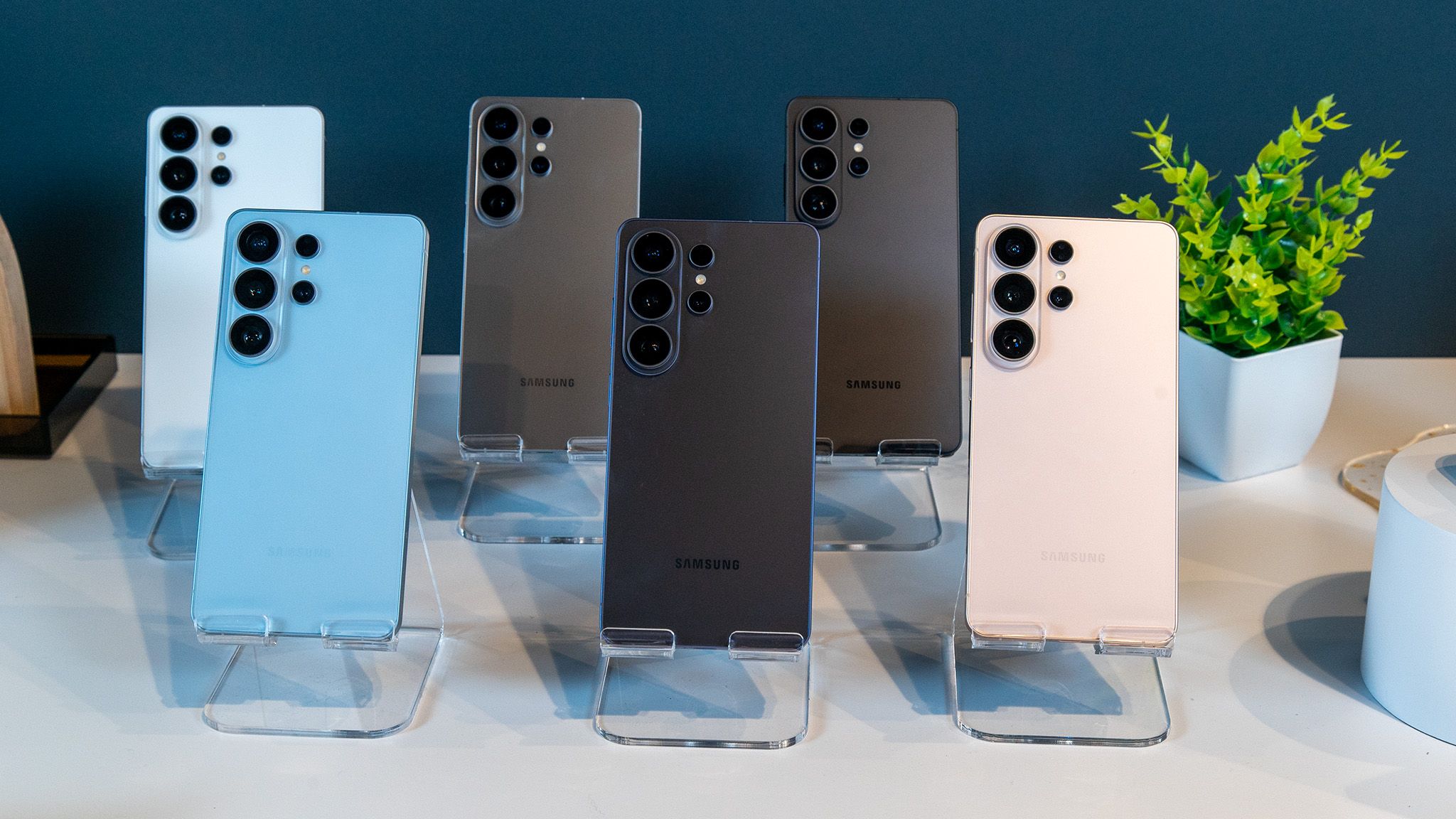
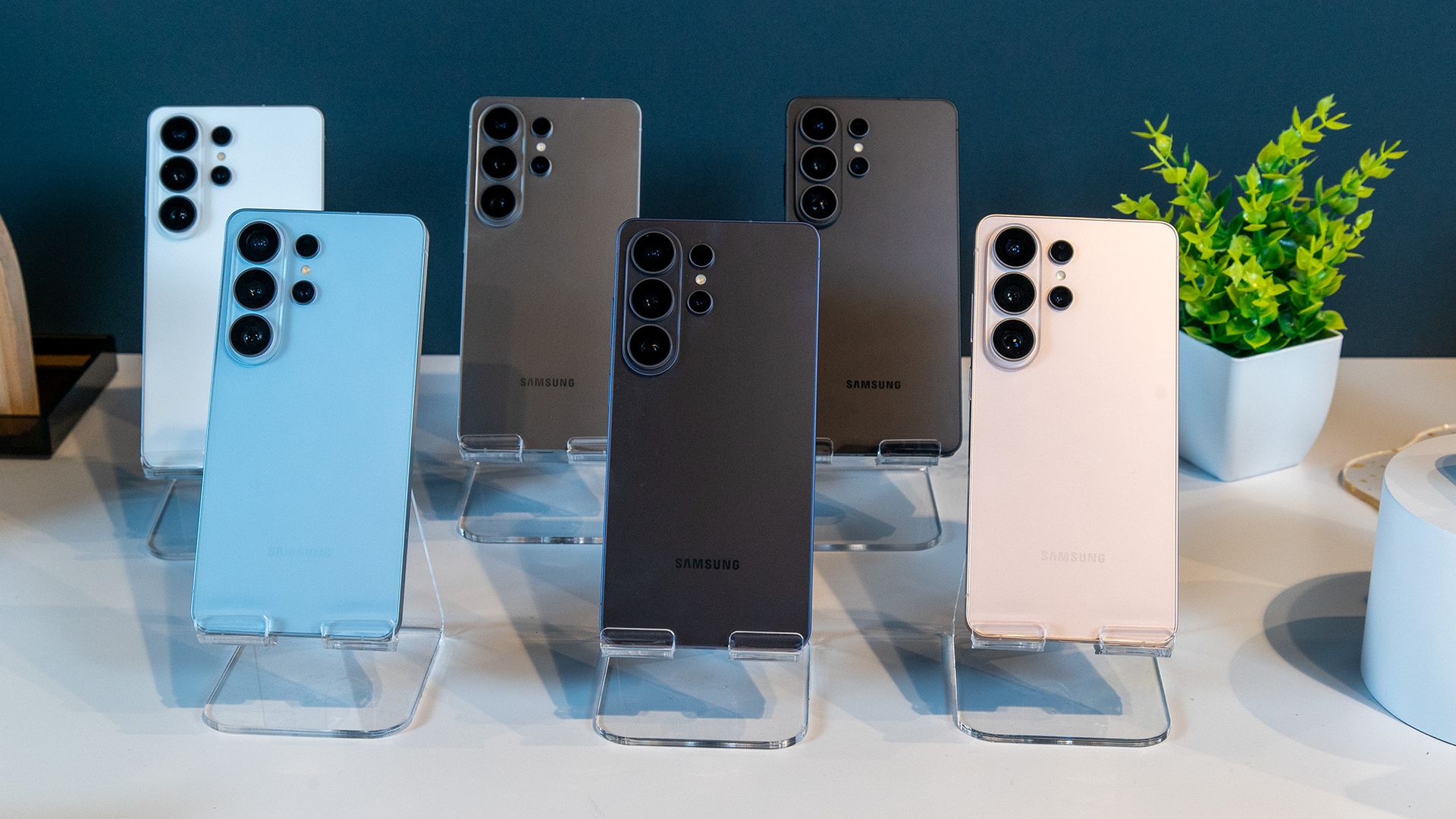
The Galaxy S27 Ultra will reportedly launch in Black, White, Blue, and Light Pink.
These initial options are designated as “base” colors, meaning they should be available through general carrier and retail channels rather than locked to Samsung’s website.
Following Samsung’s typical playbook, additional store-exclusive finishes will likely follow at launch beyond the core four.
The rumor mill is already buzzing with Samsung’s next high-end flagship, and the latest details are about the color options. According to a new leak, the upcoming Galaxy S27 Ultra will be available in four standard colors: black, white, blue, and light pink.
These colors, as per leaker Ice Universe, are said to be the four “base” colors of the phone. That language may suggest that they’re meant for broader retail distribution rather than being exclusive to Samsung’s online store.
Exclusive:
Samsung Galaxy S27 Ultra base color options:
Black, Blue, Light Pink, White.October 5, 2026
The exact shades, however, are still unknown, so there’s still no confirmation whether the blue will be like the Galaxy S26 Ultra’s Sky Blue or if the pink will be anything like its Pink Gold finish.
Latest Videos FromAndroid Central
Samsung could have even more colors in store. The Galaxy S26 Ultra came in four standard colors: Black, Cobalt Violet, Sky Blue, and White, plus Pink Gold and Silver Shadow, which are only available on Samsung’s online store. That said, more S27 Ultra color options are a real possibility.
What’s particularly interesting here is the rumor that Pink Gold might be moving from an online-exclusive finish to Light Pink possibly being one of the S27 Ultra’s main colors. If Samsung does release it widely, pink could be a much more prominent color in its Ultra lineup than in recent years.
The color leak also arrives as Samsung is reportedly gearing up for a bigger visual overhaul for the S27 Ultra, including a horizontal camera bar instead of the current camera setup.
Samsung hasn’t officially confirmed the colors or the phone yet. More leaks are expected before the Galaxy S27 Ultra arrives in early 2027.
Get the latest news from Android Central, your trusted companion in the world of Android
Latest Galaxy S27 Ultra leak reveals the possible colors available for the upcoming flagship.
Leaker Ice Universe mentions the phone would come in black, blue, light pink, and white.
There’s little clarity on the exact finishes of these “base colors.”
Update: October 5, 2026 (08:50 AM ET): After sharing the initial set of colors, Ice Universe has added that there would also be another “special” color: Violet.
Original article: October 5, 2026 (07:53 AM ET): There’s no dearth of Galaxy S27 leaks, especially ones talking about the upcoming changes to the design of the Pro and the Ultra models. A more recent leak now adds a missing piece to the puzzle, listing official colors for the Galaxy S27 Ultra.
Leaker Ice Universe has just shared what they believe to be the official colors of the Galaxy S27 Ultra. According to the leaker, the upcoming Samsung flagship will come in four colors: Black, Blue, Light Pink, and White. The Light Pink here is a new addition and could possibly replace the Deep Purple we saw with the Galaxy S26 Ultra. Pink isn’t entirely new to the Ultra, too, since the S26 Ultra gets a Pink Gold colorway.
The leak is heavy on brevity and does not divulge details about the exact shades, especially whether this blue will differ from the S26 Ultra’s Sky Blue. Given the iPhone 18 Pro also gets a light blue, we could expect Samsung to pick another palette. Similarly, it’s low on detail when it comes to the other colors. The leaker also doesn’t talk much about the finishes for these colors. However, they use the word “base” here to describe the colors, suggesting there might be some variations or specifications we hear about later.
Since the smaller Galaxy S27 Pro is expected to mirror the Ultra in terms of the design — and most of its specifications, there’s a good chance both devices also get the same color selection. Along with these, we can also expect some colors exclusive to Samsung’s online store that probably won’t be available through other sources.
Thank you for being part of our community. Read our Comment Policy before posting.
As AI agents move from experiments into everyday development, increasingly capable open models are shrinking to fit on more devices, giving builders more to run locally.
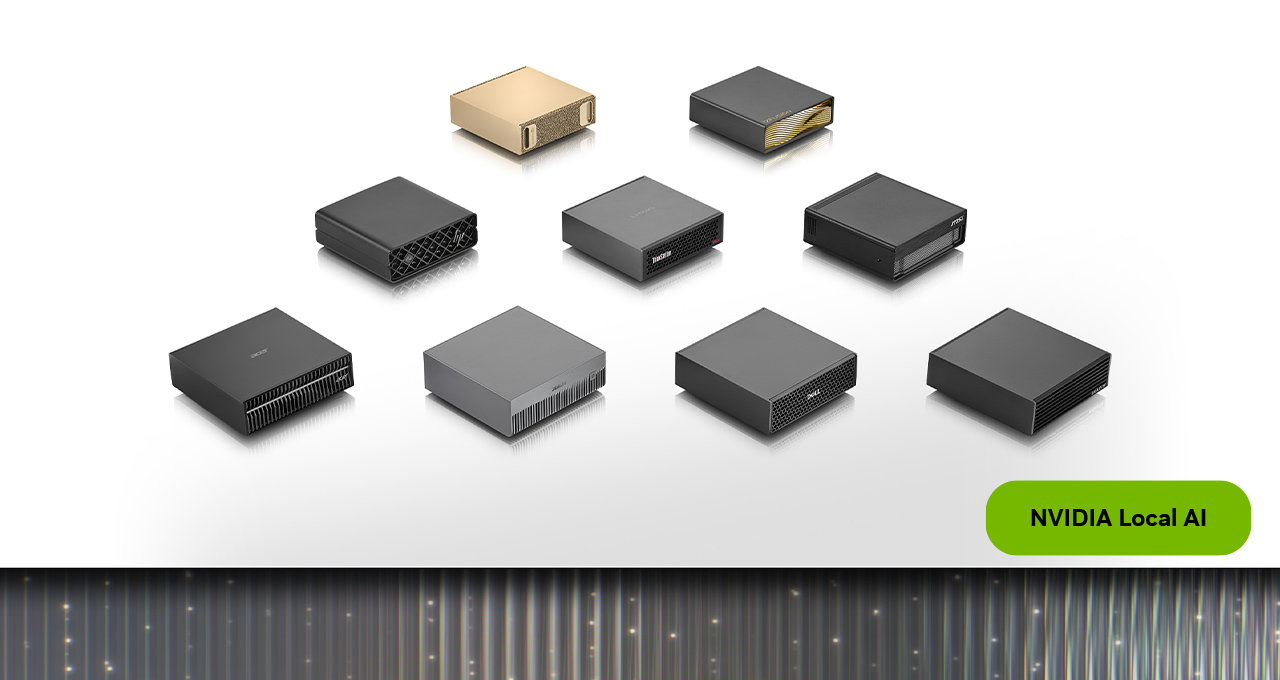
Coming this month, NVIDIA DGX Spark will be available with 64GB of unified memory from top manufacturer partners — Acer, ASUS, Dell, Gigabyte, HP and MSI — giving developers, researchers and AI enthusiasts a new configuration with DGX OS and the NVIDIA AI software stack ready to use from day one.
The new SKU runs capable local agents on device — privately, without cloud dependency. And when workloads grow, two units can cluster together via NVIDIA Sync Cluster Assistant without any additional setup.
A New Starting Point for Personal AI Supercomputing
DGX Spark combines NVIDIA Grace Blackwell compute, unified memory, NVIDIA ConnectX-7 networking and an NVIDIA CUDA-accelerated AI software stack in one system. It’s a complete local AI platform for agents, inference, fine-tuning, data science and edge development.
The compact, personal AI supercomputer provides a place to experiment with models and developers’ own data without turning to a cloud instance for every task.
The new 64GB configuration, available exclusively from manufacturer partners, keeps the platform at an accessible price point while retaining the GB10 Grace Blackwell Superchip, DGX OS and full NVIDIA AI software stack — same as the 128GB model. It supports up to 100-billion-parameter models and the agentic applications built on them, fully on device.
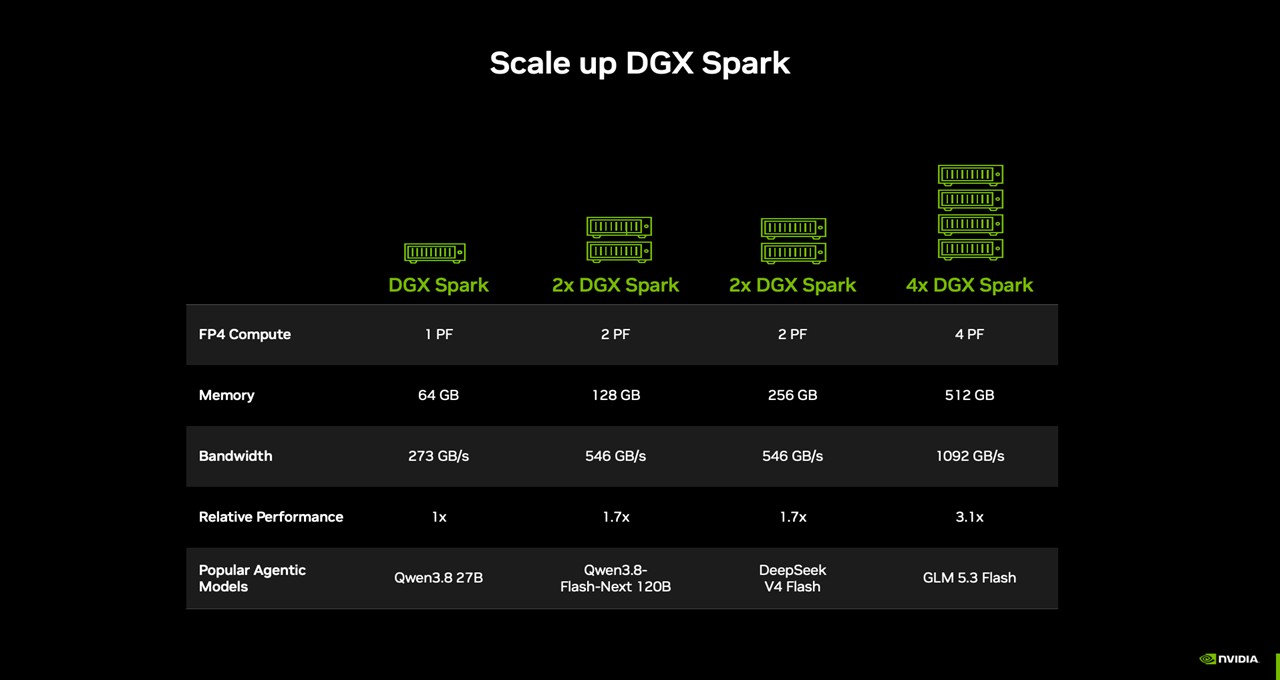
Two 64GB units clustered together don’t just double the memory. In NVIDIA’s Qwen 3.8 27B test, two clustered 64 GB systems delivered up to 1.7x performance compared with a single system, with room to keep scaling as workloads demand.
DGX Spark ships ready for agent development from day one — NVIDIA Agent Toolkit, CUDA-X AI libraries, Nemotron open models, and popular runtimes like Ollama, vLLM, and PyTorch with CUDA are all supported out of the box. Developers can go from power-on to running models in minutes.
Developers can start with the memory their projects need today and build on a platform designed to seamlessly scale multi-node clusters for larger workloads as their pipelines grow.
Every DGX Spark ships with a built-in NVIDIA ConnectX-7 NIC right out of the box. Plus, two units can connect directly with a QSFP cable, pooling their memory to 128GB and expanding model support to up to 200 billion parameters while delivering twice the memory bandwidth and up to 1.7x the performance.
The NVIDIA Sync app configures this multi-node cluster seamlessly. The cluster assistant feature detects connected units, validates device configuration and configures the ConnectX-7 network, so developers can focus on their work rather than the infrastructure. Every node runs the same NVIDIA software stack, so nothing needs to be reconfigured when scaling from one unit to two.
And coming at the end of the month, NVIDIA Sync Model Launcher makes running local AI as simple as clicking a few buttons. Developers can download and launch Qwen3.8 27B on a single DGX Spark system or a cluster, with NVIDIA Sync configuring the model to run across connected devices and making it accessible from users’ laptops. The launcher will also set up OpenCode to use the model, so developers can start coding in their browser.
Developer Use Cases on DGX Spark
The new DGX Spark 64GB configuration supports practical work from day one. With up to 100-billion-parameter models running entirely on device, developers and enthusiasts can start with a single system for models that fit within its memory, or connect multiple DGX Spark systems with NVIDIA Sync Cluster Assistant for workloads that need more memory and compute.
Here are three workflow examples:
Run an AI agent around the clock: Keep a coding or research agent running on DGX Spark, ready to review code, analyze documents or carry out multistep tasks. A cluster provides additional capacity for larger models, longer context windows or multiple agents working at once.
Power AI apps on your everyday PC: Run a language- or image-generation model on DGX Spark while using an agent or creative application on laptops or desktops. DGX Spark handles the model inference, freeing PCs for other work.
Scale when the work grows: When a single task outgrows one unit — running a larger model, a longer context window or concurrent agent requests — two DGX Spark 64GB systems connected over the 200 GbE fabric via NVIDIA Sync Cluster Assistant pool their memory to 128GB. The same workflow that ran on one unit scales to two without reconfiguring the software environment.
Get Started With DGX Spark
DGX Spark 64GB is available from Acer, ASUS, Dell, Gigabyte, HP and MSI on Friday, Oct. 23, starting at $4,999.
To get started:
Download a supported inference framework — llama.cpp, Ollama, vLLM or LM Studio.
Download the recommended local model for the workflow.
To scale to two units, connect them via their NVIDIA ConnectX-7 ports and launch NVIDIA Sync Cluster Assistant — it configures the network and routes workloads automatically.
Explore playbooks onbuild.nvidia.com/spark for DGX Spark. The following playbooks are coming soon to 64GB devices:
Serve LLMs With vLLM
Run OpenClaw With a Local LLM
Connect Multiple DGX Sparks for Distributed Workloads
New Windows PCs powered by NVIDIA RTX Spark are coming this month from Acer, ASUS, Dell, HP, Lenovo, Microsoft and MSI. Sign up for the RTX Spark newsletter to receive future updates.
Alibaba’s Qwen-Image-2.1 brings image generation and editing together in a lightweight, open-weight model. It runs locally on NVIDIA RTX GPUs, DGX Spark and DGX Station, giving creators more ways to create and refine images on their own hardware.
We’re on the brink of a revolution in how people use AI.
Today, people mostly use non-agentic, non-personalized, non-proactive AI tools via PC browsers and mobile apps.
Very soon, I predict, most AI usage will move to agentic, personalized, and proactive AI assistants via wearables like glasses, watches, and earbuds.
We’ll move from mostly typing and reading to mostly talking and listening.
This is a much bigger shift than it sounds. It moves AI from its current status as an external tool that we use to a future status of being part of us, a kind of prosthetic technology like eyeglasses, hearing aids, or an artificial knee.
(People use chatbots now for writing assistance [74%], learning and research [64%], work productivity [58%], creative projects [41%], personal organization [37%], and health and wellness [19%]. It’s reasonable to predict that people will continue to use PCs and phones for writing, coding, and image generation, but wearables for the rest.)
Surprisingly, one of the least visionary companies in technology currently has the best vision.
Meta’s product-vision blunders include the metaverse boondoggle and Horizon Worlds, the failed Facebook Phone, the Libra/Diem cryptocurrency fiasco, missing TikTok’s rise until it was too late, losing mobile platform control to Apple and Google, and its unsuccessful enterprise tool called Workplace.
More to the point, Meta has a recent history of AI chatbot failures. The company’s 2022 release of BlenderBot 3 ended in scandal after the chatbot was caught spouting antisemitic tropes, false claims about the 2020 US election, and criticism of Meta CEO Mark Zuckerberg.
Also that year, Meta released Galactica, which was trained on scientific papers, textbooks, lecture notes, encyclopedias, scientific websites, and other data, but nevertheless hallucinated wildly, fabricating citations and inventing scientific claims.
In 2023, Meta released chatbots modeled on celebrities including Snoop Dogg, Kendall Jenner, and Tom Brady, but they flopped with users and were shut down less than a year later.
A safety study by Common Sense Media, published in August of last year, found that the Meta AI chatbot embedded in Instagram and Facebook actively participated in planning suicide and self-harm with teen users, reinforced dangerous details about eating disorders, and consistently failed to offer crisis resources when teens were in distress.
A Reuters investigation published that same month exposed an internal Meta policy document that explicitly allowed the company’s AI chatbots to engage in romantic and sensual conversations with users on platforms available to children as young as 13.
Meta’s record with chatbots has been what you might call less than stellar. Until this month, when the company released Muse.
Suddenly, Muse
Meta released Muse on Sept. 8 to positive reviews; the company claimed it’s the world’s first personal AI agent built for everyone. It surged to the top of Apple’s and Google’s app stores. Intelligencer called it “an actual hit.”
Muse is currently based on the Muse Spark 1.3 model and is available on iOS, Android, the web at muse.ai, and through WhatsApp in the US to adults only. Muse’s three pricing tiers are: free (up to 100 million tokens per week), Power at $20 per month (500 million tokens per week), and Maximum at $100 per month (3 billion tokens per week). The app has no ads.
Unlike most of the chatbots people use, Muse is proactive, which means it brings things up out of the blue, rather than waiting to respond to input. Still, it’s not a unique feature. Gemini Spark is the closest competitor to Muse on proactivity. Alexa+ is somewhat proactive. Claude Dreaming is the most interesting proactive-memory concept but is developer-facing.
Muse asks user permission to connect to apps, after which time it can read and send emails, book travel, lower bills, fill out forms, create plans, turn saved recipes into grocery lists, send party invitations, and make purchases. (Muse runs in a dedicated cloud virtual machine called the Muse Secure VM, which has its own browser.)
The tool can call a company, then connect the user when a company representative picks up. It can opt out of and unsubscribe from various services and publications for users. It can monitor flights and hotels, looking for lower prices.
The website useofmuse.com is a curated collection of the many ways people are using Muse.
Muse does some interesting technical gymnastics to authorize access to people’s accounts without actually using their credentials.
Through published media reports and my own tests, we’ve learned that Muse does make mistakes. For example, it’s been caught recommending restaurants that have been closed for years.
Some of the phone calls made by Muse are actually made by human contractors, according to leaked internal posts.
Retailers including Walmart, Best Buy, American Eagle Outfitters, DICK’S Sporting Goods, Fanatics, Gap, Michael Kors, Sephora, Ulta, and Wayfair are facilitating Muse purchases. Amazon has blocked Muse from facilitating Amazon purchases.
The agent will also get its own email address, according to Meta, so users can chat via email.
Muse’s avatar is a cute, Labubu-like cartoon character named Jolly. When it’s doing agentic work, Jolly types on a laptop. It’s an oddly childish mascot for an adults-only product.
With the avatar, Meta is brazenly entering the attachment economy, the new model that follows the attention economy.
Meta’s entire social media success was based on winning in the attention economy, where advertising-driven platforms treat human attention as a scarce commodity to be captured and monetized via the promotion of outrage-bait, tribalism, sensationalism, fear, graphic violence, sexual content, celebrity scandal, conspiracy theories, AI slop, and algorithmically amplified extremism.
The attachment economy is different and worse. That model seeks to grab attention and user loyalty by making users emotionally attached to AI products. The attachment economy business model wants users to like, love, and even need the fake personalities expressed through AI.
Meta also announced its Muse Charm, which is roughly pocket watch shaped and hangs on a lanyard. Jolly lives on the device like a Tamagotchi. The device awkward and pointless. I predict the public will reject it.
The new glasses
Meta announced at Connect 2026 last week that Muse will be brought to its Meta Ray-Ban AI glasses line in the coming months, and that the camera version will use the video feed as part of the user’s input. Unfortunately for Meta, a huge percentage of the public has turned against smart glasses with cameras on them, dubbing them “pervert glasses.”
Meta wisely also unveiled a product called Ray-Ban Meta Audio glasses. They’re just like the Ray-Ban Meta glasses, but they have no camera.
Ray-Ban Meta glasses, including (we can presume) the new Audio model, have high-quality speakers and microphones, touch control, good connectivity, reasonable battery life, support for prescriptions, and other features.
And this is the killer set of features, the winning combination: Good wearable hardware that’s practical, socially acceptable and comfortable, plus an agentic, personalized, proactive and powerful agent that can be used hands-free through the glasses.
There’s just one glaring problem
Once Meta adds Muse to Ray-Ban Meta Audio glasses, we’ll have the first entry in what will be the future of using AI. But I won’t use or recommend them.
The reason should be obvious: Meta has not earned our trust.
Look at the company’s shameful history. Meta harvested 87 million users’ data without consent in the Cambridge Analytica scandal, failed to act appropriately on internal research showing Instagram harmed teenage girls, knowingly allowed its platforms to spread misinformation and radicalize users, and repeatedly misled regulators and the public about its privacy practices.
The company definitely has not earned our trust enough to allow it into our email inboxes, calendars, and bank accounts.
I also don’t trust the Jolly avatar’s intentions. It’s a digital “friend” that wants your affection so that you’ll trust the untrustworthy.
Meta has stumbled onto a winning AI strategy — or, at least, a winning feature set for the future of AI.
In posts on X and the program website, Google said the bug bounty program was paused as of October 1, with a promise to provide “an update” in the first quarter of 2027. According to Tom’s Hardware, Google engineers and open source maintainers were overwhelmed by reports that were invalid or contained hallucinations.
“This pause is due to a significant rise in automated submissions, the vast majority of which are not valid,” the company said.
In the meantime, participants are encouraged to consider Google’s other bug bounty programs.
MXGP 26 – The Official Game is an authentic motocross racing and motorcycle simulation game based on the official 2026 MXGP and MX2 championships. Race across all 19 official championship tracks, compete against licensed riders, and experience realistic motocross racing with challenging jumps, corners, ruts, and changing track conditions. With realistic physics, off-road racing, motorcycle simulation, official tracks, licensed riders, and third-person racing, MXGP 26 delivers a detailed motocross experience for fans of competitive motorbike games. Endless Rails
Take control of your rider and compete in Quick Race, Championship, and Online Multiplayer modes as you fight for position against a full field of competitors. The game features rewritten motorcycle physics, reworked rider animations, and live terrain deformation, making every lap more dynamic as the track changes during a race. Customize your rider and official motorcycles with an extensive selection of bikes, equipment, riding gear, colors, and parts from real-world motocross manufacturers and brands, allowing you to create your own racing identity.
With its combination of motocross racing, motorcycle simulation, realistic physics, off-road driving, sports racing, official MXGP championship content, rider customization, bike customization, career progression, online PvP, and dynamic terrain, MXGP 26 – The Official Game offers a dedicated racing experience for motocross enthusiasts. Race across iconic circuits, master different track surfaces, compete for championship glory, customize your machine and rider, and test your skills online as you experience the intensity of the official 2026 MXGP season.
Screenshots
SystemRequirements
Minimum Requires a 64-bit processor and operating system
OS: Windows 10/11
Processor: AMD Ryzen 5 3600, 3.6 GHz
Memory: 12 GB RAM
Graphics: Nvidia GeForce GTX 1080, 8 GB
DirectX: Version 12
Storage: 26 GB available space
Support the game developers by purchasing the game on Steam
InstallationGuide
TurnOff Your Antivirus Before Installing Any Game
1 :: Download Game 2 :: Extract Game 3 :: Launch The Game 4 :: Have Fun 🙂
Baby products are things that need an intensive process before being manufactured officially. The CPSC enforces these requirements under the CPSIA and other laws while applicable ASTM standards provide safety guidelines. Depending on the baby product, there are some that requires third-party testing, certification, and appropriate age grading before being produced in the market. Designing products for babies and young children isn’t just about being functional and appealing. It also needs to follow and meet strict safety requirements that are designed mainly to protect children from any potential hazards, which make compliance a very important part of the design process right from the very beginning.
In this article, we will explore the different safety standards, testing requirements, and CPSC rules that significantly apply to baby and juvenile products in the United States. We highlight the specific role of CPSIA, ASTM standards, certification, third-party testing, age rating, and how these requirements can significantly influence the product development. Platforms like CadCrowd helps in connecting you with new product design professionals who can best support the technical side of developing compliant products.
What is the CPSC and why does it matter for baby product design?
The U.S. Consumer Product Safety Commission (CPSC) is known as the Federal Agency that is mainly responsible for protecting the public from any unreasonable risks of injury or death that’s associated with consumer products. CPSC plays a very important role, especially when it comes to baby and juvenile products. It oversees products that are designed or primarily intended for children that are 12 years old or younger. The agency established federal product safety laws and regulations, enforces mandatory safety requirements, monitors products for any potential hazards, investigates product-related injuries and concerns, and takes enforcement action when needed.
The CPSC also works collaboratively with retailers and manufacturers to recall products that expose safety risks. Some of the product categories needed to be addressed with hazards, especially involving small parts, flammability, lead, phthalates, structural integrity, and other safety risks. For manufacturers and designers, compliance must not be treated only at the final inspection performed just before the specific product reaches the market. Instead, safety and regulatory requirements must be considered all throughout the design and development process.
Several features must be thoroughly considered such as material selection, construction methods, component choices, dimensions, and intended age range can significantly affect compliance. Taking these things into consideration helps best in reducing costly redesigns, production delays, failed testing, recalls, and serious enforcement issues in the long run.
What does CPSIA require for children’s products?
The Consumer Product Safety Improvement Act (CPSIA) establishes significant requirements especially for children’s products that are manufactured in the United States. The requirements specifically depend on what the product is, its specific use, and its applicable safety rules. Areas include testing, certification traceability, and limits on certain chemicals used.
Third-party testing
Significant children’s products should be tested by a CPSC-accepted third-party testing laboratory to ensure compliance with applicable federal safety requirements. The testing requirements highly depend on the product category and the rules that specifically apply to it. Manufacturering companies must identify the essential requirements early in the design process instead of just waiting until the product is already ready for production.
A children’s product certificate, or CPC, is known as a document that is issued by the importer or manufacturer certifying that the specific product complies with all the applicable children’s product safety rules and requirements. The CPC is highly based on the results of required third-party testing and must determine the product, applicable regulations, testing laboratory, and all the other required information.
Tracking labels
Children’s products generally need permanent tracking labels or markings that shows information to help identifying the private labeler or manufacturer, the location and production date, and other important details that are needed in determining its specific source and production batch. These requirements support traceability if any safety issue or recall occurs.
Lead limits
The CPSIA restricts the amount of lead that may be found in any children’s products especially in specific accessible parts of surface coatings. Manufacturers and product designers need to consider the product’s coatings, paints, materials, and finishes that are used in the specific product.
Phthalate limits
The law also restricts certain phthalates in children’s toys and any childcare articles. It depends on the specific substance and product category, which makes material choices a very essential part in the compliance planning. Material selection should account for any applicable chemical requirements from the very beginning of the process. Ensuring to choose appropriate materials early can really help in preventing redesigns, failures, and any production delays later in the product development.
What is section 104 rules for durable nursery products?
Section 104 of the Consumer Product Safety Improvement Act, CPSIA, is also known as the Danny Keysar Child Product Safety Notification Act. This mainly requires mandatory safety standards for products that are intended for infants and toddlers. These rules are significantly enforced to make sure hazards associated with products that are regularly used by young children will be reduced.
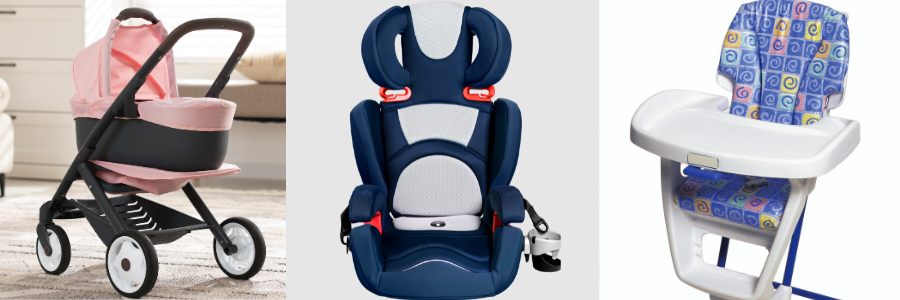
Here are some of the durable nursery products and the design issues the standards may address.
Cribs – Structural strength, stability, and child entrapment
Bassinets and cradles – Stability, structural integrity, and secure locking
Toddler beds – Strength, guardrails, and entrapment risks
Highchairs – Stability, restraints, and locking mechanisms
Booster seats – Restraints, stability, and secure attachment
Strollers – Brakes, restraints, stability, and folding mechanisms
Play yards – Locking systems, structural strength, and entrapment
Infant walkers – Stability, structural integrity, and unintended movement
Changing tables -Stability, structural strength, restraints, and fall prevention
These requirements can truly influence how a certain product is designed and manufactured. Several features like stability, restraints, folding systems, structural strength, locking mechanisms, and spaces that could certainly create entrapment hazards are all needed to be considered during the process of development.
What is ASTM F963 and when does it apply?
ASTM F963 is a consumer safety standard, which is highly known for enforcing requirements for toy design services that are mainly intended for children 12 years old and younger. It is one of the several safety standards that are considered when designing and manufacturing applicable children’s toys in the United States. This standard is mainly intended to address potential hazards that may occur during normal use and any reasonably foreseeable misuse.
ASTM F963 may address areas such as:
ASTM F963 Area
What It Covers
Mechanical and Physical Requirements
Sharp points, sharp edges, small parts, and other potential injury hazards
Chemical Requirements
Certain restricted substances and other accessible materials
Flammability
Fire-related risks that are associated with applicable toy materials
Sound-Producing Toys
Potential risks or concerns from excessive sound levels
Battery-Operated Toys
Safety considerations which involve batteries, battery compartments, and other related components
For new product designers, ASTM F963 can really influence decisions about specific features like material, construction, dimensions, components, and how a certain toy is expected to be used. Considering all these requirements early can really help in reducing potential risks of design and testing problems later. Other ASTM standards are not automatically federal law because they are published by ASTM International. Certain requirements of ASTM F963 become mandatory only when it is incorporated into federal regulations and established under applicable U.S. consumer product safety laws.
ASTM standards or provisions may also remain voluntary unless there is another regulation, industry practice, or legal requirement that makes them applicable. Therefore, manufacturers must identify different requirements that specifically apply to their product instead of just expecting that every ASTM standard is legally mandatory.
Is JPMA certification required for baby products?
JPMA certification is basically not required by federal law for baby and juvenile products. The Juvenile Products Manufacturers Association (JPMA) significantly operates as a voluntary certification program intended for eligible products, which helps manufacturers by giving them an additional way to demonstrate their specific products as it is evaluated against applicable safety standards. Although certification is not a universal legal requirement, it can still provide practical benefits in the market world. For manufacturers, participating in this kind of voluntary certification program greatly helps in demonstrating product commitment to safety and quality, all while strengthening its relationships with consumers and retailers.
JPMA certification may help several manufacturers:
Build market credibility by showing a real commitment to product safety and quality.
Increase retailer confidence when certain products are considered for distribution.
Strengthen consumer confidence through delivering additional signal which helps in product safety.
Differentiate the product in the front baby and juvenile product marketplace.
Support brand reputation, especially when marketing products to several parents and caregivers.
However, voluntary JPMA certification must not be confused with any mandatory regulatory compliance as it doesn’t function as a replacement for federal safety requirements that are established by the CPSC, CPSIA, or other applicable laws and regulations. It highly depends on the product, and the design for manufacturing firms still need to meet mandatory safety standards, complete all required third-party testing, and issue the appropriate certifications before they sell the product in the United States. The distinction of both is very important since a product can have a voluntary certification while still being subject to another federal requirements.
Manufacturers must first determine and satisfy all the needed mandatory requirements that best apply to their product. And once everything is addressed, they can already consider whether JPMA certification or another voluntary program could be added as an additional value. In short, JPMA certification is only an optional addition to compliance, not a requirement or a substitute for it. It helps in strengthening credibility and trust, but meeting mandatory safety requirements remains the very essential foundation of bringing children’s product into the market.
PRODUCT CATEGORY AND AGE REQUIREMENTS
Which baby product standards apply to which product categories?
Different baby and juvenile products are subject to several safety requirements that are significantly based on their design, specific use, and target age group. Manufacturers must determine and identify the specific rules that best apply to their product during the early process of the product design and development process, since requirements can really affect the product’s materials, dimensions, construction, and components.
Product Category
Applicable Standards / Requirements
Key Design Considerations
Cribs
Applicable CPSC requirements
Entrapment, structure, mattress fit
High chairs
Applicable CPSC requirements
Stability, restraints, pinch points
Strollers
Applicable CPSC requirements
Folding, stability, restraints
Play yards
Applicable CPSC requirements
Entrapment, locking, structure
Toys
ASTM F963 and applicable federal rules
Small parts, chemicals, mechanical hazards
Child care articles
CPSIA and applicable rules
Lead, phthalates, materials
Other juvenile goods
Product-specific requirements
Verify applicable rules
The table above provides a general overview of some of the common product categories and the types of requirements that are appropriately apply. It is only for educational purposes and not a complete compliance checklist. Requirements depend on specific products and its intended use. Prototype design engineers must verify current CPSC, applicable federal regulation, and essential standards for their specific products before they begin testing and manufacturing.
How does age grading affect baby product requirements?
Age grading significantly plays an essential role in designing a children’s product, and it is more than just deciding how it will be marketed. The specific age range that is assigned to a certain product can influence the regulations that apply, the required testing, and the warnings that should be provided. Also, the types of possible hazards designs that are needed to be considered.
A product’s intended age must be based on several factors like:
Physical development – focuses on child’s strength, coordination, size, and motor abilities.
Cognitive development – it is all about the child’s ability to understand different instructions and recognize specific potential hazards.
Intended use – how a specific product is expected to be used by children within the specified age range.
Marketing and advertising – it’s mainly about how a product is presented and the age group it intends to target.
Packaging– images, language, and specific instructions that must communicate who it’s intended for.
Age grading also affects toy classification, testing procedures, small parts requirements, and safety warnings. Therefore, product concept designers must make sure to consider how a child within the specific target age range would interact with the product realistically, including several foreseeable use and misuse.
HOW REGULATIONS AFFECT PRODUCT DESIGN
How should small parts and choking risks influence product design?
In designing products for babies and young children, every little thing or small component must be treated as a potential safety concern. Whether it’s a small or detachable parts like buttons, caps, wheels, knobs, fasteners, decorative elements, battery compartment components, and any removable accessories are considered hazardous once they break or detach during use.
Designers must put into mind these questions before designing a specific product:
Can the specific component I am using come loose during repeated use or even normal use?
Could wear and tear possibly weaken the connection over time?
Could the part possibly detach after it’s dropped or impacted?
Can a child possibly pull, twist, or pry the specific component away?
Could a broken component lead to a small part hazard?
These potential risks should be addressed while the specific product is still being designed. CAD allows CAD drafting designers to determine and examine how individual components interact and connect, while material and fastening choices can help in improving durability and reduce the potential cases of certain parts to be detached. It is also very essential to consider any foreseeable use and misuse. It is inevitable that children may chew, pull, shake, twist, or drop products in ways that adults may not expect.
That is why if a product is only designed for ideal use, it can therefore leave important hazards undiscovered later. When considering potential choking hazards before tooling and prototyping, manufacturers can have a lot of opportunities to strengthen its connections, redesign components, and select materials that are safer and reliable without the need to face expensive changes in the long run.
How can designers prevent pinch points and entrapment?
Pinch points and entrapment hazards must be considered by the product engineering professional whenever a children’s product has parts that fold, slide, adjust, move, or rotate. Features like joints, gaps, openings, folding mechanisms, hinges, and locking systems can possibly create potential hazards if not designed carefully. This is highly important since products like high chairs, strollers, convertible juvenile products, and cribs, since these are examples of products where components may change position in everyday use.
During the design process, CAD help teams in examining how every component interact and identify potential problem areas, such as spaces where a child’s fingers could possibly be trapped, gaps or openings that could somehow create an entrapment hazards, interfaces between moving components of a product, areas around hinges and joints, which could create pinch points, how parts interact as they are adjusted, rotate, slide, or fold, whether locking mechanisms properly engaged and remain as secure as it needs to be.
Prototype designers must also evaluate several foreseeable misuses instead of just considering only the product’s intended operation. A child may climb onto a product, pull on a component, place their fingers into an opening, or even push against a moving part. That is why reviewing these possible scenarios early on with CAD and physical prototypes they can be able to adjust clearances, improve mechanisms, refine component geometry, and eliminate hazardous gaps before they enter the production. Identifying these challenges and issues early is beneficial as it provides efficient workflow and less costly than applying changes after tooling or manufacturing has already begun.
How should use-and-abuse testing influence CAD design?
Children may interact with certain products in ways that go far beyond what it’s intended to be. They may drop, bite, twist, pull, climb, shake, or repeatedly operate components and mechanisms. CAD designers must account these foreseeable behaviors before the product reaches its final testing or manufacturing.
Designers must consider:
Fastener retention
Material fatigue
Joint and connection strength
Product stability
Repeated operating cycles
Structural loads and impact forces
Its main goal is to properly evaluate how a product will perform during realistic conditions, including any foreseeable misuse. CAD models help in identifying weak connections, stress points, and other areas that may require any redesigning or reinforcement. The principle is basically simple; design for foreseeable abuse, not just ideal use. 3D modeling designers must anticipate how children would interact with specific product since it can be helpful in reducing potential failures, improve its durability, and address potential safety concerns earlier rather than making costly revisions when finally launched.
Planning to design a juvenile product? Need a helping hand that could guarantee a smooth flow of having safety requirements and create an easier way to build a design before prototyping, testing, and expensive tooling begin? Worry no more! Cad Crowd can help you by connecting you with the right CAD designers, engineers, and 3D modeling professionals who are expert in turning your concepts into manufacturable products, all while supporting product development right from the early stages of design through the prototyping and production stage.
Who is mainly responsible for children’s product compliance? The manufacturer or the designer?
It’s the manufacturer or importer since they are responsible in ensuring that the product complies with all the applicable requirements. Designers, though, play an important role in making sure that the safety considerations are incorporated into the product’s design.
Can a product be sold in the U.S. before it passes required testing?
Mainly no. When it comes to children’s products, it needs to be tested since it is generally subjected to mandatory testing requirements that must be applicable before they are legally imported, distributed, or marketed.
What happens if a children’s product fails the required safety test?
If cases like this happens, the product must be redesigned or tested before it can be legally marketed. Some failures may also result in recalls or even regulatory action.
Do imported baby products have to meet the same U.S. safety requirements?
Yes. Children’s products that are imported into the United States must comply with the same U.S. safety requirements regardless of where they were manufactured.
How Cad Crowd can assist
In designing a safe and successful baby or juvenile product, a proper compliance must be considered long before it reaches the final testing laboratory or production line. Every process from age grading to material selection to entrapment risks and safety requirements can significantly shape the critical design decisions. That is why it is very important to address these factors early so that any potential or costly redesigns will be prevented along the way.
If you are developing a children’s product, especially for the U.S. market, Cad Crowd can help you best in connecting with the right and experienced CAD designers and engineers to help in turning your requirements into a thoughtfully designed product that is not just visually pleasing but also right to be manufactured with the proper accordance of standard requirements. Contact us for a free quote.
Disclaimer: This article is intended for educational purposes only and must not be considered legal, regulatory, or compliance advice. Children’s product requirements depend specifically on certain product category and can possibly change over time. Before manufacturing or selling juvenile product in the United States, make sure to confirm all the required standard requirements with CPSC-accepted third-party testing laboratory and qualified legal counsel.
MacKenzie Brown is the founder and CEO of Cad Crowd. With over 18 years of experience in launching and scaling platforms specializing in CAD services, product design, manufacturing, hardware, and software development, MacKenzie is a recognized authority in the engineering industry. Under his leadership, Cad Crowd serves esteemed clients like NASA, JPL, the U.S. Navy, and Fortune 500 companies, empowering innovators with access to high-quality design and engineering talent.
In a recent interview with PC Gamer’s Joshua Wolens, Warhorse Studios co-founder Martin Klima traced the inspirations for Kingdom Come: Deliverance back to boredom with the typical RPG—kill the dark lord, romance a companion or two, and so on. Klima added that this formula is still a mite too widespread even now for his tastes, and wondered if gamers haven’t outgrown it by now.
“I play a lot of RPGs, it’s a genre I really like,” he said. “I was really and I still am bored and tired of all the RPGs when you are this chosen one, when you have this grand task of saving the universe .. The games that are these really straightforward power fantasies. It’s not that I think it’s somehow wrong in principle. There is nothing bad about a good power fantasy. It’s just, it’s so repetitive.”
He likened the typical fantasy roleplaying game to the old idler Progress Quest, a satire which lampooned EverQuest and its ilk for being time vampire-Skinner boxes. “It’s really a distillation of what the common RPG is. So I found that there must be many, many people who are really tired of this formula and who want something new and different,” he said. That formed the seedling which eventually germinated into KCD.
Latest Videos FromPC Gamer
But things haven’t changed much since then, in Klima’s estimation. “The games that were and sort of are being made are still the games for teenagers,” he said. “If you are 16, 17, you love playing these power fantasy games because it’s something that you need. But the audience is much older today … everybody’s going to think that I am hating on Expedition 33 right now, but that’s definitely not the case.”
As for why this sort of ‘chosen one’ story is still so prevalent, Klima reckons that publishers are primarily interested in trying things that have worked before. “They are really best at recycling the same formula over and over. When I’m talking about this, I really mean more games like games from Ubisoft, for example.
“I played the original Assassin’s Creed, and the original Far Cry, and the original Watch Dogs, and most of these games in the first iterations, and it was fun. But once you play the same game for the 10th time, it sort of becomes stale.” While Far Cry and Watch Dogs aren’t exactly RPGs, it is notable that Assassin’s Creed went through a whole era where it was doing its best Witcher 3 impression.
“Craftsmanship wise, [Ubisoft’s] games are excellent. I mean, the beautiful animations, beautiful models. They are pretty much bug-free. It’s a very polished experience,” he said. “But I can’t help but feel that this craftsmanship would be better served by creating a game that’s a little bit more innovative.” That said, he acknowledged the financial risks of experimenting with the sort of money Ubisoft throws around for all its flagship series: “I appreciate the dilemma that they have, and I don’t have any easy answers for it.”
Keep up to date with the most important stories and the best deals, as picked by the PC Gamer team.
Getting a reliable internet connection can be one of the biggest challenges when livestreaming from a stadium, remote location, or field production. LiveU Hybrid Data brings Starlink broadband and cellular connectivity together to help crews stay live when network conditions change.
Instead of using Starlink only as an emergency backup, LiveU allows Starlink and cellular connections to be bonded together within the same workflow. LiveU Reliable Transport combines available IP connections into a reliable stream, while LiveU IQ analyzes cellular network conditions to help select the best-performing operators for the location.
LiveU also packages cellular data and Starlink into one managed service with one plan, invoice, and source for support, simplifying connectivity for crews working in the field.
LiveU Hybrid Data will be available for the LU300S, LU800, and LU900Q in the United States and United Kingdom, giving sports, broadcast, and remote production teams another option for maintaining reliable live video transmission when connectivity is unpredictable.
A worker getting hurt on a construction site can quickly become a serious situation for a small contracting business. Beyond helping the injured worker, the business may have to deal with insurance claims, workplace requirements, medical costs, and questions about who was responsible. Knowing when to get legal help can make it easier to understand these responsibilities and respond without making the situation more complicated. For a small contractor, having a clear process after an accident can help protect both the worker and the business.
Small Businesses Still Have Major Safety Responsibilities
Being a small contractor does not mean safety responsibilities disappear when a project gets busy or the crew is small. Employers still need to provide proper training, safe equipment, reasonable supervision, and a work environment where hazards are addressed. Taking these responsibilities seriously can help reduce accidents and prevent additional problems when someone gets hurt.
One Accident Can Create Multiple Legal Issues
A single construction accident can raise several questions about workers’ compensation, insurance coverage, and whether another party may share responsibility. The situation can become more complicated when multiple contractors, property owners, or equipment providers are involved on the same job site. Understanding each potential issue early can help the business respond carefully instead of overlooking an important responsibility.
Safety Violations Can Increase Exposure
Ignoring known hazards or failing to provide proper training can create additional problems for a contracting business after an accident. Missing safety measures may lead to questions about whether the business took reasonable steps to protect workers. Keeping safety practices consistent and addressing hazards promptly can help reduce unnecessary risks on the job site.
Documentation Can Become Extremely Important
After a job site accident, details can become difficult to remember, especially when several people were involved. Accident reports, photographs, training records, safety inspections, witness statements, and related communications can help establish what happened. Keeping these records organized gives the business a clearer account of the incident if questions or claims arise later.
Insurance Does Not Always Solve Everything
Having insurance can provide important protection, but it does not automatically make every injury claim simple or fully covered. Policy limits, exclusions, disputed coverage, and questions about responsibility can still create challenges for a small contractor. Reviewing the policy and understanding what it covers can help the business respond more carefully when an injury occurs.
Third Party Responsibility May Be Involved
Construction sites often have several businesses and individuals working together, so an injury may involve more than the injured worker and their employer. A property owner, general contractor, subcontractor, equipment provider, or another party may have contributed to the conditions that led to the accident. Identifying everyone involved can help clarify where responsibility may lie and what claims or protections could apply.
The Financial Impact Can Be Serious
A serious workplace injury can create costs that go well beyond the immediate medical expenses. A small contracting business may also face insurance issues, lost productivity, project delays, and legal expenses while the situation is being handled. These financial pressures can be especially difficult for a business with limited resources and a small operating budget.
What Contractors Should Do After an Injury
When a worker is injured, the first steps a contractor takes can affect both the worker’s well-being and how the situation is handled afterward.
Address Immediate Safety Concerns
Make sure the injured worker receives appropriate medical attention and that the immediate area is made safe. If a hazard contributed to the accident, address it before other workers are exposed to the same risk.
Report the Incident
Follow the required procedures for reporting the workplace injury to the appropriate parties. Prompt reporting can also create a clear record of when and how the accident occurred.
Document What Happened
Make sure to keep track of significant points at the earliest possible and do not let your memory get clouded by time. Photos of the area taken at the moment, pictures of involved tools, names of witnesses, and work conditions during the accident will all be helpful. Also, get accident reports, training records, and copies of related documents like inspections.
Preserve Relevant Evidence
Unless you have to do so for safety reasons (with say an exploded device), do not discard repair move or rearrange any equipment which could help you find out or reconstruct what happened. It is possible though that evidence should be preserved, if later people question what was the reason for the accident or who was responsible.
Communicate Carefully
When communicating about the accident with employees insurers subcontractors, or any other parties involved, make sure to keep to the facts that you know. Do not speculate on responsibility, nor promise about future outcome until all of the facts and circumstances are sufficiently verified.
Conclusion
A worker injury can create safety, financial, insurance, and legal challenges that a small contracting business may not be prepared to handle alone. Staying organized, documenting the incident, following proper procedures, and understanding who may be responsible can help the business navigate what comes next. When the situation becomes complicated, it may be worth taking steps to get legal help and better understand the options available.