How Plumbing Engineers Benefit from CAD Drafting and Design Services


It’s hard to believe that a plumbing project isn’t always about someone installing, repairing, or replacing broken pipes and leaky faucets. Much of it is indeed all of those, but it also involves a slightly more complicated design phase, best left to an engineering design expert rather than an actual plumber. For the uninitiated, a plumbing engineer designs the entire system and prepares the plan, whereas a plumber executes it. Because most engineers like to think their work is so difficult, they often tap a professional drafting service to draw the plan for them.


🚀 Table of contents


They get back more than they give

In a good way, of course. In an ideal world, an engineer designs the system and translates it into a technical drawing for a construction permit and approval. But sometimes the world isn’t as ideal as what everybody has in mind, and an engineer doesn’t have the luxury of time to produce a detailed draft. Perhaps there is just so much engineering work to do that outsourcing the drafting makes a lot more sense and is more time-efficient. The engineer makes sketches or low-detail presentations that are not to scale, with notes and scribbles all over them. And then the engineer gives the sketches to a drafter to convert into a technical drawing for construction. To put it simply, the engineer decides what to draw, and the drafter makes the drawing.

Because professional drafters specialize in the trade, they can do it quickly and at a lower hourly rate than an engineer. Take, for example, the drafters at Cad Crowd. Thousands upon thousands of CAD experts at Cad Crowd offer a broad range of drafting services at affordable rates, backed by the platform’s accuracy guarantee. Cad Crowd is one of the few freelancing sites on the web to place heavy emphasis on the AEC industry, including the MEP (Mechanical, Electrical, and Plumbing) sector, with more than 15 years of experience in outsourcing. Apart from this cost-saving advantage, engineers can reap a lot more benefits from collaborating with CAD drafting and design services.

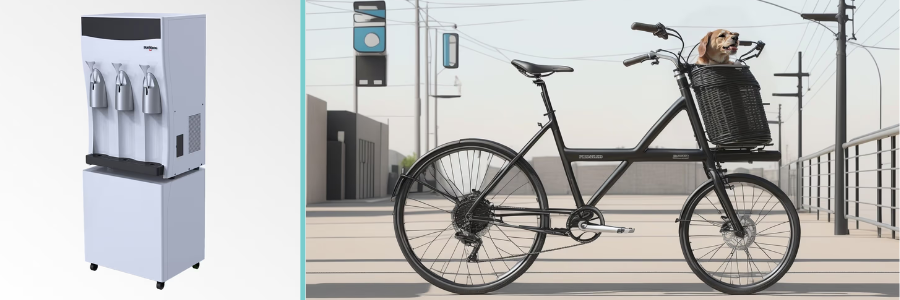
Plumbing engineering and CAD Drafting examples by Cad Crowd design experts

RELATED: CAD outsourcing: Architecture & BIM drafting strategies for architectural design firms

Let’s not eyeball it, shall we?

Eyeballing is probably just fine when you’re repairing a P-trap or tinkering with a water pressure valve, but not for an engineer designing an entire plumbing system.

Back in the old days, when CAD design services weren’t yet mainstream, or affordable for that matter, manual drafting on paper and boards reigned supreme. What is now a rather tidy task of technical drawing on a computer used to be a bungled, cluttered affair full of sweaty-hand smudges. And if an engineer was working overtime past midnight, coffee spills and dull pencils could make an otherwise sharp mind into, well, a dull one. In cases where the plumbing design was extensive enough, it might take an additional two or three drafters with varying degrees of skills and experience to work on a single plan. On one of those days, somebody was bound to not care enough about accuracy and just wanted to go home early and watch TV in black and white.

As a result, the term “precision” came only second after “completion” on many projects. When a line was off by even a fraction of a millimeter on a 1:200-scale draft, construction headaches ensued. You’re talking about misaligned pipe connections, incorrectly sized fittings, inaccessible valves, and a whole bunch of on-site adjustments by a plumber who then eyeballed things.

CAD drafting for a plumbing system means creating the plumbing plan on a computer, with a lot of help from the automation the machine offers. Think of it as a visual calculator that lets you specify the dimensions and tolerances of every component, down to the hundredth of a millimeter. Such accuracy ensures you’ll always generate the correct plan, no matter how complex the project is. The BOM (Bill of Materials) is always spot-on. And when the parts arrive at the jobsite, they actually play nice with each other. For plumbers, the CAD drawing also serves as an instruction manual, so no eyeballing is required.

Just maybe, time is indeed money

Drawing on a computer might seem daunting. You don’t have to sharpen a pencil in the process now and then. Still, it’s hard to imagine making precise movements while holding that mouse button to draw a perfect representation of a curvy water closet, sink, or bathtub. You don’t have to imagine that at all, really. It is, in fact, very hard. That’s why just about every architectural CAD software offers a broad range of templates ready to click and place on the screen. 

These ready-made templates may include a wide variety of fixtures and fittings, including end-of-the-line cleanouts, routing options for elevation mismatches, pipe specifications, automatic annotation for multiple pipe runs, and more, done by engineering design services. Almost all of them are delivered via a simple drag-and-drop interface in the software. This makes the drawing of every plumbing part and component quick and practical, with very little chance of mistakes, unless a careless drafter is involved. 

If a project involves drawing plumbing plans for dozens of individual bathrooms, such as in a residential building with pretty much identical units, a drafter can create “modules” or “blocks” on the CAD software. A block is essentially a group of plumbing parts, including fixtures and piping configurations, treated as a single assembly. It doesn’t matter if the building has 50 or 500 units; copy-and-paste does all the heavy lifting. Furthermore, an update or modification on the master block is reflected on every other drawing in an instant.

Drafting a plumbing system often involves quite a lot of repetition, and that’s to be expected because much of the drawing includes the same pipes connected with the same fittings over and over again until it gets to the very end of the line. When a repetitive task is simplified or outsourced to a professional drafting service, a plumbing engineer can focus on more pressing matters, such as maintaining consistent water pressure, sustainability, and the ergonomics of the water closet. Because the drawing happens in the background with CAD, the design phase runs quicker than ever before, and the payday comes sooner, too.

RELATED: Relevance of MEP drafting services for architectural design firms & construction companies

Gone is the eraser dust

Some clients are difficult to work with. They demand changes after changes to an already-approved plan, prompting the engineer to make revisions that never seem to please them. Sometimes the kitchen layout isn’t sophisticated enough, the bathroom design is too mainstream, or there aren’t enough sinks in the house. Clients are the project owners after all, so no engineer can blame them as long as they have the money to pay for the services. A plumbing engineer can only comply and produce a new plan for every change in design.

The good thing is that a CAD drafting expert makes revisions simple. Since the original plumbing plan was created in CAD, making changes to the image is simply a matter of moving things around on a screen. A drafter can move, stretch, and replace fixtures, or perhaps reroute the entire pipeline without even touching an eraser. Everything is done on screen in a virtual environment. Apart from that, the real benefit here is version control, or a file history if you like. If a client asks why there are now four sinks in the house rather than five, the plumbing engineer can refer back to the previous draft to see how forgetful the client is.

Quick math and no headache

We’re not saying that an engineer or a drafting service can’t do math without a headache. It’s just that there will be much less headache in case it does happen while calculating flow demand, pipe sizing, slope, and pressure drop. Modern CAD software does all the calculations automatically. For example, it can determine the pressure drop along a 50-foot stretch of copper pipe with many fixture branches attached. If you aim for a specific flow rate measured in GPM (gallons per minute), CAD tools can give you the right pipe sizes based on the number of fixtures to be installed.

Some automation features require specialized toolsets, for example, AutoCAD MEP, AutoCAD Plant 3D, or Revit. But don’t worry, all professional drafters know that plumbing engineers have a tender spot in their hearts for software with long names, so they will happily purchase and use the tools to indulge the clients. CAD tools are very good at math, even better than Sheldon Cooper, allowing the engineers to have their brainpower occupied by other important issues, presumably.

Piping and plumbing design engineering by Cad Crowd design engineers

RELATED: A comprehensive overview of steel detailing services and its importance for construction companies

We haven’t even talked about 3D CAD.

No one says CAD drafting and design have to be in the conventional 2D format. The aforementioned software, such as Autodesk Revit and AutoCAD MEP, generates 3D drafts. Other options include PractiPIPE, Bentley AutoPLANT, PlumbingCAD, etc. While the 3D image might not be photorealistic, it’s good enough to provide spatial awareness as if you’re looking at the pipeline through the floor, ceiling, and walls.

Engineers don’t need 3D plumbing drafts to understand the design. They’re trained to develop a cognitive ability to translate flat lines, shapes, and symbols into a clear vision of an architectural design. But the average clients, on the other hand? Not so much. Most clients find 2D drafts confusing, like reading a text from a language they don’t understand. They may nod many times as they stare at the image, but only to look smart in front of everyone. Thanks to 3D CAD, plumbing engineering experts can more easily explain how things work, even to the most uninformed clients. 

And let’s not forget BIM (Building Information Modeling), currently touted as the biggest thing to ever happen to the architectural industry. Some would go so far as to describe it as the be-all and end-all drafting software tool, flooded with features such as automatic clash detection, cost estimation, Bill of Materials generation, cloud-based collaboration, and, essentially, data-rich visualization.

Takeaway

The bottom line is that plumbing engineers can always work smarter, not harder. One of the smartest things a plumbing engineer can do is to work with or hire a CAD drafting service to translate the design intent into a technical drawing. Just “knowing” that a professional is taking care of the task can give the much-needed peace of mind to focus on the actual engineering parts of the job, be it cost efficiency, construction methods, rainwater harvesting, or code compliance.

Whether you need the plumbing plan in the conventional 2D format or the more advanced 3D visualization, there is always the right professional at Cad Crowd to get the work done. All drafters at Cad Crowd have been vetted and screened for their CAD proficiency and experience in architectural projects to ensure that every client works with the most qualified talent. Request a quote today.
author avatar

MacKenzie Brown is the founder and CEO of Cad Crowd. With over 18 years of experience in launching and scaling platforms specializing in CAD services, product design, manufacturing, hardware, and software development, MacKenzie is a recognized authority in the engineering industry. Under his leadership, Cad Crowd serves esteemed clients like NASA, JPL, the U.S. Navy, and Fortune 500 companies, empowering innovators with access to high-quality design and engineering talent.

Connect with me: LinkedInXCad Crowd

Elevating Your Company’s Product Designs Through User-Centered Design Principles


Success in today’s highly competitive marketplace very directly depends on how well a product meets the needs and expectations of its users. Companies are pinning more hopes on producing products that would give the best experiences to the users, and this is why user-centered design, or UCD, principles have become important components in the development process of business products for product design companies.

Cad Crowd is an industry leader in providing vetted outsourced product design services for businesses around the world.

Integrating UCD principles into the business process can quite significantly contribute to improvements in usability, accessibility, and overall user satisfaction, which translates into higher customer retention and revenue streams. This article analyzes how the use of user-centered design principles can improve your company’s designs for products, with insights from various industry leaders.


🚀 Table of contents


User-centered design definition

User-centered design (UCD) is a philosophy of design that is concerned with putting users at the center of product development services. The idea behind UCD is that design must be based upon a deep and profound understanding of what users are, what users need, how users think, and their goals. UCD is not just about functionality, but also with much emphasis on the emotional connection to the product, ensuring products are intuitive, easy to use, and engaging.

Unlike the traditional design approach, in which the product or technology is at the center of focus, UCD places the user at the center of the design process. This requires research, collection of feedback, and iteration throughout the design process to ensure that the final product satisfies the needs of the intended users.

According to experts, user-centered design is a design process in which the needs, wants, and limitations of the end-user are given extensive attention at every stage of the design process. This can be used even for physical products or digital products like applications and websites.

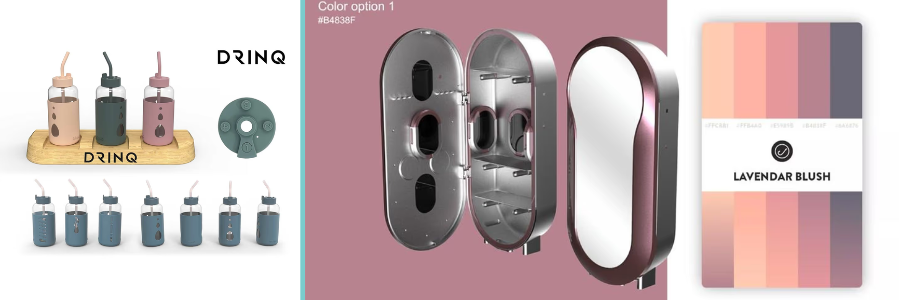
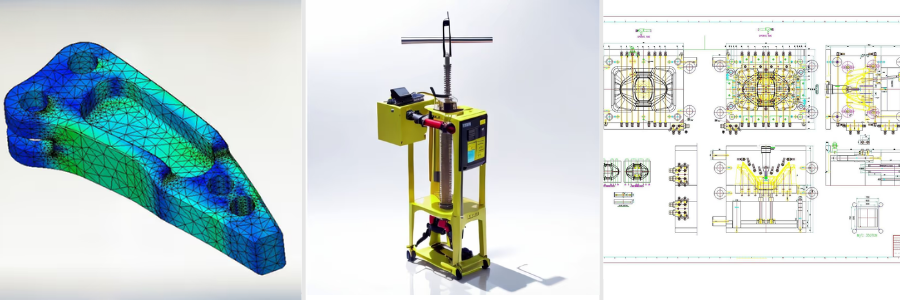
cad design example of a mag-wheel and meat grinder

RELATED: Designing for visual impact with your product design services company

Key principles of user-centered design

In order to maximize the potential of user-centered design, consumer product companies need to include guiding principles while they are in the process of creating their products. These will ensure that the users know every step they take in the design phase is based on their liking. Which always results in a more effective product.

Below are the principles that will elevate your product design.

Focus on the user’s needs and goals

The first and most crucial principle of user-centered design is understanding your users’ needs, goals, and pain points. Without this understanding, it is impossible to create a product that will resonate with users.

A user-centric approach would begin by doing extensive research, including some level of interview with the users, a survey, and sometimes usability testing, to understand their behavior, preferences, and problems. This consequently guides the real design considerations so that the final product meets the users’ real-world needs.

For instance, in the case of a fitness tracking mobile app, having an understanding of your target audience’s fitness goals, how they track their progress, and what motivates them will inform features and functionality design aimed directly at addressing these needs. You may also want to consider wearable design services in the case of smart workout apparel. If a product addresses a user’s needs, it will more probably find favor and gain success.

Include users in the design process

One of the most compelling features of user-centered design is the active involvement of users throughout the design process. This involves involving the users at every step of product development, from its earliest idea to initial testing and launch.

Involving users at each stage can deliver feedback so that your product is always going in a direction that would generally meet the expectations of the user. Through usability testing, focus groups, or beta testing, ongoing user input allows you to iterate on your design and make informed adjustments.

One good example is Apple, in which the iterative approach of its design always involved rigorous testing with feedback loops from users. Through an iterative approach, Apple can refine its products to result in a seamless and user-friendly experience for its customers.

Iterative design and testing

Design, therefore, is not one-time; rather, it is iterative, meaning it always requires constant refinement and assessment. Improving designs for products is done most effectively through continuous testing and refinement. An iterative process of design means a cycle in which your product moves through cycles of design, testing, gathering feedback, product engineering services, and subsequent improvement. Through this, a problem with the design is identified as early as possible while allowing designers to experiment with different features and functionalities to see what resonates more with users.

Companies can test these variations with customers using tools like A/B testing, usability testing, or prototypes, and determine which way would best be taken based on the results. This cycle allows repetition to continue, fine-tuning the company’s designs until they reach the most effective version of the product.

RELATED: How innovative design techniques can supercharge your new product concept

Emphasis on usability

Usability is one of the cornerstones of user-centered design. A product will only be as good as its ease of use. If the users can’t navigate it or can’t understand how to use it, frustration and abandonment will be the result. Usability, therefore, refers to making products simple, intuitive, and accessible.

The overall goal is to make it painlessly simple for a user to do anything they want to do within the application with minimal effort and frustration. This would involve such aspects as clear navigation, readable typography, responsive design, and an overall easy-to-use interface. Usability testing involves identifying weaknesses and fixing them to ensure that the design meets users’ needs.

For instance, some product development experts elaborate on how user-centered design impacts the usability of websites and digital products. A clear call-to-action button, a simple layout, and easy navigation-all these factors make your design user-friendly. All these factors will help users interact with the product easily, which increases user satisfaction and retention.

Design for accessibility

Accessibility is yet another critical principle of user-centered design. A usable design should make it possible for people with all abilities and disabilities to use the product. This involves making sure that any product is usable for people with visual, auditory, motor, or cognitive impairments.

Accessibility built into your product design means thinking of how users interact with technology. For example, providing text alternatives for the images (alt text), designing with color contrast in mind, and ensuring your website or app is accessible by a keyboard or screen reader, to name a few, are ways of creating an inclusive product.

Experts emphasize the point that accessibility and inclusive design are not actually about checking compliance, but all about product design experts building a product that everybody can use as much as possible, and gives a meaningful experience to everyone. In essence, your focus on accessibility demonstrates to your users that you really care for them and ensure that everyone has an equal, fair chance.

Consistency across the product

Consistency is a must for managing to make the user experience both harmonious and intuitive. When users are dealing with a product, they must feel that they know how it works from one screen or feature to the next. Consistent design fosters trust and comfort in the system, therefore allowing users to navigate the product without confusion.

Consistency encompasses both visual-design-level elements (color, fonts, and layout) as well as functional elements (button placement, icons, and actions). Maintaining a consistent design language across your product will make it so much easier for users to understand how to interact with your product and predict what will happen when taking particular actions.

Contextual understanding

Contextual design is basically a cornerstone of user-centered design. Context refers to the entire circumstances of a user interacting with any product, which would include their environment, goals, and mindset. By understanding the context, new concept design experts can come up with products that could more relevantly and usefully suit the specific contexts of users.

For instance, an app for drivers would require designing with high-speed, easy-to-read interfaces that do not distract their attention from the activity of driving. A fitness app may be imperative to be very simple and user-friendly when users are working out or in motion. The context in which your product is used means that users can use it with ease in their daily lives.

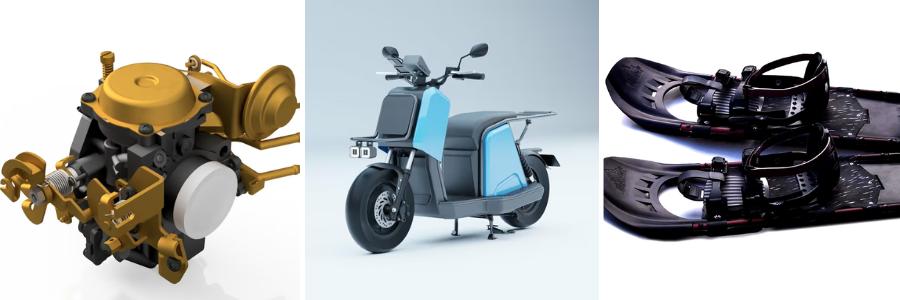
product design of a convertible bed and couch

RELATED: Why design for manufacturability (DfM) is essential for product success when hiring a design firm

Benefits of using the user-centered design approach

The use of user-centered design principles in your products and business will highly impact your product and industrial design firm; hence, the following represent some of the key benefits.

Enhanced user satisfaction

When designing products with users in mind, it would most probably meet user expectations and needs for the first time. Such a product would mean that there is very high satisfaction, and users would be more likely to continue using it or recommend it to friends.

Higher conversion rates

A good user experience will have an immediate effect on conversion rates. For digital products, this could mean more people signing up for your service, purchasing a product, or taking the desired action. By reducing user journey friction points and streamlining it, companies see measurable increases in conversions.

Lower support costs

The more intuitive the product is, the less likely users are to experience confusion or frustration. This limits the calls to technical support and complaints and reduces customer support costs; therefore, it enhances customer satisfaction.

Higher customer retention

The loyalty of customers is rooted in their good user experience. Thus, by applying the principles of user-centered design, you as a company are actually ensuring that your products hold the user’s attention for a long period of time, long enough to keep them satisfied. This results in an increased number of customer loyalty.

Conclusion

Applying the principles of user-centered design to your product design and throughout the development cycle, including the use of prototype design services to hone in on user needs, is a type of strategic play to produce products that promote the user’s needs in a saturated market of advertising. Put the need to understand the users’ demands as a priority and let them interact at every point of the design process. Their feedback is an important voice that will give you the basis for reiteration.

Product design continues to evolve every year, and adapting to these changes and embracing user-centered design will definitely help you and your company stay ahead of the competition while still delivering products that delight users.

RELATED: The importance of iteration in product development & working with product design companies

How Cad Crowd can help

Whether it is an app, website, or actual product, long-term growth and customer satisfaction can be achieved by considering the user experience in every product design. Here at Cad Crowd, we will make it easier for you through the entire process. Contact us today and request a free quote.

author avatar

MacKenzie Brown is the founder and CEO of Cad Crowd. With over 18 years of experience in launching and scaling platforms specializing in CAD services, product design, manufacturing, hardware, and software development, MacKenzie is a recognized authority in the engineering industry. Under his leadership, Cad Crowd serves esteemed clients like NASA, JPL, the U.S. Navy, and Fortune 500 companies, empowering innovators with access to high-quality design and engineering talent.

Connect with me: LinkedInXCad Crowd

Top 8 Benefits of 3D Golf Course Modeling and Rendering with Freelance Services & Design Companies


Golf course design has traditionally been a highly calculated process involving a lot of planning, aesthetic vision, and a deep understanding of the game itself, but innovation in technology has started using 3D modeling and rendering into the fray as a revolutionary tool to produce detailed, high-fidelity visualizations of golf courses before a single blade of grass is ever planted. 

Freelancers and design service companies are now using advanced tools to develop golf course models. Among the advantages of these models is the ability to bring ideas to life for designers, developers, and investors, offering quite a wide range of benefits.

Cad Crowd is the leading agency that can help you connect with 3D modeling and 3D rendering experts, providing services to your firm. Consisting of over 94,000 freelancers, we pride ourselves on our ability to give reasonable service rates while still exceeding your highest standards. Whether you’re looking for innovative solutions, new concept design, strategic insights, or top-tier execution, CAD Crowd has the expertise and the talent to bring your vision to life.

In today’s article, we will discuss the top eight benefits of 3D golf course modeling and rendering, and how freelance 3D rendering services and specialized design companies are revolutionizing the view on the visualization, design, and construction of golf courses.


🚀 Table of contents


RELATED: 10 awesome vehicle designs from the Cad Crowd gallery

Understanding 3D golf course modeling and rendering

3D golf course modeling and rendering is a particular type of computer-aided design process that can be achieved through 3D landscape rendering services, which produce ultra-high resolution, photorealistic images of golf courses. It allows designers, developers, and facility managers to visualize the details of the layout, terrain, and environmental features of the golf course during pre-planning or before any renovation work.

From 3D modeling, every part of the course is well thought out by the designers, including the fairways, bunkers, water hazards, and surrounding landscapes. Then, the rendering process incorporates realistic textures, lighting, and perspectives to mimic how the course would appear and represent the actual environment. This allows stakeholders to make rational decisions regarding design changes, landscaping, and even marketing presentations.

The union of 3D modeling and rendering boosts the mutual understanding of architects with clients on possible views concerning the course of action and elevates the process in planning and development to ensure that all the minutest details coalesce into the overall vision. Take a look at the benefits that 3D golf course modeling and rendering have to offer:

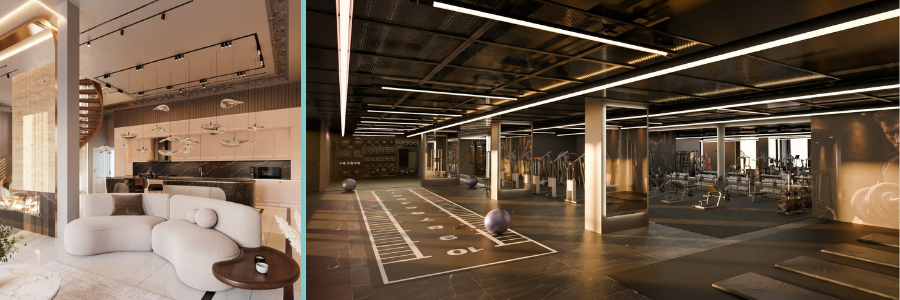
3D Golf Course Modeling and Rendering

RELATED: How engineering & 3D design contests give companies a competitive edge

Enhanced visualization and design accuracy

Probably the most significant advantage of 3D golf course modeling is its ability to deliver precise, realistic visuals through detailed renderings from 3D architectural visualization services. Two-dimensional blueprints cannot communicate depth, slope, and scale as effectively as 3D renderings. A freelance designer with expertise in CAD modeling and architectural visualization can produce photorealistic representations of how the course will appear, accurately showcasing every contour, hazard, and green.

Once accurate topographic information is in place, 3D models look just like the real terrain in every detail. As such, designers and clients should be able to walk through the virtual course and feel the elevation changes in their design. This will enable them to determine the flow of holes into one another. It is that level of immersion that results in a visual look that is absolutely stunning and will play as they want.

The challenge of redesigning a golf course arises simply because one has to iterate on the basis of architects’, developers’, or even prospective investors’ feedback. It can be pretty long and costly to correct the physical model or 2D drawings. 

3D modeling is more flexible

Particular components of the course may be easily altered by freelance CAD designers and companies specializing in 3D CAD design services. Changes in the fairway layout or adjustments to bunker depth can be quickly tweaked without an overhaul. With 3D CAD models, revisions are efficient and cost-effective, enabling several design iterations before finalizing the ideal version.

Natural integration

A golf course is not a set of holes but rather an experience in nature. The 3D modeling and rendering can be applied to integrate the course into the environment, thus ensuring it blends with nature. This integration will ensure sustainability while making the course visually more appealing to the people.

Using very high-resolution environmental data, land survey drawing experts can simulate how a golf course will interface seamlessly with natural elements, such as forests, rivers, or hills. Leveraging these specialized services allows for detailed environmental analysis, predicting how design choices affect ecosystems and surroundings. This culminates in an effortless merging of the artificial with the natural—each hole is not merely a design feature but an integrated part of the broader environment. In this sense, 3D modeling and environmental engineering help designers create sustainable golf courses that minimize ecological disruption while enhancing the golfer’s experience.

Improved stakeholder communication

In the process of developing golf courses, most of the time, several investors, architects, developers, and the local government are involved. In this case, communicating sophisticated design ideas using traditional media forms such as 2D plans or technical documents often risks that the concept will not be achieved or will fail to communicate adequately. 3D modeling and rendering offer a much clearer and more compelling means of communicating design intent.

A 3D model gives freelance designers the opportunity to share a real-to-life and immersive representation of the course with the stakeholders. This will make it easier to conceptualize the design and even give feedback. It will certainly ensure everyone is on the same page, thereby making delays minimal and timelines toward project approvals lighter. Be it pitching to investors or having your permits from your local authorities, it may be that only a well-crafted 3D render utilizing 3D rendering services will seal the deal.

Pre-construction marketing and investor confidence

3D Golf Course Modeling and Rendering

RELATED: Featured freelance CAD designer portfolio on Cad Crowd

Often, developers will seek to secure investors, or simply future members of the golf course, to fund the project before it is even commenced. A 3D rendering could be very valuable in marketing efforts for building such a project. Detailed 3D models will let potential investors see accurately what the finished course will look like, including realistic textures, lighting, and environmental features. This will help build confidence in the project by giving a very tangible vision of the end product.

Freelance design companies develop high-quality visualizations and virtual tours that developers can present to potential investors or to promote their golf course projects. The ability to show a course before setting foot will attract investors and excite prospective members, hence increasing the chances of raising funds for the venture.

Customization and personalization of golf course

Each golf course is unique, and 3D modeling will allow for a great deal of personalization. Whether the developer desires to incorporate specific natural features or emphasizes a certain architectural style, 3D modeling will allow for detailing all aspects of the course design to fit the client’s vision. Lastly, freelance CAD designers are also adept at designing some weird custom elements within a 3D environment. A signature hole with a panoramic water hazard or a dramatic elevation shift can also be done quickly. This level of personalization helps developers in designing unique courses in a very competitive golf course design market. This level of detailing is often provided by CAD design experts.

Proper planning and construction feasibility

Golf course design requires one crucial factor, which is that the course must be aesthetic yet feasible to construct. 3D modeling can pick up some of the issues that may come up with the actual design process, such as problems with drainage, grading complexities, or infringement of existing land features.

Using 3D models, freelance designers and special design companies study the topography and design the course in minute detail. For example, 3D models can model water flow across the course during the rainy season; thus, the designers have proper designs for rainfall drainage systems. Thus, by being proactive about such issues, developers can avoid expensive delays during the construction period. This proactive approach often involves hiring freelance design services.

RELATED: 3D modeling software or CAD programs: What should my designer use?

Virtual reality andinteractive experiences

One of the most exciting advancements in 3D golf course modeling is incorporating it into virtual reality (VR) technology. Freelance designers are becoming more and more leery of putting such VR experiences in design presentations to allow clients and other stakeholders to walk “the course” before it actually exists. Using a headset, users can actually walk through or even “golf” the course in real time, feeling every detail of the design from a player’s perspective.

With this interactive experience, stakeholders can move beyond the static 3D model of the course. Not only will they have an immersive first-person view of the course under development but also see at a level of interactivity that supports the overall presentation and, in some way, offers some critical insights into the details of how the course will be played, giving them scope to adjust as players, developers, and course architects respond. This level of interactive presentation is often a service offered by freelance 3D modeling.

With golf courses, freelance services illustrate this to a great extent, comprising enhanced visualization and integration with the environment while offering cheap design revisions as well as interactive VR scenarios. Freelance designers and specialized design firms offer exactly the necessary experience in producing individual designs with beautiful layouts that can meet the highest standards in the appearance and functionality of each golf course.

RELATED: How does product prototyping with 3D modeling help grow sales and save R&D money?

How Cad Crowd can help

Whether it’s a wannabe developer looking to pitch to interested investors or a golf course architect working hard to be perfect in his design, just like Tiger Woods is in his game, 3D modeling is starting to revolutionize the face of golf course design once and for all. Combine it with talented freelancers or specialized firms to bring your vision to life, creating courses that are as gorgeous to behold as they are beautiful in play.

3D golf course modeling and rendering offer numerous benefits, especially when entrusted to and carried out by reliable freelance services and design companies. Here at Cad Crowd, we will make sure that you get in touch with top talents who can come up with mind-blowing golf course designs. Get a free quote today. 

author avatar

MacKenzie Brown is the founder and CEO of Cad Crowd. With over 18 years of experience in launching and scaling platforms specializing in CAD services, product design, manufacturing, hardware, and software development, MacKenzie is a recognized authority in the engineering industry. Under his leadership, Cad Crowd serves esteemed clients like NASA, JPL, the U.S. Navy, and Fortune 500 companies, empowering innovators with access to high-quality design and engineering talent.

Connect with me: LinkedInXCad Crowd

Production Facility Rendering: 10 Advantages of Visualization Services for Factory Design


An architectural visualization, more specifically, a rendering based on a BIM file, isn’t just a pretty picture to please the eyes. In the context of a large-scale industrial project, such as the construction of a brand-new production facility or a major renovation of an old factory, a visualization is supposed to be an accurate depiction of the structure and a precise representation of all the manufacturing and utility systems in the building. The visualization also serves as the foundation for crucial decisions, such as stakeholder approvals and budget allocations.

3D rendering services and data-rich BIM files walk hand-in-hand to give a better understanding of the factory layout along with all its equipment and machinery, offering a level of insight that no conventional 2D blueprint can deliver. The ability to get a clear grasp of the spatial relationship of the entire building and an automated clash detection prior to construction improves the chances of efficient design, including for future-proofing purposes.


🚀 Table of contents


Why production facility visualization matters

High-fidelity visualization requires familiarity with the works of architectural design and a strong knack for artistic touches. Similarly, a comprehensive BIM file needs 3D modeling proficiency and industry knowledge. All those might seem hard to come by in this day and age, but not in Cad Crowd. As a freelancing platform specializing in the AEC industry, Cad Crowd acts like a massive hub that connects clients of all backgrounds with the most capable industrial project visualization services. And when the rendering and BIM file are left in the hands of the platform’s best-qualified professionals, expect nothing less than the following 10 advantages.

Early detection of errors

Let’s start with the most obvious, an advantage that photorealistic rendering services can give to architectural projects of any kind: pre-construction error detection. Construction work, whether a brand-new building or a renovation, is often an expensive undertaking, and even more so if you’re talking about such a complex structure as a factory. A manufacturing facility isn’t supposed to be luxurious or fancy, but designed to be as efficient as possible and conducive to productivity. And the truth of the matter is that ensuring efficiency often requires a pretty substantial upfront investment. Every mistake, no matter how small it may seem, can swell the budget to an unfriendly extent.

Factories are most likely dense environments. In addition to all the structural support steel, chances are you’ll also find heavy machinery, complex utility grids, overhead cranes, various office spaces, and sometimes a massive warehouse under the same roof. Everything has to coexist and fit in a relatively limited space. A traditional 2D blueprint can probably represent the entire factory, along with all the equipment and structural elements, on one big page. It’s practical, but the visualization format makes it easy to overlook a “clash,” for example, a load-bearing beam that obstructs a stretch of fire sprinkler pipe. Because you can’t clearly see the mistake on a two-dimensional blueprint, the error is only discovered during the construction phase. The next thing you know, the project is put on hold until you find a workable solution.

An architectural rendering, especially when integrated with BIM (Building Information Modeling), allows you to run an automated clash detection before construction begins. A clash can be many things, from a simple mismatch between logistics and construction schedules to poor clearances and object interference.

In a complete render, all the components of the factory are properly visualized as interconnected 3D objects to give a clear view of how they interact with each other. The result is little to no risk of a stop-work order. Any spatial conflict in the construction plan is identifiable in the BIM file when the project is still in the digital phase, and corrections are nowhere as resource-demanding as onsite modifications. Since most construction projects suffer from budget overrun due to change orders, architectural visualization services make things cost-efficient. Also, it’s possible to “virtually” install any equipment on the factory floor in the rendering, allowing you to verify that everything has enough clearance for operation and maintenance.

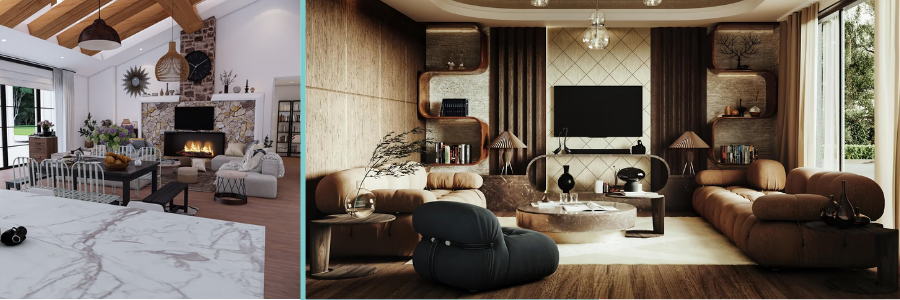
Production facility rendering and design by Cad Crowd freelance experts

RELATED: 12 important hiring tips for 3D rendering freelancers & 3D modeling service companies

MEP integration

Still on the subject of clash detection, a high-quality factory rendering allows for a comprehensive planning of the facility as a whole rather than as separate systems combined into one. Other than that, you’ll see not only a flat image as if you’re looking at a floor plan, but the spatial relationships among all the objects. And this is particularly important in the case of MEP (Mechanical, Electrical, and Plumbing) systems.

A manufacturing facility is, in essence, one big machine housed in an extensive structure. And like every machine, they need a proper electrical system, water inlets and outlets configuration, chemical piping, specialized HVAC components installation, and compressed air circulation, among other things. Just about everything is substantially more complex than what you typically find in residential buildings. Designing all these systems in isolation increases the likelihood of clashes. You don’t want to find that the ventilation duct is planned to be installed exactly at the same coordinate as a crane rail or structural steel support, leading to an untimely delay that costs thousands of dollars. The problem is that you can’t just move the parts to another spot because it may cause another series of clashes. Chances are, you have to dismantle a lot of interconnected parts and redo the process.

One of the best ways to ensure construction efficiency is zero conflict. Once again, architectural BIM services emerge as a reliable savior, providing a sort of “X-ray” view of the factory plan. BIM may not produce a photography-like visualization, but it can give you a clear outline of the building’s internal systems, which in turn allows for an overview of how the ducts, wiring, and piping integrate with the facility itself.

Stakeholders’ investment approval

Constructing a factory is an industrial project, and that’s capital-intensive. It may take tens, if not hundreds of millions of dollars, to build a new manufacturing facility capable of high-volume mass production. Like the vast majority of big industrial projects, it takes funding and approval by multiple stakeholders, which may include individual venture capitalists, the company’s boards of directors, or perhaps government agencies. 

One of the biggest challenges in securing the approvals of investors isn’t the technicalities of the construction itself, but the presentation. Not every stakeholder is trained to read a blueprint in the same way that an architect or engineer is. As a matter of fact, most people struggle to visualize a fairly simple 2D floor plan, let alone the construction plan of a gargantuan factory from a flat drawing.

You probably won’t need a sophisticated BIM file for this, as a photorealistic rendering would suffice to communicate a design for the less-technical audience. Throw in an animated walkthrough for the immersion effect, and you have a complete package of high-quality visualization to transform an otherwise complex architectural plan into an easily understandable view of a design. Add complex details when necessary, such as a showcase of the warehouse workflow or production line, for an extra touch of realism.

Investors are more likely to approve a big project when they’re confident in the design. Photorealistic rendering affords them the opportunity to take a glance at the foreseeable future when the construction reaches its final stage, and the factory building finally stands with all its industrial prowess. Visual clarity reduces the sense of risk and, therefore, speeds up the approval cycle for manufacturing design companies.

Safety compliance simulation

A factory is designed for productivity and efficiency, without sacrificing the health and safety of all the people populating the facility. Health and safety aren’t just moral obligations, but mandatory (as in, they’re required by law) and often have everything to do with financial concerns because non-compliance is a big liability. The problem is that most safety-related equipment and designs are built based on various “what if” scenarios, such as in the cases of fire, potential workplace injuries, occupational burnout, machinery-induced noise pollution, and more. 

Static two-dimensional images cannot reliably visualize the hypothetical scenarios in which accidents happen. Photorealistic rendering, on the other hand, can make use of animation to showcase “imagined” incidents where individuals’ health and safety are at risk in work environments. A 3D rendering expert may frame the animation in such a way that the audience can see from the perspective of an employee or a worker on the factory floor to understand the situation better. The simulation should be helpful for sightline analysis, emergency response training, and ergonomic optimization.

Efficient logistics

Forming the foundation of productivity in a manufacturing facility is a well-planned workflow, which can only happen when backed by efficient logistics. Think of it this way: if a forklift has to travel just one meter longer than necessary for every journey back and forth, the factory loses money in fuel, tires, maintenance, and time. A crane that takes a few seconds longer to carry raw material from the warehouse to the production line may cause a chain reaction of delay across the factory floor, leading to poor productivity and a loss of potential profit.

There’s no easy way to perceive the idea of congestion with static two-dimensional blueprints, such as when movements (whether of humans or machines) are hindered by some obstacles. Blueprints can’t visualize the possibility of crowding in heavy-traffic lanes during busy hours on the factory floor.

Animated rendering removes all the guesswork. By formatting the visualization as a spaghetti model (often used to explain the flow path of storms during hurricane season), you should be able to see with clarity how all the forklifts, cranes, trucks, materials, finished products, and people move about inside the facility. This is how you identify potential “traffic jams” or bottlenecks on the factory floor and plan for buffer spaces wherever necessary.

RELATED: Freelancing vs. in-house 3D visualization services: The best choice for companies

Accelerate construction

Just about every construction project appears to always happen in a rush. Heavy construction vehicles carry raw materials to the next processing station, while workers stay busy installing all the parts and assemblies in a seemingly random fashion. They’re all over the site, working on rebars with the help of rebar design services, steel structural supports, concrete, wooden beams, nuts and bolts, roofing components, and utility systems. But what looks like chaos really is a managed project, where everyone has a well-defined job description and carries out their duties as expected.

Another thing to mention is that long before the construction happens, there is usually a long process for design proposals, reviews, verifications, bidding, and approvals. The old way of doing architectural projects is linear and often slow. In the event of misunderstanding between the architect, engineer, or contractor, the construction schedule gets pushed back, and this adds to the project completion timeline. There’s also the problem with creating pages of 2D drafts just to plan for one specific location on the site. Each draft must be properly evaluated and approved by the stakeholders before the project can move forward. So if they have to do the same process dozens of times throughout the entire project, it can take months, if not years, to get the job done.

This is not to suggest that the old way is bad in any way. After all, people have been building production facilities for centuries before the proliferation of CAD or 3D rendering. That said, modern technologies, including photorealistic visualization and BIM, can improve efficiency a great deal. In the case of BIM, for example, the entire project plan is contained within a single file stored in a centralized database accessible by all stakeholders. Architects, engineers, and designers can update the plan simultaneously, and every modification is visible to everyone who has access to the file. Design reviews and approvals have become streamlined processes that happen in real-time. 

A BIM file contains not only an imagery of a structure, but detailed specifications of the materials, dimensions, geometries, tolerances, installation instructions, and manufacturer information of every component. The contractors understand the assignments well, component fabricators know exactly what to build, and the investors enjoy the comfort of knowing where the money goes. It even has scheduling information with automated clash detection to avoid conflicts with the construction timeline. Thanks to BIM, the entire project becomes predictable, more manageable, and highly efficient to expedite construction. And the sooner you get the facility up and running, the quicker you get to kick off production.

Thermal and lighting analysis

Every manufacturing facility should be well-lit in all areas. Great visibility is even more important in the actual production line. But it shouldn’t be all about installing the brightest lamps every few meters throughout the factory because they also generate heat. LEDs produce much less heat than the conventional incandescent type, so they’re a preferable choice for manufacturing design experts. If you have to use hundreds of LEDs, however, the increase in temperature would still be pretty noticeable. Let’s not forget that machinery, whether internal combustion or electric, also generates heat.

A lot of manufacturing facilities suffer from either hot zones or dark spots (sometimes both) due to poor air circulation, inefficient positioning of skylights, or improper placement of heat-generating equipment. This might not have been an issue in the old days when no better option existed, but now that architects and engineers are armed with modern rendering engines, an uncomfortable work environment and poor machine longevity because of excessive heat should be problems of the past. Advanced rendering engines offer many useful features for this purpose, such as Radiosity (which is an application of Finite Element Analysis) and Ray Tracing, to predict with great accuracy how light behaves in an environment to minimize dark spots. ThermoAnalytics can also visualize thermal data in high-fidelity graphics to help you get rid of hot zones. l

It’s worth mentioning that both Ray Tracing and Radiosity are capable of simulating natural lights as well. The visualization showcases the areas inside the facility that might be penetrated by natural light during daytime, so the engineers can then use the data to reduce/optimize the use of LEDs for energy efficiency. At the same time, the data gathered from thermal analysis reveals a clear view of how heat rises and accumulates in different spots, which offers an insight into how the HVAC system may mitigate the issue.

Environmental impact study

Anybody who’s been in the construction business, especially on industrial projects, is perhaps perfectly aware of the whole “NIMBYism” movement. It’s actually a pretty common phenomenon where residents oppose a new development in their local area, mostly out of fear that the new industrial infrastructure and industrial design services will negatively affect the surrounding environment. Sometimes, they also express concern for the possibility of noise pollution, an increase in traffic jams, or a decrease in their property value.

It can be difficult to dismiss the opposition unless you can provide an easy-to-understand visualization to inform the protesters that none of those concerns are actually true. Photorealistic renderings, both static and animated, give a clear explanation about how the factory handles its byproduct (if any), treats wastewater, implements a government-approved energy efficiency system, and manages noise. An aerial rendering of the facility should showcase the presence of green buffer zones, too. An accurate depiction of the facility and how it affects the environment fosters trust from the nearby community and helps de-escalate tensions in times of protest.

People might not be entirely interested in the actual environmental study conducted on the facility and what the data can tell them. However, you can produce some renderings based on that data to try to convince the community that everything is safe and runs in accordance with the regulations.

RELATED: 5 reasons freelancing studios are the future of 3D visualization services

Brownfield project management

A good number of industrial constructions aren’t actually greenfield projects (facilities built from scratch), but brownfield (renovations, retrofitting, or expansions). When old buildings are supposed to integrate with modern equipment and utilities, many things can go wrong, from incompatibility issues that lead to performance inefficiency or even weakened structural strength. The existing pillars, low ceilings, waste treatment systems, old electrical wiring, and even the roof structure can be engineering nightmares. 

Photorealistic 3D visualization services can help, for example, by converting the old blueprint into a 3D model or BIM file. However, an old building might have undergone multiple changes over the years, so the original construction documents are no longer accurate. Let’s not forget that many of the structural components suffer from degradation as well. Another option is LiDAR, which basically scans the old facility as it stands today and transforms the data into a 3D model. All of these require manual inspection, but modern visualizations are still better than relying on outdated blueprints.

Once you have the 3D models ready, planning for a brownfield project is no longer as complex as it used to be. Don’t get this wrong: Brownfield is almost always more difficult than greenfield, but at least the visualization helps you draft the project in a virtual environment, allowing for greater efficiency and accuracy. At the very least, the digital models afford the architects an opportunity to experiment with different factory floor layouts that facilitate efficient placements and installations of new production tools, heavy machinery, electrical wiring, lighting, HVAC components, and even routing for AGVs. The idea is to create a perfect fit, with zero interference, no compatibility issues, and enough spatial tolerances.

Scalable factory

Perhaps the greatest advantage of all is that photorealistic rendering opens the door to value engineering in preparation for growth. Manufacturing facilities may start with a single production line or hands-on assembly process, but they’re constantly looking to welcome emerging technologies, such as full automation and robotics. And with the current pace of development and competition, companies have no choice but to consider such growth an impending necessity, perhaps in the next 5 or 10 years.

From the perspective of infrastructure, it only makes sense to pour some additional resources upfront to make the building more scalable, or futureproof, if you please. In other words, a manufacturing facility built today must be able to adapt to the forthcoming industrial landscapes of the foreseeable future. If you build the factory by emphasizing only its usability for the current manufacturing systems and technologies, every major upgrade to the equipment and utility systems is likely cost-prohibitive.

Accurate visualization of the current structure enables the architectural design experts and engineers to plan for a flexible infrastructure designed to undergo changes and improvements without sacrificing the present-day functionality. For instance, the visualization may show a time-lapse animation that showcases how a new production line is added while keeping the current systems intact; the installation of solar panels on top of the roof structure without disrupting workflow; the integration of automated driverless robots with the crane equipment in the warehouse to achieve lean logistics, and so forth. 

production equipment and facility floor plan by Cad Crowd design experts

RELATED: How to hire freelance CAD design talent for your project: Tips for design companies and firms

Takeaway

The advantages of visualization services for manufacturing facilities go beyond pre-construction planning and budgeting, but reach far into scalability and futureproofing the infrastructure itself. You can even say that photorealistic rendering pushes the boundary of what’s possible with architectural drafting to allow stakeholders to have a sneak peek at the future. This will then enable them to develop a comprehensive measure and devise strategies to be prepared for every new technological development in the manufacturing sector. Although it’s actually impossible to make a perfectly accurate prediction of what the future may hold, visualization services can at least give you educated assumptions and informed estimates so that what you build today helps you gain competitive advantages in the future.

Not every factory rendering is created equal, however. As much as advanced software plays a factor in determining accuracy and overall quality, the professionals tinkering with object geometry, composition, lighting, shadows, textures, patterns, and post-processing details are the real defining factors. It takes skills, experience, and artistic touches to produce a high-quality rendering of a small-scale building, let alone a gigantic production facility.

That being said, BIM professionals and render artists capable of translating the file into photorealistic imagery remain scarce at this point. Cad Crowd is your best bet to find and connect with the right talent to get the job done. The platform places heavy emphasis on the AEC industry and is largely populated by experienced professionals of related trades, including BIM and architectural visualizations. Request a quote today.
author avatar

MacKenzie Brown is the founder and CEO of Cad Crowd. With over 18 years of experience in launching and scaling platforms specializing in CAD services, product design, manufacturing, hardware, and software development, MacKenzie is a recognized authority in the engineering industry. Under his leadership, Cad Crowd serves esteemed clients like NASA, JPL, the U.S. Navy, and Fortune 500 companies, empowering innovators with access to high-quality design and engineering talent.

Connect with me: LinkedInXCad Crowd

CAD Outsourcing: Architecture & BIM Drafting Strategies for Architectural Design Firms


The AEC industry is no stranger to outsourcing. Back in the day, architectural design firms probably saw outsourcing as a quick alternative to full-time hiring in times when the workload was too much to handle by the in-house team. They may hire smaller firms or freelancers to do the drafting or basic quantity takeoffs on smaller projects, just to keep the workflow running while the internal team is preoccupied with higher-stakes tasks. Things have changed quite a bit since then, most likely as soon as 3D modeling turned mainstream and BIM entered the scene afterward.

With the possible exception of real-time rendering in architectural visualization, BIM is arguably the biggest thing to have ever happened to the industry in a long time. It has introduced a new paradigm in design workflow by putting everything into a data-rich digital simulation where structural designs, materials, scheduling, cost estimation, clash detection, and energy performance are laid bare. The interactive nature of the BIM file makes the architectural design process an immersive experience and is loaded with all the data you need to formulate an informed design decision each time. The problem is that BIM professionals are few and far between, at least for now.

Outsourcing, which started as an “option” in the old days, has now become a necessity if an architectural firm wishes to take full advantage of everything BIM has to offer. And as an AEC-focused freelancing platform, Cad Crowd has the resources and the network to connect you with some of the most talented BIM specialists from all over the world.


🚀 Table of contents


BIM outsourcing strategies

With the lack of BIM experts in the industry, outsourcing is no longer a simple cost-saving measure for architectural firms, but a strategic move to gain a true competitive advantage. There are more than a few ways to make sure you get the best out of your money by hiring external BIM experts; some are listed below.

Pilot project

As a general rule, it’s a bad idea to fall into the trap of hiring a BIM partner solely based on what you see on their portfolio and other clients’ reviews. While both are pretty good indicators of quality of services, you can certainly use a little bit more concrete evidence of their capabilities. BIM is as sophisticated as architectural drafting services get at this point, and most likely used for a reasonably large project that involves complex technical calculations of geometry, bill of materials, prefabricated components, etc. And just because a potential partner, whether a firm or an individual freelancer, says they can do the job well, you are under no obligation to take them at their word. Instead, use the “pilot project” strategy.

The idea behind a pilot project is to gauge the partner’s technical proficiency and see if they have the expertise to handle a small-scale BIM task. In addition, you also get the chance to establish an efficient communication protocol without any big investment. Since the primary objective is to make sure that the partner can work at the pace you desire, hire them to do a BIM project that’s somehow representative of your typical workflow. The project must be small enough that you don’t have to spend too much money on it, yet sufficiently challenging because it needs to be a test at the same time.

Another benefit is that you have the chance to establish a BIM Execution Plan (BEP) early on, in case you actually end up collaborating with the partner for future and larger projects. BEP may contain guides to procedures like file naming conventions, software to use, file formats, data sharing, and so forth (you know a project is complex enough if you have to use an elaborate execution plan). Assuming the pilot project is successful with the partner delivering exactly what’s promised, you gain the confidence to bring the collaboration further. If not, move on to the next candidate. Either way, the time and effort you spend running the pilot project are resources well spent.

BIM rendering and design examples by Cad Crowd architectural experts

RELATED: 5 ways 3D architectural visualization can revolutionize your design process

Layered review

Outsourcing makes little sense if the deliverables fail to meet your expectations. In an ideal world, you should only outsource a BIM project to a partner proficient enough to create models that exceed (or at least match) the in-house quality standards. Otherwise, you might as well just rely on the team you already have.

It’s only natural that most freelancers and BIM service providers claim to have their own internal quality assurance professionals whose primary role is to ensure that all files are checked for errors and analyzed for inconsistencies before delivery to clients. All this sounds very reassuring, up until the point you remember that true professionals run their work through a third-party evaluation service. There’s no need to hire any independent analyst here; if the partner does use such a service, it’s a big plus all to your advantage, but you still need to practice due diligence anyway. An effective analysis happens in a layered review process to make sure that the audit is dependably objective:

  • 1st Layer: an automated review process in the form of clash detection by software. Solibri, Navisworks Manage, Revizto, ClashMEP, Autodesk Construction Cloud, BIM Track, and Bentley Navigator are among the most widely used options.
  • 2nd Layer: Make it clear in the project brief that the deliverable must be reviewed by at least one senior member of the outsourced team. Provide a list of the quality standards used by your firm and have the partner compare it against the deliverables.
  • 3rd Layer: your in-house team reviews the work, both automatically and manually, to ensure everything is in order. This means the outsourced team has to send a copy of the file ahead of schedule to compensate for the audit process and the possibility of a revision or two.

Please note that revisions are nothing but normal in any kind of outsourced task. The lack of direct supervision and management means you can’t control everything that happens during the workflow. Just because the deliverable isn’t 100% correct doesn’t mean the outsourced team is doing a bad job. In some cases, multiple rounds of revisions are still acceptable so long as the mistakes are within the margin of error. 

BIM component outsourcing

Considering how popular BIM is in today’s architectural landscape, there’s a good chance that your architectural planning and design firm will gradually (if not already) implement the technology in current and future projects. In the grand scheme of things, however, adoption is slow. Even for firms that have used BIM for a little while at this point, they still occasionally suffer from what’s typically referred to as BIM Bloat.

One thing that separates BIM files from other architectural visualizations is the amount of information contained directly in the models. BIM is supposed to be data-rich, filled with just about every single detail you can muster about structural elements, materials, plumbing configuration, HVAC installations, construction schedules, cost estimation, timeline projections, and more. With that in mind, there’s actually such a thing as too much data. Information overload happens when a BIM file is embedded with an excessive amount of non-critical data, leading to performance issues and unreliable error identification.

In a specialized component outsourcing scenario, you’re not hiring a partner to build an entire 3D building model from scratch. The main focus of the collaboration is to create efficient content libraries (such as Revit Families) to ensure standardized high-performance BIM components. For example, you can ask the partner to parametric components like cabinetry, doors, appliances, roofing, flooring, piping, or basically any architectural element with only the necessary metadata, such as manufacturer links, fire ratings, U-Values, etc. This project serves two major purposes: achieving a leaner component library and preparing an in-house team to create better BIM files.

Specialized BIM partner

It’s not uncommon for an architect or a small architectural firm to outsource or subcontract a certain portion of a project. A licensed architect is a qualified expert in building design, code compliance, project management, and cost estimation, but they might not be as adept at trade-specific tasks like HVAC duct routing, electrical wiring, or plumbing pipe installation. A typical strategy to solve the problem is to outsource the jobs to a BIM partner that specializes in MEP (mechanical, electrical, plumbing) and MEP drafting services.

This allows the architect to maintain control over design intent while ensuring that the actual construction/fabrication of MEP components has no negative impact on the building’s aesthetic and structural integrity. Because the MEP services will be integral parts of the building, the outsourced partner will need access to the architectural draft so they can configure a proper integration between the services and the structure itself. An MEP specialist often works directly with fabricators to locate the clearance zones (based on the provided draft) for installation and determine the right tolerances for maintenance. Once the plan is ready, the partner integrates the diagram with the architect’s BIM file for clash detection.

A big architectural firm probably employs an MEP professional to handle the task, but an architect running a small firm or a one-person business probably cannot justify hiring a full-time salaried expert for the job. Outsourcing to a specialized BIM partner enables the architect to focus on the design and management side of the project rather than getting bogged down with the particulars of non-structural building components.

RELATED: Why is 2D drafting still relevant for different types of architectural drawings?

Building energy modeling

Not every architectural project needs a Building Energy Modeling (or BEM), which is a subset of BIM that specifically concerns indoor air quality, energy consumption, and acoustics. But thanks to growing awareness of the importance of eco-friendly architecture and sustainability, every architectural firm must take these issues more seriously. 

In short, BEM uses a digital model of a structure to evaluate energy performance under various conditions. Take, for example, an architectural model to simulate and analyze the energy-saving potential of different HVAC configurations; even seemingly simple things like insulation materials can affect the overall effectiveness of the entire service installation over a long period of use. Hiring a BEM freelancer should count as specialized CAD outsourcing, too.

Instead of hiring a sustainability consultant full-time or purchasing an expensive simulation tool that you use probably no more than half a dozen times a year, outsourcing the task to a specialized professional is the more sensible choice. Because you have to send the BIM file of the structural design to ensure accurate evaluation, such a project may involve an NDA, so make sure to prepare the form and that the outsourced partner is willing to agree to your IP protection term.

BEM should provide not just a report of the energy performance, but also simulation-based suggestions on various elements like the size of the HVAC system, ventilation, window-to-wall ratio, design of shading device, roof insulation, and more. BEM outsourcing is a popular strategy often used by small to mid-sized architectural firms to compete with their bigger counterparts. In the event a client asks about why a certain design approach is taken while the alternative is discarded, the firm can easily explain that everything is based on a valid simulation technology by a professional partner. This is how the small firms increase their credibility without allocating big financial resources – resources they can otherwise spend on the core design and construction services.

3D BIM designs by Cad Crowd architectural design freelancers

RELATED: Top 31 3D architectural rendering platforms for freelance Maya 3D modelers & artists

Augmentation model

Hiring freelancers as external non-payrolled professionals makes things practical and straightforward. You pay someone from outside the company to handle tasks that would be too time-consuming or resource-demanding for the in-house team to do. Think of it as bringing in a reinforcement without all the overheads typically associated with full-time salaried employees, like benefits and insurance. In many freelance engagements, the work is performed off-site, and this is especially true for architectural drafting projects. The freelancer does much of the drafting work without direct contact/supervision from the employer. For example, a freelancer based in Canada might be hired by an architectural firm located in the United States. Sometimes, the employer and the employee are on different continents entirely. 

But CAD outsourcing is also possibly done in a “staff augmentation model” method, where the employers bring in additional workforce to reinforce the in-house team. The external employees are hired on either a contractual or per-project basis, but they may work alongside the internal ones under the same roof, at least temporarily. These CAD design services serve as an extension of your firm for the duration of the contract.

A staff augmentation model makes good financial sense if the external team only consists of a small group of people, or perhaps an expert BIM consultant, and they’re locally-based. Otherwise, you may have to compensate for the travel and accommodation expenses, which can pile up to a huge bill very quickly. This is not to say that overseas staff augmentation always amounts to an expensive venture, because it all depends on how the reinforcement can improve your team and project.

Knowledge transfer

Considering how the AEC industry is in a transitory period from 2D drafting to BIM implementation, chances are you’ll see a lot of staff augmentation in the coming years in an attempt to expedite adoption. Many firms will hire BIM experts and consultants to help prepare their internal teams for the changes and to ensure a smooth transition.

One of the primary objectives of staff augmentation is to facilitate knowledge transfer. At this point, the AEC industry has to admit that trained BIM professionals are still relatively scarce. For some reason, the industry appears to be hesitant to make the move toward full adoption, despite the perceived maturity of the BIM technology itself. Many new architects on their way to licensure aren’t necessarily adept at BIM, either. In fact, many architectural schools and instructors don’t require the students to use it in the first place.

Hiring BIM experts, especially with the staff augmentation model, opens the doors to an effective hands-on knowledge transfer. BIM remains a highly specialized field in the architectural discipline. While the benefits are enormous, jumping into BIM all at once can be pretty intimidating to seasoned architects, let alone the junior ones. By including “knowledge transfer” as a job specification in staff augmentation, the freelancer understands that part of the role is to provide guidance on BIM implementation, rather than taking over the task. Guidance can be as simple as a walkthrough of a model, an hour of presentation into the BIM software at the beginning of a shift, a crash course, or anything else your firm may see fit.

The FTS workflow method

Say the in-house team is already familiar with using BIM for architectural drafting, but a project has a tight deadline that makes everyone feel rushed. A reinforcement may help reduce the workload for the team, but on the other hand, it just isn’t the right time to hire new employees. Let’s not forget that the project must be completed as quickly as possible, that even with the addition of new employees, everyone still has to work overtime almost every day just to meet the deadline.

What you need in this situation is an FTS-based outsourcing. FTS, short for “Follow-the-Sun” model, is a strategic outsourcing method that leverages the global time zones to increase productivity. The idea is to keep the project running even when the traditional work hours are already over in your local time. 

Let’s say your firm is located in New York, USA, where the typical work hours last between 9 AM and 5 PM local time. Because the construction is already scheduled to begin within the next few weeks, you need to get the BIM file done in record time, as it needs to be reviewed and evaluated by the architectural design expert first. And it’s always important to take into account the likelihood of having to revise the file, too.

Outsourcing with an FTS model means hiring freelancers located in different time zones, so that the work on the BIM file is running around the clock. In this case, you need someone to pick up exactly where you left off at 5 PM. A freelancer located in Australia or Japan would make for a good candidate, because it’s still morning in those two countries while your in-house employees have already signed off. To keep the project running 24/7, you may want to consider bringing in another freelance drafter (from yet another timezone, preferably in the UK or Europe) to fill in the void between the end of the second shift and the start of the first one. The cycle continues until the BIM file is ready just in time.

Cloud-based collaboration

A prerequisite for BIM outsourcing is a cloud-based collaboration tool, and even more so if you’re using the “follow-the-sun” model. Some portions of an architectural project workflow might still rely on the tried-and-true FTP or email, but it won’t be sufficient for BIM, as it takes real-time collaboration. Among the most popular of such platforms are Autodesk BIM Collaborate Pro, Trimble Connect, BIMcollab, Graphisoft BIMcloud, Newforma Konekt, and Bentley ProjectWise.

The idea behind cloud collaboration is to allow everyone (architects, engineering design experts, designers, clients, or any authorized stakeholder) to access the BIM file simultaneously. It enables co-authoring and instant feedback because everyone is viewing, editing, and working on a single centralized dataset. Most, if not all, cloud-based platforms automatically record version history, making it easier to revert to the previous configuration in case one of the outsourced partners makes a mistake or some disproved modifications. Because changes happen in real-time, there’s minimal coordination gap. 

Cloud collaboration also opens the door to effective issue tracking. Multiple teams located in different time zones might be assigned to handle specific tasks to avoid overlapping designs. If the team in the US takes care of the structural design, the freelancer in Japan can do the HVAC and MEP layout, whereas the European partner handles the issue tracking. The final design decision is ultimately at your firm’s (or the client’s) discretion, but cloud collaboration is always helpful to improve transparency. Even if you can’t provide direct supervision to overseas outsourced partners at all times, the real-time coordination keeps the workflow in control with clear deliverables, as observed in the centralized BIM file. 

architectural BIM examples by Cad Crowd professional freelancers

RELATED: Transforming institutional spaces: The power of interior design and 3D rendering services

About risk management

Every task outsourced to an external partner comes with a risk of issues concerning intellectual property and data security. And when it comes to CAD outsourcing, especially for any project that has anything to do with a BIM file, you just can’t be too careful about confidentiality. To minimize the risk, the collaboration needs to be carried out under the umbrella of compliance with ISO 19650 (the international standard for BIM information management) and Common Data Environment or CDE, to restrict file access (in practice, the outsourced partners need only to have access to the data relevant to specific tasks assigned to them).

At the very least, enforce an NDA (Non-Disclosure Agreement) as the legal framework to protect your firm against unauthorized data access/sharing of any sort.

Takeaway

There’s no denying that BIM has introduced some major improvements to the AEC industry almost in its entirety, from design and sustainability planning to construction management and cost estimation. Despite its proven usefulness, maintaining an in-house team of BIM professionals remains quite a challenge for small to mid-sized architectural firms. While software and hardware are getting more affordable every year, the relative scarcity of trained BIM specialists is a challenge too difficult to overcome at this point. It does seem that the vast majority of the available BIM workforce choose to offer their services as independent contractors instead of full-time salaried employees. And it’s no coincidence that most of those independent talents find home in Cad Crowd, a freelancing platform specializing in the Architectural, Engineering, and Construction industry. Request a quote today.

author avatar

MacKenzie Brown is the founder and CEO of Cad Crowd. With over 18 years of experience in launching and scaling platforms specializing in CAD services, product design, manufacturing, hardware, and software development, MacKenzie is a recognized authority in the engineering industry. Under his leadership, Cad Crowd serves esteemed clients like NASA, JPL, the U.S. Navy, and Fortune 500 companies, empowering innovators with access to high-quality design and engineering talent.

Connect with me: LinkedInXCad Crowd

A Startup Guide to Concept Design for Hardware with Product Design Services Companies


So you have an idea for the next “big” thing that will revolutionize the world. Maybe it struck you in the shower. Maybe it struck you in the wee hours of 3 in the morning when you’re half-awake and chatted with your cat. You drew something vaguely potato-wing-like on a napkin, and now you’re certain that it will shake up at least three markets. To the exhilarating and sometimes frightening world of hardware concept creation!

Hardware development is not a weekend hack-a-thon to build a new app. There are no quick patches or magical “undo” buttons when you find that your prototype’s battery roasts like a toaster oven on steroids. That is precisely why there are concept design services. It is the step that prevents your idea from becoming a costly paperweight.

Startups like to downplay how complicated this stage can be. There are drawings to figure out, user requirements to go over, materials to keep in mind, and prototyping techniques to schedule. Leave any of these behind, and you’ll have something lovely on Instagram but breakable in half when a toddler lays hands on it.

The best news is, you don’t have to do this on your own. Product design service firms are experts at taking goofy ideas and turning them into viable, manufacturable designs. Hiring professionals up front will protect you from unwarranted expense and torturous revisions. Places like Cad Crowd enable you to get in touch easily with seasoned product designers who both know how to be creative and also understand engineering. They’re your concept design safety net.

Here, we will take you through the basics of hardware concept design without blowing your mind with techno-jargon. We will also touch on why sketches matter more than you know, running tests on assumptions without spending a fortune, and what you can expect when working with design services companies. There will be some laughs, some cautionary tales, and plenty of real-world tips along the way. When you are finished, you will have a clear vision for taking your “potato with wings” and making it a polished product that has a legitimate chance at succeeding in the marketplace.


🚀 Table of contents


The thrill and terror of your first hardware idea

All entrepreneurs have experienced that shivery moment when a flash of inspiration hits you. Your mind leaps ahead to the media spotlights, the TED talk, and the yacht you will one day buy. But between your scribbling in the notebook and your first prototype, harsh reality will snap you back to attention with a large rubber glove.

Hardware does not play nice. While software may be a question of painting a virtual image, hardware is a question of sculpting marble. As soon as you take away too much, you can’t just hit “undo.” No, there is something about watching your “innovative” design splatter its initial drop test onto a cold concrete floor. It wobbles, flails, and then your brilliant idea is torn to smithereens like a disappointed LEGO set after a fit from a toddler.

This is where concept design saves your sanity. It has nothing to do with making pretty pictures. Concept design experts ask difficult questions before you invest hard money. It forces you to see options, consider functionality, and consider manufacturability. Good product design services companies will even shoot holes in your plan to prevent it from falling apart literally.

Product design of a sports and training sleeve and paintball gun by Cad Crowd design freelancers

RELATED: What are proven product design principles when working with companies & freelancers?

What concept design really is (Jargon-free)

Hardware concept design is really the translation office from your imagination to the factory floor. What you are doing here is taking your idea and making it something that can be translated, tested, and ultimately made.

It involves sketches, renderings, rough models, and lots of “what if” talking. Unlike industrial design, which is deeply interested in form and appearance, or engineering design, which drills into technical detail, concept design is the playpen where art and science meet.

Consider a Venn diagram where one of the circles is “Looks Cool,” and the other is “Actually Works.” Concept design is the lovely overlap. It is why your shiny toy won’t need duct tape to function.

Good concept design is also narrative. A business-grade rendering or mockup tells investors, fellow colleagues, and potential clients, “This exists. This is happening.” And when you use a service like Cad Crowd to source designers, you are not just hiring a pair of hands. You are getting access to people who understand how to take your idea and make them understand clearly without your needing to defend your napkin scribble in a boardroom.

Turning brain sparks into tangible plans

Do not rush off to your CAD software or 3D printing design service just yet. Step back and ask yourself: Does anyone actually need this thing? Founders are prone to falling in love with what they’ve created, only to discover later that no one else wants it either.

Begin with market research. It does not need to be a grueling spreadsheet endurance test. Interview prospective users. Blog. Observe what people grumble about in criticisms of products that already exist. If your device resolves a genuine pain point, you are already ahead of half the startups in the world.

Next, describe your product’s major functions. What is it solving for you? What sets it apart? Keep it brief. There is a temptation to pack it with every conceivable feature. Now your sleek smart toothbrush doubles as a music player, weather checker, and espresso machine. That is feature creep, and it is the bane of good hardware design.

Product design companies can help here, too. They’ve seen what works, what doesn’t, and what eats through a budget faster than “crowdfunding fiasco.” A company you find through Cad Crowd can help your idea flow into a tight, buildable idea without your laying out one dime on tooling.

Sketches, renderings, and rough models

Don’t underestimate the authority of a poor drawing. Some of the greatest products ever created were badly drawn. Perfection isn’t the goal here. Communication is the goal.

Start with pencil sketches. Even if your drawings in elementary school were better, you can still mark principal shapes and functions. Once you have a number of promising leads, go to digital media like CAD.

They enable you to experiment with proportions, dimensions, and mechanical components more accurately.

Your professional design team can bring it to life. They make it possible for stakeholders to see your product as real. Photo-realistic images are something that product design experts can do well. These can be used to entice investors or test consumer appeal on social media. Platforms like Cad Crowd introduce you to designers who can turn your gadget into a million-dollar product before manufacturing a prototype.

If you’re the do-it-yourself type, you can make crude models using foam, cardboard, or even clay. Low-cost models allow you to try out size and ergonomics without jeopardizing expensive materials. You may find that your hand-held device is child-proof but painful for an adult. Worse to find that out than after a complete production run.

Prototyping without burning your wallet

At some point, your sketches and CAD models must leave the virtual world. That is where prototyping fits in. It is like the ugly teenager phase of your product. It is not yet attractive, but it is growing really fast. Rapid prototyping is within surprisingly easy reach. 3D printing lets you make physical models rapidly and inexpensively. You can try out shapes, fit, and even primitive functions without selling your kidney for the price of production. Foam models are another inexpensive way to check ergonomics. They are the action figure figurine form of your product: inexpensive, small, and surprisingly enlightening.

CNC machining costs more but produces more accurate and durable prototypes. It’s convenient if you need to test-run mechanical pieces or stress areas. Regardless of what you choose to do, don’t fall into the thinking trap that your first prototype must be perfect. It is meant to fail where you did not expect it. That is what it is for.

It is at this point that most entrepreneurs fear, believing that defective prototypes will scare away investors or partners. Actually, the fact that you are working towards refining and testing your idea indicates that you are mature. Product design services companies, especially those you can access through Cad Crowd, can guide you through prototyping design services without resource wastage. They know what areas can be started with for trial purposes and what can be done on the next round.

RELATED: Designing for visual impact with your product design services company

Manufacturing and material considerations prior to pledge

Oh, materials. They are the unsung heroes and sometimes villains of hardware creation. Get it wrong, and your product cracks, warps, or costs more to make than you wanted. Get it right, and you can save money, increase longevity, and get your product to be more appealing.

Start by considering the environment in which your product will exist. Will it see moisture, heat, or abuse? A fashion plastic can be stylish-looking, but it could melt faster than an ice cream cone at the beach on a hot summer day if it’s exposed to high temperatures. Metals are strong but heavy, and some composites are light but stiff. There are always compromises with each.

Manufacturability is as much a consideration as appearance. Some materials are harder to machine, mold, or assemble. If your product requires exotic parts or impossible tolerances, factories will avoid you or charge you an outrageous sum. It is for this reason that hiring a product design services company in the beginning is a good idea. They can identify manufacturing nightmares in advance before you become infatuated with a design that cannot be produced in quantity.

Another thing to consider is sustainability. Consumers have become increasingly conscious of saving the environment (as we all should). By using recyclable materials on your product, you can attract consumers that promotes sustainability. Like the designers from Cad Crowd, they can help you and your engineering design firm find a balance between sustainability, quality, and price.

Designing with product design services firms

Working with a product design services firm is like leaving your baby with a babysitter for the first time. You worry that they will mess it up or, worse still, will attempt to make it “better” in a way you don’t like. But a good design partner will treat your conception carefully and react with proficiency that you can never reproduce by yourself.

Start by looking for prospective partners. Look for portfolios that match your product’s level of style and complexity. Check out reviews and testimonials. Don’t be afraid to ask for references or samples of similar projects.

In any aspect of life, communication is always the key. Always know what you want, especially regarding the project deadline and allocation of money. Ask for updates, even if it’s a drawing or scribbles. A professional designer can’t deliver your expected results if you can’t communicate clearly what you need.

Legal protection is also important. Use of non-disclosure agreements (NDAs) to protect your intellectual property. Most professional CAD design services will require it and will willingly sign.

Platforms like Cad Crowd make it easier for you to complete your team. They can connect you with screen-tested designers and engineers specializing in hardware concept design or CAD. Especially, if you require assistance in creating starting sketches, 3D modeling, or production-ready file preparation, you can find the perfect match for you without wasting months asking for recommendations.

Lastly, don’t forget cooperation is a two-way street. Hear criticism out. Experienced designers may propose changes that maximize usability, minimize cost, or ease manufacturing. While it stings to leave behind your original idea, the changes often are between a product that fails and a product that succeeds.

Common mistakes first-time founders make

Every new hardware startup founder has a horror story to tell. Some of them are funny in hindsight. Some of them are a nightmare. Listening to them can spare you the expensive mistakes.

One of the biggest mistakes in business is adding more features to a product. It all starts with a simple idea, let’s say you want to produce a cooler bottle that keeps drinks cold for longer hours. Next, you want to include a Bluetooth speaker, a cup warmer, and a built-in blender. Now, the final product is more expensive than the latest game console. This reminds you to keep your product simple and not add unnecessary features just because it’s in the latest trend.

Another common mistake is neglect of design for manufacturability services. You may create a beautiful product that looks wonderful, but is impossible to produce at an affordable price. Factories are not magic. If you specify super-tiny tolerances or unique parts never made before, expect stratospheric prices or pleasant rejection letters.

Forgetting to test is another classic repeat offender. You’re convinced your design is perfect, so you launch straight into manufacturing. And you discover that the battery lasts only twenty minutes, or the hinges collapse at slight pressure. Iteration is dull, but it’s much cheaper than recalling ten thousand dead units.

Finally, poor communication can swamp even a good project. When you are vague with your product design services company, you invite miscommunication. Specific instructions, attainable expectations, and regular feedback prevent frustration from both sides. Cad Crowd makes it a lot easier to locate communicative, talented designers, but you still need to speak up.

Product and hardware design of an LED lamp and 3D printer by Cad Crowd design freelancers

RELATED: How innovative design techniques can supercharge your new product concept

The magic of iteration and feedback loops

Iteration isn’t sexy, but this is where the magic happens. Every incredible piece of hardware you adore, from your favorite headphones to your appliances in the kitchen, had thousands of iterations before it went to market. Even Apple and Dyson, those industry giants, test and iterate furiously.

Each revision is picking up something new. Maybe your device is cumbersome to hold, or maybe one button’s placement is confusing for users. These small adjustments, repeated time and again, make a good product into a great product through prototype engineering services.

User testing is worth its weight in gold. Show your prototype to someone who has never seen it before and observe what they do. They will press the wrong button, flip it over, or use it in a way that you never dreamed. It’s an eye-opener, but it teaches you things that no spreadsheet ever could.

Never give up on failure. Treat every mistake as a veil for progress. The earlier your mistakes, the earlier your growth. Work with your product design services company to incorporate critiques, re-doing designs, and building improved prototypes. Cad Crowd’s network of designers can guide you through such loops efficiently and steer clear of wasteful setbacks.

Bonus tips for navigating the wild world of hardware design

Even with the best design, hardware development tends to surprise you. These are some other tricks to put in your regular bag and maybe avoid a surprise crash:

But packaging can shatter or create the first customer impression. Packaging design services decide shipping expenses, shelf life, and even safety. Involve your product design company in packaging decisions. Designers on sites like Cad Crowd can suggest functionalities that are affordable, aesthetic, and functional.

Don’t accept the first manufacturing offer at face value. Research alternatives like injection molding, vacuum forming, or die casting. Another option, usually, will be cheaper or improve the quality. A skilled designer will walk you through the pros and cons without getting bogged down with details.

Real-life situations

Just imagine the pet feeder; the first designs were stunning on paper. However, when the first batch of manufactured products arrived, the hinge on the lid failed after a few cycles. Customers posted videos of cats blissfully trashing the feeders like furry little engineers. The company recalled the product and re-engineered the hinge, an expensive lesson in testing in real-world environments.

And another founder wanted to create a wearable fitness tracker with a revolutionary clasp system. They skipped user testing because “everyone knows how to use a clasp.” But they didn’t. The clasp was so user-unfriendly that customers wore the tracker backwards or broke it attempting to buckle it. A single round of user testing could have avoided months of embarrassment and lost sales.

It’s because of anecdotes like these that iteration, open feedback, and collaboration with product development experts are so crucial. A good designer will not just provide you with neat files. They will burst bubbles in assumptions, suggest ways to make it better, and guide you around pitfalls that have swallowed up other founders whole.

RELATED: The 5 stages of prototyping for any new product idea for product design service companies

The role of branding in hardware concept design

It’s easy to take only care of the physical aspects of your product and neglect branding. Branding, however, is not merely logos and color schemes. Branding is what informs your design decisions from the start. Is your product sleek and futuristic? Friendly and playful? Outdoor-inspired and tough? These decisions determine everything from material selection to button shape.

Your designer can incorporate branding into the concept phase. If, for instance, your company is concerned about sustainability, that should guide your selection of materials and packaging. If your item is aimed at a high-end market, your concept design should be sophisticated and precise. Cad Crowd’s network has designers who know branding as part of the larger picture and will make sure your product and your brand are a natural fit.

Getting ready for manufacturing like a pro

Once you have already planned your product, you must prepare for large-scale production. This is the most underestimated phase for the first-time businessman. For them to create a successful product, they need detailed drawings, clear specifications, and clear illustrations. That’s why sloppy documentation and management can result in a very expensive failure.

Work with your product design services firm to create manufacturing-ready documents. Double-check every measurement, every tolerance, and every material specification. Don’t rely on the manufacturing design firm to “figure it out.” They will produce exactly what you give them, which can mean producing 10,000 pieces with a defect that could have been identified early on.

You ought also to think about production locations.  Home-country production can be easier in terms of communication and quality control, but foreign production can be less expensive, but needs to have great screening and perhaps longer lead times.  Think in terms of shipping, tariffs, and variations in communication styles.  A seasoned global manufacturing designer will make this easier to do.

Holding sanity together through the highs and lows

Hardware construction is a series of rollercoasters. There will be a time when you will wonder why in the world you ever thought that your plan was a good idea, but that’s fine. Remember to surround yourself with positive peers, mentors, or even online communities of fellow founders. Share your stories, and sometimes, a word of encouragement here and there from someone who has walked in your footsteps can make all the difference.

Failures are redirections. These are your long-term motivations. Keep in mind that you’re making something real, that people can hold, use, and keep close to their hearts. That’s worth the headaches. Knowing you’re leaving a legacy.

Hardware design of an operator crane and scooter by Cad Crowd product design experts and freelancers

RELATED: How CAD turns your idea into a prototype for CAD design companies & freelance services

One last push toward action

You now have information, game plans, and a little bit of sound advice. But information does not build a product. Action does. Start sketching. Research your market. Get in touch with a product design services company. Sites like Cad Crowd wait in the wings with a group of good designers who can transform your “someday” idea into a real, producible product.

Don’t wait until your concept is perfected because it won’t be. Perfection is the progress killer. The sooner you get your idea in motion, the sooner you can learn, adapt, and build something amazing. The world doesn’t need another napkin drawing that has been left behind. It needs your idea, refined, experimented with, and ready to take over the world. Request a quote today.
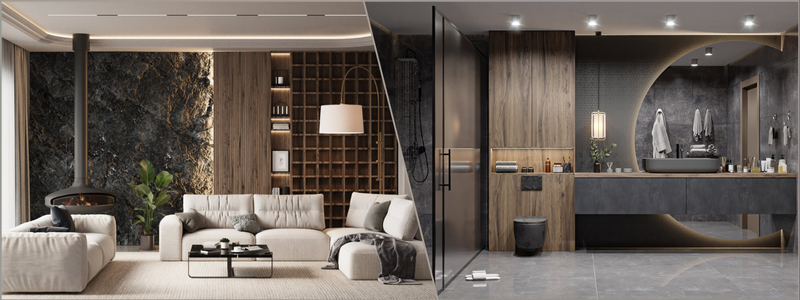
author avatar

MacKenzie Brown is the founder and CEO of Cad Crowd. With over 18 years of experience in launching and scaling platforms specializing in CAD services, product design, manufacturing, hardware, and software development, MacKenzie is a recognized authority in the engineering industry. Under his leadership, Cad Crowd serves esteemed clients like NASA, JPL, the U.S. Navy, and Fortune 500 companies, empowering innovators with access to high-quality design and engineering talent.

Connect with me: LinkedInXCad Crowd

Architectural Visualizations vs. Architectural Renderings: A Comparative Guide for Services


Visualization and rendering are the most commonly used words in architecture, and also the most confusing. Are they the same animal, just differently dressed, or do they serve entirely different purposes? If you’ve ever found yourself scratching your head as you flick through a design portfolio, then this guide is for you. You’ll learn not just what each service entails but how to find the right talent for your next architectural project, and why Cad Crowd is a great place to come looking for seriously skilled freelance professionals in this area.

Setting the scene: You are an architectural design expert, a designer, or even a client with this really ambitious dream of turning a plot of land into the next iconic skyscraper or chic residential complex. Your mind is filled with ideas, like confetti being thrown in a parade. However, unless you are able to show someone else that idea stays in your brain, like some rare Pokémon that nobody knows about. That’s where architectural visualizations and renderings come into play. They translate imagination, bridge concept and reality, and sometimes even rescue client presentations that would be adrift in some muggy waters of misunderstandings.


🚀 Table of contents


Understanding architectural visualizations

Architectural visualization is a medium that expresses highly detailed, often three-dimensional depictions of designs. Consider this as a kind of crystal ball through which the architect, client, and stakeholders are granted permission to look into the future. This can range from the simplest 3D model showing space and scale to complex photorealistic scenes that make one question whether the building already exists.

Indeed, it is in the beauty of architectural visualization that it can be so versatile: from interior layouts to exterior facades, from lighting effects to landscaping details-everything could be shown within one single visualization. If ever you experienced admiration for some sort of computer-generated image, which felt so real you could almost feel the sunlight beating on your face, chances are high you were looking at an architectural visualization.

Well, here is where things get very interesting: now, architectural visualization services have not only become technical but have also become a storytelling device, enabling architects to actually talk about the space experience. With the ability to virtually walk through a hotel lobby in the future and notice how the sun filters through skylights or how shadows dance on textured walls, it shows you what it looks like in reality and goes beyond being more than a drawing to an experience that can delight, persuade, and inspire.

It’s not about slapping shapes and textures together to make a visualization. It requires knowledge of software, lighting, materials, and spatial perception. Among professionals, 3ds Max, SketchUp, Blender, and Revit are common; additional rendering engines like V-Ray or Corona bring the finished image to life. A good visualization artist takes that blueprint and develops an exciting digital model that is often colored enough to sometimes be mistaken for a photograph when it crops up.

But probably the most important, and least talked about, aspects of visualization come in problem-solving for designs well before a single brick has been laid. Such is the case, for example, when an office building visualized in 3D shows that certain windows are oriented to the street at an awkward angle, with considerable glare inside offices. Being able to catch this in a visualization allows architects to make adjustments in the design much earlier in the process, and saves a great deal of time and money, and quite a fair share of frustration at the construction phase.

These visualizations are priceless in the case of complex structures, too. Think about a modern museum where swooping curves cross planes; any flat blueprint can only begin to give a sense of what it’s like to walk through such a space. A good visualization captures human movement through galleries, light and material interactions, and a realistic sense of scale that drawings alone can’t provide.

The other interesting application involves virtual walkthroughs whereby an architect can afford a client an opportunity to see deeply into his or her potential building and get a feel of the inside as if it were currently standing. It would prove more useful in residential work, such as for 3D residential rendering services, when clients want to feel the flow of rooms, or in commercial developments, when the impact of such areas as a lobby, an atrium, or a public area needs to be fully grasped.

3D rendering and visualization of an A frame home and sleek bathroom design by Cad Crowd freelance visualization services

RELATED: Top 31 3D architectural rendering platforms for freelance Maya 3D modelers & artists

Getting into architectural renderings

By contrast, architectural renderings are the final presentation in relation to a particular building or structure. Though renderings could use 3D models, they can also be made as 2D illustrations or digital paintings. Briefly put, a rendering is just the finished and presentable version of any design showing style, materiality, and atmosphere.

You can sort of think about renderings as the Instagramworthy architecture; it’s done with considerations of composition and lighting, even sometimes an artistic flourish. Other than flat visualizations that may have their focal point on technical accuracy and spatial understanding, renderings are to amaze, absolute emotional drums beating. Renderings can be realistic, semi-realistic, or even stylized, depending on the formality you wish to portray.

Renderings are crucial during the pitching for a client or stakeholder who is not used to reading architectural drawings. One well-rendered image can tell them about the scale, function, and aesthetic appeal in one glance, perhaps difficult with a floor plan or wireframe model. In other words, renderings are a kind of secret weapon when you want someone to fall in love with a project they have never seen physically.

Renderings also provide artistic license that the visualizations sometimes cannot. Emphasis can be given to certain elements of the design, colors can be changed based on mood, or the light effects can be exaggerated to help show architectural features. This is particularly useful within marketing materials where the purpose is to grab attention and communicate a sense of quality and desirability that is especially relevant for photorealistic rendering services.

While creation often goes along with the process of visualization, the mindset differs. Where it is to understand and explore a design through the process of visualization, rendering revolves around presentation and persuasion. It’s the difference between walking through rehearsal and performing the final show. Both have their place, but knowing when to use each service is key to communicating your vision effectively.

There are key differences between renderings and visualizations.

By now, you might say to yourself, aren’t these two terms twins separated at birth? The best answer would go both ways: yes and no. Though alike in some ways, visualizations and renderings are used for different purposes in the architecture workflow.

By nature, visualizations are exploratory. It’s one way the architect can test an idea, play with spatiality, lighting, and material to anticipate certain problems in design. They are sort of the blueprint of imagination-a sandbox where creativity and practicality meet.

Renderings, however, are persuaders. They take the output of visualizations and make from it clear, evocative images that speak effectively to clients or investors. Rendering concerns mood, color, material, or flavor, and where the design affects an emotional sense. They are made to artfully sell a vision and not just to illustrate.

Another point of differentiation would be the degree of polish. Visuals can range from raw models and technical viewpoints to even schematic visuals. The most refined ones are usually renderings, with advanced lighting, real textures, and surroundings such as landscaping, sky, and people through HDR rendering services.

Also, timing and purpose essentially distinguish the two. Visualizations are commonly done at the design stage of a project when architects do quick iterations to explore options, while renderings are used either at the culmination of a project or at presentations, whereby the intent may be to impress, communicate, and get approvals or investments.

Analogically, that would be: Visualization would be the bridge tested by an engineer under virtual loads, just to make sure everything stands strong and sturdy, whereas the rendering would be a photo of that bridge at sunset, with light displaying it softly and with pedestrians walking down and birds flying over. Both are important, but they serve entirely different functions.

Why both services are valuable

It may be that one of the services is enough or that one overcomes another. But in fact, both architectural visualization and rendering make their contribution to the process in their own way. That is where visualizations help architects and designers to make decisions sooner in the design process. This reduces the risks associated with expensive mistakes, improves the understanding of clients, and drives innovation. The renderings communicate a final vision that is engaging, in which the clients, investors, and other stakeholders are on track with the direction of the design.

Combined, they are the architectural dynamic duo of sorts. While the ability to visualize takes one on a tour around the city before it is built, a rendering allows them to show it at its best. In that respect, both help each other in the design process to make it easier, better performed, and much more engaging.

By applying views and renderings, architectural design firms can establish that the project is structurally sound while at the same time visually and emotionally stimulating. The renderings act as a bridge between technical precision and aesthetic values, allowing appreciation of function and beauty alike in design.

The role of freelance talent

And therein lies the interesting plot. With the recent mushrooming of freelance marketplaces, like Cad Crowd, how architects and developers gain access to such skill sets has been redefined. Instead of being at the mercy of in-house talent tied down by geographical location or availability, firms today can connect with skilled freelance artists around the world. Visualization and rendering can be outsourced to freelancers, and more often than not, they bring fresh insights and creative solutions that your in-house team might have missed.

Cad Crowd lets you easily access portfolios, read reviews, or hire experts in just the kind of architectural service you need. Be it an ultra-detailed work by interior visualization services, exterior renderings, or full 3D walkthroughs, this platform connects you with a deep pool of experienced talent that will make your vision come alive in the best possible way.

Freelancers are more productive and budget-friendly than employees. You will have to pay only for the required expertise that may fall within a certain period of time and without additional costs for maintaining permanent staff. What’s more, a lot of freelance artists have broad experience in new software, trends, and techniques that will keep your visualizations and renderings qualitative, competitive, and up-to-date.

RELATED: Transforming institutional spaces: The power of interior design and 3D rendering services

Understanding software & techniques

Both visualizations and renderings require advanced software; however, the approach can be different. In architectural visualization, programs such as SketchUp, Rhino, and Revit enable the creation of detailed models, while tools like Lumion and Twinmotion allow architects to create realistic walkthroughs. In cases involving renderings, 3ds Max, Blender, V-Ray, or Corona are common for making something quite polished. Other professionals even use Adobe Photoshop to refine the textures, lighting, and details in a presentation.

Of course, mastering these tools is a matter of time, experience, and artistic feeling. A skilled visualization or rendering artist would know not just the software but also composition, lighting, color theory, and perspective. They can take that abstract and turn it into compelling, immersive experiences.

More so, such skills can be outsourced to freelancers who let architectural design and drafting firms focus on the core aspect of design and have the technical and artistic heavy lifting done by professionals. This can help speed up project execution, raise the quality of the output, and please clients who can quite literally see and understand the designs being proposed.

Congratulations if you have made it this far! By now, you understand the basics of both architectural visualizations and renderings, understand the differences between them, know their roles within the design process, and why both are indispensable tools for modern architects and clients alike. But here is the thing: knowing the theory is one thing; understanding how to put it into practice is where the real magic happens. Let’s proceed further with practical applications, benefits of hiring freelancers, common pitfalls, and tips that can make your next architectural project amaze everybody who is involved.

When to use visualisations

Think of architectural visualization as a creative laboratory where one can conduct as many experiments as one wants, keep checking on ideas, and test any concept without real-world consequences. If you have done a visualization, you have designed a residential complex, experimenting with layouts and natural light at different times of day, and observing how furniture is placed to maintain continuity across the flow of space. You can instantly tweak a wall here or move a window there and see its impact-all this without a single swinging hammer.

These are particularly helpful for complex or unconventional projects. Think of a museum with undulating walls, asymmetrical staircases, and huge open spaces. The classic blueprint will only get you so far. A 3D visualization lets architects, clients, and contractors understand the spatial relationships and foresee and plan for any challenges before ground is even broken. You are giving your team X-ray vision, allowing them to see not just the structure but how people will move through it, how light will interact with the surfaces, and how materials will interact in a three-dimensional context, which may be exemplified even further through 3D animation services.

Other major benefits of visualizations are versatility: It is not just a question of what a building will look like, but how it will feel. It can be a walkthrough, panoramic views, or even an interactive model that the client themselves can walk around. Participation of this kind turns observers from passive to active participants in the design process, and that, simply stated, makes decisions easier and faster.

When to use renderings

Renderings are about persuasion and presentation. Where the visualizations help you experiment, renderings will help you sell the idea. Think of them as the red-carpet version of your architectural project: polished, detailed, and designed to impress. Rendering tends towards mood, style, and aesthetic qualities in a design. These images show investors, clients, or the public how to fall in love with a building they’ve not yet stepped inside of.

With this, the difference in marketing material for a luxury apartment complex comes in with raw visualization and fine rendering. The rendering may then be able to show how sunlight actually flows in through the glass from floor to ceiling, how shiny floors are polished, and greenery surrounds this place, for example, by utilizing HDR rendering design services. Even with people enjoying space, one could create an impression of life and action inside. Such a level of detail creates excitement while emotionally engaging potential buyers or investors closer with the project.

This will be especially helpful for regulatory approvals and public presentations. Indeed, one well-composed image often conveys your design intent much more effectively than any technical drawing. It helps the nonspecialist understand the vision in an instant when they are baffled by plans and elevations. A rendering is far more than a picture; it’s a story, a narrative that summons people to imagine the space, feel the ambiance, and picture themselves therein.

Combining visualizations and renderings

Now, this is where all the real fun begins. Visualizations and renderings are not mutually exclusive; using them in concert could be a game-changer. Take advantage of the visualizations in order to explore ideas, test configurations, and refine designs. Once an idea is finalized, render the visualizations to present the final vision to clients and stakeholders in a compelling way.

Think of it as cooking: visualization is your rehearsal, tasting, adjusting the seasoning, and perfecting the recipe. Rendering is an art to plate up nicely, garnish, and make it ‘Instagram-ready’. Without one or another, your project will just never bloom into success and impress or satisfy everyone involved.

Taken all together, all these services ensure efficiency. You will not have to make guesses at what might work and just hope your final images turn out right; you do your iterations in the visualizations. By the time you actually get to rendering, you know your design is solid, and your polished images reflect the final structure accurately.

3D visualization and rendering examples by Cad Crowd architectural designers

RELATED: Pricing factors for architectural visualization and hourly 3D renderings rates for your firm’s projects

Common pitfalls and how to avoid them

Several traps related to visualizations and renderings that even the most seasoned architects and interior design experts fall into include general reliance on renderings too early in the process. Sure, an elaborate rendering looks great, but if problems are in the underlying design, issues will only reveal themselves later in the process, which can lead to costly revisions. The answer is relatively simple: use visualizations first for exploration and save renderings for final presentations.

Another trap is avoidance of context. Buildings aren’t space ships; they relate to the environment. A rendering of a cool skyscraper might look great on a blank void, but when it faces the cityscape with surrounding buildings, roads, and natural elements, it just doesn’t blend in as well. It is context-things like surrounding structures, landscaping, and lighting-that make visualizations and renderings believable-think about the ground below.

On the other side, there is another trap in over-complicating the models. Indeed, it is almost very tempting to include in a model every imaginable detail, from intricate furniture to several dozen decorative elements. While that may sound impressive, doing so can most definitely make render times longer, iterations cumbersome, and sometimes distract from the core design. It is all about that one thing: getting a balance where enough detail is included to get the point across, not so much to lose the message.

Finally, the power of collaboration is underestimated, hindering results. Architects, designers, and visualization artists should collaborate early in a project; this also includes rendering specialists. The rendering artist brought in late to the project might not grasp exactly that mood or context intended by the design. This will make sure the visualizations and renderings early support the design intent and technical constraints to meet client expectations.

It pays to hire freelancers

That is where Cad Crowd really comes out on top, because not every firm is in a position to invest in an in-house visualization and rendering team. CAD design freelancers offer a flexible, cost-effective means: you get access to specialized talent, pay for what you need, and benefit from fresh ideas from professionals who are often working on a wide range of projects.

Freelancers bring years of experience, too. Some of them could have taken years to amass experience on a host of software platforms, styles, and types of projects. They know how to use light, perspective, and composition in such a way that it transforms this complex architectural concept into a visually brilliant image.

It is not going to be hard to hire through Cad Crowd, as you can see their portfolio of work, verify previous work, and find those artists whose style best fits your idea. Cad Crowd does make it really easy for you to connect with freelancers who are professionals in architectural visualizations and renderings, it an interior perspective, exterior shot, or immersive 3D walkthroughs.

Besides, if you work with freelancers, then it goes much faster. You scale up or down depending on your needs to avoid bottlenecks. This way, you focus on the core of your design and pass on the heavy technical and artistic lifting to experts.

Working with freelancers tips

Communication really is the key to getting the most from freelancers. Give clear, concise briefs, reference images, and any technical specifications. Be transparent with deadlines and expectations, and keep up a routine check-in to review progress. The more information provided, the more a freelancer can take a vision and create compelling visualizations and renderings.

The other tip is to let some creativity in. You might have a clear vision, but 3D rendering freelancers always offer insight into ideas and suggestions that add to the finished product. Their collaboration will yield higher returns; it brings into play your excellence in design and their mastery of visualization and rendering techniques.

Of course, it always makes a lot of sense to start off with a small project or test job if this is the first time you work with a particular freelancer. At least that way, you can get a sense of his style, his responsiveness, and his ability to meet your expectations before you commit him to a larger assignment. If you find a freelancer whose work meets your standards, you have the potential for a long-term, fruitful partnership.

Practical applications

It has also been established that visualizations and renderings are not confined to high-budget projects alone. They have something to say in residential development, areas of commercial importance, public infrastructures, and even in the planning aspect of the city. Through visualization, architects can test zoning regulations, sunlight studies, and traffic flow while communicating the proposal to the public through renderings.

This could also mean visualization of a city planning project by simulating how a new park or building is going to interact with the current cityscape, including shadows, pedestrian traffic, and spatial relationships. These renderings take those concepts and develop them into visually appealing renderings that stakeholders, residents, and officials can understand and rally behind.

Even small projects benefit from the visualization: renovation for a single-family house can be visualized to test furniture layout, lighting, and materials by interior design firms. Then, a final design rendering is communicated to the homeowners so they can confidently make decisions without costly changes during construction.

3D rendering examples of a modern building and apartment by Cad Crowd freelance architectural design experts

RELATED: Why 3D modeling is used in building architectural projects with freelance designers and firms?

The future of architectural visualization and rendering

Indeed, the future is bright. Advances in software, VR, AR, and AI-powered tools are wholly reinventing the game in developing visualizations and renderings. Today, and increasingly so, architects and designers do have the ability to offer real-time walkthroughs, full immersion into virtual experiences, and even interactive presentations that allow clients to see every aspect of the project well before laying the first brick.

Freelancers within Cad Crowd networks have so far been the early adopters wanting to push state-of-the-art techniques on projects, so design work is not only visually stunning but also technologically forward-thinking.

Conclusion

Architectural visualization and rendering go way beyond images; they are enabling instruments between imagination and reality. It helps in the exploration, experimentation, and refinement of the design, while rendering communicates, persuades, and inspires. Blended, they ensure projects are technically sound and visually stimulating.

Thanks to freelance marketplaces like Cad Crowd, access has never been easier to a pool of expert talent. Detailed interior visualizations, exterior renderings, or immersive 3D walkthroughs- whatever your client needs, rest assured that there are skilled pros prepared to bring ideas into action. Freelancers enable architects and developers to free up precious time and limit costs, while improving the quality of the project.

Look through Cad Crowd and hire some of the most exceptional freelancers of 3D architectural visualization and rendering artists who help bring your ideas alive in stunning, compelling, highly professional presentations. The right mix of visualizations and renderings done by expert freelancers can actually take architectural projects from concept to reality with clarity, impact, and style. Request a quote today.
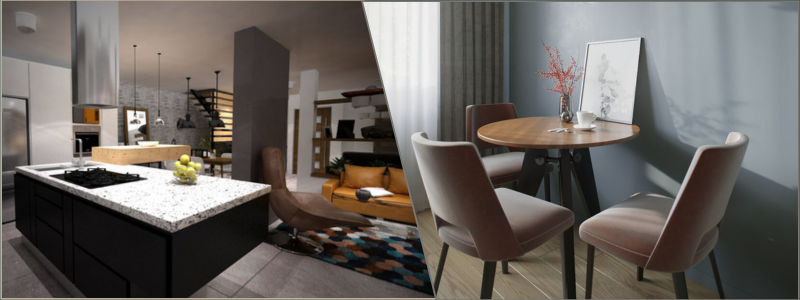
author avatar

MacKenzie Brown is the founder and CEO of Cad Crowd. With over 18 years of experience in launching and scaling platforms specializing in CAD services, product design, manufacturing, hardware, and software development, MacKenzie is a recognized authority in the engineering industry. Under his leadership, Cad Crowd serves esteemed clients like NASA, JPL, the U.S. Navy, and Fortune 500 companies, empowering innovators with access to high-quality design and engineering talent.

Connect with me: LinkedInXCad Crowd

How Innovative Product Design Simplicity and Honesty Help Your Brand Grow


Every new product in the market appears to be an update or upgrade over the old one. All the improvements are said to deliver better performance, features, and overall user experience. But just because a product is new, it doesn’t mean everything is better than the previous model. An upgrade isn’t always what it’s meant to be because it often comes at a cost of added complexity. At the same time, many brands like to throw around the term “update” at will these days just to trick customers into spending money without getting additional value for the product.

Contrary to popular belief, customers very rarely want complex products. Instead, they yearn for honest and straightforward product design companies. Many brands have now realized that buyers want products that are easy to understand and without unnecessary frills to make things more difficult. And when it comes to product simplicity and honesty, brands should look no further than Cad Crowd, where they can discover experienced professionals to implement the design principles and create products that win customers.


🚀 Table of contents


Why simplicity matters

Brands like to talk about how their products can do more things than any competitor in the market. They say the products are the most “sophisticated” and “feature-rich” to the point where you might not need to buy anything else. But being loaded with numerous features and functionality often makes the product more complex than it needs to be. It either has too many buttons to clutter the aesthetic, or too few of them that you need to refer to the manual time and again. You want the product to make your life simpler, but complexity turns it into an inconvenience instead.

Simplicity has always been a valuable commodity, and even more so in an increasingly sophisticated everyday life flooded with technology. It’s part of what makes a product an appealing proposition to customers. This applies not only to digital products like software or apps, but also to physical goods.

Take, for example, the original Apple iPhone released in 2007; it was a groundbreaking device that practically redefined what a smartphone could be, but with one glaring feature omission. The original iPhone didn’t have a copy-paste function, when just about every other phone in the market back then, including BlackBerry, offered it.

3D rendering of a specialized camera and custom workout bench by Cad Crowd product designers

RELATED: Designing for visual impact with your product design services company

Long story short, the missing functionality wasn’t at all a mistake or an oversight, but a deliberate omission to let the engineers focus on the core features. Apple didn’t see “copy-paste” as a priority, so the touchscreen interface was mainly geared toward seamless web browsing, email access, music playback, and navigation. Did users at large see the missing functionality as a drawback? Some users might scratch their heads, but Apple’s decision to focus on creating an intuitive and simple user interface rather than delivering non-critical features proved to be a brilliant idea. It sold millions of devices and set the path for taking a significant market share. Moreover, the deliberate omission still today holds a valuable lesson to product managers, engineering design experts, and designers that simplicity wins customers.

Users want a product that’s easy to use. Even when the product is highly sophisticated from a technical standpoint, users can appreciate how simple it is to use all its features and functionality. It makes the product more accessible, and people actually enjoy using it. And at the end of the day, simplicity increases adoption, sales, and brand recognition. Simplicity matters even more in a tech product, where sophistication can make a device difficult to operate and understand. If a product is frustrating to use, people might avoid buying it altogether.

Within the context of product development, design simplicity primarily concerns the user interface. For instance, a car is a highly complex piece of engineering with an internal combustion engine connected to a series of computers to control power delivery, fuel efficiency, infotainment, air conditioning, climate control, and a vast array of safety sensors. But a good road car still maintains a user-friendly interface design with a convenient button layout in the interior, enough storage space for practicality, and well-organized instruments for convenient driving.

Sometimes, less is more. It’s easy to fall into the temptation of packing as many features as possible into a product in the hope of gaining a competitive advantage. But just because your competitors offer a new function, it doesn’t always mean you need to follow suit at once.

One of the best examples of the matter is a coffee machine. There are probably dozens of popular brands and models out there. Some of them are all-in-one models (often referred to as bean-to-cup), while others are of a single-purpose type. In simple words, bean-to-cup is a combination of a coffee machine and a coffee grinder. It also often has multiple features, settings, and certainly a lot more components inside. On the other hand, a single-purpose type doesn’t do as many things; you even have to purchase the grinder separately. That said, a single-purpose machine tends to make better cups of coffee consistently than its jack-of-all-trades counterparts that may be done by other consumer product companies.

The most likely reason for the case is that a single-purpose machine focuses primarily on the core feature: brewing coffee. It has a simple user interface, thanks to the lack of numerous buttons and switches, making it easier to use. And because the designers aren’t busy adding non-critical features, they can focus on the reliability, serviceability, aesthetics, materials, and cost-efficiency.

As a design principle, simplicity is applicable to just about every product in the market. A simple interface makes the product easier to understand and more enjoyable to use. If you have to introduce an upgrade by adding new features, keep in mind that an upgrade may come at a cost of making the product unnecessarily more complex than it needs to be. You may need to go back to the drawing board, perhaps to plan for a redesign that can minimize the negative impact.

RELATED: How CAD turns your idea into a prototype for CAD design companies & freelance services

Honesty is still a good policy

According to Dieter Rams, a German industrial design expert whose most notable works include the Braun SK4 Radiogram and the Vitsœ 606 Shelving System, good design is honest. Rams further explains that an honest design doesn’t make the product more powerful, valuable, or innovative than it really is. And it doesn’t try to manipulate consumers with unrealistic promises.

With so many options available in the market, customers have become more resourceful and selective when purchasing a product. Armed with a better insight into product specifications, manufacturers, and price comparisons, people are actively searching for products they can trust; they look for brands that can offer real value, display a penchant for empathy, and place emphasis on honesty.

Designing a product with little care for honesty and empathy is a risky path to brand growth. Say the product makes it to market launch, surrounded by a marketing campaign to tell people how great it is. Soon enough, buyers will figure out the product doesn’t do what it promises to do or that it is overpriced considering the false promises.

Just like simplicity, trust is a commodity. When a product fails to instill trust in the customers’ minds, it’s difficult for the brand to recover from the bad reputation without extra effort.

Brands need to be conscious about their own products. Avoid designing a product to make it appear as if it’s “more” than it actually is. For example, Sony makes a lot of audio equipment, but it doesn’t say that every single one of them is the best in the market. Casio makes many different calculators, but the company never claims that any of them has all the functions everybody needs. Each model serves a specific purpose, designed with a specific category of users in mind.

You can see the same practice implemented by many other product development experts like cars, shoes, kitchen equipment, watches, computers, home appliances, and more.

Even if a product is excellent in and of itself, the lack of an “honesty” factor may end up hurting sales and brand reputation. A fine example of the case is the Adobe Ink and Slide, which basically is a bundle of a stylus and a ruler that works with Apple’s iPad, in addition to a pair of apps that let you take advantage of all their features. While the stylus is an overall fantastic device, bear in mind that you have to subscribe to the Creative Cloud platform to be able to use the stylus and ruler to their full potential. Adobe doesn’t just sell you the devices; the company sells subscriptions.

Compare that with the “Pencil” stylus from FiftyThree, designed to work with the Paper app on iPad. In terms of physical design, both the Ink and the Pencil are as sophisticated, sleek, and modern as each other. When it comes to ease-of-use, however, the latter feels more honest as it doesn’t require you to log into any subscription-based cloud service.

Honest design isn’t an easy feat to achieve, but it’s not impossible either. It requires you to empathize with the users, take the experience of a product as a whole into consideration, and carry out the design process almost entirely based on those insights. An honest product design expert is a testament to your intention to show respect for the users. Whether or not the product turns out to be perfect in every way isn’t the main issue here; the most important thing is to plant the seed of trust, which perhaps is the most valuable intangible anybody can discover in a product.

product design of WiFi enabled water container and RC helicopter by Cad Crowd product engineering experts

RELATED: Product development firms: 4 key factors to consider before hiring services companies

Takeaway

In the age of technology, the Internet, robots, and an app-connected world, many products that we use on a daily basis are getting more complex and sophisticated. Wristwatches can now tell you how many steps you take, a phone also functions as a navigation system, a sprinkler system can check the weather, and even a lightbulb is now remote-controlled via Wi-Fi. With all the additional features and functionality, an otherwise familiar and user-friendly product may become more difficult to understand.

But it turns out that sophistication doesn’t have to be synonymous with complexity. Designers can emphasize the value of understatement and prudence rather than embellishment, so they can focus on perfecting the core features of a product and avoiding unnecessary frills. In other words, they should design any product with simplicity in mind, making it easier to understand and use for customers. The principle of simplicity is strongly linked to design honesty in product development. A product with a simple design doesn’t mislead customers about what it can do. Simple design is neither pretentious nor sprinkled with unjustified and excessive claims about itself.

A simple and honest product may seem straightforward, but it takes real design experience and expertise to create one. Whether you’re making a new product or in the process of redesigning an existing one, Cad Crowd is pleased to connect you with the right professionals to get the job done. Request a quote today.

author avatar

MacKenzie Brown is the founder and CEO of Cad Crowd. With over 18 years of experience in launching and scaling platforms specializing in CAD services, product design, manufacturing, hardware, and software development, MacKenzie is a recognized authority in the engineering industry. Under his leadership, Cad Crowd serves esteemed clients like NASA, JPL, the U.S. Navy, and Fortune 500 companies, empowering innovators with access to high-quality design and engineering talent.

Connect with me: LinkedInXCad Crowd

How Your Firm Can Use 3D Animation to Present Architectural Designs & Services


The ever-changing world of architecture makes firms look for innovative ways to stand out in the crowded marketplace. One of the best ways of achieving this is by including 3D animation in your design presentations.

With these times behind us, where clients could only rely on static images or very complex blueprints to make them understand a project, technological advancements have made it possible for architectural firms to use 3D animation, leveraging 3D architectural animation services, where designs come to life, providing an immersive, dynamic experience that enhances communication and decision‑making.

Cad Crowd is the industry’s top agency for 3D animation, with over 94,000 experts you can choose from to help you turn your idea into a tangible one. Whether you’re looking for innovative solutions, strategic insights, or top-tier execution, CAD Crowd has the expertise and the talent to bring your vision to life.

This blog post discusses how your firm can utilize 3D animation to present architectural designs and services, leveraging 3D AR/VR architectural services, improve client engagement, streamline project approvals, and ultimately deliver better results. 3D animation creates moving images that simulate an environment with three dimensions. In architecture, that means taking a three‑dimensional model of a building or a structure and then animating it to simulate how the whole thing would appear from all sides, or with lighting, and how a person would actually interact in it. They can make everything from how the outer walls of the building appear to the small details within the interior.

In a very broad sense, what one intends to present or materialize can also mean a kind of design process, different stages of construction, and what is supposed to be built. Materials, functions, and all these together, then the overall functionality. As 3D animation is used in exhibiting a project, even more, the thought of this decision in mind with clients before taking, could be compiled together now with firms through presentations.


🚀 Table of contents


Communication with the client and stakeholders

Blog post images Elize 2 39

RELATED: How a 3D architectural design service can make your real estate marketing a breeze

Communication is the key to any architectural project, and the clearer you can express your design idea, the better your chances of a project’s approval and successful completion. The traditional architectural presentation, often relying on drawings and blueprints with static images, might confuse clients in some way or leave the vision untold, which is why many firms now leverage architectural presentation services to bring clarity and engagement to their proposals.

You can create detailed, dynamic visualizations that will make it easier for clients and stakeholders to understand complex designs with 3D animation. Animations can display the flow of spaces, the relationship between different areas, and even how the building interacts with its environment over time. This is really useful when dealing with large-scale projects, such as urban developments or mixed-use buildings, where understanding the overall context is essential.

For instance, provide an animation of a proposed building and how to walk clients through the design. It can start with an aerial view of the project site and then zoom in on the exterior of the building. Then it can transition to reveal the interior, perhaps focusing on key areas such as the lobby, offices, or residential units. Animation of how the building will interact and have natural light at different points in the day, combined with energy-efficient design components. An immersive experience lets a client conceptualize what it will really feel like there, which becomes easier for the client to make decisions and adjustments before construction.

Expedite the approval of the design

Among the major challenges in architecture is getting a consensus on the designs from the client and other stakeholders, like government authorities. Most of the time, approval can be held up since stakeholders are not able to interpret static images or technical drawings. When there are different changes or revisions that require a visual representation, the process gets complicated, which is why many firms now rely on BIM modeling services to provide interactive, data‑rich models that streamline revisions and ensure everyone stays aligned.

The process of approval becomes smoother if the design is presented clearly and in a more interesting manner in 3D animation. When all parties concerned get to see the project come alive with animation, it tends to be faster all the way. This is especially so when working with governmental bodies or other regulatory agencies, where animated presentations help in demonstrating compliance with zoning regulations, environmental impact assessments, and other criteria.

In addition, 3D animations make it easier to correct mistakes. In case one wants to alter the design, modifying the animation to express the changes is much faster and more efficient compared to redoing static images or blueprints. This flexibility saves time, but most importantly, prevents the possible occurrence of any misunderstanding among all parties concerned, especially when leveraging 3D architectural rendering services to rapidly iterate and update visuals as the design evolves.

RELATED: Why hire an architectural design service? The unmistakable benefits

Enhancing marketing and client acquisition

With the competitive market today, architectural firms have to be unique and come up with ways to capture new clients. Perhaps one of the most effective ways of doing so is by using different marketing materials. With 3D animation as part of your firm’s marketing strategy, you will create interactive, high-quality presentations that will awe your potential clients and enable them to imagine your designs. For instance, you can send an animated video of how you design to the potential client instead of just a simple brochure or a few still images. This will provide a much more memorable and impactful experience, giving your firm an edge over competitors who are still using the traditional approach.

The third advantage of 3D animation is that it can be very suitable for online marketing campaigns, including social media marketing, website presentations, and digital advertisements. The videos can go viral or catch people’s attention on YouTube, Instagram, or LinkedIn, hence reaching more people. You can tell clients with the marketing material that you created with the help of 3D virtual reality rendering. You are even saying that you’re one of those who will be at the helm of modern design, close to the world being innovative with technology.

RELATED: How architectural design services are creating sustainable architecture

Disclosure of design considerations and materials

Blog post images Elize 2 40

Another significant advantage of using 3D animation in architectural presentations is that it brings out the finer details of your design. Clients normally face problems with visualizing how materials, finishes, and textures are going to be combined in the final product. Using animation, you can model how different materials will appear under different lighting conditions and thus enlighten the client on how his or her choices will be represented in the final product.

For instance, you can have a commercial building with glass, steel, and wood elements, which you would like to show different parts of the structure by an animation of how these materials will look when put together, leveraging 3D flythrough design services. Animation can be used to show how light plays with glass facades during the day, shadows play on the steel framework, and what the texture of wooden surfaces will be; this may help clients better visualize the tactility of materials.

For better exposure of details, such depth may have to be shown for a rich selection of materials, perhaps mainly on high-end residential or even commercial projects that would require a lot of the design process. The 3D animations of such details might provide better decision-making information to clients, so maybe fewer requests for revisions and more satisfaction with their final result.

RELATED: How CAD technology is transforming the future of architectural design services companies

Virtual reality integration for immersive experiences

Over the last few years, virtual reality and 3D animation for architectural presentations have really taken the latter to new heights, especially when combined with architectural 3D modeling services. It totally immerses clients and other stakeholders in a virtual building before it is actually built. You can mix 3D animation with virtual reality to offer your clients an interesting presentation. From every side, clients are allowed to walk around and discover different layouts, designs, and environments. The immersive ability makes them relate to the design on a more concrete level, which they have always wanted.

Virtual reality integration can also be done in collaboration with others, such as contractors or even interior designers. They can walk through their design virtually and give input to be made in real-time. This kind of engagement may lead to a much more cohesive design process within which all parties actively come together to form the end product.

Cost and time efficiency

Although 3D animation would appear to add an extra cost, it can save your firm time and money in the long run when you integrate 3D construction rendering into your workflow. Providing the client with a more accurate, detailed visualization of the project reduces the likelihood of misunderstandings and costly design revisions on‑site. The clarity animations provide can also prevent miscommunication with contractors, and everyone will be on the same page from the very start.

Furthermore, the procedure that includes 3D animation also eliminates the requirement for consecutive build cycles of a model or radical changes in current sketches. A 3D model created once can therefore easily be amended to change circumstances or revised according to modifications as the work continues from its production point.

RELATED: The power of architectural CAD services

How Cad Crowd can help

In an architectural design presentation, 3D animation is a powerful means to elevate the services offered by your firm and to communicate better with clients and stakeholders. The ability to present the design dynamically, showcase materials and details, and engage clients through immersive experiences can be a competitive edge in speeding up approvals, streamlining decision-making, and raising client satisfaction.

This will enable your company to present the final product and, at the same time, display more transparent, interactive, and efficient design processes using 3D animation. Thus, such an innovative approach toward architectural presentations positions your firm as a forward-thinking industry leader, attracting more clients with success in your projects, especially when supported by design for manufacturing and assembly services that ensure the feasibility of your concepts from the earliest stages.

The future of architecture is a visual one, and through 3D animation, your firm can lead the way in making designs that will inspire, engage, and excite. At Cad Crowd, we have over 125,000 members waiting for you to choose from to help you present the most engaging and enticing architectural designs and services. Get a free quote today.

author avatar

MacKenzie Brown is the founder and CEO of Cad Crowd. With over 18 years of experience in launching and scaling platforms specializing in CAD services, product design, manufacturing, hardware, and software development, MacKenzie is a recognized authority in the engineering industry. Under his leadership, Cad Crowd serves esteemed clients like NASA, JPL, the U.S. Navy, and Fortune 500 companies, empowering innovators with access to high-quality design and engineering talent.

Connect with me: LinkedInXCad Crowd

Scaling Up in Style: 7 Innovative Ways 3D Visualization Grows Businesses with Design Services Companies


In today’s digital age, where time runs faster than ever, businesses are always thinking of innovative ways to get noticed by their clients. From all the different tools and techniques available today, 3D visualization has proven to be a game-changer, transforming the way design service companies operate with immersive and engaging experiences, powered by 3D modeling services, aiding in greater communication and business development.

Cad Crowd is the industry’s top agency for 3D visualization, with over 94,000 experts you can choose from to help you turn your idea into a tangible one. Whether you’re looking for innovative solutions, strategic insights, or top-tier execution, CAD Crowd has the expertise and the talent to bring your vision to life.


🚀 Table of contents


Understanding 3D visualization and the role it plays in design

3D visualization is among the most powerful technologies ever devised for designers and architects to accurately formulate three-dimensional views of their ideas. This technique uses advanced software to transform ideas into real-life-like pictures or animations, thereby making it easier for people to envision complex structures, products, or environments before they are actually built, powered by product design services.

There are various important roles that 3D visualization encompasses in the field of design. First, it enhances communication among the stakeholders. Such communication effectively helps clients and engineers comprehend the scope of the project, as well as the details involved. It minimizes misunderstandings and streamlines the decision-making process with a clear visual representation.

Third, 3D visualization facilitates the research and investigation of design alternatives. This can be done in terms of virtual space exploration of diverse materials, colors, and layouts, so that design decisions are based on proper choices against aesthetic and functional requirements. This flexibility not only accelerates the pace of designing but also stimulates creativity, enhanced by CAD drafting services.

Lastly, it is for marketing and presentations. Premium visualizations easily capture the attention of potential clients and investors on visible projects. In this respect, 3D visualization in design becomes an extremely important tool in filling this imaginary gap, making it look like a reality. Here are the seven new ways in which 3D visualization adds to the expansion of design services companies.

7 Innovative Ways 3D Visualization Grows Businesses with Design Services Companies

RELATED: Using 3D visualization to increase your real estate company’s vacant lands and property sales

1. Increasing client involvement

Undoubtedly, 3D visualization possesses a higher engagement factor for clients. Design presentations based on 2D plans confuse the clients because they don’t have any depth, so it’s hard to understand them at all. On the other hand, 3D models give a much better understanding of the work. They can examine designs from different perspectives, which helps them visualize their final result accurately, enhanced by 3D visualization services.

For instance, for architecture firms that use 3D visualization, the buildings can be viewed initially before construction. The experience for the clients would enable them to ‘see’ and ‘feel’ the space, hence presenting them with a reason to be more interested in the project. The higher the engagement level of the client, the higher his chance of taking an interest and investing in the project as well. In this way, the sales of the design services increase. 

2. Streamlining design iteration

Another important advantage is the capability to streamline the design iteration process. It is frequently the case in traditional design processes that alterations to a project are only possible by creating new 2D drawings or models, which can sometimes be very slow and expensive. With 3D visualization software, though, designers can instantly modify their models, further accelerated by rapid prototyping services.

This rapid iteration process makes room for an agile design environment, allowing companies to easily respond to client feedback. A prime example would be that of a design company that could present several designs to the client using 3D models. Should a client want another color scheme or layout, a designer can alter the model in real time, which greatly minimizes the revisions that take up most of the time. This efficiency will not only mean the sale of more client satisfaction but will also push more projects for design services companies and thus encourage growth.

3. Better marketing practice

Good marketing contributes to any business’s growth, and 3D visualization can help with that. High-quality 3D rendering gives marketing materials the type of look and feel that is needed for a product to capture either the imagination of a potential client or even get the attention of one for its visual appeal. This includes the website, social media, or print advertising.

Such companies can utilize 3D visualization to create a masterpiece in marketing, which will represent the skills and expertise of the design service company. Instead of delivering simple, normal photographs taken after completing projects, a firm may create the most beautiful 3D rendering that represents the design and creativity phase. Such graphics will make their way through various sources, which enhance brand visibility and capture the attention of new customers, supported by BIM services experts.

Lastly, the 3D visualization can produce virtual tours and interactive presentations, which can be emailed to potential clients of your services. It makes the experience real for the client since they are free to explore concepts, hence making them very invested in your company’s services.

4. Enable collaboration

Good design projects are actually fostered by teamwork, and the utility of 3D visualization tools provides such support. In most design services companies, members of the team and clients come from different walks of life and geographies, so there is a greater need for proper communication. A common venue for viewing and discussing designs in real-time can be afforded by 3D visualization, further empowered by 3D walkthrough services.

With the cloud-based 3D visualization tools, members of a team are able to access and contribute to remote projects, which fosters collaboration and idea sharing. Clients can also become part of the design process by giving direct comments on the 3D models. This helps further relationship ties but instills ownership in customers, who would be more likely to buy the final design.

7 Innovative Ways 3D Visualization Grows Businesses with Design Services Companies

RELATED: 7 useful innovations in 3D visualization that your company can take advantage of

5. User experience enhancement

In this user experience context, 3D visualization enables design services companies to take the above-mentioned aspect to new heights significantly. With the help of 3D models on their websites or applications, companies can provide an interactive and engaging experience to the end users. For instance, a furniture design company can help customers visualize how a piece of furniture would look in their home with the help of features such as augmented reality, powered by 3D rendering services.

In such a setting, the ability of the user to visualize a product in their own personal space will make them much more likely to make a purchase, increasing the sales of design services companies. Again, good user experience leads to good word-of-mouth marketing since satisfied customers will definitely make other people share their experiences with them, hence improving business expansion.

6. Support sustainable initiatives

Sustainability has taken center stage in the minds of many companies today. Above all, design services companies are no exception. 3D visualization mainly comes into play to support sustainability initiatives since the designers can come up with different scenarios, assess the environmental consequences of their work, and respond accordingly.
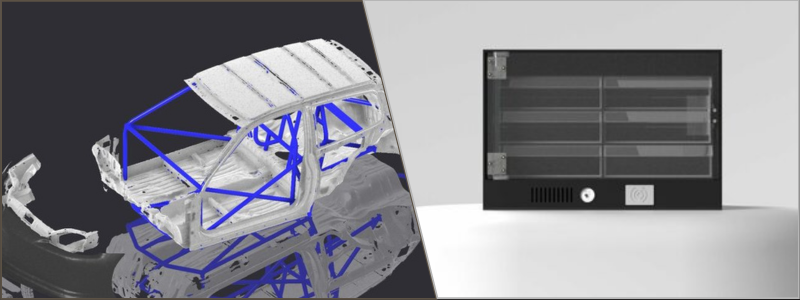
For example, architects can apply 3D visualization in an effort to evaluate sunlight penetration, energy consumption, and material usage in their design. Improving these aspects will enable companies to generate greener products that attract environmentally conscious clients. Moreover, sustainable 3D visualization in design practice can improve the corporate image of a company and expand client accessibility, enhanced by architectural visualization services. Also, clients are now considering sustainability along with other factors before making any final decision. Sustainability-driven design practices, in return, make a business service company that determines growth and brings more business.

7. Competitive advantage

It is extremely important to be different as an enterprise to expand in a highly competitive marketplace. In this regard, 3D visualization helps give a design services company a competitive advantage because of its value in helping to display creativity and innovation in the work being done. Companies using new visualization techniques are also considered more up-to-date and high-tech, hence attracting clients who place a premium on such qualities.

Furthermore, 3D visualization enhances the project proposal creatively. Companies are no longer required to submit a normal portfolio of past assignments, but rather use 3D models to explain their approach to the design of the project and what kind of vision they have in mind for the project. As such, a view is prospective; it is likely to influence potential customers positively. For that reason, subsequent project acquisition, along with business expansion, tends to go up.

Scaling up with style is an opportunity where 3D visualization really shines as companies in the design services industry push through the constantly changing landscape. Whether it’s to enhance client engagement, improve design iteration, strengthen marketing efforts, or facilitate collaboration, the benefits are versatile, powered by product design services.

By adopting 3D visualization technologies, service-rendering companies in design would be better positioned to develop their own processes and, simultaneously, provide great experiences to the clients in ensuring high business growth. At a time when innovation is everything, the acceptance of 3D visualization makes all the difference and secures the future of a company for a longer time, with long-term durability in maintaining a competitive edge in the market. In a rapidly changing future, the people who exploit the power of 3D visualization will definitely be able to stay at the forefront of design, creativity, and client satisfaction; the shapers of future design services.

RELATED: 3D rendering costs & 3D visualization prices for firms: How to save money in the long run

How Cad Crowd Can Help 

Design services companies need to embrace the ever-evolving market trends to stay ahead, and 3D visualization stands out as a powerful asset to do just that. By harnessing this technology, firms can transform the way they communicate ideas, streamline design iterations, and capture the imagination of their audiences—all while elevating their market presence.

At Cad Crowd, we understand the importance of innovation and collaboration. Our platform connects you with top-tier experts in 3D visualization who are ready to partner with you on your growth journey, ensuring that every design speaks volumes about your creative and technical prowess. Take the next step in scaling up your business with style. Get your free quote from Cad Crowd today, and discover how a dedicated team of professionals can empower your design services to meet modern challenges head-on.

author avatar

MacKenzie Brown is the founder and CEO of Cad Crowd. With over 18 years of experience in launching and scaling platforms specializing in CAD services, product design, manufacturing, hardware, and software development, MacKenzie is a recognized authority in the engineering industry. Under his leadership, Cad Crowd serves esteemed clients like NASA, JPL, the U.S. Navy, and Fortune 500 companies, empowering innovators with access to high-quality design and engineering talent.

Connect with me: LinkedInXCad Crowd