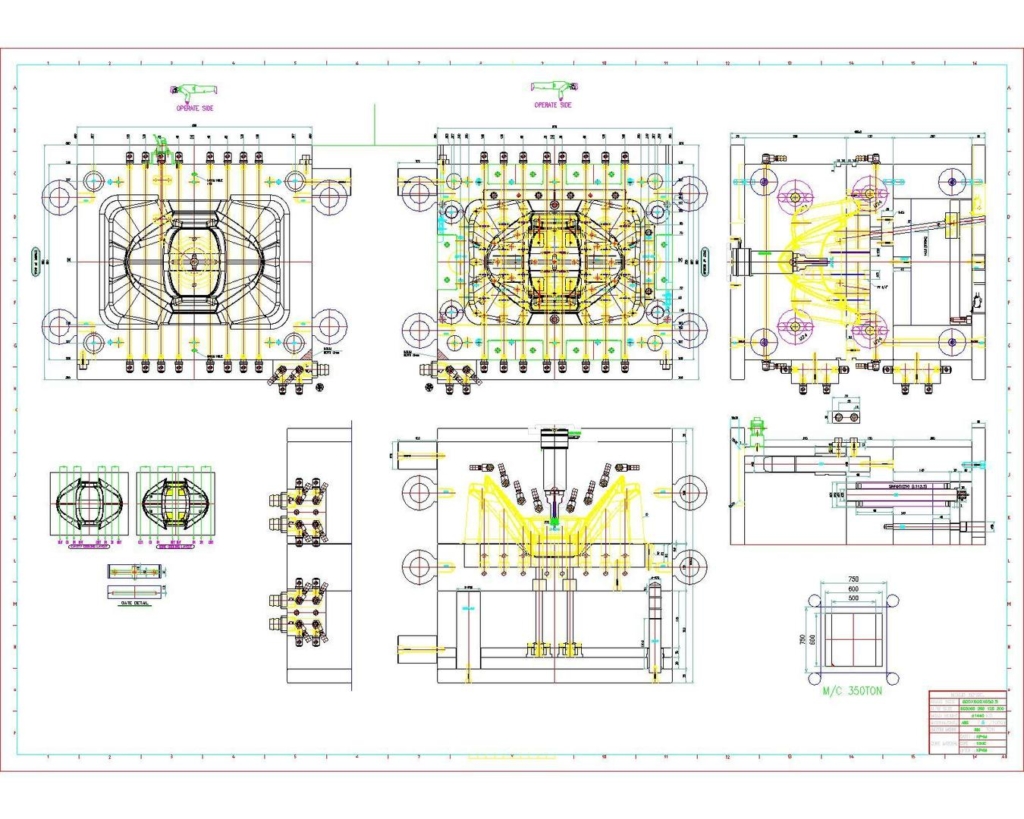
Using 3D Printed Injection Molds and Prototyping for High Quality Company Product Design Ideas


Injection molds and prototypes, usually made using materials like steel and aluminum, can be outputted with the help of CNC programming services. It is highly recommended, and designers tend to lean towards using it when it comes to designing injection molds because of its precision, accuracy, and exceptional suitability for different mold designs. Sadly, this option is far from ideal if you want to launch your new products faster or if you have a limited budget.

It is good that 3D printing is now here to improve manufacturing injection molds and prototypes. 3D-printed injection molds are made using plastic polymers like polyethylene, and ABS using any of the various types of modern 3D printing technologies. The choice to use 3D printing technology mainly depends on the properties, intended mold sophistication, and material makeup of the mold. 

3D printing injection molds is an affordable process that suits different designs, not to mention that it is also faster to manufacture the mold. The overall process that prototype design professionals use for part and prototype production that involves injection molding is also quicker. 


:rocket: Table of contents
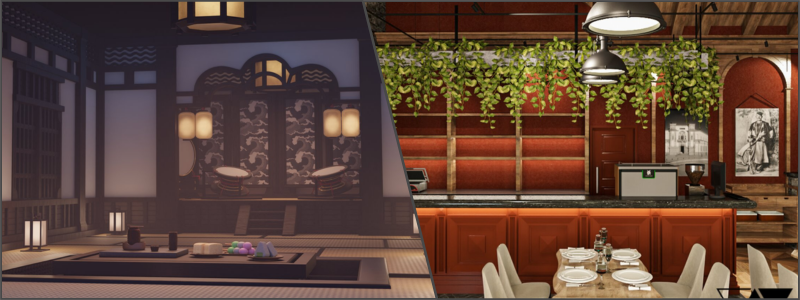

RELATED: 10 Injection molding design mistakes to avoid while working with CAD design services & engineering firms

Benefits of using 3D printed injection molds and prototyping 

3D printed injection molds are critical in part manufacturing and prototyping thanks to their flexibility, low cost, and other benefits. Here are more reasons to convince you to use these technologies for your following projects:

A more straightforward and more flexible mold design process 

3D printing offers better skills when it comes to mold design. This helps mold manufacturers and designers to design and produce molds more easily. Aside from this, correcting mistakes after a mold has been 3D printed is so much easier and cheaper, thanks to the use of plastic. 

Lower cost

Injection molds are produced using plastics that are much more affordable compared to metals like steel and aluminum used in the traditional process of injection molding. 3D printers used by 3D printing experts are also cheaper than CNC machines. There is also the fact that the printing process consumes considerably less time. Thanks to this cheaper price, the 3D-printed injection molds can be considered the most cost-effective choice for production runs that only require low volumes. Enthusiasts even claim that the use of one can already save around 80% of the total costs of mold manufacturing.

RELATED: How to design products for injection molding & prototyping firms

As mentioned earlier, 3D-printed molds are better for low-volume production runs than CNC-machined molds. For starters, the initial investment required to make them is much lower than that required for CNC machining. In addition to this, the materials used for manufacturing, specifically plastics, are way more affordable. This means that mold designers no longer have to worry about augmenting the number of injection molded parts just to cover the production cost. 

prototype design services

Less industrial expertise is required

Anyone who has good knowledge and familiarity with 3D printing can easily print injection molds, This eliminates the need for specialized industrial design services, which will only increase the cost of labor of traditional processes of mold manufacturing such as CNC machining. 

Important considerations before using 3D printed injection molds

The process of injection molding will only be successful depending on the 3D-printed mold. Thus, it is essential to consider several critical factors, including the draft angle, number of prints, and others, as listed below:

RELATED: Understanding injection molding, insert molding, and overmolding for companies

Draft angle

The draft angle helps in the correct ejection of the part that has undergone injection molding after the process is completed. It means that you have to make sure that you properly integrate the correct draft angle while designing the mold. The suggested draft angle of 20 can make it easier to remove the molded part. 

Shape and size

It is essential to determine the size of the part that will undergo injection molding and select the corresponding shape and size for it. Among the key differences between a CNC-machined and a 3D-printed mold from injection molding and casting experts is none other than its size. In general, 3D-printed molds are smaller. The result is that it cuts down the size of the parts that have been injection molded that you can work with, unlike CNC-machined molds. 

Smooth finishing

The surface integrity of 3D-printed molds is often lesser than that of metallic injection molds because of the high temperature used in injection molding, which can cause degradation of the mold. This is why these molds might not be the best choice for projects that require smooth finishing. Instead, it makes more sense to opt for steel or aluminum injection molds. 

RELATED: Prototype injection molding: 7 materials commonly used by design firms

One more possible solution here is to take advantage of a protective coating crafted on the printed mold from materials like ceramic to cut down heat degradation and create a smooth finish. Take note that the cost of the 3D printing technology, material, and general service will have a direct effect on the kind of 3D-printed mold selected. 

Number of prints

A 3D-printed injection mold has weaker structural integrity compared to its counterparts made in metal. This is why they are more recommended for low-volume manufacturing. Many 3D-printed molds, in general, only apply to just 30 to 100 runs. This makes them the ideal choice for rapid prototyping services. On the other hand, opt for a traditional mold made from steel or aluminum if you need something higher. 

automotive design services

Design tips for 3D printed injection molds

It would be best if you considered essential factors like materials, injection molding defects, parts, and others when designing a mold with the help of 3D printing. Here are some helpful tips for cutting down the challenges and difficulties often associated with using 3D printing when using injection molds:

RELATED: An overview of injection mold materials and SPI standards for companies and firms

Materials

Most materials can be used to make 3D-printed injection molds, including acetal, PP, Nylon, ABS, and PETG. There are two primary things that you should consider before you choose a material to use to 3D print plastic molds: stiffness or strength and temperature resistance. The suitable plastic polymer for 3D-printed injection molds must be stiff and robust after printing. Stiffness and strength will help the mold endure the pressure produced during the process of injection. 

Injection molding takes place at a high temperature to make sure that the molten plastic will have maximum flow. Thus, the melting point of the plastic material that will be selected to make the mold must be higher compared to the injection molding material. 

Mold design

The mold design is the foundation of mold manufacturing design services. Inner face orientation, layer height, shallow air vent, and channel are some of the critical factors to consider when evaluating a 3D-printed mold’s mold design. The orientation of the inner face of the mold must not allow any contact with support. The surface quality of the printed parts will increase because of the total avoidance or reduction of support marks. It also cuts down the need for post-processing. 

RELATED: Overmolding design success: strategic considerations for company prototype designs

Printing at a lower layer height also improves the printed mold’s smoothness. It reduces the visibility of print lines. Meanwhile, adding an air vent to the mold design can help expel any air trapped during the process of injection molding. The recommended shallow air vent of around 0.5mm can help decrease the risk of defects like injection molding flash. 

Channels can also be incorporated into the design of those molds intended to be used for over 20 runs. It will let you embed metal tubes and rods and lessen defects in the injection molded parts like warping. The use of a channel also reduces cooling times. 

Part design

Just like the mold, you might also want to add some of the design tips stated below to the injection mold part you plan to make:

RELATED: Guide to surface finishing for 3D printed parts

Include a draft angle

The draft angle part design experts use will make it easier to remove the injection molded part from the mold used for the printed injection process. The suggested draft angle is 20, which depends on the specific part in question. Stay away from sharp corners. You can prevent sharp corners if you include radii on the corners and edges of the mold. Observe uniform thickness. A uniform wall thickness is expected across the entire injection mold part to reduce potential defects like warping after and during injection. However, in instances where the walls must be thin, gussets and thin ribs can be included to improve the wall strength. 

Get rid of flash 

Flashing is a widespread flaw in injection molding, where the molten plastic ends up spilling from the mold throughout the injection process and then solidifies afterward. This happens because of the high injection pressure, an overfilled mold, or an imperfect mating of mold halves.

Using runner systems in the mold design and guaranteeing tolerance in the part line can help get rid of flashing with 3D-printed injection molds. But if these fail to work, post-design tweaks can also be done, such as cutting down the injection pressure and enhancing the clamping force. 

RELATED: Injection molding tips for cost-effective prototypes and mass-manufacturing by a mold design firm

The bottom line

3D-printed injection molds are different from traditionally designed molds. These are applicable in various industries that need low-volume production for complex and simple product designs. Taking advantage of this modern technology can help bring your ideas to life. 

How Cad Crowd can help 

Contact Cad Crowd today and let us connect you with the best providers of 3D-printed injecting molding services that can turn your company’s product design ideas into reality. Get a free quote today.

author avatar

MacKenzie Brown is the founder and CEO of Cad Crowd. With over 18 years of experience in launching and scaling platforms specializing in CAD services, product design, manufacturing, hardware, and software development, MacKenzie is a recognized authority in the engineering industry. Under his leadership, Cad Crowd serves esteemed clients like NASA, JPL, the U.S. Navy, and Fortune 500 companies, empowering innovators with access to high-quality design and engineering talent.

Connect with me: LinkedInXCad Crowd

Marketing Real Estate: Top Real Estate 3D Rendering Trends for Companies and Firms


Do you feel like you’re doing everything to pre-sell more properties but that you can still do better? Don’t worry because you’re not alone.

A lot of realtors and developers today use the most state-of-the-art sales tactics only to be disappointed with the slow flow of deals. Is there something you can do to maintain a steady stream of prospects that also brings more sales fast? It is where real estate 3D rendering services can help convince more clients to sign the dotted line.

Thanks to real estate 3D rendering, real estate or development businesses can get and use photorealistic visuals that they can use for promoting properties, including those that are still under construction or aren’t even built yet.

Real estate CGI is made not only with still images but also with interactive 3D panoramas, digital videos, and virtual reality experiences. When used smartly and correctly, these types of content can be elevated to the next level by your promotional strategies: they have the potential to improve effectiveness.


:rocket: Table of contents
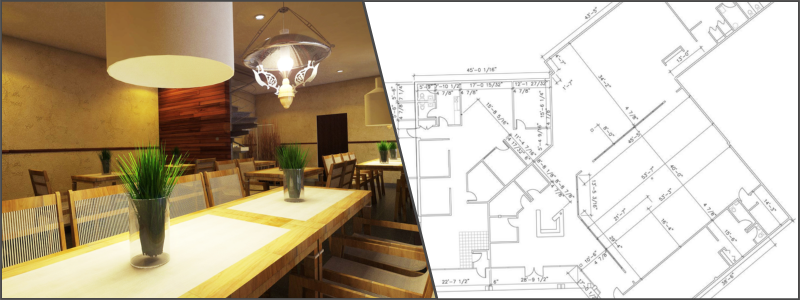

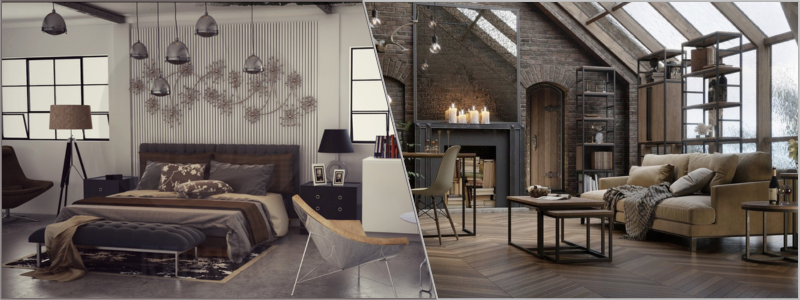
3d bedroom for real estate

Artistic and cinematic rendering

Real estate renderings are no longer limited to just technical representations because they have evolved into more enticing cinematic experiences and artistic experiences.

Expert 3D visualization artists and real estate professionals are using new original approaches that blend mood, atmosphere, and storytelling in their renders.

Presentations appeal to the public and clients because they are visually stunning and emotionally engaging.

Setting up the movement and camera position allows real-time exploration and navigation of the 3D model. Companies can manually control the camera and define its paths to show different angles and perspectives of the design.

Movements of the camera can be fluid and smooth to give stakeholders and clients a more immersive experience.

Cloud rendering

Cloud rendering is another trend in real estate 3D rendering. It is an excellent technological solution that helps 3D visualization service providers use the power or remote computer cluster for rendering CG imagery.

Since cloud rendering is a type of on-demand service, it gives access to an almost endless resource of many GPUs and CPUs to work on their files. This only happens while it renders visuals and takes time. It increases computer power allocation—speeding up the whole rendering process.

Most specialists in the CGI production industry have stated that the use of cloud rendering helps them get 3D renders in just a matter of minutes. Using in-house render farms, on the other hand, would have taken hours to do the same thing.

Through this reduced time, 3D artists can simultaneously work on multiple projects. It means a lot to real estate professionals as they can significantly improve their communication with project stakeholders through faster design updates and iterations.

Cloud rendering services are also anticipated to see a significant growth rate in the coming years. Thus, it is safe to say that the surge of ultra-fast visualization will happen and might even become the new norm sooner rather than later.

Emphasis on materials and detailing

The rise of 3D rendering technology resulted in the growing emphasis on accurate and detailed representations of finishes, textures, and materials. Real estate companies can now present intricate details with incredible realism and precision, including meticulous patterns, ornate facades, and interior elements. This trend allows stakeholders and clients to better envision the quality and aesthetics of the design.

It is vital to apply the correct textures and materials to the 3D model to achieve more realistic renderings. Modern real-time rendering supports different material properties, including transparency, roughness, bump maps, and reflections. The textures and materials must be chosen with great care and applied correctly to the model’s different elements for the accurate representation of their counterparts in the real world.

3d real estate exterior luxury hotel

Environmental sustainability

With sustainability becoming one of the primary considerations in real estate, it is only expected for it to be one of the trends in 3D rendering. Real estate companies and firms are using different rendering techniques more and more to analyze and simulate the environmental performance and structure of buildings. These include thermal performance, daylighting, and energy consumption. It lets them optimize designs for sustainability and energy efficiency to create more environmentally friendly buildings.

Vertical gardens are perfect examples of environmentally friendly architectural services. It involves the application of different shapes, textures, and levels of vegetation to create visually dynamic and stunning green walls. 3D vertical gardens use a combination of plants with varying growth patterns, foliage colors, and heights to add dimension and depth to the space. This can also transform flat surfaces into living and vibrant works of art.

This strategic three-dimensional plant arrangement creates an ever-changing and immersive experience wherein the interplay of shadow and light further highlights the complexity and beauty of vertical gardens.

Automation and AI integration

Automation and artificial intelligence, or AI, have now found their way into many industries, including real estate rendering. AI-powered tools and algorithms can help automate repetitive tasks, allow efficient generation of more realistic scenes, and streamline the entire rendering process. The integration of automation and AI can reduce costs, enhance productivity, and give designers more time to focus on design refinement and creativity.

AI techniques, including GANs or generative adversarial networks and procedural generation, can come in handy for generating realistic and complex environments. AI algorithms can also produce realistic 3D assets, including landscapes, buildings, and expert furniture design, according to design constraints and the given parameters.

This trend in real estate rendering makes way for the rapid production of scenes on a larger scale and improves the level of realism and detail in renderings.

Photorealistic rendering

There is an increasing demand and clamor for photorealistic rendering in real estate, and this is no surprise. Clients, after all, expect highly realistic and detailed renderings with close resemblance to the final product. The availability of high-quality materials and textures, enhanced hardware capabilities, and advancements in rendering software all made it possible for 3D renderings to achieve excellent levels of realism.

Photorealistic renderings offer potential investors and buyers a lifelike glimpse of the property before its construction or renovation with the help of elements like specialized landscaping, textures, materials, and lighting.

This trend in real estate marketing is an essential tool for marketing as it helps convey the unique features, aesthetic appeal, and ambiance of a property. It helps clients make better decisions and imagine themselves being in and using the space.

Real estate companies and firms can also use photorealistic rendering to present their designs in such a way that is more enticing while helping them with their pre-selling and marketing efforts.

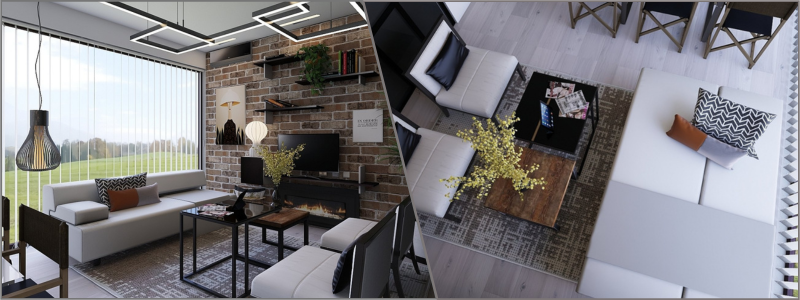
3d apartment for real estate

Real-time rendering

Another significant trend that has been enjoying a surge in popularity for the past few years is real-time rendering. With the rise of real-time visualization software and powerful GPUs, real estate companies can now engage in real-time creation and manipulation of 3D models to make the design process more efficient and interactive. Real-time rendering allows faster decision-making, instant feedback, and quick design iterations.

A specialized rendering software or engine is also used to make real-time rendering possible. These engines use state-of-the-art optimization algorithms and rendering techniques to produce interactive frame rates for high-quality renderings. It is how realistic walkthrough experiences, virtual reality tours, and 3D animation are made.

Storytelling

Storytelling is one of the key trends in real estate rendering. Technically, this is not a new trend, but it’s poised to continue in the years to come without any signs of going anywhere at all.

The use of storytelling puts more aesthetic and thought into images to the point that you will still find yourself mesmerized even after looking at them several times.

If you wish for your real estate ads or project presentations to appeal to the emotions of prospects and clients, tapping into storytelling’s undeniable power is something you shouldn’t miss out on.

AR and VR

Augmented and virtual reality technology firms have been making dramatically immense advancements, which are extensively utilized by real estate. With VR, users can have a more realistic and immersive experience through virtual walkthroughs of a space or a building.

On the other hand, AR overlays the virtual elements into the real world to allow real estate companies to envision their designs in the existing environment. AR and VR make it easier for clients to understand the design and bolster communication among all the involved parties.

A 3D real-time architectural walkthrough is an excellent example of a VR experience. Virtual real-time walkthroughs offer the ability to interact with objects, move freely in a virtual space, and make on-the-spot design modifications. It allows viewers to fully understand and experience the materials, spatial qualities, and design intent of the project in general before its physical construction.

This experience driven by technology improves communication, allows better decision-making, and facilitates visualization of designs in ways that weren’t imaginable in the past.

How Cad Crowd can help

Real estate marketing has never been easier with today’s innovative trends. Reach out to Cad Crowd, and we’ll connect you with top-notch professionals to deliver outstanding results tailored to your needs.

Get a free quote today!

author avatar

MacKenzie Brown is the founder and CEO of Cad Crowd. With over 18 years of experience in launching and scaling platforms specializing in CAD services, product design, manufacturing, hardware, and software development, MacKenzie is a recognized authority in the engineering industry. Under his leadership, Cad Crowd serves esteemed clients like NASA, JPL, the U.S. Navy, and Fortune 500 companies, empowering innovators with access to high-quality design and engineering talent.

Connect with me: LinkedInXCad Crowd

Key Signs It’s Time to Reach Out to Outsourcing Companies to Improve Your Engineering Business


If anybody tells you that outsourcing is a lot of work, you can be sure that they make it sound much more complicated than it really is. Outsourcing is as simple as hiring someone to do a specific job for a specific period of time. You do it when you need to ease the workload for your in-house expert engineering team, or anytime a project requires a talent or skill set your company doesn’t currently have.


:rocket: Table of contents


outsourced class 5 subsea torque tool

RELATED: How to outsource 3D rendering services for your company to visualization studios for 2025

Outsourcing is an option

Outsourcing is neither the answer to every problem nor the only way to improve your engineering business. Also, no one can tell you whether you should embrace it wholeheartedly or avoid it at all costs, but there are certain signs to tell you that it might be time to reach out to outsourcing companies.

You find your companies lacking certain engineering skills

No one knows better than you that “engineering” is a broad term. An engineering firm might do its business in architectural projects, automotive designs, civil constructions, IT infrastructures, electronic products firms, medical devices, footwear, fashion accessories, or just about anything else you can think of. No matter the company and regardless of what industry it’s in, chances are it has a team of engineers of different specializations on the payroll. In other words, there’s a team of engineers behind nearly everything it sells. And unless you run a pretty massive corporation that makes products in every category, you probably don’t have engineers from every single specialization.

Sometimes, you may come across a project (or a portion of a project) that necessitates an engineering skill you currently don’t have in-house. For instance, your company mainly produces mechanical toys, but at the moment, you’re planning to penetrate the RC cars market for the first time. As experienced and talented as your existing team of mechanical engineers might be, it’s probably best to leave the electronics design (for the remote controls and the toy cars as well) to an expert electrical engineer. The only problem is that there’s no electrical engineer in your team. Instead of going through all the troubles of hiring another full-time employee, outsourcing is more practical and less expensive.

The task in question isn’t actually part of your business’s core activities

Let’s say you’re in a furniture business. Most of what you sell include handcrafted chairs, tables, cabinets, nightstands, bedsteads, doors and windows made primarily of wood and metal. One day, a client wants you to build a completely “custom” furniture set for a freshly renovated home. This is an unusual project for you because most of the time you sell products of your own designs. Since you have to build the products based on the custom specification given to you by an interior designer, you also need to produce millwork drawings.

Mind you, millwork drawing isn’t actually a recurring task on your part, but you need it in this case nonetheless. And because it’s not a recurring activity, you have little reason to put someone on your payroll for the task when there’s not enough for them to do the rest of the year. You need a drafter to produce the drawing at the moment only, not all the time. You probably have a mechanical engineer or two in your team, but none of them have any experience producing an actual millwork drawing. For this project only, you must produce and send the drawings to the designer, but then again, it’s not part of your main business activities. So, outsourcing is the clear solution here.

RELATED: How to select a 3D furniture rendering services company for photorealistic results

Or, the tasks are actually easy, but time-consuming

These tasks can be anything from keeping tabs of the to-do list to maintaining social media presence. They’re not exactly difficult, but you just can’t find the time to work on them on a regular basis. For example, making appointments with potential clients doesn’t seem like much, but it’s still an important thing to do. The same thing applies to maintaining your website or social media. Remember that posting a weekly update of your products, uploading pictures of new designs, and replying to comments on your YouTube channel are also parts of your business marketing strategy.

In the middle of a hectic workday due to a looming deadline and all that, is it reasonable to expect an engineer to take photos and edit videos for social media posts? No, it isn’t. Can they do that? Of course, they can. But it’s not a question of whether they can – it’s about whether they should. Asking an experienced engineer to handle social media marketing is an inefficient use of resources. You don’t want a mechanical engineer to get busy with Twitter and YouTube, when you can use the expertise for bigger, more challenging tasks instead. So, why don’t you just outsource the marketing parts to a specialist?

oil and gas instrumentations

It’s time to scale up the business

While it’s always exciting to finally come across the opportunity to scale the business up, you can’t help but to feel a bit overwhelmed by the prospect of handling much more projects than what you’re accustomed to. As your business grows, there will be new challenges and obstacles along the way, but the most difficult part usually happens during the transition period as you’re scaling up. Suddenly you find yourself in need of a bigger engineering team, and there’s no way you can get new hires quickly enough to fulfill the demand.

Suppose you run a startup architectural firm that specializes in small to medium-sized houses. After a few years in the business, your reputation is moving up in the world. More orders are coming in; some of them involve building bigger-than-average houses. It’s the kind of opportunity you’ve been waiting for a long time, but at the moment, with your existing team of engineers, there’s no way you’re going to get the job done on time. Because hiring new people is a slow process and that you need the reinforcements today, outsourcing some of the tasks to a team of experienced engineers is the obvious answer to the challenge. This is how you can maintain the momentum and make progress without getting overwhelmed by the additional workload.

RELATED: How successful companies use industrial design services for product development & CAD design

You’re struggling with time management

Any business has its ups and downs. There are times when you have a good sales number, but there are also those weeks when the business feels like it’s as slow as it can get. But when the latter happens more often than you expect, numerous factors could be at play. It takes a little bit of investigation to pinpoint the exact problem, but if it turns out that clumsy time management is the culprit, you probably stand a good chance at fixing it by hiring an external firm to assist with productivity.

Although poor time management probably doesn’t cause too much trouble at the beginning, leaving the issue unaddressed can negatively affect sales. You have a pile of unfinished projects on the desk, and the pile just keeps getting higher, even if it seems like you work overtime every day. Outsourcing doesn’t necessarily mean handing over an entire project or two to an external firm. You’re still in complete control of what tasks to outsource and what duties for the internal team to handle. Ideally, the in-house engineering team takes care of the most important parts of the job, whereas the external firm works on minor chores. For example, in an architectural project, the in-house team determines the style, design, construction planning, and budget calculation, while the external team does the on-site survey and 3D rendering services.

The business needs to reduce operational cost

One of the most common misconceptions about outsourcing is that it tends to add business operation cost. In reality, it’s the exact opposite. Everybody knows that cost reduction is among the main advantages of outsourcing. When you’re working with an outsourcing partner, you pay for what you need when you need it. If some external talent can get the job done, you save money by not keeping anyone (to do the same job) on your payroll. This is especially true when business is slow.

For instance, you’re hired to do an interior renovation project on a medium-sized house. You have a small team of engineers to handle everything, except the 3D floor plan services. It all comes down to several options: you hire a full-time 3D render artist, you invest in training, or find an external talent to produce the image. Needless to say, the last option is the quickest and most practical. If you’re doing it right, you can even get an experienced outsourcing partner to produce professional-quality rendering – all without spending too much money.

You’re in desperate need for innovation

When your engineering team has been working on the same kind of projects or designs over and over again for many years, there are times when the company feels like it’s not moving toward innovation. It’s true that you should not fix what’s not broken, but sometimes that’s exactly what you need to do to be innovative. A fresh perspective is hard to come by when you’re an insider. You’re too close to the job to the point where you just can’t afford to think outside the box. At the same time, it shouldn’t come from someone who’s too far detached from the job because it might miss the mark as well. The fresh perspective must be from an experienced professional (or an expert if you like, in the engineering industry) who also understands the market. You might hire this person to function as a consultant, an educator, or a mentor to get the creative mindset moving along in the company.

RELATED: How are product concept design services used to innovate during product development?

yoke sub assembly

How Cad Crowd Can Help

Outsourcing might sound scary, and even more so if you haven’t done it before. Here at Cad Crowd, we strive to make things simple and easy for our clients. We help you connect with thousands of experienced professionals and experts from all industries to help you tackle various challenges, ease the workload, and propel your engineering business toward improvements. Give Cad Crowd a call today, and we’ll give a detailed walkthrough on how we get things done and how you can benefit from our partnership.

author avatar

MacKenzie Brown is the founder and CEO of Cad Crowd. With over 18 years of experience in launching and scaling platforms specializing in CAD services, product design, manufacturing, hardware, and software development, MacKenzie is a recognized authority in the engineering industry. Under his leadership, Cad Crowd serves esteemed clients like NASA, JPL, the U.S. Navy, and Fortune 500 companies, empowering innovators with access to high-quality design and engineering talent.

Connect with me: LinkedInXCad Crowd

Casework vs. Millwork Design: A Detailed Breakdown for Freelancers and Architectural Firms


One area in interior architecture and design is usually lost in translation. It relates to the difference between casework and millwork, which can be confusing due to commonalities. In essence, these two terms consist of two essential elements involved in the construction and interior design but provide quite different uses and require more skill in specific applications.

Knowing such points could better help freelancers as well as architectural companies on projects by specifying tasks more effectively, selecting the material to use, reducing efforts for implementing designs, and achieving the best cooperation ultimately.

This article digs deep into the distinctions between casework and millwork services , including their uses, design implications, costs, and best practices for integrating each into commercial and residential projects.


:rocket: Table of contents
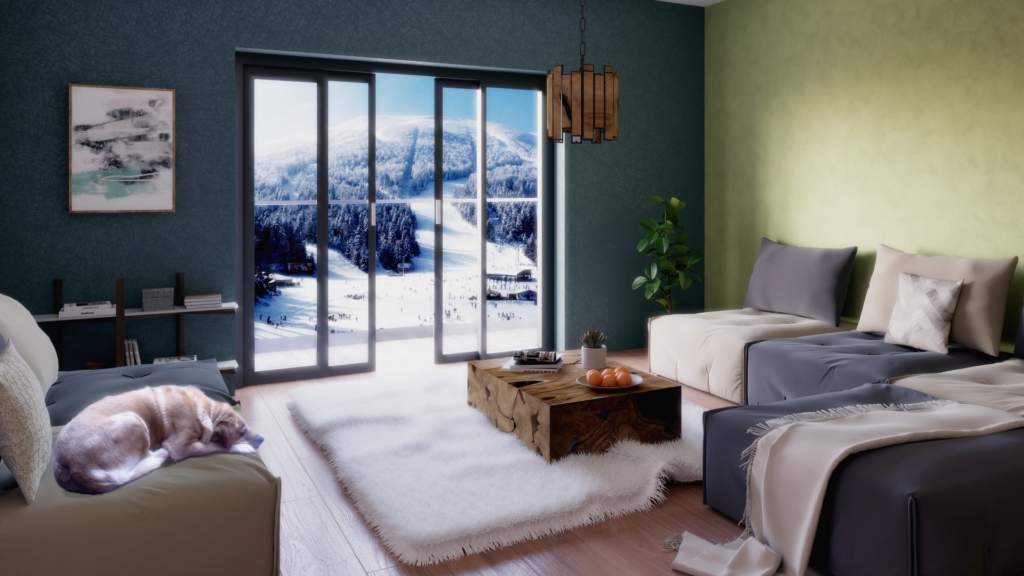

RELATED: What casework shop drawings are and why architectural design services use them

Defining casework and millwork: essential differences

Casework and millwork are part of the construction and design vocabulary, especially in interior architectural services. However, they refer to two different approaches to built-in furniture and fittings:

Casework

Casework is those modular, box-like elements that can be mass-produced and assembled on-site or prefabricated off-site. The term is also closely associated with cabinetry and other storage solutions.

Some of the key examples of casework include cabinets, bookcases, drawers, shelving units, and other types of storage. Most of the casework elements usually come in standard sizes, hence it is easy to produce them in large quantities and many different designs.

Casework is usually freestanding or semi-permanent, being removable or replaceable with no effect on the architecture of the space.

Millwork

Millwork is custom, handcrafted pieces typically constructed in a mill and then installed permanently within a building. It includes woodwork and trim that gives buildings their aesthetic character, including moldings, baseboards, window casings, staircases, and paneling.

Unlike casework, the elements of millwork are mostly custom-designed for a given space and most have some intricate details that feature to define the overall architectural style.

Millwork is normally installed as part of a permanent feature of the interior structure, hence providing an integral role in defining the character and layout of the room.

drawing flat pack bed plan

RELATED: Millwork drawings for drafting and design: complete cost, rates, and fees for firms and companies

When to use casework vs. millwork in design projects

This is, of course, useful for both freelance designers and architectural firms to learn when to use casework versus millwork so an effective project management system results in a consistent design outcome and cost-effective means for execution. Consideration shall be made for:

Scale and scope of project

It is much more ideal and beneficial for projects wherein they need functional storage to take place which may be quickly built and installed in the site. For large-scale projects, it has found itself to be able to execute consistency for many rooms and locations by casework approach.

Millwork excels at designs that are defined by aesthetic detail and customization. Luxury residential projects or high-end commercial spaces frequently utilize millwork to introduce unique features such as unique moldings or custom wood paneling.

Customization requirements

Millwork is perfect for spaces that demand some distinct character or architectural cohesiveness because it is in its very nature custom. This creates alignment with most clients’ specific design preferences.

Casework is a cost-effective and feasible option in case customization is not such an issue. However, nowadays most manufacturing firms provide semi-custom casework that balances the degree of personalization with the requirements of keeping the costs within limits.

Time constraints

Casework is a prefabricated product and, hence, it can be manufactured and installed much faster than custom millwork, which is essentially about intricate craftsmanship and lengthy lead times.

In case of tight deadlines, the freelancers and firms look for casework to complete within the deadline. In case a project demands detailed design and if there is enough time in hand, millwork would provide a unique character with longevity.

Budget

Casework is always cheaper than millwork due to standardization in the production process. In the case of budget constraints, casework can offer a more realistic solution with functionality intact but without compromising the quality.

Millwork costs more as this is the work custom to each other, and usually with high-value woods or any other kind of design desired, making it pricey but for all luxury jobs and to acquire an atmosphere in those places or designs required; this one may pay some more amount for this to last a long time as the same.

RELATED: How architectural millwork design and drafting services can easily achieve company success

Materials and finishes: what is best?

Understanding which of the materials to use on casework and millwork best realizes your goals, whether durability and style or both, would be the most effective outcome.

Casework materials

Casework is typically constructed of very rugged yet cost-effective materials used most of the time such as MDF (medium-density fiberboard), particle board, and plywood, often topped off with laminate, veneer, or melamine.

Strength, low cost, and maintenance-friendliness mark these material types, being used in mostly high-traffic areas: kitchens, bathrooms, and offices.

Solid wood or high-end veneers may be used in high-end casework, but these are expensive and add much to the cost.

Millwork materials

Millwork is typically constructed of solid wood, though the most common woods used are oak, walnut, mahogany, and cherry. These woods provide a beautiful yet durable result.

Finishing millwork may include staining and varnishing, but more elaborate finishes can involve hand-carving or painting depending on the finish that will be used.

High-quality millwork also has treatments to accentuate the natural characteristics of wood. These are either glossy or matte finishes that play with the grain.

coffee table

RELATED: Hiring freelance woodworking drafting and design services: All you need to know

Cost comparison: what freelancers and firms should expect

Casework and millwork are not the same regarding material, labor, customization, and installation.

Casework costs

Casework is generally cheaper, primarily in its modular manufacturing. Cost per unit will vary by materials, finish, and manufacturer.

The most basic types of casework average $100-$500 per unit for a prefabricated design. The cost of custom is higher than this but less expensive than millwork.

Millwork prices

Millwork is custom-made in nature, hence it requires more budgets. Labor is a very high-cost component because millwork involves skilled artisans to make complicated designs.

Millwork can be pretty expensive. Decorative molding services and custom cabinetry can run into thousands. However, millwork has long-term value in terms of its quality, durability, and timeless appeal.

Installation techniques: tips for seamless execution

Installation methods of casework and millwork show their differences in use and permanence in a design project.

Installing casework

The installation of casework is not that complex since the units are designed to standard measurements and can be installed on walls or floors without difficulty.

The modular system has the advantage of speedy installation, which is also the case in commercial establishments, where uniformity and saving time are of the essence.

Installing millwork

Millwork installation requires exactness as each part is built to fit into a room. It usually is undertaken by specialists like skilled woodworkers or millworkers; thus, each component finds its way perfectly within the design and architecture of the room well.

Because it does not readily come out, millwork must be very well contemplated during the design stage as a function of other architectural components that have to do with walls, ceilings, and flooring.

RELATED: Fabrication shop drawing services: all you need to know

In the contemporary design landscape, casework and millwork share the spotlight:

Current trends in casework tend toward lines that are smooth and sleek, with a focus on Scandinavian or modern-industrial aesthetic appeal, including clean lines, recessed handles, and matte or semi-matte finish.

Sustainable materials and finishes in casework design are increasingly being used to meet the trend for greener interior applications in both residential and commercial building projects.

Millwork is gaining popularity in luxury design with a focus on craftsmanship and artisanal quality. Modern millwork blends traditional techniques with contemporary aesthetics to create statement pieces that elevate interiors.

Dark wood tones, intricate paneling, and accent moldings are popular in residential millwork, while commercial projects often incorporate custom staircases and built-in seating that blends functionality with visual appeal.

shop drawing cabinet

Choosing between casework and millwork: practical advice for freelancers and firms

For freelancers and architectural firms, the choice between casework and millwork would depend on the budget, scope of the project, and aesthetic. Here are some key tips to guide this decision:

Evaluate client needs

Determine whether the client values customization and aesthetic details, which would indicate millwork, or if they prioritize functionality and cost-efficiency, suggesting casework.

Consider project constraints

Sometimes, because of a tight timeline and budget, casework might be favored, but when the scope is more flexible, bespoke millwork elements add a personal, timeless feel.

Hybrid approach

Usually, a successful design is a hybrid of casework and millwork. For example, a storage module casework can be used, and custom millwork for a focal point like moldings, trim, or even a dramatic staircase.

RELATED: 4 Tips to improve cabinet shop drawings for manufacturing efficiency at companies

Wrapping it up

As such, it is essential for freelancers and architectural firms to achieve a balance between casework and millwork. A couple of them tend to have different benefits and cater to different design aspects functionalities and budgets. It is rather suitable for spaces with heavy flow because it is modular efficient and also budget-friendly. Millwork is that kind that requires custom elegance and durability; it usually becomes a hallmark of luxury interiors.

Yet knowing the strengths of each allows design professionals to gain from both casework and millwork when creating such functional yet visually beautiful spaces. Whether it was in crafting minute details of any custom millwork or an outfitting room with practical casework, rich possibilities now exist to transform interior spaces into lasting, powerful designs.

How Cad Crowd can help

Freelancers and architectural firms will eventually reach the point where they need to determine whether they need casework or millwork design. Good thing that Cad Crowd is here to help connect you with the best professionals in the field. Request a quote today.

author avatar

MacKenzie Brown is the founder and CEO of Cad Crowd. With over 18 years of experience in launching and scaling platforms specializing in CAD services, product design, manufacturing, hardware, and software development, MacKenzie is a recognized authority in the engineering industry. Under his leadership, Cad Crowd serves esteemed clients like NASA, JPL, the U.S. Navy, and Fortune 500 companies, empowering innovators with access to high-quality design and engineering talent.

Connect with me: LinkedInXCad Crowd

Cost Analysis of Hiring RF Engineering Services: Detailed Rates and Pricing for Freelance Services


RF engineering is the back bone of the world of wireless communication since it enables devices to transmit and receive data through radio waves. RF engineering services are extremely important for many industries such as telecommunications, aerospace, defense, IoT, and much more. However, hiring RF engineering services is an investment that needs careful analysis.

This article is going to tell what a freelancer in RF engineering will cost: Major factors that determine the charging rate and usual price scales ranges together with how to best profit from your spending in it.


:rocket: Table of contents
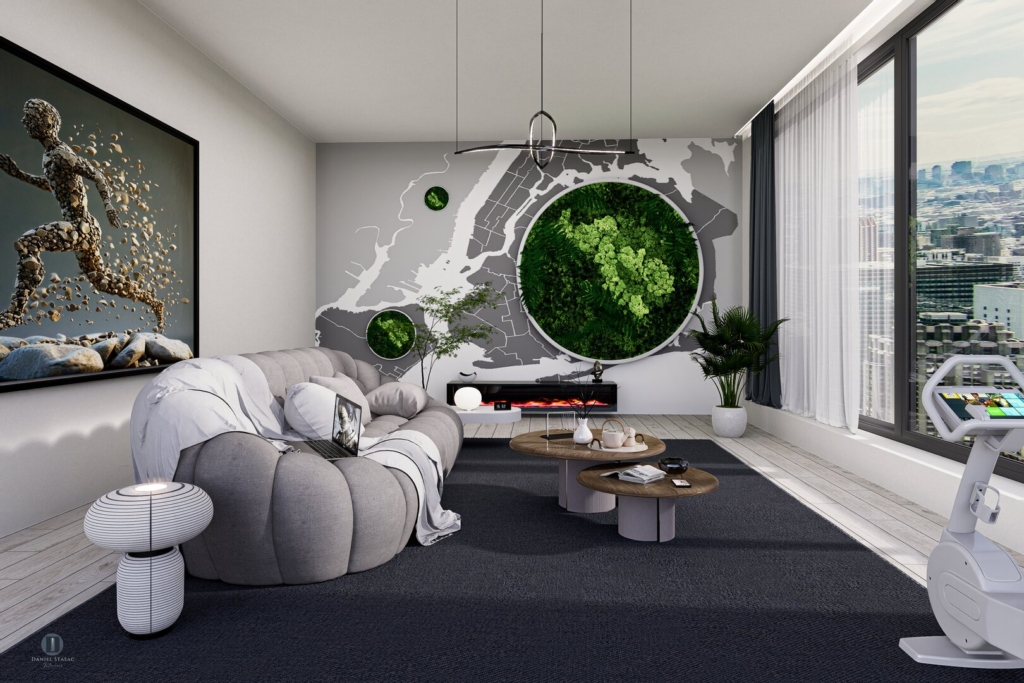

RELATED: What certifications are used for new electronic hardware products & PCB design services?

What are RF engineering services?

RF engineers play very vital roles in the process of designing, testing, and optimizing radio frequency-based systems. Systems in various kinds of wireless networks and even satellites and radars often use systems of their nature. This also entails RF engineers.

High-class RF engineering plays a highly imperative role for the continuation of efficient communication of any telecom company or of any corporation engaged in businesses of different areas that highly rely on wireless technology.

The following are the services mainly delivered by the RF engineer:

•RF Network Planning and Design: RF engineers create networks so that coverage is maximized and interference minimized.

•RF Testing and Measurement: It measures the performance, troubleshoots problems, and keeps the signal integrity.

•Design and Optimization of Antenna: Any RF system has its backbone, that is an antenna. The RF engineers design and optimize the same to the best performance. Signal Processing: By doing signal processing, engineers clean the noise of the signal and make them noise free and clear.

• Complying with rules: The systems should be developed according to the radio regulations followed locally and internationally. Those organizations involved in the designing of products that have a need for wireless communication, such as mobile, should seek RF engineering services. Their systems will be operating flawlessly when professionally developed by RF engineers, based on the conditions of signal transference and interference together with regulation standards.

Today’s networks are much more complex and therefore need faster and more reliable connections, but with the complexities of the current networks and the problems they raise, a company will get through them much more efficiently. RF engineering outsourcing allows companies to leverage specialized resources while avoiding the expense of a full-time team and saves them money while speeding up product development with a high degree of technical accuracy.

RELATED: Cost to design a new electronic product, develop PCB hardware & prototype rates at firms

Lintratek 900 MHz Linear Yagi Antenna

Factors influencing freelance RF engineering rates

Many factors come into play in cost considerations when hiring a freelance RF engineer for any project, from the complexity of a project to experience.

Skill and experience level

Normally, the rate for an experienced freelancer with a speciality is higher. Engineers with aerospace background, defense, or telecommunications may ask a premium rate easily since their experience indicates that they are dealing with high-stake projects.

•Entry-Level RF Engineers: A person with a basic level of expertise in RF design and testing might charge between $30 to $70 per hour.

•Mid-Level RF Engineers: There should be $70 to 120 an hour for good RF design background and solid practical experience.

•Senior or Specialized RF Engineers: Experienced persons with specialty expertise, either in the satellite communications type area or the defense-grade grade systems may charge $150 to $300 an hour.

Project complexity & scope

The size and nature of the project significantly influence costs. Testing an RF job, for instance, will be much cheaper compared to a full network design and planning project. Complex projects usually involve multiple rounds of design and highly specific testing, which tends to inflate costs.

• Low-Complexity Projects: An example of this includes a testing or basic analysis. Such a project is going to cost in the order of $1,000 to $5,000 depending on the degree of detail involved.

•Mid-Range Projects (e.g., Network Design): $5,000 to $20,000; this especially depends on whether custom configurations or optimization are needed.

•Advanced Projects (e.g., Satellite or Military-Grade Systems): High-complexity projects range from $20,000 to over $100,000 because of specialized skills and longer timelines.

RELATED: Consumer electronic product design services: All you need to know about costs, rates, and prices for freelancers

Geographic location

Rates for a freelance RF engineering service will vary greatly from region to region. A North American or Western European RF engineer will charge a lot higher rates than an RF engineer in Southeast Asia or Eastern Europe.

  • North America and Western Europe: $80-$300 an hour; a freelancer may charge such.
  • Eastern Europe: usually lower rate, may charge between $40-$100 an hour.
  • Southeast Asia: The rates are more competitive in this region, depending on the comparison. Free-lancers in this region may even quote between $30 and $80 per hour.

Resources needed for equipment and software

Usually, RF engineering usually calls for complex packages with a lot of simulations, modelling and analysis software for an efficient and effective system MATLAB, CST Studio suite or Ansys HFSS just to mention a few. A freelancer having licenses for such software packages would include that cost in their charges, especially if such software is required for the specific project.

Breakdown of cost components in RF engineering services

Knowledge of the different cost components in a typical RF engineering project can enable better budgeting. The main cost components are:

Consultation and initial assessment

The first phase of consultation or assessment is meant to establish the scope of the project and determine the specific needs. Others add it as a supplement for a specific sum, while others charge it in the price per hour.

Design and planning

Most of the RF engineering project time is taken up by the design process. It comprises a complex arrangement of system layout, modeling and resolving technical issues

  • Per hour rate: $70-$150.
  • Project-Based Rate: This process costs about $3,000 to $20,000 for projects in the middle to big category.

Testing and optimization

After the design is complete, RF engineers test and optimize the system to ensure that all parts of the systems are working properly and comply with regulations. Testing becomes complex because the location might be complex, equipment may be limited, and interference factors.

  • Hourly rate: $80–$200.
  • Project-based rate: In most cases, testing phase costs between $2,000 and $10,000.

Ongoing support and maintenance

Some RF engineers include ongoing support within their packages, especially in case a project requires updates or follow-up monitoring over time. This is normally quoted as a monthly retainer.

  • Typical monthly retainer: $500–$5,000, depending on the scope of work and level of support required.

RELATED: Enhancing the aerospace industry: Exploring 3D printing applications for companies 

RF transmitter deconstructed

Freelance RF engineering rate ranges by service type

To provide more clarity, here is a general listing of the most common types of RF engineering services with their associated rate ranges:

Service Hourly rate ($) Project-based rate ($)
Consultation & planning $50–$150 $500–$5,000
Network design $70–$180 $5,000–$20,000
Antenna design $80–$200 $3,000–$15,000
Signal processing $70–$200 $1,500–$10,000
Testing & troubleshooting $80–$250 $2,000–$10,000
Ongoing maintenance $50–$100 per month $500–$5,000 per month

Tips to maximize value when you are hiring a freelance RF engineer

You are hiring a freelancer for RF engineering at your end, but hiring this may be cheaper in comparison to hiring the whole service engineering firm. However, while you hire the freelance engineers, it is vital to maximize your value. Some tips are listed below:

Defining project requirements

Clearly outline the project specifications, aligning with the freelancer. This lack of clarity in the project may result in scope creep as costs escalate.

Select the best freelancer for your project

All RF engineers may not be skillful equally. Perform background checks for anyone you plan to hire as freelancers and see his or her portfolio and experience by matching them up with your requirement. Some useful resources from which one can acquire the right kind of RF engineers to work on his project are the websites Upwork, Freelancer, LinkedIn, etc.

Use fixed-price contracts if the projects defined well.

On a well-defined project, choosing a fixed-price contract as opposed to an hour-rate is easier to estimate in cost. This is quite viable when the scope of the project is defined and should not change.

Contingency budget

The complexity of the RF projects arises at unexpected times to necessitate more time or resources. Always have a contingency budget; it should comprise about 10-15% of the whole cost of the project.

Discuss long-term maintenance options upfront

RF systems tend to need to be fine-tuned or adjusted as the need arises. Ensuring to get ongoing support right away may be less expensive than negotiating further service contracts in the future.

Wrapping it up

Freelance RF engineering services provide the flexibility and expertise that many businesses need for their projects, from adding network coverage to new wireless products or RF testing. Such services incur varying rates, with experience, project complexity, and location possibly determining the cost. Awareness of such pricing dynamics and resultant project requirements definition will guide informed decisions leading to quality RF engineering services and within a budgeted cost.

Professional RF engineers will be the difference between a smooth, efficient network and a system characterized by inefficiency. Careful planning and cost analysis will maximize the value you get out of hiring freelance RF engineers.

How Cad Crowd can help

RF engineer services are on the rise now more than ever and understandably so. These professionals work hard to master their craft so it just makes sense that they also receive the compensation for their experience and expertise accordingly. Allow Cad Crowd to connect you with the best RF engineering services to date. Request a quote today.

author avatar

MacKenzie Brown is the founder and CEO of Cad Crowd. With over 18 years of experience in launching and scaling platforms specializing in CAD services, product design, manufacturing, hardware, and software development, MacKenzie is a recognized authority in the engineering industry. Under his leadership, Cad Crowd serves esteemed clients like NASA, JPL, the U.S. Navy, and Fortune 500 companies, empowering innovators with access to high-quality design and engineering talent.

Connect with me: LinkedInXCad Crowd

From Blueprint to Reality: 3D Printing’s Impact on Architectural Design and Visualization for Companies and Freelancers


3D printing has completely changed the landscape of architecture. This is not a fad; its influence has transformed architects, designers, and engineers’ thoughts and approach toward designing a project. It is very good for companies and freelancers operating in the architecture sector to give unprecedented creativity, efficiency, and involvement with the client.


:rocket: Table of contents

Know about 3D printing in architecture

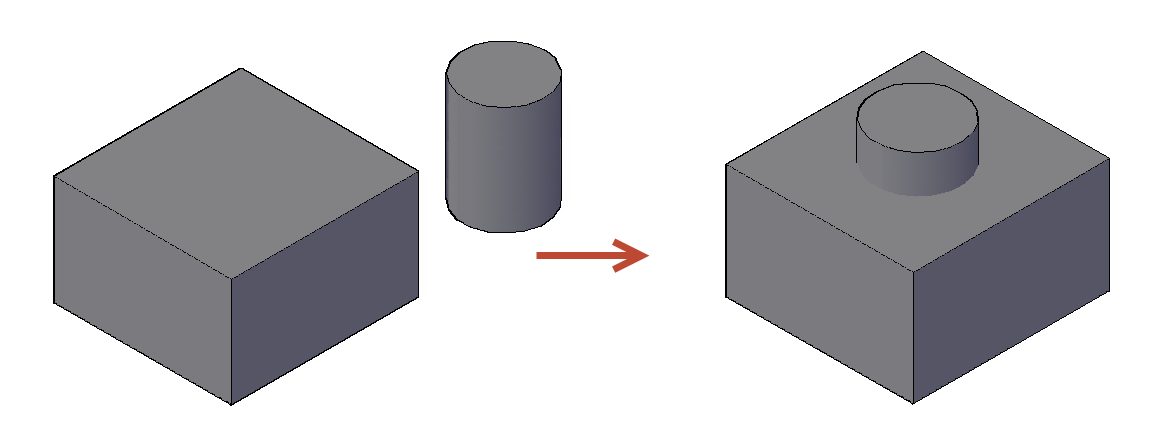
It refers to printing a three-dimensional object on a layer by layer fashion from a digital file. Currently, this is the area of additive manufacturing in architectures that has helped produce and model complex structures and full-scale prototypes. Today, building models come out in detailed dimensions, whole structures, or simply anything based on the architect’s creativity. This normally begins with a CAD file, or a blueprint for the printed model. This advanced software enables architects to draw precisely and in details to the extent that each unit within the building is improved.

Upon design, there will be a 3D printing that uses plastics, metals, and even concretes to print models. This way, aside from the fact that this is going to make everything much easier, it helps eliminate waste and cut materials for any business size-an exciting reason.

RELATED: What is 3D printing? A beginner’s guide

3D printed furniture and objects

Benefits of 3D printing for architectural design

Visualization

One of the effects 3D printing will impact on architectural design is seeing designs more concretely into realisation. Sometimes a set of sketches and the respective two dimensional drawings may not tell very much about a design in an almost authentic sense. That notwithstanding, through 3D printing, architects can visually project what they intend or are coming up with via making of physical models offering an authentic way of projection of a design.

These models can be used in client presentations, which allows the stakeholders to experience the design in ways that drawings cannot. It is possible for the client to get a close-up view of scale, proportions, and details about a project, thus providing better decision-making and increased satisfaction with the final product.

Rapid prototyping

Another important advantage of 3D printing, however is the speed at which one can produce models. It allows architects and designers to quickly come up with prototypes so that they may easily iterate much faster. The speed of production is pretty beneficial in the preliminary stages of a project. Indeed, the number of possible designs can be quite vast at this stage.

With several designs being released pretty fast, architects will try several concepts and use the data to determine material and aesthetic choices versus functional ability. This encourages more creativity but speeds up the total project timeline, the critical motivator in current high-speed construction environment.

Cost efficiency

Cost always goes to the front when an architectural project is to be undertaken. And also 3D printing really cuts expenses. In comparison with conventional prototyping, expensive materials and processes that consume labor usually find an application for prototyping. On the other hand, 3D printing is low waste because only the required quantities of materials are needed thus lowering cost production from waste.

Further, with the 3D printing technology, the models can be printed at a highly accurate level and, thus, less potential for costly errors in the on-site construction. This saving can work as a critical difference for freelancers and small firms that can enable them to be in a better position when competing with the bigger firms.

Customization and personalization

The ability to generate items with 3D printing makes customization easy as well as inexpensive, thereby making impossible things a matter of reality. In evidence is the case with architects who can design any style of facade, intricate detailing even customized interiors that cannot have been achieved with any known method.

This is very useful to freelancing architects because they spend much time developing their own solutions to clients. This capacity will ensure that freelancers develop unique designs, which will be the best way for them to stand out from other freelancers in a competitive market, thereby having stronger ties with the clients and establishing excellent reputations.

RELATED: 6 ways 3D printing will change the world

Applications of 3D printing in architectural design

Scale models

Architects have used scale models in the presentation of architecture for a long period of time. With 3D printing now available, models are so easy to make and also quite fast. The detailed accurate representation of the architect makes it possible for the clients to know the proportion and scale involved in a project.

These models can be printed with different materials such as PLA, ABS, and resin. Each has a different aesthetic and tactile quality. High-quality scale models can now be produced quickly, enabling the presentation of designs to be made more effectively and a real-time response to client feedback.

Facade elements

It also enables architects to design and produce intricate façade elements that can add an aesthetic value to a building. Additive manufacturing techniques allow one to get custom patterns, textures, and forms quite easily. This is helpful in modern architecture, where one demands extraordinary façade designs for a statement or functional objectives, such as energy efficiency and climate responsiveness.

Building elements

Some companies are studying the possibility of printing entire building elements like walls, columns, and structural elements with 3D printing. It does not have the intricacies associated with construction but gives free rein to innovative designs, which will not be tamed by existing architecture conventions. An example would be projects that actually created complex geometries via 3D-printed concrete, impossible to manufacture if produced conventionally. Thus, such a method can even diminish the construction time and human costs in labor without compromising structure.

Urban models for planning

Besides creating standalone structures, 3D printing can actually play an important role in urban design. The designers can build large neighborhood and district models showing how those developments are going to work in the place.

These models can even facilitate discussions with the city planners, stakeholders, and the community generally. They offer a physical reference to proposed changes. 3D printing makes ways to make developments relevant in the eyes of community need while increasing public involvement with planning activities.

RELATED: Redline & as-built drawings explained for construction companies and architects

Obstacles and issues

Despite its potential positives, introduction of 3D printing for architectural design still contains disadvantages.

Lack of materials

In addition, despite so many advancement opportunities, 3D printable materials available in the field of construction are really low if compared with building material kinds. The architects need to ensure that there is enough property in the strength, durability, and sustainability of materials in the process of designing for 3D printing.

Regulatory compliance

Regulatory compliance remains a great challenge with any new building construction method. Building codes and standards may not be updated to cover structures printed with 3D printing; hence the architect has to navigate a complex legal framework. This would push the acceptance of the project, and therefore the construction back.

Technical expertise

With regards to technical know-how, for 3D printing to be successfully put into action, architects must have technical know-how. This is through being well conversant with CAD software and having knowledge of how 3D printing is performed, in addition to the material properties. This would present a challenge to entry for freelancers or small firms that do not have dedicated technical teams.

Initial investment

A fairly significant initial investment in technology, a 3D printer requires of the firms desirous of getting a high quality one, and all the material that goes with it. To a small firm, the money may not easily run its course without seeing returns pretty soon.

RELATED: 8 tips companies use to simplify design manufacturing or design for manufacturing

3d air blower prototyping

Future architecture of 3D printing

As technology advances, the future of 3D printing in architecture seems to be doing all right. Probably, next-generation materials will be biobased and recycled resources, which could further expand the potential for sustainable building practices and even more ambitious architectural projects through advancements in printing speeds and precision.

The integration of 3D printing with other technologies, like BIM and AR, would make design more effective, but the project workflow becomes more smooth. For example, through AR, architects can already see a 3D-printed model in place to be constructed so that some adjustments can be made even before the construction phase.

Wrapping it up

This means that it has fundamentally affected the way architectural designs and visualization are approached and will be concluded. It is a new step forward for companies and freelancers with rapid prototyping, designing down to a high degree of customization, and generation of detail models. In its further development, it will begin to shape innovative and efficient ways of leading the architecture to a sustainable future.

3D printing is not only giving life to plans for architects, but it is also making the architectural practice of the 21st century different and better. It will also bring architects to the game, helping them to be leaders in innovation and satisfying ever-evolving needs of the clients and communities around the world.

RELATED: Understanding the cost of prototyping for product design services and budgeting for your company

How Cad Crowd can help

Nobody would disagree with the huge impact of 3D printing on architectural design and visualization. For this reason, companies and freelancers must join the bandwagon of utilizing the new technology and harness it to gain an upper edge over their competitors. At Cad Crowd, we’ll ensure that you are working with experts in 3D printing who will turn your concepts into realities. Request for a quote today.

author avatar

MacKenzie Brown is the founder and CEO of Cad Crowd. With over 18 years of experience in launching and scaling platforms specializing in CAD services, product design, manufacturing, hardware, and software development, MacKenzie is a recognized authority in the engineering industry. Under his leadership, Cad Crowd serves esteemed clients like NASA, JPL, the U.S. Navy, and Fortune 500 companies, empowering innovators with access to high-quality design and engineering talent.

Connect with me: LinkedInXCad Crowd

How to Integrate Virtual Reality (VR) in Your Real Estate Firm’s 3D Virtual Staging Services to Drive Growth


Perhaps real estate is one of the fields that have always been adopters of new technologies to serve their clients and market better. With this improvement in the evolving digital landscape, sophistication tools will become even more prevalent, and nowadays, many relevant tools emerged in Virtual Reality (VR) and 3D virtual staging. These technologies open a real opportunity for real estate firms to provide more engagement, realism, and convincing property experience for prospects, so subsequently, generate growth and business success.

The article explains exactly how incorporating VR into your company’s 3D virtual staging services can enhance the buying experience, improve customer engagement, and contribute to long-term growth. Whether you’re a small real estate agency or a large firm, adopting VR can put you ahead of others in the industry and attract more buyers to your listings.


:rocket: Table of contents


What is 3D virtual staging?

The term virtual staging refers to the process of virtually furnishing and decorating an empty or sparsely furnished property so buyers can envision how much space is available for them. Virtual furniture, decoration, and accessories are used in property photos with the help of 3D software to create a realistic and attractive image of the home. It is an increasingly popular alternative tool in real estate marketing, especially virtual staging since it has proved to be inexpensive, flexible, and visually attractive compared to other traditional staging methods.

3D virtual staging services allow real estate agents to present beautifully crafted and customized visuals of their listing without the pains and associated expensive logistics of physical staging. In what ways, though, might Virtual Reality further improve this process and potentially fuel growth for real estate companies?

RELATED: Virtual room design services and 3D room design tips for companies and firms: Complete breakdown

3d studio apartment living room

How VR enhances 3D virtual staging in real estate

VR integration is a game changer with 3D virtual staging services. Traditionally, 3D virtual staging allows potential buyers to stroll through an interactive, lifelike 3D environment, making it from static images to an exciting experience. From being passive to active viewers, this would bring a flood of advantages for real estate firms to enhance engagement and conversion rates.

Competitive advantage

As real estate competes in the field of technology, much better positioning against such rival firms is always ideal. Of course, VR-based virtual staging will give your real estate firm an edge over your competitors, especially from the traditional staging and 2D imagery approach. This means standing out through immersive VR experiences, showing your business at the forefront of real estate marketing technology. This not only attracts more buyers but also increases your market visibility and enhances your brand reputation.

Global reach

One of the most significant advantages of applying VR to your real estate business is that it will help you extend it to very long distances for buyers. The real estate market is, by and large, global, and nearly all buyers wish to have an overseas investment in a property. With the help of VR-enabled virtual staging and tours, you’ll be reaching a much larger audience-people all across the globe.

This becomes especially crucial in the post-pandemic world today; international travel remains limited, or a buyer is too busy to make a trip for viewings. With VR, potential buyers can look around from anywhere, at any time, and are more likely to attract high-quality leads.

Immersive buyer experience

Prospective buyers will experience a virtual world that emulates a very close feel of visiting the property. One can go through every room, rotate details, and zoom in on areas. Buyers can even change the perspective or even the layout of a given space. Such immersion cannot be seen in traditional 3D virtual staging.

What with the ability to “walk through” a property virtually, that which gives buyers a much more intimate understanding of the layout, size, and flow of a given space, it really creates more of an emotional connection to the property-more and more now the main factor in driving purchasing decisions.

RELATED: How 3D virtual reality services can improve your real estate business

3D VR Visualization

Better marketing and sales tools

VR is the perfect tool to create more compelling marketing materials beyond the traditional listings: high-quality virtual tours, VR-enabled advertisements, and much more interactive property showcases. You will engage prospective buyers in ways that are just impossible with traditional photos and videos. VR is a great tool for differentiating property listings, driving more attention to your offerings, and adding that storytelling dimension to your marketing.

Additionally, VR allows for tracking user interactions, which can provide valuable insights into buyer behavior. By analyzing how buyers interact with virtual properties—such as the areas they focus on or how long they spend in certain rooms—you can tailor your marketing strategy to better align with their interests and needs. This data-driven approach can lead to more efficient marketing efforts and higher conversion rates.

Increased buyer confidence

Homebuyers aiming to acquire their dream home want to be assured that they are making a good choice. They are concerned with knowing everything there is to know about a property before actually spending their money. Virtual tours, fueled by VR, allow for 360 degree view of a house, thus affording potential buyers to see every part of the house without having to physically be there. And then this experience helps build trust, giving them a clear, complete picture of the property.

Therefore, virtual reality can boost buyer confidence through the engagement and involvement the process of inspecting houses presents. It is possible to see a number of properties during one sitting, make direct comparison of layout and design, as well as pay attention to specific details such as room dimensions, lighting, or finishes. The more knowledgeable and confident a buyer is, the more likely they will be to take the next step in the purchasing process.

RELATED: Architectural VR/AR 3D rendering costs, rates & 3D modeling pricing for design firms

Personalization and customization

With one of the strengths of VR integration when it comes to virtual staging, one could definitely personalize for the individual buyer. Since every buyer is unique with different tastes, preferences, or even lifestyle needs, they can visualize how the property could fit their unique style by allowing them to interact with space in VR. They may alter the colors of the walls, change some furniture pieces, or even simply change some decorative elements to see how well it fits in that area.

This is a level of personalization more likely to elicit an emotional connection on the part of the buyer. They’re no longer looking at some generic, staged home; instead, they can imagine living in that space and how it reflects their personal vision. The more personalized the experience, the more a buyer will be driven to make a decision about moving forward with a purchase.

Time and cost efficiency

Integrating VR into your virtual staging solutions is the most cost-effective way of delivering an elevating experience without the high costs of physical staging. Staging, in its conventional form, may require renting furniture, hiring decorators, and even hiring professional photography-all very expensive operations. Virtual reality, on the other hand, enables you to stage properties digitally and offer clients infinite opportunities for virtual tours at a fraction of the price.

There is also time saving. Using VR, you don’t have to schedule multiple in-person showings nor wait for furniture to arrive. You can make adjustments to the virtual staging almost on the spot. Flexibility makes your business much more efficient than before, but it also improves the experience for clients who prefer convenience and flexibility more and more.

RELATED: When do companies use freelance 3D virtual staging services vs. traditional staging? Full breakdown

How to integrate VR in your real estate firm’s services

Of course, integrating VR into your 3D virtual staging services requires the right strategy and the right technology; here’s where to start:

1. Choose an appropriate VR technology: Choose a suitable VR software or platform that easily fits your available tools. As it is widely understood, most VR solutions are created to integrate well with 3D modeling software from where virtual staging designs may be imported into VR environments. Consider a platform that is easy to use, of quality visuals, and allows for an interactive experience of users.

2. Invest in VR headsets: Investment in VR headsets will largely depend on your business model. Some cases require you to buy headsets for showing to clients, or you can prepare web-based virtual reality tours accessible from the client’s smartphone or computer.

3. Train your team properly: Train your team on how to use VR tools and virtual staging software. These professionals must be fast and agile in creating and modifying virtual tours, adjusting the experience as clients desire, and guiding clients to expert recommendation.

4. Market VR services: After integrating VR to your virtual staging services, make sure to market it properly. Emphasize in marketing literature, web site and social media campaigns how this is actually an immersive experience, made much more convenient, and allows greater personalization.

5. Seek client feedback: Ask your clients for their feedback if they have experienced your VR services. This will give you the ability to get improvements in your offerings and fix issues and ensure your services are fulfilling their needs.

RELATED: Expert 3D store rendering and floor plan design services: attracting retail customers

Wrap up

The adoption of VR by 3D virtual staging services is one of the high-power moves to make growth look out for in the real estate industry. It can give an immersive, cost-effective, and personalized experience that can better boost engagement, increase confidence, and expand the market.

In this recent era of total competitiveness, the use of VR technology will make your business company become highly competitive in comparison and attract more buyers, which will make it separate from the competition pool.

Investment in VR and virtual staging services fits into the nowadays rising trend of technology innovations in real estate; it future-proofs the business in the ever-changing marketplace.

How Cad Crowd can help

The key to growth lies in staying ahead of trends, and VR offers an exciting opportunity for transformative change in how your firm approaches marketing and selling properties. Cad Crowd will make sure you’ll stay on top of this trend. Request a quote today.

author avatar

MacKenzie Brown is the founder and CEO of Cad Crowd. With over 18 years of experience in launching and scaling platforms specializing in CAD services, product design, manufacturing, hardware, and software development, MacKenzie is a recognized authority in the engineering industry. Under his leadership, Cad Crowd serves esteemed clients like NASA, JPL, the U.S. Navy, and Fortune 500 companies, empowering innovators with access to high-quality design and engineering talent.

Connect with me: LinkedInXCad Crowd

Benefits of 3D Demo Services for Companies’ New Product Inventions and Innovations


Interactive product demos using 3D motion graphics are now one of the most recognized effective tools to put your sales engagements all the way to the top, building a more solid connection with your products or company and your existing and potential clients. These types of demos allow you and your companies to show off new products creatively, highlighting key features to efficiently convey important details to clients.


:rocket: Table of contents


What are 3D demo services for products?

Interactive 3D demo services involve presentations, typically a slideshow or video, which allow users to have a more immersive engagement with products. These 3D demos explain the nature of products and their different features. 

3D demo services offer a uniquely immersive experience that highlights the features of a product in a way that is more dynamic than traditional slideshows with static images. 

Interactive 3D product demos are now becoming an important part of the sales process because they allow prospective customers to have a deeper and more engaging interaction with the product. This one-of-a-kind experience allows them to understand the functionality and value of a product more effectively.

RELATED: How to hire 3D designers and freelance 3D artists for your company project

3d demo jewelry store with a moving person

Importance of 3D product demos in the sales cycle

Letting potential customers engage with the product through interactive demos is essential because it offers them a more unforgettable and enticing experience that traditional product presentations can never offer.

If the prospects can see the product in full action from different angles, it can dramatically enhance their overall understanding of all its use cases and features. 

The use of interactive product demos as part of the sales cycle can also add a more personal touch to the sales process. The best way to craft product demo videos is with the help of 3D graphics. The most reliable 3D demo services use different software programs to come up with complex 3D visualizations of a product that can adapt to any environment or setting. 

3D demo services can create more impactful and relevant presentational content by making sure that the demo is tailored to the specific interests and needs of potential customers.

RELATED: 5 tips for achieving photorealism with 3D rendering and 3D visualization for home design companies

How to make effective 3D product demos

Some of the best practices for developing interactive 3D product demos include understanding the profiles of the target audience, determining the key features of the product to focus on, and structuring the product demo in such a way that will encourage active participation. It also usually involves the use of storytelling tools such as 3D motion graphics to produce compelling narratives. 

Interactive walkthroughs, simulated product usage scenarios, and 3D virtual tours are some of the most popular types of interactive demos for products.

How to personalize 3D product demos for specific uses and applications

Sales teams can tailor their product demos to address the specific requirements and preferences of every prospect by embedding them into personalized sales experiences. This level of personalization can improve the relevance of the demo and its effect on the sales process in general. 

The use of interactive 3D product demos for live demos including during sales meetings or demo calls makes use for the real-time adaptation of presentations according to the feedback and reactions of the prospect. This kind of interactivity makes the demo more effective in engaging prospective customers.

Making sure that both the marketing and sales teams work together in using interactive 3D product demos also plays a key role in the effective presentation of the value proposition of the product and making sure that the prospect will receive and understand a cohesive message. 

This professional collaboration is also a great way to ensure that the interactive 3D product demos will resonate with the potential customers and are in line with the marketing strategy as a whole.

Why use 3D demos in product tours?

The use of interactive product tours when engaging with potential customers can help effectively highlight the unique selling points and capabilities of the product. 

The distinct immersive nature of these interactive demos is what makes them impactful and memorable in conveying the value proposition of a product. 

Using interactive demos to showcase the use cases of a product also allows prospects to envision how the product addresses their specific challenges and needs. 

This personalized approach can significantly enhance the product tour’s relevance and increase the chance of more conversions. 

Adding a personal touch to the product tour experience of potential customers is possible with the help of interactive software that makes way for customizing the content of the demo according to the specific interests, role, and industry of the prospect.

RELATED: How to design 3D models for 3D printing & new prototypes

A still from a demo of a 3D drone with large wheels and yellow colors

Benefits of 3D demo services

Here are some of the benefits of 3D demo services that will surely convince companies to use them for their new product inventions and innovations.

VR and AR technologies’ increased recognition is greatly rooted in the sense of involvement and excitement that they can give by allowing people to have real-life, high-resolution 3D models. If you have ever been to the movies, chances are you choose 3D if it is one of the available options to fully experience and immerse in the scenes. 3D has this magic of tricking the mind and making you believe that you are in a different world or reality. 

It is no secret that 2D images are usually unsuccessful when it comes to conveying everything about a product even if these images are of high quality. This is why more and more brands are now starting to invest more in visualization after realizing a bit late all its potential effects on the overall shopping experience. 

Today, 3D demo services can trigger excitement among customers while promoting products at the same time. 3D product demos can be viewed by customers and even shared on their social media profiles. This can even start a new trend. There’s no need to say that the company is using 3D demo services because the technology itself is already self-explanatory. 

  • Ability to connect with e-Commerce 

3D demo services allow marketers to drive more sales online. Imagine a 3D product demo that showcases a consumable element and connects the viewer directly to the page where to buy a kit for that part. Interactive 3D demos can develop a direct path to better engagement in e-commerce.

  • Gain customer insights and analytics

3D product demos can be monitored and measured. That self-guided discovery that is critical for interactive 3D product demos allows customers to show the B2B marketers the things they might be interested in as well as their specific needs that they might not realize just yet.

This level of engagement with potential customers also offers an indication of the warmth of the prospective sale and helps the sales members to respond accordingly.

  • Reduce expenses and create better efficiencies

Interactive 3D demo services can also help the sales team save more time. Travel, logistics, and shipping expenses often linked with live demos can be reduced as well. Aside from this, the whole process of developing these 3D product demos doesn’t require significant labor at all.

For instance, most 3D demo services only need CAD files and a few background details on the functions and features of a product to come up with interactive product demos or other similar products that use augmented reality.

The final product may be slick, but the entire process required to get there is quite simple. Some marketers also get more mileage from 3D product demos by repurposing and using them again in other marketing materials.

  • Bring product benefits and features to life

As the adage goes, seeing is believing. 3D product demos can share the story of your product most compellingly and educationally. You can use these 3D product demos to make sure that the best benefits and features of your product will resonate with potential customers and give them the chance to stay informed with the help of this augmented user-friendly 3D format.

  • Generate more leads and enable more sales

Interactive 3D product demos are also effective tools that can facilitate the journey of buyers and generate more leads through a sales process with the least amount of friction. 

Imagine an ad in Google taking a potential customer to an engaging landing page with interactive 3D configuration with a form to complement it. The customer can then use the form to get in touch with a chatbot or salesperson who can automate initial inquiry communications. 

Other supplemental content like case studies and videos nested in interactive product demos can also offer additional resources to customers that can help facilitate conversion and engagement. 

  • Make great first impressions 

3D product demos can offer your customers an engaging and inviting experience with your products. Without limitations like physical barriers, 3D product demos generated digitally can give a realistic and an even more personalized environment by being able to look at the products up close. This level of user engagement in interactive 3D demos makes them more memorable, interesting, and fun.

How Cad Crowd can help

You can never stand out while being ridiculously similar with each and every one of your competitors. Contact Cad Crowd today to fully utilize and enjoy the perks and benefits of 3D demo services for all your company’s products and innovations.

author avatar

MacKenzie Brown is the founder and CEO of Cad Crowd. With over 18 years of experience in launching and scaling platforms specializing in CAD services, product design, manufacturing, hardware, and software development, MacKenzie is a recognized authority in the engineering industry. Under his leadership, Cad Crowd serves esteemed clients like NASA, JPL, the U.S. Navy, and Fortune 500 companies, empowering innovators with access to high-quality design and engineering talent.

Connect with me: LinkedInXCad Crowd

Expert 3D Store Rendering and Floor Plan Design Services: Attracting Retail Customers


Retail stores don’t just offer products to their customers. Owners should also make sure that their location is accessible with all the items displayed clearly while using the most effective techniques for visual merchandising. Making sure that the layout of a retail store is engaging and accessible means that visitors will be more inclined to browse for other products and may even become regular shoppers in the future.

This article explores the core principles of 3D store rendering and floor plan design services and how they can help attract more retail customers.


:rocket: Table of contents
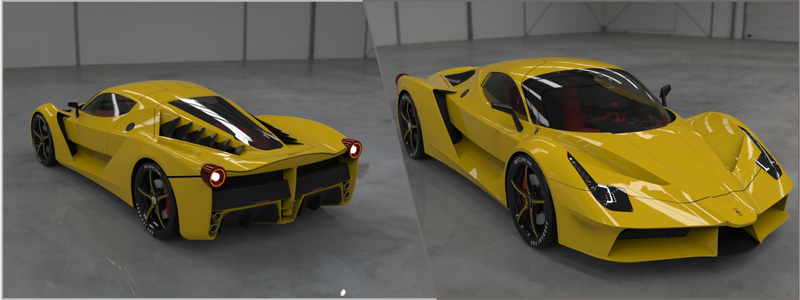

3D gallery jewelry store

Store layouts are as unique as the storefronts themselves. It’s common for retailers to either space out their items to allow casual browsing or densely pack everything on a store floor.

Many of them also use signage to guide customers in navigating the area. And then some just let the products speak for themselves. Combining several traditional layouts is also common practice in many retail stores.

Retailers should always consider their industry category, available floor size, and their brand’s overall tone. From there, it will only take a few steps to implement the following practices for 3D store rendering and floor plan design services as needed.

RELATED: Integrating 3D rendering with photography for architectural development companies 

Decompression zone and store exterior

Every retail store, regardless of its industry category and size, shares one thing in common, and that is none other than its entrance. A retail store’s exterior can capture the interest of customers through outdoor signage or display windows to encourage bystanders to stop and enter. Store exteriors are also perfect opportunities to market special products, line-ups, or promotions that appeal to the audience.

The moment they enter the threshold, customers will step into the decompression zone. The decompression zone is a 15-foot space that acclimatizes the customers to the new area and offers them that first impression of the things they can expect.

Retail owners can use this decompression zone to help customers feel more at ease and guide them in their store navigation. Some retailers often ensure that every department can be seen from the decompression zone for customers to know exactly where to go. Other retailers also use signage as a direction guide or put the most popular items on the power wall that will be instantly seen and noticed by customers.

Whatever the case is, it’s a must to incorporate human psychology into the layout. The moment they enter the decompression zone, most customers turn right to start exploring the shop. This is the reason why power walls are usually put exactly to the right. Checkouts, on the other hand, are located to the left so that they are the last thing customers will see before they leave.

Free-flow

Free-flow layouts don’t follow any expected traffic pattern outside those that human behavior dictates. This unique quality is what makes free flow different from a truly unplanned design. Specific rules are still followed even though it might not look that way to the human eye.

Retailers can put their displays and products in any appropriate arrangement while leaving sufficient open space where customers can move around comfortably. Rather than structured aisles, the products fit into clusters aligned with the principles of shopping.

High-value items, for instance, are still placed to the right of the store entrance and staples are put to the back. No aisles or barriers keep the free-flow departments apart from each other.

Free-flow layouts are designed to be highly experimental and are a great choice for retailers who want to showcase various promotional displays.

The only downside is that it limits the available space for items. This layout is common in small boutique shops or open parts of bigger stores like a bookstore display area.

Grid

Grid is the most common layout and floor plan design in retail stores seen in supermarkets, grocery stores, pharmacies, and more. Retailers who use a grid layout arrange items into densely-filled aisles for customers to browse at their own time and leisure. The arrangement reduces space, maximizes the display of products, and is typically the most familiar choice for customers.

Although categories can be organized in any way, an effective layout puts staple and everyday purchases at the store’s rear portion. Promotional displays and items are placed at the front that customers will pass on their way to commonly bought products. This approach makes it more likely for customers to buy additional products on impulse or add to the current items in their cart.

Grid layouts, regardless of the arrangement, are recommended for storing large quantities of merchandise while keeping a predictable traffic flow. Sadly, customers have a hard time finding the items they want fast in the grid layout. Experimenting with this layout may present you with challenges as well.

RELATED: How 3D rendering is transforming the property development industry for companies?

Herringbone

Herringbone is a store layout and floor pan design that looks like the grid once optimized for cramped floor areas. This is made up of an open central pathway that leads from checkout entrances. It is an approach suitable for small hardware shops and community libraries.

Although herringbone grids maximize the use of small spaces, they limit the visibility of products. Putting promotional displays at the end of every grid is a great way to address this downside.

Loop

Loop store layout directs customers along one path past every available item before they reach the checkout. The approach makes the most out of the overall exposure of products and helps streamline customer traffic. However, it also limits browsing opportunities during high traffic volumes. Loops are standard in specialty shops, gift shops, and museums.

Finding the perfect layout and floor plan for a retail space often calls for some experimentation. Sadly, this is not practical all the time. Good thing that retailers can now take advantage of 3D store rendering and floor plan design services that can develop and optimize these layouts even on the fly.

Benefits of 3D store rendering and floor plan design services

Attracting retail customers and retaining them is always a top priority in today’s extremely competitive retail industry. 3D store rendering and floor plan design services that create meticulous 3D visualizations of stores are now critical partners for interior designers, architects, and retailers in developing visually functional and appealing retail spaces.

The following are some of the key benefits of attracting retail customers with the help of 3D store rendering and floor plan design services.

3d store aisle

RELATED: 3D furniture rendering services for companies and firms, cost, rates, pricing

Digital renovation makes everything easy

3D store rendering and floor plan design services can help compare updated and existing designs side by side. This is a big help if there is a need to update an existing store’s design. It helps convince investors of the convenience of the renovation and restoration of the space.

Effective marketing solution

3D store rendering and floor plan design make sure that the image of the store will be as lifelike as the artistic rendering. Computer visualization allows companies to showcase their commercial premises and products in the most enticing way possible.

This helps launch the product’s sales online before the construction of the store is completed or way before the manufacturing of the product itself.

Accurate illustrations

Photographs will always be great auxiliary materials for designers and construction teams. But here’s the dilemma: how will you take a photo of something that doesn’t even exist yet? This is where you can simulate reality with the help of 3D store rendering.

These images save you from those expensive mistakes, including the installation of the wrong materials and structures. 3D store rendering is your best option if you want to make sure that the designer’s idea will reach the builders correctly without any distortions.

Speedy redesign

3D store renders are photorealistic and detailed. They help designers pinpoint and address the limitations of the concept and allow them to develop its potential and strengths. Significant layout changes during the rendering phase will not just guide their designers in enhancing their ideas while allowing store owners themselves to save themselves from additional costs during the implementation of the concept.

Virtual staging

3D store renders can be used to showcase the fullest potential of the space and layout. This is an effective way of staging the area to entice more stakeholders and investors.

The Bottom Line

3D store rendering and floor plan design services have changed the design and construction of modern retail spaces. These can help you by cost savings, efficient space planning, better client communication, and realistic visualization.

As today’s everchanging retail industry, 3D rendering is expected to play a key role in developing store settings that are not just visually enticing but also highly functional at the same time. These 3D renders cater to the different shopping behaviors and needs of consumers.

RELATED: How 3D rendering enhances great architectural design presentations for companies

How Cad Crowd can help

Cad Crowd offers professional 3D floor plan rendering, 3D floor plan design services, and 3D commercial rendering services that can help store owners achieve their goals.

author avatar

MacKenzie Brown is the founder and CEO of Cad Crowd. With over 18 years of experience in launching and scaling platforms specializing in CAD services, product design, manufacturing, hardware, and software development, MacKenzie is a recognized authority in the engineering industry. Under his leadership, Cad Crowd serves esteemed clients like NASA, JPL, the U.S. Navy, and Fortune 500 companies, empowering innovators with access to high-quality design and engineering talent.

Connect with me: LinkedInXCad Crowd

Robotic Industry Replacement Parts and Applications: All You Need To Know About Using 3D Printing Design Services


With the world seeing significant changes in terms of technology and digitization, it is no longer a surprise that the robotic industry is also getting bigger by the day. But just like any other technology out there, the industry also faces some serious challenges, especially when it comes to replacement parts and other applications. It is a good thing that 3D printing design services are here to simplify everything.


:rocket: Table of contents


What is 3D printing?

Also called additive manufacturing, 3D printing converts digital designs into tangible items. It is done by building up several layers of material. All you need is the right design and from there, the production can begin without any significant requirements to get started. This level of freedom makes way for on-demand production, rapid prototyping, and intricate designs of customized parts. It also offers a level of innovation and flexibility that is redefining the industry of manufacturing, including the robotic industry.

With the emergence of new materials, processes, and industries, the transformative potential of 3D printing design services can help robot designers save more resources and time and come up with better robot manufacturing and designs in the near future. Even though most of today’s robotic companies are taking advantage of 3D printing services for their robot designs, many experts foresee that this breakthrough partnership will grow further as the benefits of 3D printing help establish it as the newest form of intelligent manufacturing.

RELATED: How nature inspires robots & future robotics design

In the coming months and years, more businesses will also learn to embrace the customization and versatility that 3D printing has to offer. The two technologies complement one another to produce excellent results that will also benefit the end users in the long run.

Benefits of 3D printing for robotic replacement parts

What’s the first thing that comes to mind when you think of robots? Maybe you instantly imagine metallic arms that assemble cars or cute tiny helpers roaming around the house. But did you ever think of how these state-of-the-art robots are crafted in the first place? It is where 3D printing design services and 3D design firms step in. The following are some of the ways that 3D printing technology revolutionizes the robotic industry:

Make room for better customization

One of the top, if not the coolest, advantages of 3D printing is the ability to make the necessary customizations. Modern robots can come in different sizes and shapes, and each one has distinct parts explicitly made for specific tasks. 3D printing allows designers to easily adjust the designs and even print custom parts and components. It will enable robots to be more adaptable and efficient in various settings and environments.

RELATED: Cad Crowd’s 3D designers & engineers create expert robotics

3d printing services

Simplify complex designs

Robots usually have complex designs with intricate geometries that are often tricky and challenging to manufacture if the traditional methods are used. However, with 3D printing design services, even the most complex designs will just be a piece of cake. You can think of it as something similar to making a simple jigsaw out of a complicated puzzle. Aside from this, with the capacity to print in various materials, designers, and product engineering professionals can develop robots with parts that are both flexible and rigid to expand their capabilities further.

Allows rapid prototyping

As far as the robotic industry is concerned, trial and error will always be the name of the game. If done using conventional manufacturing methods and techniques, however, it can be expensive and time-consuming to create prototypes. However, with the help of 3D printing design services, rapid prototyping or quick fabrication of various iterations of a robot is made possible. This can speed up the process of development and help save more money down the road.

Custom robotic replacement parts with 3D printing design services

The robotic industry is among those industries where the benefits of 3D printing design services play an essential role for many good reasons. One of these is the ability to use 3D printing to come up with custom replacement parts for robotics. Traditional methods of manufacturing services usually fall short when it comes to producing parts like grippers made for specific tasks with no need to incur excessive costs because of the need to create specialized molds and tools.

RELATED: What is 3D printing? A beginner’s guide

With the help of 3D printing design services, even SMEs or small players can take advantage of 3D printing to develop robot replacement parts on a budget because there is no minimum quantity required for orders. It means that they can also manufacture replacement parts, whether they are only two pieces or more.

Intricate designs to produce lightweight parts

Weight is one of the most critical factors that help optimize the performance of a robot. Traditional manufacturing usually leads to excess weight because of the subtractive process. 3D printing design companies can revolutionize this by letting engineers design intricate and hollow structures. It can help optimize weight with no need to compromise strength. The newly discovered agility can find applications in different robotic systems, exoskeletons, and drones.

Part modulation and consolidation

The technical benefit of 3D printing also extends to the consolidation of several parts into one intricate structure. It not only helps reduce the overall weight because it also reduces the complexity of the inventory and challenges in assembly. 3D printing design services also allow breaking down one part into several specific components that can simplify modifications whenever necessary.

RELATED: 6 Ways 3D printing will change the world

Quick design changes and prototyping

3D printing design services, unlike their traditional counterparts, can offer unmatched agility when it comes to design changes and prototyping. 3D designers and engineers can quickly turn conceptual ideas into tangible prototypes. This means that they can test out a prototype almost instantly to check and verify whether it is a good fit or not. If ever they need to change or tweak the design, they can also do so quickly because of 3D printing’s flexibility.

robotics design firm

It empowers innovators to optimize and adapt robotic replacement parts and components with unparalleled speed. It not only speeds up the cycle of product development and cuts down time to market significantly because it also encourages a culture of constant growth in the ever-changing robotic industry.

Spare parts on-demand

Robotics can also experience wear and tear along the way, which can result in expensive downtime. Conventional methods of acquiring spare parts can involve a process that requires long hours of ordering and shipping and even custom manufacturing in some instances.

RELATED: Comprehensive guide to SLS 3D printing services for companies

3D printing design and robotics design services offer a cost-effective and rapid solution for both on-site and local production of spare parts on demand. Rather than having to wait for shipments or just relying on massive inventories, 3D printed replacement parts can help quickly restore the operational status of robots. This ability can significantly minimize downtime to ensure continuous functionality of the robotics systems.

Real-world applications of 3D printing in robotic industry

Now that you’ve learned the benefits of using 3D printing design services in the modern robotic sector, it’s time to take a look at several real-world applications of this state-of-the-art technology:

DIY and education robotics

Do you have one of those cute small robots scurrying around your house? With the advent of affordable 3D printing design services, educators and DIY enthusiasts are now given the opportunity to design and develop robots in their own right in the comfort of their classrooms or homes. You can think of this as taking robotics and its magic into the very hands of ordinary people. This accessibility can spur inspiration among the up-and-coming generation of innovators and engineers.

RELATED: Enhancing company operations: leveraging 3D printing services for replacement parts

Medical robotics

Precision is always crucial in the medical field, especially today. It is why 3D printing design services are revolutionizing the world of medical robotics. 3D printing is changing how the world approaches healthcare, from medical device design experts and prosthetic limbs that are custom-made for every patient to surgical robots that can conduct minimally invasive medical procedures with exceptional precision and accuracy.

Space exploration

Every gram matters in the exploration of the vastness of space. Traditional methods of manufacturing often lead to heavy and bulky parts that might be costly to launch into space. With the help of 3D printing design services, however, astronauts can simply manufacture spare and replacement parts as well as entire components on demand with the use of lightweight materials. This results in more cost-effective and sustainable space exploration.

Wrapping it up

Today’s modern robotic industry is now starting to harness the potential of producing smaller volumes of replacement parts without significant upfront costs. It has become more possible to design better tools, exploit freedoms in design, customize robots, and enjoy faster time to market with the help of 3D printing design services.

RELATED: 3D printing technologies for modeling and prototyping

With its multiple uses and purposes, it’s safe to say that 3D printing will continue to be an extremely innovative future for the current robotic industry. The combination of the robotic industry and 3D printing is poised to create a significant paradigm shift in both fields that can benefit the end users in the long run.

How Cad Crowd can help

Cad Crowd is the leading resource that offers an extensive selection of professional 3D printing design services that can help robotic manufacturers and companies produce replacement parts and enjoy more applications at a fraction of the cost.

Get a free quote today!

author avatar

MacKenzie Brown is the founder and CEO of Cad Crowd. With over 18 years of experience in launching and scaling platforms specializing in CAD services, product design, manufacturing, hardware, and software development, MacKenzie is a recognized authority in the engineering industry. Under his leadership, Cad Crowd serves esteemed clients like NASA, JPL, the U.S. Navy, and Fortune 500 companies, empowering innovators with access to high-quality design and engineering talent.

Connect with me: LinkedInXCad Crowd