OpenAI is reportedly telling investors that it plans on charging $22 a month to use ChatGPT by the end of the year. The company also plans to aggressively increase the monthly price over the next five years up to $44.
The documents obtained by shows that OpenAI took in $300 million in revenue this August, and expects to make $3.7 billion in sales by the end of the year. Various expenses such as salaries, rent and operational costs will cause the company to lose $5 billion this year.
OpenAI is reportedly circulating the documents the NYT reported on as part of a drive to find new investors to prevent or lessen its financial shortfall. Fortunately, OpenAI is raising money on a $150 billion valuation, and a new round of investments could bring in as much as $7 billion.
OpenAI is also reportedly in the midst of switching from . The business model allows for the removal of any caps on investor returns so they’ll have more room to negotiate for new investors at possibly higher rates.
ChatGPT could get more expensive to use in coming years.
The New York Times, citing internal OpenAI docs, reports that OpenAI is planning to raise the price of individual ChatGPT subscriptions from $20 per month to $22 per month by the end of the year. A steeper increase will come over the next five years; by 2029, OpenAI expects it’ll charge $44 per month for ChatGPT Plus.
The aggressive moves reflect pressure on OpenAI from investors to narrow its losses. While the company’s monthly revenue reached $300 million in August, according to the New York Times, OpenAI expects to lose roughly $5 billion this year. Expenditures like staffing, office rent, and AI training infrastructure are to blame. ChatGPT alone was at one point reportedly costing OpenAI $700,000 per day.
OpenAI could face a blowback if it increases prices too quickly. While ChatGPT has roughly 10 million paying users today, surveys suggest that many believe the current $20-per-month price is too high.
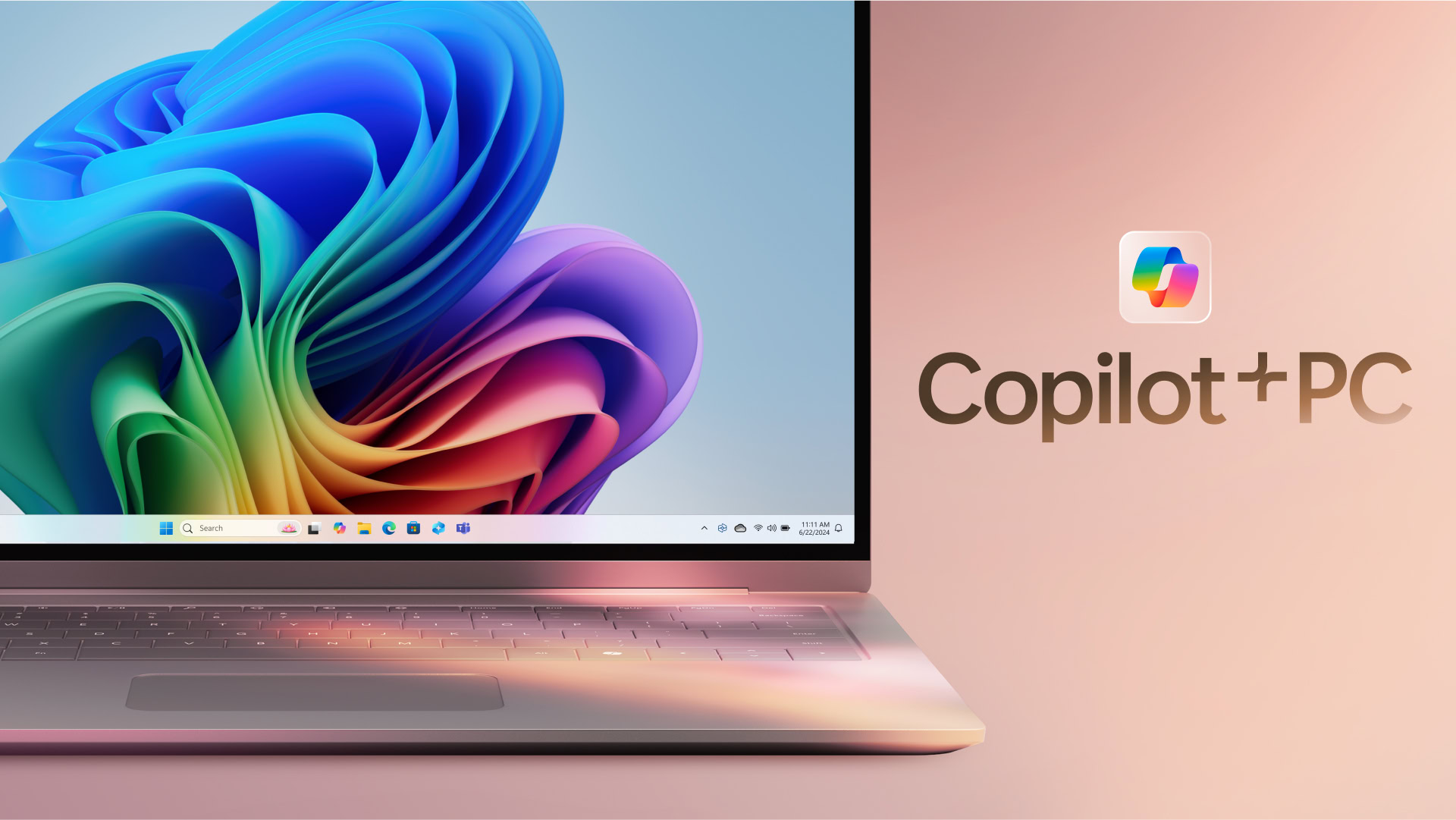
Microsoft’s Windows Recall feature, which stores a timeline of activity snapshots on your PC, has a new release date for Windows Insiders. Microsoft unveiled the feature to much fanfare in May, only to delay it indefinitely (after blowback from security researchers) a few weeks later. After taking time to recalibrate, the company said on Wednesday it will roll out Recall to beta testers using Copilot+ PCs in October.
Windows Recall stores snapshots of everything you do on your PC. Designed as a “photographic memory” for your PC activity, it lets you revisit things like products, emails, documents or chats shown on your screen. The feature’s perks are easy to see, especially for those who spend long hours on their PC (or those with foggy memories).
But if that also sounds like a privacy nightmare, security researchers thought so, too. Despite safety assurances from Microsoft during its announcement at Build 2024, cybersecurity and privacy experts sounded the alarm. The fundamental problem was that intruders wouldn’t only get goodies from your traditional file system if they accessed your PC. In addition, they could see anything you’ve done on your computer from the moment you activated Recall to the present. That’s because Microsoft — for reasons we can’t quite comprehend (other than put AI in all the things as quickly as possible) — left Recall’s data unencrypted.
As security expert Kevin Beaumont detailed, Recall didn’t hide sensitive information like passwords or banking details. Sure, your timeline was theoretically safe as long as nobody could access your PC. But if you accidentally installed malware or let an intruder in through other means, they would find a motherlode of sensitive — unencrypted — data.
Microsoft
In response to the blowback, Microsoft added some common-sense security features that left us wondering why they weren’t there in the first place. Again, it’s hard to decipher the company’s motives for that omission when the feature was announced — other than speculating that it wanted to prioritize a seamless user experience over tight security.
These security changes included making the feature opt-in instead of enabled by default when setting up a Copilot+ PC. In addition, Microsoft said the feature would require Windows Hello — a face or fingerprint scan — and deploy “just in time” decryption (only unlocked through Hello). That means if a hacker gains access to your computer, your screenshot timeline should remain encrypted unless you lend your face or finger to unlock it (or they somehow find a way around Hello’s encryption).
Everything comes at a cost, and AI is no different. While ChatGPT and Gemini may be free to use, they require a staggering amount of computational power to operate. And if that wasn’t enough, Big Tech is currently engaged in an arms race to build bigger and better models like GPT-5. Critics argue that this growing demand for powerful — and energy-intensive — hardware will have a devastating impact on climate change. So just how much energy does AI like ChatGPT use and what does this electricity use mean from an environmental perspective? Let’s break it down.
ChatGPT energy consumption: How much electricity does AI need?
Calvin Wankhede / Android Authority
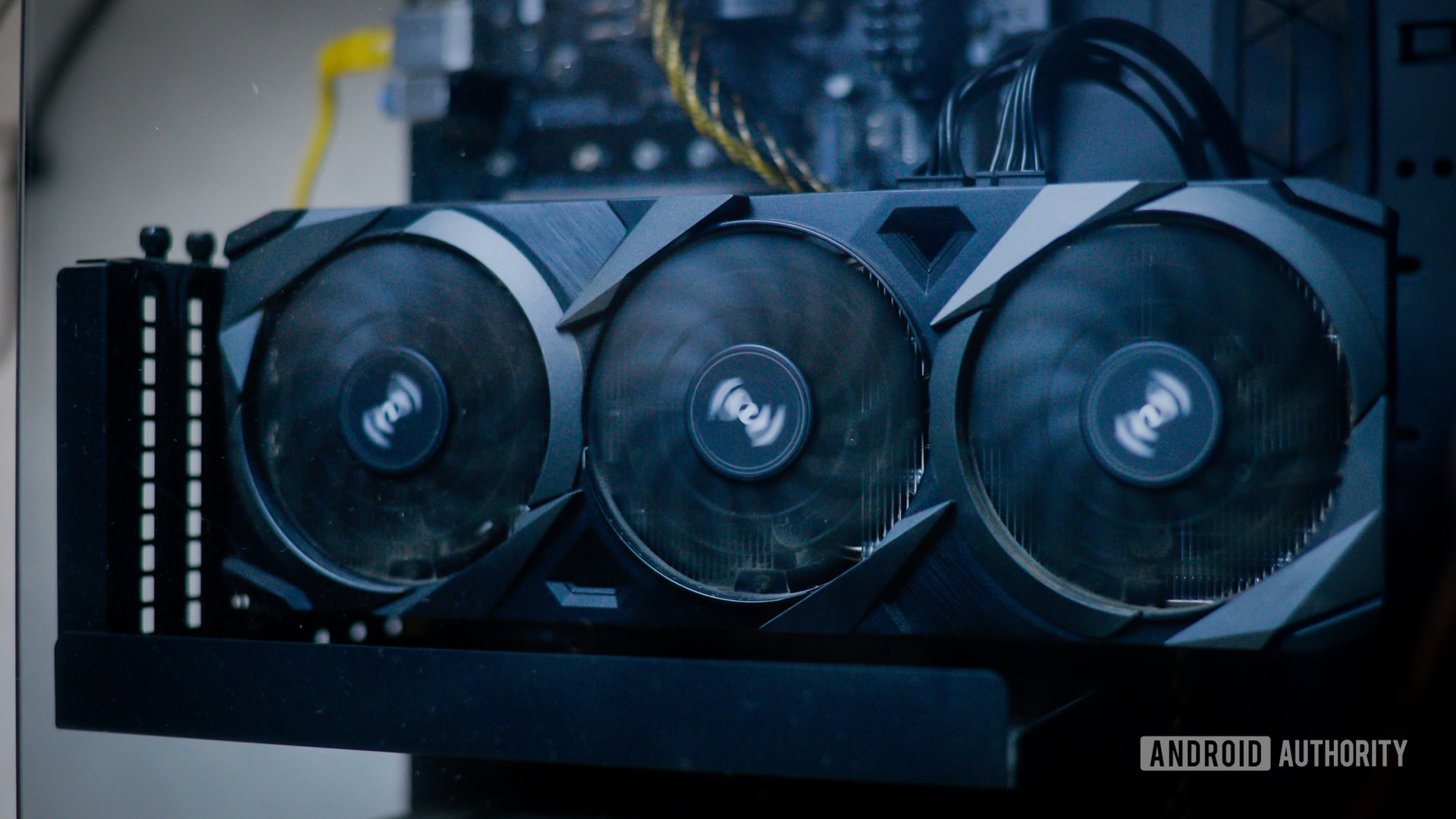
OpenAI’s older GPT-3 large language model required just under 1,300 megawatt hours (MWh) of electricity to train, which is equal to the annual power consumption of about 120 US households. For some context, an average American household consumes just north of 10,000 kilowatt hours each year. That is not all — AI models also need computing power to process each query, which is known as inference. And to achieve that, you need a lot of powerful servers spread across thousands of data centers globally. At the heart of these servers are typically NVIDIA’s H100 chips, which consume 700 watts each and are deployed by the hundreds.
Estimates vary wildly but most researchers agree that ChatGPT alone requires a few hundred MWh every single day. That is enough electricity to power thousands of US households, and maybe even tens of thousands, a year. Given that ChatGPT is no longer the only generative AI player in town, it stands to reason that usage will only grow from here.
AI could use 0.5% of the world’s electricity consumption by 2027.
A paper published in 2023 makes an attempt to calculate just how much electricity the generative AI industry will consume within the next few years. Its author, Alex de Vries, estimates that market leader NVIDIA will ship as many as 1.5 million AI server units by 2027. That would result in AI servers utilizing 85.4 to 134 terawatt hours (TWh) of electricity each year, more than the annual power consumption of smaller countries like the Netherlands, Bangladesh, and Sweden.
While these are certainly alarmingly high figures, it’s worth noting that the total worldwide electricity production was nearly 29,000 TWh just a couple of years ago. In other words, AI servers would account for roughly half a percent of the world’s energy consumption by 2027. Is that still a lot? Yes, but it needs to be judged with some context.
The case for AI’s electricity consumption
AI may consume enough electricity to equal the output of smaller nations, but it is not the only industry to do so. As a matter of fact, data centers that power the rest of the internet consume way more than those dedicated to AI and demand on that front has been growing regardless of new releases like ChatGPT. According to the International Energy Agency, all of the world’s data centers consume 460 TWh today. However, the trendline has been increasing sharply since the Great Recession ended in 2009 — AI had no part to play in this until late 2022.
Even if we consider the researcher’s worst case scenario from above and assume that AI servers will account for 134 TWh of electricity, it will pale in comparison to the world’s overall data center consumption. Netflix alone used enough electricity to power 40,000 US households in 2019, and that number has certainly increased since then, but you don’t see anyone clamoring to end internet streaming as a whole. Air conditioners account for a whopping 10% of global electricity consumption, or 20x as much as AI’s worst 2027 consumption estimate.
AI’s electricity usage pales in comparison to that of global data centers as a whole.
AI’s electricity consumption can also be compared with the controversy surrounding Bitcoin’s energy usage. Much like AI, Bitcoin faced severe criticism for its high electricity consumption, with many labeling it a serious environmental threat. Yet, the financial incentives of mining have driven its adoption in regions with cheaper and renewable energy sources. This is only possible because of the abundance of electricity in such regions, where it might otherwise be underutilized or even wasted. All of this means that we should really be asking about the carbon footprint of AI, and not just focus on the raw electricity consumption figures.
The good news is that like cryptocurrency mining operations, data centers are often strategically built in regions where electricity is either abundant or cheaper to produce. This is why renting a server in Singapore is significantly cheaper than in Chicago.
Google aims to run all of its data centers on 24/7 carbon-free energy by 2030. And according to the company’s 2024 environmental report, 64% of its data centers’ electricity usage already comes from carbon-free energy sources. Microsoft has set a similar target and its Azure data centers power ChatGPT.
Increasing efficiency: Could AI’s electricity demand plateau?
Robert Triggs / Android Authority
As generative AI technology continues to evolve, companies have also been developing smaller and more efficient models. Ever since ChatGPT’s release in late 2022, we’ve seen a slew of models that prioritize efficiency without sacrificing performance. Some of these newer AI models can deliver results comparable to those of their larger predecessors from just a few months ago.
For instance, OpenAI’s recent GPT-4o mini is significantly cheaper than the GPT-3 Turbo it replaces. The company hasn’t divulged efficiency numbers, but the order-of-magnitude reduction in API costs indicates a big reduction in compute costs (and thus, electricity consumption).
We have also seen a push for on-device processing for tasks like summarization and translation that can be achieved by smaller models. While you could argue that the inclusion of new software suites like Galaxy AI still results in increased power consumption on the device itself, the trade-off can be offset by the productivity gains it enables. I, for one, would gladly trade slightly worse battery life for the ability to get real-time translation anywhere in the world. The sheer convenience can make the modest increase in energy consumption worthwhile for many others.
Still, not everyone views AI as a necessary or beneficial development. For some, any additional energy usage is seen as unnecessary or wasteful, and no amount of increased efficiency can change that. Only time will tell if AI is a necessary evil, similar to many other technologies in our lives, or if it’s simply a waste of electricity.
OpenAI CEO Sam Altman says that OpenAI is working with the U.S. AI Safety Institute, a federal government body that aims to assess and address risks in AI platforms, on an agreement to provide early access to its next major generative AI model for safety testing.
The announcement, which Altman made in a post on X late Thursday evening, was light on details. But it — along with a similar deal with the U.K.’s AI safety body struck in June — appears to be intended to counter the narrative that OpenAI has deprioritized work on AI safety in the pursuit of more capable, powerful generative AI technologies.
In May, OpenAI effectively disbanded a unit working on the problem of developing controls to prevent “superintelligent” AI systems from going rogue. Reporting — including ours — suggested that OpenAI cast aside the team’s safety research in favor of launching new products, ultimately leading to the resignation of the team’s two co-leads, Jan Leike (who now leads safety research at AI startup Anthropic) and OpenAI co-founder Ilya Sutskever (who started his own safety-focused AI company, Safe Superintelligence Inc.).
In response to a growing chorus of critics, OpenAI said it would eliminate its restrictive non-disparagement clauses that implicitly discouraged whistleblowing and create a safety commission, as well as dedicate 20% of its compute to safety research. (The disbanded safety team had been promised 20% of OpenAI’s compute for its work, but ultimately never received this.) Altman re-committed to the 20% pledge and re-affirmed that OpenAI voided the non-disparagement terms for new and existing staff in May.
The moves did little to placate some observers, however — particularly after OpenAI staffed the safety commission entirely with company insiders including Altman and, more recently, reassigned a top AI safety executive to another org.
Five senators, including Brian Schatz, a Democrat from Hawaii, raised questions about OpenAI’s policies in a recent letter addressed to Altman. OpenAI chief strategy officer Jason Kwon responded to the letter today, writing that OpenAI “[is] dedicated to implementing rigorous safety protocols at every stage of our process.”
The timing of OpenAI’s agreement with the U.S. AI Safety Institute seems a tad suspect in light of the company’s endorsement earlier this week of the Future of Innovation Act, a proposed Senate bill that would authorize the Safety Institute as an executive body that sets standards and guidelines for AI models. The moves together could be perceived as an attempt at regulatory capture — or at the very least an exertion of influence from OpenAI over AI policymaking at the federal level.
Not for nothing, Altman is among the U.S. Department of Homeland Security’s Artificial Intelligence Safety and Security Board, which provides recommendations for the “safe and secure development and deployment of AI” throughout the U.S.’ critical infrastructures. And OpenAI has dramatically increased its expenditures on federal lobbying this year, spending $800,000 in the first six months of 2024 versus $260,000 in all of 2023.
The U.S. AI Safety Institute, housed within the Commerce Department’s National Institute of Standards and Technology, consults with a consortium of companies that includes Anthropic, as well as big tech firms like Google, Microsoft, Meta, Apple, Amazon and Nvidia. The industry group is tasked with working on actions outlined in President Joe Biden’s October AI executive order, including developing guidelines for AI red-teaming, capability evaluations, risk management, safety and security and watermarking synthetic content.
WhatsApp beta version 2.24.14.20 has a new feature that allows users to share photos with Meta AI.
The AI chatbot will analyze uploaded images and provide information or context about the content.
Users may be able to request specific edits to their photos directly through Meta AI, though the extent of this feature is still unknown.
As the battle for AI dominance heats up, Meta is adding a new trick to its AI chatbot, Meta AI, which is already part of Facebook, Instagram, and WhatsApp. While Meta AI already has impressive text capabilities, such as replying to questions, suggesting captions, and holding conversations, users cannot currently share or upload photos to the Meta AI chat.
WaBetaInfo has uncovered the exciting new feature in the WhatsApp beta for Android version 2.24.14.20. This feature will allow Meta AI to interact with photos shared by users, reply to photos, and even edit them.
As shown in the attached screenshot, WhatsApp is testing a new camera button in the Meta AI chat, designed to function similarly to the camera button in regular chats. This addition will allow users to manually share photos with Meta AI, a capability that is currently unavailable.
With this new functionality, users will be able to ask questions about their photos, presumably allowing users to ask the AI to identify objects or locations or provide context about the photo’s content. Moreover, the screenshot suggests that Meta AI will also offer the option to edit photos, enabling users to make changes to their images directly within the chat by sharing a prompt.
The exact scope of this image editing feature remains unclear, leaving us to wonder if it will be limited to simple tweaks or if it will unleash a powerful AI-driven photo editing suite. The possibilities are both exciting and intriguing, and this feature could definitely be a big hit, especially if it performs as promised.
While this new image-sharing feature would mean Meta will analyze and face-scan the photos you upload, the screenshot includes a disclaimer indicating that users will have the option to delete their photos whenever they want.
As of now, it seems that the feature is still in development, so it might be some time before we finally get to see it roll out publicly. Recently, we also reported about WhatsApp working on an “Imagine Me” feature that would allow Meta AI to generate AI avatars of you based on a set of your photos.
Got a tip? Talk to us! Email our staff at news@androidauthority.com. You can stay anonymous or get credit for the info, it’s your choice.
Anthropic is launching a program to fund the development of new types of benchmarks capable of evaluating the performance and impact of AI models, including generative models like its own Claude.
Unveiled on Monday, Anthropic’s program will dole out payments to third-party organizations that can, as the company puts it in a blog post, “effectively measure advanced capabilities in AI models.” Those interested can submit applications to be evaluated on a rolling basis.
“Our investment in these evaluations is intended to elevate the entire field of AI safety, providing valuable tools that benefit the whole ecosystem,” Anthropic wrote on its official blog. “Developing high-quality, safety-relevant evaluations remains challenging, and the demand is outpacing the supply.”
As we’ve highlighted before, AI has a benchmarking problem. The most commonly cited benchmarks for AI today do a poor job of capturing how the average person actually uses the systems being tested. There are also questions as to whether some benchmarks, particularly those released before the dawn of modern generative AI, even measure what they purport to measure, given their age.
The very-high-level, harder-than-it-sounds solution Anthropic is proposing is creating challenging benchmarks with a focus on AI security and societal implications via new tools, infrastructure and methods.
The company calls specifically for tests that assess a model’s ability to accomplish tasks like carrying out cyberattacks, “enhance” weapons of mass destruction (e.g. nuclear weapons) and manipulate or deceive people (e.g. through deepfakes or misinformation). For AI risks pertaining to national security and defense, Anthropic says it’s committed to developing an “early warning system” of sorts for identifying and assessing risks, although it doesn’t reveal in the blog post what such a system might entail.
Anthropic also says it intends its new program to support research into benchmarks and “end-to-end” tasks that probe AI’s potential for aiding in scientific study, conversing in multiple languages and mitigating ingrained biases, as well as self-censoring toxicity.
To achieve all this, Anthropic envisions new platforms that allow subject-matter experts to develop their own evaluations and large-scale trials of models involving “thousands” of users. The company says it’s hired a full-time coordinator for the program and that it might purchase or expand projects it believes have the potential to scale.
“We offer a range of funding options tailored to the needs and stage of each project,” Anthropic writes in the post, though an Anthropic spokesperson declined to provide any further details about those options. “Teams will have the opportunity to interact directly with Anthropic’s domain experts from the frontier red team, fine-tuning, trust and safety and other relevant teams.”
Anthropic’s effort to support new AI benchmarks is a laudable one — assuming, of course, there’s sufficient cash and manpower behind it. But given the company’s commercial ambitions in the AI race, it might be a tough one to completely trust.
In the blog post, Anthropic is rather transparent about the fact that it wants certain evaluations it funds to align with the AI safety classifications it developed (with some input from third parties like the nonprofit AI research org METR). That’s well within the company’s prerogative. But it may also force applicants to the program into accepting definitions of “safe” or “risky” AI that they might not agree with.
A portion of the AI community is also likely to take issue with Anthropic’s references to “catastrophic” and “deceptive” AI risks, like nuclear weapons risks. Many experts say there’s little evidence to suggest AI as we know it will gain world-ending, human-outsmarting capabilities anytime soon, if ever. Claims of imminent “superintelligence” serve only to draw attention away from the pressing AI regulatory issues of the day, like AI’s hallucinatory tendencies, these experts add.
In its post, Anthropic writes that it hopes its program will serve as “a catalyst for progress towards a future where comprehensive AI evaluation is an industry standard.” That’s a mission the many open, corporate-unaffiliated efforts to create better AI benchmarks can identify with. But it remains to be seen whether those efforts are willing to join forces with an AI vendor whose loyalty ultimately lies with shareholders.
Apple is apparently looking to take all the help it can get to integrate generative AI into its . According to a report by the , citing sources with knowledge of the discussions, Apple has held talks with Meta about the possibility of using the company’s generative AI model. It also reportedly had similar discussions with startups Anthropic and Perplexity. As of now, though, nothing has been finalized, WSJ reports.
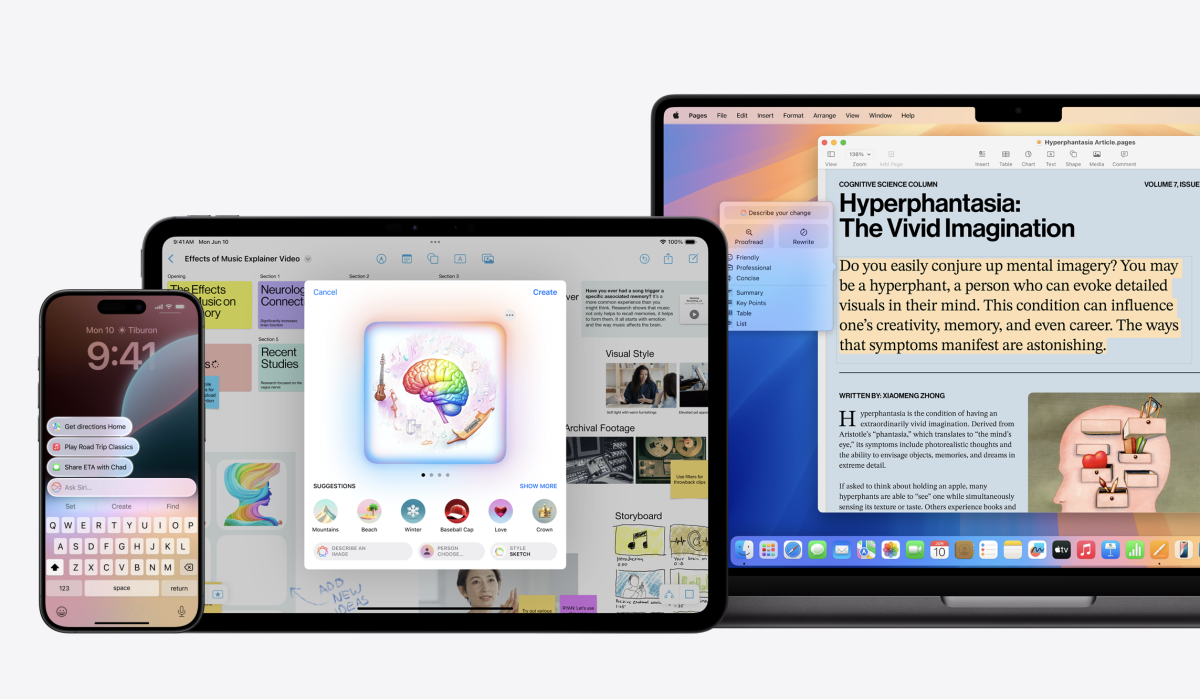
At WWDC earlier this month, Apple officially announced its much-rumored partnership with OpenAI that will with the upcoming generation of the devices’ OS. During the event, Apple’s senior VP of software engineering, Craig Federighi, also as something that could be added to Apple Intelligence in the future. “We want to enable users ultimately to choose the models they want,” Federighi said. It would make sense, then, for Apple to be shopping around.
But for the time being, only OpenAI has been confirmed as a partner. OpenAI’s GPT-4o will be integrated into Apple Intelligence to bolster Siri and other tools, with some features expected to arrive later this year.
Over the last few years, Nothing has proven that it can create compelling smartphones at excellent prices. Today, the company gave us our first tease of the Nothing Phone 3, and if it pans out the way Nothing claims, it could already be one of next year’s most interesting smartphones.
On X (formerly Twitter), Nothing CEO Carl Pei uploaded a five-minute video discussing the recent AI trend in consumer tech and, more importantly, how Nothing is thinking about AI. In short, the company’s next smartphone — the Nothing Phone 3 — could completely reinvent how we use and think about our phones.
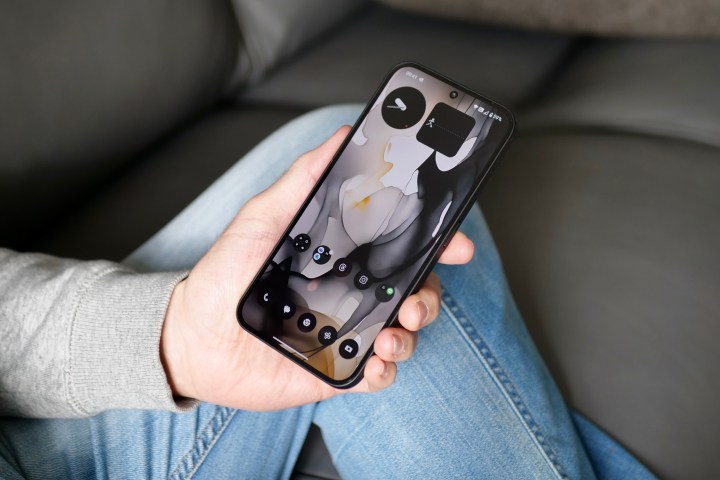
One way Nothing is going about this is with the “hub” — its AI-powered take on a smartphone home screen. The top of the hub has quick links/buttons to things like the weather, social media, your calendar, messages, etc. Below that is a smattering of “dynamic and context-aware” widgets. For example, it can automatically show a QR code for a boarding pass or concert ticket based on your calendar. Nothing says it wants the home screen to “move away from it just being a launcher for different apps and services” and to become a “hub of contextual, relevant information.”
Nothing’s AI-powered smartphone home screenNothing
The other big AI tool Nothing is working on is its own AI voice assistant. Nothing says its AI assistant can transform into a “companion” that’s personalized for each person using it. Nothing further explains that the AI assistant could appear on the home screen, lock screen, or even through a future Nothing Phone’s Glyph lights.
Nothing has only been developing these AI experiences over the last two months, so it’ll be a while before they’re ready for prime time. However, Pei confirms at the end of the video that Nothing will start rolling out these AI features with the Nothing Phone 3 in 2025.
Nothing’s AI assistant (with two white eyes) on its new home screenNothing
It’s unclear if everything demonstrated here will be available exactly as Nothing has described, but it’s clear that Nothing is thinking of it quite highly. In an email sent to Digital Trends, Nothing confirmed, “Phone (3), launching next year, [marks] a milestone in Nothing’s consumer AI journey, featuring both software and hardware advancements.”
As someone who’s been burned on grand AI claims with gadgets like the Rabbit R1, I’m personally quite excited to see what Nothing is working on. Time and time again, it’s been proven that dedicated AI gadgets aren’t the way forward — at least not right now. Whether it’s the Rabbit R1 or the Humane AI Pin, that product category clearly isn’t working. AI on smartphones has a lot more potential, but whether it’s Samsung or Google, so many smartphone AI tools have been relegated to things like photo editing and language translation. Those things are helpful, but they’re far from the AI revolution we keep being promised.
There's been a lot of hype around AI. Some great, some confusing. It’s great to see new companies rethinking the user experience and form factors. However, there is no doubt that smartphones will remain the main consumer AI form factor for the foreseeable future. With over 4… pic.twitter.com/ERJc7xhwBa
Nothing’s vision sounds a lot more ambitious, and it very well may not come together like the company is imagining. But what it’s trying to do sounds way more interesting than the AI features we have on phones today, and I can’t help but get excited about that.
It’s annoying we’ll have to wait until some point in 2025 for the Nothing Phone 3 to see what all of this ends up looking like, but I’m crossing my fingers that it’s worth the wait.
Windows 11’s new AI-powered Recall feature captures a screenshot of your screen every five seconds.
Even though Recall’s database is encrypted, a security researcher found that it’s easily accessible when the PC is in use.
Hackers could develop malware to remotely steal Recall databases without the user’s knowledge.
Even though Microsoft’s new Copilot Plus PCs are a few weeks away from hitting store shelves, security researchers are already raising alarms about a new Windows 11 AI feature. Dubbed Recall, Microsoft pitches it as an “explorable timeline of your PC’s past.”
With Recall enabled, Windows 11 will capture screenshots of your screen every five seconds and record various interactions with your PC. You can then ask the Copilot AI chatbot questions about your past interactions or simply browse through the timeline of text and images.
The Recall feature is set to debut on Copilot Plus PCs later this month. However, some enterprising developers have already found a way to enable it on older Arm-powered Windows PCs. Thanks to this early access, security researcher Kevin Beaumont was able to explore the inner workings of Recall.
According to Microsoft, Recall’s AI processing happens entirely on-device. Furthermore, none of this information is ever transmitted to the company’s servers. The good news is that these claims mostly held up in Beaumont’s published testing of the feature. The only problem? None of those measures can stop a malicious attacker from siphoning data off your computer.
Recall stores everything you’ve ever seen on your screen in a plain-text database.
Given that Recall automatically takes screenshots of your screen, it ends up recording sensitive data such as emails, chat messages, and the websites you visit. Clearing your browser history or deleting chat logs won’t make these records go away.
Microsoft’s own support document for Recall also explicitly states that the feature “does not perform content moderation” and that it “will not hide information such as passwords or financial account numbers.” Beaumont also found that while Recall respected the Microsoft Edge browser’s InPrivate mode, it continued to capture screenshots with Incognito tabs open in Chrome.
During his testing, Beaumont also found that Microsoft has tasked an on-device AI to detect and scrape text from the automated screenshots. These records are then collectively written to a plain-text database and saved in the Windows AppData folder.
That wouldn’t be a problem by itself, except for the fact that the Recall database is apparently accessible by anyone using the computer. According to Beaumont, it can even be accessed without administrator privileges. This means someone like a family member could potentially gain access to sensitive records on a shared device. The threat potential doesn’t end there, though. Beaumont warns that Infostealers — a form of malware used to siphon passwords — could evolve to steal Recall databases at scale.
The security researcher goes on to say that Microsoft’s encryption claims only hold true from a very narrow perspective. Your data is safe and encrypted by Windows BitLocker as long as the computer is turned off or your account remains logged out. However, the Recall database sits decrypted and exposed when you’re actively using the PC.
Beaumont’s Recall database containing several days’ worth of records amounted to just 90Kb, which could be uploaded by a malicious program almost instantly. He continues, “I have automated exfiltration, and made a website where you can upload a database and instantly search it. I am deliberately holding back technical details until Microsoft ship the feature as I want to give them time to do something.”
Luckily, Recall has not been rolled out to existing Windows installations, so you’re not at immediate risk. However, new Copilot Plus PCs may ship with the feature enabled by default, potentially opening up unsuspecting users to a new attack vector. The only silver lining is that you’ll be able to opt out of automatic snapshots from within the Settings app.
Got a tip? Talk to us! Email our staff at news@androidauthority.com. You can stay anonymous or get credit for the info, it’s your choice.