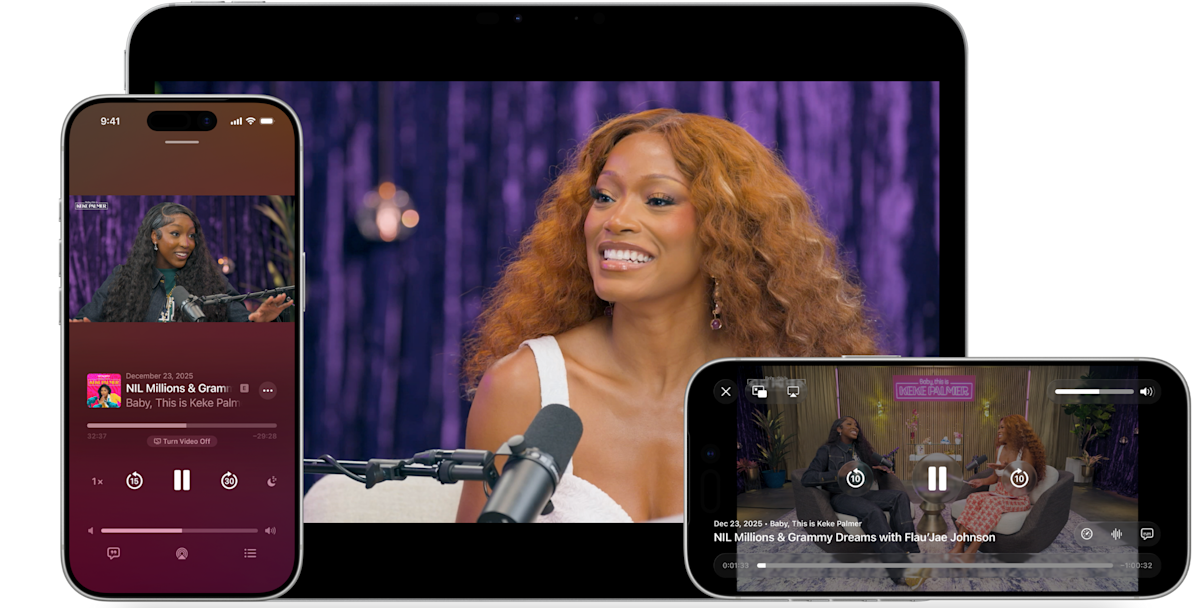
Apple is planning a major update for its Podcasts app. The entire app is switching to the company’s . Previously, it streamed video in various formats like MOV, MP4 and M4V.
This provides several benefits for the end user. It lets people switch seamlessly between watching and listening, in addition to offering a horizontal full display option. It’ll also make both video and audio streams available to download for offline viewing. This wasn’t possible with the previous streaming method, which pulled content from an RSS-like feed.
The technology integrates picture-in-picture for multitasking on products like the iPad. Finally, the updated app will automatically adjust the picture quality to ensure smooth playback in various network conditions, including both Wi-Fi and cellular.
The update will be available on most platforms, including iOS, iPadOS, visionOS and the web. It’s in beta right now, but the company plans a major rollout this spring as part of the .
Tesla’s long-awaited adoption of Apple CarPlay is still happening – just not as quickly as some drivers had hoped. After signaling last year that support could arrive by the end of 2025, the electric carmaker has hit a few unexpected hurdles that are slowing the rollout, according to the latest edition of Bloomberg’s Power On newsletter.
A delayed but ongoing integration
Tesla began working to bring Apple’s CarPlay system to its vehicles amid a period of soft sales and mounting pressure to boost demand. At the time, adding CarPlay was viewed internally as more than a minor software update. For many car buyers, CarPlay has become a must-have feature – a familiar, iPhone-like interface that seamlessly integrates navigation, messaging and music into the dashboard.
Despite Tesla’s reputation for having one of the best in-house infotainment systems in the auto industry, customer demand for CarPlay has remained strong. Tesla’s software already supports Apple Music, Spotify, video playback, web browsing and deep integration with its Full Self-Driving (FSD) system. But for many users, that’s not enough. CarPlay’s simplicity and ecosystem integration remain a powerful draw.
Tesla / Tesla
Tesla confirmed plans to support CarPlay in a windowed mode within its existing interface. However, technical challenges have pushed the timeline back.
During testing, Tesla discovered compatibility issues between Apple Maps and its own mapping software used for self-driving features. Specifically, turn-by-turn guidance from Tesla’s navigation system did not properly synchronize with Apple Maps when autonomous driving was active. In scenarios where both systems were visible side by side, this mismatch could confuse drivers.
Tesla requested engineering changes from Apple to address the issue. Apple implemented the fix in a later update to iOS 26 and the latest version of CarPlay. But another obstacle emerged: not enough users had installed the updated software.
CarPlay isn’t just another dashboard app – it’s become a central part of how many drivers interact with their vehicles. For iPhone users especially, the ability to mirror apps, access messages, use Apple Maps or Google Maps, and rely on Siri through a familiar interface can significantly improve the driving experience.
Tesla has long resisted adding CarPlay, arguing that its own system offers superior integration
But as competitors increasingly include CarPlay as standard, the absence has been a sticking point for some potential buyers. Adoption rates of iOS 26 have been slower than previous releases. Apple recently revealed that 74% of iPhones released in the past four years are running iOS 26 – slightly behind the pace of earlier updates. Crucially, the necessary Apple Maps fix did not arrive in the initial iOS 26.0 release but in subsequent updates. Apple has not disclosed how many users are on those later builds.
TeslaUnsplash
For Tesla, rolling out CarPlay before a critical mass of drivers has the compatible software could create inconsistencies and support issues. That has prompted a more cautious approach.
The good news is that CarPlay remains firmly on Tesla’s roadmap. As iOS 26 adoption continues to rise, the technical barriers should gradually ease. Apple is also expanding CarPlay functionality, adding support for third-party voice chatbot apps and enhancing its premium Ultra version – moves that could make the eventual Tesla integration even more compelling.
For now, Tesla drivers eager for CarPlay will need to wait a little longer. But the direction is clear: the feature is coming – just on a timeline dictated as much by software adoption as by engineering.
Mark Gurman, Bloomberg’s Apple scoops guy, says the development of the latest version of Siri is not looking good in tests. It’s apparently going badly enough that Apple will release only a partial version when the updated voice assistant debuts in the next version of iOS. To be clear, the iOS 26.4 update is still expected to arrive next month, and it’s still expected to have a new version of Siri, but it may be a bit of a letdown.
That’s not good for Apple. Perhaps you’ll recall that Apple has been advertising a version of Siri that works as a smart, seamless, automated personal assistant in your pocket for a long time. Apple even made a commercial about this with Bella Ramsey released in fall of 2024:
But that ad had to be pulled because Apple couldn’t ship a real-life version of what it depicted. Asking Siri questions as if it’s a chatbot and then getting good answers drawn from your information across multiple apps is a function that certainly feels possible based on existing technology. But it’s now 2026 and Apple still hasn’t released that version of Siri.
And as I wrote late last month, Apple is perceived as needing to notch a win in the AI area after falling way behind Google in AI authority. The AI model driving the new, still unreleased, Siri is essentially rented from Google for $1 billion per year. And who knows, perhaps Google’s model is the culprit behind the latest problems with Siri, but it’s hard to picture consumers blaming Google if Apple can’t execute a solid new Siri product.
Gurman’s sources tell him tests of the new Siri found that it processes queries incorrectly, and that it sometimes takes “too long”—too long for what? We don’t get to know, but it’s clearly slow. Gurman points to the feature from the Bella Ramsey ad in which the AI mines answers from your personal data, and answers questions like “What was that Greek restaurant Larry told me to try?” as one likely to be delayed past iOS 26.4.
If it’s iOS 26.5 that eventually gets the Bella Ramsey version of Siri, and the user interface ends up being designed like the working version of that operating system that Apple employees are using to perform tests, Gurman says there may be an optional toggle allowing the user to “preview” that new Siri version, meaning it’ll be framed as something that the user can try at their own peril.
So ostensibly, these Siri features aren’t being cancelled or eliminated, but delayed. Apple will, Gurman says, release some sort of partial Siri update in March with iOS 26.4, and then the rest of the new Siri features will be sprinkled into the 26.5 update in May, and the larger update to iOS 27 in September, when the iPhone 18 line is scheduled to roll out. Though this “remains a fluid situation, and Apple’s plans may change further,” Gurman writes.
Apparently, according to Gurman, another delayed feature will be Siri-based voice controls for “App Intents,” a new framework for controlling apps that Apple says will perform an “increasingly critical role within Apple’s developer platforms.” This delay may not be grieved by developers, who, judging from X posts, don’t seem super eager to figure out how to use it.
It’s official. Apple has chosen to work with Google, a longtime partner, to power AI features like Siri.
“After careful evaluation, we determined that Google’s technology provides the most capable foundation for Apple Foundation Models and we’re excited about the innovative new experiences it will unlock for our users,” Apple and Google said in a statement.
The partnership confirms previous reporting on a deal with Google. Neither Apple nor Google have confirmed the price tag, but previous reports indicate Apple could be paying Google around$1 billion for access to its AI technology. The deal also comes after Apple spent some time testing the technology of competitorslike OpenAI and Anthropic.
The multi-year partnership will involve Apple using Google’s Gemini models and cloud technology for future Apple foundational models. The deal is not exclusive, per a source familiar with the matter. Apple has historically focused on vertical integration, relying on its own hardware and software.
The iPhone-maker has faced a fair amount of public chatter criticizing it after its AI efforts, particularly its assistant Siri, lagged behind competitors. That’s not to say Apple hasn’t been quietly building powerful foundational models. The company released the first versions of Apple Intelligence in 2024, which adds AI to existing OS functions like searching for photos and summarizing notifications. Apple has also focused on privacy with its AI rollout, with much of the processing happening on-device or through tightly controlled infrastructure. Apple says it will maintain those privacy standards throughout its partnership with Google.
The firm’s strategy has resulted in a subtle, sometimes invisible, occasionally resented form of AI – one that doesn’t have the same wow factor as ChatGPT or Gemini. It also stops short of delivering the kind of Siri overhaul many users have been waiting for.
Apple has delayed the rollout of its “more personalized Siri” voice assistant several times, but a spokesperson told TechCrunch an upgrade is coming this year. Previous reports indicate the overhauled Siri is expected to launch in the spring.
Techcrunch event
San Francisco | October 13-15, 2026
Apple’s partnership with Google also comes as the search and adtech giant is in the midst of multiple antitrust lawsuits, including one that put its relationship with Apple front and center. In August 2024, a federal judge ruled that Google acted illegally to maintain a monopoly in online search by paying companies like Apple to present its search engine as the default on its devices and web browsers. Between 2021 and 2022, Google paid Apple about $38 billion to secure default search placements.
In December 2025, Judge Amit Mehta issued his final remedies on the case, which include banning Google from entering into exclusive, default agreements like the one it had with Apple “unless the agreement terminates no more than one year after the date it is entered.”
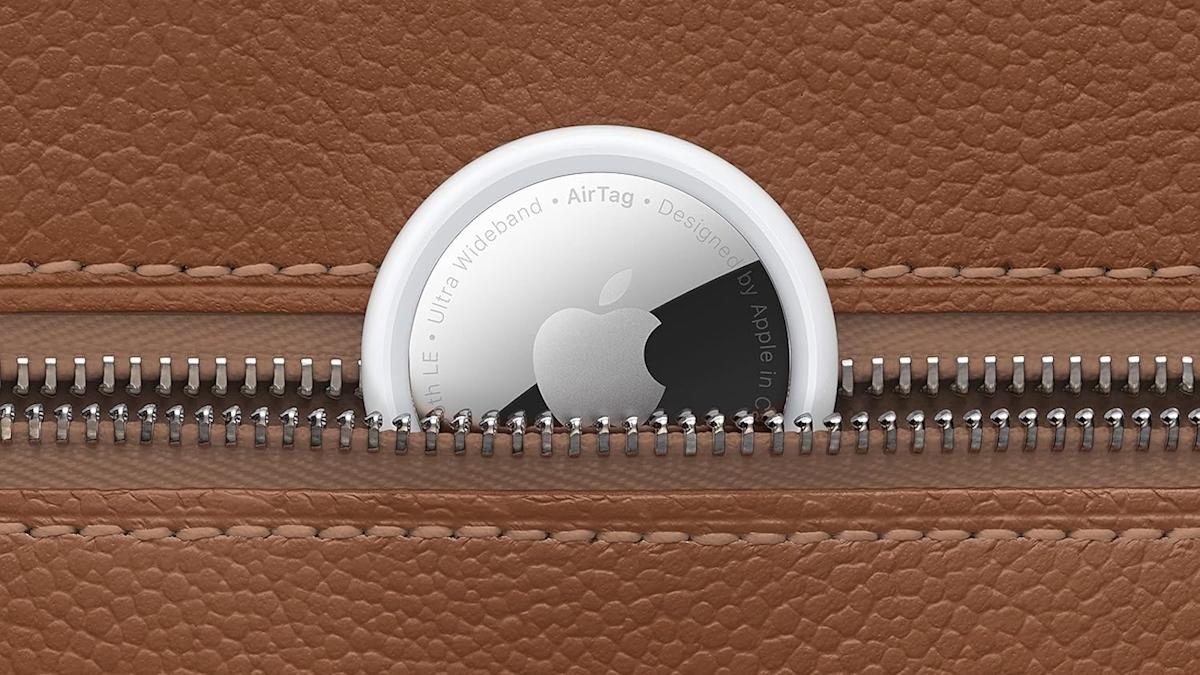
Apple keeps most of its product pricing on a tight leash, but we do see the company’s AirTags go on sale pretty frequently. Another cost cut has come around for this item just in time for the new year. Amazon is currently selling a four-pack of AirTags for $65. At a third off the regular cost, that price is pretty close to the record low discount of $63 we’ve seen for these Bluetooth trackers.
Apple
That’s a near-record low price on the Bluetooth trackers.
AirTags can be useful for people who travel frequently, helping you to keep track of essentials like your passport as well as a way to keep tabs on luggage while you’re on the go. If you do purchase some AirTags, we have some recommendations for useful accessories to go along with them, such as different styles of cases to best attach the trackers to different types of items. These are worth looking over and adding to your shopping cart in order to make the most of the product.
AirTags have an IP67 rating for water and dust resistance and their replaceable batteries should last for about a year. They can also support Precision Finding, which gives more exact directions to a lost item, when paired with most models after the iPhone 11. Up to five people can share an AirTag’s location, which is helpful for families or large travel groups.
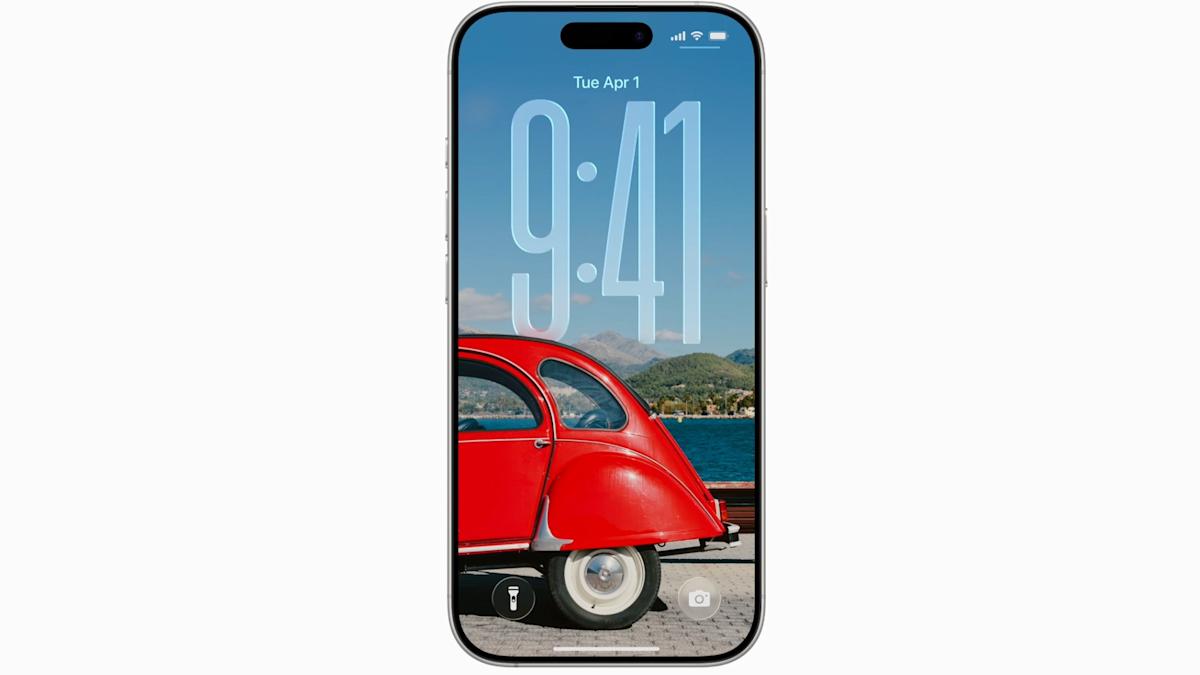
Apple has released iOS 26.2, bringing a number of new convenience features and security updates. The update includes auto-generated chapters for episodes in the Podcasts app, the option to make AirDrop more secure using verification codes, alarms for Reminders and more. It also introduces new controls for how Liquid Glass appears on the Lock Screen, adding a slider to adjust the transparency level. The drop also includes updates for iPadOS, macOS, watchOS, visionOS and tvOS.
What’s new in iOS 26.2 and iPadOS 26.2
It’s not exactly a major update feature-wise, but iOS and iPadOS 26.2 bring a bunch of quality of life improvements to apps including Apple Music, Podcasts and Games. In Apple Music, you’ll now see your Favorite Songs playlist in the Top Picks section, and lyrics will be available offline for songs you’ve downloaded. In addition to automatically generated chapters, Podcasts will display links to any other podcasts mentioned in the episode you’re listening to. And, Games is getting in-game score banners, along with filters for the library to make it easier to find titles based on category and other descriptors. Apple says it also improved support for Backbone and Razer controllers.
With iOS 26.2, Apple made Safety Alerts for natural disasters and other emergencies more detailed, and they’ll now come with maps of affected areas and other useful information. For iPad users, Apple has added drag-and-drop gestures for its new windowing system to make multitasking smoother. The update for iPhones and iPads also addresses several potential security issues, including vulnerabilities in WebKit that Apple says “may have been exploited in an extremely sophisticated attack against specific targeted individuals on versions of iOS before iOS 26.” So, if you’re not yet running the latest OS on your iPhone and iPad, it’s a good time to update.
OS updates for the rest of the family
Beyond the iPhone and iPad, macOS Tahoe 26.2 introduces Edge Light for Mac, which turns your display into a ring light for video calls. For the Apple Watch, 26.2 fixes an issue with stuck songs in the Music app, and adds some new controls for the Sleep app. The tvOS update brings the option to add profiles even for people who don’t have an Apple Account, and new restriction options for kid profiles. With visionOS 26.2, Travel Mode now has settings for cars and buses, and you’ll now be able to use spatial accessories including “Logitech Muse in Notes, Freeform, and any PencilKit-enabled app” to create hand-drawn content with the Apple Vision Pro.
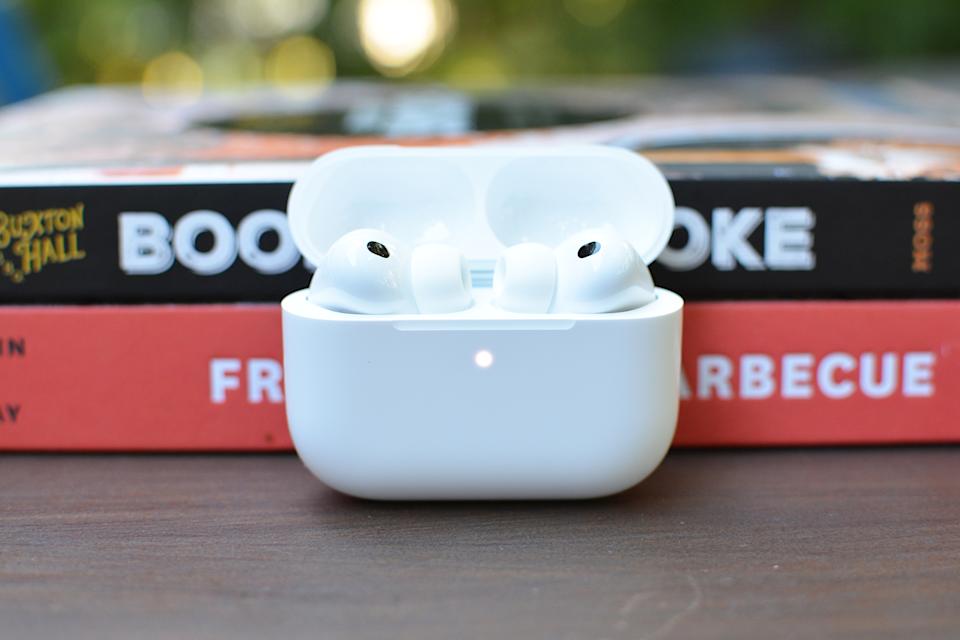
If you haven’t yet upgraded to Apple’s AirPods Pro 3, you can pick up the company’s latest model at a discount through a deal on Amazon right now. The AirPods Pro 3, which came out in September, are currently $20 off, bringing their price down to $230. With the new AirPods Pro, Apple made some big improvements, including better battery life and sound quality, and introduced useful new features, such as Live Translation.
Apple
The AirPods Pro 3 are available today, with Apple’s H2 chip, and earned a score of 90 out of 100 in this fall. Active noise cancellation (ANC) is one of the biggest selling points of the AirPods Pro, and Apple has made the experience even better with the AirPods Pro 3. They sport new foam-infused ear tips that create a better seal to improve passive noise isolation, and as Engadget’s Billy Steele wrote in his review, “Ultra-low-noise microphones combine with advanced computational audio to silence even more background noise.” In testing, they had no problem blocking out the chatter of people nearby or otherwise noisy environments.
With the AirPods Pro 3, Apple introduced heart-rate sensing, so you’ll be able to see your heart rate data from the earbuds in the Fitness app and other workout apps. The AirPods Pro 3 also boast Live Translation, which you can activate via controls on the earbuds themselves. As long as you have an Apple Intelligence-capable device, you’ll be able to translate in-person conversations in English, French, German, Italian, Japanese, Korean, Portuguese, Spanish and Chinese (Mandarin).
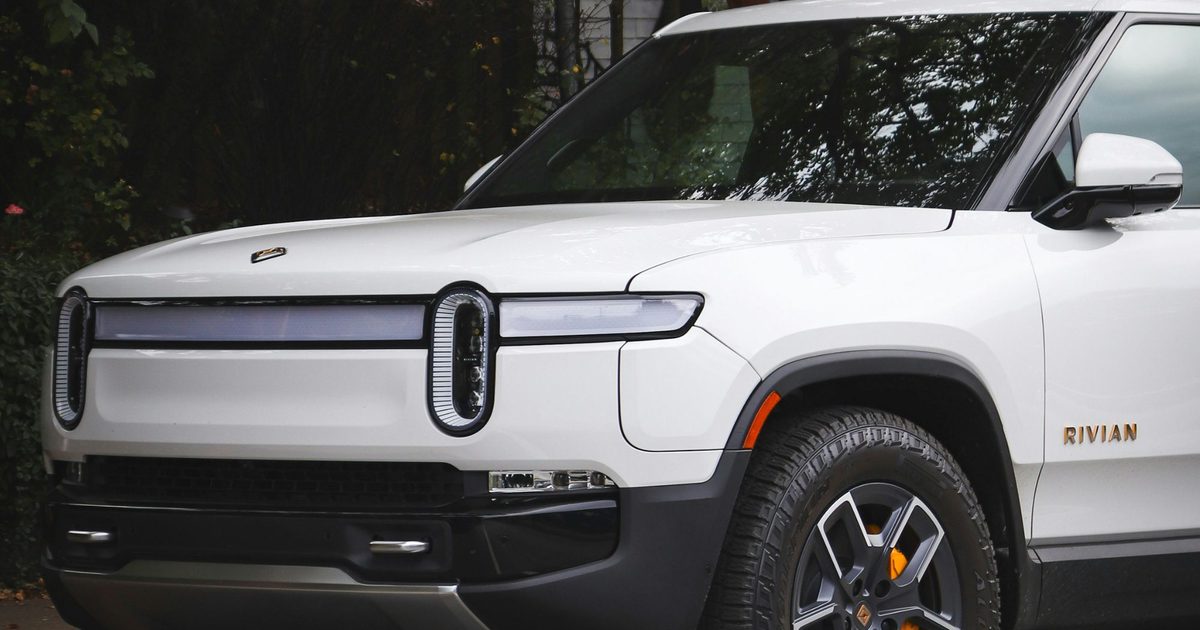
Rivian owners, your phone is finally becoming a proper key. The company’s software chief, Wassym Bensaid, has confirmed that the upcoming .46 update will officially turn on Digital Key support for second-generation R1S and R1T vehicles. This isn’t just an app update; it introduces native keys that live right inside your Apple Wallet on your iPhone and Apple Watch.
The best part? It uses both Ultra Wideband (UWB) for precise, hands-free unlocking and NFC. That NFC bit is huge because it supports Apple’s Power Reserve feature – meaning you can still tap your phone to unlock your truck for up to five hours after your battery dies.
Rivian is also bumping the limit from four to eight digital keys per vehicle, so the whole family can have access. And it’s not just for Apple users; full compatibility is coming for Google Wallet and Samsung Wallet, too.
Unsplash
Why This Matters
This is a massive maturity moment for Rivian. If you drove a Gen 1 vehicle, you know the struggle of relying on the Rivian app’s Bluetooth unlocking. It worked, but it wasn’t on the same level as the seamless experience offered by BMW or Tesla. It lacked that native wallet feel, the precision, and definitely didn’t work if your phone died.
This move to true Digital Key support bridges that gap. It finally aligns Rivian with the industry gold standards – specifically leveraging Apple’s CarKey framework – and actually utilizes the upgraded hardware built into the Gen 2 platform.
Why You Should Care
Ideally, this just makes life easier and less stressful. You can genuinely leave the bulky key fob at home without worrying about being stranded if your phone battery hits 0%.
It adds a layer of safety and redundancy that wasn’t there before. Plus, being able to share access instantly via text message is a game-changer. If a friend needs to borrow the truck or grab something from the trunk, you can send them a key in seconds without needing a physical handoff.
Unplash
What’s Next
Look for the .46 OTA update to hit vehicles later this month. While Gen 2 owners get the full package immediately, Gen 1 owners might be out of luck for the full experience since they lack the newer UWB hardware.
Rivian says this is just the start for the Gen 2 platform, signaling a broader push to make the car feel more like a piece of high-tech software and less like a traditional vehicle.
Christie’s is preparing to auction off the original partnership contract that created the Apple Computer Company on April 1, 1976, valuing it in the region of $2-4 million.
The original three-page document served as the contract among Steve Jobs, Steve Wozniak, and Ron Wayne. The agreement established initial shares at 45% for Jobs, 45% for Wozniak, and 10% for Wayne.
Additional papers documenting Wayne’s withdrawal as a partner just 12 days after the company was formed are also included in the auction package. Wayne initially received $800 for his 10% share of the company, and later received an additional $1,500 payment.
Wayne later stated he withdrew because he knew the venture would be a “roller coaster” and that the high-stakes ride was not for him.
If Wayne’s original 10% stake had somehow remained untouched, it would be worth about $409 billion today based on Apple’s $4 trillion valuation. That’s only a playful comparison, mind, since decades of stock splits, new share issuances, and structural changes mean that early 10% slice has no realistic connection to Apple’s modern share count!
Christie’s will offer the founding contract and Wayne’s withdrawal agreement as a single lot on January 23, 2026.
In the early 1990s, Wayne sold the physical copy of the founding contract for $500. Apple’s founding corporate papers were last sold at auction by Sotheby’s in December 2011. That lot also included Wayne’s withdrawal, and it was sold to a private collector for nearly $1.6 million.
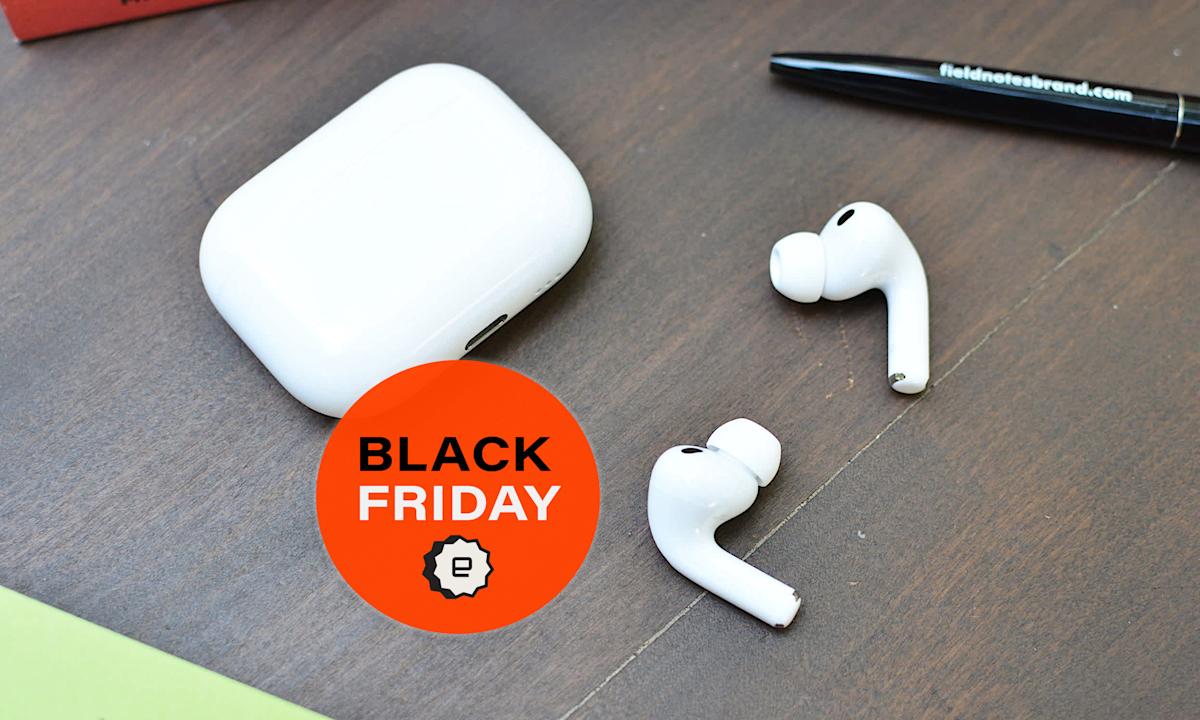
Apple’s new AirPods Pro 3 are already shaping up to be one of the most sought-after tech gifts this season, and now you can grab them at a lower price. They’re on sale for $220, down from the regular $249. Previously, the lowest we’ve seen the AirPods Pro 3 discounted to is $239. If you’ve been holding off on upgrading your earbuds, this is the deal worth grabbing.
Apple
Pick up Apple’s latest wireless earbuds while they’re on sale for Black Friday.
Apple didn’t reinvent its flagship earbuds with the AirPods Pro 3, but it made smart refinements that elevate nearly every part of the listening experience. We praised these earbuds in our AirPods Pro 3 review for delivering noticeably richer audio and more effective active noise cancellation while keeping the same pocketable form factor that made earlier models so popular.
The standout upgrade here is Apple’s Live Translation feature, which was an unexpected but welcome surprise, announced at the iPhone 17 event. Leveraging Apple’s H2 chip, the AirPods Pro 3 combines Voice Isolation, ANC and beamforming mics to kick Live Translation into action. Siri’s translation filters seamlessly through the earbuds, but if environmental noise gets too intrusive, you can view a real-time transcription in the iOS Translate app, which is a useful feature for international travel and business calls.
Battery life has improved, too. You get up to eight hours on a single charge with ANC on, and the case adds another 24 hours of playback. The MagSafe charging case, with its new U2 chip, now supports an increased distance for Precision Find My, so it’s easier to locate if misplaced.
Since we’re talking about earbuds, audio quality plays a key role in deciding whether to purchase the AirPods Pro 3 or upgrade from a previous model. Although improvements have been made to sound quality through new drivers and transducers, Apple’s decision to increase air flow inside the earbuds has been the most noticeable update. You can expect the AirPods Pro 3 to deliver deeper bass, crisper highs, and an expanded soundstage that makes everything from podcasts to orchestral tracks feel more dynamic.
There’s not much to fault here beyond the familiar Apple premium price, but that’s why this AirPods Pro 3 deal is such good news. The AirPods Pro 3 remain the best wireless earbuds for iPhone users who want seamless connectivity, top-tier ANC and reliable comfort. But if you were hoping to spend a little less, the AirPods 4 with ANC are on sale for $110 right now as well, and the standard AirPods 4 are down to $80.