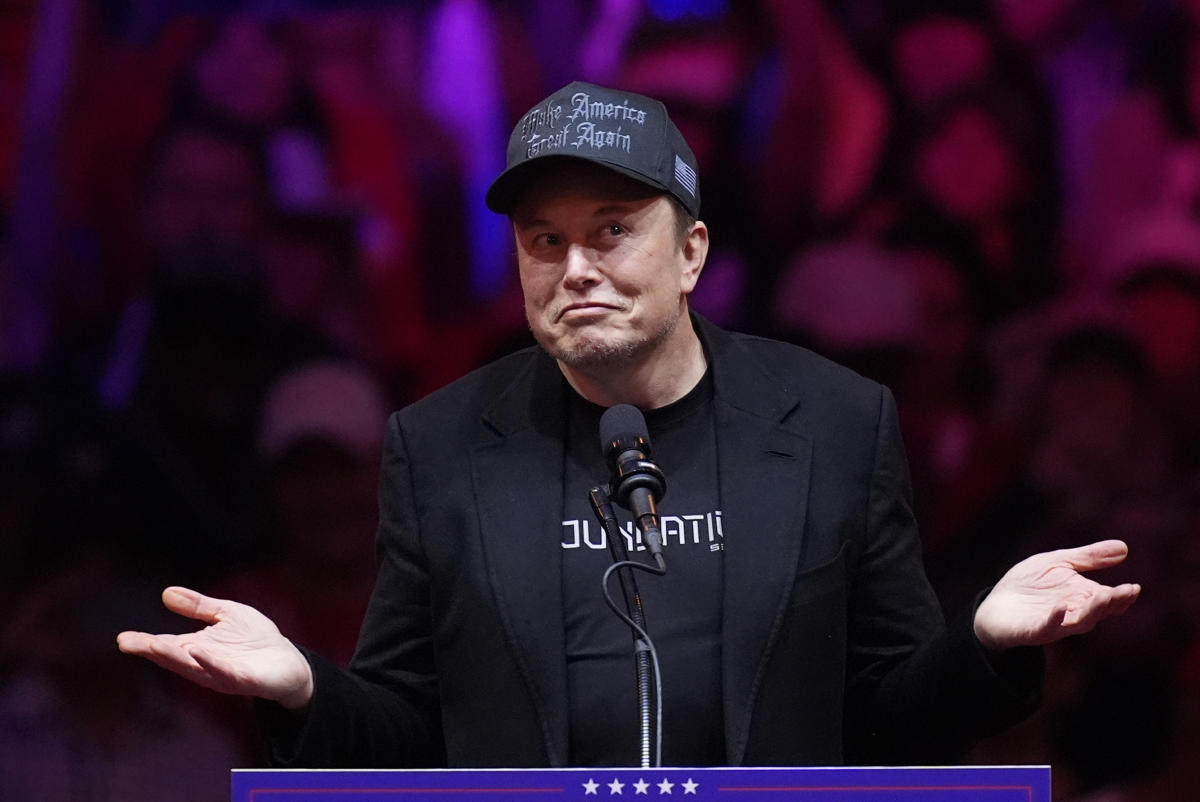
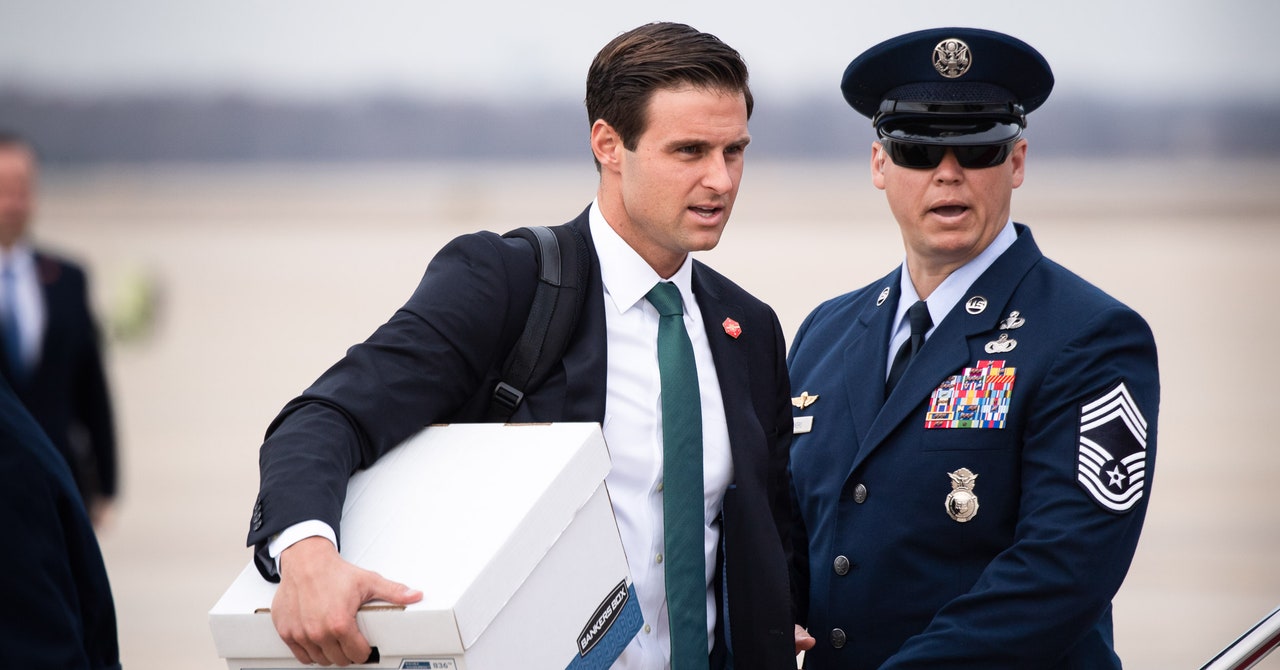
Not Even DOGE Employees Know Who’s Legally Running DOGE


Before Trump was inaugurated, the USDS administrator was Mina Hsiang. After she left, Ted Carstensen was the highest-ranking legacy USDS leader, but he resigned from the organization on February 6.

“After Ted resigned, we received no correspondence as far as who the head of this organization was,” says a current USDS employee, who requested anonymity due to concerns of retaliation.

Some people WIRED spoke with at USDS view Amy Gleason, a former USDS official who served in the first Trump administration, as a liaison between legacy USDS, DOGE, and other agencies, but little is known about her official role. Steve Davis, a longtime Musk associate and the president of the Boring Company, is another name rumored to be formally leading DOGE. Davis has worked with Musk for years, and led the billionaire’s cost-cutting efforts when taking over Twitter, now X, in 2022. Davis went as far as sleeping in the Twitter HQ with his wife, Nicole Hollander, and their child. (Hollander is now a high-level General Services Administration official.)

“Steve Davis has always been articulated as the leader of DOGE, but when I ask if he’s the administrator, [managers] say we don’t know,” one former USDS employee tells WIRED. “When I ask if he’s the interim administrator, they say ‘we don’t know.’ They’ve said Brad Smith [a health care entrepreneur with ties to Davis] is serving in a chief of staff role.”

Meanwhile, as USDS staffers are trying to figure out who is running their agency, dozens of them have been laid off. Around 50 people out of USDS’s approximately 200 employees were fired on Friday. Sources tell WIRED that product managers, designers, and members of the talent team were hit the hardest, along with some engineers.

“No rhyme or reason. Literally in the middle of work,” another source said of the Friday night firings. “There are so many of us.”

“I have heard that our directors at USDS (legacy) still have not received any kind of list or justification for the intention to terminate emails sent Friday evening,” says another source at the agency.

Last week, multiple agencies were rocked by sudden layoffs. Dozens of Consumer Financial Protection Bureau employees were fired after receiving emails botching their names and roles. Later in the week, the entire CFPB team tasked with investigating big tech were terminated, a former CFPB official told WIRED. After the CFPB firings, other agencies, including the General Services Administration, the Centers for Disease Control and Prevention, the Department of Education, the Department of Veterans Affairs, the Department of Transportation, the Department of Energy, terminated thousands of workers.

The White House did not respond to multiple requests for comment.

While Musk’s DOGE workers have taken over at USDS for the last month, very few legacy employees have interacted with their new colleagues whatsoever. Earlier this month, WIRED reported that DOGE had built a “firewall” separating Musk’s team from the rest of the organization’s workforce. The only time legacy staff had a meeting with a representative from DOGE was on February 1 with Stephanie Holmes, who identified herself as the team’s new HR person.

The only other experiences legacy USDS staff have had with DOGE staff were their surprise one-on-one interviews with DOGE-affiliated engineers who refused to identify themselves during the first week of the Trump administration.

Trump Administration Wants to Help Get Professional Misogynist Andrew Tate out of Romania


Off in the depths of the QAnon and PizzaGate corners of the internet, conspiracists swear Donald Trump is quietly preparing charges to bring down notorious sex trafficking circles operated by celebrities. Back in reality, the Financial Times reports the Trump administration is pressuring Romanian authorities to let Andrew Tate and his brother Tristan Tate travel freely despite facing charges of sexual misconduct and human trafficking.

Per the report, Trump officials have been pushing for Romania to return the Tates’ passports and lift travel restrictions on the brothers, who have been banned from leaving the country until their criminal case concludes. The pressure campaign started on phone calls last week and then got raised in-person when Trump special envoy Richard Grenell, who met with the Romanian foreign minister Emil Hurezeanu at the Munich Security conference.

Grenell—who served as Trump’s ambassador to Germany during his first term only to get iced out by German leaders for cozying up with the far-right, Nazi-aligned (and now Elon Musk-backed) Alternative for Germany (AfD)—has been publicly supportive of the Tates. In a post made earlier this month, Grenell seemed to suggest the Tate brothers were the victims of a concerted effort to target “conservatives around the world,” which he believed was funded by USAID programs.

So, okay, that’s one potential explanation of what happened to the Tates. The United States government, through a series of funds indirectly directed to Romania, successfully influenced the nation’s law enforcement apparatus to pursue anti-woke personalities and charge them with fake crimes in order to make an example of them.

Let’s try another one, just to see if it might make a little more sense. Tate, a self-described misogynist and “king of toxic masculinity” who was credibly accused of sexual abuse, fled his home in the United Kingdom and went to Romania as local law enforcement investigated allegations against him. While in Romania, which he claimed to have chosen in part because of the country’s lax laws against sex crimes, he and his brother operated an exploitative camgirl and porn website which allegedly included luring young women—some as young as 15—to their home and forcing them to partake in sexual acts on camera. Money made from the operation funded the Tates’ extravagant lifestyle, allowing them to develop a cult of personality that targeted disaffected young men and tempted them with the allure of their obscene image of masculinity.

All of that is pretty well documented, including by the Tates themselves who happily brag about all the people they have ripped off along the way. But maybe there’s an extremely elaborate international conspiracy afoot! Hard to say which is more likely. Occam’s razor is pretty dull these days.

In 2022, the Romanian government indicted the brothers on charges of human trafficking, sexual misconduct, money laundering, operating an organized crime group, and committing rape. As prosecutors continue to attempt to move the case forward, the Tates are prevented from leaving Romania. All the while, cases keep building against them. Last week, a woman in Florida accused the brothers of trying to recruit her into their webcam sex ring.

Meanwhile, the Romanian government might be more receptive to the Trump administration’s pressure soon. Last year, far-right politician Calin Georgescu unexpectedly won the first round of presidential voting in the country, though that victory was annulled by the nation’s highest court over concerns that the election process was corrupted by an outside influence campaign. Vice President JD Vance criticized the Romanian court over the decision, so should Georgescu take the highest office, communication between the leadership of the two countries might become more friendly, and Romania might be willing to hear the Trump administration’s calls to let up on the accused human traffickers.

Peter Thiel-backed Startup That Wanted to Buy Greenland Is Thrilled That Trump Wants to Buy Greenland


Donald Trump has inspired laughs, jeers, disbelief, and outrage, by proposing that the U.S. buy Greenland. Nobody quite knows what to think of the president-elect’s proposal. Trump isn’t the only person who wants to buy the Danish territory, however. Those in the technobro-iverse have previously expressed interest in purchasing the land mass and using it for their own dystopian purposes.

“I went to Greenland to try to buy it,” Dryden Brown tweeted in November. Brown, 28, is the CEO of a company called Praxis, which is part of a broader movement known as the Network State. I recently wrote about the Network Staters, who say they want to create a host of privately funded, crypto-friendly countries all around the world. Zealots of this ideology believe they’re building the future, but critics of the movement see it as little more than a bizarre neo-colonial effort to lay claim to existing countries, re-write their legal frameworks, and extract all the wealth and resources from them.

Brown actually did travel to Greenland last year to talk to local officials about potentially buying the territory. He was promptly met with ridicule. “Greenlandic independence requires approval by the Danish parliament and a change of our constitution,” politician Rasmus Jarlov recently tweeted. “I can guarantee you that there is no way we would approve independence so that you could buy Greenland.”

Now, however, Brown is all jazzed up about Trump’s proposal and seems to even be taking credit for it. Following a recent post from Trump on Truth Social about buying Greenland, the X account belonging to Praxis retweeted the post, commenting merely: “According to plan.” Not long afterward, Brown tweeted: “Praxis would like to support Greenland’s development by coordinating talent, companies, and capital to help secure the Arctic, extract critical resources, terraform the land with advanced technology to make it more habitable, and build a mythical city in the North.”

A key figure in the success of both the Network State movement and Donald Trump has been the shadowy tech billionaire Peter Thiel. Pronomos Capital, the venture capital firm that has been responsible for financing much of the movement’s special projects (including Praxis), is financially supported by Thiel. A number of Thiel associates are also deeply intertwined with the movement, including Joe Lonsdale, the co-founder of Thiel’s defense contractor Palantir, and Michael Gibson, the former vice president of grants at the Thiel Foundation, who currently serves as an advisor at Pronomos.

At the same time, Thiel has also been a notable benefactor to Trump’s political career, having helped bankroll his 2016 presidential campaign. Even more weirdly, it would appear that Trump has named a Thiel associate, Ken Howery, as ambassador to Denmark, which would put him in a prime position to influence a Greenland deal—were one to actually materialize.

So what’s going on here? Is the recent announcement by Trump somehow tied to Brown and his Thiel-backed project? Or is Praxis merely using Trump’s proposal as an advertising opportunity for its own floundering utopia? As is ever the case with Trump, it’s a little difficult to separate the truth from the bullshit.

One thing’s for sure: Brown’s recent comments about Greenland really only reaffirm the idea that Network Staters are modern-day colonialists. In multiple posts, he speaks openly about the desire to exploit the territory for Western gain. In one recent missive, the young entrepreneur wrote: “It’s huge, but only has 50k ppl, rich with natural resources: uranium, gold, oil, and more, and is a critical defense asset in the Arctic.” In other posts, Brown talked about using Greenland to practice “terraforming” so that when it comes time to build a society on Mars, America will be ready.

How NASA Might Change Under Donald Trump


Although the details remain in flux, the transition team reviewing NASA and its activities has begun to draft potential executive orders for changes to space policy under the Trump Administration.

Sources familiar with the five people on the team, who have spent the last six weeks assessing the space agency and its exploration plans, were careful to note that such teams are advisory in nature. They do not formally set policy nor is their work always indicative of the direction an incoming presidential administration will move toward.

Nevertheless, in trying to set clear goals for NASA and civil space policy, the ideas under consideration reflect the Trump administration’s desire for “big changes” at NASA, both in terms of increasing the effectiveness and velocity of its programs.

Not Business as Usual

The transition team has been grappling with an agency that has a superfluity of field centers—ten spread across the United States, as well as a formal headquarters in Washington, DC—and large, slow-moving programs that cost a lot of money and have been slow to deliver results.

“This will not be business as usual,” one person familiar with this group’s meetings said. The mindset driving their deliberations is a focus on results and speed.

Donald Trump will be inaugurated as president for his second term a little less than a month from now, on January 20. On that day he is expected to sign a number of executive orders on issues that he campaigned on. This could include space policy, but more likely that will wait until later in his presidency.

One source said the space transition team has been working off of ideas that Trump has talked about publicly, including his interest in Mars. For example, during a campaign speech this fall, Trump referenced SpaceX founder Elon Musk, who played a significant role during the campaign both in terms of time and money, and his desire to settle Mars.

“We are leading in space over Russia and China… It’s my plan, I’ll talk to Elon,” Trump said in September. “Elon get those rocket ships going because we want to reach Mars before the end of my term, and we want also to have great military protection in space.”

Ideas Under Consideration

The transition team has been discussing possible elements of an executive order or other policy directives. They include:

  • Establishing the goal of sending humans to the Moon and Mars, by 2028
  • Canceling the costly Space Launch System rocket and possibly the Orion spacecraft
  • Consolidating Goddard Space Flight Center and Ames Research Center at Marshall Space Flight Center in Alabama
  • Retaining a small administration presence in Washington, DC, but otherwise moving headquarters to a field center
  • Rapidly redesigning the Artemis lunar program to make it more efficient

Elon Musk will lead a new ‘Department of Government Efficiency,’ Donald Trump says


President-elect Donald Trump has named Elon Musk as the leader of a new “Department of Government Efficiency,” that will “dismantle Government Bureaucracy, slash excess regulations, cut wasteful expenditures, and restructure Federal Agencies.” The Tesla CEO and owner of X will spearhead the effort along with former presidential candidate Vivek Ramaswamy, Trump in a statement on Truth Social.

The scope of the role isn’t exactly clear. Trump’s press release said that “the Department of Government Efficiency will provide advice and guidance from outside of Government, and will partner with the White House and Office of Management & Budget to drive large scale structural reform, and create an entrepreneurial approach to Government never seen before.” It also stated that “their work will conclude no later than July 4, 2026.”

Musk shared the news on X, but didn’t indicate how the role might impact his obligations at his various other companies. Musk, who poured into Super Pac boosting Trump’s campaign, has previously about his desire to work with Trump to cut government spending. He did, however, joke about potential “merch” for the operation. “Republican politicians have dreamed about the objectives of ‘DOGE’ for a very long time,” Trump’s statement said.


Teens Say John McEntee, Trump’s Former Personal Aide and Project 2025 Higher-Up Made Them Uncomfortable in Chats


When Grace Carter heard from the Right Stuff’s account on Instagram, the person controlling the account introduced himself as John. He also offered a phone number with a Southern California area code—one a WIRED reporter has used in the past to contact McEntee.

There was no obvious reason why he would have reached out to her in particular. At the time he contacted her, Carter had about 17,000 followers on TikTok, she says, and still has only a modest 1,500 on Instagram. “I actually have no idea how he found me,” she says. “Based on the other accounts I follow and things I post, it’s very leftist. So I was surprised when he found me.”

Carter says she never used McEntee’s phone number, though she did accept his offer of a free branded hoodie. While messages viewed by WIRED indicate that Carter sparsely responded to McEntee, he repeatedly offered to fly her and a girlfriend to Los Angeles. “My treat,” he wrote.

“I remember I told my boyfriend about it and I was joking that he was going to be the other girl,” says Carter, who says that she continued to talk to McEntee as a kind of “trolling.” “I was like, I could use a free trip, that’s initially why I kept the conversation going.”

In messages seen by WIRED, McEntee says to Carter, “I think you’re a liberal,” but tells her, “As long as you’ll be fun I don’t care.” The conversation, she says, died out after Carter declined to visit McEntee over her winter break.

“I would have been uncomfortable with him in person,” she says.

Following the presidential debate on September 10, McEntee posted a video saying, “Can someone track down the women Kamala Harris says are bleeding out in parking lots because Roe v. Wade was overturned? Don’t hold your breath.” The comments section of that video were soon flooded with women across the country sharing their experiences.

It was this post that Carter says made her feel like it was important to share her experience. “That video he made about abortions really upset me,” she says. “And I was just like, it needs to be called out.” Carter posted a video on TikTok sharing her messages with McEntee, and says that she has received messages from several other young women who allege similar experiences.

One of those women, who spoke to WIRED and asked to remain anonymous because she’s concerned about her security, says that she connected with McEntee on the Right Stuff dating app before moving to texting him. The number provided matched the one given to Carter and the one used previously by a WIRED reporter; messages reviewed by WIRED also included selfies that clearly appear to be of McEntee. Like Carter, she was 18 at the time.

“I would label myself as semi-conservative,” the young woman says. Unlike Carter, she knew who McEntee was, and at first thought his profile on the app was an example for users, as opposed to his actual account. (Last year, a series of TikTok videos showed McEntee going on first dates with women he matched with on the app in various cities.) “I had seen him on TikTok. I’d see him on the news. My family is quite conservative, so I had seen him before.”


Trump jumps into cryptocurrency, appears to know nothing about it


Donald Trump, who previously called Bitcoin a scam, has launched a new cryptocurrency venture called World Liberty Financial. “Crypto is one of those things we have to do,” he said in an interview on X. “Whether we like it or not, I have to do it.” The news comes just a day after a likely assassination attempt against Trump at his Florida golf course.

Trump is entering the venture with his sons Donald Trump Jr. and Eric Trump, along with two crypto entrepreneurs: Chase Herro (who once called stablecoins “borderline a Ponzi scheme”) and Zachary Folkman, who founded a company called Date Hotter Girls. Trump’s 18-year-old son Barron Trump, who has no known crypto expertise, is also listed as “chief DeFi [decentralized finance] visionary.”

The tokens themself are supposedly based on US dollar stablecoins. Some involved in the venture have touted it internally as a borrowing and lending platform, according to The New York Times.

Cryptocurrency is generally supposed to be decentralized, but a large chunk of the governance tokens for World Liberty Financial could be held by insiders, according to a draft white paper for the project seen by CoinDesk. The remaining 30 percent would be distributed “via public sale” with some of the money raised from that also going to project insiders.

When asked questions about the venture in an X Spaces interview (above), Trump appeared to know next to nothing about it. “It’s so important. It’s crypto. It’s AI. It’s so many other things. AI needs tremendous electricity capabilities beyond anything I ever heard,” he said. He deferred to Barron’s expertise, saying he has “four wallets” and equated it to learning a language like Chinese.

Some comments in the Spaces interview weren’t kind. “Let’s be honest Trump doesn’t even know what crypto is or why he’s being asked to shill it,” said one. Others noted that launching such a venture just ahead of an election was inappropriate.

“I think it genuinely damages trump’s electoral prospects, especially if it gets hacked (it’ll be the juiciest DeFi target ever and it’s forked from a protocol that itself was hacked),” said crypto industry notable and self-proclaimed Trump supporter Nic Carter in a post on X.

Donald Trump Backs ‘Strategic Bitcoin Stockpile’ in Speech to Crypto Faithful


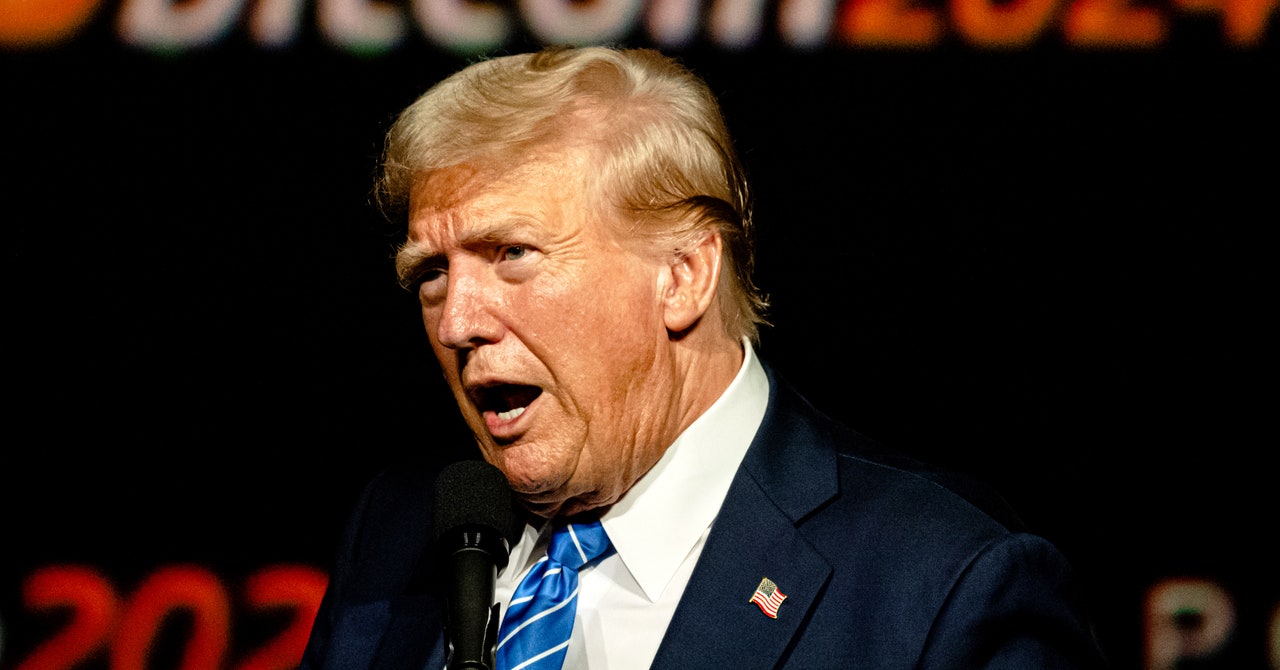
Former president Donald Trump outlined a plan to turbocharge crypto growth and make the US a crypto mining powerhouse in his keynote address to the 2024 Nashville Bitcoin Conference on Saturday.

Trump announced that if elected, he would create a strategic bitcoin reserve in the US. “It will be the policy of my administration to keep 100 percent of all bitcoin the US government currently holds or acquires in the future … as a core of the strategic national bitcoin stockpile,” he said.

Right now, the US government owns more than 210,000 bitcoins that were seized via illegal operations like the online dark market Silk Road and the ponzi scheme BitConnect. It’s worth approximately $14 billion at time of writing.

This move confirmed rumors spread by bitcoin enthusiasts who are hopeful that endorsement of a reserve from Trump could bolster the price of the cryptocurrency.

Trump also announced plans to appoint a bitcoin and crypto advisory council, whose task would be to “design transparent regulatory guidance to the benefit of your industry” in the first 100 days of his next presidency. He said he wanted the US to become the “crypto capital of the world.”

Trump also pledged to create a framework for ensuring the safe expansion of stablecoins, “allowing us to extend the dominance of the USD to other places around the world,” and doubled down on his vow to scrap any effort to create a Central Bank Digital Currency (CBDC) or digital dollar, saying “there will never be a CBDC while I’m president of the United States.”

“I will always defend the right to self-custody,” he told the exultant crowd. What got perhaps the biggest cheer was a day one promise to fire Securities and Exchange Commission chair Gary Gensler.

“The moment I am sworn in, the persecution stops and the weaponization against your industry ends,” he said, name-checking Democratic senator Elizabeth Warren of Massachusetts as the industry’s sworn enemy.

He promised to make regulations friendly to crypto mining operations in the US, so workers wouldn’t have to “move to China.” Trump promised, again, to free Ross Ulbricht, imprisoned for life for his involvement with online underground market Silk Road, where people could buy items like illegal drugs before it was shut down in 2013.

The crowd expected the bitcoin strategic reserve announcement. On July 22, Senator Cynthia Lummis of Wyoming posted “Big things … in store this week” on X, two days before Fox Business reported she would “announce legislation for a strategic bitcoin reserve” at the conference.

Lummis appeared before the crowd just after Trump walked off to announce a “present to President Donald Trump”: the bitcoin reserve bill she’d been drafting.

“This is our Louisiana Purchase moment,” she said, elaborating that the bill would take “the bitcoin President Trump just mentioned and pull it into the reserve—[and] that’s only the beginning.”

“Over five years, the United States will assemble 1 million bitcoin,” she added, “Five percent of the world’s bitcoin, and it will be held for a minimum of 20 years and can be used for one purpose—reduce our debt.”

Trump Media Stock Price in Free Fall as It Files to Issue More Shares


The company behind Donald Trump’s Truth Social has been public for just a few weeks, but the stock price has plunged 50% from its first full day on the market. Trump Media filed with the SEC on Monday to issue 21 million more shares of DJT stock, and made the first steps towards allowing Trump to resell some of his own shares, according to Bloomberg. DJT’s stock price dipped by almost 15% to $27.52 on Monday morning.

The SEC filing shows that Trump Media plans to increase the number of available shares by 15%, CNN reports. This could devalue the shares of existing DJT shareholders, including Trump Media’s largest shareholder, Donald Trump himself. The filing also included a provision that could allow Trump and other insiders to one day sell their stock, after an initial lockup period expires in Sept.

Also on Monday, Trump stepped into a New York Courthouse for the first day of his criminal trial. The former President has been charged with 34 felony counts by a Manhattan district attorney for his alleged role in an alleged hush money scheme.

Last week, two of Trump’s co-founders made a bid for the right to sell their Trump Media stock in the next six months, according to Barron’s. Wesley Moss and Andrew Litinsky, former contestants on The Apprentice, filed an amendment to their ongoing lawsuit against Trump asking to be exempt from a lockup provision. This amendment is part of Moss and Litinsky’s lawsuit against Trump filed in Feb., claiming the former President deprived the co-founders of a proper stake in Trump Media, according to The Washington Post.

Trump responded to Moss and Litinsky’s February lawsuit by suing them back a month later claiming they failed to properly set up Trump Media. At the moment, Trump Media is caught in a complicated web of legal battles between co-founders, major investors, and the SPAC that Trump Media was borne out of, The Washington Post reports.

The former President’s stake in Truth Social’s parent company has lost roughly $2 billion since March 28, when DJT’s price closed at $58. Though Trump is bound by the lockup agreement, he could be especially reliant on DJT’s stock price. Trump faces millions of dollars in legal fees, and his social media company once seemed like his saving grace.

Despite Trump Media’s disappointing stock performance, many investors see the stock as a direct way to support Donald Trump. A report from The Washington Post featured several Trump supporters saying they would keep their dollars invested in Trump Media, even as the price falls.

Truth Social’s stock price has been a roller coaster in the last few weeks. DJT’s stock price climbed to a high of $77 on its second day as a public company but has since plummeted. Short sellers have flooded the stock, as over 5 million shares of Trump Media have been shorted, according to CNBC. DJT became the most expensive stock to short against a few weeks ago, according to Reuters, though some still seem willing to do it. DJT is now a mainstay conversation topic on r/wallstreetbets, adding credit to the claim that Trump Media is a meme stock.

Truth Social offered Donald Trump a platform for years when few others would give him one. Now the social media company’s stock is buoying the former President’s net worth, allowing Trump supporters to invest in him. The DJT stock is emblematic of Trump himself, proving to be a massively divisive issue that investors can’t seem to agree on.