Prototype Design Engineering: How Well Should Your Company’s Prototype Function?


Due to the fast-paced progress in the world of product development, creating a prototype is one of the most crucial steps in turning an idea into a product. Understanding the purpose and function of your prototype is vital, as it not only impacts the development process but also determines the success of the final product. For today’s blog post, you will learn about prototype design engineering and how well your company’s prototype should function.

Cad Crowd is a leading agency that can help you connect with experts in prototype design engineering with a reputation for delivering exceptional results. Consisting of over 94,000 experts, we pride ourselves on our ability to meet and exceed your highest standards. Whether you’re looking for innovative solutions, strategic insights, or top-tier execution, Cad Crowd has the expertise and the talent to bring your vision to life. Together with our unmatched experience and commitment to excellence, we are the trusted partner you can rely on for success.


🚀 Table of contents


Why prototyping matters?

Prototyping allows you to visualize your concept, test its capabilities, and identify potential issues before full-scale production. The level of functionality required from a prototype depends on its purpose. Understanding the purpose of your prototype will guide you in determining how well it should function at each stage of development.

Conceptualizing the prototype or the early-stage prototypes helps you visualize the design as it provides a clear representation of the product’s basic features and form. As the project progresses, the design also progresses as it is functional enough to test core functions of the design in terms of mechanical and electrical systems. It can also be used to validate specific features or components.

For prototypes that are intended for user testing, the test product should accurately resemble the final product in any form, as these models are used to gather feedback from customers, allowing designers to make iterations in the design. Lastly, before mass production, prototypes are tested to function as close to the final product as possible. They are used to test manufacturing processes, quality control, and regulatory compliance.

RELATED: Master product design costing: Top strategies for CAD services companies & freelance designers

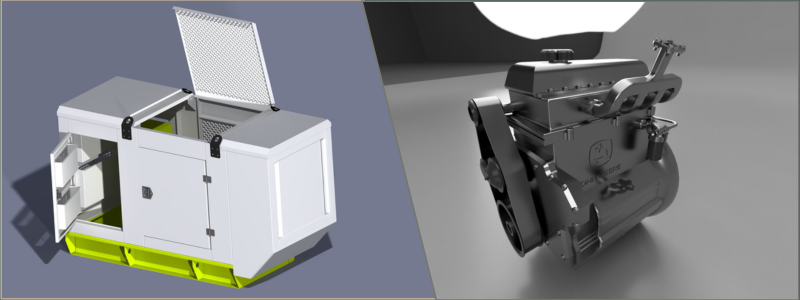
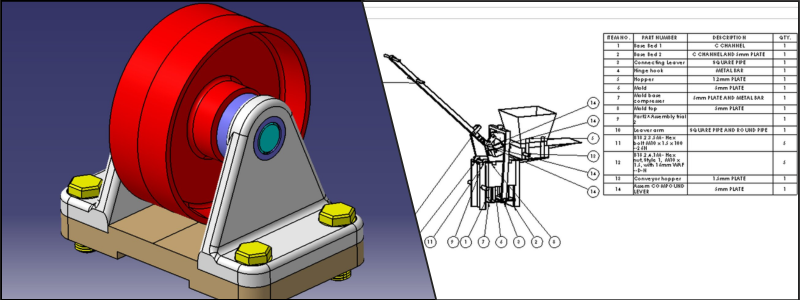
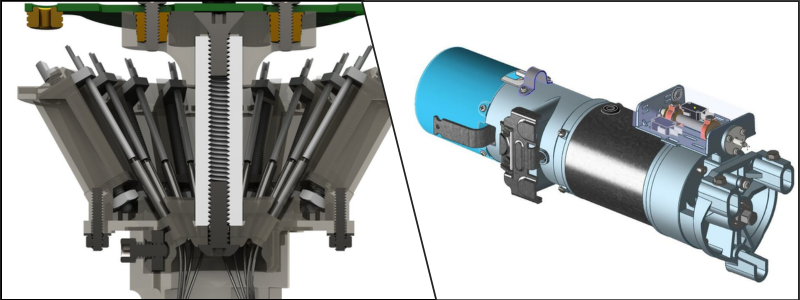
prototype of an advanced cooling device and compact EV steering

Balancing cost and functionality

One of the biggest challenges in prototype design services is balancing cost with functionality. Prototypes can be expensive, especially when advanced features or materials are required. Companies must decide how much they are willing to invest in a prototype based on its intended purpose.

Low-fidelity prototypes – For early-stage conceptualization, low-fidelity prototypes can be cost-effective. These may include simple 3D prints, cardboard models, or digital renderings. While they may not be functional, they provide a visual representation of the product at a lower cost.

High-fidelity prototypes – When testing functionality or preparing for user testing, high-fidelity prototypes are necessary. These prototypes are often more expensive, as they require more advanced materials and manufacturing techniques. However, the investment can be justified by the valuable insights gained during testing.

Iterative prototyping – An iterative approach, where prototypes are developed in stages, can help manage costs. Start with a low-fidelity prototype to test the concept, and gradually increase functionality in subsequent iterations. This allows for early detection of issues and reduces the need for costly redesigns later in the process.

You may also consider using rapid prototyping services to ensure speed in iterations while retaining quality.

Key considerations for prototype functionality

When determining how well your prototype should function, consider the following key factors:

End-user experience – The prototype should mimic the final product’s user experience as closely as possible, especially during user testing. This includes the look, feel, and usability of the product. A well-functioning prototype can provide valuable feedback on how users interact with the product, leading to improvements in the final design.

Material selection The materials used in your prototype should reflect those intended for the final product, especially if the prototype is being used for testing durability or performance. However, in early stages, it may be more cost-effective to use alternative materials that still provide an accurate representation.

Manufacturing feasibility A prototype should demonstrate the feasibility of manufacturing the final product. This includes testing assembly processes, tolerances, and production techniques. A prototype that closely matches the final product can help identify potential manufacturing issues early on, saving time and money in the long run for manufacturing design firms.

Regulatory compliance Depending on the industry, your prototype may need to meet specific regulatory standards. Ensure that your prototype is functional enough to undergo necessary testing for safety, performance, and compliance with industry regulations.

Scalability – Consider how easily the prototype can be scaled up to full production. A prototype that functions well on a small scale may reveal challenges when mass-produced. Testing scalability during the prototyping phase can prevent costly delays during production.

Real-world examples of prototyping success

To illustrate the importance of prototype functionality, let’s examine a few real-world examples where prototyping played a critical role in the success of a product.

Dyson Vacuum Cleaners – Dyson is renowned for its innovative vacuum cleaners, and prototyping is at the heart of its development process. The company is known to create thousands of prototypes before finalizing a design. Each prototype is tested for functionality, user experience, and durability, ensuring that the final product meets the highest standards.

Apple iPhone Apple’s iPhone is another example of the importance of prototyping. Before the first iPhone was launched, Apple created numerous prototypes to test various features, including the touchscreen interface and the overall user experience. The functionality of these prototypes was critical in identifying and resolving potential issues, leading to the creation of a revolutionary product for one of the most recognizable product design companies.

Tesla Electric Vehicles Tesla’s electric vehicles undergo extensive prototyping to ensure functionality, safety, and performance. From battery technology to autonomous driving features, each aspect of the vehicle is prototyped and tested to the highest standards. This rigorous prototyping process has enabled Tesla to produce some of the most advanced electric vehicles on the market.

RELATED: How to umprove product development for your company with engineering firms & design consultants

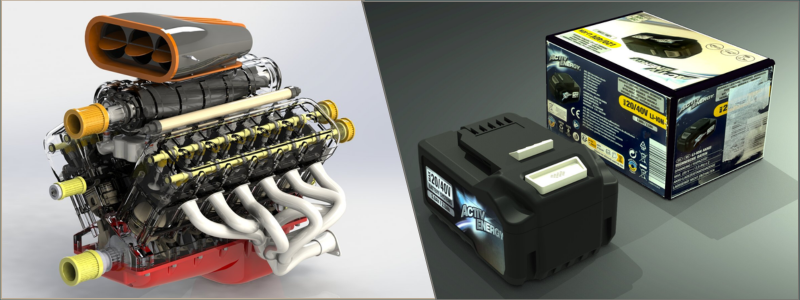
wave range cooler and electrical grill

How to ensure your prototype functions well

Ensuring your prototype functions well involves a combination of planning, testing, and iteration.

Here are some steps to help you achieve the desired level of functionality in your prototype:

  • Define clear objectives Before starting the prototyping process, define clear objectives for what you want to achieve with your prototype. Understanding the purpose of the prototype will guide decisions about its functionality.
  • Collaborate with experts Working with experienced engineering services, designers, and prototype manufacturers can help ensure your prototype meets its functional requirements. Collaborating with experts can also provide insights into potential challenges and solutions.
  • Test and iterate Testing is a critical part of the prototyping process. Conduct thorough testing to evaluate the prototype’s functionality and identify any issues. Use feedback from testing to make necessary improvements and iterate on the design until the desired functionality is achieved.
  • Consider end-user feedback Involving end-users in the testing process can provide valuable insights into how the product will perform in the real world. Gather feedback from users and incorporate it into the prototype design to enhance functionality.
  • Plan for scale Consider how the prototype will scale to full production. Ensure that the materials, processes, and design elements used in the prototype can be easily replicated in mass production. Testing for scalability during the prototyping phase can help prevent issues later in the process.

Technology’s role in prototype design engineering

Advancements in technology have significantly impacted prototype design engineering, making it easier and more cost-effective to create functional prototypes. Some of the key technologies driving innovation in prototyping include:

  • 3D printing design services: This has revolutionized prototyping by allowing designers to quickly and affordably create physical models of their designs. This technology enables rapid iteration and testing, making it easier to achieve the desired level of functionality in a prototype.
  • CAD: This software allows engineers and designers to create detailed digital models of their prototypes. These models can be used to simulate functionality, test different design options, and identify potential issues before creating a physical prototype.
  • Virtual reality (VR) and augmented reality (AR): VR and AR technologies are increasingly being used in prototyping to create immersive simulations of products. These technologies allow designers to test functionality in a virtual environment, reducing the need for physical prototypes and speeding up the development process.
  • Advanced materials: The development of new materials has expanded the possibilities for prototyping. From lightweight composites to flexible electronics, advanced materials enable the creation of prototypes that closely mimic the final product’s functionality.

Conclusion

The level of functionality required for your prototype depends on its purpose within the product development cycle. While early-stage prototypes may not need to function fully, later-stage prototypes should closely resemble the final product in terms of form and function. Balancing cost with functionality, considering end-user experience, and planning for scalability are all critical factors in ensuring your prototype meets its objectives.

As you embark on the prototyping process, remember that each prototype is a stepping stone towards the final product. By investing in well-functioning prototypes, you can identify and resolve issues early, gather valuable user feedback, and ensure that your product is ready for successful market entry.

How Cad Crowd can help

Ready to take the next step in your product development journey? At Cad Crowd, we specialize in helping companies bring their ideas to life through expert prototype design engineering.

Whether you’re in the conceptualization phase or preparing for pre-production, we will assist you in finding a team of experienced engineers and designers who can come up with functional prototypes that meet your specific needs.

Contact us today to request a quote and learn more about how we can support your product development process. Let us help you turn your vision into reality!

author avatar

MacKenzie Brown is the founder and CEO of Cad Crowd. With over 18 years of experience in launching and scaling platforms specializing in CAD services, product design, manufacturing, hardware, and software development, MacKenzie is a recognized authority in the engineering industry. Under his leadership, Cad Crowd serves esteemed clients like NASA, JPL, the U.S. Navy, and Fortune 500 companies, empowering innovators with access to high-quality design and engineering talent.

Connect with me: LinkedInXCad Crowd

How Structural Engineers Improve Custom Home Design When You Hire Architects & Design Firms


It begins with a dream. A hillside retreat overlooking the horizon. A minimalist gem that exudes space and light. Or perhaps a quaint lakeside cottage constructed with eco-friendly materials. Whatever the dream, custom home design is never merely about what is attractive. It’s about what functions—and what endures. That’s where expert structural engineers from industry leader Cad Crowd quietly emerge as the champions of the tale.

Most individuals consider the services of hiring an architect or design firm to make their perfect home a reality. That’s a wonderful start. But when the vision is taking shape, you need someone to ensure that lovely glass wall doesn’t buckle under stress, or that the stairs floating in mid-air actually float safely. That’s where the structural engineer comes in—the individual who brings artistic vision into actual, tangible reality.

Let’s see how these behind-the-scenes professionals make personalized home designs stronger, better, and often, even more gorgeous.

The quiet collaboration that changes everything

When you hire an architecture or design company, you’re entering into a creative collaboration. The architect hears what you need, researches your style, and creates a concept. Floor plans, elevations, and renderings come next, providing you with a glimpse of what’s to be. But no matter how intriguing the design, it’s still in theory until a structural engineer enters the picture.

Now here’s the magic ingredient: the greatest architectural design companies don’t merely hire engineers at the eleventh hour. They hire them ahead of time. Why? A fantastic custom home design depends upon the intimate coordination of the creative and technical minds.

Consider the architect to be a composer, and the structural engineer to be the conductor, ensuring every section of music plays together in harmony without one note being flat. The engineer does not suppress creativity—rather, they expand it.

RELATED: Commercial 3D rendering rates for buildings, services costs, and pricing for architectural firms

structurally sound modern custom home design examples

Bringing vision to viability

So what does a structural engineer do on a custom home project, exactly?

Simply put, they ensure your house stands.

They examine loads, stresses, and forces—stuff you can’t see on a floor plan. They wonder: Can that cantilevered deck really hold guests? Will this house weather high winds or earthquakes? Is the ground solid enough to bear that foundation?

And maybe most critically: Can we make this incredible design work within your budget?

Let’s get down to business with some real-world examples.

  • Making the impossible… possible (And safe)

Picture your architect showing you a mind-blowing design—huge open areas, minimalistic beams, cantilevering roofs, and floor-to-ceiling windows. You adore it. But then you ask: is it doable? Of course it is, through expert custom home design services.

A structural engineer sees the design and begins to make calculations. What is the span of those beams? Steel, engineered wood, or perhaps something more esoteric? How will these components act with time?

Their recommendations may also enhance energy performance or minimize material waste. They’re not only thinking about what holds—it’s also how it holds, how long, and how efficiently.

  • Bridging form and function

Great design isn’t merely pretty—it’s about function. That seeming defiance of gravity that’s floating up there? An engineer makes sure every tread is properly anchored and can withstand loads. That monolithic glass wall? They analyze wind loads and suggest materials that won’t buckle or crack when pressed.

Architects are visionaries, and engineers keep those visions from becoming nightmares.

But here’s where the synergy gets interesting: occasionally, engineering firms take designs even further than architects envisioned. For example, with post-tensioned concrete, they can achieve longer spans and more slender slabs—allowing the architect to go back and tweak the design with yet more streamlined lines.

It’s an exchange that’s more jazz than solo act. And the payoff is sensational.

  • Coping with site-specific issues

Each piece of land has its own characteristics. Sitting on a slope? A floodplain? In a region of wildfire risk? These are not merely aesthetic considerations—they’re engineering problems.

A structural engineer conducts soil analysis, slope stability computations, and foundation design specific to your property. They assist in making certain your personalized house isn’t simply an attractive form—it’s anchored down, integrated into its environment.

This is particularly worth it when constructing in buildings with strict building regulations or environmental restrictions. Engineers are familiar with decoding these regulations and creating novel loopholes that do not compromise the design.

RELATED: Benefits of outsourcing steel detailing services for engineering firms and CAD design companies

  • Saving you money and avoiding headaches

Here’s a myth: hiring a structural engineer will break your bank.

In fact, a good structural engineer can save you money—both during construction and many years down the road.

By optimizing the materials and structure, structural engineering services can reduce overbuilding, eliminate unnecessary redundancies, and help avoid costly errors. They spot potential problems on paper, so you’re not stuck with expensive fixes during construction.

Think of them as your custom home’s insurance policy against costly surprises.

They’ll also work with your contractor to make sure the design is functional for construction. That equals less delay, fewer change orders, and a less stressful process overall.

  • Future-proofing your home

Custom homes aren’t just constructed for today—they’re constructed for tomorrow. If you’re considering installing solar panels down the road, constructing an ADU, or adding attic space conversion, structural engineers design with flexibility in mind.

They’ll be asking: Can the roof support the extra load of solar? Can we retrofit this wall now for future expansions? Will this design support aging in place?

Top structural engineers have long-term vision, just as you do.

structural designs and 3d renders for custom simple homes

RELATED: What are costs for floor plan design blueprints, CAD designer rates, and company services pricing?

How to ensure your architect and engineer operate harmoniously

When you’re having a custom home or any large building project designed, the working relationship between your architect and structural engineer can make or break the ultimate product. While architects provide creativity and vision, engineers bring a sense of reality and safety to the table. So, how do you guarantee a smooth working relationship between your architect, structural engineer, and the balance of your design team?

It starts with hiring the right firm

First and foremost, select a structural design company that values collaboration. High-end firms realize that wonderful architecture is not merely about how beautiful it looks—it has to be structurally stable and viable to construct. A lot of established companies have long-standing working relationships with structural engineers they have faith in, or they hire consultants early in the design process. Some even have internal engineering departments, which makes communication easier and quicker to adapt during the design process.

When you interview potential companies, don’t hesitate to press them about how they manage this part of the project. Ask questions that get at their workflow and level of commitment to integration between engineering and design.

Ask the right questions early on

One of the best indicators of whether or not a company has strong architect-engineer relationships is to ask pointed questions, such as:

  • “At what point in the process do you involve a structural engineer?”
  • “Do you use a preferred engineering firm or have resident staff?”
  • “How do you approach design revisions based on feedback from engineers?”

These questions aren’t only about logistics—these questions show you how committed the firm is to structural soundness and if they see the value in using engineering as an integral part of the creative process. If the answers sound ambiguous or seem to be an afterthought for the engineer once the design is finished, that’s your warning sign. Engineering design experts will always seek to cover all bases to ensure safety and efficiency.

Review their past projects

Actions speak louder than words. Reviewing a firm’s portfolio can reveal how well they integrate design and structure. Look at their completed custom homes or commercial buildings. Do the designs feel bold, yet realistic? Are there any examples of creative solutions to engineering challenges?

Designs that blend creative design with unambiguous structural sense are a healthy indication that the architect and engineer collaborated in harmony throughout. Extra credit if the company can take you through how the team collaborated on particular recent projects.

Know the workflow

Lastly, inquire about their workflow. The most effective firms will have a straightforward process established that defines phases such as conceptual design, structural input, revisions, engineering sign-off, and permitting. An open workflow ensures everyone is on the same team and prevents expensive delays or surprises after construction has started.

You want a team that welcomes back-and-forth dialogue and understands the importance of early coordination. When architectural design professionals and engineers work as a cohesive unit rather than in silos, the result is a well-balanced design that’s both beautiful and buildable.

In short, the key to a successful project lies in communication, mutual respect, and aligned goals—so make sure your team has all three from day one.

RELATED: How 3D architectural visualization helps companies advertise unfinished projects

Structurally sound custom home designs

The emotional benefit: Peace of mind and confidence

Yes, structural engineers work with physics, math, and materials. But their actual contribution? Peace of mind.

When you understand your custom home isn’t only stunning, but safe, solid, and smartly designed, you breathe easy into the process. You savor the experience more. You know your investment is in good hands.

There’s something incredibly reassuring about knowing your open-concept living space won’t sag, your foundation won’t crack, and your roof can weather the storm. That’s the emotional ROI of structural engineering.

Final thoughts: The hidden star of your custom home

Most homeowners never encounter their structural engineer. You will not have their name over the front door or their visage in the portfolio. But do not doubt for a minute—she’s a key character in every bespoke home’s happy ending.

By bringing a superb architect or design company from Cad Crowd on board and engaging them early to introduce structural engineering to the mix, you maximize the potential of your dream home. Your design may be more assertive, your build more effortless, and your result all the more rewarding.

So when you’re ready to construct your signature home, don’t simply inquire about how it appears. Inquire: What makes it durable? What makes it endure?

That’s where the magic starts. Get a free quote today.

author avatar

MacKenzie Brown is the founder and CEO of Cad Crowd. With over 18 years of experience in launching and scaling platforms specializing in CAD services, product design, manufacturing, hardware, and software development, MacKenzie is a recognized authority in the engineering industry. Under his leadership, Cad Crowd serves esteemed clients like NASA, JPL, the U.S. Navy, and Fortune 500 companies, empowering innovators with access to high-quality design and engineering talent.

Connect with me: LinkedInXCad Crowd

Design Services Rates for Developing a Prototype of Your Firm’s Product New Concept Design


The post for today discusses design services rates for developing a prototype of your firm’s new product concept design. But why do you even need a prototype in the first place? Some need prototypes in the hopes of proving their product’s new technical features. Others may want to develop a prototype for their Kickstarter or GoFundMe campaign. And then, there are those who wish to make a prototype for testing the product and whether it has a spot in the market or not. Alas, there are many aspects to prototype design services.

However, the moment you get all the answers, you’ll notice that all of them share one thing in common. That’s none other than risk. The main purpose of a prototype is to evaluate, qualify, and reduce design risk as much as possible. This risk can take on many forms, which include manufacturing, technical, business, and user risk. As expected, a one-off prototype will cost more if the risk involved is also bigger.

Cad Crowd is the leading agency that can help you connect with experts providing prototypes for your firm. Consisting of over 94,000 freelancers, we pride ourselves on our ability to give reasonable service rates while still exceeding your highest standards. Whether you’re looking for innovative solutions, new concept design, strategic insights, or top-tier execution, Cad Crowd has the expertise and the talent to bring your vision to life.


🚀 Table of contents


Prototype development at a glance

The prototype development stage in the process of creating a product starts with a unique design idea. This idea is a representation of a descriptive state in a verbal or written form. The idea then undergoes polishing into a product concept that will include the benefits and features of the product.

The same concept then gets developed into a prototype to represent the working model, including its size. The prototype becomes the final product after a number of repetitions. Prototypes come in different types, and the initial stage is used for verifying the content’s form.

Following the validation stage, the next step is the pre-production before the development of the final version for new product concept design services. This one is almost the same as the completed product, which includes the appearance, packaging, and instructions. However, the final prototype can be quite costly, ranging between $3,000 and $10,000.

RELATED: 6 industries revolutionized by 3D rendering freelancers & design services companies

examples of prototypes of a high quality golf putter and small yacht propeller

How much should you expect to spend for your prototype, then?

To determine how much it would cost you to develop a prototype for the new product concept design of your firm, it’s imperative that you know exactly where you are already in your journey on product development. You can do this by following the product development process.

Below are the four stages involved in prototyping. Take a moment to review the different types of prototypes and the risk identification at every stage.

1st stage: concept design starts at $1,000

This particular stage in prototype development services focuses on user and chooser prototypes for product research. These prototypes simulate user experience with adequate fidelity to give third parties a chance to comment on the new product and its value.

Some of the risks identified in this stage include the following:

  • Determine the device’s constraints in terms of physical size.
  • Methods of interaction and the handiest solution.
  • Risk of device rejection or user confusion.

The most common types of prototypes used for this stage include:

  • Foam models
  • User interface mock-ups
  • Virtual 3D renderings and wireframes
  • Wizard of Oz functionality or beauty models

The cost and design time of prototypes may also vary. The overall design time may be a week or less, and the design costs for the preliminary mock-ups and sketching can start at $1,000. Materials are mainly off-the-shelf, including 3D custom prototype parts, tape, canned software, glue, module electronics, and cardboard paper.

RELATED: How cutting-edge medical prototyping design services help your firm design new products

2nd stage: design engineering starts at $5,000

Prototype design engineering services focus on the bench model engineering prototypes that quantify the choices for making important decisions regarding the design.

Some of the identified risks at this point include:

  • Functionality of the mechanism
  • Test specific parts of the design
  • Risks of structural, stress, fluid, and thermal engineering
  • Management of wires and sub-components
  • Limitations of wireless protocol

This stage uses two main types of prototypes:

  • Proof of concept or hand-built models
  • Product’s scale models

The costs involved are medium and depend on the validation metrics for user testing and the required customized sub-systems. The starting estimate for the bench model prototyping testing and the costs of materials is $5,000.

3rd stage: prototype and test costing $10,000 and higher

The third stage outputs a fully functional production alpha prototype. However, it also involves several identified risks, such as:

  • Risk for the business and the cost of the components and parts in volume
  • Risk for the business in terms of high volume and yield outputs
  • Wireless connectivity and custom electronics

As mentioned earlier, alpha prototypes that are fully functional are used at this point. In terms of costs, the stage has a medium price range, which depends on the output volume and product complexity. The average time for development is at least four to six weeks. The costs of the alpha prototype material range from several hundred to thousands. It depends on the required fidelity, electronics, and custom parts.

4th stage: manufacturing set-up and ready for production at $30,000

The last stage is the production of parts in a prototype that is ready for manufacturing design services. It is basically a fully manufactured early-stage unit. There are two identified risks involved here. First is the business risk related to the lead time of the parts, assembly, and components. Second is the risk in the manufacturing process, which includes wall thickness of the parts, color matching, and surface finish, just to name a few.

Early small runs of pilot pre-production units are used in this stage. The costs involved are medium, which depend on the volume of output and the complexity of the product. The development time can run for at least three months.

The costs often start at $30,000 for the basic products, and it can go higher depending on the development time, volume, and manufacturing process involved.

Challenges involved in estimating the costs of prototype development

The latest research has revealed three significant hindrances involved in estimating the costs of developing a prototype for a new product. These challenges include the following:

  • Fluctuations in the costs of raw materials

Even though it may have no effect on some products, you might want to be more strategic here during the conceptualization and design stage. The main idea here is to opt for materials whose market prices are less volatile and then invest in the said items.

  • Lack of complete perspective

The shortage of a complete perspective has something to do with taking a look at the bigger picture during the project’s early stage and then rolling out all the costs without even understanding the entire process, including the costs for prototyping designers. It results in the evaluation of the costs throughout every stage of the prototype development and placing in the data to affect the earlier estimations.

  • Spending time to understand the cost

Most of the time, decisions are just held up rather than being taken at the soonest time possible. A designer, for example, might be interested in knowing if you will be using aluminum or magnesium to finalize the model. However, having loads of calculations for doing that might result in the project being held up. But things will be so much faster if you plan and try to understand the entire variable cost as early as you can.

Being familiar with these challenges and taking advantage of them in determining the estimated costs of prototype development can serve as your guide in choosing the appropriate material you should use that best suits your project.

What about the fixed costs, though? For industrial design jobs, this will come with a few fixed costs as compared to someone willing enough to pin their idea. A fixed cost is literally a payment that you pay that won’t change at all, no matter the external factors involved. It doesn’t really matter at which stage you are in the production process because the cost will still remain the same.

RELATED: How much does NPD cost? Rates & pricing for services at top design companies

3D renderings of product prototypes for a drone and car carburetor

Factors that affect prototyping costs

Several factors affect the cost of prototyping. Each factor has a different effect on the total price and must be taken into consideration.

The chosen materials determine the cost of the prototype development. The cost of raw materials is not dependent on the specific tools used. If the material is of higher quality, it will also cost more, as expected.

The complexity of the design also has a direct impact on the costs of the prototype. If the prototype has a more straightforward design, for example, its cost will be lower than that of one that is more complicated. If you need rapid prototype services, it will add to the costs, especially for more complex designs. The idea here is that a simple geometry will be easier to produce than its complex counterpart.

The cost of labor may also differ depending on the workers’ geographical location. The labor rates also differ depending on the country. There might also be hidden charges that you’re unaware of during the prototyping.

When complex parts are being produced, it’s a must to hire professional and highly skilled technicians who can add more value to the prototype and the product afterward. The level of skill and experience has a significant influence on the cost of the prototype development.

The prototype’s level of tolerance is another important factor. What kind of accuracy do you like the product or prototype to have?

RELATED: Using 3D visualization services to communicate design intent to clients and firms

Conclusion

Turning your concept design into a prototype might surprise your fixed expenses, especially if you’re new to the industry. However, it can still be avoided by doing thorough research about it. A simple awareness regarding the prototype process and stages your design needs to undergo is important to carefully plan your budget. Also, knowing what your final product is like in terms of choice of material and detailed functionality and design will speed up the process of prototyping and, therefore, will lessen the cost.

How Cad Crowd can help

Cad Crowd will help ensure that the whole process of prototyping will be smooth and seamless. We will connect you with an experienced prototyping team that can bring your product to life. Schedule a consultation with us to talk about your project and embark on your journey to successfully developing your prototype and launching your new product. Get a quote today!

author avatar

MacKenzie Brown is the founder and CEO of Cad Crowd. With over 18 years of experience in launching and scaling platforms specializing in CAD services, product design, manufacturing, hardware, and software development, MacKenzie is a recognized authority in the engineering industry. Under his leadership, Cad Crowd serves esteemed clients like NASA, JPL, the U.S. Navy, and Fortune 500 companies, empowering innovators with access to high-quality design and engineering talent.

Connect with me: LinkedInXCad Crowd

How User-Centered Design Improves Product Design & New Prototypes of Your Company


Due to the growing design market, the success of any company and product often relies on its design and the user experience of the consumers. A critical approach in product design emerged known as user-centered design (UCD). This approach for product design companies and prototyping emphasizes the needs, wants, and limitations of the consumers, or what we call here the users, at every stage of the design process.

Cad Crowd is the leading agency that can help you connect with experts providing product design and prototyping services for your company. Consisting of over 94,000 freelancers, we pride ourselves on our ability to give reasonable service rates while still exceeding your highest standards. Whether you’re looking for innovative solutions, new concept design, strategic insights, or top-tier execution, CAD Crowd has the expertise and the talent to bring your vision to life.

This article will enlighten you on the significance of user experience in product design and the necessary steps needed to embed user-centered design (UCD) principles into your product.


🚀 Table of contents


What is user-centered design (UCD)?

User-centered design (UCD) is a design process that focuses on the needs, wants, feedback, and behaviors of users throughout the product development process. Unlike traditional design processes that prioritize the technical aspects, user-centered design professionals aim to highlight the involvement of the user to produce a successful product that satisfies its standards in terms of functionality and accessibility.

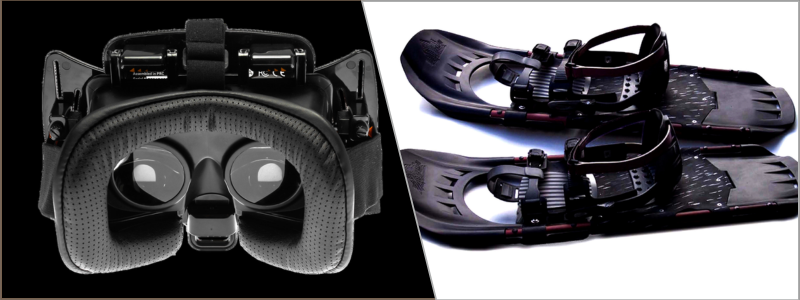
user centric product designs of a VR headset and snow shoes

RELATED: 6 industries revolutionized by 3D rendering freelancers & design services companies

Why is user-centered design important in product development?

User-centered design indeed solves the problem of each user at every product development service stage, which then improves the integrity of the business. Here are some of the reasons why you should include user-centered design for your product design.

Enhances usability

A product that is designed to cater to the needs of the users can be classified as a well-designed product due to the minimal effort required to operate it. This then leads to higher user satisfaction and lower functional errors. As stated earlier, UCD prioritizes satisfying the user’s needs and wants, which reflects its usability. When products are intuitive and easy to use, end-users won’t experience confusion or frustration. As a result, they’ll turn to the help desk less because it will be simpler to use the product or service.

Increases user engagement

Since UCD focuses on the users’ wants, consumer product services make your products more likely to engage users effectively. If a positive experience were developed in the consumers, brand loyalty would then follow, which encourages users to explore additional features or new products within the same brand. Increased engagement also translates to the feeling of being valued by the users because a brand or company is taking their opinions seriously and wants to make their user experience better.

Fosters innovation

User feedback often leads to unexpected insights that can drive innovation. By understanding users’ pain points and desires, designers can create solutions that may not have been initially considered, resulting in unique and groundbreaking products. User research and feedback provide valuable data to inform design choices. Evidently, it ensures products are grounded in user reality, not assumptions.

Improves market fit

By incorporating user-centered design principles, companies can create products that align with customer expectations and satisfaction, which leads to a better fit in the market and a possibility to start a trend among products.

Improving your credibility

When you adopt a user-centered design, you gain credibility among your end consumers. You demonstrate that you care and understand their requirements. This allows them to feel that they’re working with a company that prioritizes them and will properly understand their user experience needs, resulting in a superior product or service in the end. By prioritizing user needs and incorporating their feedback throughout the development process, UCD enables developers to produce products that are not only successful but also highly desired by their target audience.

Reducing your resource burden

The design process is resource-intensive. 3D design experts devote their time and effort to making the best possible product for the client. Yet, it’s not unheard of for a designer to work around the clock on a project only to be told that he or she has missed the mark. User-centered design helps you avoid that problem.

It might seem as though user-centered design would require more resources, but that isn’t the case. Because designers request feedback repeatedly, they’ll get a better sense of what the client actually wants sooner. They won’t waste their time creating a finished product that’s ultimately rejected. As Vause pointed out, investing time and effort into highly-rendered designs can lead to squandered resources.

RELATED: Design services rates for developing a prototype of your firm’s product new concept design

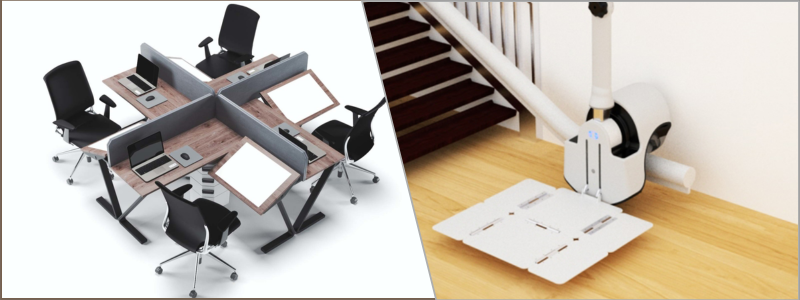
campus multipurpose table and stair elevator and platform

Reducing project risks

In every process, there are always partnered risks. However, the user-centered design reduces the risks and errors because the features directly match the user’s satisfaction. Unlike with the traditional design process, where the users are not prioritized, they don’t have an opportunity to provide feedback that will satisfy them eventually, which could lead to dissatisfaction with the designer’s work.

Increasing conversion rates and sales

Another advantage of user-centered design is higher conversion rates and sales. This applies to both design organizations and end users.

Assume you redesign your company’s flagship application after considering end-user feedback. It’s now easier to use, so you’re more likely to see people progressing through their sales journey. In fact, you’ll probably experience an increase in sales because you’re making it easy for them to buy from you. One of the most convincing arguments for embracing user-centered design is that these initiatives have a greater ROI. This is true for both designers and end users, and prototype design services would usually put an ample focus on user-centric design.

Increasing efficiency

This is a benefit that is available to end consumers. If your company has applied user-centered design inside, you will realize efficiency improvements as well. End-users benefit from user-centered design since it makes jobs easier and faster to accomplish. They don’t waste time or energy figuring out how to do anything; it’s intuitive.

How can businesses implement user-centered design in their product development process?

Integrating user-centered design into your product development process can dramatically enhance product success. Listed below is the process to effectively implement user-centered design in your product development:

  1. Create a user-centric culture – Encourage cross-functional collaboration among product development experts, developers, and marketing teams, as well as a company-wide understanding of UCD principles and their value.
  2. Conduct user research – Surveys, interviews, and user observation can all help you better understand your target audience. Determine user needs, pain points, and expectations. Additionally, create user personas or fictional persons to help drive design decisions.
  3. Embrace iterative design – In pre-design planning, you can create a low-fidelity prototype and conduct usability testing to obtain user feedback. Furthermore, modifying and customizing the design based on their feedback is possible. This ensures that the product evolves in response to consumer needs.
  4. Establish feedback mechanisms – Integrate user feedback channels throughout the development process. Encourage user testing, surveys, and post-launch feedback to gather continuous insights.
  5. Measure and analyze – Monitor critical user experience data such as job completion and error rate. Carefully examine user input to discover areas for improvement and prioritize adjustments.
  6. Invest in training – Provide your team with the skills and resources needed to perform user research, analyze data, and effectively execute UCD concepts.

RELATED: How much does NPD cost? Rates & pricing for services at top design companies

Conclusion

User-centered design has transformed into an essential design process in modern product development. By allowing users to have a unique experience in the design and prototype design engineering service process, companies and brands create solutions that genuinely address market needs rather than guessing. The business implications are substantial, including heightened customer satisfaction, reduced development costs, and stronger competitive positioning.

As consumer options continue to multiply, a company’s legacy directly depends on how effectively its services align with the changing market demands. Even well-resourced businesses can fall victim to institutional biases that cover genuine customer requirements. By systematically incorporating user-centered design and iteratively refining designs, companies can overcome these challenges and develop products that resonate with their target audience.

How Cad Crowd can help?

Product design is a rewarding process that calls for technical expertise and strategic vision. With Cad Crowd’s comprehensive product design solutions, companies can take every step confidently with the use of user-centered design. Be it a cutting-edge consumer device or an industrial part, Cad Crowd is a trusted partner in bringing your vision to life.

Feel free to contact us today to order a quote for our product design services and beyond! Request a free quote today.

author avatar

MacKenzie Brown is the founder and CEO of Cad Crowd. With over 18 years of experience in launching and scaling platforms specializing in CAD services, product design, manufacturing, hardware, and software development, MacKenzie is a recognized authority in the engineering industry. Under his leadership, Cad Crowd serves esteemed clients like NASA, JPL, the U.S. Navy, and Fortune 500 companies, empowering innovators with access to high-quality design and engineering talent.

Connect with me: LinkedInXCad Crowd

How Assembly Drawing Services Can Help Your Company or Firm Thrive


Assembly drawings are visual tools that are used to present an entire system or machine in order to identify all of the parts and components precisely. Its primary purpose is to specify items, label these parts for a correct and seamless assembly, and indicate the standard requirements.

These drawings can also give a view of the overall Bill of Materials or BOM, weight, mass, sections, orthogonal plans, elevations, and more. Assembly drawing services serve as a medium or middle ground where conversations and streams of ideas between two technical people can take place. It is where exchanges of various ideas of different multitudes can take place.

Assembly drawings are designed for products, units, devices, and types of machinery. These services assist in assembling the intricate parts of a mechanism, just like furniture guides for building up those new pieces for your room. However, some requirements should be met, such as manufacturing, operational, and maintenance requirements.


🚀 Table of contents


Why companies and firms need assembly drawing services to succeed

Your company or firm can look forward to more success if you take advantage of professional assembly drawing services.

More apparent plans for complex items

Just imagine what it would be like to try to figure out how an excellent car or super complex machine should be put together without guides to help out. It would be like demanding a final product, expecting all the features and functionalities without knowing how each part works, even more so all the parts involved.

An assembly drawing can give you and your company this much-needed visual, both a bird’s eye view and a zoomed look into the smallest and most intricate parts of your mechanisms. It can break down the design into different simple parts to show how every piece fits together. You can think of it as a roadmap, with all the crucial checkpoints, that helps solve a puzzle and guides you with the correct steps to finish the journey with a perfectly assembled project. Assembly drawings let you know where every piece of the puzzle should go to form the whole picture.

Avoid mistakes and save money

An assembly drawing is also similar to a safety net that catches mistakes and errors even before they pop up. CAD design experts can avoid costly mistakes and mix-ups since the assembly drawing gives precise details about measurements, sizes, and how everything must be put together. Once again, this helps ensure that the pieces all fit right before the actual building begins to ensure that nothing will go wrong or amiss.

RELATED: Benefits of outsourcing steel detailing services for engineering firms and CAD design companies

Better communication with suppliers

Assembly drawings are like the universal language of designers who work with others who produce the parts. These drawings help explain the requirements and how something should be made. Suppliers can refer to the assembly drawings to ensure the perfect fit of their pieces, whether it is a custom part or a special one. It simplifies the process of getting parts, not to mention that it also helps forge excellent and robust relationships.

assembly drawing examples cad design

Effective blueprint for teamwork

Assembly drawing is just like that particular dedicated language understood by all members of the production and design teams. These drawings show a product’s whole picture to help all the parties involved in its creation work hand in hand. This is also similar to a team of musicians that follows a meticulously written musical sheet. An assembly drawing helps play their parts to come up with something unique.

How to create assembly drawings

A technical person prepares an assembly drawing that is clear without any room for misinterpretation. Accurate, correct, and precise drawings make it possible to produce automobiles and machines on a mass scale that require numerous assemblies and sub-assemblies.

The person who drafts assembly drawings must have extensive technical knowledge of the traditional drafting practice and principles alike. The absence of this may result in misinterpretation and even litigation.

Aside from this, the person who interprets assembly drawings should also have a proficient understanding of the graphical language they use. If not, it would be challenging to come up with the machine in the proposed manner for engineering firms.

If no assembly drawings were made, the technical ideas would then have to be conveyed either by writing or speech rather than graphical language. It makes it harder to understand the shop floor level, not to mention that it will also be labor-consuming and prone to errors.

The effective use and application of assembly drawings is the very reason why many objects like locomotives, automobiles, aircraft, and others have been crafted and produced.

RELATED: What are costs for floor plan design blueprints, CAD designer rates and company services pricing?

Different types of assembly drawings

Assembly drawings have one primary purpose. That is to identify the different components and parts and show their specific working relationship with each other. The drawings contain a detailed and comprehensive drawing of all the elements, the subassembly, and how the final assembly should be made.

The following are the main categories of assembly drawings, some of which have their sub-categories.

General assembly drawings

Assembly drawings for catalogs Assembly drawings for catalogs are particular types of assembly drawings, which, as their name implies, are prepared for company catalogs. This kind of drawing depicts only the relevant dimensions and details that a potential buyer will find interesting.
Assembly drawings for instruction manuals This type of general assembly drawing is used if a machine that is already assembled should be knocked down to check the different parts. It is shipped away to be assembled again and installed somewhere else. Every component in these drawings is numbered to help in the process of reassembly. Assembly modeling services can be helpful in the process.
Design assembly drawings Design drawings are drawings made during the design phase. These represent the different angles of the machine that will be assembled. The drawings or layouts help visualize a machine’s performance. The clearances and shapes of the other parts that make up the machine are visible.
Detailed assembly drawings Detailed assembly drawings show the assembly process of every machine component and offer specifics such as the dimensions, the materials used, the joining methods, and more. Ideally, these drawings are used to assemble smaller machines made up of smaller parts. Aside from regular assembly drawings, these drawings can also show enlarged views of certain parts, as well as how everything fits together which is especially useful for manufacturing design companiwes.

In assemblies like lathes and automobiles made up of both individual parts and pre-assembled components, the distinct groups of parts can be assembled and typically tested as a unit before being put into the final arrangement.

The pre-assembled units are called sub-assemblies. Sub-assembly drawings are assembly drawings of a group of related components that make up a part of a more complex machine.

Exploded assembly drawings Exploded assembly drawings are technical drawings of objects that show their different parts. 3D exploded diagrams produced by assembly drawing services depict the components slightly suspended or separated in the surrounding space in an assembly sequence.

These drawings give an idea of how the finished product is going to fit together. An exploded assembly drawing can be easily understood even by a layperson, which makes it handy to be used in catalogs for parts, instruction materials, or assembly manuals.

Installation drawings Installation drawings are drawings made for the assembly or erection of a product. These drawings offer details about the position of a component concerning the adjacent or supporting components.

They also provide information regarding general configuration, hardware description, and dimensional data. These drawings offer valuable data for assembling a machine because they show all the components of a machine in their proper working position.

Machine shop drawings A machine shop drawing is intended for the end-user or the person in charge of the machine’s operation. Since the machinist isn’t concerned with the information and dimensions relevant to the earlier stages, machine shop drawing services only provide information regarding the machine’s function.

Based on this similar principle, it’s also essential to create sheet metal drawings, pattern shop drawings, forge shop drawings, and the like.

Schematic assembly drawings Schematics are defined as pictures that simply depict something with the help of symbols. Schematic assembly drawings represent the parts of a device or process with the help of standardized lines and symbols.

The simplified illustration of a system or a machine replaces every element through their respective traditional representations. Schematic assembly drawings are helpful because it is not easy to understand the different operating principles of complex machinery just from the assembly drawings alone. The schematic representation of a unit allows easy understanding of the operating principle.

assembly drawing of brain electrode and roll up motor

RELATED: How 3D real estate rendering services boosts traffic and visibility for realtors

Wrapping it up

Assembly drawing services are essential for companies and firms as they show how different components and parts fit together visually. It will be easier and more effective for professionals to explain product assemblies and their complexities to assembly workers, manufacturers, and engineers with the use of an assembly file and drawing sheet. This provides a smooth and seamless transfer starting from the design stage up to the manufacturing stage.

The different parties involved in the assembly process will get a more precise grasp of the process with a carefully crafted assembly drawing that includes annotations and dimensions indicated in the design sheet. This inclusion of tolerances, sizes, and other essential details not only cuts down the risks of errors taking place during the process of assembly but also enhances the overall success and effectiveness of a project.

How Cad Crowd can help

It takes expertise and skills to create assembly drawings. Cad Crowd is an industry-leading platform that can assist you in finding the best assembly drawing services to eliminate errors and ensure a successful production. We

author avatar

MacKenzie Brown is the founder and CEO of Cad Crowd. With over 18 years of experience in launching and scaling platforms specializing in CAD services, product design, manufacturing, hardware, and software development, MacKenzie is a recognized authority in the engineering industry. Under his leadership, Cad Crowd serves esteemed clients like NASA, JPL, the U.S. Navy, and Fortune 500 companies, empowering innovators with access to high-quality design and engineering talent.

Connect with me: LinkedInXCad Crowd

How to Integrate CAD Seamlessly into Your Firm’s Workflow of Engineering, Design & Services


In the current era of engineering, design, and professional services, Computer-Aided Design (CAD) is a foundation technology. Its real value, however, only materializes when CAD is properly integrated into your business processes. CAD integration not merely brings productivity, but also inspires innovation and reduces operating constraints.

Cad Crowd is the leading agency that can connect you with over 94,000 accredited experts from industry companies and organizations who offer expert CAD services. The platform has a collection of enormous talents whose skills can make the inclusion of CAD in any workflow method without issues.

CAD workflow automation transforms design and engineering companies. With improved productivity, reduced errors, guaranteed seamless integration, and extremely customizable, flexible solutions, automation enables businesses to provide their project goals in an improved manner.

As technology continues to develop, CAD workflow automation will increasingly become vital to businesses that must remain competitive in the constantly changing landscape of design and engineering business.

Below is a step-by-step plan for achieving glitch-free CAD integration in your organizational workflow.


🚀 Table of contents


Benefits of CAD workflow automation

CAD workflow automation is the key as it provides productivity and accuracy, which is important in today’s fast-paced engineering and design world. CAD workflow automation saves time and simplifies workflows. It eliminates repetitive steps, combines significant tools, and removes human interference, changing how work is achieved.

Enhancing productivity and efficiency

One of the main benefits of CAD workflow automation is the revolutionary boost in productivity. Repetitive and time-consuming tasks such as drawing generation, parameter updates, and data input can consume precious resources and time. Automation takes engineers and designers out of such mundane tasks so that they can spend more time on innovative and challenging parts of their work. This realignment not only accelerates project timelines but also improves thought processes.

In addition, automation reduces the chances of human error. Manually performed processes are prone to error, especially while dealing with huge amounts of data or intricate designs. Automated processes guarantee consistency and accuracy, which translate into quality output and the elimination of the need for copious revisions for your engineering firm.

Seamless integration and data synchronization

Another advantage of CAD workflow automation is the seamless integration of multiple tools and applications. Modern design projects will necessarily involve a number of platforms, including CAD applications, project management software, and databases. ApiX-Drive type automation solutions enable the seamless integration of such platforms with one another, facilitating efficient data transfer and synchronization.

This unification calls for the avoidance of manual input of information and hence lowers opportunities for inconsistency in ensuring all team members are updated on information. Accordingly, teamwork is enhanced to a level whereby teams experience enhanced coordination by working together in order to implement project objectives to a point whereby delays caused by conflicting data are eradicated.

RELATED: How your company can use pre-production prototyping to save money on product development

Flexibility and customization

CAD workflow automation is not a solution for all. It’s a scalable and adaptable solution that allows organizations to tailor automation processes to meet specific project requirements. Automated workflows can be modified to manage special tasks, respond to changes in projects, and add new tools as needed.

This degree of personalization allows automation solutions to naturally integrate into the workflow of an organization, without compromising the individual needs of individual projects. Automated workflows then scale as projects get more complicated, allowing ongoing improvement and operational agility for engineering and manufacturing design firms.

CAD design examples

CAD workflow automation solution types

CAD workflow automation is made up of various types of solutions that automate multiple elements of the design process:

  • Script-based automation: This automated script has much fewer human interventions.
  • Macro-based automation: Macros capture and adhere to a set of instructions, bringing efficiency to repetitiveness operations in addition to consistency of process execution tasks.
  • API integrations: APIs are used to connect CAD software with other solutions and systems and enable easy sharing of information along with robust process automation. Integration speeds up collaboration as well as information accuracy.
  • Custom plugins: Certain plugins or add-ons bring some features to CAD software, meeting specific workflow requirements and productivity in general.
  • Cloud-based automation: Central hosting of CAD workflows in the cloud offers scalability, real-time collaboration, and enhanced data security. This is particularly beneficial for distributed teams and large projects.

RELATED: Top 32 sites for freelance PCB designer jobs & remote electronics engineer work projects

Comprehensive guide to effective CAD integration

Understanding your current workflow

Before embarking on CAD integration, one should understand his/her current process well. Mapping the current process aids in locating where CAD design services will be relevant. Getting this first step done guarantees that CAD tools are being applied in areas where they will be more efficient and effective.

  • Current processes audit: Start with an overview of the existing work. Document all the steps from the idea through the delivery of the final product. Identify bottlenecks, waits, and duplicative activities that can be reduced through automation or by cutting unnecessary process steps. The audit will show inefficiencies that CAD can rectify.
  • Stakeholder feedback: Engage key stakeholders such as designers, engineers, and project managers. Their opinions are invaluable in understanding some pain points and requirements. Conduct workshops, surveys, or one-on-one interviews to collect detailed feedback. This combined effort ensures that the CAD system addresses real issues your team faces.

Choosing the right CAD software

The right CAD software must be selected in order to integrate well. Not all CAD tools are created equal, and the best one will depend on your own business needs, industry needs, and plans for future growth. For example, you may want to focus on looking for Blender design professionals instead of other software.

  • Compatibility: Ensure the CAD software is compatible with your existing technology stack. This includes Product Lifecycle Management (PLM) software, Enterprise Resource Planning (ERP) software, and project management software. Compatibility reduces data silos and increases workflow continuity.
  • Scalability: Choose software that will grow with your business. With greater project complexity comes greater demands on your CAD system to perform well without diminished performance.
  • Customization: Choose software that is customizable. Having the ability to customize functions, create custom templates, and automate some operations can significantly enhance efficiency and user satisfaction.

Creating a centralized data management system

Successful CAD integration is heavily dependent on successful data management. A centralized data system ensures consistent, accessible, and secure design data in the organization.

  • Version control: Implement version control procedures to manage design changes efficiently. This prevents data loss, reduces errors, and maintains team members with the current versions at all times.
  • Cloud-based solutions: Employ cloud-based data management software. They enable remote collaboration, real-time sharing, and instant access to the design files anywhere in the world, enhancing team productivity.
  • Controlled access: Data security is of utmost importance. Offer controlled access with role-based authorization to protect sensitive design data from unauthorized access or exposure.

RELATED: How to create a marketable product design for your new invention idea with design agencies

Automating repetitive tasks

The greatest benefit of CAD integration is the automation of repetitive tasks, such as design for manufacturability services. Not only does this reduce human error, but it also enables precious time to be freed up for more strategic and creative endeavors.

  • Script-based automation: Use the scripting languages natively supported by your CAD tool to automate duplicate design work. This might be creating standard parts, duplicate annotations, or batch-processing files.
  • Workflow automation tools: Use CAD to interface with workflow automation tools that take action automatically depending on pre-programmed conditions. A good example would be automatically having files verified when a draft is finished.

CAD integration with other business systems

CAD integration with multiple business systems on a single integrated platform enhances data communication and organizational productivity among departments.

  • API connectivity: Leverage Application Programming Interfaces (APIs) to enable live data transfer between CAD and applications like ERP, CRM, and PLM. The integration enables design alteration in all the involved platforms in real time.
  • BIM integration: For architecture and construction firms, CAD integration with Building Information Modeling (BIM) services improves coordination on the project, visualizes better, and reduces design clashes.
CAD design of water tank and radial cylinder

Enhancing collaboration across teams

  • Cloud collaboration platforms: Autodesk BIM 360, SolidWorks PDM, or Onshape are software platforms that allow real-time collaboration where multiple team members can work on one design simultaneously, regardless of their location.
  • Integrated communication channels: Bridge CAD systems with communication tools like Slack, Microsoft Teams, or Asana. This allows the simplification of project conversation, inbox management, and making important updates easily accessible.

Training and change management

Changing the management and training are required to introduce new CAD procedures or systems to ensure smooth adoption.

  • Recurring training programs: Organize recurring training sessions to keep the teams updated with the latest features, best practices, and new features. This maximizes expertise and return on investment in CAD tools. For example, expert electrical engineers may have to use niche software to develop more sensitive projects.
  • Change champions: Determine which of the company’s key staff members are qualified and capable enough to be hired as change champions. They are champions of new processes, that will assist their co-workers through change over, and help deal with the resistance to it.

Maximizing CAD Customization

Customization of CAD software for specific individual needs of work has the potential to greatly increase effectiveness as well as employee satisfaction.

  • User-controlled features: Allow users to customize toolbars, templates, shortcuts, and interface layouts according to their needs. Customization saves time navigating menus and increases productivity.
  • Custom scripts and plugins: Develop custom scripts and plugins in order to perform complicated tasks automatically, interact with other third-party tools, or add new capabilities to the core CAD software. This level of customizability allows your software to adapt to your exact business needs.

RELATED: Validating new product design ideas: 5 questions every CAD and 3D modeling firm should ask

Continuing monitoring and enhancements

CAD integration is an iterative, not a one-off process. Constantly review your CAD systems’ and workflows’ performance to ensure that they adapt to evolving business needs.

  • Key performance indicators (KPIs): Set up KPIs to ensure the success of CAD integration. Cycle time of a design, rates of errors, frequency of revision, and end-user satisfaction are good system performance metrics.
  • Feedback loops: Have ongoing feedback systems from end-users, especially important for consumer product companies. This can be done by conducting surveys from time to time, using suggestion boxes, or conducting feedback sessions. Utilize the feedback to implement incremental process, tool, and training scheme improvements.

CAD for green practices

Sustainability has become very significant in all kinds of design and the way of the day in engineering and design. CAD software can be a powerful ally in environmentally friendly practices and reducing environmental footprint.

  • Material optimization: Optimize the use of materials using CAD simulation. Advanced modeling processes will dictate where the material is cut without losing structure, thereby saving funds and minimizing waste.
  • Energy efficiency: Plan the product for energy efficiency. With CAD, it is possible to perform an in-depth analysis of thermal, fluid, and structure, which leads to creating products that consume less energy when produced and used.
  • Lifecycle analysis: Incorporate lifecycle analysis in the design process by using CAD software. Lifecycle analysis weighs the environmental expense of a product, from raw material harvesting to end-of-life disposal, and is used to make more sustainable design decisions.

Bringing it all together

Seamless CAD integration transforms engineering, design, and services processes into smarter, more collaborative, and more innovative workflows. By making a sound selection of the right tools, eliminating unnecessary tasks, enabling more cross-departmental collaboration, and adopting the art of continuous improvement, your business can take CAD to its full potential.

Cad Crowd is here to help

Don’t hesitate to take this integration as a strategic step towards your business’s future success. Cad Crowd is an industry leader that you can trust to help you take those steps. Reach out to Cad Crowd today to find out more about our CAD services and more. Request a quote today.

author avatar

MacKenzie Brown is the founder and CEO of Cad Crowd. With over 18 years of experience in launching and scaling platforms specializing in CAD services, product design, manufacturing, hardware, and software development, MacKenzie is a recognized authority in the engineering industry. Under his leadership, Cad Crowd serves esteemed clients like NASA, JPL, the U.S. Navy, and Fortune 500 companies, empowering innovators with access to high-quality design and engineering talent.

Connect with me: LinkedInXCad Crowd

From Concept to Car: How 3D Renderings Are Shaping the Automotive Industry for Freelancers and Companies


Nothing does it better than the auto industry. A simple pencil sketch transforms into a ready and rolling finished product that offers quite a ride. Traditional processes, dozens of sketches made with clay models, literally endless design iterations, and 3D technology forever changed the landscape that it is today in this current digital marketplace. There are 3D designers, engineers, and even marketing teams who have produced their ideas at high speeds in the blink of an eye as they bridged their imagination and reality.

For both freelancers and companies, 3D rendering now opens up this new frontier of possibilities as it streamlines the whole design process, making the process speedier, cost-effective, and, above everything else, spectacularly immersive. Thus, what is the role of 3D renderings within the modern automotive industry? Why should freelance designers and firms care? Let us follow this concept-to-car journey where the art of rendering meets the power of engineering.

3D renderings in the car industry

3D rendering in the automotive industry is revolutionary. It helps designers and engineering design professionals visualize and enhance the conceptual vehicle in a very realistic virtual space. Through 3D rendering, an automobile company can build accurate models of the interior and exterior, as well as individual parts, to analyze aesthetics, ergonomics, and functionality even before production begins.

RELATED: CAD Automotive Design – When Driving Becomes Personal

This technology accelerates design iterations, reduces prototyping costs, and helps in identifying design flaws early, thus enhancing overall product quality. Moreover, 3D renderings are of extreme importance in marketing as they provide lifelike images of the models that will soon be released, can really capture the customers’ imagination, and provide a preview of new features in an interesting way.

The power of visualization

Concept cars were once relegated to sketch or low-fidelity prototypes for years, preventing development and making feedback a long, arduous process. 3D rendering has been a game-changer for designers who can now see cars in an extraordinary level of detail, from the subtle curve of a fender to the sparkle of a headlamp; everything can be rendered digitally to make even the wildest ideas tangible. These hyper-realistic images also give companies a chance to analyze each element of their design even before the model begins to be handcrafted into reality.

This is very important to people who want to work freelance, especially breaking through into the automotive market. This offers a potential gateway for accessing high-profile projects. For instance, you are displaying the finished car, but you are actually only in the conceptual phase. Manufacturing companies will not have to wait to build prototypes; they will take clients, investors, and even consumers based on your 3D rendering. Thus, in this industry, as time equals money, you can be very flexible.

RELATED: Automotive Design & Engineering Services, Costs, Rates Pricing for Companies

Functional prototyping in 3D

The most exciting application of 3D rendering is that it goes beyond the aesthetic layer into functional design. Let’s face it—cars aren’t just rolling sculptures; they’re complex machines with intricate engineering beneath the surface. With advanced CAD software and simulation tools, designers can now create models that look good but also incorporate accurate physics, aerodynamics, and structural integrity.

automotive engineering design services

This is where the freelancer who has experience with CAD can carve out a unique niche. Merging design aesthetics with engineering precision, the freelancer can create functional prototypes that allow companies to test various aspects of their designs in a virtual environment. These 3D models can be stress-tested under different conditions—how would a particular body shape handle in high winds? What about the heat dissipation for a particular battery layout? 3D renderings are no longer only about aesthetics; rather, they have become the cornerstone of functional validation.

Time and cost savings

Perhaps one of the strongest selling points to companies in 3D product rendering services lies in saving costs. In the old-fashioned way, physical prototypes require time and expense to produce and will often involve multiple attempts at getting something right. The smallest of tweaks required, in earlier times, was going back to the drawing board quite literally. In a digital world, though, companies can tweak and modify with the click of a mouse. Ideas are tested, refined, and ready in real time.

RELATED: Revolutionizing the Automotive Industry Using 3D Printed Cars and Innovative Services 

This efficiency is not only good for large corporations but also for smaller studios and freelancers. For independent designers, 3D rendering provides a means of competition with larger studios in model creation that can be refined iteratively without the cost of overhead. Efficiency for clients also means that changes can be seen within hours rather than weeks. Those who learn to control fast, precise changes to renderings will be much in demand among companies that aim to shorten the design period.

Aiding collaboration across teams and borders

In today’s globalized world, projects in the automotive industry stretch across continents. Design can be done in California, engineering can be done in Germany, and testing can be done in Japan. And 3D renderings are the universal language connecting those geographically dispersed teams. Cloud-based rendering platforms now enable designers and engineers across the globe to collaborate in real-time to share their feedback on every detail of a car’s design, from the smallest rivet to the largest sheet metal.

For 3D rendering freelancers, that’s obviously an important form of connectivity. Now, they can conveniently work with companies from across the globe without needing to show up on-site at a client office. Imagine a freelancer designer being in a room in their studio, chatting with people on main automotive campuses all over the world nonstop.

RELATED: Get Your Engine Revving: 5 Automotive CAD Designs

It makes design an interaction and immediately sends and receives renderings through the means. Companies also benefit from these new designs since there is quicker time to market them. Development cycle risks that would result in miscommunication decrease as more time moves closer to these new designs going into mass production.

Making concepts sellable

The magic of 3D rendering really shines in marketing in the world of autos. Well, after the design, then, showing them to the public in an attention-catching manner presents the problem. No more black-and-white sketches or clay models would do; companies and freelancers must now generate truly captivating and life-like renderings that will make people say, “I want this car.”.

For marketers, with the help of 3D renderings, a car can be viewed in different surroundings, in various colors, or even in lighting conditions, and thus, consumers can experience and get absorbed into a product with a higher resolution. Freelance professionals may mean designers are included beyond the designing process itself to help in the sale of the idea. For freelance 3D artists who specialize in product visualization, companies turn to the side of automotive designers seeking freelance work, a potential stream of revenue, and equity within the marketing efforts behind car designs.

3d modeling design company

Virtual reality and interactive experiences

Advances in 3D rendering technology blur the digital to physical-experience line. Virtual and augmented reality technologies are now embracing mainstream media and bringing immersive experiences to automotive design beyond anything previously imagined. Imagine a potential buyer stepping inside a virtual car showroom where he or she can walk around, sit inside, and experience various driving conditions- all before there is even a physical car.

RELATED: How Are Companies Utilizing CAD Technology to Drive Innovation in Automotive Design? 

This is the perfect opportunity for freelancers. As companies continue to invest in VR and AR experiences, they will need talented AR/VR rendering designers who can bring such interactive 3D experiences to life. Freelancers who specialize in creating VR-ready models or interactive 3D animations can capitalize on this trend, partnering with companies to develop next-level virtual showrooms or even concept test drives that can be enjoyed from the comfort of a customer’s own living room.

Designing for a greener future

3D rendering not only makes the design process faster and more efficient but is also a step toward sustainability. As the need for multiple prototypes is cut down, there will be less waste. Also, with 3D rendering tools, the designers can look into options for environmentally friendly materials and energy-efficient designs before production.

This focus on sustainability strongly resonates in the market, particularly with the newer, more conscious consumers, and companies want to factor in sustainable practices while designing things. 3D product modeling freelancers who show eco-friendly design practices are going to have an easy time getting jobs from companies that need sustainable processes. Freelancers can come into alignment with forward-looking automotive brands that prefer reducing their environmental impact by using sustainable materials, processes, or concepts for designing.

RELATED: The Future of Electronic Design Engineering: Innovations and Trends for CAD Services Companies

The road ahead for freelancers and companies

The automotive industry is embracing 3D rendering to dramatically alter how a car starts and, ultimately, lives. It has several benefits in the turnaround for companies: cost-effective and rapidity, and innovation never thought possible. Freelancers can enter the industry and work on interesting concepts through virtual showrooms and everywhere in between.

The 3D rendering skill mastered by freelancers puts them in a position to offer themselves as an invaluable resource for companies looking to gain an edge in the highly competitive automotive space. From functional testing to immersive marketing, 3D renderings are now as much a part of the car’s DNA as its engine. And while the latest VR, AR, and other innovations advance from dream to design and eventually to highway, the world will never take as entertaining of a path. As long as you’re freelancing or a corporation, then it’s going to get wild.

How Cad Crowd can help

Freelancers and companies should never let their game down if they want to make it big in today’s automotive industry. Here at Cad Crowd, we will make sure that you will be working with the best 3D rendering services that don’t just design car concepts but turn them into tangible realities. Request a free quote today.

author avatar

MacKenzie Brown is the founder and CEO of Cad Crowd. With over 18 years of experience in launching and scaling platforms specializing in CAD services, product design, manufacturing, hardware, and software development, MacKenzie is a recognized authority in the engineering industry. Under his leadership, Cad Crowd serves esteemed clients like NASA, JPL, the U.S. Navy, and Fortune 500 companies, empowering innovators with access to high-quality design and engineering talent.

Connect with me: LinkedInXCad Crowd

How Much Does PCB Assembly Cost? 5 Expert Tips to Reduce Rates and Pricing for Design Companies


Joining electronic components to a wiring circuit board by PCB assembly thus turns a bare PCB into a working product. The cost of PCB assembly and design services is highly variable and depends on differing materials, complexity, volume, and even assembly technology used. Knowing this going in helps ensure that you’re neither a struggling startup nor an established design company fighting to stay black.

This article will delve into PCB assembly costs and identify five expert tips that help design companies reduce rates while maintaining high standards.


🚀 Table of contents


Understanding PCB assembly costs

To effectively manage the cost of PCB assembly, it is important to understand the factors that influence it. The major contributors to the overall cost for engineering companies include:

  • Board complexity: The complexity of the PCB design, for example, the number of layers, component density, and type of components directly influence the cost of assembly.
  • Component costs: There is a huge range of electronic component prices due to the myriad of specifications and sourcing of these devices. The most expensive and hard-to-source components contribute significantly to the cost.
  • Type of assembly: There are two general types of PCB assembly available: Surface Mount Technology (SMT) and Through-Hole Technology (THT). For the same application, the performance of SMT is better, with shorter lead times and lower overall costs. THT has greater labor content and, therefore, increases the cost.
  • Volume of assembly: Large volume orders are generally more economical because higher volume runs keep economies of scale in effect; smaller runs are normally associated with higher per-unit costs.
  • Lead times: A longer lead time often means a higher price. Excellent lead times often translate to better savings for non-time-sensitive projects.
  • Testing and quality control: Quality and functionality are ensured with thorough testing like ICT and FCT, which entails additional costs but is required to avoid expensive mistakes or recalls.
  • Labor and overhead: Costs for PCBs to be assembled depend on the labor rates in different regions. Surprisingly, cheap labor is mostly available in countries like China, India, and Vietnam, and Western countries are more costlier.

Now that we have all that out of the way, here are five best practices that design houses can use to see lower-cost PCB assembly without cutting into quality.

PCB design examples

Design your PCB for DFM

Design for manufacturability (DFM) services is an engineering practice aimed at making designs that are not only easy to manufacture but also low in cost. An improperly designed PCB can cost the assembly process a lot while resulting in higher rates.

Some of the DFM best practices are:

  • Minimize layers: Multi-layer PCBs offer numerous layers; however, that also can increase the manufacturing cost by many folds. Try to minimize the number of layers. This might be achieved by optimizing route paths and proper utilization of board space.
  • Standardize components: This will reduce lead times and costs. Avoid proprietary or hard-to-source components that can push up the procurement costs.
  • Optimal space: Always keep enough space between components to allow the automatic assembly machines to put them in without any effort. A design that is too dense requires extra hand labor, meaning that the PCB assembly cost will be higher.
  • Panelization: If your PCB design is very small, then you can panelize several boards together into a single larger board. Panelizing makes it more efficient to assemble the boards, and it also cuts down the setup.

Investing in a well-thought-out design upfront helps avoid costly mistakes and also saves considerable amounts of time in the assembly process.

Source the components wisely

The components you use may represent the biggest cost driver when it comes to PCB assembly. Hence, proper sourcing of components is considered an essential smart strategy.

Key strategies comprise the following:

  • Bulk purchase: Supply procurement in bulk leads to lower prices from suppliers. Design houses can further reduce costs by partnering with good assembly houses and suppliers.
  • Use alternative parts: Use other parts or equivalents that have long lead times and are expensive. If there is a match between the two for performance, then it can be considered an alternative. Now, some of the EDA tools help find alternative parts during the design cycle.
  • Check component lifecycles: Choose components that are not near the tail end of their production lifecycle. Such products are usually costlier and less accessible than others. More modern components with longer lifecycles will save you money on redesigns.
  • Partner with a turnkey PCB manufacturer: Turnkey PCB manufacturers manage all aspects of production, which includes component sourcing. Of course, with huge volumes being bought, purchasing can become cheaper, and therefore, component costs may reduce the total assembly costs.

Manage your component sourcing process actively; you can dramatically reduce the overall assembly costs for your product design company.

Use assembly automation

Automation in PCB assembly mainly reduces labor costs and increases accuracy and efficiency. Automated assembly lines, including SMT-based ones, are faster and require fewer labor hours than manual assembly.

These are some of the factors to exploit automation:

  • SMT over THT: Surface Mount Technology is less costly than Through-Hole Technology because of its highly automated nature. If your design allows SMT components, then go for this technology to reduce labor costs.
  • Pick-and-Place machines: The machine could make absolutely precise placements of the component onto the board automatically. Reducing manual placements lowers human errors, which get translated into costly rework or scrap.
  • Automated inspection: AOI and X-ray inspection systems can quickly and accurately detect defects or misalignments in assembly, reducing costly post-production testing and rework.

Investing in assembly automation is particularly profitable in high-volume production where savings earned from automation far outweigh the cost of initial setup. Consider using design for assembly services to make sure that you’re getting expert help on your project.

Leverage production volume

Production volume has a direct impact on the cost of assembling PCBs. Generally, increasing the volume of production brings down the cost per unit more for the sake of economies of scale.

Here’s how you may take advantage of the production volume to leverage cost reduction:

  • Batch orders: Where a number of designs are ordered together, all under one large batch run, it saves on the setup fees and increases the efficiency of the assembly process. This is very suitable for companies where several different PCBs are being produced.
  • Negotiate with manufacturers: Volumes of larger sizes can usually be negotiated with manufacturers for better rate reductions. Be clear with the manufacturer about future production plans since manufacturers are generally open to accepting companies with long-term production needs at better prices.
  • Plan for scalability: If you know you need high volumes in the future, it is helpful to communicate this to your assembly partner up front. They can then help ensure your design is scalable and ready to be manufactured in large volumes without significant redesign.

By optimizing your volume of production, you can greatly reduce the cost per unit for your PCB assembly for your manufacturing firm.

PCB design example including a C02 gas sensor circuit board

Consider offshore manufacturing for cost reduction

The labor cost is among the primary reasons for the assembly of PCB. Offshore manufacturing based on regions having lower labor costs can be a good practice to avoid high expenses. Asia has such regions, including China, Vietnam, and India, which provide competitive pricing for the assembly of PCBs due to their full manufacturing infrastructure and low rates of labor.

The following are the determinants for offshore manufacturing you should opt for:

  • Labor: Since the labor rate for countries like China or India is a fraction of that in Western countries, it can really help you save a lot of money if an assembly process is labor-intensive.
  • Shipping and import duties: Offshore manufacturing helps reduce production costs; however, shipping costs, taxes, and import duties applicable to the completed PCBs will have to be considered while shipping them back to your location.
  • Communication and time zones: Offshore manufacturing may create communication problems because of language and different time zones. It is always best to look for a manufacturer who maintains clear communication methods and keeps you updated regularly.

When finding an offshore manufacturer, always do very thorough research and look to work with a manufacturer who has a history of producing quality and reliability.

Wrapping it up

The cost of PCB assembly depends on the board’s complexity, the source of components, the type of assembly methods used, and the production volume. By following the five expert tips discussed in this article—optimizing your design for manufacturability, sourcing components wisely, leveraging automation, optimizing production volume, and considering offshore manufacturing— consumer product design companies can significantly reduce their rates and pricing without sacrificing quality.

Proper handling of the cost of PCB assembly will impact a firm in the long run as demand for electronic products increases. Changes in the PCB industry and keeping abreast of the latest manufacturing techniques will benefit a design company and help it stay competitively ahead of others in the market.

By employing all these strategies on your PCB assembly, you will end up saving a lot, increasing efficiency, and delivering quality products to your clients at more competitive rates.

How Cad Crowd can help

The cost of PCB assembly is always a big turnoff for most clients. Good thing that there are several tips that can help design companies lower their pricing and rates. Cad Crowd will be happy to connect you with trusted and reliable designers who can keep your PCB assembly costs easy on the pocket. Request a quote today.

author avatar

MacKenzie Brown is the founder and CEO of Cad Crowd. With over 18 years of experience in launching and scaling platforms specializing in CAD services, product design, manufacturing, hardware, and software development, MacKenzie is a recognized authority in the engineering industry. Under his leadership, Cad Crowd serves esteemed clients like NASA, JPL, the U.S. Navy, and Fortune 500 companies, empowering innovators with access to high-quality design and engineering talent.

Connect with me: LinkedInXCad Crowd

Key Signs It’s Time to Reach Out to Outsourcing Companies to Improve Your Engineering Business


If anybody tells you that outsourcing is a lot of work, you can be sure that they make it sound much more complicated than it really is. Outsourcing is as simple as hiring someone to do a specific job for a specific period of time. You do it when you need to ease the workload for your in-house expert engineering team, or anytime a project requires a talent or skill set your company doesn’t currently have.


:rocket: Table of contents


outsourced class 5 subsea torque tool

RELATED: How to outsource 3D rendering services for your company to visualization studios for 2025

Outsourcing is an option

Outsourcing is neither the answer to every problem nor the only way to improve your engineering business. Also, no one can tell you whether you should embrace it wholeheartedly or avoid it at all costs, but there are certain signs to tell you that it might be time to reach out to outsourcing companies.

You find your companies lacking certain engineering skills

No one knows better than you that “engineering” is a broad term. An engineering firm might do its business in architectural projects, automotive designs, civil constructions, IT infrastructures, electronic products firms, medical devices, footwear, fashion accessories, or just about anything else you can think of. No matter the company and regardless of what industry it’s in, chances are it has a team of engineers of different specializations on the payroll. In other words, there’s a team of engineers behind nearly everything it sells. And unless you run a pretty massive corporation that makes products in every category, you probably don’t have engineers from every single specialization.

Sometimes, you may come across a project (or a portion of a project) that necessitates an engineering skill you currently don’t have in-house. For instance, your company mainly produces mechanical toys, but at the moment, you’re planning to penetrate the RC cars market for the first time. As experienced and talented as your existing team of mechanical engineers might be, it’s probably best to leave the electronics design (for the remote controls and the toy cars as well) to an expert electrical engineer. The only problem is that there’s no electrical engineer in your team. Instead of going through all the troubles of hiring another full-time employee, outsourcing is more practical and less expensive.

The task in question isn’t actually part of your business’s core activities

Let’s say you’re in a furniture business. Most of what you sell include handcrafted chairs, tables, cabinets, nightstands, bedsteads, doors and windows made primarily of wood and metal. One day, a client wants you to build a completely “custom” furniture set for a freshly renovated home. This is an unusual project for you because most of the time you sell products of your own designs. Since you have to build the products based on the custom specification given to you by an interior designer, you also need to produce millwork drawings.

Mind you, millwork drawing isn’t actually a recurring task on your part, but you need it in this case nonetheless. And because it’s not a recurring activity, you have little reason to put someone on your payroll for the task when there’s not enough for them to do the rest of the year. You need a drafter to produce the drawing at the moment only, not all the time. You probably have a mechanical engineer or two in your team, but none of them have any experience producing an actual millwork drawing. For this project only, you must produce and send the drawings to the designer, but then again, it’s not part of your main business activities. So, outsourcing is the clear solution here.

RELATED: How to select a 3D furniture rendering services company for photorealistic results

Or, the tasks are actually easy, but time-consuming

These tasks can be anything from keeping tabs of the to-do list to maintaining social media presence. They’re not exactly difficult, but you just can’t find the time to work on them on a regular basis. For example, making appointments with potential clients doesn’t seem like much, but it’s still an important thing to do. The same thing applies to maintaining your website or social media. Remember that posting a weekly update of your products, uploading pictures of new designs, and replying to comments on your YouTube channel are also parts of your business marketing strategy.

In the middle of a hectic workday due to a looming deadline and all that, is it reasonable to expect an engineer to take photos and edit videos for social media posts? No, it isn’t. Can they do that? Of course, they can. But it’s not a question of whether they can – it’s about whether they should. Asking an experienced engineer to handle social media marketing is an inefficient use of resources. You don’t want a mechanical engineer to get busy with Twitter and YouTube, when you can use the expertise for bigger, more challenging tasks instead. So, why don’t you just outsource the marketing parts to a specialist?

oil and gas instrumentations

It’s time to scale up the business

While it’s always exciting to finally come across the opportunity to scale the business up, you can’t help but to feel a bit overwhelmed by the prospect of handling much more projects than what you’re accustomed to. As your business grows, there will be new challenges and obstacles along the way, but the most difficult part usually happens during the transition period as you’re scaling up. Suddenly you find yourself in need of a bigger engineering team, and there’s no way you can get new hires quickly enough to fulfill the demand.

Suppose you run a startup architectural firm that specializes in small to medium-sized houses. After a few years in the business, your reputation is moving up in the world. More orders are coming in; some of them involve building bigger-than-average houses. It’s the kind of opportunity you’ve been waiting for a long time, but at the moment, with your existing team of engineers, there’s no way you’re going to get the job done on time. Because hiring new people is a slow process and that you need the reinforcements today, outsourcing some of the tasks to a team of experienced engineers is the obvious answer to the challenge. This is how you can maintain the momentum and make progress without getting overwhelmed by the additional workload.

RELATED: How successful companies use industrial design services for product development & CAD design

You’re struggling with time management

Any business has its ups and downs. There are times when you have a good sales number, but there are also those weeks when the business feels like it’s as slow as it can get. But when the latter happens more often than you expect, numerous factors could be at play. It takes a little bit of investigation to pinpoint the exact problem, but if it turns out that clumsy time management is the culprit, you probably stand a good chance at fixing it by hiring an external firm to assist with productivity.

Although poor time management probably doesn’t cause too much trouble at the beginning, leaving the issue unaddressed can negatively affect sales. You have a pile of unfinished projects on the desk, and the pile just keeps getting higher, even if it seems like you work overtime every day. Outsourcing doesn’t necessarily mean handing over an entire project or two to an external firm. You’re still in complete control of what tasks to outsource and what duties for the internal team to handle. Ideally, the in-house engineering team takes care of the most important parts of the job, whereas the external firm works on minor chores. For example, in an architectural project, the in-house team determines the style, design, construction planning, and budget calculation, while the external team does the on-site survey and 3D rendering services.

The business needs to reduce operational cost

One of the most common misconceptions about outsourcing is that it tends to add business operation cost. In reality, it’s the exact opposite. Everybody knows that cost reduction is among the main advantages of outsourcing. When you’re working with an outsourcing partner, you pay for what you need when you need it. If some external talent can get the job done, you save money by not keeping anyone (to do the same job) on your payroll. This is especially true when business is slow.

For instance, you’re hired to do an interior renovation project on a medium-sized house. You have a small team of engineers to handle everything, except the 3D floor plan services. It all comes down to several options: you hire a full-time 3D render artist, you invest in training, or find an external talent to produce the image. Needless to say, the last option is the quickest and most practical. If you’re doing it right, you can even get an experienced outsourcing partner to produce professional-quality rendering – all without spending too much money.

You’re in desperate need for innovation

When your engineering team has been working on the same kind of projects or designs over and over again for many years, there are times when the company feels like it’s not moving toward innovation. It’s true that you should not fix what’s not broken, but sometimes that’s exactly what you need to do to be innovative. A fresh perspective is hard to come by when you’re an insider. You’re too close to the job to the point where you just can’t afford to think outside the box. At the same time, it shouldn’t come from someone who’s too far detached from the job because it might miss the mark as well. The fresh perspective must be from an experienced professional (or an expert if you like, in the engineering industry) who also understands the market. You might hire this person to function as a consultant, an educator, or a mentor to get the creative mindset moving along in the company.

RELATED: How are product concept design services used to innovate during product development?

yoke sub assembly

How Cad Crowd Can Help

Outsourcing might sound scary, and even more so if you haven’t done it before. Here at Cad Crowd, we strive to make things simple and easy for our clients. We help you connect with thousands of experienced professionals and experts from all industries to help you tackle various challenges, ease the workload, and propel your engineering business toward improvements. Give Cad Crowd a call today, and we’ll give a detailed walkthrough on how we get things done and how you can benefit from our partnership.

author avatar

MacKenzie Brown is the founder and CEO of Cad Crowd. With over 18 years of experience in launching and scaling platforms specializing in CAD services, product design, manufacturing, hardware, and software development, MacKenzie is a recognized authority in the engineering industry. Under his leadership, Cad Crowd serves esteemed clients like NASA, JPL, the U.S. Navy, and Fortune 500 companies, empowering innovators with access to high-quality design and engineering talent.

Connect with me: LinkedInXCad Crowd

Contract Engineering 101: A 5-Step Guide to Becoming a Freelance Engineer


Engineering has always been a dynamic field of work, but freelance engineers have found another way to take the freedom and flexibility with respect to their work. Freelance engineers provide companies with expertise on contract and carry out specific projects.

This practice of contract engineering has nothing to do with long-term employment, and therefore there is an all-around outlet toward diverse opportunities. It extends far beyond technology and manufacturing into environmental or civil engineering.

Freelancing may be a whole new ball game for engineers who are interested in it. Have no fear; below are 5 steps that would help you walk your path to becoming a successful freelancer, from finding clients all the way to managing a project and finances.


:rocket: Table of contents


Step 1: Know what you specialize in and your expertise

Before entering the freelance market, decide on the area of specialty you will specialize in and where you would like to focus. It is a very broad field of engineering with different specialties like mechanical and electrical engineering services, civil and software engineering. A defined niche enhances credibility but also makes it easier for clients to see the value you bring.

How to define your niche

Skills self-assessment: Reflect on your completed projects, the skills you have to offer, and what excites you in engineering. Do you find thrill in designing complex structures, developing renewable energy solutions, or writing automation software?

Hot Engineering Niche Analysis in freelancer markets: Sources such as Upwork, Freelancer, and LinkedIn would give a good basis for knowing what skills and kinds of projects are trending in the market. Obtain your certifications. This will add much value to your profile since you’ll be a certified professional in your niches.

Consider this for instance, an electrical engineer who is a certified Project Management Professional, knowledgeable systematic contractor. Your special skill that takes one-time investment, some training, and some software tools, pays more with more clients and better remunerated projects.

RELATED: 10 reasons to hire a freelance engineering and production design team

bill of materials elevator door

Step 2: get set up with business essentials

With this clarity of the niche you are working within, the next step would be setting a foundation for the freelance engineering business. Creating a business structure, buying necessary tools, and others are steps that would help get you started and established as a professional contractor.

Important business essentials to consider

Legal business structure: Select a form of business structure. For example, most freelance engineers operate under one of two forms, being sole proprietors or LLCs. An LLC, being more expensive to establish, still offers liability protection and will potentially offer tax benefits as well.

Contracts and documents: You can develop a good contract template to show the terms you have agreed upon with clients. That normally includes the scope of the project, timelines, payment terms, and intellectual property rights. At this stage, you may need legal advice to prevent the potential confusion that may lead to the loss of some benefit you deserve.

Insurance: Get professional liability insurance, especially on high-stake projects. That is because they can sue you, should an error occur.

Tools of the trade: Depending on your area of specialization, you will most likely require design software like AutoCAD or SolidWorks or hardware for testing and prototyping. You invest in the right tools since they often determine the quality and efficiency of your work.

You take time to set up these basics as a sign of credibility to clients and get ready for the hands-on side of freelance engineering.

RELATED: 25 excellent freelance design services created by remote experts

Step 3: market yourself effectively

Marketing strategies are required for freelance engineering. Personal branding is something that most engineers underestimate; yet, it would make them stand out in the very competitive freelance market. With a good online presence and active networking, increasing your visibility will attract the ideal clients.

Marketing strategies for freelance engineers

Portfolio is a must: This would comprise past projects, design services, technical skills, and results which would be done online. As you are new, academic projects or some experience developed in a full-time position may help.

Professional profile development: Build strong professional profiles on sites like LinkedIn, Upwork, or industry-specific sites. This would include constructing profiles with respect to some of the certifications achieved and achievements and relevant skills plus active participation in webinars and local industry events. This builds great connections with other freelancers and potential clients.

Content marketing: You can be an authority blogging or article posting. Show the world that you are knowledgeable about matters concerning clients, such as improvement in efficiency or the lastest advances in technology, and you will become a source of credibility and will draw interest.

Your marketing will take some time to earn the fruits of its labor, but you build your brand with consistent efforts ensuring surety of returns.

Rotor Core Machining Center

Step 4: find and manage clients

Freelancing gives engineers the freedom to choose their projects, but managing the right clients and relationships can be a daunting task. Communication and updates with long-term success depend upon delivering good projects.

How to find and manage clients properly

Other platforms from where one can source engineering jobs include LinkedIn, Upwork, and Freelancer platforms. The other is companies that might need one to support their engineering aspect or work with smaller outfits which may require some manpower project-to-project.

Set the expectations: After having had a preliminary discussion with clients, you lay out your timelines, budget, and lines of communication. Using your template of contract, you could then solidify such terms and prevent any misunderstandings.

Tools to manage a project: You can opt for Trello, Asana, or Notion. These will keep track of a project by providing proper tracking of task management and letting clients know about the current situation through regular progress reports, completion of certain milestones, and delays.

Client Communication: Communicate openly. Respond to emails immediately; keep the client informed of where you are in a project; and ask for his or her opinion. Happy clients can come back with another assignment or send you other prospects.

Building good client relations is key to successful freelancing. Happy clients can also give you repeat business or serve as a valuable reference for future projects.

RELATED: Top 30 mechanical engineering expert recruiters and agencies for the US

Step 5: run your finances like a boss

Discussing the finances of being a freelancer is scary; however, this is an essential part that lets a project run for the long haul. The management of taxes, lean months, and planning income requires some sort of discipline as well as foresight by engineers.

Financial tips for freelance engineers

Set your rates: You can set your rates based on the amount of market research you do, the amount of expertise required, and the complexity of the work you’re offering. Do not forget to factor in overheads like software licenses, taxes, and insurance.

Invoicing and payment terms: Always establish clear invoicing policies with your clients. Some freelancers demand advance deposits or payments on the completion of milestones to ensure they get paid for each phase of the project.

Tax planning: Freelancers must pay taxes themselves, hence the consultation of a tax advisor with information on the deduction and best practices for freelancing. Many set aside part of every payment to use for taxes.

Savings and Investments: In order to maintain an emergency fund in case of changing income streams between jobs, one would want to put money into some sort of retirement account. These can be IRAs, SEPs, or 401(k) plans designed for the self-employed.

Taking control of your finances will protect you from the natural ups and downs of freelancing and prepare you for long-term growth.

gear centrifugal pump heart valve

RELATED: What are environmental engineering costs, consulting rates & pricing for companies?

Bonus tips for staying competitive as a freelance engineer

The freelance engineering market is tough, particularly within niche areas like reverse engineering services. For additional tips on how to keep your business relevant and thriving consider the following:

Continuous learning: Due to the change in technology as well as the pace of engineering methodologies, it’s essential to keep oneself abreast with what is current within the industry and applications in use as well as updating software tools related to those applications.

Customer review: As you close every project, take the opportunity to ask clients for feedback for your work. This process, especially the final stage, is priceless because you would hear straight from them. Ask them to speak up about what works best for them and in which aspects they feel improvement can be made.

Adapt to market changes: Stay flexible about the changing demands of the freelance market. For example, if you find the trend of a surge in the demand for eco-friendly engineering solutions, then do whatever it takes to have a sustainable aspect in your working field.

Indeed, it’s exciting to be a freelance engineer: All the flexibility, creative freedom, and financial independence. Five easy steps will prepare you for the ups and downs in contract engineering and pave the way for a promising future.

Take each step slowly because freelancing does require dedication and discipline, but the rewards could make it all worthwhile. Learn the curve, market yourself well, and nurture every client relationship and soon you will find yourself in this ever-growing world of freelance engineering.

How Cad Crowd can help

Freelance engineering jobs can look pretty intimidating as a new career. At the core of it all, though, it just really requires just a couple of steps, skills, and learning to get people to top ranks. Over at Cad Crowd, connecting you to the best possible pool of freelance engineers is important, but so is helping those who aspire to be one to achieve their dreams.

Request a quote and find the best engineers today.

author avatar

MacKenzie Brown is the founder and CEO of Cad Crowd. With over 18 years of experience in launching and scaling platforms specializing in CAD services, product design, manufacturing, hardware, and software development, MacKenzie is a recognized authority in the engineering industry. Under his leadership, Cad Crowd serves esteemed clients like NASA, JPL, the U.S. Navy, and Fortune 500 companies, empowering innovators with access to high-quality design and engineering talent.

Connect with me: LinkedInXCad Crowd