The Game Awards are over — congratulations to Team Asobi for Astro Bot taking home the Game of the Year award. As always, the long, long stream was a hybrid award ceremony, advertising reel and game announcement marathon.
There were countless announcements interspersed throughout the awards, including all-new games like Intergalactic: The Heretic Prophet from Naughty Dog, The Witcher 4 from CD Projekt REDand Split Fiction from It Takes Two studio Hazelight. It was also a show of revivals, with long-dormant franchises like Okami, Onimusha, Ninja Gaiden and Virtua Fighter returning.
Here are our top announcements from the show, in no particular order — you can watch all the trailers below, or click on one of the headlines to get the full story.
Naughty Dog is pivoting from post-apocalyptic fungal drama to interstellar sci-fi bounty hunting with its newest game, Intergalactic: The Heretic Prophet. The studio revealed its new title with a cinematic trailer at The Game Awards on Thursday. Intergalactic takes place thousands of years in the future and it stars bounty hunter Jordan A. Mun, played by Chilling Adventures of Sabrina actor Tati Gabrielle. Jordan finds herself stranded on the planet Sempiria, which has been cut off from the rest of the universe for more than 600 years. She’s on a mission to escape Sempiria, but it looks like some vicious robots are going to get in her way.
Well, let’s be honest: I don’t think any of us expected to see CD Projekt Red preview The Witcher 4 anytime soon, and yet the studio did just that, sharing a lengthy cinematic trailer for the upcoming sequel at the Game Awards. Even if there’s no gameplay footage to be found, fans of the series will love what they see.
is just barely in the rearview mirror and FromSoftware already has a new game in the wings. The first trailer for Elden Ring Nightreign, a standalone co-op action game, at .
Ryu Ga Gotoku Studio delivered a meaty one-two punch at The Game Awards. First came the news that the Like A Dragon studio is behind . Not only that, but the forever-busy studio (which, you may recall, has a Like A Dragon spinoff ) is also making a Like A Dragon-style game set in the 1910s.
There were several major surprise announcements during this year’s edition of The Game Awards, but perhaps none was quite as out of the blue as word of a sequel to Okami. Not only that, the original game’s director, Hideki Kamiya, is at the helm.
It’s only been a short few months since , the next game in its long-running looter shooter franchise. Back in August, all we had was a cryptic teaser, but at today’s Game Awards, we got a proper look at the new game.
We told you back in 2021 that The Outer Worlds 2 was , and now, more than three years later, we have evidence in support of this claim: a gameplay trailer.
2K’s consistently sporadic Mafia series will return in 2025. Mafia: The Old Country is set in Sicily in the 1900s, and will explore the origins of organized crime. Developer Hangar 13 announced that a new Mafia title was in development , but gave few details beyond that. The game’s first trailer is a melodramatic affair complete with a patriarch monologuing over candlelight, horses galloping across the plains and opera music as a backing track. This is drama, people.
Swedish indie studio Hazelight is synonymous with co-op gaming, so of course its next project is built for two players — but this time, it also features two genres. Split Fiction is a co-op adventure where players leap between sci-fi and fantasy worlds in a bid to escape the clutches of a greedy publishing corporation. It supports local and online co-op, and, fittingly, it plays out in split-screen.
BrawlersAbsolverandSifuput Sloclap on the map thanks to their memorable looks, slick action and crunchy animations. So naturally the next project for the French studio is [checks notes] a 5v5 arcade soccer game. Uh, sure! Rematch, which is slated to arrive next summer, perhaps makes more sense for Sloclap than first meets the eye. The studio says the title falls within its remit of making challenging action games with a stylized look.
Thick as Thieves is a new project from the team of immersive sim and stealth-action icons at OtherSide Entertainment, which includes Deus Ex creator Warren Spector, Looking Glass Studios founder Paul Neurath, and Thief: The Dark Project lead Greg LoPiccolo. Yes, that’s a stacked lineup. Together, the OtherSide crew has created or worked on the System Shock, Deus Ex, Thief and Ultima Underworld series, and (along with Doug Church and Ken Levine) are largely responsible for the existence of immersive sims as we know them.
There are two cool pieces of news here. First, the indie studio behind the Overcooked series, Ghost Town Games, is working on a new title called Stage Fright, and it’ll support both online and couch co-op. Rad! Second, Stage Fright is being published by No Man’s Sky studio Hello Games, a move that marks Hello’s first foray into publishing other studios’ projects. Double rad! Stage Fright is built around co-op, and its mechanics bring Overcooked-style chaos to a series of escape rooms in a spooky, Luigi’s Mansion kind of world.
Resurrecting a beloved gaming series like Ninja Gaiden is always a tricky proposition. Anyone who might have worked on the franchise in its heyday has likely moved on to other projects or left the industry entirely. But judging by the talent working on Ninja Gaiden Ragebound, the new series entry revealed at the Game Awards, I think it’s safe to say the franchise is in safe hands. That’s because Ragebound unites two companies who know a thing or two about making quality games.
Microsoft has a beta test that will finally bring cloud streaming to Xbox consoles. Participants in the Alpha Skip-Ahead and Alpha tiers of the Xbox Insiders program can start using this feature now on their Xbox Series X|S and Xbox One consoles.
This news is an extension of the “stream your own game” feature that Microsoft in November. That initial launch allowed Game Pass Ultimate subscribers to stream select games they’ve digitally purchased to their televisions, Meta Quest VR headsets and to some supported browser setups. The company said at the time that it planned to also bring streaming to Xbox consoles and to the Windows Xbox app in 2025.
While this update is a welcome addition to the “stream your own game” hardware, there are still some caveats on the feature. First, it’s limited to Game Pass Ultimate members. Second, the game needs to support cloud streaming. There’s a short of titles included in the program for now, but several of them are excellent ones that are well worth a look: Baldur’s Gate 3, Balatro, Cyberpunk 2077, Animal Well, Stray and the first six Final Fantasy games, to name a few highlights. Once this goes live to the whole Xbox audience, it should be a useful way to streamline game downloads and to access your whole library without needing to shell out for external storage.
In related Microsoft news, the Windows Xbox app is getting . The new Home screen for the app will highlight curated game collections and suggested titles, as well as recent game news, releases and sales.
Spoilers for Secret Level‘s Pac-Man episode follow.
Pac-Man: Circle is the one episode of Secret Level that’s truly unforgettable.
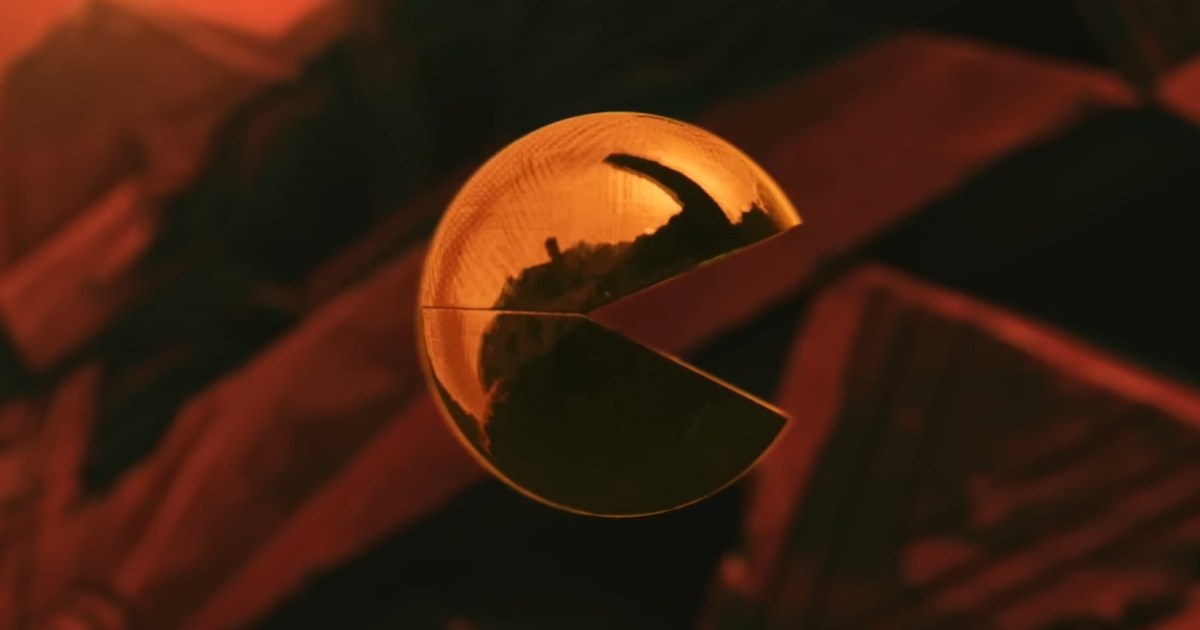
While most of Amazon’s new gaming anthology TV series plays it very safe, Pac-Man: Circle takes a radical new direction. The episode sees an alien-looking man called the Swordsman freed by an ominous spherical orb called Puck. While Puck is obviously supposed to be Pac-Man, Emily Swallow’s excellent portrayal of this character sounds more like Hal 9000 from 2001: A Space Odyssey than any voiced version of the character we’ve seen before. Puck constantly reminds the Swordsman that they’re trapped in a maze they need to break free of and that it’s eat or be eaten if you want to survive.
You are the chosen. Enter p4cm4n @ entersecretlevel.com #SecretLevel
Pac-Man: Circle is a bloody, violent, and subversive interpretation of a game typically touted for its universal appeal. As I watched it, it was hard to believe Bandai Namco would encourage such an episode to be associated with Pac-Man, but executive producer Dave Wilson tells Digital Trends that Bandai Namco Entertainment outright encouraged it.
“They really just threw down the gauntlet,” Wilson says. “Through the translator, the mission statement from Bandai was: We would like audiences to wonder what the f**k they did with Pac-Man.”
How Pac-Man: Circle was made
According to Wilson, Secret Level’s writers’ room distilled the elements of Pac-Man down to single lines that appear in the episode, such as “eat or be eaten” and “you can eat them, but never their eyes.” Those serve as the basis for the tragic, mature story this episode of Secret Level tells through the basic framework of Pac-Man. On the visual front, the episode’s look was inspired by artists like Moebius and Pascal Blanchet, leaning into vivid colors while not being afraid to have some grit.
Wilson and executive producer Tim Miller admitted to Digital Trends that many other elements of Pac-Man: Circle were established early on and stayed relatively similar throughout development. Swallow, whose voice you may recognize as The Armorer from The Mandalorian, and Aleks Le, who portrayed Luke in Street Fighter 6, came in as the voices of Puck and the Swordsman early on in the story reel process and weren’t ever replaced by other actors. Wilson said he’d love to release the story reel at some point so people can see how close it is.
Amazon
Pac-Man: Circle is much longer than other episodes of its ilk in Secret Level because the developers stuck so closely to the original vision. Wilson explained that the episode was originally supposed to only be 5 minutes long, but Illusorium Studios’ story reel for the episode came in at 9 minutes. Wilson and Miller thought it would be “sacrilege to cut it half,” so they gave Illusorium a choice of whether to keep it at the longer length or cut it in half. Illusorium chose to put in the extra work to realize the full vision for Pac-Man: Circle.
In its boldness, Pac-Man: Circle is Secret Level at its best. The series’ low points are the slower, more dialogue-filled episodes that can feel like a marketing ploy for games like New World: Aeternum or PlayStation as a brand. Episodes that lean into action (like the Gladiator-riffing Unreal Tournament episode) or take large creative risks like Pac-Man: Circle are the most enjoyable to watch.
If I only get one shot, I want to be able to do whatever the f**k I want.
This anthology’s oddball collection of adaptations has an eclectic feeling, but to its creators, that variety is part of Secret Level’s beauty. Miller is appreciative that so many companies, from Bandai Namco to the console publishers, were willing to work together and be included alongside each other in Secret Level.
“You could think that they might want to go off into their separate marketing corner and jealously guard their IP, but they don’t,” Miller tells Digital Trends. “They all came together in a really joyous, eager way. I think they like the fact that it’s this sort of jam session between the whole game industry, from indies to classics to games that haven’t come out yet to blockbuster AAA stuff that’s on the market now.”
Prime Video
It also may have helped that Miller didn’t have a preexisting notion of wanting to connect all of the episodes together narratively or thematically. “Especially with an anthology based on games, I didn’t want to limit it to just one genre or one type of game … If I only get one shot, I want to be able to do whatever the f**k I want or that I think might make a cool story.”
While that approach resulted in some duds, it also gave us a few unforgettable episodes like Pac-Man: Circle. Regardless of the uneven quality of the overall show, there’s solace to be taken from the fact that some episodes were able to take brave leaps of faith and reinterpret the classic franchises they were based on. This makes an episode like Pac-Man: Circle that does just that well worth watching.
Pac-Man: Circle and several other Secret Level episodes are now available on Prime Video. Another batch of Secret Level animated shorts will drop on December 17.
Let’s be honest: shopping for a gaming monitor can feel like wading through mud. As soon as you decide to buy a display for gaming instead of regular productivity use, a whole host of new considerations come into the equation. Should you go for an LCD or OLED monitor? What about the differences between NVIDIA G-Sync and AMD FreeSync? How about refresh rates?
Those are just some of the questions this guide aims to answer. In the process, my hope is to help you find the perfect gaming monitor for your budget.
Best gaming monitors for 2024
AOC
Screen size: 27-inch | Resolution: 2,560 x 1,440 | Refresh rate: 180Hz | Panel type: VA | Response time: 1ms GtG | Aspect ratio: 16:9 | Brightness: 1000 cd/m² | Weight: 11.9 pounds with stand
The Q27G3XMN offers a nearly unbeatable mix of features, performance and affordability. It’s a mini-LED monitor with HDR performance that’s not as good as the OLEDs on this list, but far better than anything you’ll find on an edge-lit LCD. With a 180Hz refresh rate, it’s also fast enough for all but the most fast-paced competitive esports games. Best of all, it’s priced affordably at under $300. For those reasons, unless you have a bigger budget or more specific needs, the Q27G3XMN is going to be the best bet for most people.
Screen Size: 23.8-inch | Resolution: 1,920 x 1080 | Refresh Rate: 180 Hz | Panel Type: VA | Response Rate: 4ms (gtg) | Aspect Ratio: 16:9 | Brightness: 250 cd/m² | Weight: 6.9 pounds with stand
In 2024, there are only two reasons to buy a 1080p monitor: Either you want the fastest possible display, or you want to spend as little as possible and get as much performance as possible. If the latter is true, I would go for the AOC 24G15. For $110, you’ll get a 24-inch screen with a high contrast VA panel, 180Hz refresh rate and 1ms response rate. If you’re patient, I’ve seen the 24G15 go on sale for as little as $90.
One thing to note: AOC also sells a 27-inch version of the 24G15 for about $30 more. I would avoid that model; it won’t look good due to low pixel density.
If you want a gaming monitor that basically does it all, the Alienware AW2725DF has a lot going for it. This QD-OLED features a 360Hz refresh rate and 0.03ms response. It also carries a Vesa DisplayHDR True Black 400 certification, so expect near-flawless HDR performance. It even has a HDMI 2.1 port if you want to use it with an Xbox Series X or PlayStation 5. From a performance standpoint, the only downside is that it won’t produce true blacks in rooms with too much ambient light. However, this is true of every QD-OLED monitor on the market right now.
At close to $1,000, it’s also expensive. But for what it’s worth, the OLED market is incredibly competitive at the moment. I’ve seen the AW2725DF go on sale a few times over the past couple of months, dropping to as low as $700.
For those looking for a more immersive gaming experience, an ultrawide monitor is the way to go. And right now, one of the best 21:9 displays you can buy is the Dell AW3423DWF. It offers an excellent 165Hz refresh rate, 0.01ms response time and AMD FreeSync Premium Pro support. The panel is also DisplayHDR TrueBlack 400 certified, making it great for watching movies and playing single-player games. The only feature that would make the AW3423DWF better is had Dell included an HDMI 2.1 port, but since ultrawide gaming isn’t really a thing in console gaming, the omission is not a deal breaker.
Screen size: 31.46-inch | Resolution: 4K and 1080p | Refresh rate: 240Hz and 480Hz | Panel type: WOLED | Response time: 0.03ms (GtG) | Aspect ratio: 16:9 | Brightness: 275 cd/m² | Weight: 19.8 pounds with stand
If money is no object and you play a mix of immersive games and competitive shooters, the LG 32GS95UE-B is the monitor for you. It offers something no other monitor on this list does. The 32GS95UE-B4K is both a 4K, 240Hz display and an FHD, 480Hz one. Moreover, it can switch between those two modes with the press of a button.
Yes, the 1080p output looks muddy stretched across a 32-inch screen, but for a feature that extends the versatility of an already incredible monitor, that’s a small sacrifice. At $1,400, the 2GS95UE-B is the most expensive monitor on this list. But if you’re in the market for a 4K display, chances are you’ve already spent a lot of money building a PC that can drive that many pixels.
While I’ve not used every product recommended in our list, I have extensively tested dozens of gaming monitors in the past, including models with WOLED and QD-OLED panels. In the case of the Alienware monitor I highlight above, I bought one for myself with my own money. Separately, I spent dozens of hours over a two-year period researching gaming monitors to write the current version of this guide.
Factors to consider before buying a gaming monitor
LCD vs OLED
When shopping for a gaming monitor, you first need to decide if you want to go with a screen that has an LCD or OLED panel. For most people, that choice will come down to price; OLED gaming monitors are more expensive than their LCD counterparts. Even if money isn’t a concern, the choice might not be as straightforward as you think; both LCD and OLED panels come in a few different flavors, and knowing the differences between each type is important to making an informed decision.
LCD monitors come in three different varieties: twisted nematic (TN), vertical alignment (VA) or in-plane switching (IPS). For the most part, you want to avoid TN monitors unless you’re strapped for cash or want a monitor with the fastest possible refresh rate. TN screens feature the worst viewing angles, contrast ratios and colors of the group.
The differences between VA and IPS panels are more subtle. Historically, VA gaming monitors featured slower pixel response times than their TN and IPS counterparts, leading to unsightly image smearing. However, that’s improved in recent years. VA panels also frequently sport better contrast ratios than both TN and IPS screens. They’re not dramatically better than their IPS siblings on that front, but when contrast ratios aren’t an inherent strength of LCDs, every bit helps.
On the other hand, IPS panels excel at color accuracy and many offer refresh rates and response times that are as fast as the fastest TN panels. The majority of LCD gaming monitors on the market today feature IPS panels, though you will frequently find VA screens on ultrawide monitors.
What about OLED?
If you can afford one, OLED screens make for the best gaming monitors. The ability of organic light-emitting diodes to produce true blacks is transformational. Simply put, every game looks better when there isn’t a backlight to wash out shadow detail. Plus, you can experience true HDR with an OLED screen, something that LCDs aren’t known for.
Today, OLED screens come in two different flavors: WOLED and QD-OLED, with LG producing the former and Samsung the latter. I won’t bore you with the technical details of how the two panel types differ from one another other than to note both technologies broadly offer the same set of shortcomings.
Most notably, OLED monitors don’t get very bright. At best, the most capable models peak at around 250 nits when measuring brightness across the entire screen. I didn’t find this to be an issue in my testing, but your experience may vary depending on the ambient light in your gaming room.
If brightness is important to you, note that due to manufacturer tunings, different models can perform better than others, even if they feature the same panel from LG or Samsung. It’s worth comparing monitors in the same class to find the model that’s right for you.
Separately, almost all OLEDs feature sub-pixel layouts that produce text fringing in Windows. The latest generation of OLED panels from both LG and Samsung are much better in this regard, to the point where modern OLEDs are good enough for reading and image editing. However, it’s still worth going to your local Micro Center or Best Buy to see the model you want in person, as the text fringing issue is hard to capture in photos and videos.
Another (potentially more serious) issue is burn-in. Organic light-emitting diodes can get “stuck” if they display the same image for long periods of time. Every OLED gaming monitor you can buy today comes with features designed to prevent burn-in and other image retention issues. Provided you don’t use your new OLED monitor for eight hours of daily productivity work, I don’t think you need to worry about burn-in too much.
Screen size, resolution and aspect ratio
After deciding where you fall on the LCD vs OLED debate, you can start thinking about the size of your future gaming monitor. Personal preference and the limitations of your gaming space will play a big part here, but there are also a few technical considerations. You should think about size in conjunction with resolution and aspect ratio.
A 1440p monitor has 78 percent more pixels than a 1080p screen, and a 4K display has more than twice as many pixels as a QHD panel. As the size of a monitor increases, pixel density decreases unless you also increase resolution. For that reason, there are sweet spots between size and resolution. For instance, I wouldn’t recommend buying an FHD monitor that is larger than 24 inches or a QHD one bigger than 27 inches. Conversely, text and interface elements on a 4K monitor can look tiny without scaling on panels smaller than 32 inches.
You also need to consider the performance costs of running games at higher resolutions. The latest entry-level GPUs can comfortably run most modern games at 1080p and 60 frames per second. They can even render some competitive titles at 120 frames per second and higher — but push them to run those same games at 1440p and beyond, and you’re bound to run into problems. And as you’ll see in a moment, a consistently high frame rate is vital to getting the most out of the latest gaming monitors.
If your budget allows for it, 1440p offers the best balance between visual clarity and gaming performance. As for 1080p and 4K, I would only consider the former if you’re on a tight budget or you exclusively play competitive shooters like Valorant and Overwatch 2. For most people, the user experience and productivity benefits of QHD far outweigh the performance gains you get from going with a lower resolution screen.
Just a few years ago, 4K was not a viable resolution for PC gaming, but then NVIDIA came out with its 40 series GPUs. With those video cards offering the company’s DLSS 3 frame generation technology, there’s a case to be made that the technology is finally there to play 4K games at a reasonable frame rate, particularly if you exclusively play big, AAA single-player games like Alan Wake 2 and Cyberpunk 2077 or enjoy strategy games like the Total War series. However, even with frame generation, you will need a GPU like the $999 RTX 4080 Super or $1,599 RTX 4090 to drive a 4K display. Plus, 4K gaming monitors tend to cost more than their 1440p counterparts.
If you want an ultrawide, note that not every game supports the 21:9 aspect ratio, and fewer still support 32:9. When shopping for a curved monitor, a lower Radius, or ‘R’ number, indicates a more aggressive curve. So, a 1000R monitor is more curved than an 1800R one.
Photo by Igor Bonifacic / Engadget
Refresh rates and response times
And now, finally, for the fun stuff. The entire reason to buy a gaming monitor is for its ability to draw more images than a traditional PC display. As you shop for a new screen, you will see models advertising refresh rates like 120Hz, 240Hz and 360Hz. The higher the refresh rate of a monitor, the more times it can update the image it displays on screen every second, thereby producing a smoother moving image. When it comes to games like Overwatch, Valorant and League of Legends, a faster refresh rate can give you a competitive edge, but even immersive single-player games can benefit.
A monitor with a 360Hz refresh rate will look better in motion than one with a 240Hz or 120Hz refresh rate, but there are diminishing returns. At 60Hz, the image you see on your monitor is updated every 16.67ms. At 120Hz, 240Hz and 360Hz, the gap between new frames shortens to 8.33ms, 4.17ms and 2.78ms, respectively. Put another way, although a 360Hz monitor can display 50 percent more frames than a 240Hz screen in a given time period, you will only see a speedup of 1.14ms between frame intervals. And all that depends on your GPU’s ability to render a consistent 360 frames per second.
Ultimately, a fast monitor will do you no good if you don’t have a graphics card that can keep up. For example, with a 1440p 360Hz monitor, you realistically need a GPU like the RTX 4070 Super or RTX 4080 Super to saturate that display while playing competitive games like Overwatch 2 and Valorant.
There’s also more to motion clarity than refresh rates alone. Just as important are response times, or the amount of time it takes for pixels to transition from one color to another and then back again. Monitors with slow response times tend to produce smearing that is distracting no matter what kind of game you’re playing. Unfortunately, response times are also one of the more opaque aspects of picking the best gaming monitor for your needs.
Many LCD monitor manufacturers claim their products feature 1ms gray-to-gray (GtG) response times, yet they don’t handle motion blur to the same standard. One of the reasons for that is that many companies tend to cherry-pick GtG results that make their monitors look better on paper. The Video Electronics Standards Association (VESA) recently created a new certification program to address that problem, but the grading system is unwieldy and, as far as I can tell, hasn’t had a lot of pickup from manufacturers.
For now, your best bet is to turn to resources like Rtings and Monitors Unboxed when shopping for a new gaming monitor. Both outlets conduct extensive testing of every screen they review and present their findings and recommendations in a way that’s easy to understand.
FreeSync vs G-Sync
No matter how powerful your system, it will sometimes fail to maintain a consistent framerate. In fact, you should expect frame rate fluctuations when playing graphically-intensive games like Alan Wake 2 and Cyberpunk 2077. For those moments, you want a gaming display with adaptive sync. Otherwise, you can run into screen tearing.
Adaptive sync technologies come in a few flavors. The two you’re most likely to encounter are AMD FreeSync and NVIDIA G-Sync, and each has its own set of performance tiers. With G-Sync, for instance, they are – from lowest to highest – G-Sync Compatible, G-Sync and G-Sync Ultimate.
The good news is that you don’t need to think too much about which adaptive sync technology a display supports. In the early days of the tech, it was rare to see a gaming monitor that offered both FreeSync and G-Sync since including the latter meant a manufacturer had to equip their display with a dedicated processor from NVIDIA. That changed in 2019 when the company introduced its G-Sync Compatible certification. In 2024, if a monitor supports FreeSync, it is almost certainly G-Sync Compatible, too, meaning you can enjoy tear-free gaming whether you’re using an AMD or NVIDIA GPU.
In fact, I would go so far as to say you shouldn’t make your purchasing decision based on the level of adaptive sync performance a monitor offers. As of 2024, the list of G-Sync Ultimate-certified displays is about two dozen models long, and some are a few years old now.
Photo by Igor Bonifacic / Engadget
Inputs
Almost every gaming display on the market right now comes with at least one DisplayPort 1.4 connection, and that’s the port you will want to use to connect your new monitor to your graphics card. If you own a PS5 or Xbox Series X/S, it’s also worth looking out for monitors that come with HDMI 2.1 ports, as those will allow you to get the most out of your current generation console.
A word about HDR
As fast and responsive gaming monitors have become in recent years, there’s one area where progress has been frustratingly slow: HDR performance. The majority of gaming monitors currently on sale, including most high-end models, only meet VESA’s DisplayHDR 400 certification. As someone who owned one such monitor, let me tell you it’s not even worth turning on HDR on those screens. You will only be disappointed.
The good news is that things are getting better, albeit slowly. The release of Windows 11 did a lot to improve the state of HDR on PC, and more games are shipping with competent HDR modes, not just ones that increase the brightness of highlights. Thankfully, with more affordable mini-LED monitors, like our top pick, making their way to the market, HDR gaming is finally within reach of most PC gamers.
Gaming monitor FAQs
Are curved monitors better for gaming?
It depends on personal preference. Many manufacturers claim curved monitors offer a more immersive gaming experience due to the way the display wraps around your field of vision. However, I find the edge distortion distracting, particularly when you increase the field of view in a game.
What aspect ratio should I look for in a gaming monitor?
The vast majority of 24-, 27- and 32-inch gaming monitors feature 16:9 aspect ratio panels, and that’s been the case for many years. In fact, nearly every game made in the last two decades supports 16:9 resolutions, such as 1,920 x 1,080 and 2,560 by 1,440, and if you buy a standard-sized monitor, you won’t need to worry about letterboxing.
In the case of ultrawides, 21:9 is the most common aspect ratio, with some very wide models sporting 32:9 panels. Among games, support for 21:9 and 32:9 resolutions is far from universal, so don’t be surprised if a game doesn’t fill the entirety of your screen.
Is OLED good for gaming?
OLED monitors are great for gaming. Not only do they offer excellent motion clarity and input latency, but they’re also easily the best displays for HDR gaming. If money is no object, and you primarily use your PC for gaming, you can’t go wrong with an OLED monitor.
How much does a good gaming monitor cost?
While you could easily spend more than $1,000 to obtain the best gaming monitor on the market now, the reality is that the budget and midrange categories have never been more competitive. In 2015, I spent $500 CAD to buy a 1080p monitor with a 144Hz refresh rate and TN panel. The budget AOC model I highlight above is not only cheaper than my first gaming monitor, but it also features a faster 180Hz refresh rate and a higher contrast VA panel.
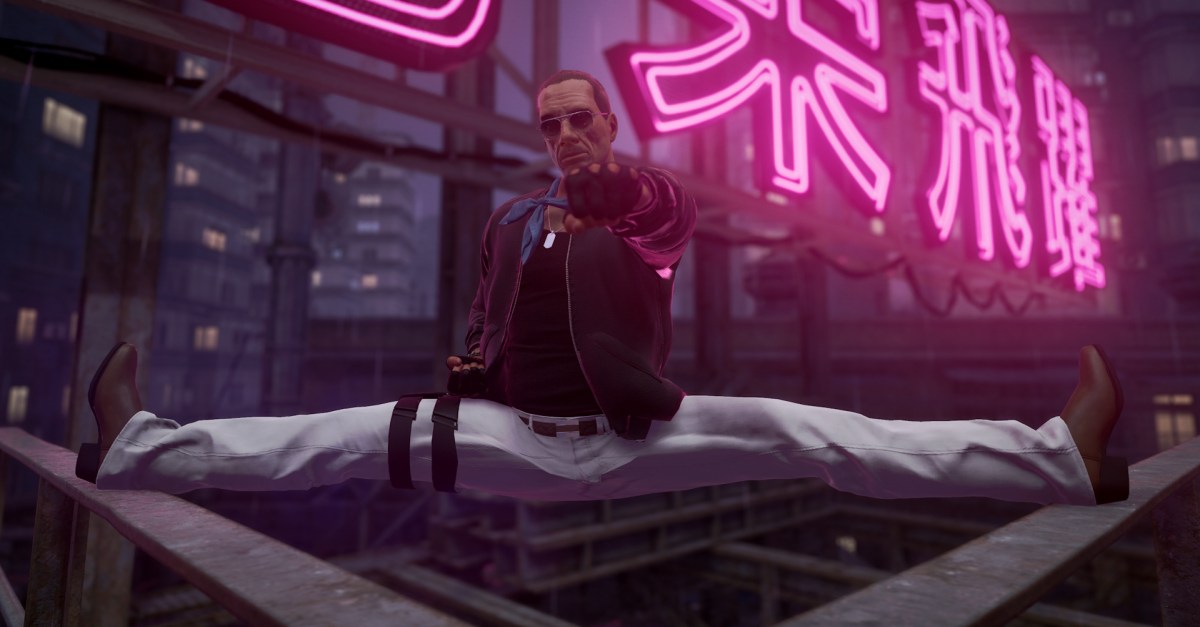
“The Splitter,” as the new content is known, features Van Damme in the role of Max Valliant, a former ICA agent who somehow avoided a previous assassination attempt several years prior. Agent 47 will need to infiltrate the rainy streets and underground data facility of Chongqing, China as he escorts an ICA board member, susses out Valliant’s “sinister agenda,” and finally puts the fellow assassin down for good.
“Max Valliant is quite the entertaining character, bringing a lot of action movie villain energy, he is ruthless, and of course, he can do the split!” Van Damme said, referring to own penchant for performing the splits in his movies and stunts. “The Splitter is a thrilling mission and like in any good action flick, Hitman players will have a few surprises, but I’ll let them find out by themselves.”
Like all elusive targets, The Splitter cannot be attempted again if failed (restarting is always allowed, of course) and has a hard end date, this time Jan. 12, 2025. Paid downloadable content will provide endless retries in arcade mode as well as a new SMG, kukri knife, and cosmetics based on the mission. And finally, the new “Season of the Splitter” roadmap will feature three missions developed by the Hitman community, new featured contracts, and the return of past elusive targets.
It’s no longer Black Friday, but don’t take that to mean that we’re left with scraps on Cyber Monday. Many of the best deals from last week are still raging on, and Cyber Monday marks the debut of some brand-new deals. In other words, you haven’t missed out on the deals, so get to shopping for the gamer in your life before these deals disappear in the coming days and weeks.
If you’re returning from last week, you’ll likely notice some familiar products below, mixed with some new ones. For a brief recap of the best deals, this may be your last chance to save $75 on a Nintendo Switch OLED (the first big discount!), or get $20 off a set of Joy-Con controllers. As far as game deals go, we’re still blown away by the discounts on 2024’s biggest games, including Metaphor: ReFantazio ($50), Warhammer 40K: Space Marine 2($50), and more. Expect new deals to land here regularly on Cyber Monday.
Riot Games is making a huge change to its terms of service that can punish creators for behavior that violates its codes of conduct when they’re not actively in-game, with updates set to go into effect on January 3, 2025.
In a blog post published Friday (thanks, Eurogamer), the League of Legendsdeveloper announced that many of these updates target content off-platform when it’s tied back to Riot games. So if a creator engages in less-than-appropriate conduct in spaces where a player’s or fan’s experience can still be negatively impacted, they can face penalties in-game. Riot clarifies that it’s not going to monitor social media, but it can take action if something comes to its attention.
What can fall under this purview depends on the creator’s jurisdiction, but the change pertain to a creator who might violate a law, harass an employee, engage in abusive, racist, or misogynistic behavior, spam chat, cheat, or engage in countless other behaviors listed in Riot’s code of conduct.
“TL;DR — If you say or do things that break our terms of service while broadcasting or creating content about our games, we can restrict access to your Riot accounts (and suspend your partner privileges if you are part of our Partner Program),” the post says.
Riot has also issued guidance on promotional content that can potentially violate its terms of service. So if a creator is selling accounts or teaching people how to cheat, they can be punished within Riot systems, even if they’re sponsored by a separate entity. There are also new policies involving stream sniping where another player watches the stream of an enemy player, and what Riot can restrict in the case of a penalty.
“For the rare occasion a seriously egregious violation occurs, we’re now including Riot-wide bans in our penalty system,” it wrote.
Riot games like League of Legends and Valorant have been plagued with toxic communities for years, which isn’t uncommon for popular competitive online games like Call of Duty: Black Ops 6. Development teams have made some changes this year to help counteract those behaviors. The Valorant team issued a new esports code of conduct earlier this year, for example. The free-to-play shooter’s studio head Anna Donlon also announced new penalties for offending players and increased moderation support.
“Competitive games need to have room for banter. We believe this, and I do understand the fear that we will sanitize gaming by over-addressing these issues,” she said in a video. “But we do believe that a person should not be in a position to have to grow a thicker skin, or whatever… If you need to make truly evil statements under the guise of regular sh*t talk to enjoy gaming, then please play something else.”
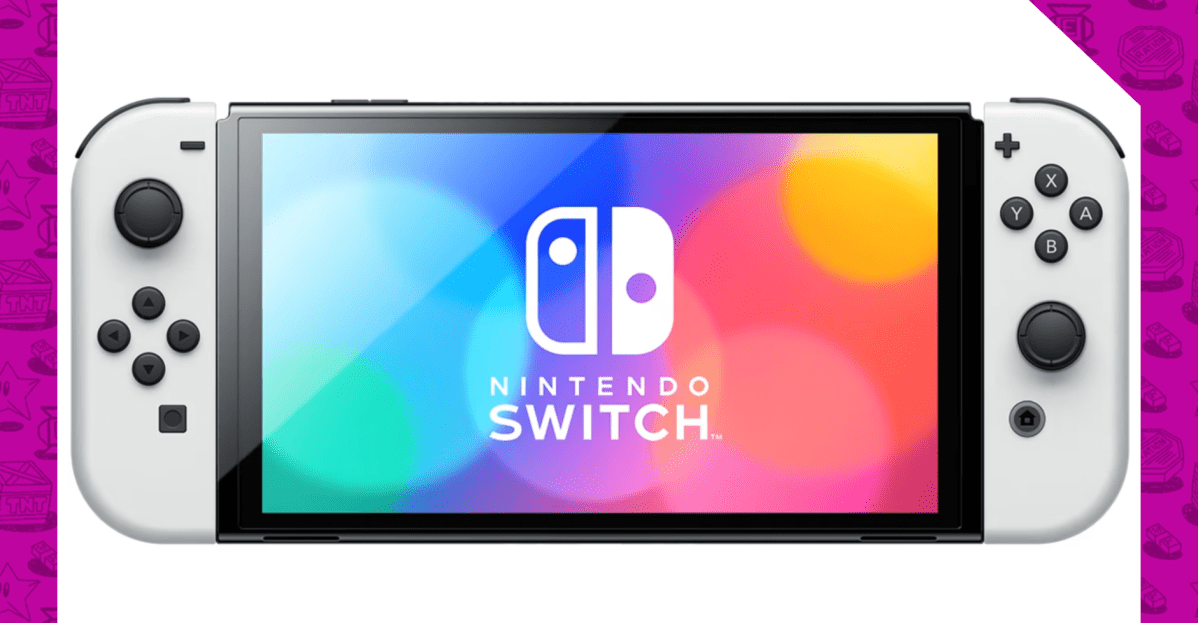
Nintendo’s making a huge splash ahead of Black Friday with the first big discounts on Switch consoles. Both the regular model and the Switch OLED are $75 off for a limited time, selling for $224.99 and $274.99, respectively. These price cuts are in effect for the seasonal bundle that includes $79 worth of extras like Mario Kart 8 Deluxe and three months of Nintendo Switch Online service for online multiplayer, cloud saves, access to retro games, plus access to the Nintendo Music mobile app.
Neither console has gotten a serious discount following their respective launches, save for retailer-specific promos that typically sold out in hours, or required subscriptions to Costco. To avoid cutting prices, Nintendo has instead opted to enrich the value of console bundles by include games or trials to its online service, but now we have actual price cuts without losing out on the added goodies. Whether these discounts return after Cyber Monday remains to be seen, though it wouldn’t be surprising to see the prices fall as the official unveiling of the Switch 2 nears in early 2025.
Nintendo has other fantastic gaming deals on accessories and games including $20 off its stellar, long-lasting Switch Pro wireless controller, $20 off pairs of Joy-Con controllers, and the lowest prices we’ve seen on some of the Switch’s must-play games. There are simply too many good deals to list here, so check them (and many others) out in our roundup of the best early Black Friday gaming deals, which will be updated regularly before Black Friday on Nov. 29.
The film seems targeted both at Warhammer diehards and newcomers alike, as the trailer opens on Heder searching for “the center of grimdark and everything gnarly,” while the camera comically zooms out to reveal he’s standing in front of a massive statue of a Space Marine. The film’s description implies Heder’s search began due to a “chance encounter at a game store,” but the admiration for the art of wargames comes through in the trailer’s cinematic composition and editing. Shots of miniatures and core texts are interspersed with interview clips and medieval architecture (rightfully) framing Warhammer and the culture around it as esoteric and arcane. Heder’s comedic ignorance of the hobby balances the, pardon the phrase, grimdark aesthetic, making the trailer feel like the final documentary will be accessible to even the most uninformed viewer.
The trailer culminates with a directive for Heder: “If you want to talk to the grandmaster, go find John.” This, of course, refers to artist John Blanche, who is credited with defining the visual language of Warhammer during his 46-year long tenure at Games Workshop. Blanche famously retired in June of last year, making rare media appearances that can be found on his personal blog. The trailer ends with a dramatic sequence of Heder knocking on what one could assume to be Blanche’s front door, before quickly cutting to an over-the-shoulder shot of a man, ostensibly Blanche, taking off his glasses in preparation.
The Game Awards aren’t known for much in the way of shock and surprise, and so it proved with the 2024 nominees — a fairly well-rounded list in which most of the year’s best-reviewed and best-loved games got some love.
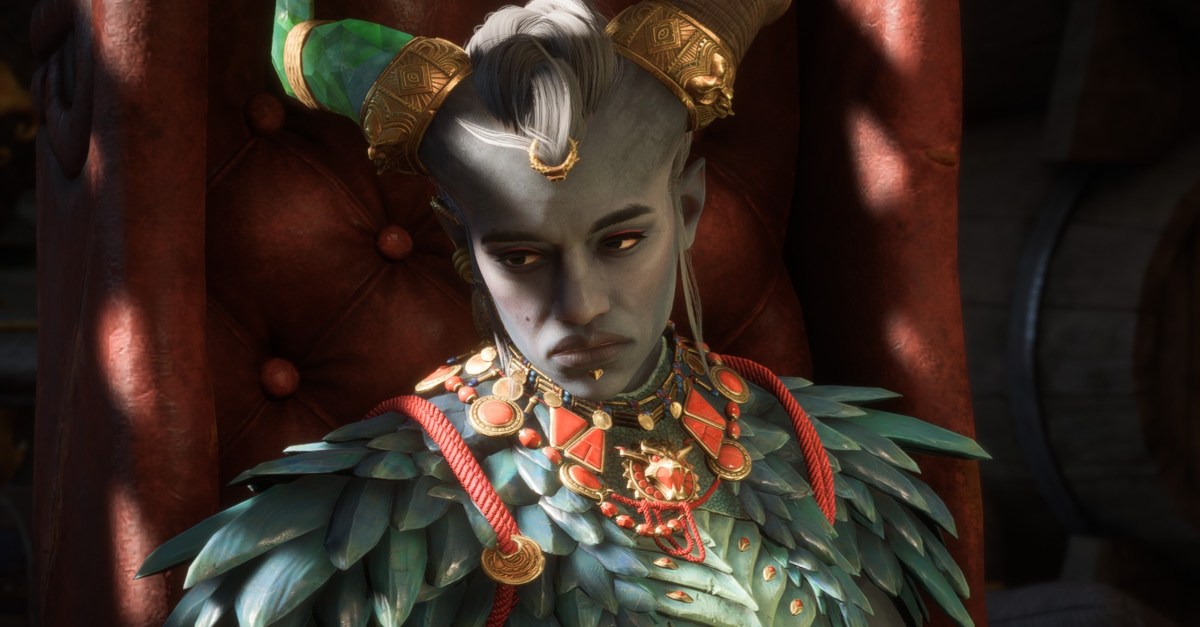
The Game Awards’ voting jury snubbed BioWare’s latest game in a series of key categories where it would have been expected to compete. It secured just one nomination, for Innovation in Accessibility, which is decided by a specialist jury.
Granted, the reception to The Veilguard has been mixed — and with its Metacritic rating settling at 82, a nomination for Game of the Year seemed beyond its reach (even though that is one point higher than Black Myth: Wukong, which did make the cut).
More tellingly, though, The Veilguard did not score nominations for Best Narrative or Best Performance, two areas where BioWare games tend to excel, and which are less review-dependent. It also missed out in Best Role-Playing Game. This was an exceptionally strong category this year: Three of the five nominees (Metaphor: ReFantazio, Final Fantasy 7 Rebirth, and Elden Ring: Shadow of the Erdtree) also secured nominations for Game of the Year, and the other two (Dragon’s Dogma 2 and Like a Dragon: Infinite Wealth) are unconventionally excellent. Even so, failing to join this company is surely not the result that BioWare or publisher EA wanted after a decade of development.
Were there any other snubs? Perhaps a few minor ones. It was a surprise not to see the much-loved EA Sports College Football 25 score a nomination in the Sports/Racing Game category, although this might be down to the broad international makeup of the jury. The Sim/Strategy Game category is missing two games with passionate fan bases and high review scores — Satisfactory and Tactical Breach Wizards — either of which might have taken the slot of the Age of Mythology remake, for example. But this was a strong category this year. Personally, I would have loved to see The Legend of Zelda: Echoes of Wisdom nominated for its fabulous music.
As ever, the intensely competitive indie categories cannot please everyone. But with 15 games nominated across Independent Game, Debut Indie Game, and Games for Impact, you have to dig down to some pretty deep cuts like Arco or 1000xResist before you find something to get upset about.
Other surprises? I don’t think anybody saw four nominations coming for Senua’s Saga: Hellblade 2, a game that has all but disappeared from the discourse since its release in May. Four nominations — including Game of the Year — for DLC, in the form of Shadow of the Erdtree, is without precedent. Black Myth: Wukong breaking through in Game of the Year despite its comparatively weak critical reputation is definitely noteworthy, as are the five nominations for one-man-band card game Balatro.
In the end, though, there’s not much in this set of nominees to ruffle any feathers — outside of BioWare’s offices, that is.