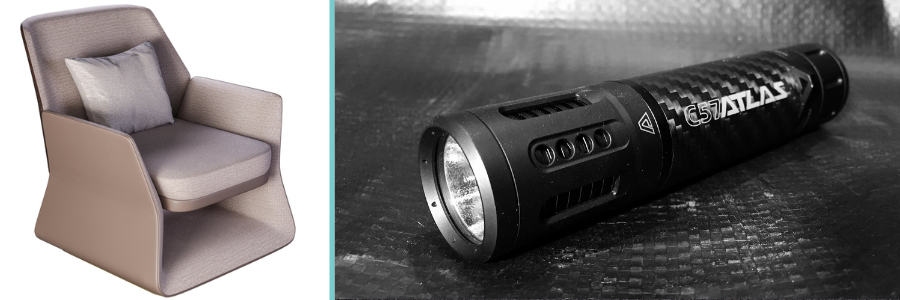
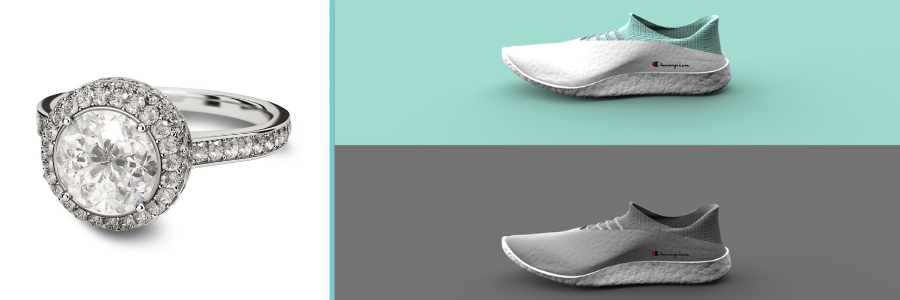
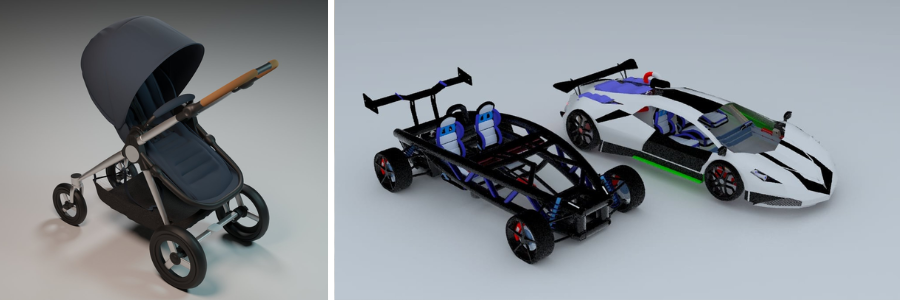
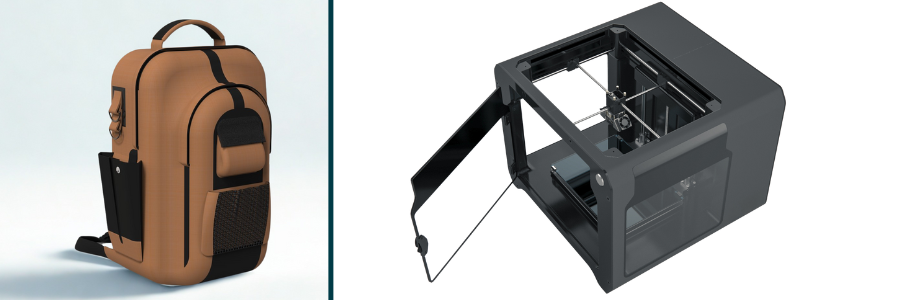
You just had a flash of inspiration for a new product that will change your game. It feels new, exciting, and like it could change the game. But then reality sets in: how do you turn that idea into something real that people will want to buy?
Most new ideas die in this space between a great idea and a successful product. The idea stays stuck in planning meetings that never lead to action.
Product design service innovation techniques fill in the gaps by providing structured ways to transform raw ideas into products that customers actively seek and purchase.
The Cad Crowd professionals’ innovative design isn’t just about how something looks or seems cool. As the number one freelance design marketplace, its experts possess a tactical force that combines creativity, technology, consumer knowledge, and smart problem-solving to turn a simple idea into a game-changing product. Think of it as a magic sauce that turns your idea from “just another idea” into something that people can’t imagine living without.
🚀 Table of contents
Human-centered design
Let’s talk about the real magic behind successful product design that puts people first. Think about this: trying to make something without knowing who will use it. Doesn’t that sound like a recipe for disaster? That’s exactly what innovative design wants to do by putting users in the spotlight.
Designing with people in mind is more than just making something that works well. It’s about really getting to know the users, what they need, what frustrates them, what makes them tick, and even the little things they might not even be aware of. The goal is to make things that not only work but also feel like they were made just for the user.
Consider a fitness tracker, for instance. A product design expert team may, at first glance, home in on technical aspects such as heart rate monitoring sensors, GPS precision, or battery endurance. But a people-first strategy challenges them to dig deeper. When exactly do people really want to check their numbers? What truly drives them to get going? How can the device slide into their daily habits seamlessly without being an annoyance?
By putting themselves in the user’s shoes, designers gain insights that result in smarter, more intuitive products. The outcome? Solutions that not only solve problems but also build emotional connections. And those connections? They’re what drive loyal customers who return again and again—not just for the tech, but for the experience.
To innovate in a way that truly connects with people, human-centered design is essential, not just good practice.
Rapid prototyping: Fail fast, learn faster
Remember the traditional school days when developing a product prototype was costly tooling, waiting for ages, and much guesswork? Innovation turned the tables by adopting rapid prototyping methods. Now, with developments in 3D printing design services, computer-aided design (CAD), and virtual reality (VR), designers are able to iterate designs in days or hours rather than months.
Rapid prototyping changes everything because it facilitates experimentation and early failure, which may not seem intuitive but is the ultimate path to winning. When you can rapidly flesh out sketches in three dimensions, try them on real people, and get reactions, you’re learning what’s going to succeed and what’s not nearly as you go along. It’s as if providing your product idea with a speeded-up option of trial and error.
This back-and-forth cycle tends to create breakthrough innovations. Perhaps that flexible piece you didn’t think you needed ends up being the key to user comfort. Or that small adjustment in the user interface makes the product instinctively easy to use. Without quick prototyping, these observations may never surface until it’s too late.
Taking advantage of cross-disciplinary collaboration
Think of innovation as a special sauce, and one of the things that makes it so powerful is when people from different fields work together. There was a time when teams worked separately, each in their own bubble. To really bring a new product idea to life, you need a wide range of skills, including designers, engineers, marketers, psychologists, and sometimes even artists, all working together.
What makes it so strong? Real innovation often occurs where these areas intersect. A designer might come up with a great design, but without engineering design services, it may not be possible to bring it to life, or it may be too costly to produce. Engineers can build something that works but doesn’t connect with users. Marketers tell us what customers really want, and psychologists help us understand how people think and feel.
From the start, teams can identify problems early, generate new ideas, and create products that the market loves, not just ones that work. Working together is what makes the difference.
Embracing digital tools and data-driven design
Welcome to the product development era of the digital age, where data and innovative tools are not niceties but necessary ones. Next-generation design leverages the capabilities of analytics, artificial intelligence (AI), and simulation software to build smarter products and smarter development processes.
Data-driven design lets you avoid using your gut or assumptions. Rather, you are able to dissect user behavior, preferences, and feedback at a very detailed level. For instance, by observing how users engage with an early prototype of an app or device, you will be able to discern pain points and areas for optimization.
AI-based systems can create several design options, optimizing for considerations such as cost, performance, or user comfort. Simulation software can simulate how a product will react under varying conditions without creating a physical prototype through prototype engineering services. This minimizes risk, reduces costs, and accelerates time-to-market.
In addition, digital solutions facilitate more engaging presentations to customers and stakeholders. Virtual and augmented reality allow individuals to try out a product idea before it is even made, creating buzz and insights that can guide its development in the right direction.
Sustainable and responsible design: The future-proof strategy
Innovation these days is not about being flash or high-tech; it is about being responsible. Shoppers and regulators are themselves demanding products that have less environmental footprint and give back to the planet.
Having sustainable design methods integrated at an early stage can boost your product by aligning it with these expanding expectations. That could be selecting green materials, making products for simple disassembly and recyclability, or developing products that use less power.
Innovative design also means considering the whole product life cycle. How is it made? How long will it last? What happens after its useful life is over? This kind of thinking tends to create breakthroughs, such as modular designs where users can replace parts rather than the entire product, or packaging design services that minimize waste.
A product built with sustainability has the potential to build a strong brand story that deeply resonates with consumers and differentiates you from competitors.
Storytelling through design
Let’s discuss a hidden ingredient in wonderful products that most people miss: storytelling. Every product, regardless of how mundane, has a story to share. And clever, innovative design is the ideal method to tell that story in a manner that captures attention and resonates emotionally with your audience.
A great design has so much to say without having to say one word. A product’s form, color, texture, and even the manner in which an individual uses one all combine to tell a narrative. This narrative communicates what a product represents and how it needs to make individuals feel.
Consider legendary brands such as Apple and Tesla. Apple’s minimalist, sleek design communicates a tale of simplicity and refinement, whereas Tesla’s futuristic, bold design conveys innovation and eco-friendliness. Your product’s design can be just as compelling—a visual language that tells your story and makes your product resonate deeply with customers.
Thinking beyond the product: service and experience design
Yes! The smartest product innovation services no longer just care about creating a great product; they think much further ahead. It’s all about the whole experience, from the first time someone sees the product to how it fits into their life. This means that product design and service design must work together.
Consider how challenging it is for customers to receive assistance when they need it. Can customers customize the product to make it their own? There may be an app or extra feature that makes the product even better. All of these elements work together to ensure that customers return, providing them with a smooth and pleasant experience.
When you create something with the entire journey in mind, you open up new ways to sell it and build a larger ecosystem around it. That’s where real loyalty and innovation happen.
Innovative design isn’t just a one-time thing; it’s a way of life and a way of thinking. Companies that push their products forward are the ones that make innovation a part of their DNA. This is making a culture where people can share their ideas, learn from their mistakes, and let their curiosity guide their decisions. It means putting money into learning new things, trying out new technologies, and always putting the customer first.
When you make innovation a habit, your new product ideas turn into a stream of new products that keep you ahead of the competition. What does all of this have to do with your new product idea? Design is not an extra step or an afterthought; it is the very heart of innovation. You can turn your idea into a product that people love, connect with, and last by using human-centered principles, rapid prototyping design services, cross-disciplinary teamwork, data-driven methods, sustainable innovation, storytelling, end-to-end experience design, and a culture of continuous innovation.
Cad Crowd is here to help!
Are you ready to supercharge your new product idea? Cad Crowd is the best freelance marketplace to find the best product, architectural, and engineering talent. Think of design not just as a way to beautify, but as a strategic engine that drives every phase of your product’s journey. Transforming your innovative idea into a market sensation. Contact us at Cad Crowd today for a complimentary quote, and let’s bring your vision to life!
MacKenzie Brown is the founder and CEO of Cad Crowd. With over 18 years of experience in launching and scaling platforms specializing in CAD services, product design, manufacturing, hardware, and software development, MacKenzie is a recognized authority in the engineering industry. Under his leadership, Cad Crowd serves esteemed clients like NASA, JPL, the U.S. Navy, and Fortune 500 companies, empowering innovators with access to high-quality design and engineering talent.
Traditional photography and videography still have their places in today’s product marketing landscape, but the increasingly competitive industry landscape shows clear hints that they’re getting superseded by the rise of computer-generated imagery (CGI), more specifically, three-dimensional modeling and rendering.
The proliferation of 3D product design rendering services in the United States at the turn of the century showcased how the industry quickly adopted CGI product visualization and accepted it as pretty much the new standard. Among the most reputable firms in the country, Cad Crowd is among the best sites to successfully materialize the combination between CAD expertise and the already booming freelance economy since 2010. It remains the go-to platform for 3D product design and rendering today and continues to grow and expand its reach worldwide.
Top 3D product visualization services
Because most 3D product rendering and visualization projects are done remotely, the list includes some studios/services based in Europe as well.
Cad Crowd
Unlike just about every freelancing platform out there, Cad Crowd is best known for its laser focus on all things CAD, including product design and visualization. Regardless of the product category, the type of visualization (static, animated, VFX, product configurator, 360-degree rotation), resolution, and file format, Cad Crowd has you covered. You even get to choose whether you want to pay on a per-project basis or an hourly rate. The company was established in 2010 in Alberta, Canada, where it still maintains a presence today. It’s now headquartered in Glendale, California, with additional offices in San Francisco and Houston.
Based in Philadelphia, Pennsylvania, Applet3D started its venture in the digital industry as a small department of an IT company. It has now grown into a business of its own with a large team of professionals, specializing in 3D architectural rendering services and product visualizations, as well as interactive digital experiences. Applet3D says every project is handled by the in-house team and that it allows them to ensure proper communication and guarantee fast results. Over the course of 10 years in the business, the company has managed to complete at least 4000 renders for more than 550 clients across nearly 1500 projects. Most products in the portfolio are architecture-related, such as furniture pieces and cabinetry, such as the Mantra Omni for Mantra Cabinets and Wine cabinets for Grandeur Cellars.
Best known for its quality 3D product rendering in consumer goods and furniture categories, ThePro3DStudio makes for an excellent service for startups or first-time clients because it offers a free trial project. In case the portfolio on the website isn’t quite numerous enough, there’s no better way for you to judge the work quality than a one-time free rendering project. While the company is headquartered in India, it has two offices in the United States: one in Alpharetta, Georgia, and another in Durham, North Carolina. Every project is protected under a non-disclosure agreement. In fact, all the employees are required to sign an NDA before they start working on a client’s project. You can either pay for the service based on an hourly rate or on a per-project basis.
In addition to its US office in Wilmington, Delaware, you can also find PIXREADY in Bedfordshire, England, and Lviv, Ukraine. It offers such services as 3D product visualization, whether still imagery or animated render, and a product configurator. This is not to say that PIXREADY only provides rendering services and nothing else. Even if you only have a rough sketch of a product idea, the company can develop the concept through 3D modeling first and then transform it into a photorealistic design. Of course, asking the company to step in during an early phase of the product development will cost more, so you should expect a budget adjustment (an increase). A few of the highlighted projects in the portfolio include a range of consumer products rendering for Fiskars, Cosmos Lamp for Noiro Studio, commercial retail equipment for USA-based Turbo Air, and 3D helmets for Belgium-based Lazer Sport.
In terms of services, there’s not much of a difference between PIXREADY and Atellier Studio. Both specialize in product visualization and are willing to develop a 3D model based on mere sketches or a photograph. And like many other studios, unfortunately, Atellier is reluctant to provide a clear pricing structure on the website. It only states that you can request a free quote by providing detailed information about the project’s nature. However, such practice isn’t entirely unreasonable considering that 3D product rendering is always a custom project; prices are affected by multiple factors like complexity, expected delivery time, and resolution. The studio charges per project, but it promises a discount for bulk orders. Sample rendering projects in the portfolio include an exploded view of a health band for Fourth Frontier and high-quality visuals of jewelry pieces for De Beers ForeverMark.
Innowise
Taking a glance at the website, Innowise appears to be a full-on software development company. To be fair, the company does offer comprehensive software and app-related services, but it also handles a good range of 3D product rendering projects. Innowise even caters to clients looking to build prototypes and create animations as well. The company has several offices spread across North America, Europe, the Middle East, and Asia. In the United States, Innowise is located in St. Petersburg, Florida. In the product visualization category, the services cover hard surface modeling, concept art, game assets, photogrammetry, and, of course, rendering. Especially for the rendering part, it focuses mainly on the automotive, fashion, and retail industries.
A lot of companies that market themselves as product visualization experts tend to also offer additional services such as prototyping, AR/VR, outstaffing, and talent marketplace. Go3DViz can’t be bothered with all of that; it specializes in 3D product rendering, package modeling, animation, and nothing else. The good thing is that the company is willing to take a rendering project, whether you already have a finished CAD model or just a rough idea about the product in question. Go3DViz caters to rendering for both digital use and print publication. Since 2014, it has completed more than 1000 projects for over 100 clients. Some of Go3DViz’s best rendering works include the Vista V3 Stroller & Bassinet for UPPAbaby, the Ridge Wallet for Ridge, the TraumaGuard for Sentinel Medical Technologies, the VCORE 100 for Yonex, and TCO 2000 Series Watches for Thumm & Co. Prices are reasonable, too. For example, a single still rendering in a white background (silo render) starts at $195, whereas lifestyle rendering costs $395. No matter which option you choose, the company includes the CAD setup files in the deliverables. The company is based in San Diego, California.
Also based in San Diego, California, VizSource has been around a lot longer. It was first established in 2006 and has since completed thousands of rendering projects for over 6,500 clients, primarily in the United States and Canada. VizSource primarily deals with architectural visualization projects such as exterior, interior, animation, 360-degree virtual tour, 3D floor plan, and aerial view renderings of both residential and commercial buildings. But the list of services includes product renderings, and the portfolio suggests that it has done a number of fairly complex projects, for exa, high-quality furniture pieces, professional-grade electronics, cosmetics, and food & beverage products as well.
In the United States, NoTriangle Studio is headquartered in Fremont, California. It has several branches in New York, Los Angeles, and San Francisco. You can also find the company in São Paulo, Brazil, and Dublin, Ireland. No Triangle Studio has been in the business for more than 10 years now, providing a wide range of rendering services for e-commerce and marketing clients worldwide. It handles exploded view visualization, marketing animation, parallax, lifestyle renders, 360 rotation imagery, product colorways, and AR models. The company serves five main product categories, including kitchen appliances, furniture, electronics, automotive (interior and exterior), and jewelry.
Spatial Interactive Experiences, stylized as SPINE, is a visualization studio based in Fort Lauderdale, Florida. It focuses on creating visual assets for design and marketing, including 3D modeling design services, rendering, animation, 360 online tours, and AR/VR experiences. Architectural projects make up a big portion of the studio’s business, but it also caters to product visualizations. Judging from the online portfolio page, it has provided rendering services in the automotive, healthcare, sporting gear, and industrial equipment sectors. SPINE3D charges by the project; there’s no base price provided, which makes sense due to the highly personalized nature of product visualization. The good thing is that the company accepts projects of any size and budget.
An LA-based animation studio, Prolific offers turnkey 3D rendering services to help you develop a product idea into photorealistic CGI. Other than the Los Angeles office, the company has two more branch locations in the United States: one in Palo Alto, California, and another in Edwards, Colorado. Its UK office is located in London. Prolific Studio serves a broad range of industries such as e-commerce, healthcare and pharmaceuticals, fashion and retail, electronics, construction, and architecture. The portfolio lists quite a variety of projects, including whiteboard, motion graphics, and 3D animations. Many of the 3D animation projects are explainer videos.
Primarily a video production company, DVI Group doesn’t actually provide static/still rendering services. But it offers several different video styles, among them are 3D animation and motion graphics. The company is based in Atlanta, Georgia, with additional presence in Tampa, Florida, and Phoenix, Arizona. A few of the projects listed in the portfolio include a 3D animated video about electrical grid maintenance for Southwire, an explainer video about the installation of a carrier system aa nd wall-mounted tank for Duravit, and another animated video illustrating the telematics system used in construction equipment for Doosan Infracore North America.
The bigger portion of Vrender Company’s capability lies in high-end residential and commercial architectural renderings such as virtual tours, 360-degree panoramas, aerial views, floor plans, and so forth. It does provide 3D product rendering services, although most of the products listed in the portfolio are still architectural-related, such as furniture pieces and decorations. Vrender Company makes clear that every project is done under a non-disclosure agreement, which is probably why the portfolio isn’t as detailed as you might expect. It also offers a custom business plan, especially for long-term collaboration, with flexible time plans and workflow. Vrender Company is based in New York.
In the United States, Welpix maintains a strong presence in such major cities as Los Angeles, Miami, Atlanta, San Diego, Chicago, and Houston. It also has representatives based in London, England, and Toronto, Canada. Welpix specializes in the 3D modeling and rendering of four specific product categories: jewelry design services, watches, cosmetics, and perfumes. One of the best things about Welpix is how the company promises to develop a complete 3D modeling and rendering of your product based on photographs. Furthermore, you get a free trial project to see what the company can do, and unlimited revisions.
In 2013, Bottomline Studio took the first step into the 3D visualization service business. It started as a highly specialized rendering studio for architects, but over the years, it has grown into a more generalized studio that caters to a much broader range of industries. For example, its product visualization services now include not only furniture and interior design pieces but also medical, healthcare, consumer electronics, jewelry, and even fashion products. Rendering styles cover 360-degree rotational, animated product demonstrations, and AR/VR models. While the head office is located in New Delhi, India, Bottomline Studio also has a location in New York, US.
Focusing on both architectural and product renderings, 7CGI claims to have completed more than 1000 projects over the last 9 years of the company’s history. The product visualization services cover such categories as furniture, jewelry, and industrial equipment. Some of 7CGI’s greatest highlights include the ability to send renderings in any file format, order-specific rendering resolution depending on the client’s requirements, a 360-degree view priced at a small fraction of the original 3D creation cost, and unlimited revisions. The company is based in Beaverton, Oregon, with another office located in Dhaka, Bangladesh.
Mainly a design company with a recognized reputation in branding and creative strategy works, Sprout Studios also offers rendering services that cover a broad range of product categories, from consumer electronics design services to heavy machinery. This is one of those companies where you can tell what it can do just by looking at its portfolio. Some of the highlighted product rendering projects include a number of RTVs and tractors for Kubota, the Ultra Open Earbud for Bose, the WOO Action Sports Tracker (Red Dot Design Award 2016), and the Lyve mobile and modular storage hardware for Seagate (IDSA IDEA Award 2020). Sprout Studio was also one of the teams that designed an underwater vehicle to detect microplastics in the ocean, which ended up on the TIME Best Invention List in 2019. The company is based in Boston, Massachusetts.
Whether you need a rendering to market a new product or revamp an existing marketing material, Tesla Mechanical Design has you covered. The company maintains a presence in four locations worldwide: Edison, New Jersey (US), London, England (UK), Melbourne, Victoria (Australia), and Ahmedabad, Gujarat (India). With over 7 years of experience in the business, the company has completed more than 1,000 projects to date. Tesla Mechanical Designs offers both 3D modeling and 3D rendering services, and it makes clear that they must be treated as separate projects, even if the latter can be (and often is) a continuation of the former. 3D product modeling is a digital representation of the product and its components in three-dimensional space, whereas 3D rendering is a lifelike visualization of the model that includes details like surface finishes, textures, lighting, shadows, colors, etc.
Founded in 1999, QeCAD3D is one of the oldest running rendering studios on the list. The company claims to have completed a total of more than 5000 architectural renders, 7000 product visualizations, and 100 animations throughout its history. As for the product visualization category, the company caters to a fairly complete range of projects, including 3D modeling, silo and lifestyle renders, animation, 360-degree view, and close-up view. QeCAD3D is based in Woodland Hills, California (US) and Ahmedabad, Gujarat (India).
Established in 2004 in San Francisco, California, Transparent House specializes in hyper-realistic 3D architectural and product renderings. It also offers branding services, including marketing strategy and immersive experiences for commercial clients. About six years into the business, the company opened another office in Berlin, Germany. Over the course of 20 years, Transparent House has delivered more than 1800 rendering projects for clients of all sizes, from Silicon Valley start-ups to Fortune 500 companies. Highlighted projects in the portfolio include renderings of the Nord N20 5G and the N300 smartphones for OnePlus, the PRO Racing Wheel and G203 Mouse for Logitech, and the MC2.1KW Amplifier for McIntosh.
Although Blue Pixel 3D hasn’t been around for as long as QeCAD3D or Transparent House, the company has in its pocket a respectable 14 years of experience with more than 1000 rendering projects in its book. These projects include still renderings, animations, interactive models, 360-degree views, and general motion graphics. Blue Pixel 3D specializes in architectural visualization experts, but it’s safe to say that it also caters to product renderings, especially architecture-related products such as furniture, fixtures, decorations, and ornaments. Pricing is on a per-project basis, and it offers discounts for bulk orders. The company is based in Foxborough, Massachusetts.
The Ohio-based company provides all sorts of visualization services, including 3D product and architectural renderings. Halo Renders doesn’t offer a turnkey rendering, which means you’ll need to send a CAD file (presumably a 3D model) of the product in the project brief. A reference image is preferable, but not mandatory. Halo Renders offers a white-label agreement, granting you full rights to use all the renders as your own intellectual property. This is pretty much a standard practice, but it’s reassuring to know that the company makes an explicit mention of it on the website. Although the service page only lists architectural and product renderings, Halo Renders says it’s willing to take custom 3D visualization projects, including AR/VR, prints, and more.
A creative studio based in Portland, Oregon, Deep Sky caters to a variety of visualization projects such as 3D product renderings, animations, live-action video productions, and VFX. The company boasts its ability to produce CGI, both static and animated, for products of all categories, from packaged goods to industrial machinery. The sample projects listed in the portfolio include snow helmets and goggles for Giro Sports, exploded views and still renderings of digital cameras for FLIR, an aviation headset for Lightspeed, a centipede battery platform for Powin, and the Affinity Filtration Technology for Clearly Filtered.
To be clear, Render Vision isn’t actually headquartered in the United States. The studio’s head office is located in Offenbach, Germany, but it does have a strong presence in the US and focuses on producing 3D visualizations of such products as consumer goods, industrial equipment, and architectural elements. Render Vision is crystal clear that it provides mainly four different visualization types for the product rendering services: static imagery (still render), animated videos, exploded view, and 360-degree configurator. A few highlighted samples in the portfolio include a gas grill and camping equipment for Campingaz, the “mill.one” coffee grinder for Klein, a hall ventilation system for Esta Apparatebau, and cut-out furniture for Flötotto.
Operating out of Vancouver, Canada, RealSpace 3D has been providing architectural and product rendering experts for clients in the United States, Europe, and beyond since 2007. For more than 17 years, the company has completed over 2500 projects for more than 1000 clients worldwide. When you decide to hire RealSpace 3D, you’ll be assigned a dedicated project manager, who functions as a communication link to the production team. This contributes to the fact that the vast majority (around 95%) of all previous projects turned out to be exactly on budget. And the product rendering itself is all-around customizable, from the details and resolution to file format and visualization styles.
If RealSpace 3D is based out of Vancouver, Render3DQuick is located in Toronto, Canada. Both are internationally recognized creative studios, providing visualization services for clients all across North America and Europe. However, Render3DQuick specializes in high-end architectural renderings such as interiors, exteriors, aerial views, animations, and industrial developments. But like every architectural visualization company, it’s safe to say that the studio also caters to product rendering services, especially if the products in question are furniture pieces, household appliances, home fixtures, or anything else related to home interior and exterior.
Since day one of its venture into the visualization business in 1996, MG Lomb Interactive has been producing 3D animated renderings and interactive presentations of complex products and technologies. With nearly 30 years of experience, the company has what it takes to deliver even the most intricate and technical product animations, scientific equipment renderings, and immersive visualizations to be displayed on touchscreen devices. MG Lomb Interactive doesn’t mention anything about “still renders” in the service page, however. The company is based in Fairport, New York.
For two consecutive years (2023 and 2024), Freedes Studio was recognized as a Top Interior Design Company by Clutch. It’s primarily an architectural visualization studio, providing such services as exterior and interior rendering services, as well as animation. That said, the studio also caters to 3D product rendering projects. The product categories it serves include furniture, electronics, home appliances, and consumer goods. As long as the products are typically featured in interior renderings of residential and commercial buildings, the company is likely willing to take the rendering projects. Freedes Studio is based in Los Angeles, California, and London, England.
The head office of CGI Furniture is located in San Francisco, California. You might see conflicting information about the address because the contact information listed on the website page actually belongs to Archivizer, the parent company of CGI Furniture. As the name suggests, the visualization services are geared toward furniture renderings. Pricing is based on the complexity of the project and the number of renderings required. A “simple” rendering starts at $130, whereas a “complex” visualization can cost up to $780. These prices are for orders of fewer than 10 units; the more images you order, the smaller the cost/unit. The problem is that the page doesn’t make it clear what constitutes simple, medium, and complex projects. CGI Furniture promises to provide rendering corrections free of charge, given that the changes are less than 60% of the original project workload. Anything more than that is regarded as a new project.
It’s a design firm with the core services in architectural visualizations, product renderings, animations, rapid prototyping, 3D projection mapping, user-interactive software, and VR applications. EnDesign was first established in Ontario, Canada, in 2013, and then it quickly established a second location in New York, United States. While the company still hasn’t reached nationwide recognition in the US, the service areas cover major cities including NYC, Portland, and Chicago, as well as the entire states of Texas and Florida.
A product rendering and animation studio, Austin Visuals claims to have been hired by an impressive list of clients, including NASA, MSI, The Smithsonian, John Deere, University of Texas, and Discovery Channel, to name a few. The company is based in Texas, operating from three locations: Houston, Austin, and Friendswood. Quite a lot of the sample projects in the portfolio are animated renderings in the form of commercials for such products as Seagate EXOS, the Encore Wellhead System, Oral-B Electric Toothbrush, Aquasana water filtration system, and Epic Reads book trailer.
Unlike most visualization studios out there, Ubunzo offers subscription-based 3D product rendering and 3D animation services. In practice, every subscribed user is granted unlimited requests of product designs and renderings (static and animated) as well as revisions if necessary. The only caveat with the massive promise is that each request will be handled one at a time, which makes sense because otherwise users may ask for an unreasonable number of projects within an implausible timeframe. Another potential hurdle is that the subscription costs nearly $6,000 per month. Ubunzo makes sense if you’re not a constant user of 3D product renderings because the pricing is not on a per-project basis. Throughout its 5-year venture into the business, the company has delivered more than 150 projects for at least 60 clients worldwide. Ubonzo is based in Alberta, Canada, but it’s a fully online studio established by a group of freelancers from around the world. Therefore, it doesn’t matter if the client is from a different country or even a separate continent. Every project is run and managed remotely.
For many products, the packaging is just as important as what’s inside. Sometimes, you need 3D renderings for product packaging to help decide whether a particular design will serve its protective and persuasive purposes. This is where CSW Graphics may come in handy. The process for packaging visualization is pretty much the same as product rendering. It starts with design sketches, CAD files, or wireframe models before it’s transformed into photorealistic imagery using specialized software. CSW Graphics takes pride in its “3Dactive PDF” format that combines CGI rendering tools and CAD animation to create interactive PDF files. When viewed on Adobe Acrobat Reader, you can spin the rendering, enlarge the image, and even open boxes, cans, bottles, bags, etc. The company is located in Sylvania, Ohio, Rochester, New York, and Ludlow, Massachusetts. Some sample projects in the portfolio include Pure Life Global Redesign for Nestle and Simply H2O for Berkley Jensen.
The visualization services by Fresco cover product rendering, animation, and a 3D configurator. The company first entered the business in 2017 and is currently based out of Marlborough, Massachusetts. Fresco also has two branch offices in Buenos Aires, Argentina, and Suzhou, China. Some sample projects in the portfolio include a handful of 3D assets (mostly for marketing campaigns and technical tours) produced on behalf of Formlabs, a smart device ecosystem for Owl Labs, baby products for 4Moms, and a car seat design for Swandoo.
What started as Columbus Electrotype in 1905 has now become Kreber, an independent content and marketing agency based out of Columbus, Ohio, and High Point, North Carolina. The company had already gone through a long history in the print and digital photography sectors before it eventually added CGI as one of its core business activities in 2018. The simple fact that the company has been running continuously for 120 years is a testament to its ability to adapt and evolve with the market and the clients at large. Apart from providing visualization services to retail and B2B clients, the company also caters to content creation projects.
What makes Chaos Cylindo a unique proposition is how it doesn’t just offer 3D product visualization services, but also a full-fledged platform with which you can manage the entire project. This platform, Cylindo Studio, is essentially a self-service tool designed to ensure consistent visuals and presentation styles across multiple commerce channels. You can simply input your product data and have the photorealistic visualizations done by the professionals at the studio. Think of the platform as a 3D configurator application that lets you showcase product renderings in different customization options and create new iterations quickly. Chaos Cylindo has three locations in the United States: Boston, New York, and North Hollywood. It also maintains a presence in Tokyo, Japan, and Seoul, Korea, as well as several offices in Europe, including Karlsruhe, Germany, and Copenhagen, Denmark.
For more than 15 years, RDC has been providing product visualization and web design services to globally recognized companies, including Lenny & Larry’s, Campbell’s Soup Company, and Bolthouse Farms. But food and beverage isn’t the only industry it serves, at least based on the sample projects the company lists on the portfolio page. These samples include various renderings of such products as the Orange Crush label and packaging design for 2MOODS, a high-performance workout grip for N-Gage Grips, a graphic calculator for Zero Calculators, and the Jay Weinberg drum kit for MixWave. RDC Design Group is based in Yardley and Philadelphia, Pennsylvania.
In the United States, Rendler Studio is situated in New Castle, Delaware. It also runs and operates its 3D rendering visualization services from London, England, in the UK. The company has been in operation for approximately 7 years and claims to have worked on over 700 projects for clients worldwide, producing more than 3,800 photorealistic images. Rendler Studio is mainly an architectural visualization company, providing visualization services for designers, real estate developers, and architects. However, it’s willing to take just about any 3D rendering project from clients of every background, even if it’s not architecture-related.
Having been in the market since 2015, Betterthan Studio claims to be the most affordable 3D rendering company in the market. It runs the business from two locations: one in Chicago, Illinois (US), and another in London, England (UK). It specializes in product visualization and animation, including instructional videos and demo clips. Backed by more than 30 professional animators and 3D artists, the company has what it takes to produce more than 150 renders per month on average.
The Render Unit is a registered firm in the US and is situated in Chicago, Illinois. But the professionals who keep the company running are located in several different countries all around the world, including the United States itself, the United Kingdom, Egypt, India, and Ukraine, with dedicated workspaces in each location. It offers a range of services to transform your concepts, ideas, and sketches of a product into photorealistic CGI through 3D modeling and rendering for presentation and marketing purposes. The Render Unit also says their work is actually good enough that you can treat them as digital prototypes to help you spot design issues early on in the product development process.
Some product visualization firms have unique propositions or are widely recognized around the world, so it just doesn’t feel right to leave them out of the list just because they don’t maintain a location in the United States. Take, for example, the London-based rendering firm Inertia. As far as the services are concerned, there doesn’t seem to be much of a difference between the firm and the alternatives across the pond; it offers static product rendering, animation, VFX, motion graphics, and brand identity services. Having said that, Inertia is best known for its anamorphic cinematography skills to showcase product renderings and brand campaigns in 3D billboards. Some samples projects in the portfolio include an anamorphic display of characters animation in Call of Duty for Activision, 3D shows to celebrate the global launch PS5 for PlayStation, animation to showcase the Lock & Hardwear collection for Tiffany & Co., hero images for PUMA shoes, 3D billboards video of the launch of Top Gun Maverick film for Paramount, and the Dream Car Generator for LEGO.
Headquartered in Chicago, Illinois, Tulfa runs its 3D product visualization services on a global scale, reaching clients all across North America, South America, Europe, and Asia. The vast majority of the clients are online businesses and e-commerce platforms. 3D lifestyle renderings and product configurators make up a big portion of what it does. The former refers to a static rendering where the main object (product) is placed among other complementary items, whereas the latter is an interactive form of 3D rendering with which users can modify or customize the product with different colors, textures, sizes, and so forth.
Among the main service areas of Branding Design Pro are Atlanta, Fort Lauderdale, Kansas City, Omaha, Orlando, New York, and West Palm Beach. But in general, the company caters to clients nationwide. While it’s primarily a logo design company, the service page explicitly mentions 3D product visualization, consisting of both static and animated renderings. The company serves such product categories as automotive (vehicles and parts), construction (buildings and materials), eyewear, fashion, food and beverage, technology (consumer electronics), and cosmetics.
A creative production company powered by active freelancers all around the country, All The Toys can work together with agencies or directly with clients to create professional-grade 3D product visualizations and configurators. In case you want to reinforce the product visualization with live-action sequences, All The Toys can help you connect with an external VFX studio to bring your ideas into high-quality imagery as well.
Over the last ten years, DFE Design Studio has completed more than 1250 visualization projects, including architectural and product renderings. Especially for the product rendering services, it handles just about every consumer product in existence, such as automotive and vehicle parts, fashion and apparel, jewelry and accessories, toys and games, home decor and lighting, appliances and electronics, and sports equipment. The company is based in Staten Island, NYC.
Most of the 3D visualization projects you’ll come across on the OmegaRender project are architectural, both exterior and interior, for residential and commercial buildings. That said, the company also offers a turnkey product visualization service that comprises technical drawing, 3D modeling, texturing, rendering, and animation. This is not to say that OmegaRender only accepts full-service orders; no matter the product development stage, the company is willing to lend a hand and help you transform the idea into a photorealistic CGI. It even provides prototype design analysis to identify possible issues with any particular product design. OmegaRender is headquartered in Bradford, England, but it’s a widely recognized firm with global reach and has actually worked with many US-based clients, too.
Here’s another unique approach to 3D product rendering services from Rendair, located in New Castle, Delaware. Instead of handling product visualization projects the conventional way, the company offers you a subscription-based tool/platform with which you can generate CGI with the help of AI. According to Rendair, the tool is able to generate high-quality renders based on prompts, sketches, or 3D files. You can also edit a finished render (removing objects or customizing colors), upscale it, and create an AI video. Pricing starts at around $13/month, for which you get unlimited render requests with up to 5 video creations.
It’s a design company offering a full range of product visualization services from technical drawing and rendering to animation and AR/VR experiences. Starting a project with UFO 3D is as easy as uploading the base file (reference images, photographs, or CAD drawings) and specifying the project briefs. You can then use the company’s communication platform to track progress, check results, and consult the team throughout the project. UFO 3D is based in San Francisco, California.
Website: Rendair.ai
Renderby
There are only three categories in Renderby’s service page: Architecture, Interior, and Products. The company operates like a freelancing platform, connecting you with several pre-vetted artists best qualified for the project. Renderby will only recommend up to 5 artists for a project to prevent you from getting overwhelmed with options and simplify the decision-making process. The options should consist of artists from three different skill levels: junior, mid-level, and expert. Prices are entirely based on the complexity of the project, added with a 17.5% commission fee for the platform. Renderby is situated in Sheridan, Wyoming.
Affordability appears to be one of the biggest selling points of The Motion Tree. Silo rendering (with white or neutral background) starts at $10, whereas lifestyle rendering costs $79. An animated rendering costs $99. Granted, everything is just a base price, meaning the price will be adjusted to match the project complexity. But there’s no denying that the starting prices are indeed very low in the current market. The Motion Tree claims to handle all the renderings in-house, using popular software such as Autodesk Maya, Autodesk 3D Studio Max, Blender, and Cinema 4D. The company is located in Queens, NYC.
Product visualization services by XS Pixels include 3D renderings, animation, and interactive CGI. In addition, the company also offers custom solutions for those with unique product visualization ideas, providing a set of bespoke services tailored to their needs. Some sample projects in the portfolio include the renderings of the P38 Air Pointer presentation tool for Targus, the T5 II headphones for Klipsch, the Fisker Ocean and Panasonic Speakers for Panasonic Automotive, and the Signature Collection Clue and Monopoly for Hasbro. XS Pixels is based in Brownsburg, Indiana.
A lot of product visualization companies, in the United States or elsewhere, offer largely the same range of services. At the same time, every rendering project must be treated as a unique task with its own challenges and constraints that depend on various factors like use cases, visualization types, animation duration, resolutions, distribution medium (digital or print), and, of course, budget.
Professional 3D product rendering companies should be able to deliver a personalized approach to each project for every client. Proper communication remains the key to a successful collaboration, and this is where a dedicated project manager kicks in to make sure both parties are on the same page throughout the entire process and that revisions (if any) are addressed promptly.
Take Cad Crowd, for example; despite being a freelancer platform instead of a conventional rendering firm, Cad Crowd has the reputation of being one of the best companies to handle product visualization projects simply because it implements a robust support system, whether you’re using their services for a one-off project or on an ongoing basis. Request a free quote today.
MacKenzie Brown is the founder and CEO of Cad Crowd. With over 18 years of experience in launching and scaling platforms specializing in CAD services, product design, manufacturing, hardware, and software development, MacKenzie is a recognized authority in the engineering industry. Under his leadership, Cad Crowd serves esteemed clients like NASA, JPL, the U.S. Navy, and Fortune 500 companies, empowering innovators with access to high-quality design and engineering talent.
A water bottle streamlined to remind you to drink, earbuds that adapt to your environment, a standing desk that adapts based on your posture—these are no longer science fiction props. They’re real products born out of an exciting combination of creativity, technology, and user obsession that’s transforming the world of product design.
Behind every product lies a team of expert product designers who understand the balance between creativity and functionality. At Cad Crowd, we’ve built a unique platform that connects forward-thinking businesses with top-tier industrial design talent from around the globe. Our network of designers doesn’t just create products; they craft experiences that blend cutting-edge aesthetics, precise engineering, and transformative innovation. Businesses navigate the complex landscape of evolving user needs, sustainability challenges, and rapid technological advancement, and have become more than a service.
So what’s new in the world of product design? Buckle up—because we’re going to take you on the most exciting trends shaping the future of industrial product design.
🚀 Table of contents
The age of human-centered everything
Let’s begin with the big one—human-centered design. Industrial design services have been all about usability for a long time, but now they’re going deeper. It’s no longer just about ergonomics—it’s about empathy. Designers are becoming a part of their users’ lives—sitting, watching, and listening. The result? Products that speak to the heart and brain. Think wearables that capture your stress level, kitchen appliances that are user-friendly for people with arthritis, or travel packs designed for neurodiverse consumers. Perfection is not the goal. It’s a connection.
So, what does it mean for design studios: Splurging on behavioral research and UX professionals is no longer an indulgence—now it’s a requirement.
Artificial intelligence is now officially in the design fold. But its not here to take jobs from people—it’s here to accelerate creativity and get rid of boredom. AI is empowering industrial design experts to develop different design iterations in a matter of minutes. It’s speeding up concept testing, performance simulations, and even predicting market success based on historical experience. With generative design and machine learning models, industrial design is not only becoming smart but faster as well. AI is also powering personalization at scale. Think AI-driven footwear design that adapts to the way you walk or customized tools built around the movement pattern of a worker.
Pro tip for industrial design services: If you have not already embraced AI-driven design software like Autodesk’s Fusion 360 or nTopology, it is time to familiarize yourself with them.
Sustainability: From buzzword to blueprint
The era of “eco-friendly” being represented by just a leafy logo on a cardboard box is over. Today, sustainability is integrated into the design process from the beginning rather than being an afterthought. Designers are now exploring biodegradable materials, closed-loop systems, and modular components to prolong product life. Circular design principles are actively embraced—creating, using, returning, and reusing. The focus is not solely on the customer; it’s also on the planet. This shift is crucial for industrial design services in sectors like consumer electronics, packaging, and automobiles, where disposability is unacceptable. Moreover, sustainability encompasses efficient energy use, shortened supply chains, and the creation of products that can be disassembled and reused.
Design concept: A living room appliance with easily replaceable components that requires no engineering degree to manage.
Biomimicry and organic aesthetics
There have been centuries of billions of years of solutions to design problems in nature, so what’s not to borrow a little know-how? Biomimicry is shaping everything from aerodynamic vehicles modeled on kingfishers to ventilated buildings modeled on termite mounds. Industrial design services is moving towards forms that not only appear organic but are also functionally ideal, often mimicking nature’s efficiency. And it’s not just the exterior. Texture of materials, temperature sensitivity, and responsiveness—all drawing inspiration from plants and animals—are appearing in new-generation product design.
The future is not looking so boxy anymore, but more… elegantly bizarre.
Mixed reality is your new sketchpad
Remember when designing meant scribbling on napkins and building clunky foam prototypes? Enter Augmented Reality (AR) and Virtual Reality (VR)—your new design power tools. Industrial designers are using AR and VR to make rapid prototyping, interactive client presentations, and user testing prior to a physical product ever existing. Imagine being inside your product idea, dynamically changing dimensions, and watching how users interact with it—all in a virtual setting. With Apple Vision Pro and Meta Quest democratizing AR/VR, designers have no choice but to be in 3D experiential mode, not just form and function. And anyway, clients adore a nice wow moment when they can “walk through” your concept.
Modular design is back—and smarter
Put your hand up if you’ve ever been irked that one little broken part meant having to discard the whole product. From home appliances to consumer electronics, modularity is in a role. Industrial design services are creating products whose parts can be upgraded, serviced, or refurbished independently. Not only is it good for the planet, it’s great for customers who crave choice and customization. A coffee maker with interchangeable components. A speaker where you can replace the skin and core technology. A workbench that changes as your skills change. Modular design is not a design trend—it’s a customer loyalty strategy.
Hyper-personalization and mass customization
Industrial design is now cracking the nut of the paradox of mass customization—how to deliver differentiated experiences at scale. Thanks to digital twins, parametric modeling, and AI-driven configurations, CAD design experts can now create flexible templates that adapt to user choice without breaking the bank. Furniture companies, for instance, are employing 3D configurators whereby consumers configure their ideal table height, form, and material. In clothing, sneakers are being 3D printed using a foot scan. The secret ingredient? Platforms and digital infrastructure that can deal with real-time customization without logistical anarchy.
Design tip: Think of your product as a platform. Make it easy to change, switch, and build upon.
Never overlook the impact of a product that feels appealing. Emotional design includes crafting products that evoke joy, trust, and pride—or even stir nostalgia. Industrial designers now incorporate emotional elements through shape, color, texture, sound, and even scent. Indeed, multi-sensory design is on the rise. Merely functioning beautifully is no longer sufficient; it must establish a connection. Take, for instance, the whisper-close drawer that eliminates clanking, the reassuring “click” of a power switch, or the soft glow of a lamp. Each feature is intentional, resonating emotionally.
And let’s be real, consumers are attached to products that delight them.
Inclusivity is the new default
Industrial design has long been hampered by a one-size-fits-all approach. But praise the Lord, those days are behind us. Today, inclusive design is being developed from scratch, not tacked on later. Designers are creating products that work for users across a spectrum of abilities, sizes, cultures, and environments. This includes adjustable interfaces, ambidextrous products, intuitive color contrast, and voice-controlled interaction for users with mobility impairments. Industrial design companies that practice inclusive design aren’t just doing a good thing—they’re substantially expanding their market base.
Push yourself: Create something that works for a 10-year-old and an 80-year-old. That’s inclusive.
Digital and physical convergence (Phygital products)
Welcome to the era of physical design, where the lines between digital and physical realms are increasingly blurred. Industrial designers are now incorporating sensors, IoT technology, and interactive surfaces into everyday items. For instance, your desk lamp can now sync with your calendar, your fridge can recommend recipes, and your workout equipment offers real-time feedback. This presents a unique opportunity for product development experts, as they transition from merely crafting objects to influencing behaviors, creating data loops, and developing ecosystems. It also necessitates close collaboration with software teams and UX/UI designers to deliver seamless hybrid experiences.
Ultra-fast prototyping with 3D printing
3D printing is no longer just a prototyping tool—it’s a production enabler. Industrial design services are using it for rapid iterations, testing user feedback quickly, and even producing limited edition runs. With advances in metal, ceramic, and bio-based printing materials, we’re witnessing a massive expansion in what 3D printing can achieve. From dental implants to aerospace components to far-out lamps that never did make it onto the shelves—this technology is changing agility in design. And for small design companies? It’s a game-changer in lowering the cost of manufacture and shaving time-to-market.
Design for disassembly: Thinking beyond use
Products are not designed for actual use; instead, they are created for end-of-life. Disassembly design allows for effortless pulling apart to repair, reuse, or recycle. It’s a step toward real circular sustainable design. Designers are paying particular attention to fasteners, adhesives, and labeling parts, moving what was once an afterthought into core design practice. It’s wise about sustainability.
The future of product design lies not in choosing one trend over another, but in creatively blending them. Picture an open, emotionally engaging, modular, and sustainable product that integrates AI assistance, is tested in VR, and manufactured through 3D printing design services. This scenario is not a fantasy as it represents a new product reality. For those in industrial design, advancing means transitioning from simply being product manufacturers to becoming strategic partners in innovation. The toolkit has expanded, the expectations have risen, and the opportunities are genuinely exciting.
How Cad Crowd can help?
Whether you are an independent industrial designer or part of a larger firm on the Cad Crowd platform, prepare to harness your unique strength: simplifying complexity and transforming ideas into meaningful outcomes. Cad Crowd is the best marketplace to find freelance CAD design expert talents – from architectural design experts to product designers. The future of product design isn’t merely about trends—it’s about transformation. Reach out to us today for your complimentary quote.
MacKenzie Brown is the founder and CEO of Cad Crowd. With over 18 years of experience in launching and scaling platforms specializing in CAD services, product design, manufacturing, hardware, and software development, MacKenzie is a recognized authority in the engineering industry. Under his leadership, Cad Crowd serves esteemed clients like NASA, JPL, the U.S. Navy, and Fortune 500 companies, empowering innovators with access to high-quality design and engineering talent.
With competition in the modern market, coming up with innovative products is critical for business development. The process from idea generation to prototype can be expensive and time-consuming.
Organizations frequently fail to make appropriate quality versus budget trade-offs when investing in product design services. Knowing how to streamline the process can easily cut down on costs without affecting the end result.
Cad Crowd is the leading agency in CAD services that helps you connect over 106,200 experts in product design and development so you can have your prototypes done in no time.
This article discusses effective money-saving strategies for new product design and development services while guaranteeing the successful development of company prototypes.
🚀 Table of contents
Define clear objectives and specifications
Among the most successful approaches to product design cost-cutting is defining a clear project scope at the start. When requirements are unclear or continuously change, companies tend to encounter expensive revisions, longer development periods, and inefficiencies that can sabotage budgets. By clearly defining objectives and specifications from the start, companies can make the design process more streamlined and avoid avoidable costs.
In order to do so, companies should first identify the purpose of the product and for whom it is intended. Knowing who will consume the product and how it will work ensures the design is focused on customer demand and market expectations. Second, outlining key features and functions enables designers to define key elements so that scope creep and unnecessary changes are avoided by product development experts.
Also, defining the materials, dimensions, and requirements for performance gives the engineering group a clear format to work by, minimizing opportunities for design misunderstanding that can drive rework. Defining actual budgetary restraints and time for development equally ensures that the project is viable from a financial standpoint and meets its deadlines.
Yet another key consideration is recognizing potential compliance and regulatory standards at the onset of the process. Not providing for industry rules can lead to redesigns and product failures, which cost valuable time-to-market.
Select the appropriate product design services partner
Choosing the proper consumer product design services partner is a key decision that has a direct effect on cost, efficiency, and the success of your project. An optimal partner can facilitate development, minimize costs, and deliver high-quality outcomes.
In assessing prospective providers, begin by determining their experience within your industry. An organization or freelancer who knows your industry will be aware of typical challenges and regulatory requirements, minimizing expensive blunders. Look over their portfolio and determine if they have already completed similar projects. This assists in measuring their ability to provide the particular design solutions that you are searching for.
Another important consideration is pricing transparency. Hidden charges and ambiguous cost structures can result in surprise costs. Choose partners who offer transparent cost breakdowns, enabling more effective budgeting and financial planning. Also, check client reviews and reputation in the industry. Good word-of-mouth from previous clients is a good sign of reliability and quality service.
An extensive design partner must be capable of handling various aspects of product development in-house, ranging from concept development services to prototyping and testing. This reduces the outsourcing requirement, lowering overall costs and making the process smoother.
In order to make a wise decision, get several quotations and compare rates, skills, and services. Hire freelancers or small design houses, which may offer specialist expertise at competitive rates compared to large agencies, but retain high standards.
By selecting the proper design collaborator wisely, you can minimize costs, maximize efficiency, and guarantee an effective product development process.
Adopt digital prototyping
Digital prototyping is revolutionizing the product development process by enabling designers to create, test, and refine products virtually before investing in costly physical prototypes. Utilizing advanced 3D CAD modeling and simulation software, businesses can visualize every aspect of a product’s design, assess its functionality, and identify potential flaws early in the development cycle.
One of the most important benefits of digital prototyping is its potential to speed up iteration cycles. Conventional prototyping involves lengthy physical production, while digital models can be easily changed and simulated in real time. This helps reduce decision time and time-to-market. Furthermore, firms can significantly cut down on material costs by limiting the number of physical prototypes required.
Another key advantage is the early identification of design defects. Through virtual simulations, engineering design experts are able to perform stress tests, thermal analysis, and performance testing without building a single physical prototype. Finding and fixing problems at this point avoids expensive rework and production downtime. In addition, realistic images created by digital prototyping enhance communication with stakeholders, enabling them to see the end product and offer valuable input prior to manufacturing.
Investing in product design solutions specializing in digital prototyping enhances the development process and maximizes the use of resources. It saves waste, decreases costs, and improves cooperation. Digital prototyping enables organizations to get good products to the market quickly and economically. Adopting this technology is a prudent step for companies to innovate and yet be economically responsible.
Prioritize necessary features and prevent overdesigning
The best method of containing product development costs is to prioritize key features and eschew unnecessary complexity. Feature creep and having too many functions too soon may result in higher cost, longer development time, and higher technical risk. It is better to aim for core capabilities in the first prototype phase. This way, the product will effectively fulfill its essential function and still be cost-effective.
By focusing on merely the most important features, companies can greatly reduce design complexity. Simple designs make technical problems less likely, rendering the development phase easier and more predictable. Second, restricting features in the early stages reduces the time spent prototyping and producing, enabling earlier market entry. A streamlined methodology also results in reduced material and production costs because unnecessary parts and customizations contribute to higher prices, especially for manufacturing design companies.
In order to strike this balance, it is necessary to work closely with a trusted product design services provider. These experts can provide valuable input on what features are absolutely necessary and what can be delayed or skipped. Customer feedback collected from an initial release can then inform subsequent enhancements, with only the most pertinent additions being made.
Steering clear of overdesigning not only reduces the cost of production but also results in a product that is simpler to scale and refine. A well-prioritized, concentrated design strategy ultimately results in improved resource utilization and a successful market launch.
Apply modular design principles
Modular design is a product development strategy that centers on the development of standardized, interchangeable parts to be applied to several products or configurations. Implementing modularity enables companies to attain huge cost reductions, increase efficiency in production, and design scalable solutions to meet future demands.
One of the key benefits of modular design is cost reduction in manufacturing. Standardised components facilitate mass purchase, reducing material costs and simplifying manufacture. As the same parts are used in various products, businesses can simplify inventory and improve supply chain optimisation, as well as prototyping design services for future products.
In addition, modularity makes it easier to carry out assembly procedures and reduces errors during production. With clearly defined, reproducible modules, workers are able to rapidly and correctly assemble products with lower labor expenses and better quality control overall. The uniformity of modular components also facilitates quicker detection and replacement of faulty components, resulting in lower maintenance and higher product dependability.
Aside from saving costs, modular design makes products more scalable and flexible. Companies can roll out new product variants or updates without having to redesign entire systems. For instance, in the manufacturing of furniture, modular pieces make it possible for customers to tailor configurations while maintaining production efficiency. In electronics, modular circuit boards facilitate quick upgrading and fixing.
In order to use modular design principles to their maximum potential, sit down with your design team to come up with opportunities where standardization can be done. Think of how the modularity can help optimize efficiency, reduce wastage, and enhance flexibility. Properly thought-out modular thinking not only enhances your competitive edge but also facilitates long-term product development and sustainability.
Outsource specific work to freelancers or specialized firms
Outsourcing non-core design work is a strategic decision that yields huge cost benefits without sacrificing efficiency and quality. Most talented freelancers and specialized agencies provide competitive pricing for product design experts, and this makes it easy for companies to avail themselves of expert talent without the overhead of full-time employees.
Major design activities to be outsourced involve CAD modeling and 3D rendering, which are critical for product concept visualization, and PCB and electrical circuit design for electronics product development. User interface (UI) and user experience (UX) design are also important aspects of product usability, and market research and customer analysis give vital inputs for wise decision-making.
However, to fully capitalize on outsourcing, it is vital to ensure that outsourced work meets your project’s quality standards and deadlines. Poorly managed outsourcing can lead to costly revisions, so clear communication and quality control are essential for success.
Utilize open-source and cost-effective design tools
Utilizing open-source and cost-effective design tools is an excellent way to minimize expenses without compromising functionality. Several low-cost or free tools come with feature-packed capabilities that compare with commercial products, which is perfect for small-scale projects, startups, or early-stage prototyping. In 3D modeling, FreeCAD and Blender offer advanced features in parametric design and rendering. KiCad is an advanced tool for designing electronic circuits, providing schematic capture, PCB layout, and 3D visualization services.
On the other hand, cloud CAD software like Onshape allows real-time collaboration and instant sharing of designs with no need for costly licenses. With these tools incorporated into your workflow, you can have high accuracy and efficiency while keeping the costs of software low. Open-source solutions also get the community’s support and ongoing improvements, so designers and engineers can utilize industry-leading features. Capitalizing on these resources provides more flexibility and creativity without extra costs.
Use rapid prototyping methods
Selecting rapid prototyping methods can streamline your product development process by cutting time, cost, and risk. Techniques like 3D printing and CNC machining allow companies to make functional prototypes very quickly, enabling them to thoroughly test form, fit, and function prior to investing in costly production molds. These state-of-the-art methods have a number of benefits over conventional prototyping.
First, they enable quicker turnaround times, allowing companies to speed up their design iterations and get products to market sooner. Second, rapid prototyping design services reduce material waste, so it is a cost-saving method for product design refinement. It also offers the flexibility to test various design variations without having to make significant upfront investments in tooling.
To get the most from these benefits, work with your product design services partner to incorporate rapid prototyping into your development schedule. Through the use of these new manufacturing methods, you can simplify your design validation process and facilitate a smoother transition from concept to production.
Work with manufacturers early in the process
Working with manufacturers from the inception of the design process is an important tactic for facilitating a seamless move from concept to production. By including them early on, designers can prevent expensive errors later that could stem from limitations in materials, inefficient assembly processes, or scalability. Manufacturers provide valuable insights in a number of areas critical to production feasibility and cost.
First, they offer advice on material selection, assisting designers in selecting materials that are not only appropriate for the desired function but also easily accessible and cost-effective. They also recommend sourcing alternatives to avoid supply chain interruptions. Second, manufacturers assist in streamlining assembly methods, proposing methods of simplifying production and reducing labor expenses. This can result in streamlined workflows, quicker turnaround times, and less waste.
Design for manufacturability services (DFM) are an important methodology in product design that ensures certain designs are suitable for effective and economical manufacturing. By incorporating DFM principles early in the design process, firms can greatly enhance product quality while minimizing manufacturing complexities.
One of the key goals of DFM is to reduce the cost of production by simplifying design, using fewer components, and selecting cost-effective materials. Streamlined design also minimizes inefficiency and error, ensuring manufacturing becomes more predictable and consistent. This, subsequently, increases the overall product’s reliability and durability since there are fewer components that can fail.
To effectively capitalize on DFM, businesses can work with product design companies specialized in manufacturability analysis. These specialists are responsible for assuring prototypes will be functional as well as meet economic criteria for a more viable end product. Applying the concept of DFM at the inception of the designing process is needed to gain that balance of performance, cost, and manufacturing effectiveness.
Plan for scalability and future production efficiency
While creating a product, scalability planning is crucial to make way for a smooth shift from prototype to mass production. A proper approach reduces the necessity for large-scale redesigns, lowering costs and accelerating time to market.
One of the main strategies is to create molds and tooling appropriate for large-volume production. Spending on high-quality, precision-made molds guarantees consistency of quality and decreases the possibility of defects when manufacturing at large volumes. In a similar vein, choosing materials that are cost-effective and considering compatibility with high-volume manufacturing processes is also vital. Materials should be easy to handle, be readily available, and work satisfactorily in actual conditions.
Manufacturing processes should also be selected with scalability in consideration. Processes like injection molding services, CNC machining, or assembly lines need to be tested for their effectiveness and long-term sustainability. Also, packaging and logistics optimization have an important role in keeping costs minimal. Effective packaging solutions not only secure products in transit but also ensure maximum utilization of space, which minimizes storage and transport costs.
The second most important area of scalability is the rigorous testing of prototypes. Performing actual durability and performance tests makes it easy to spot weaknesses early in the design stage, avoiding expensive adjustments down the road. By making products wear-resistant, manufacturers cut down on failure rates and ensure customer satisfaction.
By incorporating these techniques from the beginning, companies can optimize production, save money, and deliver consistent product quality as demand increases.
Conclusion
Cost savings on new product design and development services involve strategic planning, teamwork, and the use of cost-effective technologies by engineering firms. By setting clear goals, choosing the appropriate design partner, and making use of digital tools, businesses can produce quality prototypes without going over budget.
Investing in affordable product design services not only minimizes development costs but also speeds up the process of getting from concept to market-ready product. By adopting the proper methodology, companies can achieve innovation without compromising on financial sustainability and be successful in the long term in an ever-growing, competitive market.
At Cad Crowd, you don’t have to worry about investing in cost-effective technologies for your prototypes, especially digital tools – we are the top freelance platform to find the best CAD design and product development services.
Our extensive pool of experts of your choosing can deliver quality product designs and prototypes without going over the budget. Don’t forget to contact Cad Crowd today to learn more about our services. Request a quote today.
MacKenzie Brown is the founder and CEO of Cad Crowd. With over 18 years of experience in launching and scaling platforms specializing in CAD services, product design, manufacturing, hardware, and software development, MacKenzie is a recognized authority in the engineering industry. Under his leadership, Cad Crowd serves esteemed clients like NASA, JPL, the U.S. Navy, and Fortune 500 companies, empowering innovators with access to high-quality design and engineering talent.
Now more than ever, the success of a product relies heavily on design. You may be a new company launching your first product, or you may be an established player launching a new product to your lineup; either way, working with experienced product design firms and service experts on a reputable site like Cad Crowd can be that game-changer that distinguishes your product.
Most companies grapple with this fundamental question: Do they use a specialized product design agency, or do they recruit a freelance product designer? There is no across-the-board answer. Both modes of operation present unique strengths, and selecting between them depends on your project’s size, price, and longer-term goals.
This article addresses the compelling arguments why investing in expert design personnel is not just an option, but more of a necessity to succeed.
🚀 Table of contents
The value of professional design thinking
Good design is not about creating good-looking things. Good design is purely about making a product that’s simple to use, functional, and saleable. It may be furniture, an electronic gadget, or a component of a building; professional designers blend imagination and problem-solving abilities to offer the optimum outcome.
User-centered approach
One of the greatest strengths of professional design is how user-centered it is. Experts deeply dive into researching user behavior, what they need, and where they hurt. This way, the end product isn’t only good to look at but also ergonomic and intuitive. A product that is well-designed will feel like second nature—like it was designed specifically for you.
Innovative problem-solving
Good design not only fits within constraints but redefines them. Professionals see beyond the obvious, solving problems users may not even know they have. Whether it’s making a product stronger, easier to use, or more sustainable, great designers break rules to design smarter solutions for product design companies.
A strategic roadmap
Design isn’t merely the output—it’s how it’s created. An experienced designer or design firm follows a methodical process, from concept to prototyping and then from testing to manufacturing. This blueprint guarantees success, affordability, and viability in the market.
Put simply, mastery of design thinking takes a vision and converts it into a purposefully created, ready-for-market solution with balance, creativity, strategy, and practicality applied in the world.
In product design, where access to the most advanced tools and technology that turns an idea into success or failure is key, professional design houses spend plenty on the latest software, up-to-date equipment, and state-of-the-art prototyping facilities, affording them a tremendous advantage when producing high-end work. Freelancers are experts in certain tools, but they have an equally strong offering and a focused approach with an adaptively tuned offering.
For instance, professionals generally use industry-grade CAD technology such as SolidWorks, AutoCAD, Rhino, and Fusion 360. These sophisticated tools enable accurate 3D modeling design services and simulation so that each aspect of a design is perfected prior to production. Professional companies also generally possess rapid prototyping facilities to supplement this. Through 3D printing, CNC machining, or other leading-edge manufacturing technologies, they can rapidly convert digital models into physical prototypes to test and iterate.
Another critical area of expertise is material selection and processes. Experts possess extensive know-how of different manufacturing processes, from injection molding to metal fabrication and even sustainable materials. This helps avoid expensive errors and ensures that designs are not just functional but also cost-efficient and environmentally sound. With such advanced technologies at their disposal, both experts and freelancers can push the boundaries of innovation and give form to their ideas.
Speed and efficiency—Minimizing time-to-market
Speed is the game of product development. The quicker you can get your product to market, the quicker you can gain market share and begin to enjoy the benefits. One of the finest means of having momentum build very quickly is by leveraging professionals who can minimize the time-squandering process, cutting out delays and bottlenecks that are certain to retard the pace.
Professional businesses are designed to speed up your timeline. Their organized process is engineered to move each development step faster, from initial design to final production. Professional businesses apply tested procedures that are refined to meet deadlines and eliminate wasteful steps, maintaining your project timeline.
Cross-functional teams within such companies also play a vital role when it comes to speed. Expert industrial designers, engineers, and production specialists collaborate extremely closely to ensure that everything is taken care of and that the product development cycle is plain sailing. Working together, they cut down on wasted time in endless going back and forth and avoided the possibility of delays.
Freelancers, however, also have their own strengths. With their versatility, they are able to get the quick turnaround done, and they will provide more individual attention. While they may not have some of the in-house tools a company would have, freelancers are still able to do wonderful things in a short amount of time by committing themselves to your project and making changes to fit your needs as they evolve. Either route you go, either with a professional firm or a freelancer, can save you a huge amount of time to market.
Economical in the long term
When companies decide on hiring professionals, the up-front cost is often the deciding factor. However, skimping on professional design services may eventually mean paying out much larger fees later. Cutting corners early will look like a cost-saving idea, but it will most likely cause much greater troubles later on.
First, let’s talk about the prevention of design flaws. If a product is poorly designed, it can cause costly recalls, warranty claims, and, perhaps most damaging of all, harm to the company’s brand reputation. A product with fundamental issues may even struggle to meet market expectations, resulting in lost sales and customer trust.
Optimization of manufacturing is another field in which experts excel. As the product is manufactured optimally by the design for manufacturability service, it decreases the cost of production, saves waste, and simplifies the process as a whole. That translates into fewer mistakes, less material wastage, and more efficient use of resources, all contributing to a healthier bottom line.
Lastly, seasoned designers consider scalability. They know that what is amazing for a tiny production might not be as awesome when you scale up to mass production. By considering these from the beginning, the experts make your product scalable with minimal hassle, saving you time, money, and headaches along the way as your business grows. Spending in good design initially results in cost savings and ultimate success in the long run.
Intellectual property protection and compliance
Intellectual property protection and compliance are simple in product design, particularly if you’re making anything from consumer electronics to medical devices or manufacturing equipment. Getting your product protected from misuse and complying with the required standards can be the difference between its success and failure in the market.
Secondly, patentable designs are most crucial. Trained product development experts, internal or external, have the ability to develop designs that not only meet the requirements of creativity but also survive the harsh conditions that may make a design patentable. These are novelty, function, and uniqueness—demonstrating your invention is legally safe.
Industry compliance is also a top priority. Professional design companies and experienced freelancers keep current with constantly changing regulations in safety, environmental responsibility, and quality assurance. From FDA compliance for medical devices to environmental compliance for consumer goods, their knowledge ensures your product meets all relevant laws and prevents expensive legal problems later on.
Finally, you cannot defend your development process. Confidentiality is the top priority, and professional businesses and freelancers provide secure working environments for sensitive projects. They tend to utilize Non-Disclosure Agreements (NDAs) and complex contracts, assuring you that your intellectual property is secure in the production and design process.
Through collaboration with experienced professionals, you make sure that your product is not only legally protected but also fulfills all requirements of the industry.
No two design projects are similar. Some are broad in scope, requiring a lot of industry expertise and a top-down approach. Others are specialized, requiring specialized skills in one area. This is where whether to hire a full-service product design agency or a veteran freelancer matters.
Product design companies are ideal for massive, complicated projects that require a multidisciplinary team. They can carry out all phases of the design process—from research and concept design services to prototyping and production planning. Product design companies possess ample resources and skills to undertake each phase to ensure that the final product is technically sound and marketable.
Freelancers are also adept at some well-defined activities like CAD modeling, rendering, or even product redesigning. Freelancers can concentrate on a part of a project without the overhead that comes with a larger team. Freelancers are likely to be great options for small businesses and startups because they are cost-effective and enable companies to obtain high-quality work without the overhead of an agency.
Lastly, the best option will vary depending on project complexity and size level. When you require an overall solution or technical expertise, knowledge of the individual capabilities of each ensures the success of the end product.
Improved aesthetic value and market viability
When launching a new product, functionality is only part of the equation—making something that is attractive and engaging emotionally is what it’s all about. Well-designed products are a harmony of function with form, functional yet emotionally attached. That is where professional designers come in to take your ideas and turn them into stunning visuals that represent your brand and connect with your audience.
One of the strongest elements that separates CAD design experts is brand alignment. They make sure that your product is actually a representation of your brand identity and meets the expectations and desires of your target market. A product that is aligned with the brand establishes trust and creates a stronger bond with customers.
Then, there are user experience (UX) and ergonomics. Human factors are near and dear to designers’ hearts, and they help ensure that the product is pleasing, easy to use, and comfortable. It can be the difference between a product being used and one collecting dust in a drawer.
Last but not least, competitor analysis matters. Seasoned designers study what’s trending in the market and among competitors so that your product stands out. Instead of being just another face in a crowd, your product will have its own charm, setting you apart from the rest in an industry where competition matters. When done right, these elements create a product that not only functions well but also leaves a lasting impression.
Future-proofing your product for longevity
Future-proofing your product so that it will stand the test of time is not merely about relevance in the marketplace today—it’s about foresight and understanding that your product will have the ability to evolve in such a way to meet the needs of future trends and changing users alike. Talented consumer product design services such as these are, at their core, engaging strategic elements whereby your product flourishes in the long term.
One of those key characteristics is modular and scalable designs. These are intelligent solutions that can be modified or updated without requiring a complete redesign. Imagine building your product with a framework that can expand as technology advances or consumer tastes shift.
Sustainability is one of the key drivers of contemporary product design. With an increasing awareness about the environment, it is now a necessity to incorporate recyclable materials and energy-efficient consumption of energy in the manufacturing process. Designers these days take environmental concerns into account from the beginning so that products not only carry out their tasks but also help make a greener future.
Beyond that, intelligent functions and the Internet of Things (IoT) become increasingly significant with every passing day. Customers today expect connected, interactive products – a smart thermostat, wearable technology, or other smart products, to name a few. Seasoned product designers possess expertise in integrating these functionalities in a subtle manner, advancing product capability, and keeping your product in synchronization with evolving technology.
These are the things that will assist you in designing a product that is not only ready to go today but ready to take on the challenges and opportunities of tomorrow.
The design process is not merely developing a prototype through product engineering services; it’s ensuring that design ideas smoothly translate into actual products in the real world. One of the most significant factors in doing so is manufacturing feasibility, which ensures that what is designed can indeed be produced cost-effectively and efficiently.
Design for Manufacturing (DFM) is a design practice that has been adopted by professional designers in order to reduce expensive changes prior to mass production. By considering upfront how the product is to be made, designers are capable of discovering flaws that will develop during manufacture in time enough to save time and money. It prevents the production of expensive changes down the line, facilitating simple production.
Professional designers also utilize their established vendor and supplier network to optimize the manufacturing process. Such companies enjoy partnerships with trusted manufacturers, which guarantee that the end product is of quality and cost-effective.
No less significant is the technical documentation delivered by designers. This comprises production-ready blueprints, Bills of Materials (BOMs), and specifications. These papers guarantee that the manufacturing team has an understanding of the details of the design so that there are no errors and miscommunications during production. By delivering all the details in advance, expert designers facilitate the manufacturing process to be less cumbersome, thereby lessening the chances of expensive errors in the future.
Long-term business growth and competitive advantage
Long-term business success and a competitive edge often rely on what you create in the way of professional design. A well-designed product is not this day’s tale of success—can it be the start of a successful, long-term business? Investing in design expertise gives your open innovation company a competitive edge that puts it on the path to market leadership and lasting brand loyalty.
Second, well-designed products are more strongly adopted in the market. They catch on right away, driving rapid customer adoption and high loyalty. Satisfied customers are even more likely to share the message about your company, telling friends and family to buy from them and driving word-of-mouth growth. This forms a loop in which the quality of the product fortifies brand allegiance, which enhances your position within the market.
Also, a good design becomes a launchpad for subsequent innovations. Having a solid design foundation, your product is more easily customizable, upgradable, and adaptable. Being flexible allows you to easily lead trends, introduce new features, or even branch out into new markets altogether with little risk.
Finally, professional design engineering services can make your company more appealing to investors. They will be more willing to finance a product with a high level of sophistication and intelligence, perceiving it as having less risk with more value in the returns. Therefore, design investment is not only about appearances—it’s an investment in long-term success.
Conclusion
Professional product design is a strategic investment that transforms innovative ideas into market-ready solutions. By leveraging expert design thinking, cutting-edge technologies, and user-centric approaches, companies can create products that not only meet current market demands but also anticipate future trends, ensuring long-term success and competitive advantage.
The choice to employ professional product design firms or freelance experts can either make or break your product. Although in-house staff may appear to be a cost-cutting exercise, they do not have the years of experience and quality equipment that experts have. Cad Crowd stands as the topmost freelance platform for finding the best professional product, architectural, industrial, and engineering designers.
Whether you opt to hire a design company based on its systemized, full-service approach or a freelancer based on its flexibility and specialized talent, investing in a pro ensures your product isn’t another bland product on the shelf—it’s the market leader. Don’t wager your product’s future on possibilities—choose to work with the right individuals and make your ideas a reality. Call Cad Crowd today and let us arrange an introduction to that person. Request a free quote now.
MacKenzie Brown is the founder and CEO of Cad Crowd. With over 18 years of experience in launching and scaling platforms specializing in CAD services, product design, manufacturing, hardware, and software development, MacKenzie is a recognized authority in the engineering industry. Under his leadership, Cad Crowd serves esteemed clients like NASA, JPL, the U.S. Navy, and Fortune 500 companies, empowering innovators with access to high-quality design and engineering talent.
You have a business idea that won’t leave you alone. It hits you during your morning commute, while you’re sipping coffee, or right before you fall asleep. This isn’t just any random thought. It’s something that could actually work, something that could solve a real problem. But here’s the thing that stops most people: they have no clue how to make it happen. They get stuck between the excitement of the idea and the overwhelming reality of turning it into something real.
That’s exactly where most entrepreneurs go wrong. They think they need venture capital first, or a perfect website, or some magical business plan. But the real starting point is much simpler and much more powerful: a good prototype. This is your bridge from daydreaming to doing, from “what if” to “look what I built.” The best part? You don’t need to be an engineer or have a massive budget. CAD design services firms have changed the game completely, and here at Cad Crowd, we know what it takes to deliver quality services and connect the world’s leading freelance CAD and engineering talents with the best design firms.
They can take your napkin sketch and turn it into something you can actually hold, test, and show to people. Three simple steps can transform your persistent idea into a real product that proves your concept works.
🚀 Table of contents
Step 1: Define and refine your concept with strategic discovery
You have a brilliant idea brewing. Maybe it’s an app that could revolutionize how people connect, or a product that solves a problem you’ve struggled with for years. But here’s where most entrepreneurs make their first costly mistake. Before you start hiring developers, contacting manufacturers, or sketching on napkins, there’s one critical step that separates successful ventures from expensive failures: strategic discovery.
This isn’t about having a good idea. Ideas are everywhere. Strategic discovery transforms your vague concept into something concrete and actionable. You’re asking tough questions: Who needs this? What problem does it solve? How will people use it? Companies that do strategic discovery right create products that resonate from day one. Skip this step, and you’ll constantly pivot, rebuild, and explain why your timeline and budget were wrong. So before you make that first hire or major decision, ask yourself: Have I refined this idea into something strategic?
Why clarification is crucial?
When you’re excited about building something, it’s tempting to skip the thinking phase and jump straight into action. But here’s what happens when you rush: you end up solving the wrong problem, targeting the wrong people, or building something that can’t actually work in the real world. Strategic discovery gives you the chance to ask the hard questions before you invest serious time and money in product design companies:
Who exactly needs this product?
What specific problem are they dealing with?
How is your solution different or better than what already exists?
Are there technical hurdles, industry regulations, or patent issues you need to know about?
This isn’t about slowing you down or killing your momentum. It’s about making sure you’re headed in the right direction from day one. Think of it as your insurance policy against expensive mistakes. When you take time upfront to really understand your market, your users, and your constraints, everything else becomes easier. Your development team knows what to build. Your marketing team knows who to target. Skip this step, and you’ll spend months pivoting, rebuilding, and wondering why your original plan fell apart.
Visualize a design consultancy as a translator from your unrefined ideas to the actual product development process in the real world. You provide the vision; they assist in making it real.
By means of guided discovery workshops—sometimes accomplished via Zoom or in-person strategy sprints—these companies collaborate with you to break down your idea. They pose difficult questions, chart the product landscape, define use cases, and develop user personas that make your theoretical concept people-oriented and real-world focused.
Let’s take an example. Say you’ve come up with a smart water bottle that reminds people to hydrate based on the weather and their activity level. Sounds cool, right? But who’s the target user? A busy office worker stuck at a desk all day? A marathon runner? A parent trying to keep their kids hydrated? Each of these personas needs something different from your product. And each leads to different design, tech, and cost implications, as well as maybe needing different teams, such as specialized engineering design services.
The design team will also explore feasibility: What sensors will you require? Bluetooth or Wi-Fi enabled? What’s the estimated cost to produce? Should your app be iOS-specific or cross-platform?
What you’ll walk away with
At the end of the discovery phase, your concept will have transformed from a general idea to a specific direction. You’ll usually get:
A product requirements document (PRD)
User journey maps that illustrate the way a user engages with your product
Ranked feature lists that inform development
Early mood boards or style guides to establish tone
In essence, you exit with clarity. And as significantly, you and your team members will now use a common tongue—one that aids you in speeding up, wising up, and reducing surprises while building.
Step 2: Work together to develop a worth-testing prototype
You’ve ideated. You’ve schemed. Perhaps you’ve even created a napkin diagram of your idea that’s going to change the game. So what? Now it’s time to take that idea out of your head and into reality—not through complete production or an app store launch, but through a prototype or prototype design engineering services. A prototype is your product’s first honest test in the wild, and how you handle it can break or make the development process. But fear not—you don’t have to go it alone.
Why prototyping isn’t optional
Let’s clear the air: a prototype is not the final product. It’s not sleek, not polished, and probably not flawless. That’s a good thing. Prototypes are intentionally scrappy—they’re designed to be tested, tweaked, and torn apart (gently) by users, investors, or partners. You’re building something “good enough” to learn from, not to ship.
And depending on your product, a prototype can take many forms:
A mockup printed in 3D to check dimensions or fit.
A clickable app wireframe to try out navigation and flow.
An interactive Figma UI for visual feedback.
A circuit prototype constructed using Arduino or Raspberry Pi.
A cardboard model to check form and ergonomics.
This is where contemporary design firms really excel.
Unlike old-school agencies that silo their work across departments, today’s product development firms often combine industrial design, UX/UI, mechanical engineering services, prototyping, and material sourcing under one roof. This means you’re not bouncing between freelancers or managing six contractors just to get a prototype made.
These firms are built for prototyping. And when they collaborate closely with you, magic happens.
The collaborative prototype process
Forget the disappearing designer myth. A quality firm won’t disappear for three months and reappear with a prototype you didn’t commission. Instead, they’ll bring you into the process through rapid, iterative sprints. Here’s what a typical six-week prototype sprint looks like:
Week 1–2: Concept sketching & wireframes
The first stage is all about options. Designers investigate several directions—sketches, interface layouts, and hardware shapes. You look at them, respond to them, and assist in focusing. It’s like sculpting: rough and malleable.
Week 3–4: CAD modeling & UI mockups
Now your idea starts to look like a real product. Physical items go into SolidWorks or Rhino for precision 3D modeling design services. Digital products might get high-fidelity screens using Figma, Adobe XD, or Framer. You’ll see how it looks, how it flows, and how it might feel in action.
Week 5–6: Low-fidelity prototype
Here’s the best part. You receive a hands-on version—perhaps a 3D-printed model, a clickable demo, or a foam-and-glue mockup. It’s not shelf-ready, but it’s ideal for testing. You’ll be getting user feedback, demoing it to stakeholders, and iterating from there.
During this stage, companies may be applying tools such as:
KeyShot or Blender for photorealistic renders.
3D printers, CNC machines, or foam cutters for physical models.
Arduino or Raspberry Pi for simple electronics.
Framer or Figma for animated UI tests.
What you’re really building
Sure, you’re crafting a prototype. But what you’re really building is confidence in your design, your functionality, your user experience. Each test leads to discoveries: which button is confusing, which curve is uncomfortable, or which idea resonates strongest with users.
What is the important attitude here? Flexibility. Your initial prototype should not be ideal. It should make you question, test assumptions, and expose blind spots that can be used by your product engineering service. With every choice, with every bit of criticism, you move further towards something that will be useful to people. So don’t go it alone. Partner with a design firm that knows how to collaborate, iterate, and prototype with purpose. Together, you’ll create something real—something worth testing. And from there? The real product journey begins.
Step 3: Test, refine, and prepare for launch
So you’ve created a functional prototype. Good job! But here’s the bad news: the hard work has just started. Now it’s time to test it in the wild, and magic occurs. Testing is not about getting a pat on the back; it’s about learning things that can revolutionize your product. New design services companies know this process so well—they’re not making nice-looking products for the sake of it—they’re assisting you in creating prototypes that elicit genuine responses and reveal critical insights.
The right way to test a prototype
When you’re ready to test your prototype, forget about those basic surveys that ask “Do you like it?” Real testing goes much deeper. You want to watch how people actually interact with your product, what excites them, what frustrates them, and where they hit roadblocks. Professional testing involves several approaches:
Usability testing sessions: Real users try your product while you observe and learn where improvements are needed/
A/B feature comparison: Test two versions of the same feature to see which performs better.
In-person product demos: Watch target customers use your product in realistic but controlled settings
Data collection and analytics: Track user behavior digitally to understand how people navigate and interact
For physical products, testing focuses on the tangible experience: how it feels in someone’s hands, whether it’s the right weight, if it’s intuitive to use, and even the emotional reaction people have when they first pick it up. Digital products require a different approach, examining user flow, task completion rates, and overall navigation experience.
The real value comes from asking tough questions during testing. Where do users get confused or stuck? What features do they ignore completely? What would they actually pay for this? Would they tell their friends about it? These insights are gold because they reveal the gap between what you think your product does and what users actually experience.
Testing isn’t always fun. It can be humbling when you realize your favorite feature confuses everyone or that users completely misunderstand your product’s purpose. But these raw, honest moments are exactly what you need. Some companies record every interaction, create heat maps of where users click, or simply watch people struggle with no guidance at all. These unfiltered reactions often completely change the direction of a product, and that’s exactly the point for many consumer product design firms.
Once you’ve collected feedback, it’s time to move to the refinement stage. But don’t think of refinement as rebuilding. The goal here is to take the insights gained from testing and tweak the product to make it better, often in small but impactful ways. A design firm will update the CAD files, adjust the UI, or even 3D print a lighter version of the product.
Refinement is all about making the product:
Manufacturable: Is it possible to produce it in volume without sacrificing quality?
Fundable: Is it a product investors would like to fund?
Usable: Does it do its job well?
Desirable: Does it make users excited enough to want to purchase it?
By the end of this stage, you will have a design spec package, a producible CAD model, UI files, and a Bill of Materials (BOM). Most design companies take it one step further, helping with early-stage sourcing or introducing you to manufacturers in their network.
From prototype to pitch deck
Here’s an unexpected upside to the testing and iteration process: your prototype becomes your most effective storytelling asset. Whether you’re pitching to investors, kickstarting a project, or demoing at a large tech event like CES, your prototype is your evidence that you mean business. It says to the world: “I’m not fantasizing; I’m building.”
With help from your design firm, the prototype becomes even more than a physical product—it’s a polished, market-ready asset. Expect to receive not only the prototype but also detailed renderings, exploded views, product animations, and a pitch deck, all optimized to sell your vision to potential backers, manufacturing design services, and customers.
Ultimately, testing, tuning, and getting your product ready to ship isn’t so much about solving problems as it is about making your idea a real-world solution that communicates for itself. Your prototype will be more than a dream with the right hand; it will be your ticket to success.
Why modern design firms are a startup’s secret weapon
You may be thinking: Can’t I just do it all myself? Wouldn’t it be enough if you just gave it a go on your own?
In theory, yes. But prototyping isn’t such a hack-fest for your garage anymore. Today’s customers demand clean design, usability, and beauty—even at version 1. That’s not easy to accomplish alone.
Today’s design services firms are designed for founders like you:
They go fast but plan for the long term.
They employ agile processes but honor structure.
They’re populated with specialists who speak human.
Best of all, they understand the stakes. You’re not just prototyping a product. You’re prototyping a business.
These firms aren’t only for VC-backed startups or Silicon Valley tech bros. Many are startup-friendly, offering tiered pricing, modular engagements, and even equity-for-services models. Some specialize in niche categories like wearables, medical devices, kitchen tools, or children’s products. Others are full-stack design-to-manufacturing services.
When you choose the right design firm, you gain a co-creator, not just a contractor.
How to choose the best design services partner
Ready to prototype? Don’t rush through selecting a good firm. Don’t even opt for the trendiest portfolio or the lowest bidder. Instead, consider:
Category experience: Did they create something like your idea?
Collaborative process: Do they get you involved or work in a black box?
Full-service offering: Are they capable of assistance with design, engineering, and user testing?
Prototype fluency: Do they understand how to align prototype fidelity with your objectives?
Transparency: Are they transparent about timelines, budgets, and revision cycles?
Request to see previous prototypes. Interview prior customers. And listen to your instincts—this is a creative partnership, and chemistry counts.
Last thought: Your prototype is the first version of your future
Most ideas perish quietly—not because they were bad, but because they never got built. Don’t let that be your story. A good prototype is more than a milestone. It’s a conversation starter, a learning tool, and a credibility boost. And with the right design services firm by your side, you don’t need to be an engineering design expert or a millionaire to make it happen.
So go ahead—take the first step. Develop your idea, create your prototype, test it on real people, and iterate until it sings.
Allow Cad Crowd to transform your business idea
Ready to transform your brilliant idea into a real, testable prototype? Here at Cad Crowd, we’ll guide you through the complete three-step process: strategic discovery to refine your concept, collaborative prototyping to build something tangible, and rigorous testing to prepare for launch. Cad Crowd is recognized as the best platform for finding vetted CAD, architectural, and engineering talent. Don’t let your idea remain just a dream on a napkin sketch. Contact us today for your FREE quote and turn your vision into your next business success!
MacKenzie Brown is the founder and CEO of Cad Crowd. With over 18 years of experience in launching and scaling platforms specializing in CAD services, product design, manufacturing, hardware, and software development, MacKenzie is a recognized authority in the engineering industry. Under his leadership, Cad Crowd serves esteemed clients like NASA, JPL, the U.S. Navy, and Fortune 500 companies, empowering innovators with access to high-quality design and engineering talent.
Picture yourself in a vibrant, frenetic space with whiteboards, sticky notes, and an inquisitive group of people – designers drawing furiously, engineers computing in quiet contemplation, product managers walking up and down with their phones in hand. This busy-sounding place is where some of the most innovative concepts in product and engineering design services are being born at the industry giant Cad Crowd, the number one freelance CAD and engineering design services platform. It’s the sacred space where innovative brainstorming happens, yet what’s the magic formula that takes an ordinary group chat and makes it an innovation powerhouse?
How do leading product design and engineering companies come up with ideas that shake up markets and make users smile time and again? Grab a seat because I’m going to take you backstage into the art, science, and wizardry of creative brainstorming.
🚀 Table of contents
Why brainstorming seems like magic — But isn’t pure luck
Everybody assumes that brainstorming is all about a moment of epiphany. A room full of voices screaming ideas until something takes hold. But those “aha!” moments aren’t happenstance. They’re the product of a good process that cultivates curiosity, diversity, and rigor, but makes room for playfulness too.
The magic starts with a mindset. The best teams enter brainstorming with a no-judgment rule — an unwritten agreement that no idea is too crazy or too insignificant to bring up. This psychological safety is revolutionary. When individuals feel free to express even the most ridiculous thoughts, they ignite new connections in their own minds and in others’. At other times, a seemingly frivolous idea blossoms into a breakthrough when it is built upon by another, bringing the impossible to the innovative.
In product design firms and engineering services companies, that principle is coupled with profound expertise. Designers and engineers contribute technical acumen and user understanding to the process, which keeps imagination in touch with reality sufficiently to make it possible to act upon. They do grasp constraints — material constraints, cost implications, usability issues — but see them as inventive challenges and not as obstacles. That equilibrium between liberty and concentration is where magic occurs.
To double the creative juice in your brainstorming sessions, diversity is your secret weapon. This is not merely demographic diversity, although that is important for inclusive thinking. It’s the diversity of disciplines, experience, points of view, and even cognitive styles.
In leading product design and engineering companies, brainstorming pools together industrial designers, mechanical engineers, UX specialists, marketers, and even individuals from customer support. Why? Because every profession is different in how it asks questions about problems.
Engineers may be considering feasibility and strength, designers user experience and looks, and marketers consumer appeal and messaging. When these points of view clash in an animated session, they cause assumptions to be shattered and uncover possibilities that otherwise go unseen.
I once heard about a consumer product design firm that invited a supply chain manager into a brainstorming session focused on a new wearable device. The manager’s insight about packaging and shipping constraints immediately redirected some design ideas, saving the team weeks of wasted effort down the line.
The playful framework: Structured chaos
You might think creativity thrives best with zero rules, but many product design firms swear by structured brainstorming techniques to channel creative chaos. The structure is a scaffold, not a cage.
One technique that is used frequently is known as “brainwriting,” in which, rather than yelling ideas out loud, participants write ideas quietly for a couple of minutes, then pass on the notes to the next person to add to them. This saves dominant voices from overpowering quieter ones and stimulates more thoughtful thinking.
Yet another is “SCAMPER” — a playful acronym that leads you to Substitute, Combine, Adapt, Modify, Put to another use, Eliminate, or Reverse elements of an idea. This whimsical prodding encourages the brain to consider problems in new ways.
Even a humble timer can be a magic maker. By establishing a brief time frame (e.g., 10 minutes) for generating ideas, the time pressure inspires quickfire thinking and deters over-analysis paralysis. The group then shifts into a slow, deliberative phase to choose up-and-running ideas.
These approaches maintain energy high and ideas flowing, and prevent teams from falling into the trap of ineffective chaos.
Why environment and mood matter more than you think
Picture brainstorming in a dingy, small conference room with dim fluorescent lights. Now picture doing it in a bright studio room, with colorful post-its, touchy-feely prototypes, and perhaps even some refreshments. The difference is one of energy. Leading design and product engineering companies understand that the environment influences creativity. They design spaces that are inspirational and secure-feeling, relaxed seating, writable walls, mobile furniture, and proximity to resources such as 3D models, tablets, or physical materials.
Even mood comes into play. Beginning with an icebreaker or a simple, fun activity breaks the tension and preps the brain for creative thinking. Play and laughter decrease cortisol (the stress hormone) and boost dopamine, which drives motivation and learning. Music is an unexpectedly strong tool as well. Some teams utilize background music that improves focus or provides energy boosts, tuning the atmosphere to the tone of the session.
The role of constraints: Creativity’s paradoxical ally
It sounds backwards, but limitations actually boost creativity rather than kill it. When teams face constraints, they’re forced to innovate and discover solutions they never would have considered otherwise. Product design thrives on constraints: budgets, regulations, manufacturing limits, ergonomics, and deadlines. Rather than crushing ideas, these boundaries sharpen them into something better.
A team designing a rugged outdoor speaker faced strict weight and cost limits. These constraints pushed them to explore lightweight composites and rethink internal layouts. The result was sleeker, more durable, and became a customer favorite. When brainstorming, frame constraints as exciting puzzles to solve rather than walls. This transforms limitations from creative killers into innovation catalysts.
The secret strength of visualization and storytelling
Words alone can’t always convey the complete richness of an excellent idea. 3D visualization services — including sketching, prototyping, or storytelling — are the way teams bring ideas to life and convey them richly.
Product design studios promote fast sketching in brainstorming. Such quick sketches aren’t required to be works of art; they are exercises for the mind that initiate discussion and refinement.
Occasionally, groups create low-fidelity physical models with clay, cardboard, or 3D printing. Having a concept in hand, watching how it might even work, sparks ideas you can’t achieve through verbal brainstorming only.
Storytelling gives emotional resonance. Rather than simply writing about a feature, teammates act out users, visualizing how the product is part of their lives. This empathetic method grounds ideas in authentic human wants and needs, taking them above intellectual concepts.
The aftermath: Bringing ideas to life
Brainstorming doesn’t conclude when the final sticky note is affixed on the wall. The sorcery exists in the subsequent. Excellent product design and open innovation companies view idea consideration and refinement as essential components of the creative process.
Following a session, groups sort ideas into themes and rate them on impact, feasibility, and alignment with business objectives. This filtering through collaboration eliminates a massive collection of ideas down to a couple of gems that are well worth pursuing.
But the thing is: excellent brainstorming has even more brainstorming. Preliminary prototypes tend to expose new questions and lead to new ideas. This feedback loop continues to energize innovation throughout the entire product-building process.
Real-world tip: Tap digital tools without forgetting human spark
In a time of remote work and online collaboration, numerous companies have fallen in love with online brainstorming platforms — virtual whiteboards, mind maps, and idea management software.
These platforms are amazing at capturing ideas in real-time, engaging global teams, and maintaining organized notes. But they cannot substitute human energy and the spontaneity of in-person sessions for product development experts.
The top companies combine the two. They may begin with a face-to-face or video call brainstorming, and then employ digital tools to create, follow up on, and iterate on ideas asynchronously. This combination of the humane and the high-tech strikes a balance between human intuition and technical productivity.
What you can steal from product design & engineering firms today
You don’t need to be a Fortune 500 firm or a high-end design house to access these secrets. Here’s how to bring a little of that magic to your next brainstorming session:
Create a judgment-free zone. Establish a sense of safety where every thought is welcome, even if it seems crazy.
Shake up your team. Bring in folks from other departments or backgrounds to bring new thinking.
Playful prompts or exercises to jolt out of the box thinking.
Constraints are creativity stimuli, not roadblocks.
Spark ideas through sketching, modeling, or storytelling.
Make the vibe conducive — a song or two, a cozy area, and some icebreakers could work like magic.
Idea clustering and iterative refinement in follow-through.
The never-ending adventure of creativity
Creative brainstorming isn’t about waiting for lightning strikes. It’s about cultivating rich soil where ideas can take root and flourish. The best brainstorming combines the right mindset, diverse perspectives, smart structure, and a healthy dose of playfulness, all fueled by genuine curiosity and empathy for the people who’ll use your product.
Next time you’re in a brainstorming session, think like a product designer or engineering design expert. View constraints as exciting puzzles to solve, embrace different viewpoints as your secret weapon, and treat wild ideas as sparks that could ignite the next breakthrough innovation. Remember, the most brilliant products never emerge from thin air. They’re born from the messy, energetic, sometimes chaotic collaboration of minds willing to dream big and explore what’s possible.
Great brainstorming is just the beginning. Whether you’re sketching on napkins or have detailed concepts ready to prototype, our team at Cad Crowd has the expertise to guide your vision through every iteration until it becomes something extraordinary. Get your free quote with Cad Crowd today and discover how professional product design can turn your creative breakthrough into your next business success.
MacKenzie Brown is the founder and CEO of Cad Crowd. With over 18 years of experience in launching and scaling platforms specializing in CAD services, product design, manufacturing, hardware, and software development, MacKenzie is a recognized authority in the engineering industry. Under his leadership, Cad Crowd serves esteemed clients like NASA, JPL, the U.S. Navy, and Fortune 500 companies, empowering innovators with access to high-quality design and engineering talent.
Oh, the excitement of innovation! The glint in a product designer expert‘s eye as a new concept comes to life. The thrill that percolates through you when you envision customers falling over their heads for your new invention. But life? Well, it tends to come crashing down like a ton of bricks. The rude reality is that the majority of new products fail to get beyond the launch phase. It’s a sobering fact: as many as 90% of new products don’t make it. So why do they fail? And more importantly, how can collaborating with capable new product design services companies from the industry-leader Cad Crowd turn the tables to put the odds on your side?
Let’s dive into why products fail and learn some tried-and-tested ways to help you create a successful product from conception through to delivery. Consider this a deep dive, with real-talk and practical guidance, aimed at anyone who’s got aspirations to bring the next big thing to market.
🚀 Table of contents
What’s behind the curtain? Why do most products fail?
First, it’s essential to understand that product failure is not a random catastrophe. It’s frequently the consequence of preventable mistakes and forgotten details. Often, it’s not about the product itself, but where it fits in the market and whether it addresses a real problem.
One traditional trap is misreading the market. Think about investing months (or years!) of work on a product based on guesswork about what people are looking for, and discovering they don’t really want or need it. This is all too easy to do. Entrepreneurs and businesses often bypass the hard work of learning true customer pain points and wind up introducing products that completely miss the point.
And then there’s the problem of inferior product design. Product design services are not merely about looks or a slick appearance. It’s about usability, functionality, and delivering an experience that customers are hungry for. If the product isn’t easy to use, dependable, or just a joy to use, word gets around quickly, and it’s not a positive kind.
Another offender is ignoring the competition. If you don’t know what else is available, how are you going to differentiate? Not placing your product uniquely or not providing something better or different tends to result in getting lost in the crowd.
Lastly, bad marketing and communication will kill a product quicker than a flawed prototype. The greatest product requires a simple message that will appeal to the people and a method to distribute it to them.
New product design services companies tend to be the behind-the-scenes heroes of successful new product launches. When you’re starting from scratch with a new idea, it may be tempting to roll up your sleeves and build it yourself. But the distinction between a do-it-yourself versus working with experts is night and day. These companies bring creativity, technical savvy, and extensive market insight together to turn raw ideas into refined, market-perfect products.
One of their biggest strengths is in imposing sense on the maelstrom of innovative ideas. Rather than charging headlong, they begin by excavating who the product is actually for. By doing research and testing, they find out things about customers’ wants and needs that save them from making expensive errors, such as introducing something no one wants. Through seeking out critical questions regarding the intended audience, the issue the product addresses, and its integration into everyday life, they develop a solid groundwork for development.
The core of the process is iterative design. Ideas become sketches, sketches become prototypes, and prototypes are tested and tweaked over and over. This feedback and tweaking loop smooths out usability problems and hones features so the end product isn’t merely functional but actually pleasant to use. In most cases, this isn’t a linear journey; the round-trip guarantee that nothing half-finished makes it to the store.
Aside from beauty and use, these companies are attuned to manufacturing realities. They think about cost, material, sustainability, and production viability—factors that can make or break a product’s success or failure in the marketplace. Last but not least, most consumer product design companies assist in building the brand narrative, spinning an emotional thread that converts casual consumers to devoted enthusiasts. This narrative often closes the sale and propels enduring success.
How to tilt the odds: Proven tips for product success
If you’re itching to dive in and bring your idea to life, here’s the good stuff, proven tips to boost your chances of success, with a particular focus on how collaborating with product design services firms can be a game changer.
Begin with actual customer insight
Let go of what you believe people want. Get out there and listen. Through interviews, surveys, or viewing actual user behavior, this unfiltered feedback will guide your design and development down the correct path. Product design companies are great at this stage, leveraging formal techniques to capture insights that eliminate speculation.
Validate early and often
Don’t wait to test your assumptions until the product is complete. Use rapid prototyping design services—think crude sketches, mockups, or even crude 3D-printed ones—and get them out in front of your audience. This will save money, time, and heartache. It’s like a dress rehearsal prior to the big premiere.
Design for the user experience
Usability is the monarch. A confusing or frustrating product won’t stick, regardless of its cool factor. Product design teams infuse user-centric design experience, crafting flows and interfaces that are natural and pleasant to use. Consider ergonomics, accessibility, and even emotional resonance—the pixel count.
Understand your competitors, their strengths, and weaknesses. This enables you to define your niche and your value proposition. Proficient design companies perform market research as part of their practice, so your product will stand out.
Plan manufacturing and cost from day one
A jaw-dropping design is useless if it breaks the bank to construct or can’t be produced at scale. Product designers apply an understanding of materials, manufacturing design services, and cost management to help strike a balance between innovation and reality.
Build a compelling brand and story
Humans purchase products they emotionally connect with. Writing a compelling story around your product makes it easier to build that connection. Design companies tend to partner with branding specialists or provide full-service offerings that incorporate your product’s story into each touchpoint.
Get ready to launch with a good go-to-market strategy
Timing, channels, and messaging are the factors that matter. Product design companies tend to work in tandem with marketing experts to synchronize the launch plan with the strengths of the product and the target audience.
Lessons from real life through failed products
Learning sometimes comes the hard way, through others’ failures. Take the case of Google Glass—a product that was full of innovative technology but ended up failing because it didn’t click with users’ needs or social culture. Privacy and clumsy usability murdered what potentially could have been a groundbreaking wearable or New Coke, when a timeless formula tweak alienated loyalists, proving that grasping emotional connections and customer loyalty are key.
These scenarios indicate that product success isn’t necessarily about innovation or wizardry with technology—it’s about empathy, market savvy, and prudent execution.
Working with the right product design firm
Working with the ideal product design firm (or industrial design service, for that matter) can literally determine the fate of your project. When looking for the ideal match, pay attention to those that can appreciate your unique product category. Experience counts—a firm that has successfully released similar products to yours will better see through anticipated challenges and opportunities. Aside from expertise, also see if a team feels like a true partner. They must be in sync with your vision and passion while providing honest recommendations and expert opinions that enhance your idea.
The key is to understand their design process. Do they conduct extensive user research in order to discover genuine needs? Is prototyping an essential part of the process, enabling ideas to mature through testing and feedback? Companies that practice iterative development tend to create more robust, more usable products. Additionally, early attention to manufacturing constraints can save time and money later by preventing designs that are difficult or costly to manufacture.
Another crucial consideration is the way in which the company incorporates branding and market strategy into the design process. A full-service product design firm that can handle these elements in addition to design and engineering can help your product go from concept to market with ease, minimizing expensive surprises and increasing the likelihood of success.
Final thoughts: Failure isn’t fatal, it’s feedback
Failure is also usually depicted as the enemy, but it’s actually just on the way. Each failed product is a lesson—somehow, a glimpse into what does and doesn’t work. When paired with professional direction from open innovation and product design services companies, the lessons become stepping stones to success.
Innovation requires courage, patience, and flexibility. It involves challenging assumptions, listening rigorously, iterating continuously, and combining creativity with pragmatism. The product design process is your guide through this intricate landscape.
Ready to beat the 90% failure rate?
Don’t let your product idea become another statistic. Partner with Cad Crowd’s expert product design services to transform your concept into a market-winning reality. Our proven process combines deep customer insight, iterative design, and manufacturing expertise to give your product the competitive edge it needs.
MacKenzie Brown is the founder and CEO of Cad Crowd. With over 18 years of experience in launching and scaling platforms specializing in CAD services, product design, manufacturing, hardware, and software development, MacKenzie is a recognized authority in the engineering industry. Under his leadership, Cad Crowd serves esteemed clients like NASA, JPL, the U.S. Navy, and Fortune 500 companies, empowering innovators with access to high-quality design and engineering talent.
Due to advancing technology, every device and every appliance features its unique capabilities. Within your proximity, you can already identify five devices within your reach. But this goes beyond the usual things we see every day. Nowadays, we have electronic toothbrushes, electronic vehicles, robotic vacuums, etc. But of course, every good side has its downside. When you try to use a different battery for a camera, it doesn’t fit, or imagine cramming a heart rate sensor, GPS, cellular connectivity, and a day’s worth of battery life into something smaller than a traditional watch face.
It’s like playing Tetris, except the pieces are expensive, the consequences are high, and if you mess up, thousands of customers will roast you on social media.
Most of the time, this can be really overwhelming. To help you with the process and development, the leading agency for 3D professionals and experts, Cad Crowd, is here to help you. With over 102,000 pool of talents, you’ll have no hard time selecting the best team for you with an affordable budget, while still getting quality work.
Are you ready to know more about developing consumer electronics product design with 3D rendering? Let’s start.
🚀 Table of contents
The old days were expensive and slow
Here’s how product development used to work, and why it was such a pain. You’d have an idea for a new gadget – let’s say a fitness tracker. First, you’d sketch it out, maybe build a cardboard mockup to get a feel for the size. Then comes the expensive part: building actual prototypes.
Every single variation required its own physical prototype. Want to test three different button layouts? That’s three prototypes. Five different color schemes? Five more. Different battery sizes? You get the idea. Each one could cost anywhere from a few hundred to several thousand dollars, depending on complexity.
I remember talking to a startup founder who spent $50,000 just on prototype design services for a simple Bluetooth speaker. They went through dozens of iterations trying to get the acoustics right while keeping the size reasonable. Half of those prototypes never even got tested because they ran out of money.
Then there was the time factor. Building prototypes takes weeks. Shipping them between teams takes more time. Testing reveals problems, so you build new prototypes, which takes more weeks. Meanwhile, competitors are moving ahead, and that brilliant idea you had six months ago is starting to look less brilliant.
What is 3D rendering and its importance in consumer electronics
3D rendering basically lets you build incredibly detailed virtual prototypes instead of expensive physical ones. But calling it “virtual” makes it sound fake or simplified. These aren’t cartoon drawings – modern 3D renderings are so realistic that you literally can’t tell them apart from professional photographs.
A friend of mine works at a consumer electronics company, and she told me about their latest smartwatch project. Instead of building dozens of physical prototypes to test different internal layouts, they created everything digitally first. They could move components around, test different arrangements, even simulate how heat would flow through the device – all on a computer.
When they finally built their first physical prototype, it worked almost perfectly. No major surprises, no expensive redesigns, no scrambling to meet deadlines. The whole process took half the time and cost about a quarter of what it would have using traditional methods.
But here’s what really blew my mind: they were creating marketing materials before the product even existed. Professional-looking photos, 360-degree product views, and even videos showing how different features worked. All generated from 3D modeling design services.
Role of 3D rendering in consumer electronics
Last year, an automotive company needed approval from its board for a new dashboard design. Instead of building expensive physical mockups, they created photorealistic 3D renderings of three different options. Board members could see exactly how each design would look in different lighting conditions, how materials would age over time, and even how buttons would feel to press (through haptic feedback simulations).
They made their decision in a single meeting. No back-and-forth, no “let’s see another version,” no delays. The whole approval process took two weeks instead of two months.
Another example: a furniture company was developing a new line of office chairs. They needed to show potential investors how different color and material combinations would look in various office environments. Rather than producing dozens of physical samples, they used 3D visualization services to create scenes showing each chair variant in different settings – modern offices, traditional boardrooms, home workspaces, even outdoor patios.
The investors could see not just the chairs themselves, but how they’d actually look in real-world situations. It was more convincing than physical samples because they could visualize the complete picture.
How would you develop consumer electronics product design?
Creating these digital masterpieces starts with 3D modeling – basically sculpting with math instead of clay. Every surface, every curve, every tiny detail gets defined precisely. It’s tedious work that requires patience and an eye for detail.
In texturing, surfaces start looking like real materials instead of plastic computer graphics. Getting textures right is an art form. The difference between aluminum that looks fake and aluminum that looks real comes down to understanding how light behaves when it hits different surface finishes.
Lighting design services are where things get really complicated. Real-world lighting is messy and unpredictable. Light bounces off surfaces, creates reflections, and changes color based on what it hits. Good 3D artists spend years learning to recreate these effects digitally.
The actual rendering process is where powerful computers take over. Modern software can simulate incredibly complex physics – how different materials interact with light, how transparent objects distort what’s behind them, how metallic surfaces create reflections. Some renderings can take hours or even days to complete, but the results are worth it.
Why companies are going all-in
The cost savings are obvious, but they’re just the beginning. Traditional product photography requires physical samples, professional photographers, studio time, equipment rental, and extensive post-production work. For companies launching multiple product variants, these costs multiply quickly.
But the real advantage is speed. Need to change a product’s color? That’s a few hours of computer work instead of weeks of reshooting. Want to show how the product looks in different environments? Create new digital backgrounds instead of finding new locations.
The flexibility is incredible. Companies can create marketing campaigns for products that exist only as ideas. They can test market reactions to different designs before committing to manufacturing. They can even let customers customize products and see exactly what they’ll get before ordering.
I’ve seen companies use 3D rendering design services to create interactive experiences where customers can rotate products, zoom in on details, and even see exploded views showing internal components. It’s like having a showroom that fits on a website.
The electronics device design industry never sleeps, and 2025 is turning out to be particularly interesting. Artificial intelligence is getting smarter, but it’s being adopted unevenly across different types of products. Some applications are ready for mainstream use, while others are still experimental.
Energy costs keep climbing, which is creating demand for smart home products that help people track and reduce their power usage. Companies that can make energy management simple and intuitive are finding eager customers.
TV sizes keep getting bigger, which is pushing display technology in interesting directions. What started as a quest for larger screens has led to improvements in resolution, color accuracy, and energy efficiency that benefit lots of other products.
The computer market is experiencing some interesting shake-ups due to changes in processor technology. Companies that can adapt quickly to new chip architectures are gaining significant advantages over slower competitors.
Smart home devices are getting much better at understanding their environment thanks to advances in sensor technology. The latest products can detect subtle changes in temperature, humidity, air quality, and even human behavior patterns, then respond appropriately.
Developing a new consumer electronics product
Companies that have figured this out are following more systematic approaches. Instead of jumping straight into design, they’re spending more time upfront researching markets, understanding customer needs, and identifying opportunities for genuine innovation rather than just copying what competitors are doing.
The concept development phase has become much more sophisticated. Teams can create detailed product concepts with realistic 3D visualizations services, test how components fit together, and identify potential problems before ordering expensive parts. Project timelines now account for the flexibility that 3D rendering provides. Companies can run multiple design tracks simultaneously, make rapid changes based on feedback, and compress development cycles without cutting corners on quality.
Testing has become more focused, too. Instead of discovering basic design flaws during physical testing, companies can use that time to validate performance characteristics and fine-tune user experience details. Even manufacturing benefits from better upfront design work. Production teams can review detailed 3D models to spot potential manufacturing challenges and suggest modifications that make products easier to build without compromising functionality.
3D rendering has transformed from a supplementary tool into a vital necessity for maintaining competitiveness. Firms that excel with these technologies can create products more swiftly, cost-effectively, and with fewer unexpected challenges. The most thriving companies will be those able to iterate rapidly, obtain valuable feedback early, and launch attractive products to market before their rivals. 3D rendering lays the groundwork for this type of fast-paced development cycle.
We’re still in the early stages of this transformation. As rendering technology continues improving and computers get more powerful, the line between digital prototypes and physical products will keep blurring. Companies that embrace this change now will have a significant advantage over those that wait. The future belongs to organizations that can move fast without breaking things – and 3D rendering is making that possible in ways we couldn’t have imagined just a few years ago.
MacKenzie Brown is the founder and CEO of Cad Crowd. With over 18 years of experience in launching and scaling platforms specializing in CAD services, product design, manufacturing, hardware, and software development, MacKenzie is a recognized authority in the engineering industry. Under his leadership, Cad Crowd serves esteemed clients like NASA, JPL, the U.S. Navy, and Fortune 500 companies, empowering innovators with access to high-quality design and engineering talent.
Designing a brand-new product isn’t exactly a walk in the park, especially if you intend to mass-produce and sell it at a profit, too. It takes meticulous planning, some serious budget considerations, and an almost obsessive level of devotion to the undertaking just to get the product properly designed and made to begin with.
And even when the product is finally here and ready to market, there’s little guarantee that it’s going to hit the ground running. Unless you have designed, produced, and released a product before, chances are you’ll bump into a number of perplexing challenges and get caught off guard by some hurdles you never knew existed in the first place. Even if this isn’t your first run, it doesn’t mean you won’t come across some difficulties, either. The difference is that you’ve gained some experience now, meaning you’ve gone through the intricacies before and become more prepared to face what’s coming next.
Either way, help isn’t always hard to come by. Like every other challenging task, designing a product is best left to the professionals. In this case, you have the option to seek assistance from a product development firm or a freelance design expert to provide guidance throughout the process. For example, you can find plenty of design forms and experienced freelance 3D design experts on freelancing platforms like Cad Crowd. However, not all design firms and experts are created equal; each has a distinct specialization in product categories, varying experience levels, a track record in the industry, and a history of successful projects. The following tips should help you discover the best possible partner for your specific needs and circumstances.
🚀 Table of contents
Be crystal clear about your goals
This first tip actually has little to do with hiring a professional design expert. Instead, it concerns your vision of the product and how you want to achieve it. Every product starts its existence as an idea. However, it takes work to turn the idea into a tangible product. A significant portion of this “work” involves identifying the nature of the product itself, including what it does, how it works, where it can be manufactured, why people would want it, who the target buyers are, and when it will be ready for sale.
You need to set a series of measurable goals, such as the target research and development cost, maximum production cost, estimated time to market, and expected profit margin, among others. Everything must be well-articulated from the beginning. All those targets and product descriptions will likely change throughout the development process, but at least you start with something definable, so you can keep track of those changes.
Research potential partners
Now that you’ve clearly defined everything there is to know about the product (or rather the idea of a product), you’ll come to realize that a collaboration with a professional design expert, or perhaps a product design firm, should go a long way to help you turn the idea into reality. The next step is to research potential partners. Because it makes little sense to just browse every single firm you can find online, you need to set the search criteria in advance to narrow down the options.
For example, limit the search to design experts who specialize in physical products rather than apps, UI, firmware, or other digital objects. Ensure the specialization includes the product category relevant to your idea. Focus on specific regions or areas, as well as a price range. The level of experience should also be included as a requirement, as seasoned product designers are more likely to understand the task’s complexities and guide you through the process.
Take a closer look at their portfolio
This is a no-brainer, really. Product development firms and freelance design experts often highlight their previous successful projects, prototype designs, collaborations with notable individuals, partnerships with prominent companies, and current ongoing projects. Don’t be surprised if their portfolios are filled with a broad variety of designs or products from entirely different categories. The key step here is to determine if any of them have experience working on a product similar to your design. It doesn’t have to be exactly the same, however.
As long as the product in the portfolio is in the same category as yours, it’s a huge plus. That being said, a diverse portfolio actually indicates versatility, a wide range of expertise, and proficiency in the trade. Don’t forget to read the case studies, if available, as they often provide valuable insights into problem-solving methods, client interactions, design workflows, and other project-related information.
When looking for design firms, it’s advisable to pay close attention not only to the principal engineer’s qualifications but also to those of the other team members. Partnering with a design firm doesn’t always mean you’ll be working directly with all the senior engineers. A design team typically comprises a project leader (manager), a product design experts, and two or more junior engineers. Of course, every firm has a different approach to a project, but the description generally holds true for the vast majority of small to medium-sized companies.
What you want is a diverse team comprised of professionals from various backgrounds. For instance, for the development of a complex mechanical product, the ideal team should consist of a mechanical engineer, an electrical engineer (for electronic products), and industrial/product designers. It’s essential that the team’s combined expertise encompasses a broad enough range of knowledge to develop your design into a viable product.
Take a long look at the pricing model
Some product development firms do not provide clear pricing information on their websites, but they’re willing to email it if you ask. If you opt for the freelancer route, pricing information is often more readily available. The most common pricing models include fixed-fee (a single fee that covers their services for the entire duration of the project) and hourly rate (based on the time they spend working on the project). A fixed fee is predictable, but it likely involves a large upfront payment; an hourly rate is more flexible, but it may lead to a significant expense if the project takes longer than expected.
Understand the design process and QA practices
The product development workflow is just about the same, no matter the design expert or the firm you hire. It begins with the ideation step, followed by market research, and then proceeds to prototype making, testing, documentation, and ultimately, mass production. But this is a generalization because they always have their own unique perspectives and approach to the design process.
Even if the basic workflow is the same across the board, they might employ different methodologies, such as Agile (focusing on iterative processes and flexibility), Waterfall (emphasizing linear and sequential development), or Design Thinking (focused on meeting users’ needs). Each methodology also has its own strong and weak points, so get yourself familiar with the matter before making a choice for your consumer product design firm. QA practices are just as important; ask the firms and design experts about their product testing procedures, how much of the design budget goes to quality assurance activities, who is involved in product reviews, and so forth. The more questions you ask, the more answers you get.
Place emphasis on project management
The cornerstone of a successful project is effective management. The term “management” is used in the broadest possible sense of the word and should encompass communication, collaboration practices, budget efficiency, and the extent of your involvement, among other aspects. A good product development firm should always keep you informed by providing timely updates on progress and timeline reports.
Poor communication often leads to design clashes, multiple runs of revisions, and misunderstandings, all of which can result in increased cost. It can be quite tricky to assess how exactly a firm manages a project unless you’ve hired them before. But it shouldn’t stop you from inquiring about their project management tools and preferred communication methods or channels. You may also be able to gauge their responsiveness during the initial consultation phase. In general, you should prioritize a firm or design expert who demonstrates strong collaborative effort, provides prompt answers to inquiries, responds to feedback, and uses a robust project management platform.
Get to know their manufacturing considerations
The ultimate goal of designing a physical product is to have it mass-produced in a cost-effective manner and sell it for profit. This is why you should be persistent with your inquiries about the production considerations. Product development experts are not inexpensive. You’ll be making a pretty substantial investment, so you need to know what you’re getting even before you make that hiring decision. Ask as many questions as you can muster about the firm’s strategies to prepare the product for mass production.
The question can be about injection molding, CNC machining, electronic product assembly, and 3D printing. If your product needs to be environmentally friendly, ensure the firm can provide you with satisfactory answers regarding material selection, product recyclability, end-of-life management, and other relevant aspects. A significant aspect of production consideration is DFM (Design for Manufacturability), which involves design optimizations to prepare the product for practical manufacturing. A product designed with the DFM approach in mind typically has a lower production cost as well.
Ask for well-defined deliverables
Developing a product from scratch isn’t something you can do in a matter of days. It may take weeks or even months, depending on design complexity and requirements. You shouldn’t expect any firm or design expert to get the job done in record time, but you can ask for details about project scope, realistic timelines, and a schedule for deliverables. All this information should help you track progress easily, address potential issues as they arise, and ensure proper collaboration throughout the project. If there are changes to the schedule due to unexpected challenges, the firm must provide prompt and clear updates, as delays may ripple through the project timeline.
Discuss the issues regarding confidentiality and intellectual property
The idea is yours, and you hire the product development firm or design expert to help you materialize that idea into reality. Whether you like it or not, collaboration means sharing every single detail about the idea with the professionals you hire. You practically present a potential invention to them, and you have to pay for it. Ideally, all the inventions and innovations that may come to the surface during the collaboration, along with the documentations related to the project, should be yours, because it’s your project, and you merely hire them to help you. But sometimes, things are not always that simple. This is why it’s essential to have a proper discussion about IP ownership and confidentiality in advance with product engineering services. The usual solution is to enforce an NDA.
Consider cultural fit
When people say “cultural fit” in hiring, it typically refers to the alignment of values between the employer and the employee. For example, if you want to design an eco-friendly product, then you should collaborate with a firm or design expert who also demonstrates an inclination for reducing harm to the environment; if you’d like to be heavily involved in the day-to-day activity in the project, you should hire a team with a dedicated project manager. When both parties share similar values and prefer the same approach to working, it’s easier to avoid misunderstandings, reduce conflicts, and tackle all possible challenges. In short, cultural fit improves productivity.
Check testimonials
A reliable method for gaining insight into a firm’s capabilities, communication style, collaborative efforts, and project management skills is to review testimonials. If possible, reach out to previous clients and ask them to describe their experience hiring the design firm. Please understand that it can be difficult to track down every single client who hired the firm in the past because of the NDA in their contracts. Seeking information from unofficial sources, such as through a professional network, can also reveal the quality of the services. The reputations of freelance design experts are likely easier to verify by simply looking at their ratings and clients’ feedback on freelancing platforms.
Avoid the common pitfalls
You’ll be surprised to know how many mistakes you can possibly make when hiring a design firm. For example, you decide to hire a firm or a design expert simply because the services are cheap. While price is always an important consideration, making a decision based solely on price often leads you to a design firm that may not have the necessary expertise and experience to complete the job. In some cases, cheap prices also indicate a long completion time; even if the firm has the professionals to deliver a quality product, the low price may suggest that your project is not a priority.
Another common mistake is choosing a design expert whose specialization is entirely different from your product category. Say you want to build a relatively simple yet robust desk ornament made of stainless steel; it makes little sense if you hire a design expert known for fashion accessories services. Even if the price is good and the designer has years of experience in the clothing industry, you can find a much better fit for the project.
Overemphasizing experience or reputation over creativity and fresh ideas can also be a mistake. It wouldn’t be a stretch to say that there are hundreds, if not thousands, of new design professionals out there eager to showcase their skills and unique visions to clients everywhere. Just because they’re new, it doesn’t always mean they’re any less capable than the others. Consider giving them a pilot project for simple product development, just to see how they handle the job. Like all pilot projects, don’t spend too much money on it; keep it a low-risk investment, but make sure the project allows you to assess its overall performance.
Conclusion
Whether you end up partnering with a freelance design expert or a full-blown product development company, the decision likely comes with quite a sizable investment for good reasons. They lend some specialized skills to help materialize an idea, bring an objective viewpoint to your design preferences, and offer a fresh perspective to keep everything on track. Believe it or not, much of that investment actually goes to something a little less tangible: experience. Now that you have experienced professionals on your team, the product development process has every chance to run more efficiently; they should know which strategies will work to your advantage and what to avoid, to prevent a waste of resources.
But the investment is not without risk, either. The right product development firm can open the door to brilliant ideas, help execute every action plan with good accuracy, and lead you to a hassle-free path toward a successful venture. On the other hand, choosing the wrong one can lead to a significant waste of time and money. The problem is, sometimes there’s no way to know if you’re making the wrong decision before it’s too late.
While the tips above may not cover everything, treat them as essential guidelines for finding reliable design professionals in your product category. To kick-start your search, explore freelancing platforms like Cad Crowd, which are well-regarded for their impressive product design portfolios, with Cad Crowd being the premier place to find these talents. Don’t hesitate! Start your journey now to discover the perfect designer for your needs! Request your FREE quote now!
MacKenzie Brown is the founder and CEO of Cad Crowd. With over 18 years of experience in launching and scaling platforms specializing in CAD services, product design, manufacturing, hardware, and software development, MacKenzie is a recognized authority in the engineering industry. Under his leadership, Cad Crowd serves esteemed clients like NASA, JPL, the U.S. Navy, and Fortune 500 companies, empowering innovators with access to high-quality design and engineering talent.