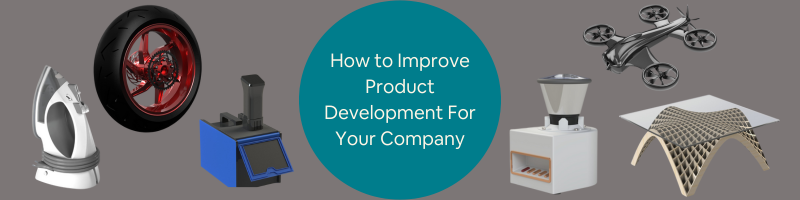
How to Improve Product Development For Your Company with Engineering Firms & Design Consultants


Product design is a complex and interactive process that involves a range of stages, from ideation through to final product launch. Those companies charged with creating innovative, high-tech products are those that engage the services of engineering companies and design consultants within a top-shelf firm like Cad Crowd, gaining access to world-class expertise as well as thinking outside the box. The secret to enhancing your product development is finding out how partnerships function, the value that they add, and how to infuse their input into your operations without interruption.

This article discusses the best practices through which companies can maximize their product development through partnerships with engineering design firms and design consultants. We will dissect the advantages, the process involved, and the step-by-step steps towards a successful partnership that yields innovative and market-ready products.


🚀 Table of contents


The role of engineering firms and design consultants in product development

Product development is the practice of bringing together various disciplines in order to turn a product into something not only functional but also desirable and saleable. The two major actors in this role are engineering firms and design consultants, each with its own capabilities.

Engineering firms undertake the technical component of product development. They specialized in areas including mechanical, electrical, software, and industrial engineering. The primary role is to translate abstract designs into concrete, functional products, ensuring that a product is not just functional and reliable but also manufacturable in volume. They also provide valuable insights regarding materials, processes, and technologies required to make the product function effectively in the real world. Their experience makes the design functional, safe, and inexpensive to manufacture, filling the gap between the original concept and the finished product.

Design consultants, on the other hand, focus on the UX and look of the product. They dive deep into how the product feels, looks, and engages with the end-user. Design consultants make the product appealing to the target consumers by focusing on aspects of form, functionality, and ergonomics. They use creativity and market knowledge to create a design that not only works but is also stunning and in sync with current fashion trends. Keeping abreast of the consumer’s taste, they position the product so that it stands out among others in a competitive market.

Together, engineering companies and design consultants offer a balanced solution to product design services. Engineering companies offer technical accuracy and functionality, while design consultants ensure the product resonates with the consumer on an emotional level. The combination creates innovative and sellable products.

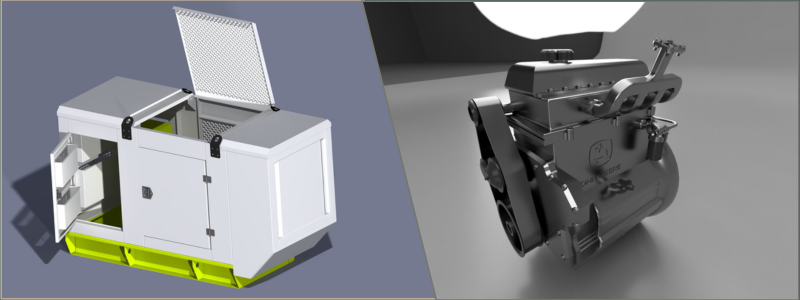
product design of a smart watch and glass cup by Cad Crowd design experts

RELATED: A guide to electronic product design for manufacturing with PCB design firms & engineers

The benefits of working with engineering firms and design consultants

Collaboration with outside experts, including design consultants and engineering companies, can make a significant difference in product development. These partnerships enable businesses to access top-tier talent, innovate more effectively, shorten time-to-market, and reduce costs and risks. By merging the skills of engineers and consultants, companies can achieve better product outcomes and avoid costly mistakes. The following is a closer examination of the specific benefits these collaborations offer.

Expertise and specialized knowledge

One of the strongest arguments to collaborate with engineering firms and design consultants is the level of expertise they can provide. Engineering design experts, whether they are making it manufacturable, ensuring it meets industry standards and laws, or dealing with challenging engineering issues, are able to handle the technical issues that can otherwise slow or halt a project. They can make sure that a product can be produced effectively and safely, and it meets all specs required.

Alternatively, design consultants provide insightful perspectives in areas such as consumer behavior, usability, and ergonomics. They are experts in knowing what the target market likes and making a product functional and user-friendly as well as pleasing to the eye. Through working with such an expert, businesses are able to design products that are market-friendly, user-friendly, and market competitive.

Innovation

Having outside experts collaborate with them also creates innovation. Design consultants and engineers introduce new ideas and innovative solutions that may not be conceived by in-house staff. These specialists are used to thinking outside the box and generating solutions that go against the norms. For instance, an engineering company can propose a new method of production that reduces costs or extends the lifespan of the product. In the same manner, design consultants can bring in new materials, beauty, or functionality that enhances the product’s value to the consumer.

The inclusion of consultants in the design process ensures that companies stretch the limits of their product ideas and find opportunities for differentiation they might otherwise not have discovered on their own without assistance. This surge of innovation and expertise can lead to more breakthrough products well-positioned to seize the marketplace for consumer product design companies.

Less time-to-market

Collaboration with professionals will easily accelerate the development cycle. Engineering companies and design consultants typically have well-documented processes and design tools that facilitate straightforward testing, prototyping, and design. They also possess experience with numerous projects, enabling them to foresee potential challenges in advance so the team can take proactive measures to address issues before they impede progress. Moreover, these experts can quickly prototype and test ideas, thus shortening the time required to transition from conception to completion.

The faster one can get a product into the market, the faster it will start making money and building brand recognition. Companies can significantly minimize their development timeline with the assistance of external specialists and become the leaders in constantly evolving industries.

Cost efficiency

Though outside consultant and engineering firm costs are a drawback, the initial upfront price, the initial upfront price is a drawback, they can actually end up saving enormous amounts of money. Engineering companies are valuable at finding and fixing design faults prior to these being turned into money-wasting production problems. Through making things more manufacturable, companies allow products to be manufactured cheaper and thereby save materials and production dollars, such as through design for manufacturability services.

Cost savings by product refinement are also designed by design consultants for the sake of meeting user needs and market requirements. A product that is appropriately designed in the first place will not need redesigning or costly rework. Consultants save companies from expensive mistakes, such as designing a product that people won’t appreciate or one that fails to perform as designed in the real environment.

Mitigation of risk

Third-party experts have a sense of caution, enabling companies to avoid risk at the onset of product development. Design consultancies and engineering companies have a third-party perspective, detached from the design process and therefore able to point out problems that may be missed internally due to bias or expertise. By detecting such risks early on, i.e., probable safety issues, manufacturing problems, or usability defects, experts can come up with solutions that prevent secondary, bigger, and more expensive issues.

Identifying errors is important to prevent delays, expensive product recalls, or lawsuits that could harm the business reputation. With the counsel of experts, companies can tackle challenges head-on, gaining a smoother and more successful product launch.

In brief, co-operation with design consultants and design engineering firms has several benefits. From innovation and experience to reduced times to develop, cost savings, and risk elimination, such co-operation can make the product development process. Through the leverage of the experience of external experts, companies can develop more successful products and gain a competitive edge in the competitive market.

How engineering companies and design consultants improve the product development process

Product development is a multi-faceted process involving numerous factors such as design, cost control, user needs, manufacturability, and compliance with regulatory legislation. Design consultants and engineering firms are the main protagonists in this process, providing professional guidance that shortens the development cycle, enhances performance, and ensures commercial success. By collaborating, they offer essential guidance at every stage of the product life cycle, ranging from conceptualization to completion and manufacturing. Now, we will explore how design consultants and engineering firms assist with product development in the following areas.

A) Development of clear requirements and specifications

The first part of any product development project is to create well-defined, actionable requirements. This is the most critical stage because it sets the tone for the remaining development process. Both design consultants and product engineering companies utilize their expertise to translate them into solid technical specifications.

Engineering input

Engineering companies play the central role at this point in specifying and designing the technical specifications needed in a bid to realize the product. This entails making decisions regarding the materials that will be used, the performance levels that are desired, and the manufacturing methods. Engineers also need to ensure that the product will be technically possible and can be constructed within the intended budget. They also take into account pragmatic considerations like print durability, safety, and legality that prevent problems down the line that might jeopardize the product’s launch.

Design input

Design consultants bring a creative input. They are user experience-focused, though. So the product is not only beautiful, ergonomic, and easy to use. They define the user interface, visual design, and functionality from the consumer perspective. These are basic factors, as whether or not a product works also hinges upon whether or not it is acceptable to the ultimate consumer. The design consultants would reassure that the product design would be appealing to its target consuming audience and at the same time adhere to the brand identity.

This collaboration between designers and engineers makes sure that everyone involved in the project has a clear vision of the project constraints and objectives. The outcome is a clearly defined roadmap that reduces the risk of scope creep and maintains the project on course.

RELATED: Master product design costing: Top strategies for CAD services companies & freelance designers

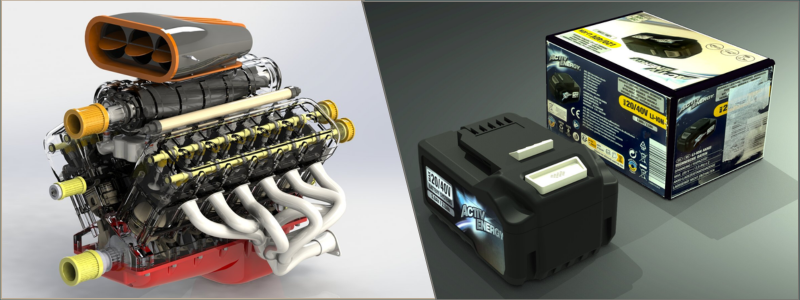
Product design of a watch and RV camper by Cad Crowd design professionals

B) Prototyping and iteration

After the first-stage design requirements, the second major phase of the product development process is prototyping. Through prototyping design engineering services, designers and engineers are able to experiment with their concepts in real form, receiving useful feedback regarding how the product will behave in real life.

Engineering perspective

For engineering companies, a prototype serves as a test demo for technical performance. They ensure that the product can be produced in volume and that it passes required safety testing. Engineers also test the product’s performance and durability under different sets of conditions. This is a crucial component of detecting and correcting any design defects prior to large-scale production. If the prototype either does not perform or fails to clear regulatory tests, the engineers will return to the drawing board and redesign until it is functional and producible.

Design perspective

Prototyping for design consultants is an opportunity to refine the design and user interface of the product. Designers pay attention to things such as how the product appears, feels, and how the product and user interact. They keep a very close eye on ergonomics, usability, and design appeal in general. Feedback from user testing, for example, from individual user interviews or focus groups, will most likely yield the richest feedback that will influence design development. Evolutionary design changes ensure not only that the product is useful but also that it is salable and appealing to consumers.

The iteration and prototyping stage is a joint effort, with designers and engineering design firms closely working together. Through testing the prototypes, technical and user feedback are integrated, and the product progresses towards its final product. Iteration is vital in helping find and solve problems early on before making expensive errors later.

C) Simplifying manufacturing and supply chain

Design and functionality of a product take precedence, but manufacturability and getting it to the customer are just as critical. Engineering companies are notorious for taking the lead in these aspects, ensuring the product can be scaled up for cost-efficient and effective manufacturing. Design consultants ensure the product design is scalable for production without sacrificing user experience.

Engineering’s role in manufacturing optimization

Engineers are responsible for selecting suitable materials, establishing production techniques, and simplifying production processes. They are interested in ensuring the product can be produced in high volume within budget constraints while maintaining quality. Engineers may suggest design modifications that make production easier or cheaper, such as simplifying assembly processes or using substitute materials that reduce the cost of manufacture without loss of function.

Design’s role in scalability

Design consultants ensure the product design can be mass-produced. They ensure the design will be uniform and function correctly if mass-produced. This is particularly important in consumer goods, where design elements must be duplicated exactly across enormous quantities. By finding a balance between manufacturability and aesthetics, designers ensure the end product is not only functional but also maintains its original appeal once mass-produced. Design for manufacturability services specialize in harmonizing these two qualities for mass production.

Collaboration between engineering companies and design consultants is paramount in supply chain optimization. While the engineers focus on minimizing production costs as well as manufacturing processes, the design consultants make sure that the end product is not only visually appealing but also easy to use and aesthetically consistent. The collaborative approach guarantees that the product is not just producible but also affordable and competitive in the market.

D) User-centered design and feedback loops

In a competitive market, the key is integrating customer feedback into the product development process. Design consultants gather and analyze user feedback to ensure that the product satisfies the needs and expectations of its customers. User testing, focus groups, and surveys are used by designers to get valuable insight into how the product functions under everyday conditions.

Engineering’s role in feedback integration

As user feedback is being collected by design consultants, engineers make sure that user-driven modifications do not harm the product’s functionality or manufacturability. Engineers make sure that design modifications are technologically viable and won’t adversely affect the product’s performance or safety. This dialogue offers a cycle of feedback constantly improving the user experience of the product without jeopardizing technical integrity.

This ongoing process of refinement and upgrading is necessary for the creation of a product that not only satisfies user requirements but is functional, durable, and producible at high volume.

E) Cost optimization and efficiency

Cost minimization is the key issue for every business in product development. Product design experts and engineering companies work together to find cost-saving opportunities without impacting the product quality and creativity.

Engineering’s role in cost optimization

Engineering companies can provide more affordable materials and production processes that can lower the cost of production. For instance, they can suggest the use of substitute materials that are less expensive but just as good in terms of performance. Manufacturers can also be streamlined by engineers, minimizing labor costs and maximizing efficiency.

Design’s role in cost efficiency

Design consultants will be in a position to recognize unnecessary parts or features that can be cut out or simplified to lower production costs. They can recommend design modifications to simplify the manufacturing process or lower assembly costs. Designers keep the product affordable and yet make it viable for the market by emphasizing essential features and cutting out the unnecessary ones.

By maximizing both design and engineering considerations, companies can design products within their budget and yet have the required quality and functionality.

Best practices for working with engineering firms and design consultants

To maximize value from working with engineering firms and design consultants, and even manufacturing design services, companies must follow some best practices that promote cooperation and result in successful product development.

A) Clear communication and alignment

From the beginning, there must be clear communication among all parties. Design firms and engineering firms must learn your company vision, objectives, and target audience. Frequent meetings, transparency in communication, and documentation keep everyone on the same page throughout the development phase.

B) Set realistic expectations

Development is a complicated process, and hurdles are always present. Setting realistic expectations on timescales, costs, and results allows it to be possible to deal with any unexpected obstacles. Having contingency plans and an open line of communication available ensures that derailments can be corrected on an expedited basis.

C) Create synergy between designers and engineers

Promoting coordination among designers and engineers makes it simple to identify issues early, which creates innovative ideas and brings both sides of the product together without conflicts. Cross-functional teams have the ability to introduce diverse ideas to the project, which is what makes the project innovative and effective.

D) Continuous feedback and iteration

The process of product development is a circular one, and feedback is to be included at each step repeatedly. Expert engineering design consultants have very crucial roles to play in including testing feedback, user feedback, and market feedback into the product development process.

RELATED: How much does NPD cost? Rates & pricing for services at top design companies

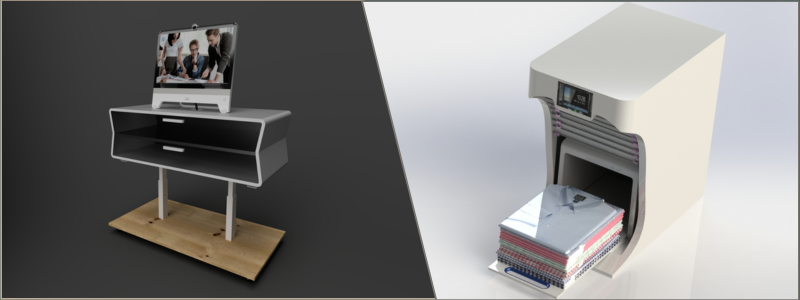
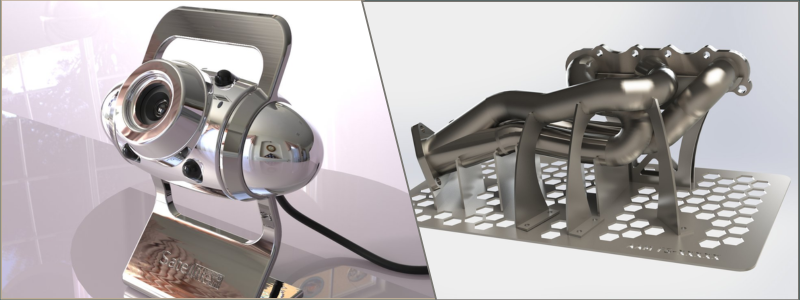
Product design rendering of a smart TV and SIM racing rig by Cad Crowd design professionals

E) Have a long-term partnership

Long-term associations with engineering firms and design consultants could lead to improved and innovative product development. Over time, the partners come to know your business objectives and beliefs better, making it easier to work with a quality output.

Starting from establishing clear requirements and specifications to streamlining the production process and integrating users’ input, their technical know-how makes products functional, producible, and user-friendly. By promoting teamwork, establishing realistic expectations, and establishing open lines of communication, firms can deliver high-quality products that satisfy consumers’ requirements and business goals.

Conclusion

Product development is not just enhanced by technical knowledge or creative design—it’s the way one brings the two together in a team setting. By collaborating with engineering companies and design consultants, businesses are able to leverage specialized knowledge, drive innovation, and simplify their development process. What emerges is not just a product that functions, but a product that interacts with users and dominates the market.

How Cad Crowd can help?

By adhering to best collaboration practices, defining clear objectives, and implementing an iterative process, your business can realize the full potential of these partnerships and introduce into the market products that are not only useful but also innovative, user-friendly, and affordable. Collaborate with Cad Crowd to achieve success as you deserve. Request a quote today.

author avatar

MacKenzie Brown is the founder and CEO of Cad Crowd. With over 18 years of experience in launching and scaling platforms specializing in CAD services, product design, manufacturing, hardware, and software development, MacKenzie is a recognized authority in the engineering industry. Under his leadership, Cad Crowd serves esteemed clients like NASA, JPL, the U.S. Navy, and Fortune 500 companies, empowering innovators with access to high-quality design and engineering talent.

Connect with me: LinkedInXCad Crowd

What You Need to Know When Hiring a Product Design Firm & Designer for New Prototypes


So, you’ve got an idea. A product idea. Maybe it’s a game-changing kitchen gadget, a smart wearable for pets, or a sleek piece of exercise gear that folds into your coffee table. Whatever it is, one thing’s clear: you can’t build it alone. That’s where a product design firm or a skilled freelance product designer from the industry leader Cad Crowd comes in. But finding the right one? That’s kind of like dating. There’s chemistry, there’s trust, there’s the first awkward meetings, and hopefully no heartbreak.

It’s not about creating something that “looks good.” It’s about bringing your idea to life, making it manufacturable, functional, and desirable. It’s a path from sketchbook to prototype, and then on to something that sits on a shelf (or finds its way onto a TikTok shopping haul).

But don’t worry. You don’t have to be an engineer, an artist, or a Silicon Valley visionary. You just need to know what to look for. Here’s your whole guide to hiring a product design team that won’t ghost you after the first render.


🚀 Table of contents


Why you can’t skip the pro team

Product prototyping isn’t about cobbling things together with hot glue and prayer. It may be tempting to rely on a tech-savvy uncle who has a 3D printer, but there is a huge gap between a homemade mockup and a professionally designed prototype that can really sell. That’s where an experienced product design company comes in—and why bypassing them can be more expensive in the long term.

The pros bring more than just tools. They bring a multi-disciplinary team: industrial designers who focus on aesthetics and usability, mechanical engineers who obsess over structure and durability, CAD specialists who translate ideas into manufacturable models, and materials experts who know exactly what will work (and what will melt under pressure). If your idea includes electronics, electrical engineers are often part of the lineup, too.

But the greatest value isn’t merely technical expertise. It’s the critical thought that goes into each choice. An expert team understands how to ask the proper questions: Will this work in the real world? Is it safe? Can it be produced at scale and economically? And perhaps most importantly, will it delight users?

Collaborating with a professional product design company isn’t about delegating your concept; it’s about getting it right the first time. Since the journey from idea to reality is riddled with make-or-break moments, you want individuals in your corner who have successfully traveled that path and who know exactly where the potholes lie.

RELATED: How is product design different from industrial design services companies?

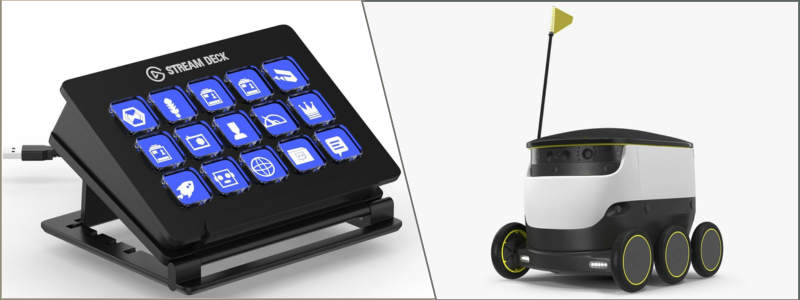
Product design of a elgato steam deck and robotized delivery machine by Cad Crowd product engineering experts

The big questions you should ask before you sign anything

Imagine this: you’re in a modern conference room, with an espresso cup nearby, surrounded by pristine sketches, polished prototypes, and excited designers who are obviously proud of what they’ve made. It’s easy to jump in headfirst, give the go-ahead on the project, and envision your product launch going viral. But before you become carried away with the euphoria, it’s time to put on the brakes and demand the hard questions, especially the ones that can make or break your project later on.

Q1. Have you developed products similar to mine?

Experience in your particular category of products is not a plus; it’s a necessity. Creating a smart wearable device is different from creating a new chair or kitchen gadget, even for product design firms. If your product has electronics, wearables, moving pieces, or has to meet exacting safety requirements, you need a partner who’s already familiar with that landscape. Request examples. Case studies. War stories, even. A team that has “been there, built that” will keep you out of expensive side roads.

Q2. Do you do everything in-house?

Not all design companies are equal. Some provide full-service solutions from ideation and sketching through prototyping and factory-ready files. Others might subcontract work such as CAD modeling or prototyping to outside vendors. That’s not necessarily a bad thing, but it’s important to know who’s actually performing the work. You don’t want to find halfway through a project that your prototype is being sent half around the world, or that essential design files are handled by some nameless freelancer. Transparency is essential.

Q3. What’s your prototyping process?

This question says a great deal about the company’s technical ability and how seriously they are taking your vision. Are they handing you 3D prints glued together with super glue, or are they giving you high-fidelity prototypes that closely represent the final product? If your project is being presented to investors or you are going for crowdfunding, appearance and function count big time. A professional prototype created with CNC-machined aluminum or molded plastics says you mean business.

Q4. Can I own the IP?

You’d be amazed how many business people sweep this one under the rug. Intellectual property is everything. Your name on the patent application, your brand on the design, and your rights locked in black and white. Contracts must be cut-and-dried: you own all IP created under the project. No gray language. No co-ownership. No “we retain rights on particular components” provisions. If the design company resists this, it’s a warning sign.

Q5. What is the DFM (Design for Manufacturing) plan?

A gorgeous prototype is only half the journey. The real magic happens when that design is ready to roll off the production line efficiently and cost-effectively. That’s where DFM services come in. If the design team can’t explain how your product will be manufactured at scale, or worse, they haven’t thought about it at all, they’re not building a business; they’re building a one-off model. Ask how they handle production constraints, material choices, and supplier communication.

Short and sweet, enthusiasm is wonderful, but preparation makes it perfect. Ask these questions, make notes, and don’t accept vague replies. Your product and your company deserve clarity and competence from the beginning.

RELATED: Key factors to consider when vetting engineering firms for design & consulting services

Behind the scenes: What product design firms actually do

When someone hears “product design firm,” they might envision a group of creatives rolling up their sleeves and batting out chic 3D drawings and presenting them with a flourish. That may be the superficial tip of the iceberg, but what actually goes on behind the scenes is an awful lot more complex, strategic, and team-based. A product design company doesn’t merely make things look nice; it assists in shaping ideas into producible, marketable products. Here’s a greater insight into what the entire process actually entails.

Phase 1: Discovery & concept development

This is the time your idea gets to take its first breath. You arrive with sketches, inspiration boards, or perhaps just a rough idea in your head. The concept design service team has its own weaponry, which includes whiteboards, post-its, coffee-fueled ideating, and lots of curiosity. The intent here is to understand user requirements, market voids, and product objectives. Don’t worry if your original concept gets remolded or questioned. The whole point of this phase is exploring and distilling down a vision that’s innovative and realistic.

Phase 2: Industrial Design

And now the party starts. This is when the visual identity of your product comes into being. Designers consider ergonomics, aesthetics, user interface, and visual effect. They create concept illustrations, create mood boards, and start modeling initial designs in CAD. But it’s not merely creating something pretty; however, it needs to be right and act naturally for the end user. It’s where form and function come together in an explicitly intentional and user-oriented manner.

Phase 3: CAD modeling & engineering

Design concepts are passed on and developed into precise 3D models. Engineers come aboard to sort out the nuts and bolts: materials, component location, load tolerances, and mechanical systems. CAD packages become the collaboration language of first resort. All the way down to screw holes and cable run, everything is carefully specified. This is the stage where the design team begins to answer the essential question: Can this even be built?

Phase 4: Prototyping

Now that the digital work is complete, it’s time to go physical. With additive manufacturing services, CNC machining, and other rapid prototyping tools, the product begins taking form in the physical world. This isn’t for display purposes alone—prototypes are examined for feel, fit, strength, and usability. Can the hinge withstand repeated use? Does the button provide proper tactile feedback? It’s all about checking the design and identifying what needs to be corrected before proceeding.

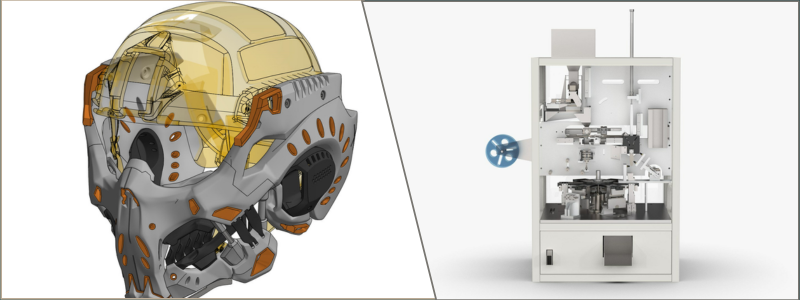
3D product rendering of an airsoft mask and tea bag automated packager by Cad Crowd product design engineers

Phase 5: Refinement & pre-production

Prototype is followed by a cycle of feedback and revision. Perhaps the material selection must be tailored, or the transformation could be more ergonomic. The team makes product refinements based on field testing and stakeholder feedback. Engineers validate that the design is suitable for mass manufacturing, streamlining assemblies, minimizing components, and maintaining cost-effectiveness while preserving performance.

Phase 6: Handoff to manufacturing

Lastly, the design is ready to face the world. Detailed CAD files, production drawings, and bills of material (BOM) are complete. Some companies even help with finding manufacturing design companies or taking orders from vendors. Everything is now ready to go smoothly from the design studio to the shop floor.

So no, it’s not all about fancy renders. It’s an intense development process, significant collaboration, and an infinite number of iterations all to create a product the correct way.

Red flags that shout “Run!” when selecting a product design agency

A beautiful portfolio or crisp website can be extremely convincing, but remember, do not be seduced. Even the most professional-looking design agencies can be a bad fit when you look beyond the surface. Before you sign the contract, here are some serious red flags that should make you reconsider the arrangement.

Number one: no physical prototyping abilities. Great digital renders, perhaps, but if a company can’t create and test physical prototypes, how will it determine true-world usability, longevity, or fit? A design that exists solely on a screen isn’t very helpful once consumers hold it.

Then there’s the abhorred one-size-fits-all strategy. Your product is specialized if it’s a niche or combination design, such as a smart lock with a skateboard attachment. If a company appears to be using the same process with each client, it probably means they’re not customizing for you.

Another dealbreaker is the lack of understanding of production. A stunning concept, in the minds of some designers, is the last step in their work. But if production is too expensive or impossible, then the design serves no use. From the very beginning, the top product engineering design companies think about production limits.

Listen to what they say, too. If every other sentence is full of industry jargon but you still don’t have a clue what they’re talking about, that’s an issue. Clean communication is important. If they can’t describe their process in simple English, then they probably don’t even know it well themselves.

Lastly, ambiguous pricing and schedules should cause you to pause. Experienced firms know how to estimate costs and timelines. If everything seems fuzzy or TBD, that’s a big red flag that they’re not yet prepared or inclined to commit.

Bottom line: trust your gut. If it doesn’t feel right, it likely isn’t.

RELATED: A guide to electronic product design for manufacturing with PCB design firms & engineers

How much does this actually cost?

Yes, the money talk. It’s not really anyone’s favorite subject matter, but if you’re truly determined to introduce a new product, you can’t afford to brush it under the rug. So, how much does product design and prototyping really cost?

If you’re creating a simple consumer product, like a kitchen appliance or a simple plastic box, the costs usually range between $15,000 and $50,000. That usually covers everything from preliminary concept drawings to a functional prototype. But it gets a little more serious (and costly) when you enter into complicated territory.

Products that encompass embedded electronics, specialty materials, or rigorous safety protocols, such as medical devices or wearable smart things, can easily drive the price to $75,000 to $150,000, and even higher at times. These are not merely frilly figures. They represent the broad engineering, prototype design engineering service, and regulatory hurdles involved.

Now, sure, freelancers tend to hit the market at more affordable price points. If you’re a startup struggling to get traction on a shoestring budget, you may see quotes ranging from $5,000 to $10,000. Sounding pretty good, right? Well, here’s the problem: that $5,000 design may never actually be produced. If it can’t be manufactured, or it doesn’t work when put to use in real-world applications, you’ve pretty much wasted money with nothing to show for it.

So what are you actually paying for? Not just doodles. It’s about expertise, productivity, and problem-solving. An experienced team understands how to avoid the types of errors that kill a project several months into the process. And where each delay costs more than dollars, time, opportunity, and momentum, it will become apparent that wise investment early on often translates to better returns down the line.

Short answer: Cost is important. But the value is more.

Should you hire a firm or a freelancer?

It’s a typical dilemma for anyone creating something new: do you hire a full-fledged design agency or a lean freelancer? The response isn’t one-size-fits-all. It actually depends on the scope of your project and how involved you want (or need) to get.

Design companies send a whole team along. Consider industrial design experts, CAD specialists, mechanical engineers, prototypers, and sometimes even supply chain experts. If your item is complicated or if you need someone to guide it from the first sketch to full production, this one-stop shop experience can be a big winner. You receive organization, accountability, and often an efficient process.

Freelancers, on the other hand, provide a concentrated and flexible solution. Perhaps you only require CAD drawings. Or a nice product rendering. Or an outside opinion on a mechanism that’s been stumping your team. Freelancers tend to be cheaper, and they typically are quicker to get up to speed. The catch? You’ll be responsible for coordinating other aspects of the project, such as electrical engineering, procurement, or end prototyping.

The third option is à la carte services, where you can access their expertise without purchasing the entire ticket. Need just a prototype? Or want a design audit before you invest in tooling? These companies can step in at a halfway point and provide specific support holes.

Ultimately, it’s all about connecting the right talent with the right point in your product journey. Whether that’s the power of a firm or the flexibility of a freelancer is a matter of what you’re building and how you want to build it.

RELATED: How to reduce painful product development costs for your company

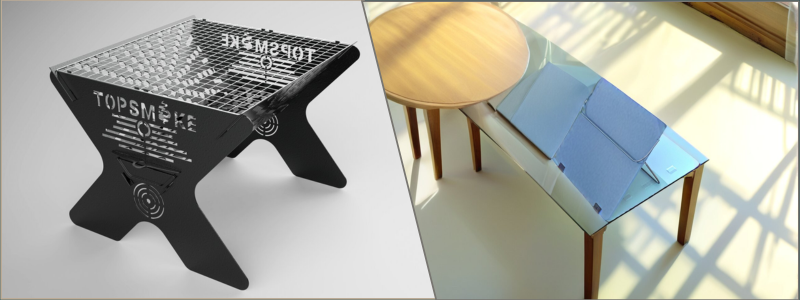
Product design rendering of a portable firepit and laptop table by Cad Crowd engineering experts

What great designers and firms have in common

When you’re in the market for a design partner, whether it’s a freelance pro or a full-fledged consumer product design firm, it’s easy to get distracted by beautiful mockups and slick presentations. But great design isn’t just about looks. It’s about working with someone who truly gets what you’re building, why it matters, and how to make it real.

One thing that distinguishes good designers from great ones?

  • Curiosity: Great designers won’t simply nod and agree with anything you propose. They’ll ask intelligent questions regarding your users, your business objectives, and even your competition. That’s how they adapt solutions to what you really need, rather than what you believe you do.
  • Candor: If your idea has a hole in it, you want someone who’s honest enough to say so and skilled enough to offer better alternatives. No sugarcoating. No unnecessary flattery. Just useful, constructive feedback.
  • Collaboration: A good designer understands that this isn’t a one-and-done deal. They’ll listen attentively, articulate their decisions clearly, and shift their strategy as your project unfolds. It’s a two-way conversation, and the best ones ride with you each step of the way. Just as crucial is a production mentality. A design that appears stunning on the screen but is prohibitively expensive to produce is a dead end. Great designers know how things work in production and design accordingly.

Lastly, the results are not simply nice shots, but products in the real world, rave reviews, and case studies that speak to their effect. Specific client testimonials can say more than any portfolio ever could.

Bottom line: Brilliant designers pose intelligent questions, provide frank responses, collaborate like teammates, and realize your ideas in style and function.

How long does it take?

How long do products actually take to design? If you were thinking of getting it all done in a few weeks, think again. A full product design process from your first concept to production files is typically 3 to 9 months, and sometimes more. The timing depends on complexity, especially in the case of electronic device design firms.

For instance, a straightforward plastic product can be done in 3 or 4 months. But if you’re working on something more complex, such as a wearable device with electronics or several user interfaces, then you’re talking about 6 to 12 months or even longer. This is not a rush project; it’s about accuracy, testing, and polish.

After all, you’re not simply drawing a nice thing; you’re creating something that people will actually use, maybe on a daily basis. Taking the extra time to get it right the first time will save you from expensive errors later on. In product design, patience isn’t a virtue; it’s essential to success.

Working with a design firm: Tips for a smoother ride

Want to be a dream client? Here’s how to steer clear of the bumps.

  • Come with clarity. You don’t need a complete spec sheet, but have a sense of your objectives. What are you solving? Who’s your user? What’s your vision?
  • Be flexible. Your idea can shift. That’s not a failure, it’s evolution.
  • Provide good feedback. “I don’t like it” doesn’t tell us much. “It feels too heavy for a kid’s hand.
  • Patience is polite. Respect the process. Good design is iterative. Anticipate several rounds and expect some twists along the way.
  • Prototype planning. Budget and time must be allocated for not only one, but possibly several prototypes. It’s part of figuring out what works.

RELATED: What are industrial design rates & costs at product design services firms?

Design is where magic meets mechanics

There’s something thrilling about witnessing your product evolve from sketch to shelf. The best product design firm isn’t merely a team; you need to find your co-pilots on this wild journey. The process will test your patience, challenge your assumptions, and potentially reshape your initial idea through open innovation services.

But with the right partners, you’ll gain more than just a prototype. You’ll have a product ready to face the real world, with every curve, button, and detail meticulously considered by people who live and breathe design.

Cad Crowd is here to help!

So, don’t rush! Take your time to ask the tough questions and look beneath the surface. When it comes to bringing your idea to life, hiring an excellent product design team from Cad Crowd is not just the first step; it’s the most crucial one in transforming that “what if” into a “wow.” Don’t wait any longer—get in touch with us today for your free consultation and discover how we can help you turn your vision into reality! Request your FREE quote now!

author avatar

MacKenzie Brown is the founder and CEO of Cad Crowd. With over 18 years of experience in launching and scaling platforms specializing in CAD services, product design, manufacturing, hardware, and software development, MacKenzie is a recognized authority in the engineering industry. Under his leadership, Cad Crowd serves esteemed clients like NASA, JPL, the U.S. Navy, and Fortune 500 companies, empowering innovators with access to high-quality design and engineering talent.

Connect with me: LinkedInXCad Crowd

The Simple Secret To Unlocking New Product Innovation at Design Services Companies


You can have the greatest engineers, the most visionary designers, and a budget that would make a startup cry tears of happiness, and still get it wrong when it comes to product innovation. Ridiculous, right? But here’s the catch: most design services firms are searching in all the wrong directions for the next big thing. They follow trends, hold onto processes, overthink metrics, and overlook the one secret ingredient that really gets the innovation needle moving.

Cad Crowd, the leading agency, can help you choose from over 94,000 experts and product design experts. These experts don’t simply help bring concepts to fruition; their help actually plays an imperative role in helping speed the overall product creation process along. What could be an otherwise protracted, fat-bloated undertaking, these designers transform into streamlined, quick-line paths for reaching the marketplace as fast as possible. So, what’s this amazing fairy dust elixir that the top design services firms at Cad Crowd are using today? Is it some kind of AI magic? A creative brainstorming session? Or maybe a unique five-step approach with a catchy name?

Not so much. The trick is reassuringly straightforward: deep user insight.


🚀 Table of contents


Why “knowing your user” isn’t just UX fluff

Let’s get something straight right off the bat—when we talk about “knowing your user,” we’re not referring to those cookie-cutter personas scribbled on a whiteboard during a kickoff meeting. You know the ones: “Sarah, 32, lives in the suburbs, likes yoga, struggles with time management.” That’s surface-level. Decorative. It might look good on a slide deck, but it doesn’t move the needle when it comes to creating products that truly resonate.

What we’re actually discussing is an intimate, visceral knowledge of the people you’re designing for. We’re discussing understanding their pain points so well that you cringe when you consider them. About discovering wants they didn’t even know they had. It’s about listening to their irrational behaviors and unmet needs, the messy, inconsistent things that never materialize in surveys but always materialize in real-life behavior. That’s where the gold lies.

And yet, far too frequently, product design services firms succumb to an old temptation: they begin designing for the client, not for the client’s user. On paper, it seems innocent enough. You do want to please your client, don’t you? Naturally. But here’s the thing: if you leave it there, if your whole design process is based on stakeholder desires and business objectives without grounding those in actual user understanding, then all that “innovation” you’re peddling? It’s window dressing. Pretty. Polished. But fundamentally empty.

RELATED: Key factors to consider when vetting engineering firms for design & consulting services

hand orthosis and robot cleaner product design engineering by Cad Crowd experts

There’s a good reason why Airbnb is cited so frequently in discussions of design thinking; let’s take a step back and look at it. In their early, nascent days as a startup, Airbnb didn’t innovate by investing much in internet advertising or expanding its technology. They went door-to-door instead, which is far less tech-savvy. I mean it. They interacted with hosts in person, photographed houses to a professional standard, and, most crucially, had one-on-one conversations with users. Presumptions were not made by them. They got in touch with nature, lived through it, inquired, and listened intently to what others had to say and didn’t say.

That’s the sort of raw, boots-on-the-ground research that powers good design. It’s not sexy, and it doesn’t scale well, but it works. Why? Because actual users don’t act like spreadsheets or personas. They act like people. And if you want to design something they’ll care about, you need to know them on that level.

For consumer design services firms, especially those juggling multiple clients and deadlines, this kind of deep immersion might feel like a luxury. But here’s the truth: it’s not a luxury. It’s essential. Yes, it takes time. Yes, it might stretch your process. But the payoff is products that connect, experiences that matter, and clients who see real results.

Because ultimately, good design isn’t about guessing. It’s about knowing. And that knowledge is not fluff, it’s your foundation.

The innovation mirage: Why tech and tools aren’t enough

You’ve got the best CAD software on the market. Your team is packed with top-tier talent, PhDs, award-winning designers, and agile-certified project managers. By all accounts, you’re set up for groundbreaking innovation. But then, the results are just okay. Not bad, not brilliant. Just lukewarm.

So, what gives?

Here’s the uncomfortable truth: innovation is not born from tools. Innovation comes from a point of view. You can’t mechanize creativity. You can’t plan a lightbulb moment into a two-week sprint. But so many design services agencies fall into the trap of adoring their process. Agile, Scrum, Double Diamond, Lean UX—these are all great frameworks. But none of them will bail you out if you’re not actually curious about the problem that you’re solving.

Open innovation services aren’t just tasks on a Jira board. It exists in messy discussions, strange client responses, and casual mentions in user interviews. It happens in the resistance, the feeling, the things you can’t map out in a process chart.

Consider this: providing your team with the newest software and hoping for magic is similar to giving someone a top-of-the-line kitchen and insisting on a Michelin-starred meal, without ever instructing them on how to taste. If they have no idea what great food tastes like, all the fancy equipment in the world won’t matter.

It’s the same with product design. Without a true sense for your users, their weak points, their idiosyncrasies, their unstated wants—your high-powered tools aren’t going to do much for you.

So, yes, spend money on tech. Hire geniuses. But don’t ever forget that the source of true innovation lies not in what you use, but in how you look. And sometimes looking different is the most difficult skill of all.

RELATED: How to improve product development for your company with engineering firms & design consultants

The “Crawl into Their Lives” technique: How field immersion ignites genuine innovation

If your product development experts creative spark is on fumes, do this easy yet potent reboot: send your designers out into the actual world. No laptops, no questionnaires, and absolutely no scripted interview questions. Simply have them drop in where your users reside, work, or play—and listen.

This method, which we prefer to refer to as the “Crawl into Their Lives” technique, is about getting into another person’s day-to-day life and observing closely, not from a cubicle, but in the field. Watch how a person struggles with a hair dryer in a cramped hotel bathroom. Observe a warehouse worker on a 2 a.m. barcode-scanning shift. Notice the awkward stretches, the slight grimaces, the workarounds they’ve developed just to get the job done.

You’re not just collecting data, you’re absorbing context, pain points, and emotional cues. It’s investigative design empathy. And it changes how your team thinks.

Here’s a real-world example: a medical device design expert team building a portable medical device observed nurses in an ER by sitting in it. What they observed was not what they had anticipated. In that high-pressure, chaotic setting, nurses did not concern themselves with touchscreen beauty or immaculate button arrangements. They wanted something they could grab with one hand, use on the go, and yell over. That epiphanic moment didn’t result from a focus group. It resulted from being there.

So if you’re trying to unleash innovation, ditch the lab. Instead, crawl into the lives of the people you’re designing for. You’ll return with insights you never knew you needed—and solutions that actually make sense in the messiness of real life.

The layer cake of product innovation: Strategy, empathy, and iteration

In spite of all the moving pieces, inventing a product is really rather straightforward, like putting together a three-layer cake. The entire structure is dependent on each level; thus, its absence will cause it to collapse. So, how important is the “empathy” component, which entails developing a thorough familiarity with the user?

Let’s start with the foundation.

  • Strategic Alignment is the ground floor where you figure out market trends, define clear business objectives, size up the competition, and define a solid value proposition. This level addresses the big questions that answer the purpose of creating the product and its market leads.
  • Empathetic Design is the layer most frequently neglected. It is the human aspect of innovation. It changes the attention from numbers to individuals and questions Who are we designing for? What do they really need, not what they tell us they want? This layer brings emotional intelligence to the mix, which makes products engage on a true, human level.
  • Rapid Iterations happen quickly for designing, prototyping, testing, and refining. It gets to the “how,” but only if it’s based on the strategy and empathy that comes first. Without understanding, rapid iteration is just rapid guessing.

Most 3D and engineering design service providers excel at the upper and lower levels, but this is where they all fall short. Their actions are in sync with company goals, and they are swift. But what if they remove the layer of empathy? Assumptions, not reality, are what they’re iterating on. Plus, that always ends in failure.

So, remember that the intermediate layer is crucial if you want to create innovative products that truly connect with people. Your innovative cake might be visually appealing, but it will be tasteless if you lack empathy.

RELATED: A guide to electronic product design for manufacturing with PCB design firms & engineers

window and door cutter and skiving machine by Cad Crowd product design professionals

The power of brutal honesty in innovation

There is a painful reality in the realm of innovation that does not receive nearly as much discussion as it deserves: letting go. It is not glamorous, it is not enjoyable, and it hurts the ego, but it is absolutely necessary.

Ask any engineering design expert or designer, and they will most assuredly confess (perhaps with a sheepish smile) to having fallen a bit too hard for one of their own concepts. It’s natural. After all, creativity does take work, and when you do manage to come up with something that seems clever, original, or beautiful, you need to protect it. But here’s the twist: true innovation doesn’t care about your ego. It doesn’t care if your solution is beautiful or elegant. It only cares whether or not it works for the user.

And that’s precisely where brutal honesty comes in.

If you wish to innovate, you must become accustomed to throwing your pet ideas into the garbage. That’s the attitude behind the old journalism adage, “Kill your darlings.” In design, it translates to ditching favorite ideas when user feedback indicates they’re not performing. It means accepting feedback as a beacon of guidance, rather than a validation station. Each usability test, each surprise response, each moment of confusion is a chance to learn, and to shift.

That’s tough. Particularly in product engineering design services firms, where groups tend to spend weeks or months on a feature or a prototype. But here’s the reality: if your concept fails in real-world conditions, it wasn’t going to work anyway. The best you can do is admit the defects, learn from them, and proceed wiser.

The successful companies aren’t the ones that hold onto ideas because of pride. They’re the ones who create cultures in which ego gets pushed behind wisdom. In these cultures, the more feedback you gather, the less attached you get to any single solution. Ideas are not rigid but fluid. Teams are not defensive but adaptive.

So the next time a user test sinks your beloved feature, don’t panic. Rejoice. You just identified a blind spot before it became a failure. That’s progress. After all, innovation isn’t perfection, it’s evolution. And evolution requires one thing more than any other: the courage to slay your darlings. Are you ready?

Unlocking Innovation with “invisible collaboration”

Let’s discuss a practice that is below the radar but delivers the most difference: invisible collaboration. It isn’t the stereotypical cross-functional team with sticky-note walls. It’s more subtle and often more productive.

Invisible collaboration occurs when designers, engineers, manufacturing design experts, strategists, and researchers are all working from a shared user understanding, albeit working asynchronously or even across time zones. It’s a quiet sync. When everyone understands the user pain point in the gut, the solution is a shared thrust and not a task-oriented deliverable.

A few companies employ immersive onboarding, where each new hire of any type is required to spend a week conducting field research. Others include rotating customer support roles for direct exposure to complaints and requests. The payoff? Less time fighting at meetings, more time constructing the right things.

RELATED: Why electronics product prototyping is important for successful product development at PCB design companies

The magic of constraints

It’s interesting that creativity grows when there are limits. That’s right; you read that correctly. Your team’s creativity is sparked by things like time, money, materials, and rules. It’s crucial, though, to make sure that these limits are in line with what users want, not what the government wants. For example, IDEO’s method of constraint-led design. They typically change the way they look at problems from “solve this problem” to “solve this problem for an Indian 10-year-old who doesn’t have access to clean water and has $2 worth of materials.”

In that instant, innovation becomes a thoughtful act of compassion and engineering. Constraints are not roadblocks, but fuel for innovation. Constraint-based 3D CAD design service firms that adhere to this ideology do not look at constraints as restrictions, but as clarity.

The secret sauce: “innovation moments”

Deep user insight is the secret. With that insight lies what we’ll call “innovation moments”. These are small, often overlooked behaviors or frustrations that reveal an opportunity to delight. They’re not about building something huge; they’re about solving something tiny in a way that feels magical.

It may be the silent gasp of a train passenger when their app freezes as they are getting aboard, or the annoying wait when someone looks for their wallet at the register, or how someone tilts their phone to cut down on glare when reading. These are important times. They usually don’t show up in surveys or usability tests, but your team will learn to notice them as they learn to look for things that are easy to miss.

From insight to impact: Turning research into breakthroughs

One of the challenges for many new invention design services companies is translating rich user insights into changeable design. The insights are there, yet innovation seems like a chasm away.

Here’s a playbook that can help:

  • Synthesize, don’t summarize. Insights require interpretation. Don’t say “users struggle with onboarding,” say “users feel anxious because the app employs jargon during onboarding.”
  • Pose opportunity spaces as questions. Not “fix onboarding,” but “how could we make onboarding feel like a conversation rather than an exam?”
  • Use prototype design quickly, ugly, and frequently. Forgive perfection. Create something rough, expose it to a user, and do it again. Innovation is iterative clarity.
  • Use a narrative. Know-how sticks when it arrives in the form of a narrative. Rather than citing a statistic, recount the tale of a customer who hacked your product to fulfill a need that you did not foresee.

Innovation as a behavior, not a project

The following is a mental shift: cease to treat innovation as a project. It’s not a project stage. It’s a behavior.

Constantly innovative companies don’t do it because it’s on the agenda. They are innovators because their people are naturally perceptive, inquisitive, and user-centric. Ideas thrive in such a culture. Additionally, teams are encouraged to try new things, make mistakes, and take chances here since they understand that perfection isn’t the goal. Real value for users is the foundation of this advancement.

night vision goggles and state-of-the-art transportation case by Cad Crowd product design services

RELATED: 10 design principles for product development & industrial design services teams

The trap of the obvious idea

Occasionally, the nemesis of innovation isn’t a shortage of ideas, it’s too many obvious ones. Concept design experts, if not directed, will tend towards the same comfortable solutions. The initial idea is the safest. The third one is clever. But the sixth or seventh one? That’s where you begin to break the mold.

Make teams go beyond the obvious. Conduct ideation sessions where the objective is to generate intentionally terrible ideas. Then reverse-engineer the “badness” in order to find concealed insights. You’ll be surprised how frequently a joke solution creates an actual breakthrough.

Final thoughts: Make it emotional

To unlock product innovation, ditch the buzzwords. Avoid the gimmicks. Begin with emotion.

The greatest products don’t merely work—they feel right. They simplify people’s lives, make them faster, safer, or happier. And that emotional connection begins with a team that’s passionate about deeply understanding the people they’re designing for.

Definitely, the most important thing is to know your audience. This comprehension, however, extends beyond the scope of a short or survey. Being open to being shocked, challenged, and altered by the insights you acquire is essential, as is really experiencing their perspective, sometimes even physically.

Cad Crowd is here to help!

Innovation begins there. Everything else is mere tools and tactics. Transform your ideas into reality and unleash your full creative potential. Contact Cad Crowd today for a FREE, no-obligation quote and discover how our expert team can help you innovate, streamline your processes, and bring your projects to life. Don’t wait! Let us be your partner in innovation and success!

author avatar

MacKenzie Brown is the founder and CEO of Cad Crowd. With over 18 years of experience in launching and scaling platforms specializing in CAD services, product design, manufacturing, hardware, and software development, MacKenzie is a recognized authority in the engineering industry. Under his leadership, Cad Crowd serves esteemed clients like NASA, JPL, the U.S. Navy, and Fortune 500 companies, empowering innovators with access to high-quality design and engineering talent.

Connect with me: LinkedInXCad Crowd

Speeding Up Product Development with New Product Design Services Companies


Imagine you’re a product manager or entrepreneur ready to take the next hot thing to market, whether a revolutionary gadget or a stylish, green piece of furniture. You’ve got the vision, team, and idea that can disrupt the market. But time is of the essence. Your competitors are already revved up, and your customers are anxiously waiting. If you don’t get your product out there quickly, you’ll be left behind.

That is where new and innovative product design services is needed. Cad Crowd, the leading agency, can help you choose from over 94,000 experts and product designers. These experts don’t simply help bring concepts to fruition; their help actually plays an imperative role in helping speed the overall product creation process along. What could be an otherwise protracted, fat-bloated undertaking, these designers transform into streamlined, quick-line paths for reaching the marketplace as fast as possible.

Let’s break down how these companies accelerate product development and how working with them can be a game-changer.


🚀 Table of contents


Mastering the art of streamlined design thinking

All successful products start with a good design, one that is thoughtful, purposeful, and focused on the end-user. In the old product development world, teams became mired in long loops of experimentation and error, multiple iterations of prototyping, and constant revisions. The process spirals out of control, takes too long, and costs too much. That’s where design thinking steps in to offer a more efficient solution.

Essentially, design thinking is a solution-finding process that revolves around empathy, ideation, and iteration. Instead of plunging headfirst into solutions, it encourages teams to start off by understanding the users’ needs and experiences beforehand. This human-centric approach allows companies to find pain points early on, eliminating unnecessary steps and making the development process focused on what really matters: the user experience.

Through design thinking, companies are able to avoid costly mistakes down the line. Consumer product design services firms, in particular, implement techniques like rapid prototyping to accelerate development. Rather than spending months finishing a product, they create quick, affordable prototypes that can be tested quickly and sent back to the designer to make changes. By this cycle of iteration, teams are able to modify their designs in real time, reducing development cycles by leaps and bounds and keeping projects on the go.

Ultimately, through the exercise of design thinking, companies not only enhance the quality of their product and customer satisfaction but also save valuable time and resources, streamlining the design process to success.

RELATED: The evolution of architectural design with CAD software & design service companies

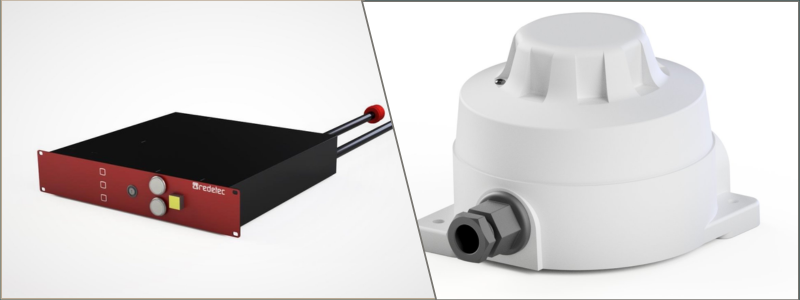
engineering design of a fire alarm and smoke detector by Cad Crowd engineering design experts

Applying agile methodology to attain speed and flexibility

In product development, flexibility is the name of the game. Those are the days of the rigid, waterfall approach, where each step of the process was dependent on the previous one. Gone are those days in today’s fast-paced world, where flexibility and responsiveness are a must, and that’s where agile methodology fits in.

Essentially, agile is about iterative development. Rather than spending months developing a product in a black box, agile teams break down the process into little, bite-sized chunks, known as sprints. That way, teams get to keep building, testing, and iterating a product, introducing feedback and market intelligence along the way. It’s all about being attuned to the evolving needs of the user and the market.

For product design services companies that are new to the market, agile thinking can be revolutionary. By bringing cross-functional teams, product design experts, engineers, and researchers together, they’re able to respond quickly, operate in concert, and respond as needed. This ability to adjust leads to fewer delays and a more efficient process of developing products.

The reward? A product that not only gets to market earlier but also meets the actual-world issues and needs of its users, too. Agile development is changing the way companies approach product development, offering flexibility, velocity, and a more user-centric design process. If you’re refining a product you already sell or creating one from the ground up, adopting agile can help you stay ahead and react better to what the marketplace is asking for.

Facilitating effortless teamwork with cross-functional teams

Product development acceleration isn’t just a matter of quick design cycles; it’s also a matter of making a culture wherein teamwork occurs naturally across all departments. Product designers, engineers, marketers, and business leaders must work together from day one to achieve the product vision on time and at a reasonable cost. Seamless teamwork is where it starts.

New product design services companies are designed to accommodate this kind of cross-disciplinary collaboration. These companies are inclined to bring together specialists with various areas of expertise, and this allows teams to approach the development process from various angles. From a product’s design, functionality, or positioning in the market, having many experts work together ensures a balanced approach to product development.

For example, when product designers and design engineering services firms work extremely closely together, it reduces the risk of design failures and technological blips later on. A designer might recognize that a design choice might be problematic for manufacturing, while an engineer might recognize a probable conflict between the product’s functionality that affects the user interface. Early interaction detects problems before they turn into expensive delays.

Also crucial is involving marketing professionals right from the start. They play an important part in creating the product’s messaging, so it resonates with the target market and aligns with branding plans. With marketing involved early, the product stands a better chance of being launch-ready for a successful launch.

By creating space for continuous collaboration, businesses can streamline the development process, resolve barriers faster, and get products to market in time.

Smart technologies and tools to streamline development

The modern world is rapidly moving, and technology is advancing at record speed in product development. The past reliance on ancient tools and slow manual processes is gone. The whole development process has been simplified with sophisticated technologies that automate and optimize each process because of the advancement of design services companies.

One of the strongest tools of this revolution is professional CAD services and 3D modeling software. These allow designers to create highly detailed and precise digital models of products no prototypes necessary. This makes it possible for designers to test, try out, and change their designs very quickly and simply, cutting development time by huge amounts. The simplicity with which the product is visualized from all angles and in varying contexts allows the fine-tuning of the design with ease in a matter of minutes, unlike when a long period is utilized when applying the traditional methods.

But there’s more. Several design services companies are also using advanced simulation and analysis software, taking the guesswork out of testing products. Designers can simulate a product in computer models of real-world conditions and detect flaws before the product ever hits the assembly line. Teams can then make adjustments to prevent costly mistakes by catching the flaws early.

With these state-of-the-art tools in their kit, design services businesses can move through the design process faster without sacrificing quality. The result is faster time-to-market, more innovative products, and a competitive advantage that keeps businesses ahead of the pack.

Ensuring consistency and quality assurance

In product design, speed is generally the name of the game, but that does not mean that quality should be sacrificed. Luckily, the new product design services companies today are masters at achieving the perfect balance between rapid development and top-notch results. They understand that while time equals money, quality sacrifice can result in more headaches in the long term.

How do they provide quality at top speed? It all depends on a combination of technology, testing, and experience. These companies use rigorous testing, prototype design engineering services, and validation processes to make sure the final product not only meets industrial standards but also exceeds customers’ expectations. Advanced automated tools detect potential problems early in the design process, reducing the risk of defects or costly recalls later on.

The secret to speed and quality control lies in their efficient processes. By efficiently managing timelines, budgets, and resources, they are able to meet deadlines without compromising on quality. This process ensures that no matter how tight the schedule is, the focus on quality never wavers.

To you, as the client, this promise of quality control means fewer errors, less rework, and fewer slippages, so you can deliver your product to market earlier than planned. In today’s high-speed world of product development, this difficult balance of both speed and better quality can often be the key to standing head and shoulders above others.

Minimizing time to market using existing expertise and experience

Product development is never a straight line. It’s a set of turns and twists, unanticipated bumps, and occasionally, having to swivel off from your original course. But this is the thing: with the right experience working for you, those barriers can become just bumps on the highway, and that’s where new product invention design services firms come in.

These are usually veteran veterans, with much experience to draw upon. They’ve already traversed the intricacies of product design, from conception through final production. Since they’ve done it all before, they’re aware of the obstacles that can develop and how to attack them full-on. That extensive industry expertise enables them to foresee pitfalls, shift gears at a moment’s notice, and act fast to resolve them, shortening precious time from your project timeline.

And that’s not all. Several of these design services firms come with a long-established network of good suppliers, manufacturers, and partners. With such a pre-established network, sourcing is easier, production can be accelerated, and distribution made easier. Thanks to their relationships and know-how, they can expedite the processes that can otherwise decelerate development and see your product onto the market faster.

Time to market may be the deciding factor between failure and success in a competitive market. Using the skill and capacity of an able product design service company can give you that competitive edge.

RELATED: How to determine the quality of architectural 3D renderings with design services companies firms

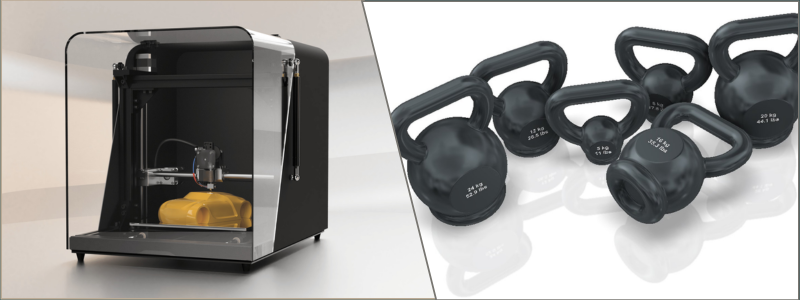
engineering design of a 3D printer and kettleballs by Cad Crowd engineering experts

Sourcing and supply chain optimization

When it comes to speeding up product development, sourcing and supply chain optimization are elements that cannot be overlooked. An unproductive or slow supply chain can result in costly delays, missed deadlines, and lost opportunities in a competitive market. That is where product design services companies come in. These experts not only specialize in design—they are also versed in supply chain management and can help optimize this important segment of the process.

With their connections in the business, these companies know exactly where to get good parts and materials. They can use connections with established suppliers to get the best terms, so you get what you need without unnecessary delays. It’s not just a question of getting the right parts at the right price; it’s the timing. These design service professionals are familiar with ensuring the delivery of materials as scheduled, meaning you get to meet deadlines without incurring wasteful delays.

In addition, many design firms work with manufacturing specialists who specialize in rapid prototyping design services and low-volume production. This technology can be revolutionary, so you can test designs quickly, make adjustments as needed, and get merchandise to market faster than ever before. Streamline the supply chain, and product design services can push development forward and lead the way.

Risk management using early testing and validation

In today’s quick-paced product development world, the fear of failure can sometimes be a giant stumbling block. What if, though, this fear doesn’t have to hold you back? Companies that offer new product design services are revolutionizing the way we approach risk by emphasizing early-stage testing and validation, so that products are ready to succeed even before they are released.

Among the most influential resources these businesses leverage is user testing. Through direct feedback from genuine users, they can identify potential problems that could otherwise fly under the radar. Whether by means of A/B testing, trials of prototypes, or usability research, this preliminary feedback enables design teams to swiftly make adjustments, refining the product for optimal benefit. This preventive action not only solves potential issues before they turn critical but also saves time and resources in the long run.

The primary benefit here is that, by way of early validation of ideas, design services companies prevent costly setbacks that could otherwise delay the launch of the project. This strategy not only minimizes risks, but it also accelerates the development process so the final product is fully aligned with client expectations. It’s a smart, strategic risk control method that keeps the project on track for success.

Scalability and flexibility to respond to demand

With your product development going on, naturally, market trends and customer needs will transform. Either due to new fashion, innovative technologies, or unexpected changes in consumer trends, staying ahead of the curve is the only way to go. This is where your scalable and adaptable design services come into play. New product design services through engineering design companies are masters at helping you navigate these transitions smoothly, ensuring your product evolves along with the market.

Their strength is their ability to quickly adapt and implement necessary changes without affecting the overall development process. If customer feedback necessitates a design change or if market conditions suddenly shift, these companies can redesign your product, condense its features, or even change production strategies.

What distinguishes them is their capacity to quickly adapt, without upsetting the entire project timeline. They understand that change is a reality in business, and they are ready to make your product adjust to such changes seamlessly. This implies your product remains not only relevant but also competitive in an ever-changing landscape. With a design partner who can match the pace of change in the market, you’re ensuring long-term success for your product.

The competitive advantage: Coming to market first

Timing is everything in the success of a product. One of the single greatest advantages of hiring a new product design services firm is entering the market before your competition. In fields where speed matters, being first gives you a powerful competitive edge.

These design service companies bring forward new approaches and expertise to the table and make the whole process of product development easier. They use the latest technologies, such as 3D modeling design services, rapid prototyping, and advanced CAD tools, which allow them to identify and address potential issues early on and make sure the design is tuned before production is done. This reduces the waits that typically follow traditional development practices.

By working with industry experts who understand the quickly changing environment, you are able to take your idea from conception to market much quicker. This is crucial because getting your product out first compared to everyone else provides you with a greater chance to acquire market share and establish brand recognition before others can even react.

Ultimately, the faster you get your product to market, the more likely you are to capitalize on breaking trends, address consumer demand, and gain a foothold in a crowded marketplace. It’s a surefire method of making your product stand out above the competition.

RELATED: 5 reasons freelancing studios are the future of 3D visualization services

Conclusion

Speeding up product development is not about going quicker; it’s about going wiser. New product design services companies provide the talent, tools, and team-oriented environments necessary to bring your product concept to life with velocity and precision.

Whether through agile development, rapid prototyping, or leveraging cutting-edge technologies, such companies play a critical role in ensuring your product reaches the market on schedule and with integrity. By partnering with the right product engineering services company, you are able to take your product to market quicker, outpace competitors, and eventually end up more successful.

Engineering of a control desk and automatic clothes folding machine by Cad Crowd product engineers

How Cad Crowd can help?

Ready to transform your innovative ideas into market-ready products quicker than ever? Join forces with the experts at Cad Crowd today, the leading platform for hiring highly skilled freelance engineers, architectural designers, and more! You and your future customers will be grateful. Contact us now for your free quote and take the first step towards success!

author avatar

MacKenzie Brown is the founder and CEO of Cad Crowd. With over 18 years of experience in launching and scaling platforms specializing in CAD services, product design, manufacturing, hardware, and software development, MacKenzie is a recognized authority in the engineering industry. Under his leadership, Cad Crowd serves esteemed clients like NASA, JPL, the U.S. Navy, and Fortune 500 companies, empowering innovators with access to high-quality design and engineering talent.

Connect with me: LinkedInXCad Crowd

Key Factors to Consider When Vetting Engineering Firms for Design & Consulting Services


Here’s the thing about choosing an engineering firm: it’s nothing like picking a restaurant based on Google reviews. You’re not going to find testimonials saying, “Amazing structural analysis, would collapse bridges with them again!” But whether you’re developing the next breakthrough medical device, planning a LEED-certified skyscraper, or yes, even perfecting that game-changing smart toaster everyone’s been waiting for, the stakes are absolutely massive. Get this decision wrong, and you’re not just dealing with a disappointing meal; you’re looking at blown budgets, missed deadlines, and watching your brilliant concept turn into an expensive lesson in what not to do.

Make one misstep and you’re not only working with mushy tacos; you’re dealing with busted budgets, blown deadlines, and projects that go from vision to catastrophe quicker than you can say “Request for Proposal.

So, how do you screen an engineering design firm from industry giant Cad Crowd that won’t merely check the boxes but will actually advance your project with brains, boldness, and brilliance? Grab yourself a coffee (or something more potent, if your budget allows), and let’s dive deep into the most important factors you actually need to think about when selecting the perfect firm for your design and consulting needs.


🚀 Table of contents


Experience is more than a number on their website

All engineering companies have experience, typically with a neat round number on their website, such as “50+ years of combined experience.” Sounds great, but what does that actually mean? It might be one veteran engineer who’s been around since rotary phones, accompanied by two recent graduates who still call their professors for guidance. The number doesn’t tell you much.

What is more important is pertinent experience. If you’re designing a wearable health monitor, a group with expertise in aerospace work may not be the best fit, even if they assisted in putting a satellite into orbit. The technical proficiency may be similar, but context, user requirements, and regulatory requirements are all different.

Dig into the portfolio of engineering design experts. Have they solved similar problems before? Have they worked in your space? Look for evidence they’ve handled challenges like FDA approvals, LEED certifications, or tight form-factor constraints. If your idea involves smart sensors, advanced materials, or custom simulation work, make sure their experience supports that, not just on paper, but in practice. Flashy CAD models are nice, but they won’t help if your final product can’t function outside the render.

RELATED: Drafting vs. design of interior projects: What’s the difference for CAD design companies?

Silent diesel generator and advanced engine system CAD and engineering design through Cad Crowd

Team dynamics: The secret chemistry that counts

This is where the real narrative starts, the human beings behind the project. You’re not contracting a firm; you’re partnering with real human beings who’ll be sweating it out alongside you. So, just who are they? Who’s at the helm? Who will you be talking to each week? These aren’t little questions. Indeed, they can make or break your whole experience. Other companies present their A-players during the pitch, then assign your project to junior staff after you sign on the dotted line.

That’s a bait-and-switch you can do without. It’s chemistry, too. You’ll be working a lot of hours with this team on calls, in meetings, and in the trenches. If the chemistry doesn’t work in the early stages, it probably won’t improve. You require a team that listens, challenges constructively, and understands what you’re trying to create. If the talks already feel strained or stilted, it could be time to go somewhere else. A good working relationship based on trust and communication can save you considerable time, money, and anguish later on.

Pick wisely.

Technical breadth and depth: The engineering buffet

Today’s engineering is more of a smorgasbord than an individual course of action. Contemporary products don’t confine themselves to a single discipline; today’s products tend to integrate mechanical design, electrical engineering, embedded systems, industrial design services, software development, and even fluid dynamics. When you bring on a company that excels in only one area, it leaves you scrambling to coordinate a multitude of specialists. Now you’re having to juggle vendors like you’re bowling pins, praying nothing falls on the floor. And no, there’s no standing ovation for that show.

That’s why it is worth searching for engineering companies that have a complete range of experience to draw upon. Do they provide finite element analysis (FEA) and computational fluid dynamics (CFD)? Are they able to rapidly transition from concept sketches to working prototypes? Are they able to take you all the way to the manufacturing hand-off?

The more of these services that reside under one roof, the less bumpy your ride will be. It cuts down on miscommunication, accelerates development, and helps keep your vision from getting lost in translation. In the modern era of product development, technical breadth and depth are no longer an added value; they’re the entrée.

Communication: The underrated superpower

One of the most underappreciated assets of an amazing engineering company isn’t the tech stack, talent, or timelines—it’s communication. Transparent, no-surprises communication. If you’ve ever spent hours refreshing your inbox waiting for updates that never arrived, or gotten a project status email that reads like a Klingon-language novel from the planet Sto-Vo-Kor, you know exactly how infuriating poor communication can be.

Excellent engineering design firms don’t only construct, they clarify. They understand how to take complicated technical language and make it accessible to all, from investors to product managers, so everyone can comprehend it and take action. That is not merely politeness; it’s an art, and one that separates the great from the good.

High-end companies also adopt tools that allow staying in the know to be a breeze for all. Real-time collaboration environments, transparent Gantt charts that truly reflect tangible progress, and weekly updates that advance the project, not clutter up your calendar, are indicators of a team mindful of your time and priorities.

Amidst a sea of buzzwords and grandiose promises, actual communication remains the superpower that keeps everything on course.

Flexibility & problem-solving skills

Engineering isn’t a straight road. It’s a twisting road with potholes, detours, and the occasional missing bridge. Projects hit snags, pieces of equipment magically go out of stock, and timelines stretch like taffy. The true measure of an excellent engineering partner isn’t whether or not they encounter potholes, because they will, but how they react when things go wrong.

There are some companies that collapse at the first sign of trouble. Others return with a plan: “Here’s the problem, and here are three good ways to fix it.” That’s what you want to have in your head. The right team isn’t panicking or stalling. They adapt with confidence, troubleshoot quickly, and move the project forward.

It’s not about solving for X—it’s about welcoming flexibility from day one. Consider iterative design, rapid prototyping design services, and agile processes. These are not buzz terms—they’re indicators of a company that can change course in real time. You don’t require a company that gathers in a room for a week to get a bolt moved. You require engineers who spot an issue, roll up their sleeves, and fix it without skipping a beat.

Prototyping abilities: From napkin drawing to something you can drop

Renderings can charm souls on a screen, but in real-world performance, they tend to fall short. Similar to a dream date profile picture, a computer model can be filtered and polished far from the real thing. That’s where prototyping pays its dividends.

Whether a crude foam-core mockup taped together with duct tape, a machined part on a CNC, or a smooth 3D print, a prototype brings an idea to life in something you can touch, test, and yes, accidentally drop on the floor.

It’s not just about building something once. It’s about learning what works, what doesn’t, and iterating fast. When choosing a product design firm, ask about their prototyping capabilities. Do they build in-house or work with partners they trust? How quickly can they go from CAD model to physical object? Can they crank out multiple versions in a short time frame?

Faster, more accurate, and more flexible prototyping can be the key to a wow-inspiring investor presentation versus an opportunity lost. Particularly when there is little time, a company that can mock up, iterate, and refine in a hurry becomes your best friend.

Project management skills: The glue that holds it all together

Ever seen a project unravel because no one was clearly in charge? It happens more often than you’d think. Engineering firms may have top-tier technical expertise, but without strong project management, things can fall apart fast. Brilliant designs don’t mean much if they get buried under missed deadlines and ever-expanding scope.

That’s where project management expertise comes in—not a nice-to-have but the backbone of effective delivery. A competent firm should know what they are doing before anything starts. Are they tracking progress using tools such as Jira, Asana, or MS Project? Do you get milestone check-ins so that things are on track? Is there a roadmap that actually works from beginning to end?

Good project management doesn’t merely avoid chaos. It creates clarity, accountability, and order. A strong project manager anticipates issues ahead of time, keeps teams on track, and ensures deliverables are on schedule and of high quality. When these abilities are ingrained in a design engineering services company’s culture, they’re not constructing projects. They’re constructing trust.

RELATED: Best 50+ product design companies & new prototype development services firms in the US

Engineering design of a V12 engine and power batteries through Cad Crowd design services

Reputation & references: The Yelp review of the engineering world

Before booking a restaurant, you probably read three Yelp reviews, check the photos, and maybe even skim the menu. So why wouldn’t you do at least that much due diligence before hiring an engineering firm for your next big project?

Begin with customer testimonials, but don’t confine yourself to the carefully selected quotes on their website. Those are carefully edited for effect. Request the firm’s actual references, individuals you can speak with directly. Legitimate firms won’t mind introducing you to previous clients who can give you an accurate picture of what working together was like. You’ll want to ask: Were deadlines met? Was the project within budget? How was communication? If there were issues, how were they resolved?

Aside from customer testimonials, seek industry cred. Are they presenting at engineering conferences, writing opinion pieces, or receiving awards? That’s generally a good indicator that they’re not only effective marketers but committed engineering professionals well-regarded by their peers.

In an age where your project’s success rests on your ability to trust, don’t leave the background check behind. Research now can prevent a lot of regret later.

Cost structure & transparency: Show me the money (and the fine print)

Ah, yes, the infamous money talk. It’s not necessarily anyone’s highlight of initiating an engineering project, but it’s one of the most significant. Whether you’re introducing a new product or undertaking a structural rework, it’s wise to understand how your, say, for example, structural engineering company bills. Are they charging by the hour or quoting a flat fee? Are change orders readily including unexpected expenses? And what if a project extends beyond its expected duration or goes over budget?

A company that can’t articulate its price or won’t even talk about it is waving a giant red flag. You’re not merely contracting for brains and blueprints. You’re entering into a business arrangement, and transparent cost projections are essential to preventing drama down the road.

Seek out companies that are transparent with full-fledged proposals and itemize the “why” of each fee. They should also assist you in making decisions, such as between expensive components and less expensive options.

And don’t forget, the cheapest bid isn’t always the wisest. Bad engineering will end up costing you exponentially more in the end. Honest pricing may not be sexy, but it spares your wallet and your head.

Compliance and industry knowledge: Can they play by the rules?

If your product must navigate safety certifications, environmental requirements, or international compliance, working with a company that makes it up as it goes along is not a possibility. Understanding the rules is paramount. It makes sense to inquire beforehand which regulations they have experience with. Whether it’s submitting to FDA standards, ISO certification, UL testing, or even your local zoning regulations, the know-how counts.

Having worked through these processes before with a company saves you time, money, and grief. Bonus points if they’ve worked on projects in the highly regulated fields of medical devices, aerospace engineering services, or automotive. These don’t brook errors—one misstep may result in regulatory hell or government notices you don’t want to receive.

A compliance-savvy firm will more likely steer your product safely through the approval maze and inspection gauntlet. This skill not only guarantees that your product complies with regulations but also instills trust and customer confidence. In product development, following the rules isn’t simply intelligent, it’s a necessity.

RELATED: Why electronics product prototyping is important for successful product development at PCB design companies

Cultural fit: The x-factor you can’t ignore

It’s more than locating a capable engineering firm by skills and expertise. This is where you’ll know that cultural compatibility is a big deal. It’s all about how much you mesh with their organization and whether they really respect your company’s values, tempo, and vision. When dealing with an outside firm, it’s not just a matter of handing off work; it’s a collaboration. If the team makes you feel like a nuisance every time you have a question or doesn’t fit your working style, that tension can slow the whole thing down.

A company that feels like an extension of your own team makes the process smoother and, really, more fun. Communication works better, trust develops organically, and issues get resolved quicker. Pay close attention to those initial conversations, how they react, their demeanor, and vibe. If anything seems off, it likely is. You don’t have to accept just “meh” when there are amazing engineering companies that really resonate with your vibe. That special somebody can make the difference in your project’s success and your sanity.

Post-project support: Will they ghost you after launch?

When your product does finally ship or your build is complete, it’s tempting to believe that the hard work is behind you. But oftentimes, that’s when it really starts for consumer product design companies. Once the initial rush wears off, unexpected bugs will erupt, and what appeared to be a flawless version will require adjustments. Documentation updates become imperative, and suddenly, stakeholders have “just one more question” that no one saw coming.

After checking the dotted line, it’s wise to inquire about support after the project. Do they have warranty periods that will cover those inevitable repairs? Do they have maintenance packages that will keep things running in tip-top condition? It’s also good to know whether they’re prepared to assist with subsequent versions or upgrades, version 2.0 and all the rest. Expansion usually means new problems, so see whether the team can grow with your changing needs.

Having a company that doesn’t vanish after shipping is worth its weight in gold. A partner who hangs in there with you through the rough spots and iterates can spare you headaches and keep your project going strong long after it’s launched. Reliable help isn’t a nice-to-have; it’s frequently the difference between a good project and a great one.

Satellite camera and engine exhaust engineering designs from Cad Crowd design professionals

RELATED: 10 design principles for product development & industrial design services teams

Final thoughts: You’re not just hiring a vendor—You’re choosing a co-pilot

Choosing an engineering company isn’t like buying a product from a shelf. It’s more like choosing a co-pilot for a long flight across thunderclouds, time zones, and occasional rough air. You need someone to know how to fly, certainly, but also someone you don’t mind being stuck beside when things get rocky.

So ask the tough questions. Get into the weeds. Don’t rush it. The right partner will not only help you deliver your vision, but they’ll stretch it, test it, and make it better.

And when that prototype becomes a reality, when that system fits together like a puzzle, when your product starts shipping or your building opens to the public, you’ll know:

Partner with Cad Crowd Now!

Ready to find your engineering co-pilot? Don’t settle for just any firm when you could partner with a team that actually gets it. At Cad Crowd, we’ve helped countless innovators turn wild ideas into market-ready products. Let’s chat about your project, reach out today for your FREE quote!

author avatar

MacKenzie Brown is the founder and CEO of Cad Crowd. With over 18 years of experience in launching and scaling platforms specializing in CAD services, product design, manufacturing, hardware, and software development, MacKenzie is a recognized authority in the engineering industry. Under his leadership, Cad Crowd serves esteemed clients like NASA, JPL, the U.S. Navy, and Fortune 500 companies, empowering innovators with access to high-quality design and engineering talent.

Connect with me: LinkedInXCad Crowd