Netflix’s Trigger Warning, The Beast, and every new movie this week


Greetings, Polygon readers! Each week, we round up the most notable new releases to streaming and VOD, highlighting the biggest and best new movies for you to watch at home.

This week, Trigger Warning, the new action thriller starring Jessica Alba as a hardened Special Forces commando, premieres on Netflix. That’s not all, as plenty of other exciting new releases make their streaming debuts this week, including a documentary on tennis legend Roger Federer on Prime Video, Kung Fu Panda 4 on Peacock, Sometimes I Think About Dying on MUBI, and more. There’s also several highly anticipated releases on VOD this week, including animated sci-fi noir mystery Mars Express and dystopian sci-fi romance The Beast starring Léa Seydoux.

Here’s everything new that’s available to watch this weekend!


New on Netflix

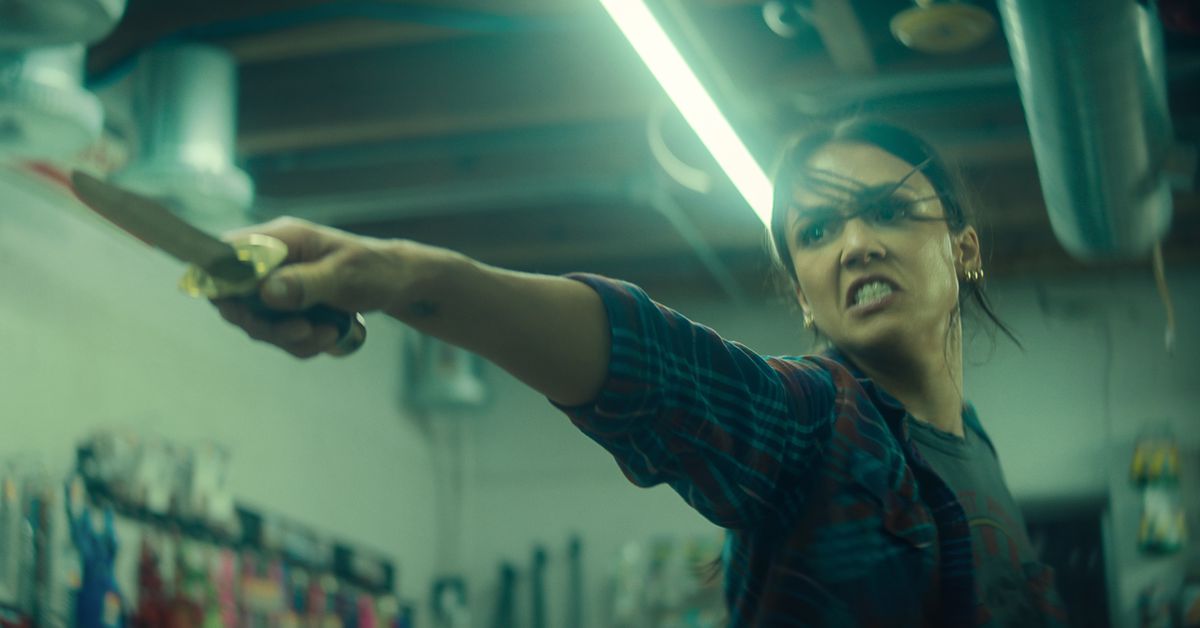
Trigger Warning

Where to watch: Available to stream on Netflix

A woman wielding a knife in Trigger Warning.

Image: Netflix

Genre: Action thriller
Run time: 1h 46m
Director: Mouly Surya
Cast: Jessica Alba, Anthony Michael Hall, Mark Webber

The Alba-naissance is here. Five years after her last film role (crime thriller Killers Anonymous), the onetime Sue Storm is teaming up with Indonesian director Mouly Surya in an action-packed movie inspired by the John Wick franchise (and produced by John Wick producer Basil Iwanyk). Trigger Warning is Surya’s English-language debut and was filmed three years ago, but is finally dropping on Netflix this week.

Black Barbie

Where to watch: Available to stream on Netflix

A woman holding a barbie in Black Barbie.

Image: Netflix

Genre: Documentary
Run time: 1h 40m
Director: Lagueria Davis

This doc from Shondaland digs into the first Black Barbie and three Black women at Mattel who made it happen: Beulah Mae Mitchell, Kitty Black Perkins, and Stacey McBride-Irby.

New on Prime Video

Federer: Twelve Final Days

Where to watch: Available to stream on Prime Video

Image: Prime

Genre: Documentary
Run time: 1h 40m
Directors: Asif Kapadia, Joe Sabia
Cast: Roger Federer, Rafael Nadal, Novak Djokovic

Arguably the greatest men’s tennis player to ever live, Roger Federer finally hung up his racket for good in 2022. This documentary, co-directed by Senna and Amy director Asif Kapadia, focuses on the final 12 days of the Swiss legend’s illustrious career.

New on Peacock

Kung Fu Panda 4

Where to watch: Available to stream on Peacock

An anthropomorphic panda holding a green scepter and a red panda in his arms while smiling.

Image: Universal Pictures

Genre: Martial arts comedy
Run time: 1h 34m
Director: Mike Mitchell
Cast: Jack Black, Awkwafina, Bryan Cranston

The fourth entry in the Kung Fu Panda saga sees Po taking on a new apprentice to succeed him as the Dragon Warrior. When a mysterious sorceress plots to resurrect Po’s past adversaries, he’ll need to call upon all his strength and allies to save the day.

From our review:

While the individual scenes and moments in Kung Fu Panda 4 are entertaining (and sometimes even great), it never quite gels as an enjoyable movie on its own. The message of change tying it together is flimsy, and the plot feels strung along, trying to get the characters in the right place to launch a few seconds of cool action. After four movies, it isn’t really a surprise that the Kung Fu Panda machine is running out of steam — thankfully, though, it has just enough power left to churn out some genuine laughs at the end.

New on MUBI

Sometimes I Think About Dying

Where to watch: Available to stream on MUBI

A close-up of Daisy Ridley as Fran, as she looks at the camera, her face serious

Image: Oscilloscope Laboratories

Genre: Romantic drama
Run time: 1h 34m
Director: Rachel Lambert
Cast: Daisy Ridley, Dave Merheje, Parvesh Cheena

Star Wars icon Daisy Ridley takes a dramatic turn in this new existential drama, playing the role of a socially awkward office worker who tentatively attempts to come out of her shell. It’s dark, funny, awkward, and achingly human.

From our review:

Not much happens in Sometimes I Think About Dying, but that’s the point of the movie. Even the smallest thing, like Fran mustering up the courage to say goodbye to someone after work, is given huge weight. The movie lingers on the mundane, using it to paint a thorough portrait of who she is, without having her say or act much. The steps she takes to help overcome her social anxiety might seem small, but they’re all hurdles to her. It’s a movie made up of quiet moments: pauses in conversation, lingering glances, and outstretched hands. Lambert emphasizes the importance of these small interactions, and the ways they build up to connections. It’s a quiet story that aches in the best sort of way.

New on Metrograph at Home

Last Night I Saw You Smiling

Where to watch: Available to stream on Metrograph at Home

A group of people gathered around a TV showing a kickboxing match in Last Night I Saw You Smiling

Image: Metrograph at Home

Genre: Documentary
Run time: 1h 18m
Director: Kavich Neang

In the final days of a condemned, iconic building, director Kavich Neang follows three families who live there (including his own). This is the streaming premiere of the movie, which first came out in 2019 and won awards on the international festival circuit, and is a part of Metrograph’s “Davy Chou Selects” series.

New to rent

Handling the Undead

Where to watch: Available to rent on Amazon, Apple, and Vudu

A woman holding the limp body of child in her arms beside a boat surrounded by marsh of reeds in Handling the Undead.

Image: Neon

Genre: Horror drama
Run time: 1h 37m
Director: Thea Hvistendahl
Cast: Renate Reinsve, Anders Danielsen Lie, Bahar Pars

There’s tons of horror movies about the dead coming back to life. None of them are quite like Handling the Undead, though. Based on John Ajvide Lindqvist’s 2005 novel, the film follows the story of three families living in Oslo whose loved ones all mysteriously rise from the dead as semi-sentient corpses. How will they handle this new phenomenon, and is it a second chance to say goodbye… or a curse?

I Used to Be Funny

Where to watch: Available to rent on Amazon, Apple, and Vudu

A young woman laying sideways on a bed, looking forlorn in I Used to Be Funny.

Image: Barn 12/Utopia

Genre: Comedy drama
Run time: 1h 45m
Director: Ally Pankiw
Cast: Rachel Sennott, Olga Petsa, Jason Jones

Rachel Sennott (Bodies Bodies Bodies) stars as Sam, a stand-up comedian living in Toronto who takes on a nannying job in order to earn some cash. After the young girl she was caring for goes missing, Sam is stricken with PTSD and no longer performs comedy, haunted by the loss of her charge and her own helplessness.

IF

Where to watch: Available to rent on Amazon, Apple, and Vudu

A bearded man seated at a desk with a small girl with her arms crossed with colorful CG-animated characters in the background in IF.

Image: Paramount Pictures

Genre: Fantasy comedy
Run time: 1h 44m
Director: John Krasinski
Cast: Cailey Fleming, Ryan Reynolds, John Krasinski

Remember Foster’s Home for Imaginary Friends? Well, imagine that, but set in New York and starring Ryan Reynolds and not so imaginative. IF follows Bea (Cailey Fleming), a young girl who works alongside her neighbor to help imaginary friends whose real-life friends have grown up. It’s ostensibly a kids’ movie, but with a message that’s slightly… off.

Mars Express

Where to watch: Available to rent on Amazon, Apple, and Vudu

A robot with a holographic head and a red arm points to a screen next to a blonde haired woman in a trenchcoat in a futuristic vehicle in Mars Express.

Image: Everybody on Deck/GKIDS

Genre: Sci-fi action
Run time: 1h 25m
Director: Jérémie Périn
Cast: Léa Drucker, Mathieu Amalric, Daniel Njo Lobé

This sci-fi noir thriller follows a private detective and her android partner who are hired by a wealthy businessman to track down an elusive hacker. Their investigation dovetails into a search for a missing woman before inadvertently spiralling into a vast conspiracy that threatens to unravel the fabric of human civilization.

From our review:

Mars Express is the rare example of an animated feature that warrants an almost immediate rewatch upon completion, if only to appreciate the craftsmanship of its presentation. It’s a densely layered sci-fi story that’s light on proper nouns, but heavy on subtext. It’s set in a world that doesn’t tell so much as it shows the depth of its narrative and worldbuilding, by trusting its audience to pay close attention and connect the dots alongside the film’s characters. In short, it’s a rare example of “adult” animation that treats its audience like adults, and its execution elevates its premise until it stands confidently as one of the year’s best animated features.

The Beast

Where to watch: Available to rent on Amazon, Apple, and Vudu

Gabrielle (Léa Seydoux), a pale young woman dressed in black vinyl, lies on her back staring upward with a tear rolling down her cheek in The Beast

Image: Janus Films

Genre: Sci-fi romance
Run time: 2h 26m
Director: Bertrand Bonello
Cast: Léa Seydoux, George MacKay, Guslagie Malanda

Imagine Cloud Atlas meets The Age of Innocence meets Mulholland Drive. That’s about the simplest way of describing The Beast, Bertrand Bonello’s sci-fi romance drama. Léa Seydoux (Spectre) stars as Gabrielle, a woman living in the near-future who undergoes a process to “purify” her DNA of strong emotions by reliving her past lives. Her procedure becomes more complicated after crossing paths with Louis (George MacKay), a man whom — in a past life — she may or may not have loved.

From our review:

The Beast’s three timelines play with seemingly unmixable genres: a classic period romance, a gripping horror-thriller, and dystopian sci-fi. That places them at a logistical disconnect, but Bonello binds them aesthetically and emotionally. Through his lengthy, thought-provoking close-ups of Gabrielle and Louis in each section, he creates a sense of longing and isolation across time, binding together human experiences of the past, present, and future, and putting them into sharp and chilling context.

We Grown Now

Where to watch: Available to rent on Amazon, Apple, and Vudu

A woman hugging a child in We Grown Now.

Image: Sony Pictures Classics

Genre: Drama
Run time: 1h 33m
Director: Minhal Baig
Cast: Blake Cameron James, Gian Knight Ramirez, S. Epatha Merkerson

Set in Chicago in the early ’90s, We Grown Now centers on the story of Malik and Eric, two young boys growing up in a housing complex who survive the mundanity of school life and the perils of their environment through the strength of their friendship. When a sudden tragedy threatens to strain their bond, Malik and Eric will have to grow up fast and make a choice between what to hold on to and what to let go of.

NewJeans’ PUBG collab has already captured the attention of fans online


It seems like no world — physical nor digital — is immune to the girly pop flair of NewJeans. The globally famous K-pop group made its debut in PlayerUnknown’s Battlegrounds as part of the 30.1 update on Wednesday. The collaboration adds each member of the group as a playable character, adorable accessories to dress up your characters, emotes for popular dances set to songs like “OMG,” and more. Equal parts bizarre and wonderful, the PUBG update has already captured the fascination of fans online.

Krafton released the NewJeans x PUBG: Battlegrounds collaboration on Wednesday to Windows PC users and will release it to console users on June 20. The PC patch has introduced some environmental changes as well. For example, the Taego School has been transformed into a sparkly rainbow wonderland and there’s now a pink and purple truck stage on the starting island of every 8 km map. You can play as any member of NewJeans — Minji, Hanni, Danielle, Haerin, or Hyein — and dress your character up in adorable pastel accessories. You can view all the details on the PUBG site.

The collaboration brings a vibrant pop of color to the gritty world of PUBG. Just like other live-service games, PUBG is no stranger to surprising collaborations. PUBG has featured collaborations with the anime series Neon Genesis Evangelion and other games like Angry Birds. Despite that, the NewJeans collab manages to stick out from previous events and now people online are sharing videos showing the girls emoting in the game. The dances just look that good. Here is a video of Minji from NewJeans doing several dances from songs like “Super Shy” and “OMG.”

It’s only been a day, but people have already started to make memes of the girl group in the game. This video features several moments, including one where Haerin dances on a knocked out played and then shoots them at point blank range.

I personally can’t get this video of several characters joining in on dancing the choreo for “Hype Boy” out of my head.

There’s a lot to check out, so if a ton of Bunnies suddenly found themselves interested in trying out PUBG, I wouldn’t blame them.


Disney’s first Donald Duck short in 60 years shouldn’t be the last


Donald Duck, arguably tied with Goofy as the second most recognizable Disney character after Mickey Mouse, starred in over 150 short films throughout the 1930, ’40s, ’50s, and ’60s. 2024 marks the 90th anniversary of the pantsless Pekin, who persisted through the second half of the 20th century thanks to Disney Channel replays of his shorts, appearances in DuckTales, and the Kingdom Hearts games.

Disney is celebrating the duck’s birthday with the usual merch drops and theme park shenanigans, but its best gift to fans is a brand-new short: DIY Duck, Donald’s first solo short outing since 1961’s The Litterbug. Directed by veteran Mark Henn, who has remained on Disney’s hand-drawn animation team throughout the quarter-century pivot to 3D CG, DIY Duck checks all the boxes of a classic Donald short, starting with a mundane day-in-the-life problem that puts the character through the cartoon wringer.

Donald was always my favorite cartoon character: Landing between the more wholesome Disney gang and Tex Avery and Chuck Jones’ elastic, ecstatic WB cast, Donald was just… some dude… trying to learn how the world works and get by. His temper could run hot, but he was solutions-oriented. He wanted to make a buck, but wasn’t anything like Scrooge McDuck. His curiosity and zest for life meant Disney could drop him into a PSA every now and then — Donald wanted to learn, and we wanted to learn with him. I will dig up what might be his greatest adventure, Donald in Mathmagic Land, once a year just to remind myself that, yeah, math rules.

These days, Donald’s mostly a relic, playing second fiddle to Mickey in the rare instances when Disney approves its mascot character for media use. That’s a bummer, and DIY Duck is a great reminder. Today’s more sophisticated toons are often fantastical and larger than life even when speaking to nuanced human experiences. So it’s kinda nice to have a modern short, simple yet stylish in its cartooning, that is about fixing a crack in a wall — something that I, like Donald, would be absolutely terrible at. In a neat throwback, DIY Duck also pays tribute to Donald’s classic rage voice by using archive clips of Clarence “Ducky” Nash, who voiced the character for 50 years.

While Disney maintains a hand-drawn department, the company mostly deploys it for stunts (like DIY Disney and last year’s Once Upon a Studio short) and skeletal work on 3D CG features. During a visit to Walt Disney Animation for 2014’s Big Hero 6, I was fortunate to watch Henn in action, cartooning by hand for a scene that would later be painted over and rendered with the finished CG art. Whether Disney will ever make a new hand-drawn feature — or, heck, a steady stream of Donald shorts! — is unclear, but by keeping Henn and the team on board, the studio implicitly understands the soul of the medium, whether it’s breathing life into 3D characters or reviving a legacy for an act of tribute. I’m just hoping this isn’t the last time we see Donald in this form over the next 60 years.

Furiosa: A Mad Max Saga’s smartest move is sidelining Immortan Joe


George Miller’s Furiosa: A Mad Max Saga complements and enhances the impact of his 2015 blockbuster Mad Max: Fury Road in a lot of ways, but there’s only one I can’t stop thinking about: How little the new movie has to say about Immortan Joe, the original movie’s iconic arch-villain.

Sure, Joe’s lack of interaction with Anya Taylor-Joy’s Furiosa could be simply because Hugh Keays-Byrne, the actor who first put Immortan Joe on the screen, died in 2020. Lachy Hulme assumes the role for Furiosa, but perhaps George Miller reduced it out of respect for Keays-Byrne, who he worked with for many years.

But I’m skeptical. Joe’s consistent secondary status in Furiosa’s origin story fits the overall themes of Furiosa too well to be a coincidence: Immortan Joe, the demon of Imperator Furiosa’s last stand, wasn’t her nemesis at all. In fact, he wasn’t her anything.

Furiosa (Anya Taylor-Joy), forehead smeared with greasepaint, drives the war rig in George Miller’s Furiosa

Image: Warner Bros. Entertainment/YouTube

This is in great contrast to Fury Road, where their beef seems deeply personal. Max Rockatansky wanders into somebody else’s narrative in Fury Road, as his stories usually go. This time, those somebodies are Furiosa (Charlize Theron) and Immortan Joe.

While Fury Road only subtly hints that Furiosa was once one of Joe’s captive harem of wives and incubators — the white wrappings of Furiosa’s top evoke the Wives’ impractical shifts — Theron confirmed that piece of her backstory in interviews. So Furiosa seems to have really personal reasons to hate Joe. And his response to her betrayal is presented as a towering rage, cresting mushroom cloud-like out of all proportion to her ability to withstand him.

Not to diminish the agency of the Five Wives in their own escape, but Joe considers them property that’s been stolen from him, not allies who betrayed him. Furiosa, however, he considers a traitor, worthy of his personal anger. And in the end, she’s the one who gets the honor of finally taking him down, underscoring her place on the same narrative level he occupies as Fury Road’s primary villain.

Which is why it’s so wild that Furiosa says, quietly and implacably throughout its entire run time, that Joe actually isn’t even a main character in her story. Sure, he buys her, but then he forgets she even existed. He didn’t take anything from her that hadn’t already been taken, didn’t teach her anything she hadn’t already learned from someone else, didn’t give her anything she hadn’t already taken for herself. When they do share scenes, and even trade dialogue, there’s no interpersonal ire or affection in either direction. In spite of their characters’ intensity, Hulme and Taylor-Joy keep a neutral distance of emotion.

It turns out, in Furiosa, that Furiosa’s life was actually framed by the completely different, utterly pathetic figure of Dementus, the Wasteland warlord who tortured her mother to death, sold Furiosa into slavery, killed her closest friend, and cost her her right arm. And just as emphatically, Furiosa says, Furiosa moved beyond revenge years before she ever stood against Joe.

What you saw in Fury Road, Furiosa says, was the furthest thing from personal to Furiosa. Immortan Joe was never The Guy. He was just the guy in the way. And the “guy” part might be the most important one.

l-r: Nathan Jones as Rictus Erectus and Hugh Keays-Byrne as Immortan Joe stand surrounded by War Boys and huge vehicles in Mad Max: Fury Road.

Photo: Jasin Boland/Warner Bros. Pictures via Everett Collection

The conversation that immediately surrounded Fury Road was about Immortan Joe as a Wasteland illustration of the death cult of capitalism and toxic masculinity. His very recognizable philosophy reduces all non-elites to things — women to Wives (sex slaves, forcibly impregnated) or Mothers (enslaved to produce breast milk for food), and men to War Boys (emphasis on boys), interchangeable cannon fodder addicted to the lie that they can only find purpose in violence for the True Leader.

This was all emphasized by the emasculating nature of Furiosa’s rebellion. After all, by the language of a country-and-Western song, she’s wounded him in the most devastating way a man can be wounded, by stealing his wife (Wives), his money (water), his car (the War Rig), and maybe even his dog (Nicholas Hoult’s hapless character Nux, if we want to stretch the metaphor a little bit).

Immortan Joe is an electrifying villain, and Furiosa doesn’t exactly skimp on him! A scene contrasting Dementus’ shaky appeal to the self-interest of the masses with the unshakable belief created by Joe’s death-cult propaganda is among the film’s most chilling. But there is an eternal risk in presenting such an operatic villain who also represents such a wide-ranging theme. If you’re not careful, making them powerful and capable enough to claim villain status also risks making them look aspirational. You can swing right around to making them seem cool.

Which is why it’s so damn smart of Furiosa to put this final nail in the coffin of Joe’s emasculation, by establishing that Fury Road’s sense of personal beef was all on Joe — on his fear, and his vulnerability, not on Furiosa’s. He isn’t even important to the woman who’s unmanning him.

In a cliche reversal for the cinematic ages, Immortan Joe was, for Furiosa, just Tuesday.

Wildermyth will conclude with its final expansion, Omenroad


Wildermyth is an incredible procedurally generated RPG that leads players through a series of narrative quests. As you build bases, battle foes, and learn more about the world, you’re able to build up your cast with new decisions and sacrifices. A hero might die, marry another party member and have children, or turn into an increasingly feral beast. It’s a tremendously cozy, satisfying RPG experience.

Wildermyth has a core campaign, and additional adventurers that introduce new stories and new enemy factions. The game’s first DLC pack was focused around new cosmetic skins and armors for heroes, whereas the upcoming Omenroad expansion includes a roguelike-style challenge mode and a new story campaign called Walk in the Unlight. While Omenroad brings lots of new bosses and challenging fights, it also represents an end to development for Wildermyth. Worldwalker Games announced the conclusion on May 29 on the game’s official X account.

“We will continue to support the game and fix critical bugs, but don’t expect new content going forward,” co-owner Nate Austin wrote. “We will be saying farewell to many of our team members. Worldwalker Games is going into hibernation for now.”

Austin clarifies that the team still intends to port Wildermyth to other platforms, and the hibernation does not affect that “in any way.” He also commits to continuing a Kickstarter that will record the game’s music live and integrate it into the game, French and Spanish translations for Omenroad, and to maintain the game’s Discord, wiki, support email, merch store, and social media.

“Wildermyth has been wonderful, but nothing goes on forever,” wrote Austin. “We wanted to ship Omenroad, and having done that, we’re ready to move on. This was the plan, and it doesn’t have anything to do with how well Omenroad is doing. (It’s doing well! We’re extremely proud of it.)”

He added, “I’m pretty sure we’ll eventually find something else to pour our passion into, and we’ll let you know about it when the time comes.”

It’s sad to see an end to Wildermyth, which has become one of my staples when I want to play a narrative RPG adventure. But it’s also a tremendous game, and it’s good to see the studio end on a high note and walk away from the project of their own choice. While we may never see another title from the Worldwalker team, I’ll treasure Wildermyth and the stories it effortlessly spins for years to come.

Karyn Kusama reveals how she knew Michelle Rodriguez would be a star


Not every filmmaker gets their debut feature enshrined in the Criterion Collection. But not every filmmaker’s debut feature packs the punch Girlfight does.

Decades after release, Karyn Kusama’s debut movie, Girlfight, still holds up — it’s no surprise that it launched her career as a director of subversive horror drama (Jennifer’s Body, The Invitation) and memorable television (Yellowjackets, Halt and Catch Fire, The Man in the High Castle), along with launching Michelle Rodriguez as a star. Girlfight is coming to the Criterion Collection on May 28, with a brand-new 4K digital restoration supervised by Kusama, new interviews and commentary from the director, and a slick new cover by Jillian Adel.

Girlfight, the story of a troubled high schooler who takes up boxing in secret as an outlet for her frustrations, aches with high school emotions in and out of the boxing ring. At the same time, it subverts boxing-movie tropes. Rodriguez plays Diana Guzman, a teenager who’s frequently in trouble for fighting at school and alienated from her father (Paul Calderón) at home. When she tries boxing in secret to get some of that tension off her chest, she shows a real talent for the sweet science. At the gym, she meets a boy (named Adrian, making Diana the Rocky in this equation) and a new father figure in her trainer (Jaime Tirelli).

Jaime Tirelli coaches Michelle Rodriguez in the boxing ring in Girlfight

Image: Screen Gems/Everett Collection

Making Girlfight was a long process for Kusama, who wrote the movie after taking up boxing herself in 1992. Production companies begged her to cast a white woman in the lead role, but she stood her ground, insisting on a Latina lead and finding Rodriguez in an extensive audition process focusing largely on non-professional actors. After financiers backed out two days before pre-production in 1999, legendary filmmaker (and Kusama’s former mentor) John Sayles and his creative partner and producer Maggie Renzi stepped in and helped fund the film.

Polygon spoke to Kusama on a video call ahead of the movie’s Criterion release. We spoke about revisiting her first movie for the restoration, when she knew she had a star in Rodriguez, and whether Girlfight could be made the same way now.

Polygon: Congratulations on Girlfight being added to the Criterion Collection. When did you find out, and what was your reaction?

Karyn Kusama: This must have been last year, Criterion reached out to me and said, “We’d really like to remaster Girlfight and release an edition of the film.” I was floored and so excited. I am such a Criterion nerd, as you might imagine, so it was literally a dream come true. For me, this just felt like the ultimate stamp of approval.

Does it mean more to you because it was this one?

I think what I appreciate is that it’s my first movie. And as someone now who’s got more than 20 years of time and experience to look back at the film, there’s so many things I might do differently — I might improve, I might cut, or change or refine. And so the idea that it can still work for anyone, despite the fact that I would love to get back in there and completely retool it, that’s gratifying.

A black-and-white image of Karyn Kusama directing Michelle Rodriguez on the set of Girlfight

Photo: Abbot Genser/Screen Gems/Everett Collection

Watching it now, I was struck by the balance between the boxing elements, the family drama, the character study, Michelle Rodriguez’s amazing performance, and the high school romance. How do you think back on the balance of all those elements?

I never felt like I would want to make a purely boxing-oriented movie. In some ways, the true story is about this character entering a new world, and finding a place for herself within it. And in doing so, opening herself up to a kind of vulnerability that she doesn’t feel capable of exposing at home. It is so much about this tension between the closed emotional world of her family life and the more expansive emotional world of, paradoxically, a boxing ring. So that was something I knew I wanted to do. But I don’t know at the time if I was really weighing the balance of it all.

In somewhat ham-fisted terms, I was trying to tell a story about a young woman for whom traditional expressions of femininity didn’t quite feel true to her. And so it was so much about trying to find a path toward self-acceptance, toward some kind of openness, to whatever kind of weirdo she ultimately was going to be.

When you look at the movie now, what would you want to tweak?

I think I would probably lift some scenes and tighten some scenes. I think I would know a little bit more how to evoke the same emotional impact with fewer cuts or fewer shots. I would just get to the heart of the matter faster. But that being said, I think some of what I wrestle with in the movie is also inherent to it, you know, which is a lot of non-actors, a lot of young, raw performances. And in some respects, that’s part of the charm, I hope, of the movie.

And it helps that the central three of her family are so strong.

Oh, good. Yeah, I think so. Obviously, Paul Calderón [who played Marie’s father] was a wonderful and well-known actor at the time, and still, and so he could kind of anchor the rest of the cast. But you know, it’s funny, I always find with movies, for me, it’s a process of making the thing, hoping that I made the truest thing I could make, and then moving on and not looking back. And so what’s really weird about doing the Criterion edition is — the process of looking back is both wonderful and painful. I was looking at the movie a lot. So it gave me a lot of time to think about, Oh, I could have done that. I should have done that. A lot of woulda, coulda, shoulda.

Michelle Rodriguez delivers a punch to another boxer in Girlfight

Image: Screen Gems/Everett Collection

Do you think things have changed in the industry over the past two decades? Would making Girlfight now be the same, easier, or more difficult?

That’s something I have to chew on. Because in some ways, obviously we all want the answer to be “Things are better now.” I think the hard reality is that we are still almost even more entrenched in a star-driven system. So it would be even harder now, I think, to make a movie with a completely fresh face as the center of the film.

And luckily for me, when I made Girlfight, Michelle ended up having a true electric, charismatic star power that allowed her to continue to make movies. But now I find it’s still really, really hard. In terms of the questions around representation? I think the conversations are more deliberately coded around what is permissible. But I think ultimately, there is still a lot of resistance to a complicated or complex depiction of the world as we actually live in it.

Working with Michelle Rodriguez on the movie, what did you learn about what makes a movie star and how to showcase that?

Oh, that’s such a good question. I mean, first of all, she has a funny un-self-consciousness as an actor. In the initial auditioning process, and initially working with her, I had to kind of remind her of staying in character and staying on book and all of the basics around being an actor. What she didn’t have was shame. There was a quality to her of just like, I’m here. The world can start now. And that quality of guileless confidence is really important. She demanded attention.

And that simple kind of intensity is something that I’ve really learned is actually not common across the board. It’s not like every actor I work with has that same intensity, though I’ve certainly worked with actors who had more training and more experience and more discipline. Michelle has a kind of ineffable charisma.

Was there a specific moment with her where you were like, Oh, she’s different, or is that just something that you learned over the course of filming?

It’s really funny, because I have such a vivid memory of doing all those initial auditions and having hundreds of people in front of us for interviews and short auditions. And we taped them all. And because I’m kind of obsessed with thoroughness, I decided to just go through the process of looking at all the tapes.

And it was in that moment of looking at her tape, even though she was untrained, completely inexperienced, completely unprepared, kind of every negative you could imagine, she held the screen with such totality that I felt like, Huh, that’s interesting. I have to keep looking at her, I have to keep engaging with this presence. And so it just meant we kept bringing her back. But that initial feeling about her was definitely something that now I look at and I realize, Oh, that was her. That was her star power.

Michelle Rodriguez and Santiago Douglas embrace in a scene in Girlfight

Image: Screen Gems/Everett Collection

Would you have predicted her going on to star in major franchises like the Fast and the Furious?

At the time, I couldn’t, but she called it for herself way earlier than I could have. Because she always knew what she liked. Immediately when she read The Fast and the Furious, she was like, I know I have to do this, and I know it will be a global franchise. She understood that part of entertainment a lot better than I did.

Have there been opportunities for you to work with her on projects of that scale? Is that something you’re interested in?

You mean like the giant franchises?

Yeah. Doesn’t strike me as totally your vibe, but you never know.

No, it’s not really my vibe. And a lot of that just has to do with the idea that you need to be making something that is of a piece of a very large entity with a lot of history, and a lot of relationships that people are already bringing to the characters, into the worlds. For that reason, I’m not sure I’d be the best candidate for that kind of work, but never say never, I guess.

You’re in this really interesting space with both TV and movie opportunities. Where’s your focus next, and what do you see yourself moving toward?

I need to be making personal movies again. That’s where I really learn and flex and experiment and fail and try and all of it, you know. So that’s what’s next for me, is just figuring out what the next feature is going to be.

Dungeons & Dragons books discounted at Amazon


Amazon is currently discounting a handsome collection of core curriculum and supplementary adventures for Dungeons & Dragons. Whether you’re trying to rope your friends into your next tabletop session or need an ample supply of one-shot adventures to kill time while we all wait for D&D’s revised fifth edition, you’ll want to check out this modest selection of discounted tomes.

For instance, if you or a small band of adventurers are looking to test the waters of Dungeons & Dragons, the D&D Essentials Kit is currently discounted to $20.31 (was $24.99). However, if you need a more substantial introduction to the world of D&D, you can also find the Player’s Handbook on sale for $37.21, and the Monster Manual discounted to $28.86.

Cover art for the Dungeons & Dragons Essentials Kit shows a player-character and their sidekick going up against a dragon on a snowy hilltop.


Dungeons & Dragons Essentials Kit

Prices taken at time of publishing.

An abridged rulebook, modestly-sized one-shot adventure, six character sheets, 11 dice, and a wealth of supplementary material round out the D&D Essentials Kit.


Dungeons & Dragons: Player’s Handbook

Prices taken at time of publishing.

The essential rulebook for playing Dungeons & Dragons 5e. Includes rules and errata for players to create their own characters and also features references for spells, equipment, and other items.


Dungeons & Dragons: Monster Manual

Prices taken at time of publishing.

A guide detailing D&D monsters from Aarakocra to Zombie. The essential Monster Manual for D&D 5e includes over 150 creatures, complete with lore, illustrations, and stat blocks to populate your next campaign.

Amazon also has discounts on an impressive selection of one-shot adventures and campaign settings to spice up your next tabletop session. Become a space pirate with the Spelljammer: Adventures in Space bundle for just $34.99 (was $69.99). Or, perhaps you’d like to mull over a collection of 17 mystery-themed adventures in one of our personal favorites, Candlekeep Mysteries, which is on sale for $26.10 (was $49.95).

Regardless of your level of experience with the legendary tabletop franchise, you’re bound to find at least one tome that would make a fine addition to your armory of D&D texts.


Spelljammer: Adventures in Space Bundle

Prices taken at time of publishing.

This bundle includes the Astral Adventurer’s Guide, Light of Xaryxis adventure, and Boo’s Astral Menagerie monster manual. The box set also includes a DM screen and a double-sided map of the Rock of Bral campaign setting.


Candlekeep Mysteries

Prices taken at time of publishing.

This anthology of 17 different one-shot adventures only requires Dungeon Masters to place a library somewhere in their world. Well, that and 3-5 hardy adventurers to find it.

Cover art, including text, for Icewind Dale: Rime of the Frostmaiden.


Icewind Dale: Rime of the Frostmaiden

Prices taken at time of publishing.

This new campaign for the original role-playing game takes fans to the coldest reaches of the Forgotten Realms, as well as taking them from level one through level 12.


Strixhaven: Curriculum of Chaos

Prices taken at time of publishing.

A collection of four one-shot adventures that bind the worlds of Dungeons & Dragons and Magic: The Gathering together.


Mythic Odysseys of Theros

Prices taken at time of publishing.

Odysseys of Theros introduces the Satyr and Leonin races from Magic: The Gathering to Dungeons & Dragons.

Megan Thee Stallion and more celebs pick their My Hero Academia quirks


My Hero Academia returns this Saturday with the highly anticipated premiere of its seventh season. The latest season of the mega-popular superhero action anime is set to adapt the “Star and Stripe” arc of Kōhei Horikoshi’s original manga. That means the arrival of America’s No. 1 Hero, Star and Stripe, in Japan to aid Izuku Midoriya and his classmates in their battle against Tomura Shigaraki and the Paranormal Liberation Front.

Since its debut in 2016, My Hero Academia has grown to become one of the most popular shōnen anime in the world, inspiring a fandom arguably magnified by the pop culture shift instigated by the phenomenon of the Marvel Cinematic Universe and the DCU. During this year’s Crunchyroll Anime Awards, Polygon had the opportunity to speak to multiple celebrity anime fans about their love of My Hero Academia, as well as ask what quirk they think they would have if they lived in the world of Horikoshi’s superhero epic.


Megan Thee Stallion

“If I could choose my own quirk, I would choose to be a part of the Todoroki family because I feel like those are already quirks that I would have. Because I’m Tina Snow; that’s my ice powers, and I’m the Hot Girl coach; that’s my fire power. I just feel like that’s where I would be.”

Iman Vellani

“Freezing time, but without me aging. I would like more sleep; I would like more time to watch TV and movies. Sometimes I feel like when I’m doing press and I get to travel, it’s just all press and I don’t have enough time to just go where I want. So freezing time, or teleportation, though I do like being on a plane.”

Yaeji

“I think [my quirk] would have to do something with time, which is a heavy burden to carry. But maybe there’s more specific rules to it, something that manipulates time that allows you to speed up or slow it down.”

Mercedes Varnado

An invisible person in a blue and white jumpsuit doing pull-ups in a gym in My Hero Academia.

Image: Bones/Crunchyroll

“Either flying or being invisible. Just because I love overseeing things, I love being part of the world, and I love traveling. So just to be able to travel faster would be awesome. I’d like to be invisible so I can escape from any situation; Like, if I don’t like something, I could just go.”


What quirk would you choose to have in the world of My Hero Academia?

My Hero Academia season 7 premieres Saturday, May 4 at 2:30 a.m PT on Crunchyroll.

Iman Vellani shares her love of Attack on Titan and anime fandom


Iman Vellani is the kind of movie star whose enthusiasm, humor, and openness radiates off the screen and feels positively incandescent in person. The 21-year-old actress, best known for her role as Kamala Khan in 2022’s Ms. Marvel and 2023’s The Marvels, is unabashedly open in sharing her love of all things MCU-related, from playfully debating the finer points of canonical continuity with Marvel Studios head Kevin Feige to co-writing a Ms. Marvel limited series with Sabir Pirzada.

But Vellani has other passions beyond Marvel — her most recent being anime. Earlier this year at the Crunchyroll Anime Awards, Vellani shared with Polygon what convinced her to finally take the plunge into exploring Japanese animation.

“I was very intimidated by anime until very recently,” Vellani said. “I started watching anime about a year ago, so this is a new obsession for me, but I’m totally into it now. There’s just so much content, I didn’t know where to start. I mean, I can barely keep up with all the Marvel content that’s out there.”

Eren Yeager, the protagonist of Attack on Titan, standing in front of the “Colossal Titan” with his swords drawn in Attack on Titan.

Image: Wit Studio/Crunchyroll

Vellani attributes her nascent love of anime to Attack on Titan, which she was introduced to via family and friends and proudly names as her current favorite anime. “They just talk about it all the time,” Vellani said, “and Attack on Titan kept coming back up whenever they would talk about anime. I started watching it and was like, This is a story that seems like it’s about humanity. I think I can get into it.”

Of the entire ensemble of characters that appear in Attack on Titan, Vellani pointed out one in particular whose story resonated the most with her. “I love Mikasa Ackerman,” Vellani said. “The way that she kept Eren’s scarf at the end of the show, even though Eren told her to give it up and forget about him. Her being the only one who was able to kill Eren at the end to stop the Rumbling. That is a woman who — I don’t think I’ve seen many other female characters like her who have that authority, willpower, and determination to actually act on it. I recently cut my hair, and when I looked in the mirror, I was like, I know what my next cosplay is.”

A dark haired anime woman smiles with tears in her eyes and a burgundy scarf draped around her neck.

Image: Wit Studio/Crunchyroll

Aside from Mikasa, Vellani also named one of the series’ other leading characters as one she especially enjoyed, going so far as to praise the voice actor responsible for their performance in Attack on Titan’s finale. “I like Armin because I always like to root for the nerdy characters,” Vellani said. “I watched the final half of the show with the English dub and, I don’t know who the actor who plays Armin is, but they deserve a raise because their performance in the final episode blew me away. He made me cry, his wailing and that flashback scene between him and Eren, it just hit me in all the right ways.”

After resisting anime for a while, Attack on Titan quickly became a show that stuck with her. “The ending was such a gut punch. It left me feeling so awful at the end, but it’s like one of those Succession-type endings where it’s not the ending you want, but it made sense. The ending made sense for the story, it made sense for the characters.

“I think they tied the knot so perfectly, and I can’t think of anything else I’ve watched recently that’s impacted me as much as that. I was crying in my bed watching it. My mom walked in on me and she was like, ‘It’s just an animation show!’ and I was like, ‘No, this is real!’”

A long-haired anime man with shackles around his wrists stands with a giant glowing pillar behind him and a pitch-black starry night.

Image: MAPPA/Crunchyroll

Shortly after finishing Attack on Titan, she dove into exploring other popular series suggested by her friends. “I finally started Jujutsu Kaisen and One Piece,” Vellani said. “One Piece was one that I did not want to get into initially because it’s like, what, a thousand episodes now, and that felt like too much. Grey’s Anatomy was more than enough for me, and I stopped at, like, season 10. But after the Netflix show came out I was so drawn to the characters, and after the heartbreak of Attack on Titan, I needed something lighter and funnier and that made me feel good. The characters are likable and I want to root for them all, so that’s a show I really like.”

And Vellani’s love for anime doesn’t stop at TV. “I watched Suzume just before coming to Japan and I loved it,” Vellani said. “That blew my mind. Truly a masterpiece. I also recently watched The Boy and the Heron and, as a 21-year-old, it really spoke to me and it reassured me that my inner child still exists.”

Mahito and a grey heron with disturbing human teeth glare at each other face to face in Hayao Miyazaki’s anime movie The Boy and the Heron

Image: Studio Ghibli via GKIDS/YouTube

When asked why she felt that her generation has embraced anime, and what it was about the medium that specifically spoke to her, Vellani cited the empowering roles and depictions of women and children, as well as the craftsmanship of studios like Studio Ghibli, as some of the reasons why anime is so popular among Gen Z audiences. “I just feel like anime feels so progressive with the way they depict women and children, especially in Studio Ghibli movies. All those movies are so good at showcasing youth and childhood and imagination in a way that’s encouraging children to keep that mindset.

“I feel like a lot of American cinema right now is just so depressing. It just wants to show the gritty real life of the world. I want to live in a world that makes me excited for the future, and I think anime does such a wonderful job in showcasing all the beauties of life. We went to the Ghibli Museum this morning and saw how they draw every single detail of the houses — the bricks, the walls, the windows — and you just realize how much people paid attention to these details when they drew it. Like, this is how they see the world, and that’s how I want to see the world, as something that’s full of life and joy.”

Civil War’s Jesse Plemons scene is the movie’s best and truest moment


Jesse Plemons is a brilliant actor. He’s also one of our most memeable stars. It’s not that he’s super expressive — quite the opposite, in fact. He’s usually quite placid, and almost hesitant in his line deliveries. He takes his time. But, whether he’s playing a timid everyman in The Power of the Dog or season 2 of Fargo or a stout lawman in Judas and the Black Messiah or Game Night, there’s always something going on behind his narrowed, watchful eyes. His stillness, his pauses, and his plain, unvarnished way of speaking act as a gravitational force, drawing the camera and other actors into his orbit. He’s also, in a low-key way, extremely funny.

A still image of Plemons in his ten-gallon Stetson in Killers of the Flower Moon, standing immovably in the doorway of Leonardo DiCaprio’s character’s house, has become internet shorthand for calmly and righteously calling bullshit. “I’ve been sent down from Washington D.C. to see about these murders.” “See what about ’em?” (A tiny pause, just long enough to be noticeable.) “See who’s doing it.”

That scene was used in the movie’s trailer, and Plemons’ masterful deadpan jolted it to life. Less than a year later, he was at it again in the first trailer for Alex Garland’s Civil War, with another pause, and another matter-of-fact line delivery, that lingered in the mind even longer than Garland’s stark, button-pushing imagery of America torn apart by war. Wearing military fatigues and a pair of bright red sunglasses with red lenses, and holding a rifle, Plemons is shown interrogating the film’s journalist heroes. “There’s some kind of misunderstanding here,” says Wagner Moura’s character, Joel. “We’re American, OK?”

“OK,” says Plemons, taking a second to scratch his stubbly cheek. “What kind of American are you?”

The full scene has much the same impact on the final movie, and the question posed by Plemons’ nameless character looms large over the whole enterprise long after the credits have rolled. For me, this was the moment Garland’s expertly made, thrilling, but somewhat withholding movie finally bared its teeth.

Civil War has come in for some criticism for not clearly articulating the root causes of the conflict it portrays, or for having its cake and eating it by marrying a fence-sitting political stance with deliberately provocative imagery. I’m not going to litigate the case for or against it here — Garland has laid out his reasoning for approaching the story this way very clearly in interviews, and the polarized reactions to the movie tend to say more about the viewers than the film.

Civil War is essentially a road movie that follows a team of journalists on a dangerous odyssey to meet America’s fascist president before he’s overthrown by an alliance of independent-minded states. As the ravaged landscape scrolls by, Garland stages a series of Apocalypse Now-style vignettes that underline the surreal horrors of war, and provoke questions about the role reporting plays in society: torture at a gas station, summary executions after an intense gun battle, a weirdly peaceful town ruled by a watchful militia. At every stage, he’s careful to avoid naming sides, or bringing any kind of political ideas into the mix.

That’s true for the Plemons scene too — up to a point. The scene occurs a little past the halfway mark; cub photojournalist Jessie (Cailee Spaeny) and Bohai, another reporter, have been separated from their friends and get captured by Plemons’ small militia team. The soldiers — it’s not clear which faction they belong to, if any — are dumping a truckful of bodies into a mass grave. Joel, Lee (Kirsten Dunst), and Tony (Nelson Lee) approach to try to negotiate their friends’ release. As an opener, Plemons’ character shoots Bohai dead. Then he poses his question.

Jesse Plemons, wearing military fatigues and red sunglasses and carrying a rifle, in Civil War

Image: A24

On a simple level, the scene works so well because it gives us a clear bad guy — perhaps the only one in the movie — played by a great, charismatic actor. That’s always been one of cinema’s purest pleasures. Plemons, who was cast only a week before filming after a different actor dropped out, is extremely menacing without breaking the movie’s muted, realist tone. His red sunglasses — a true stroke of genius from the costume department — give him an iconic pop on the screen. The scene is shocking and suspenseful, and it moves an already gripping film up a gear. It’s also a dramatic fulcrum for most of the film’s characters, none of whom is quite the same afterward.

But this is also the first and perhaps only moment in Civil War when its troubling subtext about our current time comes searingly to the surface. “What kind of American are you?” Is Plemons asking which side of the conflict the reporters belong to, or something else? Sensing the danger in the question, Joel replies that he’s from Florida. “Hmm, a central American,” Plemons replies, dubiously. Lee and Jessie are from Midwestern states, so they get a pass. Not coincidentally, they’re also white. “Now, that’s American.” Tony, crying with fear, admits he’s from Hong Kong, and is immediately shot in the head.

It’s racism; it always comes back to racism. With the truck and ditch full of noticeably nonwhite bodies in the background, Garland is pointing out that the evil of ethnic cleansing almost always follows on the heels of war. But the implications of Plemons’ interrogation are even broader and more frightening than that. While accepting Lee and Jessie’s heritage, he also mocks them for their rootless detachment from it. When a terrified Jessie admits she doesn’t know why they call her home state of Missouri the “Show-Me State,” Plemons responds with a chilling bark of derisive laughter. (The question was improvised; Spaeny really is from Missouri, and really doesn’t know why people call it that.)

When he asks “what kind of American,” Plemons’ character isn’t just insinuating about race. He’s posing a fundamental question of identity: How do you perceive your Americanness, and how deeply are you rooted in it? A reply that has any less than total conviction won’t pass muster. In this scene and this scene only, Garland gets to the heart of the matter — the scary, polarized essentialism that can push a country to tear itself apart, and that is all too easy to recognize in the current moment. All its threat and horror are contained in one of Jesse Plemons’ little pauses.