The golden Trump Phone is almost certainly not made in the US


Not content with a real estate empire and the presidency of the United States, the Trump family is wading into the phone wars like it’s 2011 with a shiny gold monstrosity called the T1, the marketing of which leans extensively on the narrowest idea of patriotism. Beyond the immediate question — why do this, like, at all? — the T1 invites a question that’s perhaps easier to interrogate: How can any modern smartphone claim to be made in the US?

Over the last 40 years America has led a massive globalization effort that allows companies to pick and choose where they develop and build hardware that finds its way back to the US. The best chips to run your phone are built in Taiwan — regardless of the phone maker. The best phones are built in China, India or Vietnam. The displays are often produced in Korea. The glass is actually made in America. The sand that will eventually become the silicon wafers chips are made of is sourced here too. But most phones, and virtually all smartphones found in America, are globally produced devices. An all-American golden Trump phone is about as fantastical as the big, beautiful bill’s promise to make all Americans rich.

The phone has reasonable specs for the $499 price tag. There’s a 6.8-inch AMOLED display with a punch hole for the 16MP front camera, 12GB of RAM, 256GB of storage. Its rear array of cameras includes a 50MP main camera, a 2MP depth sensor and a 2MP macro lens. Notably lacking in the spec list is the processor. Perhaps that’s a typo, or perhaps that’s because nearly all smartphone processors are made overseas.

Multiple analysts have suggested the Trump T1 is actually a reskinned Revvl 7. That’s a $200 Android phone currently offered by T-Mobile in the US and manufactured by Wingtech, a (partially) state-owned Chinese phone maker and semiconductor manufacturer. However the specs and outer appearance better align with the €180 (also about $200) Coolpad X100, which is mentioned as a “related phone” to the T1 on the smartphone database GSMArena. Similarly, that phone has a 6.8-inch AMOLED display, 256GB of internal storage and up to 12GB of RAM, but its cameras are significantly higher resolution and it has a flash built into its camera module. It, like the Revvl 7, is manufactured in China by a Chinese company.

Don Jr and Eric Trump haven’t said if the T1 is a reskin of the Revvl 7 — or any other existing phone for that matter — instead insisting their device will eventually be made in the US. (Note that word “eventually.” It is doing a lot of work.) The Trump brothers have chosen their words like lawyers are watching, likely because the Made in America claim they’re making isn’t just marketing, it’s enforceable by the Federal Trade Commission. You can’t just slap it on a crummy Chinese phone and call it a day.

“The FTC actually has very strict regulations on how you label products and country of origin,” Todd Weaver, CEO and Founder of Purism, told me. Purism is an American company that produces its own operating system to compete with iOS and Android and is the only company in the US which can actually use any part of the “Made in America” claim for its phones. In our call he sounded a little irritated about the T1’s claims, but was eager to explain how the labeling works.

Purism Liberty PhonePurism Liberty Phone

The Purism Liberty Phone. (Purism)

“I don’t make that claim and I manufacture all the electronics in the US,” Weaver said. Purism had to go with a non-phone processor for the Liberty phone because no company based in America makes phone processors (yet). Even with a non-standard chip, Purism’s processor comes from its supplier’s fabrication in South Korea. He found it financially challenging to source a chassis in the US as well. An unqualified Made in America claim would mean that a phone was not just assembled here, but every single part of the device was manufactured here as well. That’s an essentially impossible task for phone makers. It’s why Purism’s phone has the label Made in America Electronics instead. Weaver could get a lot, but not all of the parts manufactured in the US.

While it’s certainly theoretically possible the Trump brothers could take all the wealth they’ve been amassing since their father reentered the Oval Office to brute force a more American phone, it isn’t happening any time soon. The Trump T1, which they claim will be sold in September, cannot carry that label, at least not legally. (Whether the current FTC would prosecute the president’s sons for misrepresenting the T1 is another story entirely.) We’ve reached out to the FTC for comment and as of publishing have not heard back.

So what about other pro-American manufacturing labels? The Trump Brothers have hinted that the phones will be assembled here — even if the Revvl 7 (or Coolpad X100) is currently not. Those labels are also governed by the FTC and they’re not easy to get around. A simple “screwdriver” operation (importing almost entirely foreign parts and fitting them together in the States) is even provided by the FTC as a straightforward example of consumer deception.

That’s a lesson we all learned when Apple promised to start building computers domestically again. In 2019 it announced a big factory in Texas under pressure from the Trump administration to bring more manufacturing jobs to America. But even though people are putting screws into Mac Pros stateside, those can’t carry the label “Assembled in America.” Instead they’re “Designed in America” and a “Product of Thailand” with “Final Assembly in America.” It’s a global device.

Electronics are global devices and no amount of gold gilding or misleading claims from the sons of American presidents can change that. The best estimates from manufacturing experts claim it will be half a decade, minimum, before Apple or Samsung could be building phones in the US.

Weaver has already mused about reporting the Trump brothers for claiming their gold-gilded T1 is Made in America, and noted that anyone (even you, dear reader) could do the same.

If you buy something through a link in this article, we may earn commission.

How to set up a WhatsApp account without Facebook or Instagram


There’s no shortage of reasons to stay off the Meta ecosystem, which includes Facebook and Instagram, but there are some places where WhatsApp remains the main form of text-based communication. The app is a great alternative to SMS, since it offers end-to-end encryption and was one of the go-to methods to send uncompressed photos and videos between iPhone and Android users before Apple adopted RCS. Even though Facebook, which later rebranded to Meta, acquired WhatsApp in 2014, it doesn’t require a Facebook or Instagram account to get on WhatsApp — just a working phone number.

To start, you need to download WhatsApp on your smartphone. Once you open the app, you can start the registration process by entering a working phone number. After entering your phone number, you’ll receive a unique six-digit code that will complete the registration process. From there, you can sort through your contacts on your attached smartphone to build out your WhatsApp network, but you won’t have to involve Facebook or Instagram at any point.

Alternatively, you can request a voice call to deliver the code instead. Either way, once you complete the registration process, you have a WhatsApp account that’s not tied to a Facebook or Instagram account.

If you change your mind and want more crossover between your Meta apps, you can go into the app’s Settings panel to change that. In Settings, you can find the Accounts Center option with the Meta badge on it. Once you hit it, you’ll see options to “Add Facebook account” and “Add Instagram account.” Linking these accounts means Meta can offer more personalized experiences across the platforms because of the personal data that’s now interconnected.

You can always remove your WhatsApp account from Meta’s Account Center by going back into the same Settings panel. However, any previously combined info will stay combined, but Meta will stop combining any personal data after you remove the account.

Google will reduce battery life for some Pixel 6a phones to prevent overheating


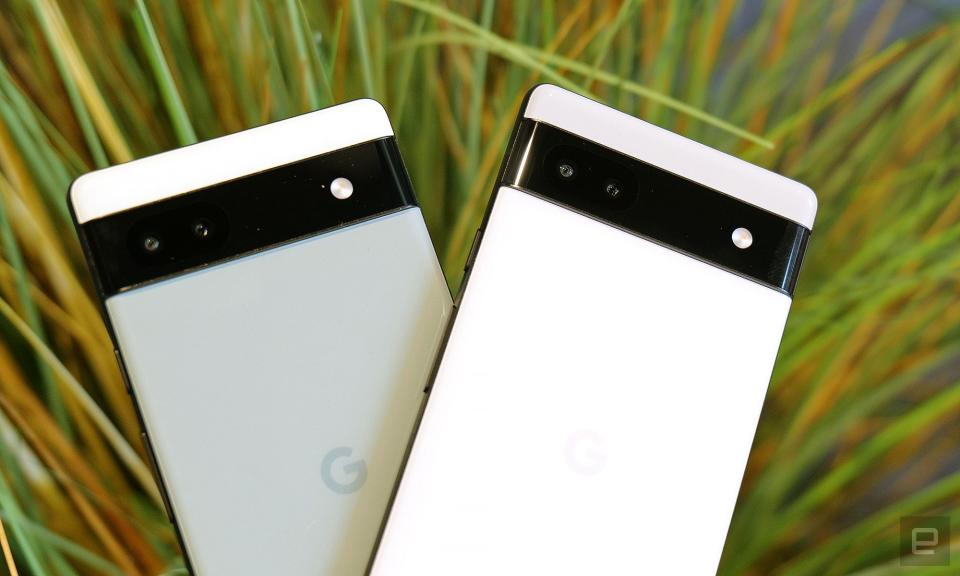
Google’s Pixel 6a has been a winner in many respects, but a new issue with the smartphone’s battery may pose a safety concern. After Android Authority reported on a pair of instances where a Pixel 6a battery overheated to the point where the device caught fire, the publication spotted some details in the latest Android 16 beta indicating that as a precaution, the Pixel 6a battery capacity and charging speed will be reduced. In addition, Android Authority received this statement from Google:

A subset of Pixel 6a phones will require a mandatory software update to reduce the risk of potential battery overheating. The update will enable battery management features that will reduce capacity and charging performance after the battery reaches 400 charge cycles. We’ll contact impacted customers next month, with all the information they need to address the issue.

The Pixel 6a is due to receive software support until July 2027, but it’s just the latest entry in this device line to have battery problems this year. In January, Google rolled out an update that reduced battery life of the Pixel 4a to increase stability for the 2020 phone model. Then in April, the company launched a program of repairs and payments after some instances of batteries “swelling” in the Pixel 7a.

macOS Tahoe is the end of the line for Intel Macs


Apple announced a lot of new features in today’s WWDC stream, but news from one follow-up meeting heralds the end of an era. MacOS 26, also known as macOS Tahoe, will be the last version of the operating system to work on Macs powered by Intel Processors. Tahoe-supporting Intel Macs will get full access to all the new features, and they’ll still get security updates for the next three years. By 2028, though they’ll be out of the Apple ecosystem.

The first Apple Silicon processor launched in 2020. Since then, Apple has run all its hardware on its own Apple Silicon microchips, which are significantly more powerful than the Intel chips it had been using for most of the millennium. Apple Silicon’s ARM-based architecture can perform more operations and use less battery power than the x86-based Intel processors. Many Intel-powered Macs have already aged out of updates, but today’s update puts an expiration date on the last survivors.

The announcement, which came during a Platform State of the Union (SOTU) following the main WWDC event, was aimed primarily at app developers. Apple is encouraging developers to plan for the post-Intel era and ensure the migration is as smooth as possible for themselves and their users. Both macOS 26 and the planned next version, macOS 27, will include the Rosetta translation process, which helps apps built for x86 run on ARM. After 27, Rosetta will remain in place to support legacy video games.

Intel-powered Macs that will support Tahoe include the 2019 16-inch MacBook Pro, the 2020 13-inch MacBook Pro, the 2020 27-inch iMac and the 2019 Mac Pro.

Snapchat now has a standalone app for making gen AI augmented reality effects


Snapchat has been experimenting with generative AI-powered augmented reality lenses in its app for the last couple years. Now, the company is allowing users to make their own with a new standalone app for making AR effects.

Snap is introducing a new version of its Lens Studio software that allows anyone to create AR lenses through text prompts and other simple editing tools, and publish them directly to Snapchat. Up to now, Lens Studio has only been available as a desktop app meant for developers and AR professionals. And while the new iOS app and web version aren’t nearly as powerful, it offers a wide range of face-altering and body-morphing effects thanks to generative AI.

“These are experimental new tools that make it easier than ever to create, publish, and play with Snapchat Lenses made by you,” the company explains in a blog post. “Now, you can generate your own AI effects, add your dancing Bitmoji to the fun, and express yourself with Lenses that reflect your mood or an inside joke–whether you’re on the go or near your computer. “

Snap gave me an early look at the Lens Studio iOS app, and I was pleasantly surprised by how much flexibility it offered. There are AI-powered tools for transforming your face, body and background via detailed text prompts (the app also offers suggestions of the kinds of prompts that work well, like “detailed zombie head with big eyes and nose, lots of details.”)

There’s a bit of a learning curve to figuring out what works well for each type of effect, and some of the generative AI prompts can take up to 20 minutes to render. But the app also offers dozens of templates that you can use as a starting point and remix with your own ideas. You can also make simpler face-altering filters that don’t rely as heavily AI but take advantage of popular Snapchat effects like face cutouts or Bitmoji animations. (A few examples of my creations are below, both used AI to create a background I overlaid other effects onto.)

Lenses I made in Lens Studio app.Lenses I made in Lens Studio app.

Screenshots via Snap

Snap already has hundreds of thousands of lens creators, some of whom have been making effects for the app for years. But I can easily see this new, simpler version of Lens Studio opening the door for many more. There could also be some upside for creators hoping to take advantage of Snapchat’s monetization programs: the company confirmed that users who publish lenses from the new app will be eligible to participate in its Lens Creator Rewards program, which pays creators who make popular AR effects.

A more accessible version of Lens Studio could also help Snap compete with Meta for AR talent. (Meta shut down Spark AR, its platform that allowed creators to make AR for Instagram last year.) In addition to Snapchat’s in-app effects, the company is now on its second generation of standalone AR glasses. More recently, Snap has focused on big-name developers to make glasses-ready effects, but the company has previously leaned on Lens Creators to come up with interesting use cases for AR glasses. Those types of integrations will likely require much more than what’s currently available in the new pared-down version of Lens Studio, but making AR creation more accessible (with the help of AI) raises some interesting possibilities for what might one day be possible for the company.


Jim Lanzone, the CEO of Engadget’s parent company Yahoo, joined the board of directors at Snap on September 12, 2024. No one outside of Engadget’s editorial team has any say in our coverage of the company.

How to watch the Latin American Games Showcase at Summer Game Fest 2025


Summer Game Fest 2025 is just around the corner and it’ll be a weekend packed with video game news. The event kicks off on June 6, with roughly a dozen livestreams scheduled to take place from then through June 8. Among them is the Latin American Games Showcase, which will highlight over 50 titles from Latin American indie developers. You can tune into the YouTube stream on Saturday, June 7 at 2PM ET (11AM PT).

Last year’s Latin American Games Showcase at SGF gave us a glimpse at a ton of games to be excited about, like the recently released title, Despelote, that’s both memoir and soccer game. We don’t know yet what the 2025 showcase will bring, but there’s sure to be some gems. Before the Latin American Games Showcase on Saturday, Summer Game Fest Live will usher in the festivities on June 6 at 5PM ET (2PM PT).

We have all the info you need to know right here ahead of Summer Game Fest and will be on the ground getting some hands-on time with many of the games you’ll see featured in the showcases, so be sure to check back in for the latest news.

How to watch SpaceX’s ninth Starship flight test on Tuesday


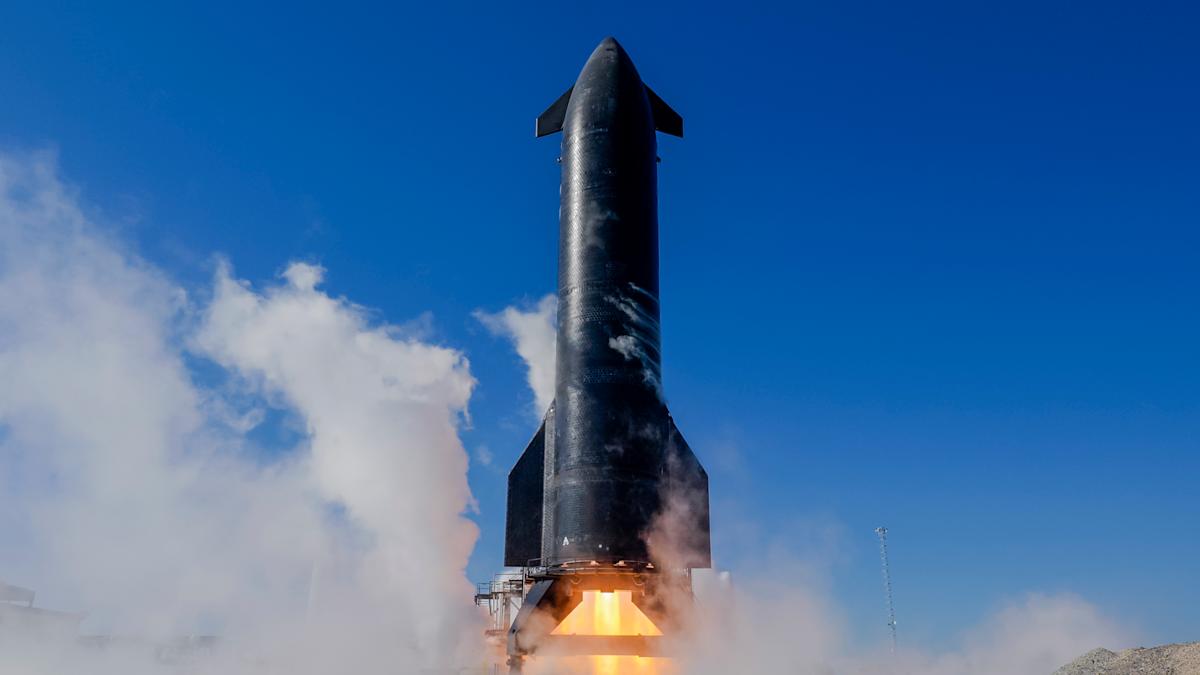
The FAA last week cleared SpaceX’s Starship to fly again after concluding its review of the previous flight, which ended in an explosion, and the next test could now take off as soon as Tuesday. SpaceX is eyeing May 27 for Starship’s ninth flight test, with a launch window opening at 7:30PM ET (6:30PM local time for the Texas Starbase). This launch will mark the first time SpaceX reuses a Super Heavy booster; the booster for flight nine previously flew with Starship’s seventh flight test earlier this year. While single-use parts have been replaced, SpaceX says it’s reusing 29 of the booster’s 33 Raptor engines.

As always, viewers at home will be able to watch along by tuning into the livestream, starting about 30 minutes before Starship launches. That will be available on SpaceX’s website and in a broadcast on its X profile.

To view this content, you’ll need to update your privacy settings. Please click here and view the “Content and social-media partners” setting to do so.

SpaceX conducted Starship’s eighth flight test back in March, but the vehicle ran into some issues a few minutes after launch. The Super Heavy booster was able to return to the launch site after separation from the upper stage and be successfully caught by the tower’s “chopstick” arms, but as for the ship itself, several Raptor engines shut off, causing it to tumble and ultimately blow itself up.

SpaceX says the issue was likely due to “a hardware failure in one of the upper stage’s center Raptor engines that resulted in inadvertent propellant mixing and ignition.” It’s since made some changes to prevent that from happening again. SpaceX said in an update on May 22 that “engines on the Starship’s upper stage will receive additional preload on key joints, a new nitrogen purge system, and improvements to the propellant drain system.”

For flight nine, the Super Heavy booster won’t return to the launch site, but will instead splash down in the ocean. The Starship upper stage will attempt to deploy eight Starlink dummy satellites, and SpaceX is otherwise looking to this flight to test “several experiments focused on enabling Starship’s upper stage to return to the launch site.”

Apple’s WWDC 2025 keynote will be June 9 at 1PM ET


Apple has sent the invites for its in-person WWDC 2025 festivities on Monday, June 9, featuring the keynote session at 1PM ET/10AM PT. Attendees will be able to watch the keynote presentation at the company’s Cupertino campus, as well as meet with developers and participating in special activities. For everyone who hasn’t received an invite to Apple Park, the keynote will stream online. Developers can also participate in the rest of WWDC’s programming online for free.

We’ve already got pretty high hopes for the keynote announcements, with a lot of potential news expected about the upcoming redesign for iOS 19. We’ve heard that the operating system could have features including AI-powered battery management and improved public Wi-Fi sign ins, and our own Nathan Ingraham has penned an impassioned plea for a normal letter “a” in the Notes app. The full WWDC conference runs from June 9-13.

Nintendo is reportedly using Samsung to build the main Switch 2 chips


Nintendo hired Samsung to build the main chips for the Switch 2, including an 8-nanometer processor custom designed by NVIDIA, Bloomberg reported. That would mark a move by Nintendo away from TSMC, which manufactured the chipset for the original 2017 Switch. Nintendo had no comment, saying it doesn’t disclose its suppliers. Samsung and NVIDIA also declined to discuss the matter.

Samsung has previously supplied Nintendo with flash memory and displays, but building the Switch 2’s processor would be a rare win for the company’s contract chip division. Samsung can reportedly build enough chips to allow Nintendo to ship 20 million or more Switch 2s by March of 2026.

NVIDIA’s new chipset was reportedly optimized for Samsung’s, rather than TSMC’s manufacturing process. Using Samsung also means that Nintendo won’t be competing with Apple and others for TSMC’s resources. During Nintendo’s latest earnings call, President Shuntaro Furukawa’s said that the company didn’t expect any component shortages with its new console — an issue that plagued the original Switch.

Nintendo said in the same earnings report that it was caught by surprise with 2.2 million applications for Switch 2 pre-orders in Japan alone. Despite that, the company projected sales of 15 million Switch 2 units in its first year on sale to March 2026, fewer than analyst predictions of 16.8 million — likely due to the impact of Trump‘s tariffs.

How to watch Google I/O 2025


It’s still May, which means it’s still Google time. After showing off Android’s new look at The Android Show, the company still has its developer conference to check off the list. Google I/O 2025 is scheduled to start on May 20 at 1PM ET / 10AM PT, and Engadget will be covering it live, via a liveblog and on-the-ground reporting from our very own Karissa Bell.

Google included some Gemini news in The Android Show — the AI is coming to Wear OS, Android Auto and Google TV — but artificial intelligence should still be the focus of the company’s upcoming keynote. too. Expect news about how Google is using AI in search to be featured prominently, along with some other surprises, like the possible debut of an AI-powered Pinterest alternative.

To view this content, you’ll need to update your privacy settings. Please click here and view the “Content and social-media partners” setting to do so.

The company made it clear during its Android showcase that Android XR, its mixed reality platform, will also be featured during I/O. That could include the mixed reality headset Google and Samsung are collaborating on, or, as teased at the end of The Android Show, smart glasses with Google’s Project Astra built-in.

To find out for yourself, you can watch Google’s keynote in the embedded livestream above or on the company’s YouTube channel. The event starts at 1PM ET on May 20 and the company plans to hold breakout sessions through May 21 on a variety of different topics relevant to developers.