Max’s SharePlay feature for iOS is now available to all ad-free subscribers


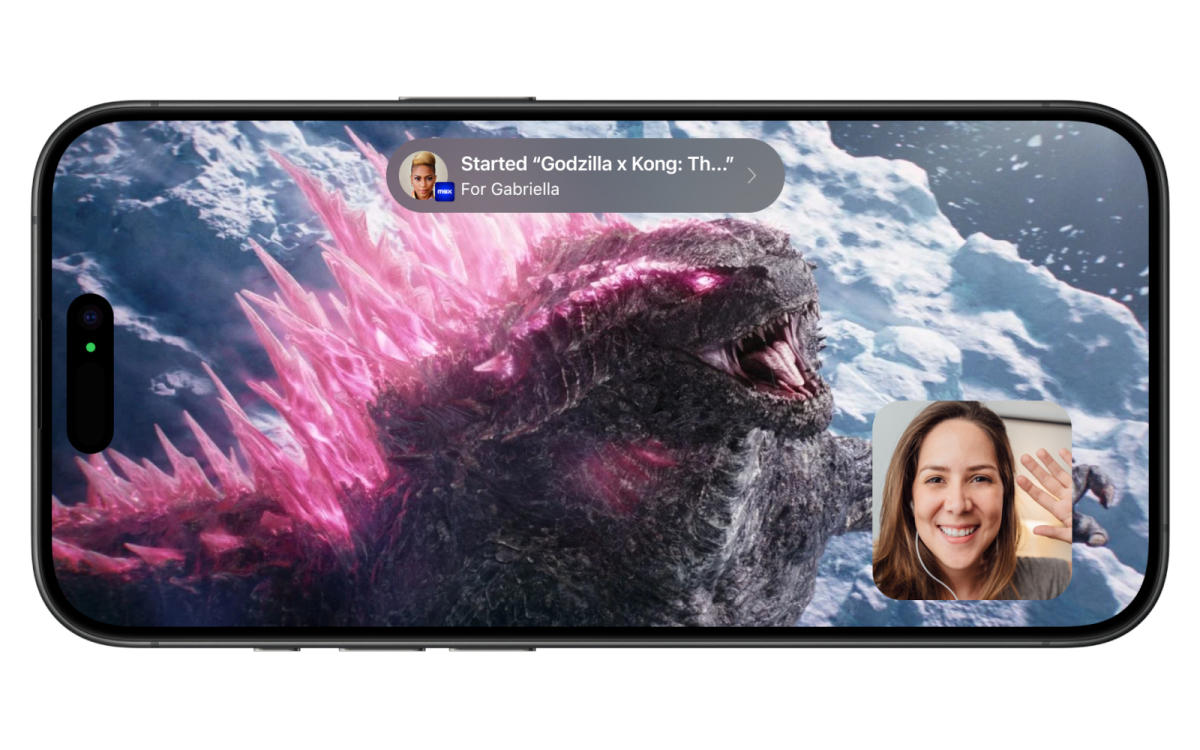
Back when Max was still known as HBO Max, it released a redesigned app that added SharePlay for Apple devices, but only in the US. Now, the streaming service is rolling out the feature to all its users around the world. SharePlay is now available to all Max users paying for Ad-Free and Ultimate Ad-Free plans, allowing them to hold and join watch parties over FaceTime and iMessage, no matter where they are.

Users can start watching with friends by hitting the “share” button either on the details section of each title or within the FaceTime app. Each session can have as many as 32 participants, but they all have to be Max subscribers. That means people from regions where Max isn’t available, such as in Asian countries, won’t be able to hop on and watch with their pals in the US or Europe. Warner Bros. is planning to expand Max’s reach to South East Asia later this year, but it warns on its website that the timeline could still change.

SharePlay for Max works on iPhones, iPads, Apple TVs and Vision Pro headsets. To initiate a watch party on iPhones, iPads and Vision Pros, users have to find the Share icon on the details page of a show or a movie, enter the contacts they want to share with and initiate a FaceTime call. If they choose Messages on their mobile devices, their friends will get a message asking them to join SharePlay. On Apple TV, users will have to open FaceTime first before clicking the SharePlay button and choosing Max from the app list.


Outage caused by CrowdStrike’s disastrous update affected 8.5 million devices


The global outage caused by a faulty update from cybersecurity provider CrowdStrike on Friday affected some 8.5 million Windows devices, Microsoft said in a blog post. The update triggered a blue screen of death, bringing systems used by hospitals, airlines, banks and other major services temporarily to a standstill. Only machines running Windows were affected.

While the issue was mostly resolved by Friday afternoon, Microsoft and CrowdStrike are still dealing with the fallout. In the blog post on Saturday, Microsoft’s VP of Enterprise and OS Security, David Weston, wrote that the company is working with CrowdStrike to “develop a scalable solution that will help Microsoft’s Azure infrastructure accelerate a fix for CrowdStrike’s faulty update.” Microsoft has also called in help from Amazon Web Services (AWS) and Google Cloud Platform (GCP).

CrowdStrike said in its own blog post on Saturday that the update — a sensor configuration update — “was designed to target newly observed, malicious named pipes being used by common C2 frameworks in cyberattacks.” Unfortunately, for devices running Windows 7.11 and above that use CrowdStrike’s Falcon sensor, it instead “triggered a logic error that resulted in an operating system crash.” The total number of devices affected worked out to be “less than one percent of all Windows machines,” according to Weston.

NASA’s Curiosity rover accidentally uncovered pure sulfur crystals on Mars


NASA scientists say pure sulfur has been found on Mars for the first time after the Curiosity rover inadvertently uncovered a cluster of yellow crystals when it drove over a rock. And it looks like the area is filled with it. It’s an unexpected discovery — while minerals containing sulfur have been observed on the Red Planet, elemental sulfur on its own has never been seen there before. “It forms in only a narrow range of conditions that scientists haven’t associated with the history of this location,” according to .

Curiosity cracked open the rock on May 30 while driving in a region known as the Gediz Vallis channel, where similar rocks were seen all around. The channel is thought to have been carved by water and debris flows long ago. “Finding a field of stones made of pure sulfur is like finding an oasis in the desert,” said Ashwin Vasavada, Curiosity’s project scientist. “It shouldn’t be there, so now we have to explain it. Discovering strange and unexpected things is what makes planetary exploration so exciting.”

A rock run over and cracked by the Curiosity rover revealing yellow sulfur crystalsA rock run over and cracked by the Curiosity rover revealing yellow sulfur crystals

NASA/JPL-Caltech/MSSS

After spotting the yellow crystals, the team later used a camera on Curiosity’s robotic arm to take a closer look. The rover then took a sample from a different rock nearby, as the pieces of the rock it had smashed were too brittle for drilling. Curiosity is equipped with instruments that allow it to analyze the composition of rocks and soil, and NASA says its Alpha Particle X-Ray Spectrometer (APXS) confirmed it had found elemental sulfur.

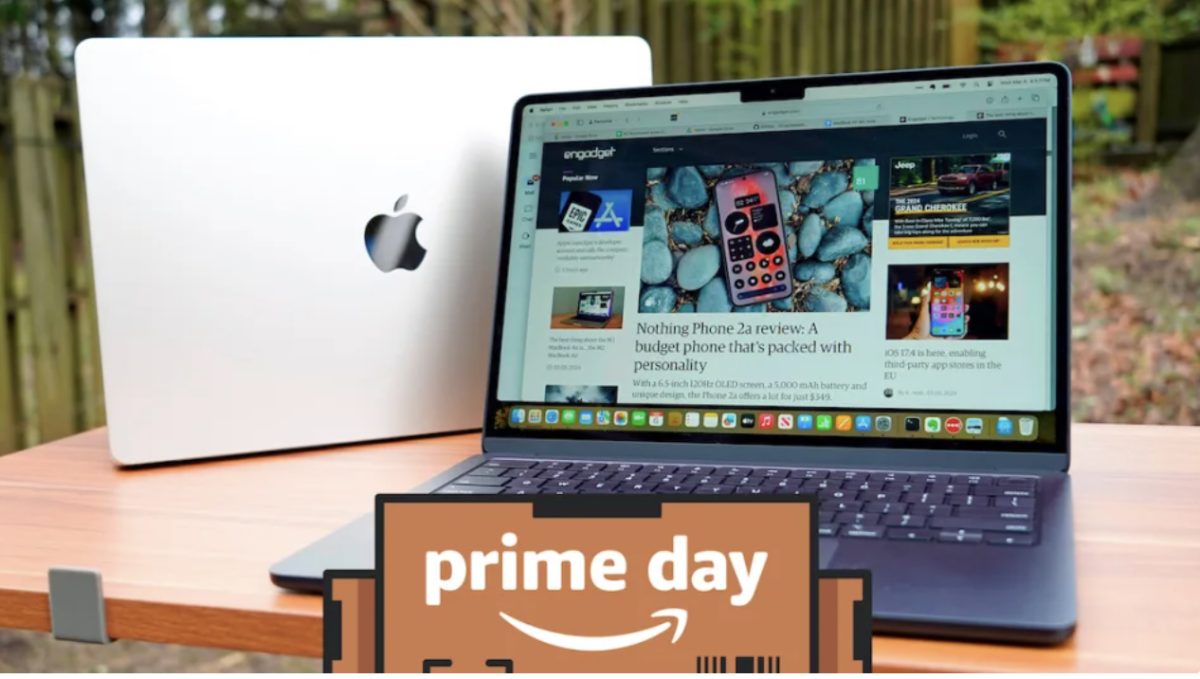
This Prime Day MacBook Air deal is already great, but spending more makes it an even better value


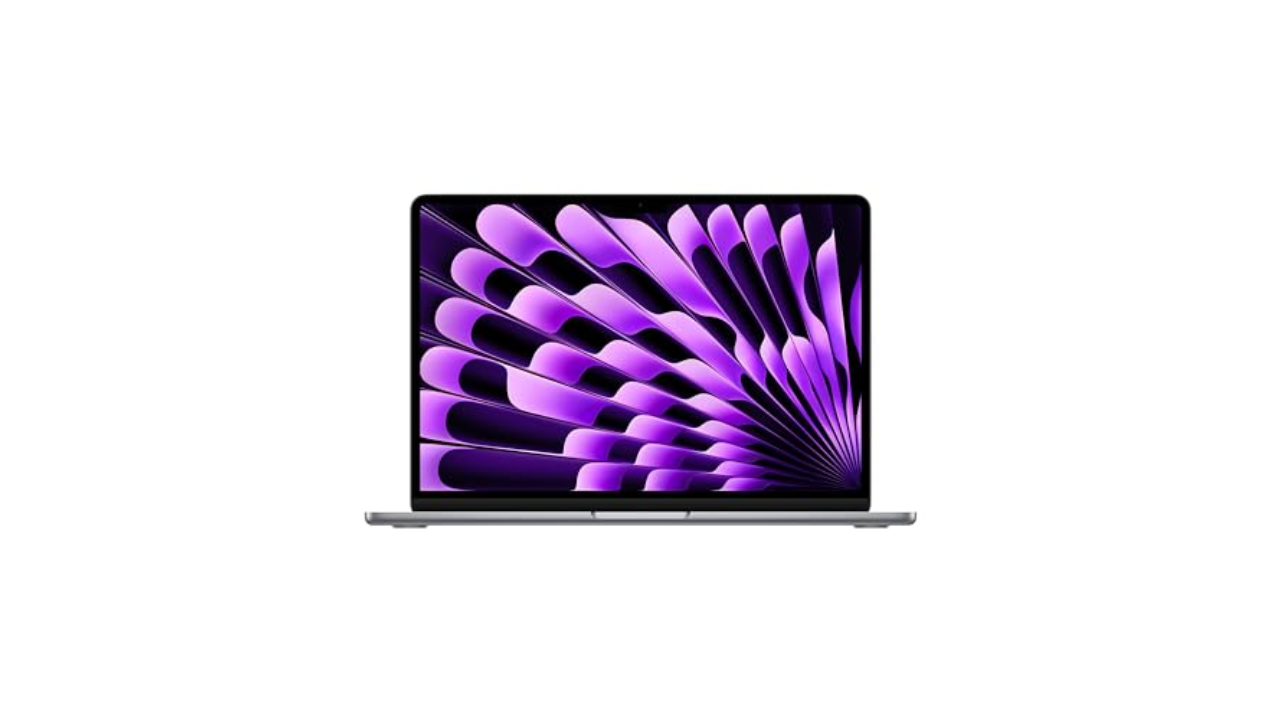
Next to Black Friday, Prime Day is a great time to buy hardware from Amazon and Apple. On the latter brand, we’re seeing some of the best prices to date for the latest models of iPads, AirPods and AirTags, to name a few. And if you’re in the market for a new laptop, it’s also a great time to buy a MacBook, with prices starting at a record low $849 for the latest MacBook Air. It’s currently Engadget’s top pick on our best laptop list.

But I’m here to argue that you should spend $1,249 for that MacBook Air instead.

Apple

Save on the latest MacBook Air (but double up on the RAM and storage). 

$1,249 at Amazon

Here’s why: They get you in the door for that sub-$1,000 price, which is an enticing $250 less than you’d spend at the Apple Store. But Apple is notoriously stingy on memory and storage for its devices: The baseline model only has 8GB of RAM and a 256GB drive. That’s fine if you’re only using your laptop for the basics – say, social media, streaming video and light document creation. But even with cloud storage, that SSD will fill up very quickly with photos, audio and video if you’re doing anything creative. (Yes, you can get external USB drives, but they’re slower and ruin the lines of Apple’s sleek laptop.) And while Apple does a great job of managing software resources on the Mac, that 8GB of memory feels like a low ceiling.

So here’s what I did when Amazon ran a version of this same deal a few months ago: I paid to double both specs. For $1,249 (after clipping that same $50 on-screen coupon), you get 16GB of RAM and 512GB of storage. Yes, a terabyte or more would be even better, but you pick your battles. And this configuration still saves you a cool $250 off the Apple Store price for the same configuration, while being a lot more future-proofed. For instance, if you’re laptop shopping for a high school or college student, this stepped-up model will survive a 4-year academic stint with more comfort than that $849 version.

If that’s still too steep, you can split the difference with the 512GB MacBook Air M2. It doesn’t have the extra RAM, but the otherwise identical slightly older model still gets you a very capable, modern Apple laptop with decent storage for just $999. But don’t wait: these laptop deals end today, and we don’t know if we’ll be seeing them again before Black Friday.

Your Prime Day Shopping Guide: See all of our Prime Day coverage. Shop the best Prime Day deals on Yahoo Life. Follow Engadget for Prime Day tech deals. Hear from Autoblog’s experts on the best Amazon Prime Day deals for your car, garage, and home, and find Prime Day sales to shop on AOL, handpicked just for you.

Report finds most subscription services manipulate customers with ‘dark patterns’


Most subscription sites use “dark patterns” to influence customer behavior around subscriptions and personal data, according to a pair of new reports from global consumer protection groups. Dark patterns are “practices commonly found in online user interfaces [that] steer, deceive, coerce or manipulate consumers into making choices that often are not in their best interests.” The international research efforts were conducted by the International Consumer Protection and Enforcement Network (ICPEN) and the Global Privacy Enforcement Network (GPEN).

The ICPEN conducted the of 642 websites and mobile apps with a subscription component. The assessment revealed one dark pattern in use at almost 76 percent of the platforms, and multiple dark patterns at play in almost 68 percent of them. One of the most common dark patterns discovered was sneaking, where a company makes potentially negative information difficult to find. ICPEN said 81 percent of the platforms with automatic subscription renewal kept the ability for a buyer to turn off auto-renewal out of the purchase flow. Other dark patterns for subscription services included interface interference, where desirable actions are easier to perform, and forced action, where customers have to provide information to access a particular function.

The companion from GPEN examined dark patterns that could encourage users to compromise their privacy. In this review, nearly all of the more than 1,000 websites and apps surveyed used a deceptive design practice. More than 89 percent of them used complex and confusing language in their privacy policies. Interface interference was another key offender here, with 57 percent of the platforms making the least protective privacy option the easiest to choose and 42 percent using emotionally charged language that could influence users.

Even the most savvy of us can be influenced by these subtle cues to make suboptimal decisions. Those decisions might be innocuous ones, like forgetting that you’ve set a service to auto-renew, or they might put you at risk by encouraging you to reveal more personal information than needed. The reports didn’t specify whether the dark patterns were used in illicit or illegal ways, only that they were present. The dual release is a stark reminder that digital literacy is an essential skill.

Early Prime Day deals discount the Echo Show 5 to $50


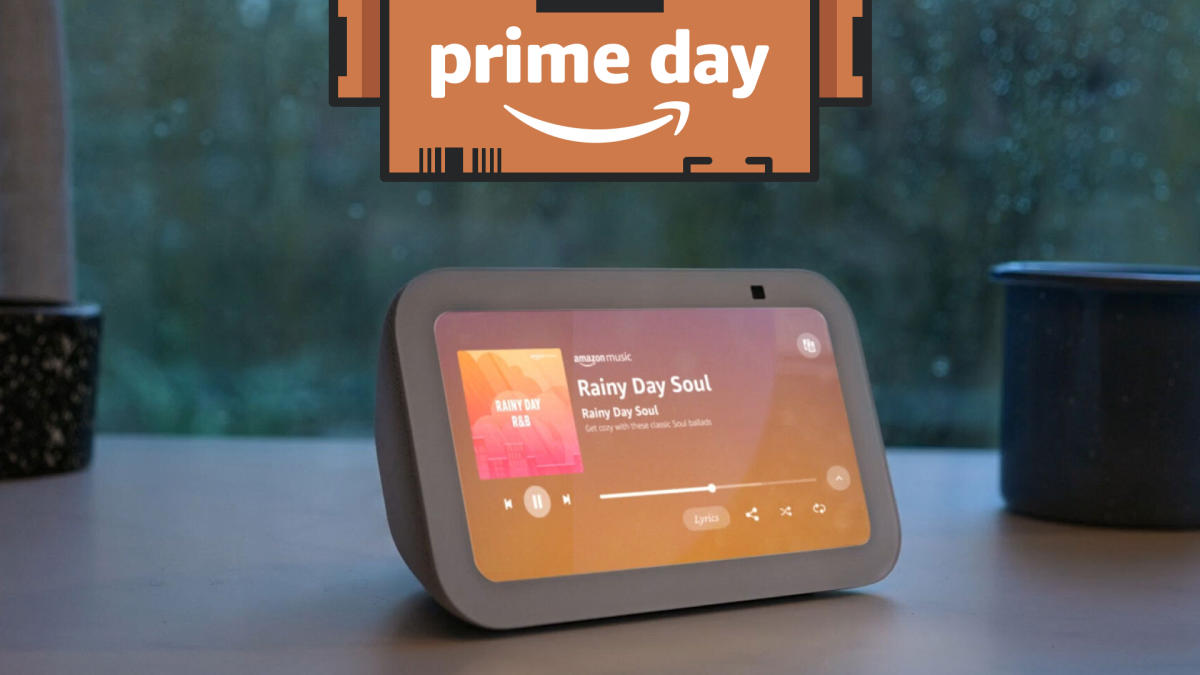
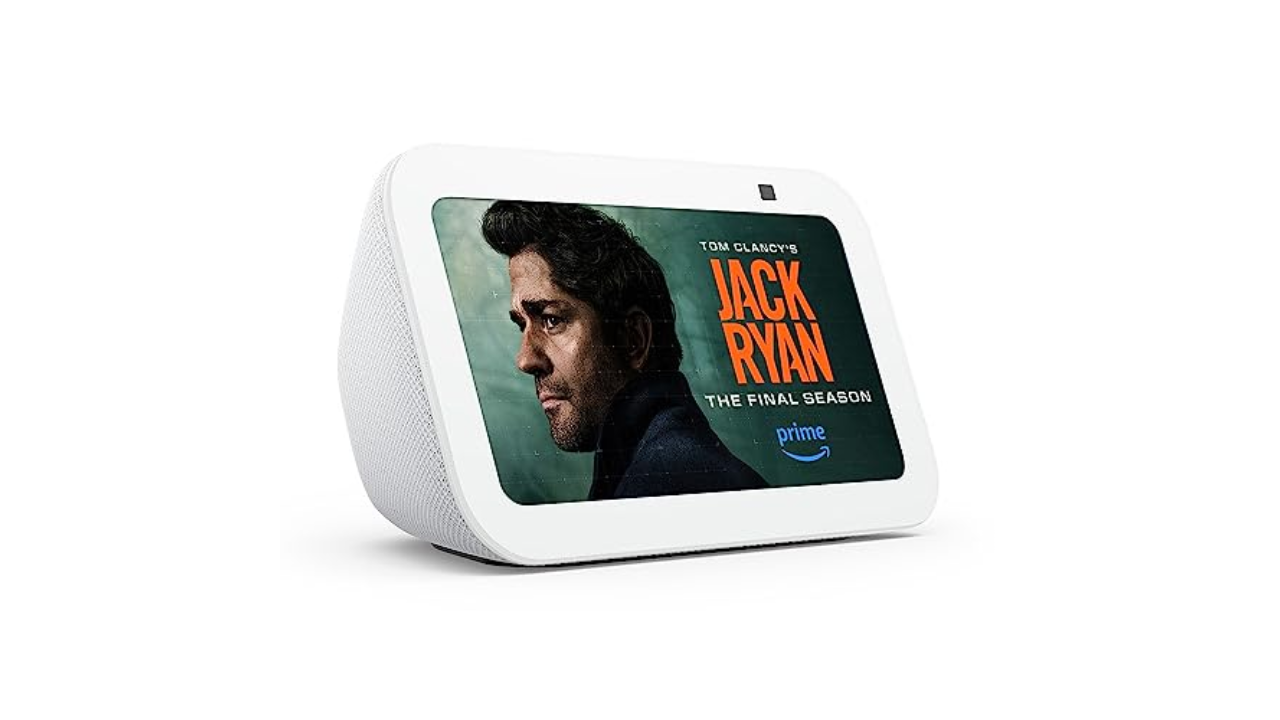
This year’s Amazon Prime Day is nearly upon us, as it officially begins on July 16. However, some of the best early Prime Day deals are already coming in hot, including a deep discount on the Echo Show 5. The Amazon smart display is on sale for $50, which is a discount of $40. That’s just a tiny bit more than the record-low price. The Echo Show 8 is also on sale for $85, which is a new record low.

The Echo Show 5 easily made our list of the best smart displays, for a great many reasons. The 5.5-inch screen is diminutive, especially when compared to the Echo Show 8, but that just makes it fit better on a desk or nightstand. To that end, it doubles as a fantastic alarm clock. The ambient alarm light sensor adjusts the screen’s brightness automatically, which is a nice way to wake up, and the tap-to-snooze function allows for a few more minutes (or hours) of precious sleep.

Amazon

There’s a camera, which is great for simple video calls but does bring some privacy concerns. Amazon ships this display with a physical camera cover to solve that issue. Just pop on the cover when you aren’t actually using the camera.

This isn’t a perfect smart display, though it’s a great one for the price. The main downside with the Echo Show 5 is that the speakers are not as powerful as those found with larger smart displays. This isn’t a dealbreaker. It’s still plenty loud, but you probably won’t use it to power a dance party.

Your Prime Day Shopping Guide: See all of our Prime Day coverage. Shop the best Prime Day deals on Yahoo Life. Follow Engadget for Prime Day tech deals. Hear from Autoblog’s experts on the best Amazon Prime Day deals for your car, garage, and home, and find Prime Day sales to shop on AOL, handpicked just for you.

Cities: Skylines 2’s console port has been delayed indefinitely


Cities: Skylines 2, the follow-up to the popular city builder developed by Colossal Order, just can’t catch a break. Following a post by the official Cities: Skylines account on publisher Paradox Interactive’s Cities: Skylines 2 forum, the console release for Cities: Skylines 2 has been postponed indefinitely. The game was originally targeting a launch on Xbox and PlayStation sometime in October.

“While we are making slow but steady progress, there are still unresolved issues impacting the game in ways that harm the player experience we want to deliver. We expect to receive a new [release candidate], which will undergo a thorough review in August. This evaluation will determine whether we can begin the submission process and provide a solid release date, or if further issues need to be addressed,” the post reads.

A screenshot from Cities: Skylines 2 showing a fully-built city with skyscrapers and rolling hills in the distance

Image: Colossal Order/Paradox Interactive

Despite Paradox Interactive publishing multiple pieces of downloadable content for the game, Cities: Skylines 2 has been plagued with performance and stability issues since its PC launch in October 2023, prompting an apology from the developers in April. The prompt cancellation of the Sims-competitor Life by You following an indefinite delay doesn’t inspire much confidence in Paradox’s intention to deliver on this promised release.

Colossal Order has managed to hit all of its goals outlined in the publicly available year-one roadmap for Skylines 2. However, persistent issues and a lack of mod support have left players clinging to the original Cities: Skylines for the time being.

An image displaying the year-one post-launch roadmap for Cities: Skylines 2. The San Fransisco Set and Deluxe Relax radio station are available at laiunch. The Modern Architecture Creator Pack, Urban Promenades Creator Packs, and Soft Rock Radio Station are set to launch in Q2 of 2024. Three more Creator Packs and Radio stations are slated for Q4 of 2024, while a Bridges & Ports Expansion and Cold Wave Radio Station are targeting a Q1 2025 launch.

The roadmap for the first year of post-launch content for Cities: Skylines 2
Image: Colossal Order/Paradox Interactive

Epic says that Apple has accepted its third-party app store


Update, July 5, 5:25PM ET: The same day it posting a tweet thread about Apple’s app submission processes, Epic now says its game store has been accepted by Apple. The company offered no further commentary beyond a single tweet noting that “Apple has informed us that our previously rejected Epic Games Store notarization submission has now been accepted.”

Thirty minutes later, Epic CEO Tim Sweeney said “Apple is now telling reporters that this approval is temporary and are demanding we change the buttons in the next version – which would make our store less standard and harder to use. We’ll fight this.”

Guess this saga’s got more legs to run.

The original story chronicling Epic’s moody tweets follows unedited.


Epic says that Apple has once again rejected its submission for a third-party app store, according to a series of posts on X. The company says that Apple rejected the latest submission over the design and position of the “install” button on the app store, claiming that it too closely resembles Apple’s own “get” button. Apple also allegedly said that Epic’s “in-app purchases” label is too similar to its own label, used for the same reason.

The maker of Fortnite suggests that this is just another salvo in the long-running dispute between the two companies. Epic says that it’s using the same “install” and “in-app purchases” naming conventions found “across popular app stores on multiple platforms.” As for the design language, the company states that it’s “following standard conventions for buttons in iOS apps” and that they’re “just trying to build a store that mobile users can easily understand.”

Epic has called the rejection “arbitrary, obstructive and in violation of the DMA.” To that end, it has shared concerns with the European Commission in charge of tracking potential Digital Markets Act (DMA) violations. The company still says it’s ready to launch both the Epic Games Store and Fortnite on iOS in the EU in “the next couple of months” so long as Apple doesn’t put up “further roadblocks.”

This is just the latest news from a rivalry that goes back years. The two companies have been sparring ever since Epic started using its own in-app payment option in the iOS version of Fortnite, keeping Apple away from its 30 percent cut.

This led to a lengthy legal battle in the US about Apple’s walled-garden approach to its app store. Epic sued Apple and Apple banned Epic. A judge issued a permanent injunction as a way to allow developers to avoid Apple’s 30 percent cut of sales. This didn’t satisfy anyone. Apple wasn’t happy, for obvious reasons, and Epic contested the language of the injunction, which didn’t call out Apple for having a monopoly. Both companies appealed, eventually making its way to the Supreme Court. The court decided not to hear the case. The justices must have had other things to do.

As the two companies continued bickering in the US, the EU passed the aforementioned DMA. This forced Apple’s hand into allowing third-party storefronts on iOS devices in Europe. Since then, Epic has been trying to get its storefront going but has been met by resistance from Apple.

This article contains affiliate links; if you click such a link and make a purchase, we may earn a commission.


YouTube upgrades its ‘erase song’ tool to remove copyrighted music only


YouTube is trying to make it easy for its creators to remove songs from their videos and resolve copyright claims. In a new Creator Insider video, the website has announced that it has released an upgraded “erase song” tool that has the capability to remove music from video segments without deleting other audio, such as conversations, as well.

When creators get a copyright claim for music, YouTube gives them the option to trim out the affected segment or to replace the song with an approved one in its audio library. Creators can’t monetize that particular video until they resolve the claim. The website has been testing its “erase song” tool for a while, but in the video, the company says it hasn’t been as accurate as it would like. To solve that problem, it redesigned the tool so that it now uses an AI-powered algorithm to accurately detect and remove copyrighted music from videos.

Still, YouTube admits that the tool might not always work. If a song is particularly hard to remove, presumably due to audio quality or the presence of other sounds while it’s playing, creators may have to resort to other options. In addition to being able to trim out the offending segment or to replace its song, creators will also be able to mute that part of their video through the new erase tool.

The website’s upgraded erase song tool will be available in YouTube Studio in the coming weeks.

New Wicked, Gladiator 2 release dates set up this year’s Barbenheimer


Universal Pictures has moved the release date of its lavish musical Wicked forward by a few days, from Nov. 27 (the day before Thanksgiving) to the preceding Friday, Nov. 22.

The move is ostensibly, and sensibly, to avoid a clash with Disney’s animation sequel Moana 2, also set for Nov. 27. Universal may have been motivated (read: scared) by the astonishing box office performance of Disney and Pixar’s Inside Out 2, which has racked up over $1 billion globally in a little over two weeks, setting a new record for an animated film.

But the date change also sets up another, potentially more exciting clash: Wicked, which stars Ariana Grande and Cynthia Erivo, will now hit theaters on the same day as Ridley Scott’s historical action drama Gladiator II, starring Paul Mescal and Pedro Pascal. Wicked is the first part of a two-part adaptation of the hit stage musical, which prefigures the 1939 classic The Wizard of Oz, telling the witches’ backstory. Gladiator II is a generation-later sequel to Scott’s Oscar-winning 2000 epic. (Vanity Fair just published a surprisingly meaty preview of Gladiator II, which is stuffed with first-look images, plot details, and good quotes from Scott and the cast; it’s worth checking out.)

The contest between these two movies instantly recalls “Barbenheimer,” the 2023 box office phenomenon that pitted Greta Gerwig’s candy-colored comedy Barbie against Christopher Nolan’s somber nuclear bomb drama Oppenheimer. That date clash created a storm of publicity and a kind of unofficial festival of moviegoing that worked out to the benefit of both movies, which finished 2023 as the biggest and third-biggest films of the year worldwide.

Theater owners, if no one else, will be hoping for similar from Wicked and Gladiator II, but the juxtaposition isn’t quite so striking this time around. It’s true that one is a colorful, fantastical stage musical centering female characters and the other is a violent action movie front-loaded with manly actors.

But they’re both big, old-school spectacles with Old Hollywood feel, and they don’t make for as stark (or as funny) a contrast as between a toy-branded meta comedy and a three-hour biopic about physics and nuclear holocaust. Wicked and Gladiator II are also both franchise movies of a sort, relying on brand familiarity, whereas Barbie and Oppenheimer are both daring, original films from auteur directors.

Also, it’s hard to come up with a compound name for them that rolls off the tongue as smoothly “Barbenheimer” does. Gladicked? Surely not. The best I can do is “Wickiator.”

None of that matters quite as much as what Wicked and Gladiator II have in common with Barbie and Oppenheimer, though: They’re both exciting-looking movies that present very compelling reasons to see them on the big screen, that complement each other in fun ways, and that stand to do very well with audiences. It’s going to be a fun November.