Detroit police can no longer use facial recognition results as the sole basis for arrests


The Detroit Police Department has to adopt new rules curbing its reliance on facial recognition technology after the city reached a settlement this week with Robert Williams, a Black man who was wrongfully arrested in 2020 due to a false face match. It’s not an all-out ban on the technology, though, and the court’s jurisdiction to enforce the agreement only extends four years. Under the new restrictions, which the is calling the strongest such policies for law enforcement in the country, police cannot make arrests based solely on facial recognition results or conduct a lineup based only on facial recognition leads.

Williams was arrested after facial recognition technology flagged his expired driver’s license photo as a possible match for the identity of an alleged shoplifter, which police then used to construct a photo lineup. He was arrested at his home, in front of his family, which he says “completely upended my life.” Detroit PD is known to have made at least two other wrongful arrests based on the results of facial recognition technology (FRT), and in both cases, the victims were Black, the ACLU noted in its announcement of the settlement. Studies have shown that facial recognition is .

The new rules stipulate that “[a]n FRT lead, combined with a lineup identification, may never be a sufficient basis for seeking an arrest warrant,” according to a summary of the agreement. There must also be “further independent and reliable evidence linking a suspect to a crime.” Police in Detroit will have to undergo training on the technology that addresses the racial bias in its accuracy rates, and all cases going back to 2017 in which facial recognition was used to obtain an arrest warrant will be audited.

In an op-ed for published today, Williams wrote that the agreement means, essentially, that “DPD can no longer substitute facial recognition for basic investigative police work.”

This article contains affiliate links; if you click such a link and make a purchase, we may earn a commission.

Extreme E is now Extreme H, a hydrogen-powered racing series starting 2025


Extreme E, the premium off-road EV racing series, is pivoting to hydrogen. The series announced this week that it’s rebranding to , and unveiled a hydrogen-powered race car it’s calling the Pioneer 25 to usher in the transition. The first season is slated to begin in April 2025 in Saudi Arabia, before heading to the UK, Germany, Italy and wrapping up in the US.

Extreme E , putting electric off-road vehicles to the test of (as you might expect) extreme environments, like the desert. It got some major teams on board, . This year marks Extreme E’s fourth season. In a about the shift to hydrogen, founder and CEO Alejandro Agag said the move is “not just about e-mobility; it’s about creating green power solutions that can be applied anywhere, from remote locations to bustling cities.”

“By launching Extreme H, we’re not only showcasing the viability of hydrogen as a fuel source but also testing the wider hydrogen ecosystem including recharging and hydrogen transportation — as well as helping to create a market for it,” Agag wrote. Pioneer 25, Extreme H’s flagship race car, is powered by a 75kW hydrogen fuel cell.

Julian Assange pleads guilty to espionage but defends himself in court


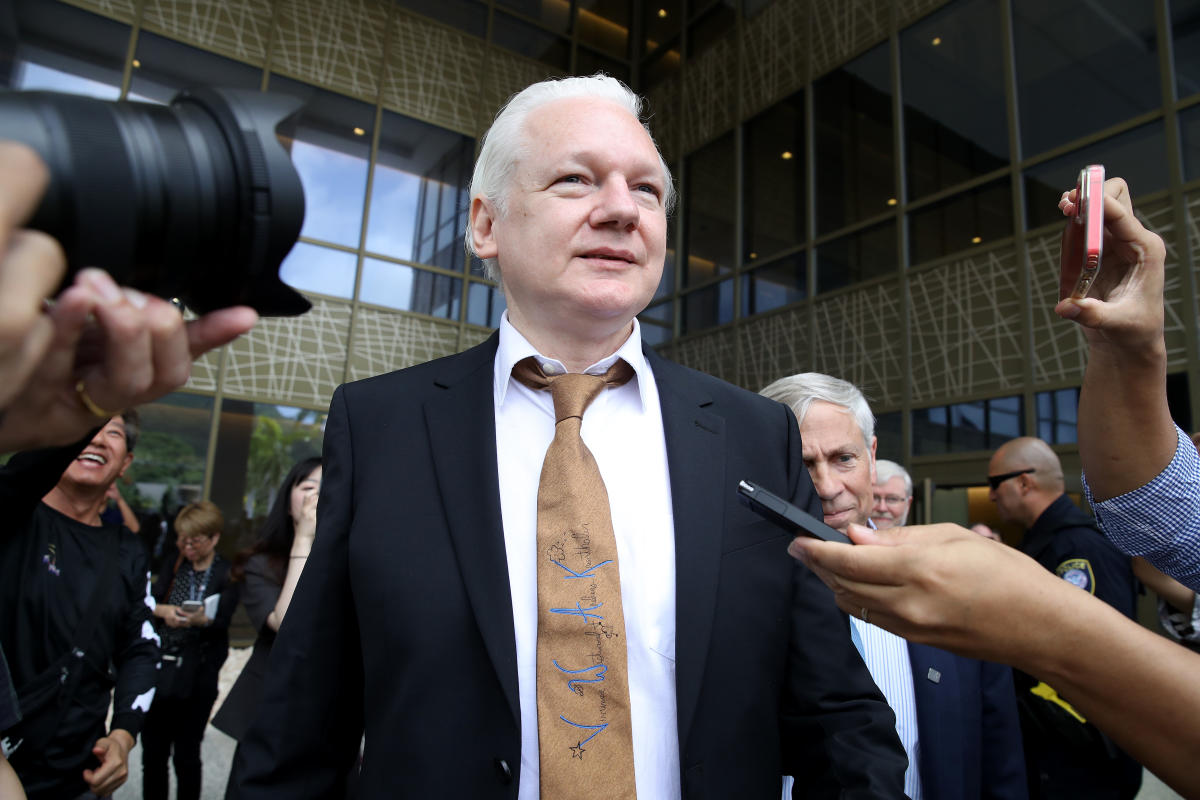
Julian Assange has formally pleaded guilty to violating the Espionage Act at a federal courthouse in Saipan, the capital of Northern Mariana Islands. The WikiLeaks founder was released from prison on June 24 after reaching a plea deal with the US government and quickly boarded a plane at Stansted Airport to make his way to Saipan. While the deal required Assange to plead guilty to “conspiring to unlawfully obtain and disseminate classified information relating to the national defense of the United States,” he still defended himself in court.

According to The Washington Post, Assange argued that he should’ve been protected by the First Amendment as a journalist. “Working as a journalist, I encouraged my source to provide information that was said to be classified in order to publish that information,” he said. “I believe the First Amendment protected that.” He also said that he believes the First Amendment and the Espionage Act are in contradiction of each other, but he accepts that his actions were in “violation of an espionage statute” and that it would be “difficult to win such a case given all the circumstances.”

A lawyer for the US government, however, accused him of encouraging personnel with high security clearances to expose classified military information and threaten national security. If you’ll recall, WikiLeaks published classified information related to the wars in Afghanistan and Iraq, which was obtained by whistleblower and former Army intelligence officer Chelsea Manning, under his leadership.

Lawyers from both sides argued about the time Assange served in prison, but around three hours after the proceeding started, Chief Judge Ramona V. Manglona declared that the 62 months he spent in Belmarsh Prison was reasonable and on par with the time served by Manning. Assange will not spend any time in US custody, but he has to leave the US Northern Mariana Islands immediately. As of this writing, the same private jet that flew him from London to Saipain is waiting to take him to Canberra, Australia.


Apple reportedly even held talks with Meta about an AI partnership as it plays catch-up


Apple is apparently looking to take all the help it can get to integrate generative AI into its . According to a report by the , citing sources with knowledge of the discussions, Apple has held talks with Meta about the possibility of using the company’s generative AI model. It also reportedly had similar discussions with startups Anthropic and Perplexity. As of now, though, nothing has been finalized, WSJ reports.

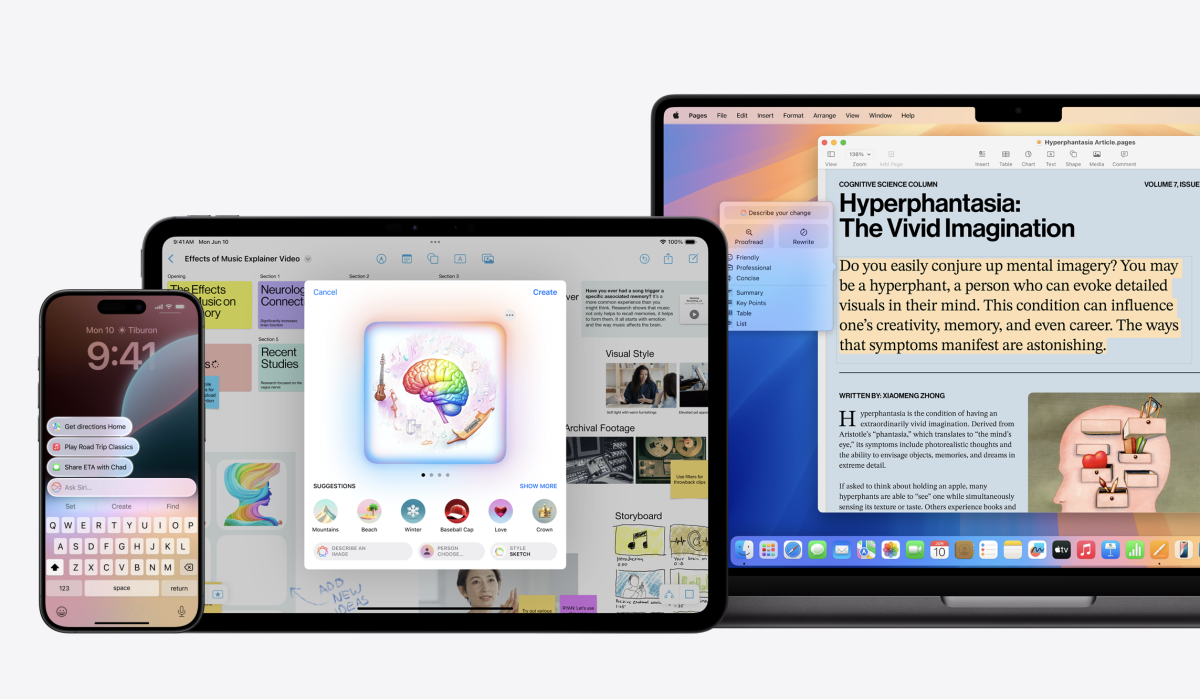
At WWDC earlier this month, Apple officially announced its much-rumored partnership with OpenAI that will with the upcoming generation of the devices’ OS. During the event, Apple’s senior VP of software engineering, Craig Federighi, also as something that could be added to Apple Intelligence in the future. “We want to enable users ultimately to choose the models they want,” Federighi said. It would make sense, then, for Apple to be shopping around.

But for the time being, only OpenAI has been confirmed as a partner. OpenAI’s GPT-4o will be integrated into Apple Intelligence to bolster Siri and other tools, with some features expected to arrive later this year.

Someone apparently hacked 50 Cent’s accounts to peddle a memecoin and made off with millions


50 Cent and his millions of social media followers were reportedly the targets of a pump-and-dump crypto scam on Friday that resulted in hackers pocketing a good chunk of change before it was all shut down. The exact amount they made is unclear; the rapper initially wrote on Instagram that “whoever did this made $300,000,000 in 30 minutes” (per Cointelegraph), but the post has since been edited to say $3,000,000 as of this afternoon. I will not make a Get Rich or Die Tryin’ pun, I will not make a Get Rich or Die Tryin’ pun…

The scammers used 50 Cent’s X account and website, Thisis50, to push $GUNIT. “My Twitter & Thisis 50.com was hacked I have no association with this Crypto,” 50 Cent wrote in an Instagram post containing screenshots of the unfolding mess. “Twitter worked quickly to lock my account back down,” he added. His X account and Thisis50.com still appear to be unavailable. Stay safe out there, and be wary of celebrities shilling crypto.


Amazon faces nearly $6 million in fines over California labor law violations


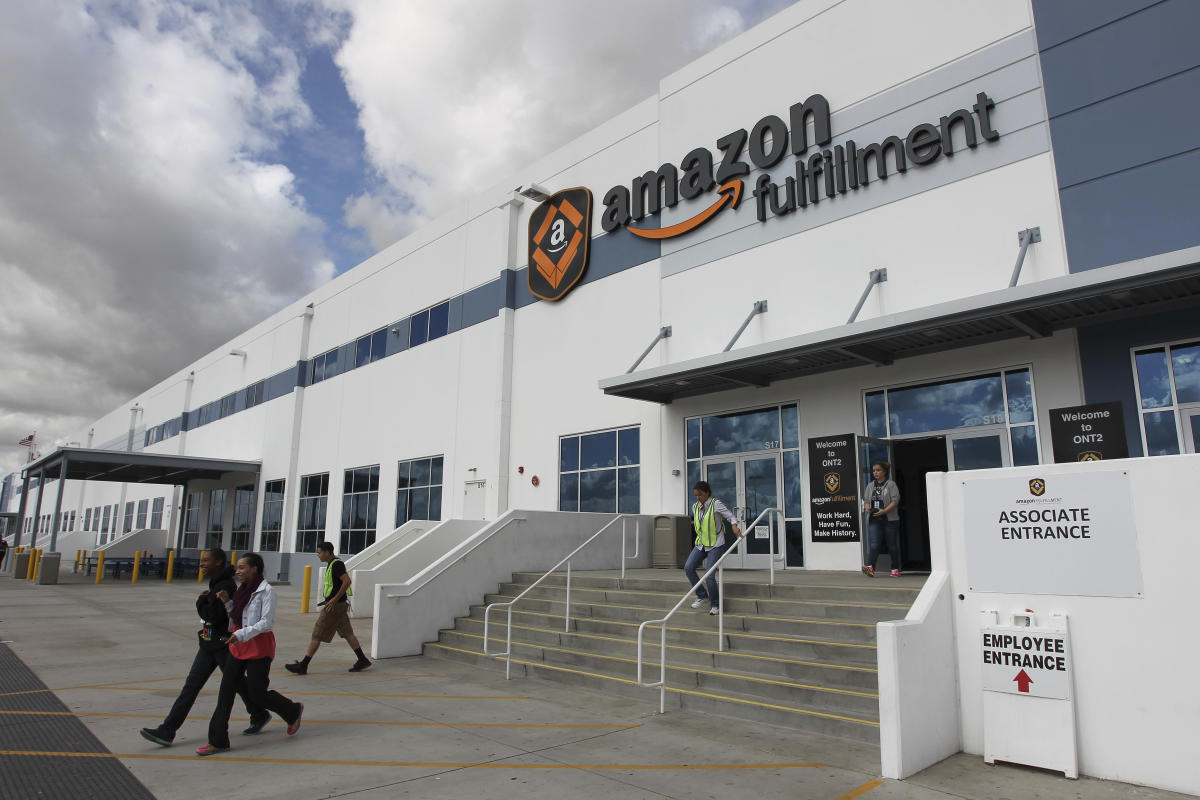
The California Labor Commissioner’s office has fined Amazon $5,901,700 for infractions related to a law designed to protect warehouse workers. Under the state’s AB-701 law, large companies are required to tell warehouse or distribution center workers in writing what their expected quotas are, including how often they should perform particular tasks, and what consequences they may face for failing to meet those quotas.

This law was a reaction to stories from Amazon workers who said they would skip bathroom breaks or risk injury in order to maximize their output. “The hardworking warehouse employees who have helped sustain us during these unprecedented times should not have to risk injury or face punishment as a result of exploitative quotas that violate basic health and safety,” Governor Gavin Newsom said when he signed the bill in 2021.

According to the California Labor Commissioner, Amazon failed to meet those rules at two of its facilities in the cities of Moreno Valley and Redlands, with 59,017 violations logged during the labor office’s inspections. It’s one of the first big fines levied thanks to AB-701, which took effect in January 2022. The tech giant claimed it did not need to provide written information because it uses a “peer-to-peer system.”

“The peer-to-peer system that Amazon was using in these two warehouses is exactly the kind of system that the Warehouse Quotas law was put in place to prevent,” Labor Commissioner Lilia García-Brower said in an official statement. “Undisclosed quotas expose workers to increased pressure to work faster and can lead to higher injury rates and other violations by forcing workers to skip breaks.”

The AB701 bill was passed by the state in September 2021, headed up by State Assembly rep Lorena Gonzalez. She was also a part of passing California’s AB-5 bill in 2019 to seek better protections for gig workers at companies such as Uber and Lyft.

Amazon spokesperson Maureen Lynch Vogel told Engadget, however, that the company disagrees with the allegations made in the citations and have already appealed the fines. “The truth is, we don’t have fixed quotas,” Vogel continued. “At Amazon, individual performance is evaluated over a long period of time, in relation to how the entire site’s team is performing. Employees can — and are encouraged to — review their performance whenever they wish. They can always talk to a manager if they’re having trouble finding the information.”

Update, June 18, 2024, 8:48PM ET: We’ve updated this post’s headline to correct the fine Amazon is facing. We regret the error. We’ve also added a statement from Amazon.

NewJeans’ PUBG collab has already captured the attention of fans online


It seems like no world — physical nor digital — is immune to the girly pop flair of NewJeans. The globally famous K-pop group made its debut in PlayerUnknown’s Battlegrounds as part of the 30.1 update on Wednesday. The collaboration adds each member of the group as a playable character, adorable accessories to dress up your characters, emotes for popular dances set to songs like “OMG,” and more. Equal parts bizarre and wonderful, the PUBG update has already captured the fascination of fans online.

Krafton released the NewJeans x PUBG: Battlegrounds collaboration on Wednesday to Windows PC users and will release it to console users on June 20. The PC patch has introduced some environmental changes as well. For example, the Taego School has been transformed into a sparkly rainbow wonderland and there’s now a pink and purple truck stage on the starting island of every 8 km map. You can play as any member of NewJeans — Minji, Hanni, Danielle, Haerin, or Hyein — and dress your character up in adorable pastel accessories. You can view all the details on the PUBG site.

The collaboration brings a vibrant pop of color to the gritty world of PUBG. Just like other live-service games, PUBG is no stranger to surprising collaborations. PUBG has featured collaborations with the anime series Neon Genesis Evangelion and other games like Angry Birds. Despite that, the NewJeans collab manages to stick out from previous events and now people online are sharing videos showing the girls emoting in the game. The dances just look that good. Here is a video of Minji from NewJeans doing several dances from songs like “Super Shy” and “OMG.”

It’s only been a day, but people have already started to make memes of the girl group in the game. This video features several moments, including one where Haerin dances on a knocked out played and then shoots them at point blank range.

I personally can’t get this video of several characters joining in on dancing the choreo for “Hype Boy” out of my head.

There’s a lot to check out, so if a ton of Bunnies suddenly found themselves interested in trying out PUBG, I wouldn’t blame them.


Waymo issues recall after one its self-driving taxis crashed into a pole


Waymo is voluntarily recalling its robotaxis after one of them collided with a telephone pole in an alley enroute to pick up a passenger, The Verge reported. The vehicle was unoccupied and no bystanders were injured.

At the time of the May 21st accident, the Waymo vehicle went through an alley lined with telephone poles mounted at street level rather than on a curb, with a yellow line showing where to drive. While pulling over, it struck one of the poles at 8 MPH and sustained some damage, Waymo said.

“It never made it to pick us up,” the passenger waiting for the car, Jericka Mitchell, told 12News. Mitchell reportedly heard, but didn’t see the accident.

The company filed a recall with the National Highway Traffic Safety Administration (NHTSA) after updating the software in its entire self-driving fleet of 672 vehicles. The update is designed to fix an error that assigned a low damage score to the pole and failed to account for the alleyway’s hard edge.

It’s only Waymo’s second recall. The first happened earlier this year when two of its autonomous vehicles crashed into the same pickup truck that was being towed. In that one, Waymo found that its software failed to predict the movements of the vehicle due to “persistent orientation mismatch” between the towed vehicle and the one towing it.

Waymo is also under investigation for more than 24 incidents including crashes and traffic violations. Rival Cruise, owned by GM, was involved in a more serious incident last year, wherein one of its robotaxis accidentally dragged someone hit by another vehicle a few dozen feet down a San Francisco street. California then suspended its license to operate in the state and Cruise eventually paused all robotaxi operations

Thrasher, the psychedelic game from the artist behind Thumper, arrives in July


Thrasher, which its developers describe as a “mind-melting arcade action odyssey,” will be available for the Meta Quest and the Apple Vision Pro on July 25. The SteamVR version will follow at a later date. Thrasher was first announced at The Game Awards last year as a new project by Brian Gibson, who was the artist and composer behind the nightmare-inducing rhythm game Thumper. For Thrasher, Gibson teamed up with Mike Mandel, known for working on games like Rock Band VR and Fuser, who took charge of the coding and research and development.

The player takes control of a space eel in Thrasher, which they have to guide with “fast-paced gesture controls” through unsettling landscapes, so that it can evolve and defeat a cosmic baby god by the end of their journey. Based on the images and teasers the developers have released so far, the game’s environments truly do look mind-bending with their psychedelic neon colors and their geometric patterns. Even the eel’s powers sound trippy: Players can fight bosses with a rainbow spray of bullets or bulldoze environment elements in a blaze of color and light.

The developers said that Thrasher’s “music, visuals, and gameplay mesh into one transcendent experience” for the player. While the virtual reality version offers the most immersive option for gamers, Thrasher is also expected to be available for consoles and PC in the future

TikTok says it fixed a vulnerability that enabled a cyberattack on high-profile accounts


TikTok says it has fixed a vulnerability that allowed for a cyberattack that targeted high-profile accounts, as reported by Axios. A TikTok spokesperson added that the company is currently working to restore access to impacted users.

The social media giant hasn’t announced how many accounts were hit by the attack, but we do know that CNN and Paris Hilton were targets. The hack involved sending messages to users that were filled with malicious code. When the user opened up the message, the code went to work and took over the entire account. Oddly, the impacted accounts didn’t post anything while they were compromised.

It remains unclear who was behind the attack and what their ultimate goal was, aside from taking over celebrity TikTok accounts. TikTok also remains mum as to the specifics regarding the vulnerability that allowed for the attack in the first place. This type of hack is extremely rare, however, so it shouldn’t be a big concern for average users.

The hack is known as a zero-click attack, meaning that you don’t have to click on anything to get infected. In this case, users just had to open up a direct message. The method used here is similar to zero-click spyware attacks, only those hackers target high-profile government officials and journalists for the purpose of secretly gathering information. This attack took over the whole account for unknown purposes.

This isn’t the first big TikTok hack. Last year, over 700,000 accounts in Turkey were compromised due to insecure SMS channels. Researchers at Microsoft discovered a flaw back in 2022 that let hackers overtake accounts with just a single click. Later that same year, an alleged security breach allegedly impacted more than a billion users. That’s a whole lot of people.