Why 3D Modeling Is Used in Building Architectural Projects with Freelance Designers and Firms?


In architecture, the transition from traditional blueprints to computerized visualization has revolutionized project conception, presentation, and construction. But why is 3D modeling such a priority in construction work? It’s because it enables greater precision, greater collaboration, more efficient processes, and the development of concepts with precision never seen before.

In the middle of the revolution lies 3D modeling design services, an advanced tool that has become standard in freelance designers’ and architecture firms’ processes. Cad Crowd is the leading agency that can connect you with over 94,000 experts who specialize in 3D modeling for building architectural projects.


🚀 Table of contents


Revolutionizing construction design with 3D modeling

3D modeling revolutionized construction for architects and engineers by providing them with an interactive, dynamic, and accurate means of constructing buildings. As opposed to the previous systems, in which drawings were essentially flat two-dimensional sketches, 3D modeling provided them with a virtual platform on which buildings were conceptualized, changed, and perfected long before a spade was ever hammered into the ground.

From blueprint to digital modeling

The transition from paper sketches to computer 3D models represents a revolution in building construction. It allows designers to break beyond the drawing board, producing detailed, sophisticated representations of buildings to be constructed. This not only helps define designs but ensures stakeholders better understand the end result, making coordination simpler and eliminating expensive misunderstandings.

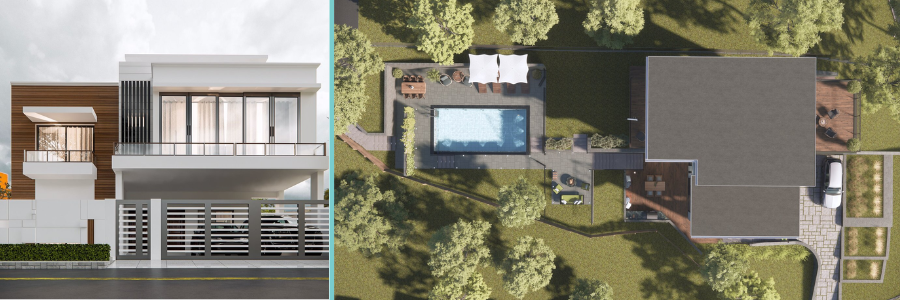
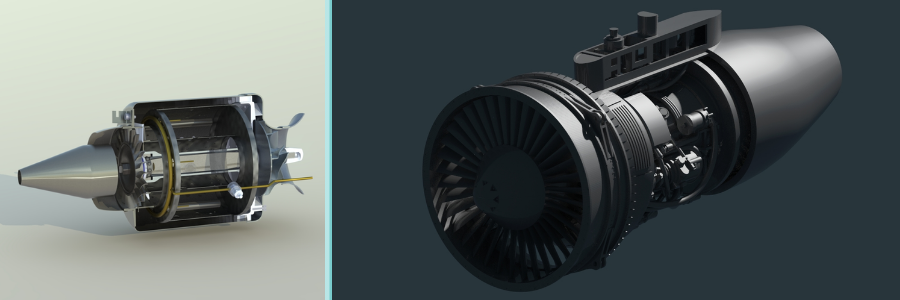
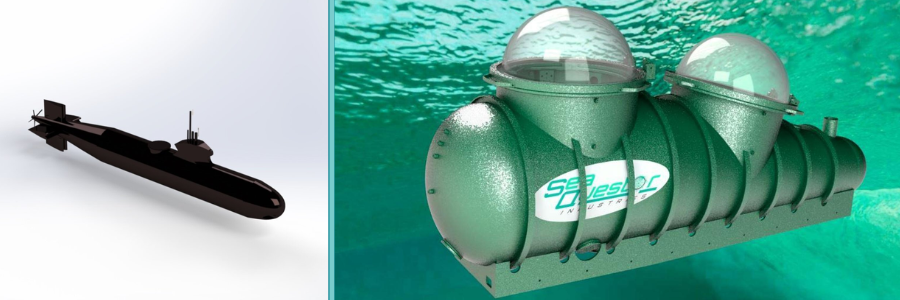
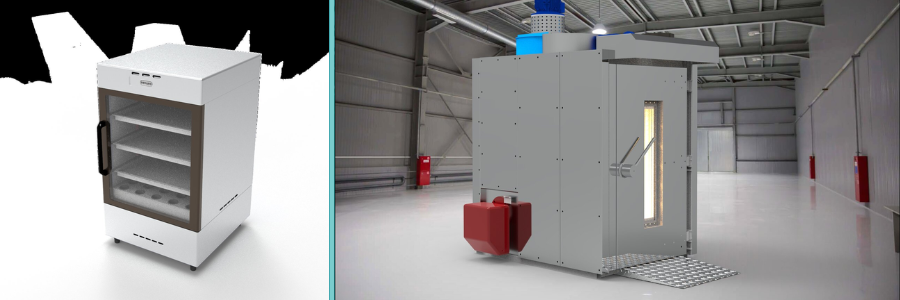
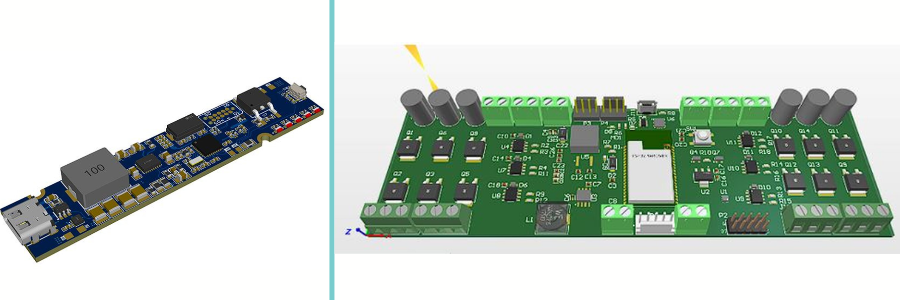
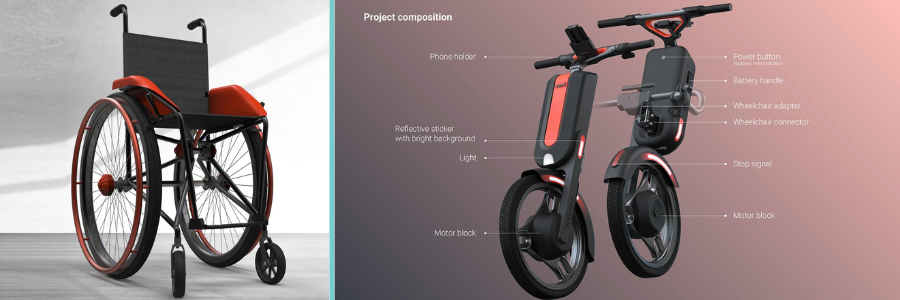
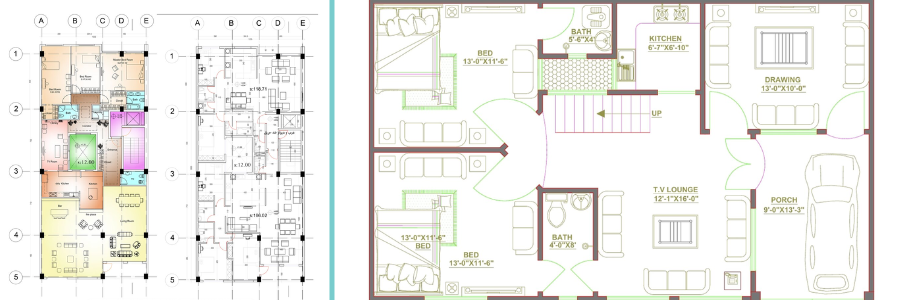
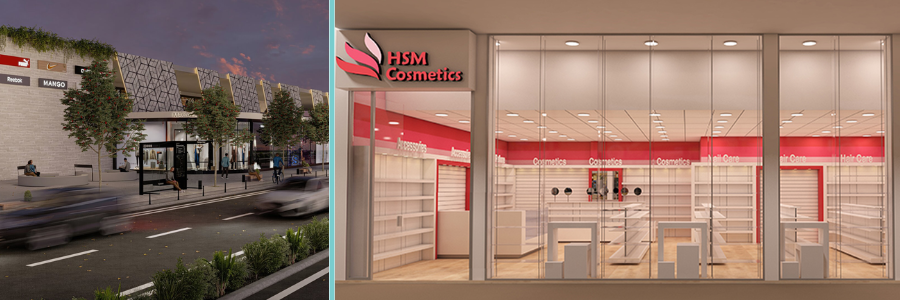
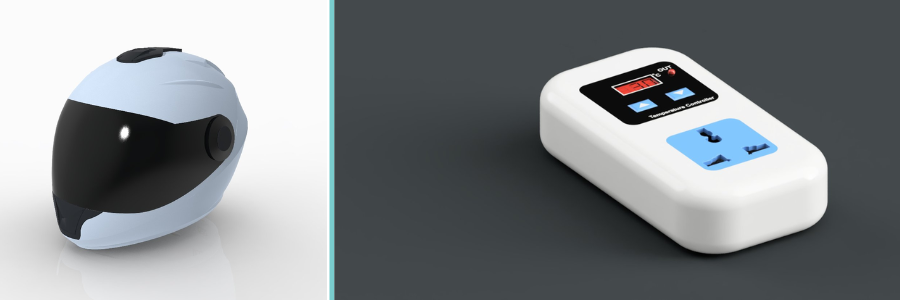
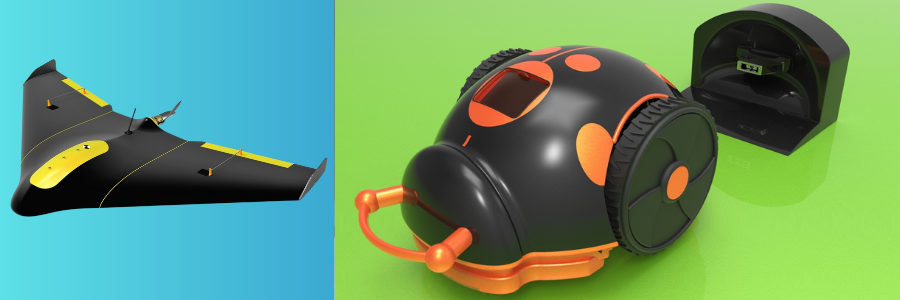
3D modeling and rendering examples by Cad Crowd design experts

RELATED: How 3D visualization is transforming property sales for developers & real estate services companies

The technology behind 3D modeling

It depends on advanced software programs like AutoCAD, SketchUp, and Revit to design modern buildings. With these programs, it is easy to create high-level computer models, which are accessible for viewing from any direction. It is easy to modify dimensions, materials, and layouts, providing precision and flexibility at various stages of the project.

Changing architecture and engineering

Computer software capable of 3D modeling has changed the face of engineering firms and architecture. Through more precise designs, they save on rework and mistakes at the construction phase. Experimentation with a lot of options for design sets the stage for creativity and innovation, and computer simulations enable one to detect structural flaws early on.

Additionally, 3D modeling facilitates easier communication between the contractor, client, and project team, who are all kept in sync. In addition to design assistance, 3D modeling also allows for project scheduling and resource planning, all aimed at cost-saving and efficient construction operations.

In construction today, 3D modeling is no longer an application – it is a platform for advanced design and project delivery.

Enhanced visualization: Bringing concepts to real-life experience

One of the strongest arguments for the application of 3D modeling in architecture is the visualization potential. Unlike 2D drawings, which tend to take a trained eye to truly comprehend, 3D models create a real-world, interactive version of the completed building. This allows clients to “walk through” their new spaces and appreciate spatial relationships, lighting, and aesthetic value in a manner not possible with flat drawings.

For independent designers, this level of accuracy is groundbreaking. It facilitates the easy communication of design intent to clients, lessening misinterpretation opportunities and ensuring conceptualized projects are brought to life in client visions. Corporations use 3D models as a step to demonstrate projects while making pitches, putting them at an advantage when winning contracts. Precision and

Accuracy: Avoiding mistakes early on

Accuracy is to be anticipated in architecture. Small missteps in planning can be giant problems after building has begun, with stoppages and increased cost. 3D modeling addresses the problem directly by enabling designers to produce highly accurate computer models of buildings. These can be carefully inspected and tested for stability, code compliance, and structural flaws before a brick is set.

Freelancers benefit immensely from this accuracy as it enhances their credibility and reliability in architectural design services. Organizations utilize these precise models to coordinate with diverse stakeholders, from structural engineers to interior designers, to ensure that all the elements fit comfortably within the broader architectural context.

Smooth workflow and revisions

The process of designing architecture is, by its nature, repetitive. The client desires to change, something new in legislation comes into force, or design development can happen in the course of development. All these in traditional drawing would be time-consuming and are very susceptible to error. With 3D modeling, not only are changes easier but quicker.

Designers can simply modify dimensions, material, or layouts in the model with corresponding automatic updates to all views. This responsiveness is especially useful for freelancers handling numerous projects at a time because it saves them time and reduces errors. It makes project management a breeze for companies, thus meeting deadlines without compromising on quality.

Improved interdisciplinary collaboration

Architecture is never a single-handed endeavor. It is a multi-disciplinary practice where there is collaborative working between architects, builders, owners, and engineers. 3D modeling facilitates interdisciplinary coordination by offering an umbrella reference point for everyone.

Freelance designers are distributed workers, and hence coordination has to be seamless. 3D models, via cloud-based systems, enable real-time feedback and revisions regardless of location. Architectural practices benefit through enhanced coordination between internal personnel and external architectural design experts, leading to more consolidated project deliverables.

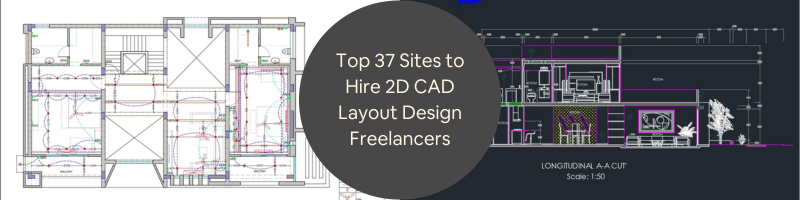
3D models of buildings and apartments by Cad Crowd design experts

RELATED: How 3D rendering helps collaboration between clients and design services companies

Cost effectiveness: Minimizing waste and optimizing resources

While money and time have to be spent initially to develop intricate 3D models, in the long run, it saves tremendous costs. Accurate models enable one to detect possible design flaws at an early stage, preventing costly construction mistakes. It also helps one to quantify materials with greater accuracy, avoiding waste and optimizing the utilization of resources.

Freelancers, who work on tight budgets most of the time, can find a means of taking advantage of these efficiencies and providing high-quality outputs without such costs. Companies that have big projects on their hands see less rework and improved cost control, leading to overall profitability for the project.

Realistic rendering for marketing and client engagement

Besides design functionality, architectural 3D modeling services can also serve as an effective marketing tool. Images that are photorealistic from 3D models look excellent, evoking the attention of prospective customers and investors. They are worth gold in proposals, presentations, and marketing material since they help designers and companies display their work in the most positive light.

These are captured through highly advanced camera technology. Independent architects can create beautiful portfolios with beautiful 3D renderings, acquire more clients, and gain recognition in a saturated market. Architectural practices utilize these images to secure tender contracts, obtain funding, and set up their practice.

Facilitating virtual reality (VR) and augmented reality (AR) experiences

As technology continues to improve, new applications for 3D modeling are emerging. Integration of models into AR and VR technology revolutionizes client presentations. Clients can actually walk through the virtual space and view designs in an interactive, immersive form, which is impossible with static photographs.

Freelancers who offer 3D architectural VR and AR services stand out from the rest by generating value that justifies payment premiums. Organizations using these technologies in their process demonstrate innovation and vision, appealing to tech-savvy customers and investors.

Supporting sustainable design practices

Sustainability is becoming a major concern in architecture, and 3D modeling provides access to green design. Models can analyze energy consumption, natural light transmission, and environmental impact, allowing designers to maximize buildings for sustainability.

Freelance green designers can use these tools in an attempt to create green projects and win clients who are interested in sustainability. Businesses can more effectively meet regulatory requirements and obtain certifications like LEED, which enhances their credibility in the market.

Flexibility across project types and scales

3D modeling is not only for high-budget commercial structures. It’s equally effective for any residential home or city planning. A 3D modeling freelancer whose task involves an individually customized interior redesign or a corporation whose job involves a multi-storied skyscraper, 3D modeling is a specific requirement of the project.

This adaptability allows freelancers to expand their services, which are varied according to the needs of the clients. Organizations can standardize the design process and thus achieve consistency and quality for diversified sets of projects.

Enhancing construction planning and management

The benefits of 3D modeling do not stop at the design phase but extend to construction planning and project management. Models may be integrated into Building Information Modeling (BIM) systems, providing accurate information regarding materials, timelines, and cost. The connection enables better scheduling, optimal use of resources, and avoidance of risks early in the process.

Design-build freelancers can offer complete services, from idea generation to construction management. Businesses can minimize project delays, complete projects sooner, and improve construction quality overall.

3D modeling services and experts by Cad Crowd design experts

RELATED: A guide to 3D environment design & concepts with freelance 3D modeling companies

Future-proofing architectural practices

The world of architecture continues to evolve as technology increases, and the demands of customers continue to change. Utilizing 3D modeling keeps the company and designer ahead. With each new advancement in technology, new software is also being developed, and people who can master 3D rendering services will be best positioned to adapt and flourish.

Freelancers are able to future-proof their own careers by learning the most up-to-date tools and techniques and staying competitive. Companies that invest in 3D modeling capabilities are able to become industry leaders, draw top talent, and grow their range of services.

3D modeling is not just a design tool but a revolutionary technology that has rewritten the architectural scene. From precision and visualization to collaboration and environmental friendliness, its advantages are extensive and multifaceted. Independent designers are independent, efficient, and competent, and architectural companies experience enhanced project success, economic returns, and strategic expansion.

Cad Crowd is here to help

As all things go forward in architecture, this is the one thing certain: 3D modeling is no phase – it’s what lies beneath current architectural practice. It is not an option to work with this technology; it’s a necessity for anyone who wants to be ahead of the curve in the overcrowded field of architecture and construction. Reach out to Cad Crowd to get the best-fit 3D modeling services that can bring your architectural designs to life. Get a quote now.

author avatar

MacKenzie Brown is the founder and CEO of Cad Crowd. With over 18 years of experience in launching and scaling platforms specializing in CAD services, product design, manufacturing, hardware, and software development, MacKenzie is a recognized authority in the engineering industry. Under his leadership, Cad Crowd serves esteemed clients like NASA, JPL, the U.S. Navy, and Fortune 500 companies, empowering innovators with access to high-quality design and engineering talent.

Connect with me: LinkedInXCad Crowd

Why You Need Lease Outline Drawings: A Guide for Architectural Design Services


A lease contract of a property, either residential or commercial, is a rather complex agreement that requires a pile of technical documents in which the intertwining interests of all parties involved, typically lessees (tenants) and lessors (landlords), along with property managers if necessary, must be clearly defined. Among such documents is a lease outline drawing, a practical record that marks the extent of the property under lease.

Drafting a proper lease contract is no small matter. It might include an exhaustive list of elaborate clauses to determine the terms of the agreement and prevent any violation of those terms. When a contract is so comprehensive to the point where it actually becomes excessive, there’s always a chance that somebody overlooks something important, such as the square footage of the leased area in question, and this is where lease outline drawing comes in.

Considering the fact that the drawing carries an important weight in the contract, the only way you’d want it done is with much care and professionalism to ensure accuracy. It’s a good thing that you can rely on architectural design firms, draftspersons, and CAD experts in Cad Crowd or other reputable freelancing platforms to lend their expertise on the matter.


🚀 Table of contents


What is a lease outline drawing?

The term is pretty self-explanatory, really. A lease outline drawing is a visual representation, or a diagram if you like, of a property (or the specific part of a property) under lease. While the drawing is pretty technical, it doesn’t have to be as elaborate as a blueprint or a floor plan. The whole point of the drawing is to highlight the leased area, including its dimensions, boundaries, shared spaces, and layout. In the lease agreement, the drawing is used as a reference for both the tenant and the landlord to ensure transparency and reduce ambiguity.

You probably don’t need such a drawing if the lease agreement is simple enough and includes an entire small residential house located in a specific parcel of land, but the document is almost certainly mandatory in large-scale or commercial leasing scenarios where an accurate definition of the area is important for operational and legal purposes.

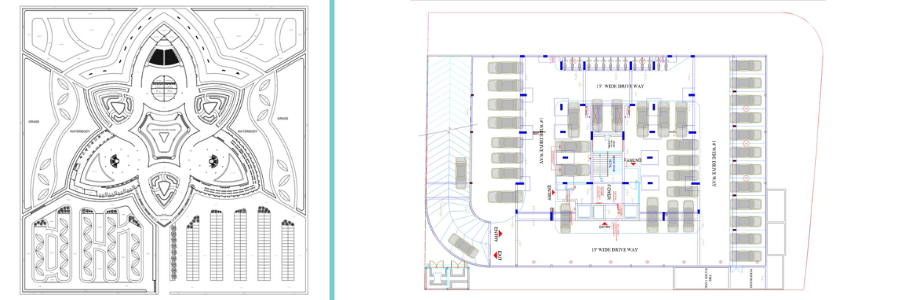
3D rendering and lease drawing example by Cad Crowd architectural drawing services

RELATED: A comprehensive overview of steel detailing services and their importance for construction companies

What makes an effective lease outline drawing?

Neither a plain nor an overly complicated drawing will do for an architectural planning and design company. An effective lease outline drawing has to be straightforward enough that even the most ignorant tenant and landlord can understand it, but at the same time, it still has to contain at least the following features:

Element Note
Dimensions Accurate measurements of the leased area. The legal documentation (lease contract) must specify the correct dimensions, allowing for proper space planning.
Boundaries Accurate measurements of the leased area. The legal documentation (lease contract) must specify the correct dimensions, allowing for proper space planning.
Straightforward layout Major structural features such as doors, windows, and walls are outlined. Major fixtures, like built-in appliances, need to be highlighted as well.
Shared spaces If there are multiple tenants in the same property or only certain sections of a property are leased, there might be shared spaces such as parking lots, hallways, lobbies, etc. These shared spaces must be clearly identified and labeled in the drawing.

Like a map or a diagram of a building, the drawing must include directional markers, such as “North” or any other form of orientation cues for contextual understanding. It doesn’t have to be elaborate, either; a directional marker can be a simple compass icon that corresponds to the drawing for design and drafting firms.

Lease outline drawing workflow

Every draftsperson, architect, surveyor, property manager, and leasing agent has their own methods to produce the drawing. They may even use different sets of tools and software packages to get the job done. Be that as it may, most of them follow more or less the same workflow, as summarized below.

  • Property information review: The first step is to gather all the relevant information about the property in question. Information may include floor plans or architectural blueprints. In some cases, the landlord has done some major renovations to the property, so it’s important to use the latest available records. Keep in mind that there might be a lot of other documents required for the leasing transaction in general, but for drawing purposes, the relevant document mainly concerns the physical property itself.
  • On-site inspection: Being able to physically visit the property helps with measurement verifications. A thorough inspection allows you to identify irregularities or discrepancies between the actual physical layout and the architectural records. To avoid inaccuracies, use advanced tools like laser distance meters or 3D scanning devices.
  • Drafting: assuming you find no notable differences between the architectural blueprint and the physical property, the drafting process can be as simple as copying the layout. Otherwise, you add the missing objects from the blueprint as needed. Include major structural elements like doorways, windows, and walls. Mark the boundaries of the leased areas and highlight the leased spaces. You may consider architectural drafting services that specialize in this department.
  • Annotations: At this point in the process, the drawing part is done, and all that’s left to do is the labeling. Annotations provide context, making it easier for the landlord and the tenant to interpret the document. Every room subject to the lease agreement should be named or clearly designated in some other way. The dimensions for each section of the leased area and the orientation cue of the entire drawing must be present as well.
  • Validation: before the lease outline drawing can be incorporated into the lease agreement, it is reviewed by all parties involved in the leasing process for approval.

Following the validation and approval, the lease outline drawing is included as part of the contract or attached as a stand-alone document for reference.

RELATED: How design drawings help avoid interior design mistakes for 3D design companies

What’s it for?

A lease outline drawing is an integral part of the lease terms and agreement, but what exactly is it for? If you could define and explain the dimensions, layout, and boundaries of the leased area in writing, would you still need the drawing? Is it really that important? And can you draft a lease contract without it? Or is it only a matter of preference because using a lease outline drawing suggests that you’re a real professional?

It’s not impossible to draft a lease contract without a lease outline drawing, so long as the leased property is described clearly in writing. There has to be zero ambiguity because it may lead to a breach of contract at a later date. The idea behind a lease outline drawing is to minimize such ambiguity concerning the exact area or space subject to the lease agreement. It functions as a visual representation of the leased property to help eliminate possible misunderstandings among the tenant, the architectural design expert, the landlord, the property manager, and any party involved in the contract. The drawing fosters transparency, which in turn reduces the potential for misinterpretations.

Conflicts and disputes over the extent of a leased area are not uncommon. At the same time, most (if not all) lease agreements are legally binding. As soon as a lease outline drawing is incorporated into a contract, it becomes an official record that gives a neutral point of reference. Should a dispute arise during the term of the lease, the drawing can be used as evidence in court or as a visual guide to help settle issues without having to undertake any legal proceedings.

In addition, a lease outline drawing makes it easier for the tenants to do their space planning, which is important if the property is leased for commercial purposes. The visualization provides a clear view of the layout, most likely from a bird’s eye perspective, allowing them to be more precise and careful in positioning business equipment or designing the interior of the establishment in general. And when the current term of the agreement ends, the drawing can be helpful in a renegotiation process. For example, the tenant might want to expand the space or make non-permanent modifications to the layout done by the architectural drawing service; for the landlord, the existing layout (as visualized in the current drawing) can be used as the baseline for price adjustment or changes in the accommodation.

In a large-scale leasing process involving multiple tenants in the same building, the property manager might use a lease outline drawing as a visual guide to make improvements such as adding more utilities in the shared space, providing efficient maintenance services, and reducing operational costs. In the event of damage to the property, the insurance adjusters will need the lease outline drawing to determine eligibility for claims.

If you’re the property owner (the lessor or landlord), having the lease outline drawing produced in advance means you can market the available space in a more effective fashion. Tenants will appreciate the clarity and transparency even before they visit the property. A clear visualization of the layout and dimensions of the space should help them make an informed decision. This also speeds up the negotiation process.

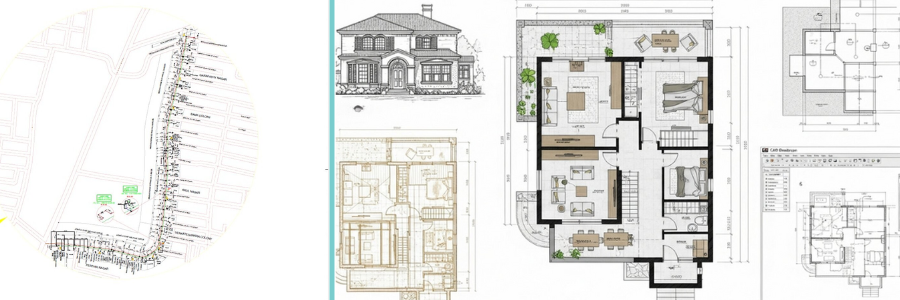
examples of lease drawings with 3D rendering services and Cad Crowd experts

RELATED: 5 reasons freelancing studios are the future of 3D visualization services

Conclusion

A lease outline drawing isn’t just a diagram attached to the lease agreement for the sake of attachment. It’s a useful tool to facilitate effective communication and foster transparency between the lessor and the lessee. Beyond its importance in the agreement itself, the drawing is also used for space planning, especially in a commercial leasing scenario, and all sorts of property management tasks. Considering how the drawing can play a crucial role in a leasing contract negotiation, renegotiation, and conflict resolution, it only makes sense if you have it produced by a truly qualified professional.

How Cad Crowd can help?

Despite its simplicity and straightforward visualization, lease outline drawing is still pretty technical; it has to correctly indicate the boundaries, the layout, the dimensions, major structural features, the positions of built-in fixtures, and room designations. Thankfully, at Cad Crowd, finding the right person doesn’t have to be a chore, as it can help you connect with hundreds of experienced architectural drawing professionals with just a few clicks of a button. Request a quote today.

author avatar

MacKenzie Brown is the founder and CEO of Cad Crowd. With over 18 years of experience in launching and scaling platforms specializing in CAD services, product design, manufacturing, hardware, and software development, MacKenzie is a recognized authority in the engineering industry. Under his leadership, Cad Crowd serves esteemed clients like NASA, JPL, the U.S. Navy, and Fortune 500 companies, empowering innovators with access to high-quality design and engineering talent.

Connect with me: LinkedInXCad Crowd

Industrial Design vs. Product Design: What Sets These Services Apart for Companies?


You’ve got a brilliant idea for a new gadget—sleek, smart, and destined to change the world. Or maybe you’re staring at a clunky old version of your company’s best-selling tool, ready to bring it into the modern age. Either way, you’re looking to design something. But here comes the question that often confuses even seasoned entrepreneurs: Do you need a product designer or an industrial designer? Here’s the fun, honest breakdown

Spoiler alert: product design and industrial design services aren’t the same thing. Sure, both roles orbit the same creative solar system, but their orbits are distinct—and occasionally collide in brilliant ways. Think of it like comparing a DJ to a music producer. Both craft experiences through sound, but one works the crowd live, while the other shapes the underlying structure of the track. That’s the kind of difference we’re talking about here.

If you’re on the verge of launching the next big gadget, app-connected appliance, or sleek new wearable, knowing the difference between product and industrial design could be the key to whether your idea dazzles… or fizzles.


🚀 Table of contents


So, what’s in a name?

The confusion starts with the labels. “Product designer” and “industrial designer” get tossed around like they’re twins. They’re more like cousins—close, but raised in different parts of the design world.

Industrial design is grounded in physical product creation. These designers obsess over tangible things. They’re the minds behind the ergonomic grip of a toothbrush, the sleek silhouette of your favorite speaker, or the intuitive layout of a car dashboard. Their craft sits at the intersection of aesthetics, engineering, and usability. When you admire the curve of a chair or how perfectly a coffee machine fits on your counter, you’re seeing an industrial designer’s fingerprints.

Product design companies, on the other hand, are a broader, evolving discipline. It absolutely includes physical products—but also stretches into digital interfaces, UX (user experience), systems thinking, and even behavior design. It’s the zoomed-out view of how users interact with a product over time, across physical and digital touchpoints.

Here’s a quick way to picture it: If a product were a movie, the industrial designer is the set designer and costume genius, making every object feel right in your hands and beautiful to the eye. The product designer is the director, making sure the story flows, the characters (aka users) are satisfied, and every moment makes sense in the bigger picture.

Top of the line iron and luxury sofa by Cad Crowd product design experts

RELATED: How to reduce costs on 3D product development with remote CAD experts for companies

Where the lines blur (and that’s a good thing)

Despite the differences, there’s plenty of overlap. In the real world, industrial design experts often take part in UX conversations, and product designers may sketch physical prototypes. The best results often come from tight collaboration between the two, especially when hardware and software are dancing partners—think smartwatches, fitness trackers, or even modern thermostats.

So, do you need a product designer or an industrial designer? The answer depends on what you’re building. If it’s physical and needs to delight people in the real world, you probably need industrial design chops. If you’re thinking about how users flow through an ecosystem—physical, digital, or both—product design is your guiding light.

In short, choose your creative co-pilot wisely. The success of your next big idea might just hinge on it.

The industrial designer: Master of tangible beauty

Ever picked up a product and thought, “Wow, this just feels right”? That’s no accident. Behind that satisfying shape, that perfect grip, and that sleek surface is the handiwork of an industrial designer—someone who lives at the intersection of artistry and engineering.

Industrial design is where beauty meets practicality. These CAD freelance professionals are the reason your smart speaker doesn’t just sound good but blends seamlessly into your décor. They’re obsessed with how things look, feel, and function. Materials, ergonomics, and manufacturing methods—every decision is deliberate. That smooth curve on your electric toothbrush or the matte finish on your coffee maker? It was sketched, modeled, tested, and refined again (and again) by someone who’s part sculptor, part strategist.

Their process usually begins with sketching bold ideas and translating them into CAD models. Then comes prototyping—sometimes with foam, other times with 3D printing design services—so they can get their hands on the concept, test it, twist it, drop it, and improve it. It’s creativity grounded in reality.

But they don’t work alone. Industrial designers are deeply collaborative, aligning closely with engineers, marketing teams, and manufacturers. They know a great idea only matters if it can be produced efficiently and still dazzle consumers. They juggle aesthetics with cost, innovation with practicality.

Their fingerprints are on just about everything: sleek smartphones, intuitive kitchen gadgets, high-performance athletic gear, and even life-saving medical tools. That chair you melt into at work? It’s not just comfortable by chance.

Industrial designers shape the everyday objects we often take for granted, transforming functionality into something that feels like magic in our hands.

The product designer: Architect of the entire experience

Now, enter the product design experts—the Swiss Army knife of design services.

Product designers focus on the complete user experience (UX). That means they care about how the product is used, not just how it looks. Their work spans digital and physical domains, and they’re often found mapping out user journeys, conducting usability tests, and refining the logic behind every button click or swipe.

Yes, they might sketch out the outer shell of a product too (especially in startups or smaller teams), but they’re equally concerned with the interface, packaging, service model, and long-term product lifecycle. They might design the onboarding flow of an app, the haptic feedback of a button, or even the repairability of a wearable device.

Product designers are also strategists. They work upstream—researching user needs, assessing market trends, using open innovation services, and identifying opportunities long before a single CAD file is created. And downstream—testing with users, measuring engagement, and suggesting feature updates.

In other words, while an industrial designer might perfect how a smartwatch looks and feels, the product designer ensures it syncs with your phone, displays the data intuitively, and doesn’t frustrate the user after three days of wear.

RELATED: Cost-effective methods for new product design & development services for your company

Collaboration or competition? Actually, it’s teamwork goals

There’s a common misconception that industrial design and product design are locked in some kind of creative turf war. But truthfully, the most successful products don’t pick a side—they blend both disciplines like the dream team they are. Think of it less like a rivalry and more like a power duo: peanut butter and jelly, Batman and Robin, or a Spotify playlist that just gets your vibe.

In reality, industrial and product designers are playing different positions on the same team. Industrial design focuses on the physical form—how the product looks, feels, and functions in the real world. Meanwhile, product design zooms out and designs the entire user experience, from interaction flow to digital integration.

When these two worlds collide in harmony, magic happens. Literally—take the Apple Magic Mouse. Its sculpted exterior is a showcase of industrial design precision, while the intuitive touch gestures and user flow are the handiwork of a thoughtful consumer product design service. The result? A tool that’s as elegant as it is functional (well, minus that awkward charging port on the bottom—nobody’s perfect).

Companies that recognize this collaborative sweet spot don’t just make products; they craft experiences. They solve real problems in ways that feel effortless. And in a market that’s full of noise, that kind of synergy speaks volumes.

So instead of drawing a line in the sand, it’s time to set shared goals. Because when industrial and product designers team up, everyone wins—especially the user.

Where the lines blur—and why that’s okay

Here’s where things get especially compelling. The once-clear boundary between industrial design and product design? It’s getting fuzzier by the day—and that’s not necessarily a bad thing. Thanks to the rise of accessible design tools, online education, and collaborative workspaces, more professionals are crossing traditional lines and building hybrid skillsets.

It’s not unusual now to see an industrial designer experimenting with digital interfaces or a product designer diving into sculpting and physical prototyping engineering services. Platforms like SolidWorks and Figma live side by side in the same workflow. One designer might be 3D-printing a hardware prototype in the morning and refining an app’s user flow in the afternoon. Especially at startups or lean teams, versatility becomes an asset. One person often wears multiple hats—part engineer, part interface designer, part brand strategist.

Still, there’s value in deep focus. A designer who’s spent years studying user ergonomics or perfecting app UX flows will likely outperform a generalist in that specific area. Companies face a strategic choice: hire a specialist who brings depth and precision, or bring in a multi-disciplinary talent who can adapt, connect, and iterate across mediums.

The key takeaway? The line between industrial and product design is more of a gradient than a wall. That overlap can lead to richer collaboration, more intuitive products, and faster innovation. And in a landscape where agility and insight matter more than rigid roles, blurring the lines might just be the smartest move of all.

RELATED: Speeding up product development with new product design services companies

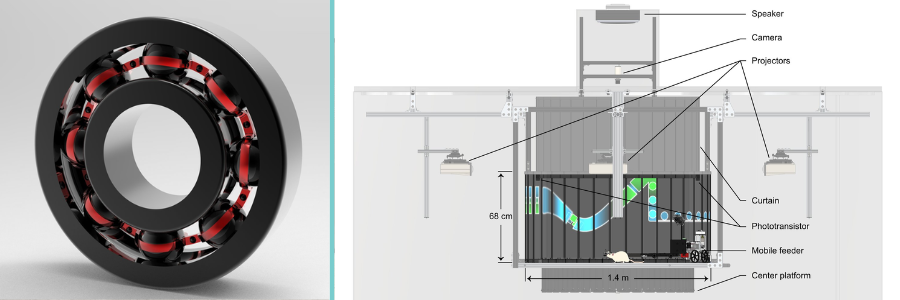
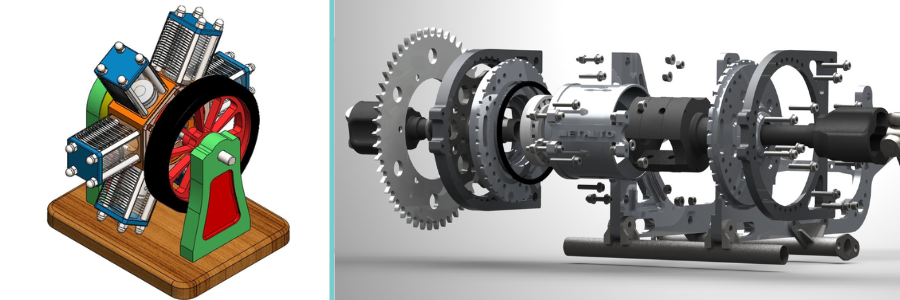
Product and industrial engineering designs of a cara battery and computer accesories by Cad Crowd experts

How companies choose: The practical breakdown

Picture this: you’re a company about to launch a new product. The prototype sketches are on the whiteboard, excitement’s in the air, but then comes the million-dollar question: Who do we call first—an industrial designer or a product designer?

If your vision involves a tangible item—say, a sleek gadget, furniture piece, or a tool meant for mass production—an industrial designer is your go-to partner. These folks are experts in turning ideas into physical objects that are not only functional but also use principles from design for manufacturability services and aesthetics. They’ll fine-tune every curve, texture, and material to ensure your product feels as good as it looks. Need it to fit into an injection mold or have a premium metallic finish? They’ve got it covered.

But what if your product also lives in the digital world? Suppose it needs an app, connects to Wi-Fi, or includes a screen—enter the product designer. These specialists zoom in on user journeys, interface clarity, and how people interact with the digital side of your product. They care about how your product feels in a user’s hand and how it responds to a swipe, tap, or push notification.

Still scratching your head because your project spans both physical and digital? Like a smart thermostat or a wearable fitness tracker? That’s your cue to bring both designers into the room. Not just in the final stages, but early, during brainstorming, sketching, and planning. When these two disciplines collaborate from the start, you get something more than just functional or beautiful. You get something truly integrated, delightful, and user-friendly.

In the end, choosing who goes first isn’t about hierarchy—it’s about what your product needs to succeed. And often, it needs a bit of both worlds.

What it means for startups vs. corporations

Startups move fast—and often on a tight budget. Hiring both an industrial designer and a product designer? Not always an option. That’s why many young companies look for a hybrid designer who can wear both hats, or they team up with agencies that offer an all-in-one package. These agencies usually have dedicated specialists, but they work closely together to deliver a cohesive, streamlined product.

Corporations, by contrast, have the resources to go deep. They often break down their design pipeline into clear roles: industrial design, product design, UX research, engineering design services, and more. This approach allows for serious depth and technical expertise. But it also comes with a catch—silos. When teams don’t talk, design suffers. Great products come from great collaboration, not disconnected departments.

Whether you’re launching your first MVP or refining a next-gen device for a global market, timing matters; bringing in the right designer at the right stage can prevent costly delays, endless feedback loops, and design misfires. It’s not just about talent—it’s about alignment. Understanding the strengths and limits of your setup, whether lean or layered, can make all the difference in how smoothly your product journey unfolds.

Tools of the trade: Where the software tells a story

Sometimes, the easiest way to tell an industrial designer from a product designer is by snooping around their software. It’s not just about what they create—it’s how they build it.

Industrial designers often live in the land of SolidWorks, Rhino, Fusion 360, and KeyShot. Their screens are filled with exploded views, intricate renderings, and glossy material libraries. Adobe Illustrator might pop in, too, especially when surface graphics need that perfect polish. And the final proof? You can usually pick up what they’ve designed—literally. Whether it’s a prototype you can turn in your hand or a photo-realistic rendering service that looks ready for the shelf, industrial design is all about form, function, and physical presence.

On the flip side, product designers navigate a digital-first universe. Their toolbelt features Figma, Sketch, Adobe XD, and InVision—each one tailored for user flows, app interfaces, and seamless interactions. Add in some Blender or Fusion for the occasional 3D exploration, and it becomes clear: this is the realm of journey maps, user personas, wireframes, and pixel-perfect layouts. There’s no shortage of sticky notes either—some physical, many virtual.

Sure, there’s overlap. And it’s growing in exciting ways. But try designing a toothbrush in Figma or wireframing an app in SolidWorks, and the differences become hilariously obvious. These tools aren’t just software—they’re storytelling devices, uniquely suited to the kinds of problems each designer is solving. The tools may differ, but the goal remains the same: great design that works.

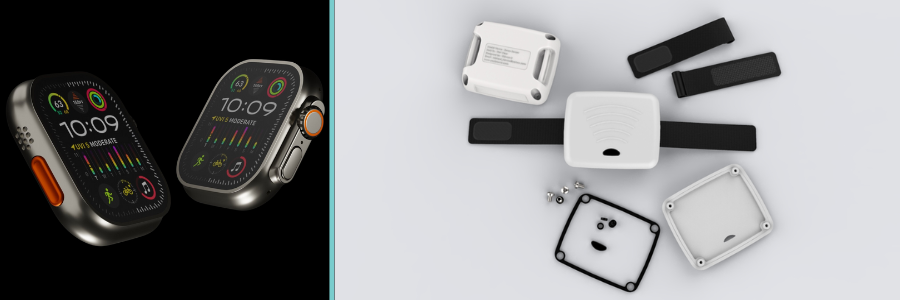
Health smart watch and glass tables by Cad Crowd design expert

RELATED: How is product design different from industrial design services companies?

Who gets the credit?

When a product becomes wildly successful—think smartphones, fitness trackers, or even that sleek coffee maker in your kitchen—it’s tempting to pin the win on one brilliant mind. But that’s rarely the case. The real magic? It’s a team effort for product development experts.

The industrial designer deserves a huge nod. They’re the ones who sculpt the physical form, choose materials, and make sure the product doesn’t just look good but can actually be manufactured without costing a fortune. They’re the reason your device feels solid in your hand and looks sharp on your desk.

Then there’s the product designer—deep in the user experience trenches. They map out how the product works, how it feels to interact with, and whether the features genuinely solve your day-to-day problems. When something just makes sense, that’s no accident. It’s a thoughtful, intentional design.

But the real success comes from collaboration. When these two design disciplines push each other—one rooted in aesthetics and physical realities, the other grounded in usability and customer needs—the results are incredible. It’s not about who deserves more credit; it’s about how their different approaches elevate each other.

Final thoughts: Hire for vision, Collaborate for success

At the end of the day, understanding the difference between industrial design and product design isn’t just academic—it’s a strategic advantage, especially for electronic device companies.

When companies choose the right designer at the right moment, they reduce time-to-market, cut costs, and wow customers. When they confuse the roles or underinvest in design altogether, they end up with a product that’s awkward to use, hard to manufacture, or worse—forgotten.

So, whether you’re dreaming up a new gadget, redesigning a best-seller, or building an ecosystem of hardware and software, think beyond just “design.” Think about which kind of design your product needs, and build your dream team accordingly.

Because in the battle of industrial design vs. product design, the winner is always the company that hires both.

RELATED: A guide to electronic product design for manufacturing with PCB design firms & engineers

How Cad Crowd can help?

Ready to bring your next breakthrough product to life but unsure whether you need industrial design expertise, product design vision, or both? Cad Crowd is the best freelance marketplace for product and industrial designers. Our vetted experts understand the nuances between industrial and product design, delivering tailored solutions that transform your ideas into market-ready innovations whether you’re launching a startup’s first prototype or refining a corporate product line, partner with Cad Crowd to access the right design talent at exactly the right moment for your project’s success, leading globally as the number one platform for 3D CAD and product development services. Get a free quote today.

author avatar

MacKenzie Brown is the founder and CEO of Cad Crowd. With over 18 years of experience in launching and scaling platforms specializing in CAD services, product design, manufacturing, hardware, and software development, MacKenzie is a recognized authority in the engineering industry. Under his leadership, Cad Crowd serves esteemed clients like NASA, JPL, the U.S. Navy, and Fortune 500 companies, empowering innovators with access to high-quality design and engineering talent.

Connect with me: LinkedInXCad Crowd

Product-Centric vs. Customer-Centric: Which Is Best for Consumer Product Design Companies?


Picture yourself as a ship captain navigating a ship through the vast expanse of consumer product design services. Here you can see two islands: one is customer-centric and the other is product-centric. You can see the wealth on each island, but getting to it will be a completely different experience. Where would you like to dock then? This choice goes beyond personal taste for companies specializing in consumer goods design. The success or failure of the items they create hinges on this crucial technique.

Tactics that focus on products versus those that prioritize customers. Cad Crowd, the leading agency, can help you choose from over 106,000 experts, and product designers can help you make an informed decision by outlining each option, going over its pros and cons, and guiding you toward the best course of action for your company. These experts don’t simply help bring concepts to fruition; their help actually plays an imperative role in helping speed the overall product creation process along.


🚀 Table of contents


Establishing the backdrop: What does each strategy entail?

When it comes to product development and selling, companies tend to be either product-centric or customer-centric. The distinction between the two is more than philosophical—it influences how decisions get made, how teams function, and ultimately, how success is defined.

A product-centric approach is all about the product itself. Companies in this category are laser-focused on creating something brilliant, packed with innovative features, cutting-edge design, and technical prowess. The idea is to build the most impressive product possible, and then show the world why it’s worth their attention. In this setup, the product is the hero. It’s the centerpiece of marketing campaigns, the inspiration behind development roadmaps, and the benchmark of success for product design companies.

Now, compare that with a customer-focused mentality. This mindset turns the script on its head. Rather than inquiring, “What can our product do?” the question now is, “What does our customer need?” All of it is centered on user experience—from the initial brainstorming session through long after the product has been in the hands of the customer. Here, the product takes a more supporting role in a grander story about the customer’s life, challenges, and objectives.

Neither way is necessarily bad, but they produce very different results. Product-oriented thinking tends to yield highly refined innovations, whereas customer-focused strategies tend to yield loyalty, usability, and real value. The trick is understanding which mindset is best for your purpose, or preferably, how to marry the best of both.

product packaging design and electro-powered motor vehicle by Cad Crowd product engineering experts

RELATED: A comprehensive guide to engineering product development services for companies & startups

The product-centric charm: Crafting the masterpiece

The product-first philosophy originated deeply in engineering design services and innovation cultures. Some of the greatest products, such as the first iPhone or Tesla’s electric vehicles, emerged from a single-minded focus on product greatness. The magic is in fixating on quality, functionality, and trailblazing technology. Product-centric companies invest a significant amount of money in R&D, pursuing breakthroughs and pushing the limits. Their credo is “build it, and they will come.” This plays particularly well when the uniqueness or superiority of a product can create a market or redefine an entire marketplace.

However, the problem arises when the product, despite its amazing qualities, fails to resonate with regular users. Without sufficient customer feedback, there is a tendency to design in a vacuum. The outcome? Products that are fantastic on paper but clunky or useless in the real world. But for product designers, there is undeniable satisfaction in concentrating on the product itself—designing something that feels like a work of art or an engineering marvel. The ego satisfaction of extending the boundaries can be overwhelming.

Customer-centric focus: The heartbeat of design

Changing your focus from product to customer is about knowing people deeply. What troubles them at night? What small things do they tolerate on a daily basis? What dreams or aspirations might your product unleash?

Customer-focused organizations are masters of empathy. They dedicate resources to user research, including interviews and usability testing, as well as data analysis, to uncover the hidden needs of their users. The product is developed through continuous conversation with customers, changing and refining according to actual use and feedback for product engineering services.

This way builds loyalty and trust, as customers feel valued and heard. Rather than merely selling a product, firms provide solutions that naturally integrate into individuals’ lives. The reward? Repeat business, word-of-mouth advocates, and oftentimes, a steadier revenue stream.

But it’s not always easy. Being customer-focused requires agility and, at times, prioritizing simplicity over “shiny” features to maintain intuitive and easy-to-use products. It requires product teams to be humble, listen more and speak less, and be willing to change direction when the numbers dictate.

When product-centric wins the day

Envision a startup conceiving a revolutionary wearable health product. Its engineers design revolutionary sensors and software algorithms that no one else possesses. Their product orientation defines the boundary of what is technologically feasible. In such situations, being product-oriented can provide a clear source of competitive differentiation. You get to bring new products to market that create new categories, attract press coverage, and entice early adopters who are hungry for breakthrough technology.

Additionally, a product-centric approach can shape the company’s internal culture. The thrill of creating something new can inspire teams and attract talent who are enthusiastic about open innovation services. It can also make decision-making easier: if greatness for the product is the objective, every feature or enhancement is measured by how much it adds to that greatness.

RELATED: How to visualize consumer products using 3D rendering services for your company and firm

When customer-centric takes the crown

Compare that to a firm producing daily household appliances. Reliability, ease, and value are what customers demand. Preferences may vary regionally or by life situation. Customer-centricity is a strategic imperative here.

Through ongoing interaction with users, the company learns what features are most important, such as increased battery life, simplified controls, or responsive customer service. Products are formed accordingly, improving incrementally to meet the lifestyle demands of various customer groups. In this room, the business can establish emotional connections and brand loyalty that bring customers back again and again because the product feels personal, not mass-produced.

Bridging the gap: Is one better than the other?

This one tends to generate lively arguments. Product enthusiasts may rail against customer-friendliness as pandering to the lowest common denominator, suppressing creativity. Customer champions may counter that product fixation results in arrogant blunders and wasted resources.

But the reality is more complicated. Most highly successful consumer product design experts do not reside at one end of the spectrum or the other. Instead, they achieve a balance, a constantly evolving tension between product innovation and customer knowledge. Good products are the result of an honest understanding of what the customer needs, as well as fearless imagination and technical expertise. Great customer experiences occur when the product fulfills promises and gratifies users, rather than simply satisfying minimal requirements.

How to find your company’s best fit

Selecting your island relies on many variables:

  • Market type: Are you moving into an emerging market where innovation can drive demand? Product-centric may be your guiding star. Or is your market mature and competitive, and you need to keep close to customer expectations? Then, customer-centric may be your way station.
  • Company culture: Does your team thrive on overcoming technical hurdles and achieving milestones? Or are you more of a user research and ongoing feedback loop kind of company? Match what pumps your team up.
  • Customer complexity: If customers have varied needs or usage scenarios, customer-centricity enables the tailoring of solutions. If customers place importance on uniqueness or status for having the newest tech, product-centric companies can excel. Consider how design for assembly services can fit into the equation.
  • Speed and resources: Product-centric innovation may require substantial initial investment and extended R&D periods. Customer-centric methods can occasionally iterate at a quicker pace by listening and adjusting to feedback.

Combining both: The hybrid model

Why not take advantage of both? Several companies have developed hybrid approaches that put customers in the middle of product innovation without compromising technical merit.

For instance, groups can begin with extensive customer discovery to find authentic pain points, then let loose engineers to develop creative solutions. Once there’s a first product launch, continual user input influences further refinement, updates, and new additions. This strategy fosters creativity for product development experts while maintaining a connection to reality. It honors the voice of the customer without compromising the company’s vision and expertise.

product design of a perfume container and health device by Cad Crowd product experts

RELATED: How to reduce costs on 3D product development with remote CAD experts for companies

Real-world examples to inspire

Take Apple, for instance, which is frequently referred to as a product-focused company. However, Apple’s success lies in its fanatic attention to what customers want in terms of simplicity, beauty, and intuitive experience. Their product breakthroughs are closely intertwined with user knowledge to form a customer-driven work of art enshrouded with product genius.

Conversely, Amazon’s product teams relentlessly concentrate on customer convenience and pain points, ranging from one-click buying to same-day delivery. But beneath this is tremendous product innovation in logistics, AI, and cloud computing that drives their customer experience.

What consumer product design companies can learn

If you’re leading a consumer product design company, here’s the playful reality check: obsess over your product and obsess over your customers. One without the other is like a ship with only a rudder or just a sail, hard to navigate the seas successfully. Concept design services fuel innovation and differentiation. Customer design fuels relevance and loyalty. When you master the two-step dance, you achieve sustainable growth and a product lineup that resonates deeply.

Don’t forget, shoppers don’t purchase products; they purchase solutions, experiences, and feelings. Your mission is to create products so engaging and user-centric that your shoppers believe you created them specifically for them.

RELATED: The simple secret to unlocking new product innovation at design services companies

Cad Crowd is here to help?

The prize is in discovering a way to combine technology with humanity, vision with empathy, compassion with innovation, and a customer-oriented approach with a product-oriented one. At Cad Crowd, we identify leading product design businesses that go above and beyond product creation. They create memorable experiences that clients adore. A free quote is available when you contact us today.

author avatar

MacKenzie Brown is the founder and CEO of Cad Crowd. With over 18 years of experience in launching and scaling platforms specializing in CAD services, product design, manufacturing, hardware, and software development, MacKenzie is a recognized authority in the engineering industry. Under his leadership, Cad Crowd serves esteemed clients like NASA, JPL, the U.S. Navy, and Fortune 500 companies, empowering innovators with access to high-quality design and engineering talent.

Connect with me: LinkedInXCad Crowd

3 Steps To Transform Your Business Idea into a New Prototype with New Design Services Firms


You have a business idea that won’t leave you alone. It hits you during your morning commute, while you’re sipping coffee, or right before you fall asleep. This isn’t just any random thought. It’s something that could actually work, something that could solve a real problem. But here’s the thing that stops most people: they have no clue how to make it happen. They get stuck between the excitement of the idea and the overwhelming reality of turning it into something real.

That’s exactly where most entrepreneurs go wrong. They think they need venture capital first, or a perfect website, or some magical business plan. But the real starting point is much simpler and much more powerful: a good prototype. This is your bridge from daydreaming to doing, from “what if” to “look what I built.” The best part? You don’t need to be an engineer or have a massive budget. CAD design services firms have changed the game completely, and here at Cad Crowd, we know what it takes to deliver quality services and connect the world’s leading freelance CAD and engineering talents with the best design firms.

They can take your napkin sketch and turn it into something you can actually hold, test, and show to people. Three simple steps can transform your persistent idea into a real product that proves your concept works.


🚀 Table of contents


Step 1: Define and refine your concept with strategic discovery

You have a brilliant idea brewing. Maybe it’s an app that could revolutionize how people connect, or a product that solves a problem you’ve struggled with for years. But here’s where most entrepreneurs make their first costly mistake. Before you start hiring developers, contacting manufacturers, or sketching on napkins, there’s one critical step that separates successful ventures from expensive failures: strategic discovery.

This isn’t about having a good idea. Ideas are everywhere. Strategic discovery transforms your vague concept into something concrete and actionable. You’re asking tough questions: Who needs this? What problem does it solve? How will people use it? Companies that do strategic discovery right create products that resonate from day one. Skip this step, and you’ll constantly pivot, rebuild, and explain why your timeline and budget were wrong. So before you make that first hire or major decision, ask yourself: Have I refined this idea into something strategic?

Why clarification is crucial?

When you’re excited about building something, it’s tempting to skip the thinking phase and jump straight into action. But here’s what happens when you rush: you end up solving the wrong problem, targeting the wrong people, or building something that can’t actually work in the real world. Strategic discovery gives you the chance to ask the hard questions before you invest serious time and money in product design companies:

  • Who exactly needs this product?
  • What specific problem are they dealing with?
  • How is your solution different or better than what already exists?
  • Are there technical hurdles, industry regulations, or patent issues you need to know about?

This isn’t about slowing you down or killing your momentum. It’s about making sure you’re headed in the right direction from day one. Think of it as your insurance policy against expensive mistakes. When you take time upfront to really understand your market, your users, and your constraints, everything else becomes easier. Your development team knows what to build. Your marketing team knows who to target. Skip this step, and you’ll spend months pivoting, rebuilding, and wondering why your original plan fell apart.

RELATED: How is product design different from industrial design services companies?

Design firms as vision translators

Visualize a design consultancy as a translator from your unrefined ideas to the actual product development process in the real world. You provide the vision; they assist in making it real.

By means of guided discovery workshops—sometimes accomplished via Zoom or in-person strategy sprints—these companies collaborate with you to break down your idea. They pose difficult questions, chart the product landscape, define use cases, and develop user personas that make your theoretical concept people-oriented and real-world focused.

Let’s take an example. Say you’ve come up with a smart water bottle that reminds people to hydrate based on the weather and their activity level. Sounds cool, right? But who’s the target user? A busy office worker stuck at a desk all day? A marathon runner? A parent trying to keep their kids hydrated? Each of these personas needs something different from your product. And each leads to different design, tech, and cost implications, as well as maybe needing different teams, such as specialized engineering design services.

The design team will also explore feasibility: What sensors will you require? Bluetooth or Wi-Fi enabled? What’s the estimated cost to produce? Should your app be iOS-specific or cross-platform?

What you’ll walk away with

At the end of the discovery phase, your concept will have transformed from a general idea to a specific direction. You’ll usually get:

  • A product requirements document (PRD)
  • User journey maps that illustrate the way a user engages with your product
  • Ranked feature lists that inform development
  • Early mood boards or style guides to establish tone

In essence, you exit with clarity. And as significantly, you and your team members will now use a common tongue—one that aids you in speeding up, wising up, and reducing surprises while building.

Step 2: Work together to develop a worth-testing prototype

You’ve ideated. You’ve schemed. Perhaps you’ve even created a napkin diagram of your idea that’s going to change the game. So what? Now it’s time to take that idea out of your head and into reality—not through complete production or an app store launch, but through a prototype or prototype design engineering services. A prototype is your product’s first honest test in the wild, and how you handle it can break or make the development process. But fear not—you don’t have to go it alone.

Why prototyping isn’t optional

Let’s clear the air: a prototype is not the final product. It’s not sleek, not polished, and probably not flawless. That’s a good thing. Prototypes are intentionally scrappy—they’re designed to be tested, tweaked, and torn apart (gently) by users, investors, or partners. You’re building something “good enough” to learn from, not to ship.

And depending on your product, a prototype can take many forms:

  • A mockup printed in 3D to check dimensions or fit.
  • A clickable app wireframe to try out navigation and flow.
  • An interactive Figma UI for visual feedback.
  • A circuit prototype constructed using Arduino or Raspberry Pi.
  • A cardboard model to check form and ergonomics.

This is where contemporary design firms really excel.

RELATED: Key factors to consider when vetting engineering firms for design & consulting services

Camping and tracking essential consumer products by Cad Crowd design experts

Enter the prototype powerhouses

Unlike old-school agencies that silo their work across departments, today’s product development firms often combine industrial design, UX/UI, mechanical engineering services, prototyping, and material sourcing under one roof. This means you’re not bouncing between freelancers or managing six contractors just to get a prototype made.

These firms are built for prototyping. And when they collaborate closely with you, magic happens.

The collaborative prototype process

Forget the disappearing designer myth. A quality firm won’t disappear for three months and reappear with a prototype you didn’t commission. Instead, they’ll bring you into the process through rapid, iterative sprints. Here’s what a typical six-week prototype sprint looks like:

Week 1–2: Concept sketching & wireframes

The first stage is all about options. Designers investigate several directions—sketches, interface layouts, and hardware shapes. You look at them, respond to them, and assist in focusing. It’s like sculpting: rough and malleable.

Week 3–4: CAD modeling & UI mockups

Now your idea starts to look like a real product. Physical items go into SolidWorks or Rhino for precision 3D modeling design services. Digital products might get high-fidelity screens using Figma, Adobe XD, or Framer. You’ll see how it looks, how it flows, and how it might feel in action.

Week 5–6: Low-fidelity prototype

Here’s the best part. You receive a hands-on version—perhaps a 3D-printed model, a clickable demo, or a foam-and-glue mockup. It’s not shelf-ready, but it’s ideal for testing. You’ll be getting user feedback, demoing it to stakeholders, and iterating from there.

During this stage, companies may be applying tools such as:

  • KeyShot or Blender for photorealistic renders.
  • 3D printers, CNC machines, or foam cutters for physical models.
  • Arduino or Raspberry Pi for simple electronics.
  • Framer or Figma for animated UI tests.

What you’re really building

Sure, you’re crafting a prototype. But what you’re really building is confidence in your design, your functionality, your user experience. Each test leads to discoveries: which button is confusing, which curve is uncomfortable, or which idea resonates strongest with users.

What is the important attitude here? Flexibility. Your initial prototype should not be ideal. It should make you question, test assumptions, and expose blind spots that can be used by your product engineering service. With every choice, with every bit of criticism, you move further towards something that will be useful to people. So don’t go it alone. Partner with a design firm that knows how to collaborate, iterate, and prototype with purpose. Together, you’ll create something real—something worth testing. And from there? The real product journey begins.

Step 3: Test, refine, and prepare for launch

So you’ve created a functional prototype. Good job! But here’s the bad news: the hard work has just started. Now it’s time to test it in the wild, and magic occurs. Testing is not about getting a pat on the back; it’s about learning things that can revolutionize your product. New design services companies know this process so well—they’re not making nice-looking products for the sake of it—they’re assisting you in creating prototypes that elicit genuine responses and reveal critical insights.

The right way to test a prototype

When you’re ready to test your prototype, forget about those basic surveys that ask “Do you like it?” Real testing goes much deeper. You want to watch how people actually interact with your product, what excites them, what frustrates them, and where they hit roadblocks. Professional testing involves several approaches:

  • Usability testing sessions: Real users try your product while you observe and learn where improvements are needed/
  • A/B feature comparison: Test two versions of the same feature to see which performs better.
  • In-person product demos: Watch target customers use your product in realistic but controlled settings
  • Data collection and analytics: Track user behavior digitally to understand how people navigate and interact

For physical products, testing focuses on the tangible experience: how it feels in someone’s hands, whether it’s the right weight, if it’s intuitive to use, and even the emotional reaction people have when they first pick it up. Digital products require a different approach, examining user flow, task completion rates, and overall navigation experience.

The real value comes from asking tough questions during testing. Where do users get confused or stuck? What features do they ignore completely? What would they actually pay for this? Would they tell their friends about it? These insights are gold because they reveal the gap between what you think your product does and what users actually experience.

Testing isn’t always fun. It can be humbling when you realize your favorite feature confuses everyone or that users completely misunderstand your product’s purpose. But these raw, honest moments are exactly what you need. Some companies record every interaction, create heat maps of where users click, or simply watch people struggle with no guidance at all. These unfiltered reactions often completely change the direction of a product, and that’s exactly the point for many consumer product design firms.

RELATED: Does a prototype have to work to design a new product?

Refinement is not rebuilding

Once you’ve collected feedback, it’s time to move to the refinement stage. But don’t think of refinement as rebuilding. The goal here is to take the insights gained from testing and tweak the product to make it better, often in small but impactful ways. A design firm will update the CAD files, adjust the UI, or even 3D print a lighter version of the product.

Refinement is all about making the product:

  • Manufacturable: Is it possible to produce it in volume without sacrificing quality?
  • Fundable: Is it a product investors would like to fund?
  • Usable: Does it do its job well?
  • Desirable: Does it make users excited enough to want to purchase it?

By the end of this stage, you will have a design spec package, a producible CAD model, UI files, and a Bill of Materials (BOM). Most design companies take it one step further, helping with early-stage sourcing or introducing you to manufacturers in their network.

From prototype to pitch deck

Here’s an unexpected upside to the testing and iteration process: your prototype becomes your most effective storytelling asset. Whether you’re pitching to investors, kickstarting a project, or demoing at a large tech event like CES, your prototype is your evidence that you mean business. It says to the world: “I’m not fantasizing; I’m building.”

With help from your design firm, the prototype becomes even more than a physical product—it’s a polished, market-ready asset. Expect to receive not only the prototype but also detailed renderings, exploded views, product animations, and a pitch deck, all optimized to sell your vision to potential backers, manufacturing design services, and customers.

Ultimately, testing, tuning, and getting your product ready to ship isn’t so much about solving problems as it is about making your idea a real-world solution that communicates for itself. Your prototype will be more than a dream with the right hand; it will be your ticket to success.

Product design of wearable devices by Cad Crowd design freelance professionals

Why modern design firms are a startup’s secret weapon

You may be thinking: Can’t I just do it all myself? Wouldn’t it be enough if you just gave it a go on your own?

In theory, yes. But prototyping isn’t such a hack-fest for your garage anymore. Today’s customers demand clean design, usability, and beauty—even at version 1. That’s not easy to accomplish alone.

Today’s design services firms are designed for founders like you:

  • They go fast but plan for the long term.
  • They employ agile processes but honor structure.
  • They’re populated with specialists who speak human.

Best of all, they understand the stakes. You’re not just prototyping a product. You’re prototyping a business.

These firms aren’t only for VC-backed startups or Silicon Valley tech bros. Many are startup-friendly, offering tiered pricing, modular engagements, and even equity-for-services models. Some specialize in niche categories like wearables, medical devices, kitchen tools, or children’s products. Others are full-stack design-to-manufacturing services.

When you choose the right design firm, you gain a co-creator, not just a contractor.

How to choose the best design services partner

Ready to prototype? Don’t rush through selecting a good firm. Don’t even opt for the trendiest portfolio or the lowest bidder. Instead, consider:

  • Category experience: Did they create something like your idea?
  • Collaborative process: Do they get you involved or work in a black box?
  • Full-service offering: Are they capable of assistance with design, engineering, and user testing?
  • Prototype fluency: Do they understand how to align prototype fidelity with your objectives?
  • Transparency: Are they transparent about timelines, budgets, and revision cycles?

Request to see previous prototypes. Interview prior customers. And listen to your instincts—this is a creative partnership, and chemistry counts.

RELATED: 10 key costs for electronic product design & development rates for engineering services companies

Last thought: Your prototype is the first version of your future

Most ideas perish quietly—not because they were bad, but because they never got built. Don’t let that be your story. A good prototype is more than a milestone. It’s a conversation starter, a learning tool, and a credibility boost. And with the right design services firm by your side, you don’t need to be an engineering design expert or a millionaire to make it happen.

So go ahead—take the first step. Develop your idea, create your prototype, test it on real people, and iterate until it sings.

Allow Cad Crowd to transform your business idea

Ready to transform your brilliant idea into a real, testable prototype? Here at Cad Crowd, we’ll guide you through the complete three-step process: strategic discovery to refine your concept, collaborative prototyping to build something tangible, and rigorous testing to prepare for launch. Cad Crowd is recognized as the best platform for finding vetted CAD, architectural, and engineering talent. Don’t let your idea remain just a dream on a napkin sketch. Contact us today for your FREE quote and turn your vision into your next business success!

author avatar

MacKenzie Brown is the founder and CEO of Cad Crowd. With over 18 years of experience in launching and scaling platforms specializing in CAD services, product design, manufacturing, hardware, and software development, MacKenzie is a recognized authority in the engineering industry. Under his leadership, Cad Crowd serves esteemed clients like NASA, JPL, the U.S. Navy, and Fortune 500 companies, empowering innovators with access to high-quality design and engineering talent.

Connect with me: LinkedInXCad Crowd

Innovation Best Practices: Strategies for Better & Faster Product Design Services


If you’ve ever seen a product materialize — that instant when an idea draws itself from a pencil mark into a prototype and then into the very product you’re holding in your hands — you already understand that product design is a ride. But it’s not all about the ride. It’s about being intelligent, quick, and strategic. Product design innovation services you can find in industry giant Cad Crowd aren’t merely a buzzword; it’s a marketing advantage. The firms that perfect it don’t merely survive; they flourish.

But innovation has its quirks. How do you develop better ideas in less time, get the ideas to stick, and ship great products without the aggravation of back-and-forth forever? The solution is a combination of culture, strategy, tools, and attitude. Let’s break down what works, what doesn’t, and how you can take your product design game to the fast lane with style and substance.


🚀 Table of contents


Drop the linear mindset: Innovation is a loop, not a line

Product design innovation never happens in a linear fashion from idea to finished product. The familiar myth that you just begin with an idea, sketch it out, construct it, test it, and voila, it’s finished is more of a dream than a reality. Rather, the process is more of a dance—one step forward, then two back, and sometimes a wayward spin that reverses direction.

It’s widely known that being flexible is the key to success. This is where innovation comes in due to the fast-paced environment that requires quick prototyping, the need to improve every single time, and to achieve greatness in every product design. If ever you assume that everything you do is perfect and does not need any editing, you have to face the reality that every design process is a work of art that needs to undergo a series of refinements to achieve perfection.

The advent of agile methods, which first originated in software development, has greatly transformed the way design teams function. Segmentation of projects into brief sprints enables teams to prototype concepts rapidly and learn valuable lessons without having to wait for months to receive a completed product. Cross-functional team collaboration also energizes quicker problem-solving and innovation spurts by product design firms.

By stepping away from the old linear thinking, teams save time, cut down on wasted effort, and maintain their momentum. This cycle of creation, feedback, and refinement is what really fuels successful innovation in today’s rapid marketplace.

RELATED: A comprehensive guide to engineering product development services for companies & startups

CAD designs of unique products by Cad Crowd experts

Fuel innovation culture: People first, process second

Innovation doesn’t just pop from sophisticated tools or strict procedures—it’s all about people. It’s the attitude, inspiration, and collaboration within a business that most effectively sparks new possibilities in product design services. No procedure by itself can trigger imagination if the company culture discourages risk-taking or inquiry.

Innovative cultures have some common characteristics. They rejoice in curiosity and empower employees to experiment without the fear of failure. Rather than disciplining mistakes, they regard failure as a necessary stepping stone to triumph. Just imagine Apple or Tesla — their competitive advantage is not so much cutting-edge technology but the fearlessness, audacious culture that gives their teams the confidence to break rules.

Leadership is key to the creation of this type of culture. When leaders encourage experimentation and build environments where individuals are not intimidated to make mistakes, employees have the liberty to speak freely, even about their most outrageous ideas. That freedom is usually what produces the breakthrough innovations everyone envies.

Cooperation also stimulates innovation. When groups eliminate silos between departments—designers talking to engineering design experts, marketers, and even customers—innovative ideas begin to flow. Varied views provoke new ways of thinking and challenge old assumptions. When individuals link freely and exchange their own perspectives, innovation ceases to be a far-off dream and becomes an everyday occurrence in the company’s way of operating.

Tap open innovation: Don’t go it alone

The concept of the solo genius inventor developing revolutionary innovations independently is less a reality and more a myth. Real innovation often benefits when it’s a team effort, and one of the best partners could possibly be outside your organization or company itself. This method is referred to as open innovation.

Open innovation consists of embracing ideas, technologies, and alliances from outside your company walls. That might involve partnering with startups innovating in their space, accessing university research, engaging deeply with suppliers, or even speaking directly to customers. By inviting outside contributors, businesses dramatically increase the number of ideas and solutions available, accelerating problem-solving in ways an insular team could hardly hope to replicate.

Think of a consumer product design company designing smart home appliances. Rather than attempting to create each bit of technology in-house, they may partner with a startup company that is good at artificial intelligence or IoT sensor technology. This speeds up creation and makes the product more attractive and useful, providing customers with something revolutionary.

Yes, open innovation is not without risk. It requires sound coordination and trust. Intellectual property rights and confidentiality need to be well-defined to keep everyone safe. The organization also has to be flexible enough to implement outside ideas swiftly, lest the entire process become bogged down. When executed properly, open innovation makes collaboration a catalyst for greatness.

Customer-centric innovation: Listen harder, build smarter

Customer-led innovation transcends mere buzzword status; it serves as a highly effective strategy that transforms product development. Instead of guessing what customers may require, the most successful teams go directly to the source, engaging deeply with real customer experiences and needs. This approach involves leveraging feedback through diverse methods such as ethnographic research, where designers watch how individuals use products in their daily routines, as well as usability testing, surveys, and monitoring social media discussions.

The secret is to look beyond surface-level comments. The true gold is finding those buried frustrations and needs that customers themselves may not even be able to articulate. At times, individuals don’t even know what they require until they experience a product that fixes an issue they weren’t aware they possessed—a philosophy Steve Jobs famously believed in. Having the complete context of customers’ environments enables designers to design solutions that are intuitive and natural, not contrived or gimmicky.

Engaging with customers throughout development ensures products stay current and avoids costly missteps later. This process also creates a loyal group of champions who trust the brand and can’t wait to support new titles. When open innovation services are focused on careful listening combined with intelligent design, the result isn’t just better products. It’s healthier, longer-lasting relationships that fuel sustained success for both brands and their customers.

RELATED: How to visualize consumer products using 3D rendering services for your company and firm

Smart use of technology: Innovation tools that make a difference

Technology is transforming product design and industrial design services in amazing ways, from AI-facilitated creativity to virtual reality prototyping that animates concepts before there even is a first physical model. With a staggering number of tools at our disposal, it’s tempting to get lost in pursuing the new fad without direction. The wisest strategy is to adopt technology that helps the design process in meaningful ways—tools that inspire creativity, enhance precision, and ease collaboration.

For instance, 3D CAD tools integrated with simulations enable the testing and iteration of ideas virtually, conserving precious time and resources otherwise spent on physical prototypes. Not only does this virtual testing accelerate development, but it also minimizes costly errors early in the process.

Keeping all stakeholders integrated is another significant advantage. Digital collaboration tools allow designers, engineers, and stakeholders, wherever they are, to exchange ideas, documents, and live feedback easily. This improves communication flow and enables projects to continue flowing smoothly.

Data analytics also comes into play by unlocking patterns in product performance or how production can be optimized. Breakthroughs and intelligent innovations come from insights provided by this information.

Of course, technology alone doesn’t drive innovation. The magic only occurs when teams figure out how to incorporate these tools in a thoughtful way into their workstreams. Proper training and intended use are critical to make investments in technology pay off as meaningful progress and quantifiable returns.

Speed without sacrifice: Balancing fast iteration with quality

Quality and speed often conflict in product design, but finding the right balance is essential. Quick innovation is vital for competing in crowded markets, yet rushing can lead to the release of subpar or flawed products— a costly mistake that may damage reputation and erode customer trust.

A really smart product development expert incorporates quality assurance into all aspects of development. Rather than leaving it until the end, testing and validation occur all along, catching issues early. This keeps surprises from arising later on and ensures that every iteration is robust.

The trendy “fail fast” slogan is often used incorrectly. It does not equate to releasing defective products but is about learning quickly from small, controlled failures during prototyping. Fast prototyping and functional testing expose issues early when they’re easier and less expensive to fix, enabling teams to make changes and develop without massive delays.

Smart risk-taking also figures into this balancing act. By focusing on features and experiments that provide the most benefit at the least risk, teams stay centered and don’t waste time on expensive, low-impact initiatives. This approach keeps innovation agile and focused.

In the end, going fast without compromising on quality isn’t merely possible — it’s a requirement for product success. Adopting a tempo that combines fast iteration with intensive testing makes high-speed development a viable competitive advantage.

Data-driven decision making: Innovation meets analytics

Innovation and analytics may seem like opposing forces—creativity and intuition on one hand, and data-driven decision-making on the other. However, when combined, they are transforming modern product design. Creativity often starts with an instinctive spark or a bold idea, but lacking solid data, it can feel like aiming at a target in the dark.

Product teams today have data at their fingertips: knowledge about market trends, how people use products, what the competition is doing, and even granular material and supply chain information. All this information provides insights and patterns that may not otherwise be apparent. Take, for instance, customer usage data that draws attention to features that aren’t catching on and could be simplified or reenvisioned to create real value. Supply chain analytics may identify bottlenecks that prompt teams to be creative with alternative materials or modular designs that enhance efficiency.

When you start marrying creative vision with these deeper insights, something remarkable happens to your decision-making process. Instead of those endless debates based on personal preferences or gut feelings alone, teams can zero in on solutions rooted in actual user behavior and everyday contexts. This shift doesn’t just save everyone from spinning their wheels on ideas that’ll never fly—it dramatically improves your odds of building something that actually succeeds in the market. I’ve watched teams waste months on beautiful concepts that completely missed the mark because they never validated their assumptions with real people.

What’s exciting is how this blend of hard data and creative thinking transforms the entire approach to product engineering services. You’re no longer throwing ideas at the wall to see what sticks. Instead, you’re building on a foundation of evidence while still leaving room for those breakthrough moments that only come from imaginative thinking. The teams that master this balance—combining rigorous research with bold creative leaps—consistently deliver products that not only work well but genuinely surprise and delight users in ways they didn’t even know they needed.

RELATED: What you need to know when hiring a product design firm & designer for new prototypes

Build a strong innovation pipeline: Manage ideas like gold

Ideas fuel innovation, but treating them casually can mean missing out on game-changing opportunities. Thinking of ideas as valuable as gold changes the way a company approaches creativity, turning random sparks into real business wins. Many organizations falter simply because they don’t consistently capture ideas or let promising concepts fade away before they get the chance to grow.

A successful innovation pipeline behaves like a carefully designed funnel, walking ideas through step-by-step. It begins with discovery, progresses through concept refinement, prototyping, and ultimately launches the most promising ideas. This process eliminates the poorer concepts early on, allocating energy and resources to those that have the greatest promise.

Transparency is the key to making this system succeed. When each team member understands how to come up with ideas and what happens next, more people participate. Confidence in the process grows organically. Clear criteria for idea evaluation keep the pipeline focused on the company’s larger objectives and avoid distractions.

Technology plays a crucial role in this process. Modern innovation management tools help teams efficiently collect, evaluate, and track ideas and move through prototype design engineering services. They encourage collaboration by allowing for real-time feedback and improvements. By combining a structured innovation pipeline with smart technology, ideas are not just created; they are transformed into valuable products and services. This approach helps businesses stay ahead in a competitive market, turning innovation into an ongoing, manageable process instead of an unpredictable occurrence.

Celebrate small wins: Keep the momentum alive

Innovation is a marathon, not a sprint, and anyone who’s ever been involved knows how hard it is to maintain momentum over the long term. The secret to keeping that flame burning? Commemorating the small victories along the way. Whether it’s acing a prototype test or hearing a glowing word from a customer, these smaller celebrations are more important than we tend to think.

Recognizing these successes doesn’t need to involve much. Innovation awards or recognition programs are wonderful, but even a shout-out at a team meeting can be a strong message: creative effort matters here. When individuals are noticed and valued for their work, it fuels passion and the will to keep innovating.

Innovation is not an event but a continuous process for concept design services. Every minor victory creates momentum, making it simpler to overcome the subsequent obstacle. These victories embed a culture of experimentation wherein attempting new things is less risky because progress is consistently recognized. That confidence built through minor successes produces a positive feedback loop, encouraging more imagination and propelling the team ahead.

Through celebrating small victories, businesses turn innovation from a taxing challenge into an enthralling, ongoing journey. It’s these small wins that maintain morale high and the momentum going, so big breakthroughs have a strong base to build on.

medical scanner and customizable backpack designs by Cad Crowd product innovation services

RELATED: The simple secret to unlocking new product innovation at design services companies

Learning from failure: The innovation paradox

In the innovation world, there’s an interesting paradox surrounding failure. Failing quickly is often touted as necessary, yet failing and not learning is meaningless. The true value lies not in how fast you crash into a wall—it’s in what follows. Successful innovation product design teams know this at their core. They do not view failure as a stop sign; rather, they view it as a treasure chest of learning in waiting.

When a project didn’t deliver, spending time breaking down what did work, what didn’t, and why can be a turning point. This sort of honest self-reflection transforms failure from infuriating setbacks into valuable lessons. Each failure holds within it clues that, when revealed, result in wiser choices and improved solutions. It’s taking a stumble and turning it into a stepping stone toward triumph.

Too many workplaces discourage this method. When failure is punished, or errors are concealed out of fear, creativity comes to a halt. People are risk-averse, often concealing problems rather than confronting them. Companies that foster open and honest discussions about failures, on the other hand, produce a culture where learning can thrive. Employees feel comfortable experimenting, exchanging, learning, and constantly improving.

Innovation is not a linear path. It’s a process of attempting, stumbling, reflecting, and improving. The breakthrough happens when failure is viewed as a reliable guide rather than something to dread. Accepting failure as a usual aspect of the journey brings forth new ideas, fosters growth, and leads to ultimate success.

Sustainability as innovation: Designing for the future

Innovation nowadays is no longer just about adding new capabilities or accelerating product rollout. It’s becoming something more profound and significant — a responsibility. Designing for sustainability involves creating products that not only perform their function but also honor the environment and society. This thinking is transforming the way companies develop products.

Successful firms do not handle sustainability as an afterthought. Rather, they incorporate it explicitly into their innovation processes. Recycling materials, for instance, reduces the ecological impact, whereas making products repairable ensures that they last longer and minimizes waste. Streamlining production processes to minimize residual materials and energy usage also significantly contributes to this green strategy.

The genius of sustainability-fueled innovation is that doing good and doing well finally intersect. Consumers increasingly desire products that reflect their values, so environmental-conscious design is a powerful market differentiator. Indeed, firms that focus on sustainability frequently find that they capture customer loyalty and differentiate themselves in competitive markets.

Finally, sustainability is no longer a nice-to-have. It’s an integral part of innovation that future-proofs products and companies, demonstrating that responsibility and creativity are two sides of the same coin. The future is for those who think for both the planet and people.

The human element: Balancing tech and touch

The center of product design innovation pulses most when human touch and technology are brought together. It’s tempting to fall into the newest AI software, powerful CAD systems, and pyramids of data analytics — and they are without a doubt game-changers. They make designers able to work more quickly, see ideas in stunning clarity, and study user behavior in ways never seen before. But innovation is not simply a matter of number crunching or running algorithms. It’s about people.

Product design fundamentally addresses two distinct groups. On one side, there are the creative individuals such as designers, strategists, and product managers who continuously push boundaries and envision new possibilities. On the other side, we have the end users who simply seek solutions that integrate smoothly into their lives. The interesting thing is, without those distinctly human qualities like gut instinct, genuine empathy, and creative problem-solving, even the most sophisticated technology falls flat. It’s these softer skills that breathe life into what would otherwise be just another functional tool, turning it into something people actually want to use..

Finally, keeping the user at the center of every decision guarantees that products not only work well but also relate on a more personal level. The magic occurs when intelligent technology intersects with authentic human insight. That’s where innovation flourishes.

Wrapping up: Your innovation playbook

Product design innovation isn’t magic, but it’s close. It involves a mind shift, cultural buy-in, intelligent use of tools, fanatical customer obsession, and a properly managed process that celebrates failure and learns quickly. By making innovation a strategic habit — powered by collaboration, data, and a love of problem-solving — your product designs won’t be faster and better; they’ll be game-changers.

RELATED: How is product design different from industrial design services companies?

Partner with Cad Crowd now!

Ready to disrupt the norm? The most effective innovations don’t ask for permission — they run full speed, try bold things, and surprise customers in ways they never could have imagined. Innovation isn’t a place you arrive at. It’s your new work methodology. And it’s the advantage that keeps you ahead. Be at the top of the game with the assistance of Cad Crowd services, the world’s leading freelance platform to find CAD, engineering, and architectural design professionals. Get in touch with us today and ask for a quote for free.

author avatar

MacKenzie Brown is the founder and CEO of Cad Crowd. With over 18 years of experience in launching and scaling platforms specializing in CAD services, product design, manufacturing, hardware, and software development, MacKenzie is a recognized authority in the engineering industry. Under his leadership, Cad Crowd serves esteemed clients like NASA, JPL, the U.S. Navy, and Fortune 500 companies, empowering innovators with access to high-quality design and engineering talent.

Connect with me: LinkedInXCad Crowd

Top 51 Websites to Hire Freelance Eagle PCB Designers & CAD Engineers for Electronics Design


The world of electronics just keeps going. Either you’re sprinting to create the next-generation IoT proof-of-concept or debugging a future-proof PCB for consumer electronics, and need the right 3D designer who knows Eagle CAD and the trace dance, ground planes, and component pads. But where are they? Where exactly are you going to meet that wizard who makes your fantasy circuits real? Cad Crowd has been connecting the top product design and engineering companies with highly skilled freelancers and engineering professionals.

Buckle up. We’ve cut through the hype and made the ultimate list of top 51 sites to find freelance Eagle PCB design services and CAD engineers that are battle-hardened and breadboard-genius. From needing someone to pound out a schematic from scratch to refining a multi-layer board or turning a napkin sketch into Gerber files, these sites have the know-how.

Let’s begin with a big gun.

Cad Crowd

Cadcrowd

Cad Crowd is not only a generic freelance site—it’s a filtered design and engineering network. On Cad Crowd, Eagle PCB experts are vetted and individually matched to your project. If you’re designing wearable tech, a drone sensor board, or just have a 4-layer power management PCB you want done just so, Cad Crowd finds experts who don’t guess—they calculate. All the freelance engineers here are familiar with electrical integrity, board miniaturization, and EMI reduction. Bonus: you can invite private projects or competitions, and even long-term contractors to work. Cad Crowd is good to tame the NDAs and IP issues, real sensitivity, a big bonus for both corporate innovators and hardware startups.

Website: CadCrowd.com

EngineerX

EngineerX logo

EngineerX has only engineering experts, like electrical engineers who possess skills in Eagle PCB. Their platform allows you to assemble a crack design team or engage a contractor to do short-term design bursts. Freelancers on the platform generally have a strong technical background—some who are transitioning from aerospace, automotive electronics, or medical device prototyping industries. Their vetting process will ensure you don’t end up with a hobbyist who has only been through a schematic but someone who is familiar with current density, through placement, and high-speed routing. If your project requires a designer who also understands systems engineering, then this is a goldmine.

Website: EngineerX.com

Kolabtree

kolabtree logo

Kolabtree caters to science and engineering freelancers, which makes it an excellent fit for R&D-intensive electronics projects. Require an FDA-compliant medical device PCB? Or an Eagle-designed circuit for lab equipment? Your PhDs, postdocs, and experienced engineering design firms here recite trace width calculations as if they were poetry. Some of our Kolabtree freelancers are researchers, so they’re quite familiar with data acquisition, sensor integration, and precision analog design. If your electronics project is more toward biotech, academia, or science research, leave Kolabtree for later.

Website: Kolabtree.com

SolidGigs

solidgigs logo

SolidGigs technically is a job aggregator, not a pure freelance platform, but it does contain high-end freelance assignments — including electronics design and Eagle PCB projects. Rather than sifting through a thousand profiles, you receive hand-screened job proposals. So, although this site is gold for design-seekers looking for clients, savvy firms can turn the model on its head: provide gigs in which excellent freelancers just happen to gather. Look to find engineers moonlighting from salaried jobs with some real industry chops to offer.

Website: SolidGigs.com

CrowdSpring

crowdspring logo

CrowdSpring is usually linked with design contests, but it has a surprisingly deep reservoir of engineers and technical creatives. While not dedicated solely to hardware, you’ll find Eagle PCB designers by creating a technical project that includes detailed specs and layout requirements. CrowdSpring’s contest model shines if you’re open to getting multiple board designs from different freelancers before choosing the best. It’s best suited for electronic creative projects—consider wearables, art-tech screens, or LED matrices—where looks are as important as electronics. You maintain the last rights to the design, and the platform encourages open deliverables upfront.

Website: CrowdSpring.com

Workana

Workana logo

Workana is employed in Latin America but is expanding internationally—and so is the talent pool of experienced Eagle PCB designers and electronics CAD engineers. If you are building a smart farm system, consumer product prototype, or IoT product, Workana can put you in touch with freelancers who are familiar with layout and embedded systems. Workana offers hourly and fixed-price projects and has milestone tracking and payment functionality. There are some of the listed engineers who are bilingual, others with experience in manufacturing operations, cost routing, or local certification. It’s especially useful if your project is targeting Spanish-speaking stakeholders or the South American market.

Website: Workana.com

CadCade

Gopillar-academy

CadCade is a boutique platform and is only focused on freelance CAD and PCB design freelancers. It quietly draws high-caliber Eagle designers who prefer focused technical projects over mass freelance sites. Here, you’ll encounter freelancers who are fluent in EMC compliance, PCB panelization, and complex power electronics. They’re primarily cross-software friendly—i.e., they can co-design or convert Eagle, KiCAD, Altium, or OrCAD designs. It is especially handy if your business employs multiple platforms and needs seamless interoperability. The site is simple but effective, and you’re dealing with engineers who value technical correctness, accuracy, and simplicity more than glitzy portfolios.

Website: CadCade.com

RELATED: What you need to know when hiring a product design firm & designer for new prototypes

PCBWay’s Partner Hiring Section

PCBWay logo

PCBWay, the popularly used board manufacturing hub, even has a dedicated PCB designer recruitment section. They are primarily Eagle users and instructed to send production-ready files optimized for PCBWay’s manufacturing requirements. The most important aspect of this platform is close integration with fabrication realities—designers here have tolerances, layer stack-ups, and DFM in their minds. You’re not being given a schematic—you’re being given a buildable, tested outlay. Particularly well-suited for prototyping customers who will prototype within a short time of design. You can view portfolios, read reviews, and reach engineers directly through PCBWay’s community.

Website: PCBway.com

Hirable

Hirable

Hirable is a marketplace that’s responsive in that talented Eagle PCB designers post a listing of their availability. It’s a dating site for engineering geniuses—you have direct access to who’s on board, how many years of experience they have, industry-specific, and when they’re available. Hirable is not flooded with scores of profiles, and hence, quantity is not better than quality. The engineers hired here belong to various domains, ranging from robotics to consumer electronics to RF design of high frequency. Most of the applicants have hardware and firmware experience and, therefore, become perfect candidates for projects where microcontroller pin mapping and board design are complementary.

Website: Hirable.FYI

DesignCrowd

DesignCrowd logo

Even though they are more famous for graphic and web design, DesignCrowd has also ventured into more technical fields lately—such as electronic design and CAD engineering. Eagle PCB engineers here are likely to possess cross-over skill sets in product development or industrial design. That flexibility is well worth it if your board will be housed within a consumer product with space-constrained form factor restrictions. DesignContest on DesignCrowd can return multiple concept-level Eagle schematics or layout ideas. Ideal for early discovery or where appearance and operation need to be identical—smartwatches, rugged healthcare devices, or home-automation devices organized into systems.

Website: DesignCrowd.com

Moonlight Work

Moonlight Work

Moonlight Work is a setting where startup-smart-watchers are matched with individual developers and engineers, such as Eagle PCB specialists. Some here have worked in startups or hardware accelerators, so they know rapid prototyping, agile sprints, and MVP hardware creation.

They are also engineering design experts who have exported actual-world products, such as Bluetooth gadgets, environmental sensors, robotics PCBs, and so on. Tasks are usually short-term but high-impact, which makes them a good choice for companies with an urgent deadline or a demo day plan. Moonlight values openness and sharing, and its engineers are usually just as content in Discord servers or GitHub repositories.

Website: MoonlightWork.com

TaskRabbit (Engineering & Tech Services)

TaskRabbit logo

It’s unconventional, but TaskRabbit now has something other than home assistance—its Engineering & Tech division has its own independent contractors who can do Eagle CAD projects, particularly in tech centers. Even when the talent pool is local, there are usually multidisciplinary hardware freelancers who happen to be makers, hackers, and electrical engineers themselves. Ideal for solo operations or small boutiques that want to have someone on hand to sit down, glance at a schematic, and debug or co-design ad hoc. Not great for long-term staffing, but quite useful for in-person work or deadline design salvage.

Website: TaskRabbit.com

Polywork

polywork logo

Polywork is a more professional collaboration community and not so much of an actual job board—but it’s alive with high-capability Eagle PCB designers showcasing their side projects, personal boards, and open-source designs. There are engineers at tech companies working full-time but taking on side work to assist others with prototyping, iterating, or debugging.

It’s great to establish real connections and network with someone who shares the same passion as you in technical activities. Whatever it is that you do—low-power applications, wearables, sensor networks—you discover that rather than merely hiring someone off a job posting, you initiate a partnership. Polywork is especially rich in up-and-coming engineers and hacker-transcendent engineers.

Website: Polywork LinkedIn

EEWeb Freelancer Directory

EEweb logo

EEWeb is an antiquated watering hole, if you please, of electrical engineers, and its freelancer directory is the hangout of the gurus who think and breathe Eagle PCB. These aren’t freelance writers in the classical sense—these are engineers who author tutorials, blog about new PCB technology, and post to professional forums. There are signal integrity gurus, power electronics experts, EMI shielding masters, and even RF matching networks aficionados. They’ve written articles or worked on open board projects, so don’t hesitate to take a look at their technical credentials prior to hiring them. EEWeb also includes community rankings and references to your GitHub page or personal site, a snap to the screen.

Website: EEweb.com

Bark

bark logo

Bark matches companies with freelancers offering services in all the major industries—e.g., electronics and Eagle PCB design. Bark is a concierge-level matchmaking service: you put in what you need (e.g., Eagle CAD schematic, 2-layer PCB, IoT board), and Bark returns a shortlist of freelance matches. Most Bark engineers also prototype, install, or do systems integration, so you will likely find individuals with field experience and not simply layout skills alone. The website is ideal to use on a solo project or whenever you need to locate someone to review a design prior to going into production. It’s fast, local-friendly, and incredibly well-stocked with tech freelancers.

Website: Bark.com

Truelancer

truelancercom logo

Truelancer is blowing up for freelance tech work, particularly in South Asia—and that includes PCB designers who know Eagle CAD. Electrical design experts here provide end-to-end design: schematic capture, board layout, DRC cleanup, and fab-ready Gerber/Excellon file export. Since most freelancers are familiar with low-cost manufacturing, Truelancer is ideal for low-budget hardware projects such as a home automation system, a power supply unit, or simple robotics. The site has escrow payment support and time tracking, making it a good choice for quick gigs as well as longer projects. Truelancer’s global reach means you’ll find engineers familiar with both metric and imperial board design standards.

Website: Truelancer.com

99Designs (by Vista)

99Designs

At first glance, 99Designs may seem like a haven for logos and branding—but it also supports custom design categories, including tech and product design. There, you have the ability to initiate a contest or project for one lone Eagle PCB layout–handy if the board design must be consistent with a product’s physical shape or case. Designers possess industrial or mechanical design backgrounds, and as a result, they know how the electronics are stuffed into enclosures, wearable straps, or odd-shaped cases. It’s a strange but profitable route when your project is more about combining art with precise engineering.

Website: 99Designs.com

Remote OK

RemoteOK logo

Remote OK caters to digital freelancers and remote-first companies—but don’t be fooled by its dev-heavy vibe. It also hosts freelance electrical engineers who offer remote Eagle PCB design services. If you’re building hardware for smart homes, robotics, or embedded Linux platforms, you’ll find someone here who speaks your tech language. Remote OK is suited for startups that want to work asynchronously in time zones with PCB experts who know Git, GitLab, or collaborative version control. Profiles are cross-matched with GitHub, personal websites, and Notion portfolios, so one understands better the tech scope of the engineer.

Website: RemoteOK.com

RELATED: Cost-effective methods for new product design & development services for your company

X-Team

X-Team Logo 2

X-Team is marketed as an on-demand “developers” company, yet they utilize hardware-focused technologists with hands-on PCB layout skills. You can also rent Eagle CAD designers with experience in Arduino shields, Raspberry Pi HATs, and ARM-based microcontroller custom dev boards.

X-Team engineers are community and open-source driven, with the majority of them being open-source contributors or operating out of DIY maker spaces. Their highly screened matching engine enables you to see freelancers who suit your technical stack and work environment. It’s a great one to use when you’re a high-speed hardware firm with immediate needs for smart partners who can come aboard and start routing immediately.

Website: X-Team.com

We Work Remotely

Weworkremotely

We Work Remotely is another website that’s tailored to digital nomads, but its job board has serious engineering freelancers—such as Eagle PCB veterans. Mention a complex project, and you can receive responses from experts with drone electronics, power systems, or consumer-grade product-development experience for product design companies. Since the site is for remote work for the long term, it’s an appropriate choice if you’re engaging someone to iterate on several iterations of a board or have them collaborate with your internal team for several months. Treat it as more of an agency that employs remote full-cycle design engineers as repeat clients.

Website: WeWorkRemotely.com

Archslate

Archslate logo

Archslate works with architecture and engineering professionals—those who work with electronics incorporated into structural or industrial design. Go here to find Eagle PCB designers with expertise in constraints such as heat dissipation within confined spaces, incorporation with smart building systems, or control interface boards. The platform is especially useful for clients designing complex systems at the intersection of spaces, hardware, and control. If you are designing smart light panels, HVAC board control, or industrial monitoring circuitry, Archslate’s engineering bias hybridity will be of benefit to you.

Website: Archslate

Gigster

gigster logo

Gigster builds entire project teams—including difficult developers—so you can deliver your product with an Eagle PCB designer of the highest quality as part of a team. The platform is used for enterprise-level projects that typically have firmware developers, product managers, and UI/UX designers for IoT products or smart hardware products.

Eagle CAD designers on this platform are likely collaborating with app developers or server-side engineers, thus your board designs would seamlessly integrate into digital interfaces. Great for sophisticated products such as medical wearables, home automation controllers, or industrial control, where one would desire fast prototyping and mass manufacturable processes.

Website: Gigster.com

CloudDevs

Clouddevs logo

CloudDevs is among the emerging stars of hand-vetted freelance coding talent, and though developer-focused, it boasts a good roster of embedded systems and PCB designers—and Eagle-versed ones, to boot. Communication skills, technical expertise, and experience with agile workflow procedures come into play in screening. If your product is going to interact with firmware teams or cloud control panels, CloudDevs makes collaboration possible. Designers here are more than happy to do more than just lay out—processor selection, power management, and parts purchasing are all up for discussion. Perfect for startups releasing MVP products with a focus on intelligent integrations.

Website: CloudDevs.com

Gun.io

gunio logo

Gun.io is not your average freelance website—it’s a headhunter for the best technical freelancers. Though it’s suffering from software bias, there is a niche of embedded systems engineering experts with exposure to working with Eagle PCB who are squarely in the running for mission-critical jobs.

Where Gun.io varies is the concierge model: you specify your requirement (e.g., a wearable ECG sensor with analog front-end and microcontroller), and the platform finds and matches you with the respective-skilled experts who’ve done the same or something closely related before. Engineers in these instances usually work in safe environments, so if your board contains proprietary IP, encryption, or regulated markets, Gun.io connects you to secure, experienced hands.

Website: Gun.io

Lemon.io

Lemonio logo

Lemon.io is speed-quality oriented, a freelance platform connecting startups with skilled engineers, such as those who are super skilled with Eagle PCB and embedded hardware. Their freelancers normally act as full-stack makers, providing schematic capture, layout design, and firmware integration under one umbrella. Lemon’s team pairs you within 48 hours or less, usually with engineers who are familiar with Bluetooth wearables, consumer electronics, or medical-related devices. It’s particularly a good fit if you want someone to quickly prototype and iterate. With vetted workers and up-front pricing, Lemon.io is perfect for fast-paced startups that desire hardware outcomes without having to micromanage.

Website: Lemon.io

Indy

indy logo

Indy positions itself as an independent pro platform, but its job board aggregates a specialized talent pool of electronics designers and CAD engineers—many of whom have a background in Eagle. In contrast to the huge-volume marketplaces, Indy is light, community-focused, and promotes long-term co-creation. The platform also includes productivity features (like contracts, invoicing, and file sharing), so it’s easy to manage one-off PCB projects or iterative board iterations. You’ll find freelancers who specialize in efficient board real estate usage, DFM (design for manufacturability), and even Eagle-to-KiCAD conversions. If you’re tired of chaotic platforms, Indy offers calm, professional precision for electronics work.

Website: WeAreIndy.com

Clutch.co (Freelancers & agencies)

Clutch logo

Clutch is well-known for agency reviews, but it also lists highly specialized engineering freelancers and boutique firms offering Eagle PCB services. These aren’t gig economy players-they’re typically small, tight-knit groups of engineers with decades of experience in electronics design services ranging from automotive control modules to aerospace-spec PCBs. You’ll see diligent ratings, thorough reviews, and technical portfolios with deep multilayer boards, sensor fusion, and power optimization. When your business needs to recruit registered firms or engineers offering official NDAs and design reports, Clutch matches you with veteran experts who approach board layout as a job—not a pastime.

Website: Clutch.co

Geomagic Freelance Network

geomagic logo

Geomagic is less popular but a gem for customers designing at the crossroads of mechanical and electronics design. They offer a community of engineers that combine Eagle PCB layout with mechanical CAD accuracy—ideal for high-density boards in industrial sensors, wearables, or drones. Designers here are familiar with tolerance stacks, enclosure integration, and placing connectors in tight areas. It’s the go-to when you want your board to not only function but fit, breathe, and cool well inside a product. Best for joint ventures where electrical and mechanical design need to intersect for the first time.

Website: Geomagic (now part of Hexagon)

MarketerHire (Hardware Design Category)

MarketerHire logo

While originally designed for growth marketers, MarketerHire currently has a “Hardware Design” niche within technical services. They possess Eagle CAD engineers who perform board design for connected products—such as GPS trackers, wearables, or smart retail beacons. They are good at working closely with marketers, so they’re aware of product lifecycles, rapid iteration, and form factor constraints. If you are creating an Internet of Things product for the mass market, MarketerHire is quite good at identifying hardware engineers who understand how to design sexy, manufacturable, and sellable boards neatly and efficiently.

Website: MarketerHire.com

Catalant

Catalant logo

Catalant collaborates with companies and innovation labs—and its talent pool features experienced electrical engineers, with most of them having some experience in Eagle PCB design. No weekend warriors; typically consultants from Fortune 500 firms or hardware firms. Ideal for high-budget, high-complexity projects such as medical devices design services, power systems, or industrial automation hardware. The platform enables working project-by-project with scopes and deliverables, typically with engineers having extremely vertical experience in compliance, signal integrity, and long-term reliability. If you are doing corporate-level R&D or high-scale product development, Catalant provides the platform to access experienced consultants with the heavy lifting already accomplished.

Website: Catalant.com

Mayple

mayple logo

Mayple works directly with eCommerce companies, but its platform has recently shifted to include technical consultants and hardware engineers with accreditations such as Eagle PCB design for retail hardware, IoT inventory sensors, and smart packaging technology. If you’re designing electronics that plug directly into eCommerce infrastructure—such as POS peripherals, digital signage, or in-store analytics hardware—Mayple’s highly experienced team is an intelligent choice. Half a dozen or so. Some of the freelancers here have even worked with consumer-grade electronics directly and have ideas about things such as product certification, device pairing, and low-cost manufacturing needs. Mayple brings business and engineering together in a data-driven lean process.

Website: Mayple.com

RELATED: Key factors to consider when vetting engineering firms for design & consulting services

Hired.com

hiredcom logo

Hired is generally considered a site to hire low-level, low-paid developers, but it can have a low yet substantial percentage of these kinds of freelance and contract hardware engineers, with Eagle PCB skills too. After putting up a hiring profile and defining the nature of PCB you’re doing, the site generates candidates with verified experience in embedded electronics, firmware co-design, and master-level layout work. Freelancers here tend to have experience at startups or small-to-medium-sized firms and can fit into existing dev cycles. When you’re hiring an interdisciplinary engineering team with hard deadlines, Hired offers you depth of talent and speed.

Website: Hired (now part of LHH Recruitment Studios)

Bark

bark logo

Bark is a specialized freelance platform that brings off-the-radar engineering talent, such as remote electronics engineers who develop with Eagle. While smaller than mainstream freelance hubs, Barkl’s talent pool is filled with hands-on designers who’ve built everything from power monitoring PCBs to battery protection circuits. Many have their own test labs or 3D printers for rapid validation. Barkl emphasizes personal service—so you’re not sifting through hundreds of generic profiles. It’s ideal for businesses that need a hardware freelancer who will be part of the team, more of an insider type than a solo gig worker. Prepare yourself for some hardcore small talk and end-to-end design services, no matter the level, from concept to fabrication-ready layouts.

Website: Bark.com

Field Engineer

Fieldengineer

Field Engineer was originally a community portal for IT and telecom techs, and now it has electrical engineering services that are experienced in PCB design, even those familiar with Eagle. What sets it apart is that it has a hybrid approach—you can hire off-site freelancers or purchase on-site engineers for a specific task. This is a godsend if your job includes lab testing, equipment installations, or face-to-face design meetings. Engineers here are often proficient in RF circuits, industrial boards, and test fixture design. Best for businesses that manufacture networked electronics, wireless equipment, or telecomm gear that needs precise layouts and quality engineering.

Website: FieldEngineer.com

Working Not Working

workingnotworking-logo

Thanks to its curated creative talent, Working Not Working diversified into technology-specialized work, such as hardware freelancers with Eagle PCB design skills. The site tilts towards the individuals who find themselves at the middle point in the creative and technical world, which is why it is perfectly suited for product design and consumer electronics. The engineers who graduated from here do so in fashion technology, interactive installation, and art-driven electronics. If you’re building something marvelous, wearable, or simply fantastic (consult smart rings or interactive badges), this is where you’ll get the correct brain power. Working Not Working will pair you up with freelancers who give as much emphasis to looks and ingenuity as they do to trace widths and routing layers.

Website: WorkingNotWorking.com

Twine

twine logo

Twine is great at pairing creatives with firms—but surprisingly great engineering and technology team as well. Eagle PCB designers on Twine tend to overlap with audio engineers, LED technology designers, or multimedia electronics engineers. Freelancers create boards for light installations, interactive musical instruments, or kinetic sculptures. Twine is ideally suited for creative studios, event tech companies, or product makers who create electronics with creativity. The platform is equipped with project storytelling support, by which freelancers can reveal their workflow, so it’s better to lay hands on their work for your diagram. It is the best choice for hiring designers who value useful circuitry as much as they value good, expressive design.

Website: Twine.net

Flexing It

Flexing It logo

Flexing It is a site targeted towards highly qualified Asia-Pacific freelancers. Among the best professionals on its list are Eagle CAD design engineers who have worked in industrial design, embedded electronics, and hardware prototypes. Most freelancers also have experience from large manufacturing or OEM environments, offering real-world experience with component sourcing, test fixture design, and cost-reduction techniques. You’ll find experts in SMPS circuits, battery charging systems, and PCB thermal optimization. This platform suits medium-sized companies requiring contract experts well-versed in design and pre-production. Flexing It offers good portfolio access and prospects of short-term assistance or more substantive consulting work.

Website: FlexingIt.com

SourcingGuides

sourcing guides logo

SourcingGuides unites product engineers and manufacturers with engineering and manufacturing specialists, specifically electronics and OEM. The freelancers provided by this platform are Eagle PCB experts who are familiar with both design and production situations. Hundreds of thousands are familiar with working with collaborating factories or have a background in developing concepts for contract manufacturers. Ideal for small batches of consumer electronics, health wearables, or education kits, this service is particularly valuable if you’re on a deadline and wish to get from concept to a hard-working prototype. You can reach out to engineers who offer layout, BOM verification, and vendor-ready documentation that fills the very useful gap between CAD design and ultimate assembly.

Website: SourcingGuides.com

Codementor (Hardware Design Category)

Codementor

Codementor is well known to match software programmers with students—but they also have hardware gurus, including Eagle PCB designers who work part-time as consultants or instructors.

If you are a junior founder or engineer who needs to consult on layout, Codementor is a great place to get one-on-one counsel. Freelancers will be able to walk you through schematic best practices, grounding techniques, or debugging an EMI problem. Others will even co-design your layout in real-time over a live video call. Great for solo inventors, student capstone projects, or startups that need to onboard new hires. Tech support + instant prototyping advice.

Website: Codementor.io

Worksome

Worksome logo

Worksome marries enterprise-level project management with freelance recruitment. Perfect for high-risk engineering work, and has Eagle PCB experts experienced in automation, robotics, and industrial control boards. You’ll find professionals here who’ve worked on motor drivers, real-time sensor networks, and systems integration—often delivering schematics, layouts, and firmware handoff. Worksome vets each applicant before permitting them to take on offers, meaning quality is high. This project dashboard on this site holds milestones, documents, and feedback in one location, making it easy to keep track of complex hardware deliverables in progress. A high-end solution for high-expectation companies with stringent technical workflows.

Website: Worksome.com

RELATED: A guide to electronic product design for manufacturing with PCB design firms & engineers

CircuitDigest Job Board

Circuit Digest logo

CircuitDigest is a premier source of hardware engineers, and its job board attracts dedicated Eagle PCB designers who are electronics enthusiasts.

They are freelancers who write tutorials, tinker with open hardware projects, or design breakout boards of their own. They are makers with skill sets ranging from RF layout to low-noise analog design. They are hands-on tinkerers with their own test benches. Whether you’re designing power supply modules, Arduino boards, or signal processing gadgets, CircuitDigest freelancers possess that unusual combination of theory, experience, and DIY passion. It is gold dust for hobby-to-pro and startup engineers who require actual engineering discipline.

Website: CircuitDigest.com

PCB Design Forum Job Boards

Places like All About Circuits, EEVblog, or Reddit’s r/PrintedCircuitBoard have job ads and hire-me threads from veteran Eagle PCB designers regularly.

These sites aren’t the traditional places, but they hold some of the most active and enthusiastic electrical engineers on the web. There are freelancers who have fixed hundreds of thousands of schematics, routed hundreds of power buses, and worked on open-source electronics projects. If you share a good job posting or go through their gigs for sale, you can find someone with extensive domain expertise. These communities provide peer credibility—a system that will be critiqued, criticized, and refined by peers.

IndieHackers Community

IndieHackers logo

IndieHackers has bootstrapped founders, hobbyist programmers, and design engineering services—freelance PCB designers themselves, who would be eager to co-found companies.

It’s not a marketplace, but a good earth on which to link people, hardware-addicted, and they know Eagle inside and out. If you visit the “Projects,” “Products,” or “Looking to Collaborate” forums, then you can discover co-founder circuit designers looking to co-found, consult, or freelance. They usually design wearable tech, IoT sensors, or custom keyboard PCBs. You’re a hardware startup founder with a product in development and would like a similarly passionate co-founder; this is where hustle meets tech.

Website: IndieHackers.com

Hackaday.io (Collaborations)

hackaday logo

Hackaday.io is a paradise for electronics designers and hardware hackers, and its Collaborations section is overflowing with Eagle CAD users seeking projects.

They’re masters of PCB reflow, quick prototyping, and debugging circuits—and most of them are posting full layouts of their projects. You can find designers and contact them directly, or sift through their open-source board files and try to find someone whose skills and aesthetic would be appropriate for your application. It’s best for low-volume production, robots, or bleeding-edge technology projects. The catch? There are many who are truly passionate and willing to innovate. Collaborating with a Hackaday individual is collaborating with a hardware enthusiast in every sense.

Website: Hackaday.io

Tindie Creator Network

tindie logo

Tindie is a standalone hardware creator marketplace, but its network comprises a broad range of designers who are ready to do freelance work.

Most of them upload Eagle-made projects—dev boards ready for use, microcontroller shields, RF kits—and reference their GitHub or personal sites. Reach out directly to these creators and you’ll often find someone willing to customize a board, consult on layout improvements, or build a new design entirely. Since they already sell proven hardware, you’re hiring someone with practical, market-ready experience. The Tindie community is ideal for makers who desire a designer who has a creator’s soul, not only a technician, but an actual collaborator.

Website: Tindie.com

PeoplePerHour

peopleperhour logo

PeoplePerHour is geared towards freelance technical experts, such as Eagle PCB and electronics design experts. Its European roots imply you can likely find PCB suppliers who are familiar with the CE certification guidelines or ROHS-approved design practices. From motor control PCBs to audio processing boards, the list of expertise is staggering. The site also offers fixed-price work, which might be useful if you need a tight budget. You can search for “hourlies” (fixed services) or create a bespoke project description and invite bids from engineers around the globe.

Website: PeoplePerHour.com

Guru

guru.com-logo

Guru’s been established long enough to have its stripes earned, and it has a reasonable stable of experienced CAD design experts and PCB designers, including Eagle groupies. Their WorkRoom feature is an added value—it isolates communication, milestones, and file sharing in a clean space. You’ll see freelancers who’ve worked on everything from sensor interfacing to power supply design, and freelancers who can perform thermal management and routing of small boards. Some of the Guru freelancers also perform simulation tool integration using LTspice or Altium, so you can virtually simulate designs before you build them.

Website: Guru.com

Fiverr

fiverr logo

Fiverr initially centered around $5 gigs, but today it’s an international marketplace for talent—bustling with a healthy roster of Eagle PCB design experts. There are specialists who offer schematic development, layout optimization, and even full PCB fabrication bundles. Fiverr is different because of the “gig” model: fixed-scope, fixed-fee, transparently-rated work. Perfect for low or medium-complexity tasks—a small sensor board, LED driver circuit, or simple power module. Just be sure to do your homework by reading reviews, have your deliverables in writing, and select sellers who have a background in PCB work and some samples of their portfolio pieces.

Website: Fiverr.com

Toptal

Toptal-logo

Toptal’s notoriously picky—and that is to your benefit. Only the best 3% of technical talent passes through their doors, so Eagle PCB designers who work here are not only qualified but at a global level. If you require someone to perform multilayer RF layouts, high-frequency boards, or anything involving signal integrity to the hundredth, then Toptal is your premium choice. They also screen for solid communication skills, so you’re getting someone who can describe their design philosophy without the techno-babble. From power electronics to embedded systems, Toptal freelancers can deliver high-end, enterprise-level design needs.

Website: Toptal.com

Freelancer.com

freelancercom

Freelancer.com provides an ocean of possibilities—and that includes cheap Eagle PCB specialists. The project bid system permits you to post your rate and deadline, and freelancers submit bids for them. You can also organize contests if you wish to have many design outcomes. Buckle up for designers worldwide—some are analog circuits experts, some are power conversion experts, battery management experts, or digital control system experts. It’s a good site, too, if you require a designer with firmware experience matched with board layout skills. Just be prepared to screen communication skills and portfolios heavily; quality is really uneven.

Website: Freelancer.com

Upwork

Upwork-logo

Upwork’s largeness is both its blessing and curse—but if you know where to look, you’ll find gems. Look for Eagle PCB designers or CAD engineers, including new invention development services with solid portfolios, and you’ll find freelancers with experience in Arduino, STM32, ESP32, Raspberry Pi hats, and much more. Most of them offer simulation, DRC optimization, and schematic capture in their packages. Some Upwork freelancers also provide turnkey production prep—up to creating BOMs, Gerbers, and pick-and-place files. Perfect for startups or solo entrepreneurs with a deadline to meet.

Website: Upwork.com

RELATED: Drafting firms: Steps to always choose great outsourced drafting services

Wrapping it up: Getting the right Eagle PCB Designer

It’s worth more than a body that can push traces forward to hire a freelance Eagle PCB designer—what you need is someone with your product vision, working within your constraints, and assisting you in creating something that is functional, manufacturable, and scalable.

You could be designing the next IoT home run, debugging a picky wearable, or getting a specialty industrial device into production. Whatever it is, the sites below bring you face-to-face with your perfect match. From vetted talent environments such as Cad Crowd, leading the way as the best freelance CAD design platform, to get-your-hands-dirty communities such as Hackaday and Tindie, each site on this list has a particular requirement. Pick carefully, vet thoroughly, and you will transform that schematic fantasy into a working, flashing, tested work of art. Get a free quote today.

author avatar

MacKenzie Brown is the founder and CEO of Cad Crowd. With over 18 years of experience in launching and scaling platforms specializing in CAD services, product design, manufacturing, hardware, and software development, MacKenzie is a recognized authority in the engineering industry. Under his leadership, Cad Crowd serves esteemed clients like NASA, JPL, the U.S. Navy, and Fortune 500 companies, empowering innovators with access to high-quality design and engineering talent.

Connect with me: LinkedInXCad Crowd

Design Strategies for Radar Enclosures with Electronics Enclosure Design Companies


Radar enclosure design is like superhero armor design. It has to be streamlined to the eye, function flawlessly, and hold off the forces of darkness (i.e., the weather). And, as a bonus, it has to keep the delicate electronics inside from getting crushed. While Iron Man armor, though, covers the red carpet, radar shelters are hidden, like above the beach, above airports, above bases, and above rolling weather stations, keeping sensitive radar parts safe from whatever life has planned.

And if you’ve ever wondered how these structures are designed in the first place, you’re not alone. Electronics enclosure design firms from the top platform Cad Crowd, with over 104,600 experts and professionals, can help you refine these radars, striking a balance between brutal environmental resistance and whisper-light signal transparency. It’s a feat of contemporary engineering. So, let’s explore the amazing world of radar enclosure design strategies.


🚀 Table of contents


What’s a radar enclosure?

A radar enclosure, or radome, is more than a hunk of plastic that looks out of this world. It’s actually the technological cover-up specifically engineered to envelop sensitive radar equipment, and it’s got a lot more to do than sit around and pretty itself up. It’s constructed from the most advanced composite material used today, engineered with aerodynamic accuracy and internal geometries that enable radar systems to function at their best.

That’s the magic: radar equipment sends out electromagnetic waves to detect and follow objects, so the shield has to keep the gear safe from bad weather, debris, UV radiation, and even curious birds, without distorting the radar waves themselves. The material and build have to be tough enough to survive the worst the weather can dish out, like hurricane wind, and yet so thin and radar-transparent that the radar hardly knows it’s there. It’s a high-tech fortress, camouflage, and cover.

Strategy #1: Don’t block the signal – material matters

The hardest part of radar enclosure design for engineering design firms is that the material needs to effectively act as if it weren’t there. Consider it the same as designing a window for radio waves—you would have the radar to see through the enclosure, as well as it would see through unconfined space.

Low-loss dielectrics are the first choice. These could be composite resins or specially formulated plastics that enable radar waves to pass through with near or no signal loss. Fiberglass-epoxy, PTFE composites, and tuned thermoplastics are all contenders on the short list. The buzzword in this case is transparency to RF (radio frequency).

But it’s not just a case of selecting the right material. Material thickness, resin weight, and fiberglass fiber weave each have some influence on signal performance. Electronics enclosure design firms typically perform sophisticated simulation and field testing to fine-tune just the right combination.

Strategy #2: It’s a war out there – weather resistance

Imagine a radar sitting atop the Swiss Alps. Imagine the same radar used in a tropical rainforest in Southeast Asia. Two environments with one problem in common: the enclosure must be able to withstand the most challenging climates while maintaining the highest levels of performance.

Electronics enclosures are attained by radio frequency engineering and design firms through multi-layer composite walls, UV-stabilized finishes, and hydrophobic surfaces. They can also be equipped with integrated heaters to avoid snow or ice buildup. In deserts? Sand-resistant finishes and thermal expansion joints to avoid extreme heat.

Resistance to corrosion is also a consideration. That is why certain radar enclosures shun exposed metal unless it is treated aluminum or stainless steel. The enclosure could be an empty dome or box, but beneath the exterior, a fortress.

Strategy #3: Special shapes for special purposes

Radar equipment is special, and so are the enclosures. There are geodesic domes, bullet-shaped casings, cube sanctuaries, and low-profile cases, each tailored to a particular operational need.

  • Radar air traffic control is required for wide, high-altitude coverage, which is why their enclosures look like big golf balls.
  • Coastal and marine radars require weather- and corrosion-resistant constructions with minimal wind resistance.
  • Military radar systems? These require camouflaged, modular enclosures deployed in an instant and concealed in an instant.

Form follows function. Enclosure design companies frequently employ 3D CAD modeling design services and simulation software to define enclosure forms to the optimal point. Even minor variations in the curvature of domes can optimize signal performance or minimize wind drag.

Strategy #4: Keep it cool – thermal management

Within that protected housing, radar electronics may become very hot. To the extent of a great deal of heat, indeed, from high-frequency transmissions, processors, and power amps. And unless managed to some degree, it can all cause failure.

Enter: thermal management design.

Which typically consists of:

  • Passive ventilation systems with air baffles to restrict airflow and heat sinks to dissipate heat.
  • Active cooling, such as integrated fans or HVAC systems.
  • Intelligent layout strategies that position heat-generating components away from critical sensors.

A few enclosure designers take it a step further by incorporating phase-change materials (PCMs), which release and absorb heat slowly, or thermoelectric cooling modules. It’s literally air conditioning the circuit, but in a cool enclosure.

Strategy #5: Security and shielding

Don’t forget about the human element. Radar enclosures often hold very sensitive or classified tech, so they require physical protection and electromagnetic shielding.

In government or military systems, enclosure design companies may:

  • Employ Faraday cages to guard against external interference (or internal emissions from escaping).
  • Employ anti-tamper features, CCTV, or biometric authentication.
  • Employ ruggedized lock doors and tamper-evident lids.

Even civilian radar equipment made through electronics design services (i.e., for predicting the weather or tracking sea) can include lightning protection, grounding, and EMP shielding integrated for worst-case use. You wouldn’t mind that bolt out of the blue burning up your radar system—or at worst, having some jerk slip in there and blow it up.

radar and RF receivers and transmitters by Cad Crowd enclosure design experts

Strategy #6: Portability and modularity

Why do radar systems have to be stationary installations?

Increasingly, radar is being placed on wheels—on trucks, ships, or deployable tents that can be deployed in haste. These applications require enclosures that are light, transportable, and easy to install quickly.

Mobility design typically entails:

  • Panelized construction optimization, where walls bolt or latch together.
  • The addition of lift eyes, forklift pockets, or tow hooks.
  • Staging the enclosure to be stackable or collapsible for shipping.

Some electronics enclosure design experts even offer specialized deployment kits, whereby an entire radar shelter can be set up in less than an hour in any environmental condition, including rain or shine, desert or tundra.

Strategy #7: Seismic, shock, and vibration safety

Radar equipment is fragile, such as your new, high-quality espresso machine that shatters if you bump it too hard. Therefore, when designing enclosures, cushioning and isolating the contents inside is a requirement.

Enclosure design firms usually:

  • Shock mounts mount to cancel out vibrations.
  • Under seismic bracing or shock-resistant subframes.
  • Foam-lined or elastomer-dampened walls in sensitive electronics bays.

If your radar is headed toward a ship, train, or airplane, these types of problems are twice as significant. Otherwise, one pothole—or wave—would shake your whole system into an expensive paperweight.

Strategy #8: Maintenance ease

Radar systems must be inspected periodically. Therefore, freelance engineering design experts take maintainability into consideration when designing the enclosure.

This includes:

  • Weather-sealed doors or panels that can be accessed.
  • Embedded platforms, ladders, or retractable.
  • Diagnosis-friendly wiring paths and easily identifiable components.

Smart enclosures may even provide remote condition monitoring and diagnostics, so technicians can track performance without even stepping on-site. It’s telemedicine for your radar.

Bonus strategy: The camouflage art of invisibility

This is radar stealth nuts. In some military or surveillance uses, radar enclosures need to be camouflaged. These introduce camouflage coatings, low-profile shapes, and visual illusions.

Some enclosures are camouflaged to resemble:

  • Ordinary utility sheds
  • Huge boulders
  • Roof-top air conditioners

In a city, radar systems can be hidden in building features, such as church steeples or water towers. It’s hi-tech hide-and-seek, and enclosure designers are the game masters.

Collaboration: Why enclosure design companies are indispensable

Radar equipment is very high-tech equipment with literally tons of moving parts—literally, as well as conceptually. And that is precisely why engineering design experts prefer to work with enclosure design companies. These guys aren’t just assembling boxes; they’re assembling a serious package of material science skills, mechanical engineering services, thermodynamics, and RF transparency. That is, they know how to house your radar without throwing a wrench into its signal.

It’s far more than technical competence. They’re familiar with regulatory standards as well as MIL-STD-810 for military, for example, or IEC approvals for commercial equipment. They’re familiar with using environmental testing and weathering the difficulties of rough real-world use.

When you’re not only bringing on board a company with decades of history in enclosure design but setting the stage for success tomorrow, whatever location you’re deploying your radar system to, that’s what the right partnership is all about.

Conclusion: Putting it all together

Radar enclosure design is not a cookie-cutter exercise in electronics device engineering. It’s an equilibrated mixture of art and science tied together in fiberglass, resin, and weather-resistant coatings.

From shape, material, to thermal control and security, each detail plays a role in performance. When you have the right electronics enclosure design company at your side? You’re not just protecting your radar, you’re amplifying its potential.

How Cad Crowd can help?

The next time you catch sight of a dome-crowned tower or look up to see a radar dish perched on the hilltop, remember: there’s an entirely different world of strategy behind those appearances. It’s more complex and smarter than it seems. Cad Crowd is the best platform to find freelance engineering, architectural, and product design for the most unique projects.

Don’t miss out on the opportunity to elevate your understanding—contact Cad Crowd for a personalized, no-obligation quote today!

author avatar

MacKenzie Brown is the founder and CEO of Cad Crowd. With over 18 years of experience in launching and scaling platforms specializing in CAD services, product design, manufacturing, hardware, and software development, MacKenzie is a recognized authority in the engineering industry. Under his leadership, Cad Crowd serves esteemed clients like NASA, JPL, the U.S. Navy, and Fortune 500 companies, empowering innovators with access to high-quality design and engineering talent.

Connect with me: LinkedInXCad Crowd

Best 51 Sites to Hire Freelance CAD Design Experts and Remote Designers for Your Company


In the highly competitive landscape of the design industries, businesses from all around the world are in tough competition not only in terms of sales but also in finding skilled CAD talents. Things are even more difficult for startups and small businesses, as they might not be able to afford an in-house professional design team from the get-go, so they tend to rely on an external workforce to complete specific design tasks. It’s not that they don’t have a full-time employee to do the job–it’s just that hiring a freelancer or two can help get things done without all the complexities of permanent or contractual recruitment. And that’s just the tip of the iceberg of advantages.

Cad Crowd understands freelance talent as the top platform and marketplace to hire vetted freelance talent. Hiring freelancers means you have on-demand access to experts/professionals with specialized design skills that your team is currently lacking. Since the freelancer isn’t part of your payroll, you’re under no obligation to keep the person hired after the project is done. Most freelancers offer their services on a per-project basis. It’s cost-effective because you avoid expenses like lengthy training, onboarding, office space, employee benefits, etc. The temporary nature of freelancing makes it easier for you to scale the business workforce up and down depending on the current necessities. With the ability to quickly adapt to the constantly changing needs comes the benefit of reduced hiring risk. There’s no higher turnover rate, affording you the stability within the in-house team and a work environment conducive to higher productivity.

Listed below are some of the best online resources to help you find and hire CAD professionals and remote designers:

Cad Crowd

cadcrowd-logo

Most freelancing websites have a pretty broad scope of categories, ranging from web development and marketing to administrative support and accounting services. Cad Crowd is unlike the vast majority of freelancing sites. In fact, it’s one of the very few that specializes in CAD (computer-aided design), MEP (Mechanical, Electrical, Plumbing), and AEC (Architectural, Engineering, and Construction). If your business has anything to do with design and engineering, and you need a skilled freelancer to get something done, Cad Crowd is likely the only place you should go to.

Powered by more than 125,000 professionals from various backgrounds in the design and engineering industries, you’ll be hard-pressed to NOT find the right person for any design job. You have several options to discover talents in Cad Crowd. The most straightforward route is to get a quote directly from the site; to do that, it’s important to provide some details about your project, including length and type. Add some images, which can be samples or project files, if necessary. Based on your description, Cad Crowd will provide a quote from a pre-qualified professional–this is part of their “Managed Services” feature.

Alternatively, the site allows you to post a “Design Contest” to elicit submissions from dozens of CAD designers and engineers within a matter of days. A design contest might be public for everyone to see and participate, private (accessible by only select designers), or invite-only in case you want submissions from invited users. Another highlight is that Cad Crowd manages everything from the early submission process to NDA agreement and payment methods. Even if you need to hire freelancers on an hourly basis, it’s also possible via their managed services. In general, Cad Crowd is a one-stop shop for your freelance hiring needs in the CAD design industry.

Website: Cadcrowd.com

X-PRO CAD

X Pro Cad

There doesn’t seem to be any option for you to browse and directly hire freelancers on X-PRO CAD. But you can provide short details about a project and ask for an estimate. The site specializes in everything CAD design services, including but not limited to engineering design, animation, and consumer product design. It offers patent filing and related services if you want those as well. Interestingly enough, X-PRO CAD doubles as a prototype maker and manufacturing partner; the idea is that once you have the design ready in a CAD file, they can take on the production process using 3D printing, CNC machining, or injection molding methods.

Website: X-procad.com

Indeed

indeedcom logo

Nowhere on the site does Indeed think of itself as a freelancing website. It’s a place where job seekers can browse through employment opportunities posted by organizations and companies. Indeed seems to avoid the use of the term “freelancers” in favor of “temporary” and “contract,” in addition to the usual full-time and part-time options. Therefore, if you insist on using Indeed to look for and hire freelancers, make sure your job posting is categorized under the contract or temporary listing. Remember that a freelance CAD job can be regarded as any of the two types, anyway. There really isn’t any glaring difference.

Website: Indeed.com

Worksome

Worksome logo

Again, you can’t hire directly from the site, but Worksome offers a platform to broadcast a job opening, whether freelance in nature or otherwise, through a “multichannel” distribution network. While it all sounds sophisticated, this basically refers to publishing the project or job on many different platforms. This should help broaden the audience reach and increase the exposure in general. As usual, you’ll be able to customize the posting itself, such as by defining the specific roles, skill sets, and locations, among others. Worksome is also a platform for freelance management that gives you a complete overview of the hired workforce, including payments and contracts.

Website: Worksome.com

Glassdoor

Glassdoor

Using Glassdoor to attract freelancers for any given project is quite unusual, but not a far-fetched idea either. The site is built mostly for job seekers as they browse through employers’ profiles and decide which companies to apply for. A neat trick to get the attention of the right talent is to craft your business description in a way that tells them how you often find yourself in need of freelancers to keep up with the workload. Considering the fact that the vast majority of Glassdoor users are active job seekers, it certainly is worth a shot. However, this might only work if your business occasionally needs freelancers. For a one-time project, Glassdoor is less than ideal.

Website: Glassdoor.com

RELATED: Ultimate guide in choosing freelance structural engineer for companies and firms

Unicorn Factory

unicorn factory logo

If you’re willing to hire remote workers from anywhere in the world for your next CAD design project, then Unicorn Factory can definitely cater to your needs. But if your company can only hire remote workers from specific countries or territories, bear in mind that the site can only connect you with freelancers from two countries: New Zealand and Canada. You have three options to find freelancers here: post a job, browse the directory, contact the listed freelancers directly, or use the concierge service. In any case, Unicorn Factory claims that most clients should find the right CAD design expert freelancers within just a few days.

Website: Unicornfactory.nz

Contra

contracom logo

Unlike a lot of freelancing platforms that often boast about their ability to cater to businesses of all sizes, Contra uniquely positions itself as a tool for businesses currently struggling to find the much-needed talent. It’s not a job board or marketplace for freelancers, but a platform for companies to source contract workers (or freelancers), manage project workflow, and process payments. The online application has just about everything you need to make hiring easier and managing projects more practical. Contra actually invites the most experienced freelancers to join their team for priority hiring. You can also use some pre-made contract templates suitable for different freelancer hiring scenarios.

Website: Contra.com

Aquent Talent

Aquent

Who says you can’t use a recruitment agency to hire freelancers? It’s certainly a possibility, and there’s nothing wrong with that at all. One of those agencies is Aquent Talent. Although recruitment agencies are often associated with permanent, or at least long-term staffing, Aquent Talent offers recruitment services for quick projects, which translates to hiring contractual workers–in other words, freelancers. Think of it as hiring vetted freelancers through a staffing agency that will manage everything in the process.

Website: Aquent.com

Nexxt

Nexxt

Like the Aquent Talent mentioned above, Nexxt is also a recruitment agency. One of the biggest differences between the two is that Nexxt actually allows you to post a job (for a fee, of course) and have the platform manage it for better targeted exposure. The job posting is published across Nexxt’s own network of career and local freelancing sites, so the project quickly gains a sizable online presence, all in the right places. There is also the “Programmatic Advertising” plan, where you have more features like job posting management, ROI measurement, budget optimization, and exposure increase.

Website: Nexxt.com

Kolabtree

kolabtree logo

Here is the site to find freelancers with respectable credentials for engineering and architectural design companies. Kolabtree is basically similar to most freelancing sites, except for one thing. You can easily post a job or a project and expect to see some proposals from freelancers within the next few days. The distinguishing aspect is that Kolabtree claims to only allow freelancers with impressive backgrounds, such as an Ivy League education, to apply for any project. In case you want to contact some freelancers directly without posting a project, Kolabtree makes it easy for you to browse their profiles as well. All payments are processed through an escrow system.

Website: Kolabtree.com

DesignCrowd

DesignCrowd logo

As long as your next CAD project revolves around graphic design, make sure to give DesignCrowd a go. While every project is packaged in a “design contest” environment, it doesn’t change the fact that the site is obviously all about freelancing. It starts with you initiating a design contest, and then interested freelancers begin to submit their designs according to the project brief. You pick the best design and reward the winner with prize money. DesignCrowd is a nice place to launch a “test project” and see whether the site actually has skillful freelancers to work on your next, larger job. If a contest is too time-consuming, you might want to contact the freelancers directly instead.

Website: Designcrowd.com

FlexJobs

FlexJobs logo

An employer’s account in FlexJobs is not free. The most basic account starts at $199, which already comes with unlimited job postings and unlimited resume searches. According to FlexJobs itself, about 82% of the job seekers registered with the site have a college degree, and nearly 75% have worked remote jobs in some capacity, either part-time or full-time. Since it was established in 2007, FlexJobs has helped connect 4 million job seekers in their search for flexible employment options. It doesn’t say if the platform specializes in any field or industry, but it only means the platform accepts job postings for any project, including CAD design.

Website: Flexjobs.com

Remote.co

remoteco logo

Established in 2015, Remote.co is a sister site of FlexJobs. Both platforms offer more or less the same thing, but Remote.co focuses on remote hiring. In case your business has no problem with hiring CAD professionals from everywhere in the world (some companies do have restrictions about this), Remote.co is definitely worth taking a look at. There seem to be quite a lot of CAD freelancers in various sectors, such as 3D animators, architectural drafters, concept artists, product designers, etc.

Website: Remote.co

Guru

guru.com-logo

A general category freelancing site, Guru is a place where hundreds of businesses post their projects for free, including design engineering services. You can also boost the listing for better visibility and greater exposure for a relatively small fee. Freelance (and remote) CAD designers can respond to the job posting by providing bids and giving you quotes for their services. You have the option to set your own contract with the selected freelancer, whether with an hourly rate or a fixed price. A contract for recurring work is also available. Once the project is underway, you might use Guru’s own project management tool called “WorkRooms” for collaboration and communication purposes. Payment is done with an escrow method for safety.

Website: Guru.com

99designs

99Designs

Primarily a graphic design contest platform, 99designs offers a simple, straightforward, quick way to discover a freelancer for your next project. To hire a designer, browse through their listing of freelancers and invite the one you like to collaborate on a project. Every progress, deliverable, and communication is done within the site. Once the design is finished, you release the payment, and the project concludes. Or, you can choose the traditional route of posting a project and launching a public contest. The latter might be preferable, but only for a simple project, where you don’t have to go back and forth with every designer for revisions and additional details.

Website: 99designs.com

Behance

Behance logo

Owned by Adobe, Behance is first and foremost a marketplace for CAD assets. Accordingly, you need an Adobe account to access all features on the site. Before you start searching for freelancers on Behance, it might be a good idea to determine the timeline and budget for the project; you’ll be asked to share the information with the freelancers anyway. In the “Hire” page, it’s easy to browse through hundreds (if not thousands) of CAD professionals available for freelance projects. You can filter the search based on location, preferred tools or software, and even education. Every freelancer’s profile comes with additional information like the number of completed projects and client reviews as well.

Website: Behance.net

Dribbble

dribbble.com-logo

It’s another freelancing site built for graphic design professionals. Hiring a freelancer directly from Dribble comes with a basic 7.5% platform fee, but you don’t have to pay until the project is done. All the data and intellectual property are usually included, unless you and the freelancer set a separate agreement regarding the matter. The ability to post a job, however, is available only with a premium account, which costs $150 per month. If you want to have a complete hiring suite with premium features, the monthly subscription is $300.

Website: Dribbble.com

Wellfound

wellfound logo

One thing that makes Wellfound stand out from the crowd is the self-claim about how it’s a freelancing site built specifically for startups. To call it a freelancing site wouldn’t be entirely accurate, because it looks more like a job board than anything else. By focusing on small businesses, Wellfound makes posting a job on the site free of charge. No matter how many times you do it, you don’t have to pay a dime. Wellfound says that every job posting will immediately reach a community of freelancers ready to take on the next opportunity. A typical job post receives thousands of views within the first week, so it really doesn’t sound too bad indeed. It even has its own ATS platform and the option to boost the job listing (for a fee) to gain a larger exposure.

Website: Wellfound.com

Crowdspring

crowdspring logo

In case you haven’t heard, Crowdspring is a freelancing site that focuses on the graphic design industry. There are two methods to find your next freelancer in Crowdspring. The first and most typical method is by launching a contest. It can be a logo, packaging design services, illustration, visual art, or anything else that you can use for print and online publications. A number of designers submit their works, you choose the best one, and release the payment. Second, Crowdspring offers the possibility to work with a specific designer on a project. You have the option to choose your own freelancers or use those recommended by the platform. All the tools you need to manage the project are available on the platform.

Website: Crowdspring.com

Upwork

Upwork-logo

One of the direct competitors of Guru, the freelancing platform Upwork, is another well-known option to find remote talent. You can find freelancers by either posting a project or browsing through their profiles directly. Like a lot of other freelancing sites, Upwork takes a percentage of the freelancer’s earnings from every completed project. While it might look like a disadvantage to the freelancers, the reality is that it’s a common practice–the platform simply acts as an intermediary party that connects your business to the talent pool, and it costs money to do so. Upwork offers several tiers of membership for clients, such as Basic, Plus, and Enterprise.

Website: Upwork.com

Coroflot

Coroflot

Posting a single project on Coroflot will set you back $295. But the good thing is that the design category is pretty comprehensive, with freelancers looking for their next gigs in concept art, architecture, visual design, product design, 3D modeling, and more. The job posting should remain live for about three months, and you can edit it at any time during that period. Coroflot also offers some bundle packages, such as the 3-pack ($265 per job post), 5-pack ($235 per job post), and 10-pack ($200 per job post). The fee is pretty hefty compared to many other sites, but not unreasonable either.

Website: Coroflot.com

Designhill

Designhill logo

Claiming to have more than 150,000 freelancers on the network, Designhill sure is a promising place to source freelancers in the graphic design field. You can post a design project as a public contest to get multiple submissions (but you can only use the winning design, of course) or as a one-to-one project with a specific freelancer. Even if you’ve never used a freelancing site before, Designhill has a clear layout on top of a pleasing user interface that makes it easy to navigate the website.

Website: Designhill.com

CAD design of a watch and yatch by Cad Crowd cad design professionals and experts

RELATED: How to reduce new product development risks for design services companies

Hubstaff Talent

hubstaff talent logo

If you want a bare-bones, no-frills, minimalistic approach to hiring freelancers, Hubstaff Talent is the site you’re looking for. It’s a completely free platform where companies or employers can connect directly with freelancers from all around the world for architecture, product design, and engineering firms. There’s no platform fee, no markups, and no middlemen involved in the hiring process. You can set up an alert to get a notification each time someone responds or applies to your project. While Hubstaff Talent does offer a management platform for time tracking, you are under no obligation to use it. When communicating with applicants and freelancers, you’re free to use any channel you like; it can be email, Skype, social media, or anything else you prefer. Hubstaff Talent only provides the space to post a project and make first contact with freelancers.

Website: Hubstafftalent.com

Truelancer

truelancercom logo

The design category in Truelancer is filled with freelancers specializing in various fields, from visual arts to interior design. Truelancer offers two methods to find the right freelancers for your needs: contest and direct hire. The former refers to posting a project for the public to see and receiving design submissions from participants. You don’t get to choose who the participants are, but the submissions should provide you with enough design options. The direct hire option means Truelancer will help you find the right freelancers based on your project brief using AI.

Website: Truelancer.com

Virtual Vocations

Virtual Vocations logo

Every freelancer registered with Virtual Vocations is looking for a remote project. In fact, the platform specializes in work-from-home jobs and provides employers with access to tracking statistics, such as job post views and CTR. As an employer looking for freelancers, you have to register with Virtual Vocations to be able to post jobs. Once your registration is approved, you have the freedom to post an unlimited number of job postings, as long as the job is meant for work-from-home freelancers. The good thing is that freelancers can apply directly by email or company link; they don’t have to communicate with you on the platform.

Website: Virtualvocations.com

Easy Render

easyrendercom logo 2

With a massive network of 3D artists from more than 130 countries worldwide, Easy Render is a promising place to find and hire your next freelancer. Mind you that the platform is specifically built for the architectural visualization sector of the design industry–it’s all about photorealistic 3D rendering of architectural plans such as interior, exterior, furniture pieces, floor plans, etc. Also, it costs nothing to register an account with Easy Render. Posting a job is free as well. You’ll only pay once you approve the artist’s work and the project is done, but the site requires you to deposit the amount into escrow beforehand.

Website: Easyrender.com

Treatstock

Treatstockcomsitehire-designer logo

If your next design project has anything to do with 3D printing services or CNC machining, Treatstock can be a great place to search for freelancers to get the job done. Instead of browsing through hundreds of freelancers on the site, the internal team at Treatstock will provide you with a list of recommended designers based on your project description. Most projects are about creating 3D objects of various shapes and forms. As long as the objects can be produced using a 3D printer or CNC machining process, Treatstock has you covered. When the project is done and you receive the final design, you can have Treatstock produce it for you, too.

Website: Treatstock.com

Fiverr

Fiverr

The interesting thing about Fiverr is how the site is mostly built for freelancers, instead of the other way around. Rather than posting your project to the site, you are provided with a simple search bar to tell the site what services you’re looking for, and the site will give you a list of freelancers specializing in the field. You can post a job request, but there’s no way to track how many freelancers have “viewed” the post at any given time. Fiverr will match the project brief with some sellers, and it will notify you when one of them accepts the request. It really is just easier to search for CAD design and browse through the freelancers’ profiles and portfolios.

Website: Fiverr.com

Workana

workanacom logo

Unlike many other freelancing sites, Workana prioritizes workers and job seekers based in Latin America. The design category is filled with dozens of freelancers specializing in CG animations, electronic designs, 3D designs, and more. Signing up is free, and you can post a project right away after you complete the registration process. Interested freelancers may respond to your project with their proposals, so it’s basically a bidding process. You’re allowed to hire the winning bidder for a flat rate or an hourly rate. Either way, you must deposit the payment in advance into an escrow account. The payment is released only when the project concludes.

Website: Workana.com

Archionline

archionlinecom logo

While it may sound like a bit of a stretch to say that architects and general contractors are freelancers, there’s no denying that they do work for clients in more or less the same fashion. You hire them to complete a project with a flat rate or an hourly rate payment option. And let’s not forget that the jobs of modern architects and general contractors involve quite a lot of CAD applications. With that in mind, Archionline isn’t exactly out of place in this list. To post a project to the site, you need to fill out a simple form to describe the job in detail. It might be helpful to include a picture or two as references. A project manager from Archionline will reach out to you to clarify the information and point you to a capable architectural design expert or general contractor near the project’s location. Of course, you can negotiate the terms of the proposal further with the project manager to get the best deal. The job starts after you pay the deposit online.

Website: Archionline.com

Freelancer

freelancercom

The site says that it connects more than 77 million employers and freelancers from all over the world. It’s like any other freelancing website, but with a little bit more sophistication. When you’re about to post a project, you’ll be provided with a series of simple questions to define the job. It starts with a description of the project all the way to options about NDA agreement, payment schedule (hourly rate or fixed-price), and budget. There are additional options like free or premium posting, with the latter giving you access to some sort of project manager to keep everything organized. As soon as the post is live, you’ll begin to receive bids from freelancers.

Website: Freelancer.com

PE4H

pe4hirecom logo

Professional Engineers for Hire, styled as PE4H, is a platform where you can post an engineering project, receive proposals from freelancers, and hire the best candidate for the job. The site claims to be able to connect you with a pool of professional engineers nationwide, and you’ll receive notifications for every proposal. You can use the dashboard to review proposals and communicate with candidates online. Most engineers registered with the site are willing to work on either short-term or long-term projects.

Website: PE4H.com

Blender Artist

blenderartistsorg logo

Despite the clear name similarity, Blender Artist is an online community that’s not at all affiliated with the open-source 3D CAD software, Blender. Just by looking at the homepage of the site, you’ll immediately get the sense that it’s a specialty online forum, frequented only by those with a great interest in the software or using it for professional work. Users are allowed to post a project and invite freelancers to collaborate on it. Blender Artist is maintained by only a small team of moderators, and yet the site is heavily moderated to maintain content quality. Clients can only post paid jobs, and freelancers are advised against working without a signed contract. Whether you need 3D rigging, CG animations, models, textures, 3D architectural visualization services, or character designs, Blender Artist has just the right pool of talent for the project.

Website: Blenderartist.org

Creativepool

Creativepoolcom logo

The recruitment platform, Creativepool, offers three different methods of hiring job seekers. The first method is called “studiogigs” and was made specifically for freelancing purposes. You can post a project for free, and Creativepool says that all freelancers who respond (by sending proposals or bids) are approved professionals. The studiogigs option comes with zero commission fee, but you manage everything by yourself and pay the freelancers directly. The second method is referred to simply as “standard,” but only for a permanent position. The third option, “Premium Featured,” has every feature that comes with standard, plus a dedicated account manager. Since you’re looking for freelancers, studiogigs is the obvious choice here.

Website: Creativepool.com

Archinect

Archinect

As the name suggests, Archinect is built only for architecture-related matters. To find a freelance CAD designer on the site, simply use the “Talent Finder” feature and sort the talents based on years of experience, educational background, and portfolio projects. Apart from architecture, other areas of specialization include construction, engineering, landscape, interiors, furniture design, and urban planning. In case you want to post a design contest instead of browsing the profiles directly, use the sister site, Bustler.

Website: Archinect.com

RELATED: How to reduce costs on 3D product development with remote CAD experts for companies

A2D

A2dapp logo

Sometimes you get to find your way to the best freelancers around by running and sponsoring a contest managed by an online platform. A2D is only one of many places where you can do exactly that. To post a contest here, first you have to make sure that the CAD project falls within any of the following categories: mechanical engineering, prototype, industrial design, or concept creation. A design contest gives you the opportunity to see how the participants tackle a customized challenge. And at the end of the day, you’re equipped with more complete information about their skills and level of expertise to make a better, informed hiring decision.

Website: A2d.

Zerply

zerply logo

Everything in Zerply, including the freelancers registered with the site, is all about CG animation and VFX. This isn’t the place where you post a project for an architectural design draft or an engineering design task, but if you want an architectural walkthrough with animation or product visualization in a 360-degree interactive panorama design service, Zerply is right up your alley. To directly hire a freelancer on the site, remember to use the self-serve platform rather than the concierge option. The former allows you to search VFX artists by skills, experience levels, preferred software, location, and availability. Once you find a match, you can contact the freelancer with a few clicks.

Website: Zerply.com

Tasker

Taskerplatformcom logo

The best way to describe Tasker is that it’s a managed freelancing service for hardware engineering projects. You start by posting a job with a clear description of the deliverables, budget, and timeframe. Next, Tasker connects you with vetted candidates who have the skills and experience that match your description. Remember that a hardware engineering project doesn’t always mean building an actual piece of hardware for a mechanical assembly; it can be anything from creating a product concept in 3D format to running a finite element analysis. You pay the freelancers once you approve all the deliverables.

Website: Taskerplatform.com

Toptal

toptal

Here is the big claim: Toptal says it only has the top 3% of all the freelance talents everywhere, indicating that you’ll be dealing only with the most experienced professional freelance CAD designers, should you decide to use the platform. There’s an account manager to help you with finding/building a team of freelance professionals right from the start, so you basically never have to lift a finger after posting the request. Suppose you only need an individual freelancer rather than a team; there’s an option for that, too. In 2023 alone, Upwork has managed more than 64,000 projects for over 25,000 clients.

Website: Toptal.com

ArchitectureQuote

architecturequotecom logo

Architects who sell their services through private business entities are basically contractual workers. And all contractual workers are essentially freelancers. This is where ArchitectureQuote comes in. You can hire an architectural planning and design service through the platform in three easy steps. First, you post a project and include additional files, including the early design concept (a sketch will do) as well as technical drawings for builders and engineers. It also requires you to “at least” prove that you’ve already approached the local authority for a permit/approval. Second, upload some inspirational images if needed. Third, the platform matches your project with the right architect. The first step alone seems like a lot of work on your part, but it can only mean that you will receive a more accurate quote.

Website: ArchitectureQuote.com

LinkedIn

Linkedin

Everybody has heard of LinkedIn before. It prides itself as a professional network (and claims to be the world’s largest at that too) that brings together companies, employers, and professionals from everywhere in the world in a single online platform. Many professionals on LinkedIn probably wouldn’t consider themselves “freelancers” and prefer to be regarded as “independent contractors” instead. However, independent contractors are technically freelancers, and LinkedIn has no shortage of professionals looking to get hired for short-term projects. In case you’re in the market for professionals in CAD design who are willing to work remotely, LinkedIn’s built-in search function should help you narrow down the search.

Website: LinkedIn.com

Freelance.com

freelancecom logo

You probably have heard about Software as a Service and Platform as a Service before, but Freelance.com is saying that it’s doing what’s called Talent as a Service–a fancy way of saying that it connects you with freelancers from various educational backgrounds and experience levels in various industries. There’s no mention that the platform focuses on specific fields, which should only mean it can work with any client working on any project, including CAD design. The site is based in France, but its network of freelancers is spread across multiple countries like Germany, the UK, Belgium, Switzerland, and Morocco.

Website: Freelance.com

DesignContest

design contest logo

The site is exactly what it says in the name. DesignContest is a platform to help you post a design contest, more specifically in the graphic design discipline. Although the contest is the site’s biggest selling point, it has a feature where you can assign a project to an individual designer (or a small team of them) in a one-on-one environment. You write your own design brief and select a few designers to work on it. The one-on-one option is best if you’re confident enough about the freelancers’ abilities or have actually worked with them before.

Website: Designcontest.com

CAD design of a lidar and luxury home by Cad Crowd design experts

RELATED: As-built drawings vs shop drawings: What freelancers and service providers need to know

Twine

design contest logo

From CG animators to product design experts, Twine has all the professional freelancers you need for every graphic CAD project. The “Standard” subscription package gives you free-of-charge job posting and automatic AI-powered candidate screening. You only pay a small platform fee when you actually end up hiring a freelancer through the site. The service fee starts from 5%, but it gradually goes down as you post more projects and hire more freelancers. The “Business” package comes with a $139.99 premium, and for that, you get all the features from the Standard option, added with a manual vetting process and a dedicated account manager.

Website: Twine.net

YunoJuno

yunojuno logo

You won’t be able to hire freelancers directly here. YunoJuno kind of asks you to use the platform to “book” freelancers and manage the project, too. While you can search for professionals using the search feature, there’s no way to get around the system to contact the freelancers by email, Skype, or social media–you have to use YunoJuno for that. Once you become a registered member, you get access to tens of thousands of freelancers specializing in various fields, including CAD designs.

Website: YunoJuno.com

PeoplePerHour

peopleperhour logo

Millions of freelancers from all around the world, including those in the 3D CAD industry, are looking for their next projects on PeoplePerHour. To look for freelancers, simply use the search bar on the homepage; it just doesn’t get any simpler than that, although apparently there is now an AI feature to assist you with the hunt. Once you’re on the search results page, it’s easy to filter the results based on the expected delivery time, the freelancer’s country, and the budget. Mind you that PeoplePerHour does very little in terms of evaluating the members, so you need to manage the search and take on some quality control measures yourself.

Website: PeoplePerHour.com

Remote OK

RemoteOK logo

Of all the freelancing sites mentioned in this list, Remote OK is probably the most straightforward platform of them all. It’s as raw as it can possibly get for a job board, where you post a project and wait for proposals from freelancers. It doesn’t have a built-in ATS of any sort, which is probably a good thing, since you can communicate with freelancers directly for just about any niche, including consumer product design services. The not-so-good thing about such a system (basically an online job board) is that you must do your own vetting.

Website: RemoteOK.com

Remote

remote logo

The similarly named Remote is an entirely different site. It’s a subscription-based freelancing site with a starting membership fee of $119 per month. According to the platform itself, every project is visible to a pretty massive audience because the site has around 2 million monthly visitors. Remote does not in any way fiddle with the job posting, meaning it offers no premium feature to boost visibility or highlight any project submitted to the site.

Website: Remote.com

DeviantArt

DeviantArt-Logo

Built primarily as an online community for digital artists, DeviantArt has more than 90 million registered members from all around the world. If you head to the “Employment Opportunities” page of the Forum section, you should see two main threads: Artists for Hire and Hiring an Artist. The former is where digital artists, including 3D rendering experts, promote their skills and services to employers, whereas the latter is for employers to post projects and look for freelancers. You can actually use both threads to browse through freelancers’ profiles and hire one of them to work on your next graphic design project.

Website: DeviantArt.com

We Work Remotely

Weworkremotely

To post a job to WWR, you must be a premium member. Subscription fee starts at $299, with some optional upgrades available. The site is intended for employers and freelancers who search specifically for remote hiring opportunities. Since this is a general freelancing site, there’s no limitation on the type of project you can post. WWR says that all applicants have been manually vetted, so the freelancers responding to your job post are regarded as the “priorities” to stop you from wasting time sorting dozens of profiles.

Website: WeWorkRemotely.com

RELATED: Understanding architectural fees for design companies and freelance design costs for your firm

Closing

Hiring freelancers offers flexibility, cost-efficiency, and access to a global talent pool, making it an attractive option for businesses of all sizes. Unlike full-time employees, freelancers can be hired for short-term or specific projects. Cad Crowd is a leader in providing freelance CAD design services to AEC companies and beyond.

Companies hire remote freelancers to access specialized skills without long-term commitments, gain flexibility in staffing based on project needs, reduce costs by avoiding additional overhead, and tap into a global talent pool, allowing them to find the best fit for specific projects regardless of location. In essence, hiring freelancers provides greater business agility and adaptability to workforce demands while saving money.

Get a free quote today.

author avatar

MacKenzie Brown is the founder and CEO of Cad Crowd. With over 18 years of experience in launching and scaling platforms specializing in CAD services, product design, manufacturing, hardware, and software development, MacKenzie is a recognized authority in the engineering industry. Under his leadership, Cad Crowd serves esteemed clients like NASA, JPL, the U.S. Navy, and Fortune 500 companies, empowering innovators with access to high-quality design and engineering talent.

Connect with me: LinkedInXCad Crowd

Top 31 Platforms to Hire Freelance Rhino 3D & Rhinoceros Designers for 3D Modeling & CAD Design


If you’ve ever tried to find a Rhino 3D design expert and felt like you were looking for a needle in a haystack – worry not, friend, you’re not alone. Rhino 3D (or Rhinoceros, if you’re fancy) is a giant in the surface modeling and industrial design world. It’s quick, precise, and used by some of the smartest architects, product designers, marine engineers, and even jewelers.

But here’s the catch: not every freelance site allows easy sorting through the masses to reach that top Rhino expert who will translate your 3D vision into neat NURBS surfaces. We conducted some research for you. If you need custom yacht hulls or swoopy sci-fi chairs, these sites will put you in touch with Rhino pros. Cad Crowd has worked with many of the best AEC firms in order to help them find the right talent for their unique project needs.

Let’s jump into the ultimate roundup – starting with the most Rhino-fluent and making it all the way through the flexible platforms where Rhino specialists nest in CAD corners.

Platforms which clearly feature Rhino CAD first

Cad Crowd

Cadcrowd

Cad Crowd is a premium freelance platform that has established a reputation for CAD and 3D modeling skills, and its Rhino CAD section is no exception. With nearly 30 proven Rhino experts, customers can choose from designers with proficiency in architecture, jewelry design services, and complex industrial modeling. Cad Crowd distinguishes itself from the rest by focusing on pre-screened experts and making sure that clients are paired with the most suitable designer to meet their unique Rhino 3D needs. Whether you’re a startup looking to create a prototype or an architect seeking seamless parametric geometry, Cad Crowd always ranks high on the lists of best freelance CAD design websites—and for good reason: it’s personalized, dependable, and Rhino-savvy.

Website: CadCrowd.com

Guru

Guru logo

Guru’s Rhino 3D department is teeming with over 1,100 professionals offering niche skills in parametric design, NURBS modeling, and algorithmic processes with plugins like Grasshopper. From intricate jewelry CAD operations to building facades of commercial complexes, Rhino professionals on Guru offer immense niche expertise in all domains. The largest advantage of the platform is its workroom system, which allows you to work with milestones, deadlines, and payments in absolute security. Guru’s Rhino freelancers have authenticated credentials, portfolios, and transparent pricing. With this combination of high technical skill and project management features, Guru is an excellent option for repeated or complex Rhino CAD design work that requires close working coordination.

Website: Guru.com

Freelancer.com

freelancercom

Freelancer.com leads among overall freelance websites by emphasizing professional Rhino 3D services. Their website has a unique project posting feature in which clients receive immediate bids—often within minutes—by experienced Rhino experts. Average Rhino freelancer ratings on Freelancer are at around 4.91 out of 5, indicating consistency of quality. The platform also includes constant competitions and gig jobs, which allow you to experiment with skills prior to commitment. Rhino modelers here cross disciplines like engineering, product conceptualizing, and building visualization. If speed, variety of budgeting choices, and talent supply are your concerns, Freelancer.com is a good platform to search for Rhino-skilled pros in quantity.

Website: Freelancer.com

Fiverr Pro

fiverr logo

While best known for speedy gigs, Fiverr Pro ups the ante with verified Rhino 3D experts who are authorities on 3D product rendering services, modeling, and concept development. You can relax browsing through the carefully filtered Fiverr Pro level with only high-quality experts in view. Rhino freelancers here will bundle services for fixed prices, including jewelry rendering, industrial modeling, and furniture visualization. Even though Fiverr is not specifically CAD-focused, Fiverr’s Pro marketplace filters out the noise so that you can work with confident pros who understand precision design. The transparent previews, open prices, and customer safeguards make Fiverr Pro unexpectedly solid for those in need of good Rhino CAD in a rush.

Website: Fiverr.com

Upwork

Upwork-logo

Upwork’s “Hire Rhinoceros 3D Experts” website is a repository of wealth for clients looking to work with experienced freelancers. The per-hour rate averages ₱3,000 (~$55 USD), and there is a wide range of ability at various price points. Users are able to filter by project category—product design, modeling, rendering, or animation—and view freelancer feedback averaging a staggering 4.9 out of 5. Although Upwork has writing through web dev covered, their Rhino 3D category remains open, with new experts joining all the time. For companies with urgent, trusted Rhino CAD support, Upwork provides flexibility, reliability, and access to a huge talent pool.

Website: Upwork.com

3D modeling from Rhino design experts in Cad Crowd

RELATED: Cost breakdown for 3D rendering services: Pricing & rate highlights for 3D design services in 2025 & 2026

Full-service CAD & 3D platforms with solid Rhino credentials

CGTrader Talent 3D

CGtrader

While renowned for its 3D asset marketplace, CGTrader’s “Hire a Designer” webpage quietly boasts a roster of qualified Rhino users. The majority of them are specialists in parametric modeling, NURBS geometry, and high-detail rendering. What sets CGTrader apart is the rate at which Rhino experts combine their modeling ability with rendering tools like KeyShot, which makes them ideal for concept images as well as for presentation aspects. The Talent 3D section contains portfolios, hourly work rates, and delivery times, giving the client a comprehensive view before they commit. For consumer products, virtual environments, or 3D-printed replicas, CGTrader’s Rhino department is a designer-packed area for superb modeling.

Website: CGTrader.com

3DExport

3dExport logo

3DExport blurs marketplace asset sales with freelancing, so it’s a smart option for clients needing Rhino-expert help for AR/VR architectural modeling services, animations, or printable prototypes. Their market features Rhino-knowledgeable designers and exportable format expertise to ensure compatibility with multiple rendering engines or game engines. The freelance facet of 3DExport allows customers to commission modeling from artists directly, which often contains amazing Rhino-built assets. Because most of these designers also create marketplace-quality products, their models are clean, lightweight, and production-ready—ideal for digital fabrication or in-game asset use. Rhino users here are production-focused, detail-focused, and capable of thinking creatively on their feet.

Website: 3DExport.com

RenderHub

RenderHub logo

RenderHub has found its place in 3D content as a hybrid model asset and freelance design services provider. Its talent base of Rhino 3D experts is solid, especially for film, animation, and photorealistic rendering use cases. The platform allows Rhino professionals to post their modeling services alongside high-resolution images, and you can browse freelancers who specialize in jewelry, vehicles, architecture, and more. RenderHub Rhino modelers are ideal for media-driven projects requiring precision geometry and visual flash. If you’re seeking gorgeous Rhino work with a cinematic feel, this new platform could surprise you with its dollar-per-value quotient.

Website: RenderHub.com

CADMakers

cadmakers logo

Built with architecture and construction workflows in mind, CADMakers is less a freelancer site and more of a design-services partner. All the same, they do regularly outsource Rhino experts, specifically on larger projects that include parametric modeling, BIM integration, or generative design. Rhino freelancers who are hired by CADMakers tend to be familiar with architecture, facade design, and construction documentation. Rhino’s capability for ease of organic shapes and data-driven geometry is a no-brainer application here, especially when combined with tools like Grasshopper. If your business needs contracted Rhino strength for a high-end archviz or design-build project, CADMakers offers a high-end, firm-friendly launch point.

Website: CADMakers.com

Xometry Experts

Xometry

Xometry, with its reputation for on-demand manufacturing prowess, has developed a network of freelance experts under the banner Xometry Experts, and it includes Rhino experts proficient in precision modeling. These freelancers are familiar with tolerancing, manufacturability, and Rhino file conversion to CNC, injection molding and casting services, or 3D print processes. Xometry’s Rhino proficiency is not all about creativity; it’s based in engineering. That comes in handy if you’re modeling something that needs to get made. Having design-to-build kept in mind, the freelancers in Rhino here are likely to have experience with both CAD design and downstream manufacturing needs, so it’s an excellent gateway from Rhino CAD to actual product realization.

Website: Xometry.ae

Creative & design-driven portfolios

Behance

Behance logo

Adobe’s creative portfolio site, Behance, is a repository of Rhino 3D experts, especially architecture, jewelry, and product designers. Members can directly search using the keyword term “Rhino 3D” and refine results by location, discipline, or popularity. Freelance status is indicated by the majority of designers, where clients can message or directly hire them. Portfolios on Behance are more than static visuals, with work-in-progress photos, Grasshopper scripts, and 3D printouts. For those seeking artists with a solid visual aesthetic and narrative approach to CAD, Behance provides immediate access to the world’s best Rhino modelers and their stunning portfolios.

Website: Behance.net

Dribbble

dribbble.com-logo

Dribbble is generally associated with UI/UX and motion graphics, but increasingly, industrial designers have been posting Rhino-powered product concepts here. Designers use the site to post screenshots of consumer electronics, concept ideas, toys, and packaging—all created in Rhino or topped up with Grasshopper. Dribbble’s clean visual appearance allows customers to quickly browse styles and view creatives that they enjoy. Most Rhino artists have links to hire them or visit their own websites. For clients who are looking for original, design-focused Rhino 3D work—especially with a conceptual or test-tube twist—Dribbble is a surprising but powerful source for modern CAD innovators.

Website: Dribbble.com

Coroflot

Coroflot

Coroflot remains a useful niche site for discovering Rhino designers who specialize in industrial, game, and product design services. Unlike portfolio-only websites, Coroflot features designer profiles alongside a careers board tailored specifically to creative industries. Rhino experts here often showcase skills like advanced surfacing, NURBS editing, or prototype building. Clients can filter by software skills, education level, or project type. As it’s for creative tech, Coroflot attracts Rhino designers with good visual storytelling and functional product conception. Whether you need futuristic home products or next-gen gadgets, Coroflot offers a highly filtered pool of Rhino-experienced professionals who can visualize and model with flair.

Website: Coroflot.com

Archinect

Archinect

As an architecture professional job board and social network, Archinect is full of Rhino users who work on everything from schematic design to advanced rendering. Freelancer and company profiles typically list Rhino 3D as one of their key skills, usually in conjunction with Grasshopper, V-Ray, and BIM software. The site’s emphasis on design theory, visualization, and discussion of the built environment features Rhino experts who understand spatial design and conceptual processes. For architecture, interior, or urban design practices or clients, Archinect makes it easier to find Rhino experts with the visual skills and architectural competency needed for interactive, buildable design solutions.

Website: Archinect.com

Archilovers

archilovers logo

Archilovers is a members-only site that’s both a showcase and a network of architects and designers around the world. It has project-based directories where designers tag the software employed, like Rhino and its pervasive plugins. What is so useful about Archilovers is the ability to search for architects based on region, toolset, and typology. In other words, if you need Rhino-skilled architects from Italy, Australia, or the UAE, it’s fairly straightforward to drill down and locate them. It’s not used for freelancing in itself. Still, it’s great for finding local experts, connecting with other professionals, or searching for firms with Rhino skills for ongoing working engagements or collaborations.

Website: Archilovers.com

RELATED: How 3D CAD modeling is transforming design and manufacturing industries at design companies

Contest-style/assignment platforms

DesignCrowd

Designcrowd

DesignCrowd is a great platform for unleashing innovative Rhino talent through design competitions. Clients submit detailed briefs, and dozens of designers enter unique concepts—many using Rhino for 3D modeling of industrial products, household goods, or jewelry. It’s a great method to research a number of directions prior to choosing the final model. Even though the forum is extremely graphic and creative, its 3D design section is growing. Rhino freelancers on this platform like form experimentation and visually driven concepts, hence making DesignCrowd a perfect fit for ideation at the initial stage. If you need diverse, concept-driven Rhino designs at budget-friendly prices, this crowd-sourced solution is inspiring as well as affordable.

Website: DesignCrowd.com

99Designs by Vista

99Designs

Historically known to specialize in 2D graphic design, 99Designs by Vista has expanded its offerings with a “3D & Industrial Design” section with freelance Rhino CAD experts. Clients can either host contests for designs or hire professionals directly, particularly for product visualization, industrial design services, or even packaging with Rhino-modeled designs. Designers here typically possess a clean, branding-oriented style, and therefore are the best fit for form-and-function projects that meet style. While not Rhino-exclusive, 99Designs excels at creative briefs that require a head-turning prototype or model. The contest or direct-hire two-pronged system allows clients to find and refine ideas with Rhino-savvy creatives.

Website: 99designs.com

Cad Crowd Contests

Cadcrowd-logo

Cad Crowd not only allows you to find Rhino masters, but also allows you to outsource answers through its built-in contest phase. With a Rhino-themed modeling contest, you can receive dozens of single submissions based on your requirements, then award the prize to your winner. This type of format is especially wonderful for achieving diverse executions of a product idea or architectural element. Cad Crowd’s pre-screened talent pool ensures each submission meets professional standards, and you have full rights to the winning design. For Rhino users who are competition junkie, and clients who value diversity before a decision, Cad Crowd Contests offer a fun, strategic kick.

Industry/niche talent platforms

Shapeways Designers for Hire

shapeways logo

Shapeways has evolved from a 3D printing business to a talent platform of designers who are printable model specialists, many of whom utilize Rhino. Since Rhino is very powerful for watertight NURBS modeling, especially of jewelry, mechanical parts, and figurines, it’s an ideal fit for this platform. Shapeways designers understand how to model according to material requirements, wall thickness, and printer constraints so that what you upload is indeed production-ready. Whether you are designing a product prototype for casting resin or calculating complex miniatures, Rhino specialists at Shapeways provide a technical edge in making sure your design is still feasible in the conversion from virtual to real.

Website: Shapeways.com

SolidSmack Jobs

SolidSmack Logo

SolidSmack Jobs is a specialty job board for product development, mechanical design, and CAD professionals, and Rhino is a common keyword for its job listings. While not an immediate workplace like Upwork, it connects you with high-quality Rhino professionals with deep roots in engineering, product design, and manufacturing. This is where expert industrial designers go to work on devices, mechanical systems, or complex surface modeling. If you’re a company looking for Rhino specialists with technical competence and a manufacturing mindset, SolidSmack Jobs points you to ones who speak the language of tolerances, limits, and real assembly—and can model for them.

Website: SolidSmack.com

DesignRush

designrush logo

DesignRush is a handpicked list committed to pointing businesses to top-rated design consultants and agencies. In its database, you find firms that have Rhino 3D mentioned outright in their toolkit—namely, those in product development, architectural design services, and industrial design fields. The website also permits filtering by category of services, place of work, and area of specialization. As a firm seeking a full-service agency that has expertise in Rhino, this is the ideal place to browse for proven experts with a rich portfolio. DesignRush has a more agency-level implementation and fewer freelancers, so it’s best for clients with larger-scale or multifaceted Rhino projects.

Website: DesignRush.com

Industreal

industreal logo

Industreal is a niche, hand-curated marketplace for designers of physical products and those with specialization in jewelry, home decor, and artisanal production. Rhino is an underlying shared factor among its members, most of whom use it to model elaborate forms ready for prototype-making or casting. Unlike old-school marketplaces, Industreal honors craftsmanship, small-batch manufacturing, and creative innovation. Rhino creators who balance digital precision with hand-crafted art appeal to Industreal, often providing process-driven descriptions of how they transform their models into actual physical products. When you require Rhino skill with a design-focused, artisanal approach, Industreal offers a high-density community of talent who have exceptional modeling ability.

Website: Industreal.com

Worksome

Worksome logo

Worksome is a European freelance platform optimized for high-caliber professionals, like industrial designers, architects, and Rhino-skilled engineers. The platform prefers verified professionals and offers formal contracts, which suit corporations with mid- to high-end Rhino design needs. Rhino freelancers on this platform are commonly involved in competition bids, visualization tasks, and architectural presentations. With its strong Scandinavian footprint, Worksome’s Rhino users are apt to incorporate minimalist design aesthetics, BIM skills, and generative design capabilities into their pipelines. If you are in Europe—or seeking EU-based designers—Worksome is an excellent option for procuring Rhino specialists familiar with local regulations and global design languages.

Website: Worksome.com

Kolabtree

kolabtree logo

Kolabtree is a new platform tailored to connect businesses with PhD-level professionals in technical and scientific fields. While it’s favored for medical writing and biotech consulting, industrial designers and engineers are also entertained there, using Rhino to design complex medical devices, laboratory equipment, and prototype cases. The accuracy and versatility of Rhino fit this specialty, and the experts on Kolabtree tend to have interdisciplinary education, bringing together design, material science, and functional prototyping. Suppose you need Rhino CAD expertise with a scientific or regulatory twist. In that case, Kolabtree allows you to gain access to experts who not only know software but also the broader universe of product design in the physical world.

Website: Kolabtree.com

Reedsy

reedsy logo 2

Reedsy is best known as a platform for book publishing professionals—editors, illustrators, and designers—but its surprise subgroup consists of artists and modelers creating 3D worlds, book cover props, and concept images using Rhino. These creatives often work with fantasy authors, educational publishers, and game-adjacent fiction to build models that help visualize imaginary worlds. While it’s a niche application, Rhino’s ability to handle complex organic shapes makes it well-suited to this kind of visual storytelling. For authors or publishers looking to add immersive, dimensional assets to their work—especially ones meant for rendering or promotional use—Reedsy’s creative community can deliver unexpected Rhino brilliance.

Website: Reedsy.com

LinkedIn Services Marketplace

Linkedin

LinkedIn Services Marketplace is where you can find freelancers and professionals advertising their specialty, most often, with Rhino 3D as a skill. By entering “Rhino 3D freelance designer,” you can locate architects, engineering design services, and modelers who use Rhino in different industries. They have several that actually highlight portfolios, certifications, and previous employer work directly in their profiles, so it’s a great option for clients who want to background-check and network professionally. You can also search geographically, see common connections, and even reach out before taking on a project. It’s especially useful for companies seeking trustworthy Rhino freelancers for particular cities or sectors.

Website: LinkedIn.com

GrabCAD Community

grabcad

Although GrabCAD is best known as a SolidWorks community, its massive library of models and active community also includes professionals who re-post Rhino-compatible models. Some of the users post Rhino as a tag to their posts, and some of them offer technical consultancy, rendering solutions, or downloadable files that were originally from Rhino. The site emphasizes sharing and peer-to-peer collaboration, so it becomes more learning-based and open-source in character. Nevertheless, it’s an excellent site to screen talent casually or contact Rhino users whose technical proficiency is attested to by the sophistication of their public projects. Freelance Rhino jobs on McNeel can be a gem if you are searching for extremely competent, engineering-oriented Rhino designers.

Website: GrabCAD.com

Rhino 3D modeling of a jewerly piece and exterior modeling and rendering by Cad Crowd Rhino experts

RELATED: Why architects outsource 3D modeling services and the benefits for your design company

Freelance Rhino Jobs on McNeel

Rhinoceros Mcneel logo

McNeel, the developer of Rhino, has an official forum that features a section dedicated to freelance job posts. Usually named “Best place to find Rhino freelancers?” or “Looking for Rhino 3D help,” these threads attract talented users from among the pool of Rhino users themselves. Since the forum is run by Rhino veterans and consists of power users, job postings receive responses fairly quickly, with relevant and knowledgeable replies. It’s bare-bones, but perfect for those who want to connect with real Rhino experts without needing to sort through the irrelevant profiles.

For direct access to seasoned Rhino experts, McNeel’s forum is still a go-to resource.

Website: Discourse.McnNel.com

Modelo.io

modeloio logo

Modelo.io is a collaborative platform for architects and designers in the cloud, and although it is not a true hiring marketplace, it showcases Rhino prominently in its listed toolsets. Their “Rhino 3D Jobs” resource includes career guidance, salary models, and freelance directories of architects and designers who use Rhino for freelance work. This makes it a useful platform for both freelance professionals hoping for visibility and businesses searching for where to hire Rhino experts.

Modelo’s emphasis on sharing 3D models and real-time collaboration is also ideal for the Rhino community, giving designers a friendly place to share and collaborate on projects with prospective clients.

Website: Modelo.io

NOVEDGE Blog (Rhino V5 Jewelry Webinar)

novedge logo

NOVEDGE, a software reseller, publishes a comprehensive blog with Rhino-specific events, including the popular “Successful Jewelry Modeling in Rhino V5” webinar. The blog is not only informative, but also a participatory showplace and community center for sophisticated Rhino 3D modeling design services, particularly in fields like jewelry and accessories. Filigree, stone setting, and 3D print-ready jewelry experts are regular visitors or guest writers.

For companies or customers in need of the best Rhino modelers to do fine product work, NOVEDGE’s blog and webinar library offers instant access to who is doing it well here and how to get in touch with them.

Website: Novedge.com

Final thoughts

There are Rhino 3D experts on specialized marketplaces, platforms, and even surprising networks like LinkedIn and Reedsy. If you need a contest-based screening or a reliable long-term subcontractor, this resource arms you with 30 proven and vetted sources of top talent.

From bid and browse sites (Upwork, Freelancer, Guru) to contest markets (99Designs, DesignCrowd, Cad Crowd), to get-in-deep niche heroes (Shapeways, Industreal, SolidSmack), this collection is your one-stop ref for modeling jewelry, seashells, product mockups, or buildings. Cad Crowd is the number one go-to for many AEC companies across the globe for freelance CAD and Rhino 3D design.

Happy hiring—may your next Rhino masterpiece be conceived! Get a free quote today.
author avatar

MacKenzie Brown is the founder and CEO of Cad Crowd. With over 18 years of experience in launching and scaling platforms specializing in CAD services, product design, manufacturing, hardware, and software development, MacKenzie is a recognized authority in the engineering industry. Under his leadership, Cad Crowd serves esteemed clients like NASA, JPL, the U.S. Navy, and Fortune 500 companies, empowering innovators with access to high-quality design and engineering talent.
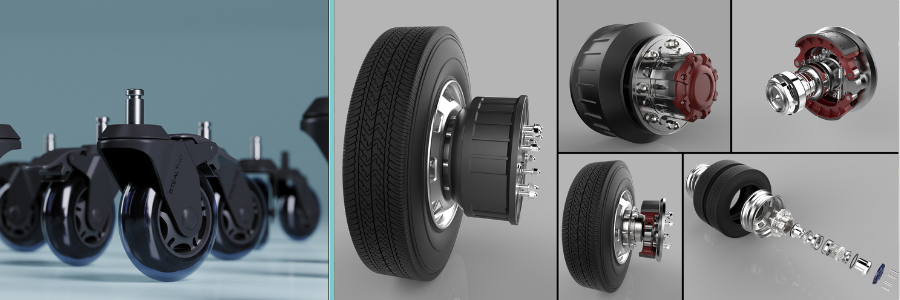

Connect with me: LinkedInXCad Crowd