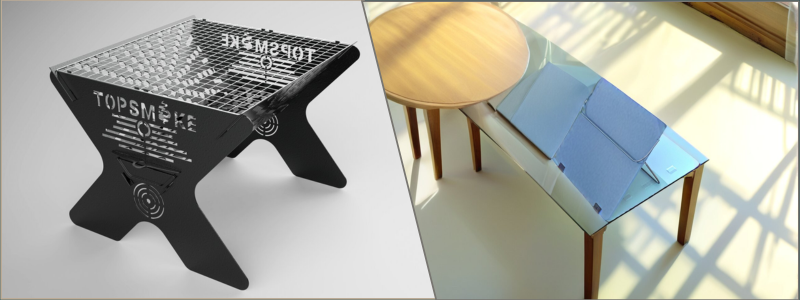
Due to advancing technology, every device and every appliance features its unique capabilities. Within your proximity, you can already identify five devices within your reach. But this goes beyond the usual things we see every day. Nowadays, we have electronic toothbrushes, electronic vehicles, robotic vacuums, etc. But of course, every good side has its downside. When you try to use a different battery for a camera, it doesn’t fit, or imagine cramming a heart rate sensor, GPS, cellular connectivity, and a day’s worth of battery life into something smaller than a traditional watch face.
It’s like playing Tetris, except the pieces are expensive, the consequences are high, and if you mess up, thousands of customers will roast you on social media.
Most of the time, this can be really overwhelming. To help you with the process and development, the leading agency for 3D professionals and experts, Cad Crowd, is here to help you. With over 102,000 pool of talents, you’ll have no hard time selecting the best team for you with an affordable budget, while still getting quality work.
Are you ready to know more about developing consumer electronics product design with 3D rendering? Let’s start.
🚀 Table of contents
The old days were expensive and slow
Here’s how product development used to work, and why it was such a pain. You’d have an idea for a new gadget – let’s say a fitness tracker. First, you’d sketch it out, maybe build a cardboard mockup to get a feel for the size. Then comes the expensive part: building actual prototypes.
Every single variation required its own physical prototype. Want to test three different button layouts? That’s three prototypes. Five different color schemes? Five more. Different battery sizes? You get the idea. Each one could cost anywhere from a few hundred to several thousand dollars, depending on complexity.
I remember talking to a startup founder who spent $50,000 just on prototype design services for a simple Bluetooth speaker. They went through dozens of iterations trying to get the acoustics right while keeping the size reasonable. Half of those prototypes never even got tested because they ran out of money.
Then there was the time factor. Building prototypes takes weeks. Shipping them between teams takes more time. Testing reveals problems, so you build new prototypes, which takes more weeks. Meanwhile, competitors are moving ahead, and that brilliant idea you had six months ago is starting to look less brilliant.
What is 3D rendering and its importance in consumer electronics
3D rendering basically lets you build incredibly detailed virtual prototypes instead of expensive physical ones. But calling it “virtual” makes it sound fake or simplified. These aren’t cartoon drawings – modern 3D renderings are so realistic that you literally can’t tell them apart from professional photographs.
A friend of mine works at a consumer electronics company, and she told me about their latest smartwatch project. Instead of building dozens of physical prototypes to test different internal layouts, they created everything digitally first. They could move components around, test different arrangements, even simulate how heat would flow through the device – all on a computer.
When they finally built their first physical prototype, it worked almost perfectly. No major surprises, no expensive redesigns, no scrambling to meet deadlines. The whole process took half the time and cost about a quarter of what it would have using traditional methods.
But here’s what really blew my mind: they were creating marketing materials before the product even existed. Professional-looking photos, 360-degree product views, and even videos showing how different features worked. All generated from 3D modeling design services.
Role of 3D rendering in consumer electronics
Last year, an automotive company needed approval from its board for a new dashboard design. Instead of building expensive physical mockups, they created photorealistic 3D renderings of three different options. Board members could see exactly how each design would look in different lighting conditions, how materials would age over time, and even how buttons would feel to press (through haptic feedback simulations).
They made their decision in a single meeting. No back-and-forth, no “let’s see another version,” no delays. The whole approval process took two weeks instead of two months.
Another example: a furniture company was developing a new line of office chairs. They needed to show potential investors how different color and material combinations would look in various office environments. Rather than producing dozens of physical samples, they used 3D visualization services to create scenes showing each chair variant in different settings – modern offices, traditional boardrooms, home workspaces, even outdoor patios.
The investors could see not just the chairs themselves, but how they’d actually look in real-world situations. It was more convincing than physical samples because they could visualize the complete picture.
How would you develop consumer electronics product design?
Creating these digital masterpieces starts with 3D modeling – basically sculpting with math instead of clay. Every surface, every curve, every tiny detail gets defined precisely. It’s tedious work that requires patience and an eye for detail.
In texturing, surfaces start looking like real materials instead of plastic computer graphics. Getting textures right is an art form. The difference between aluminum that looks fake and aluminum that looks real comes down to understanding how light behaves when it hits different surface finishes.
Lighting design services are where things get really complicated. Real-world lighting is messy and unpredictable. Light bounces off surfaces, creates reflections, and changes color based on what it hits. Good 3D artists spend years learning to recreate these effects digitally.
The actual rendering process is where powerful computers take over. Modern software can simulate incredibly complex physics – how different materials interact with light, how transparent objects distort what’s behind them, how metallic surfaces create reflections. Some renderings can take hours or even days to complete, but the results are worth it.
Why companies are going all-in
The cost savings are obvious, but they’re just the beginning. Traditional product photography requires physical samples, professional photographers, studio time, equipment rental, and extensive post-production work. For companies launching multiple product variants, these costs multiply quickly.
But the real advantage is speed. Need to change a product’s color? That’s a few hours of computer work instead of weeks of reshooting. Want to show how the product looks in different environments? Create new digital backgrounds instead of finding new locations.
The flexibility is incredible. Companies can create marketing campaigns for products that exist only as ideas. They can test market reactions to different designs before committing to manufacturing. They can even let customers customize products and see exactly what they’ll get before ordering.
I’ve seen companies use 3D rendering design services to create interactive experiences where customers can rotate products, zoom in on details, and even see exploded views showing internal components. It’s like having a showroom that fits on a website.
The electronics device design industry never sleeps, and 2025 is turning out to be particularly interesting. Artificial intelligence is getting smarter, but it’s being adopted unevenly across different types of products. Some applications are ready for mainstream use, while others are still experimental.
Energy costs keep climbing, which is creating demand for smart home products that help people track and reduce their power usage. Companies that can make energy management simple and intuitive are finding eager customers.
TV sizes keep getting bigger, which is pushing display technology in interesting directions. What started as a quest for larger screens has led to improvements in resolution, color accuracy, and energy efficiency that benefit lots of other products.
The computer market is experiencing some interesting shake-ups due to changes in processor technology. Companies that can adapt quickly to new chip architectures are gaining significant advantages over slower competitors.
Smart home devices are getting much better at understanding their environment thanks to advances in sensor technology. The latest products can detect subtle changes in temperature, humidity, air quality, and even human behavior patterns, then respond appropriately.
Developing a new consumer electronics product
Companies that have figured this out are following more systematic approaches. Instead of jumping straight into design, they’re spending more time upfront researching markets, understanding customer needs, and identifying opportunities for genuine innovation rather than just copying what competitors are doing.
The concept development phase has become much more sophisticated. Teams can create detailed product concepts with realistic 3D visualizations services, test how components fit together, and identify potential problems before ordering expensive parts. Project timelines now account for the flexibility that 3D rendering provides. Companies can run multiple design tracks simultaneously, make rapid changes based on feedback, and compress development cycles without cutting corners on quality.
Testing has become more focused, too. Instead of discovering basic design flaws during physical testing, companies can use that time to validate performance characteristics and fine-tune user experience details. Even manufacturing benefits from better upfront design work. Production teams can review detailed 3D models to spot potential manufacturing challenges and suggest modifications that make products easier to build without compromising functionality.
3D rendering has transformed from a supplementary tool into a vital necessity for maintaining competitiveness. Firms that excel with these technologies can create products more swiftly, cost-effectively, and with fewer unexpected challenges. The most thriving companies will be those able to iterate rapidly, obtain valuable feedback early, and launch attractive products to market before their rivals. 3D rendering lays the groundwork for this type of fast-paced development cycle.
We’re still in the early stages of this transformation. As rendering technology continues improving and computers get more powerful, the line between digital prototypes and physical products will keep blurring. Companies that embrace this change now will have a significant advantage over those that wait. The future belongs to organizations that can move fast without breaking things – and 3D rendering is making that possible in ways we couldn’t have imagined just a few years ago.
MacKenzie Brown is the founder and CEO of Cad Crowd. With over 18 years of experience in launching and scaling platforms specializing in CAD services, product design, manufacturing, hardware, and software development, MacKenzie is a recognized authority in the engineering industry. Under his leadership, Cad Crowd serves esteemed clients like NASA, JPL, the U.S. Navy, and Fortune 500 companies, empowering innovators with access to high-quality design and engineering talent.
Designing a brand-new product isn’t exactly a walk in the park, especially if you intend to mass-produce and sell it at a profit, too. It takes meticulous planning, some serious budget considerations, and an almost obsessive level of devotion to the undertaking just to get the product properly designed and made to begin with.
And even when the product is finally here and ready to market, there’s little guarantee that it’s going to hit the ground running. Unless you have designed, produced, and released a product before, chances are you’ll bump into a number of perplexing challenges and get caught off guard by some hurdles you never knew existed in the first place. Even if this isn’t your first run, it doesn’t mean you won’t come across some difficulties, either. The difference is that you’ve gained some experience now, meaning you’ve gone through the intricacies before and become more prepared to face what’s coming next.
Either way, help isn’t always hard to come by. Like every other challenging task, designing a product is best left to the professionals. In this case, you have the option to seek assistance from a product development firm or a freelance design expert to provide guidance throughout the process. For example, you can find plenty of design forms and experienced freelance 3D design experts on freelancing platforms like Cad Crowd. However, not all design firms and experts are created equal; each has a distinct specialization in product categories, varying experience levels, a track record in the industry, and a history of successful projects. The following tips should help you discover the best possible partner for your specific needs and circumstances.
🚀 Table of contents
Be crystal clear about your goals
This first tip actually has little to do with hiring a professional design expert. Instead, it concerns your vision of the product and how you want to achieve it. Every product starts its existence as an idea. However, it takes work to turn the idea into a tangible product. A significant portion of this “work” involves identifying the nature of the product itself, including what it does, how it works, where it can be manufactured, why people would want it, who the target buyers are, and when it will be ready for sale.
You need to set a series of measurable goals, such as the target research and development cost, maximum production cost, estimated time to market, and expected profit margin, among others. Everything must be well-articulated from the beginning. All those targets and product descriptions will likely change throughout the development process, but at least you start with something definable, so you can keep track of those changes.
Research potential partners
Now that you’ve clearly defined everything there is to know about the product (or rather the idea of a product), you’ll come to realize that a collaboration with a professional design expert, or perhaps a product design firm, should go a long way to help you turn the idea into reality. The next step is to research potential partners. Because it makes little sense to just browse every single firm you can find online, you need to set the search criteria in advance to narrow down the options.
For example, limit the search to design experts who specialize in physical products rather than apps, UI, firmware, or other digital objects. Ensure the specialization includes the product category relevant to your idea. Focus on specific regions or areas, as well as a price range. The level of experience should also be included as a requirement, as seasoned product designers are more likely to understand the task’s complexities and guide you through the process.
Take a closer look at their portfolio
This is a no-brainer, really. Product development firms and freelance design experts often highlight their previous successful projects, prototype designs, collaborations with notable individuals, partnerships with prominent companies, and current ongoing projects. Don’t be surprised if their portfolios are filled with a broad variety of designs or products from entirely different categories. The key step here is to determine if any of them have experience working on a product similar to your design. It doesn’t have to be exactly the same, however.
As long as the product in the portfolio is in the same category as yours, it’s a huge plus. That being said, a diverse portfolio actually indicates versatility, a wide range of expertise, and proficiency in the trade. Don’t forget to read the case studies, if available, as they often provide valuable insights into problem-solving methods, client interactions, design workflows, and other project-related information.
When looking for design firms, it’s advisable to pay close attention not only to the principal engineer’s qualifications but also to those of the other team members. Partnering with a design firm doesn’t always mean you’ll be working directly with all the senior engineers. A design team typically comprises a project leader (manager), a product design experts, and two or more junior engineers. Of course, every firm has a different approach to a project, but the description generally holds true for the vast majority of small to medium-sized companies.
What you want is a diverse team comprised of professionals from various backgrounds. For instance, for the development of a complex mechanical product, the ideal team should consist of a mechanical engineer, an electrical engineer (for electronic products), and industrial/product designers. It’s essential that the team’s combined expertise encompasses a broad enough range of knowledge to develop your design into a viable product.
Take a long look at the pricing model
Some product development firms do not provide clear pricing information on their websites, but they’re willing to email it if you ask. If you opt for the freelancer route, pricing information is often more readily available. The most common pricing models include fixed-fee (a single fee that covers their services for the entire duration of the project) and hourly rate (based on the time they spend working on the project). A fixed fee is predictable, but it likely involves a large upfront payment; an hourly rate is more flexible, but it may lead to a significant expense if the project takes longer than expected.
Understand the design process and QA practices
The product development workflow is just about the same, no matter the design expert or the firm you hire. It begins with the ideation step, followed by market research, and then proceeds to prototype making, testing, documentation, and ultimately, mass production. But this is a generalization because they always have their own unique perspectives and approach to the design process.
Even if the basic workflow is the same across the board, they might employ different methodologies, such as Agile (focusing on iterative processes and flexibility), Waterfall (emphasizing linear and sequential development), or Design Thinking (focused on meeting users’ needs). Each methodology also has its own strong and weak points, so get yourself familiar with the matter before making a choice for your consumer product design firm. QA practices are just as important; ask the firms and design experts about their product testing procedures, how much of the design budget goes to quality assurance activities, who is involved in product reviews, and so forth. The more questions you ask, the more answers you get.
Place emphasis on project management
The cornerstone of a successful project is effective management. The term “management” is used in the broadest possible sense of the word and should encompass communication, collaboration practices, budget efficiency, and the extent of your involvement, among other aspects. A good product development firm should always keep you informed by providing timely updates on progress and timeline reports.
Poor communication often leads to design clashes, multiple runs of revisions, and misunderstandings, all of which can result in increased cost. It can be quite tricky to assess how exactly a firm manages a project unless you’ve hired them before. But it shouldn’t stop you from inquiring about their project management tools and preferred communication methods or channels. You may also be able to gauge their responsiveness during the initial consultation phase. In general, you should prioritize a firm or design expert who demonstrates strong collaborative effort, provides prompt answers to inquiries, responds to feedback, and uses a robust project management platform.
Get to know their manufacturing considerations
The ultimate goal of designing a physical product is to have it mass-produced in a cost-effective manner and sell it for profit. This is why you should be persistent with your inquiries about the production considerations. Product development experts are not inexpensive. You’ll be making a pretty substantial investment, so you need to know what you’re getting even before you make that hiring decision. Ask as many questions as you can muster about the firm’s strategies to prepare the product for mass production.
The question can be about injection molding, CNC machining, electronic product assembly, and 3D printing. If your product needs to be environmentally friendly, ensure the firm can provide you with satisfactory answers regarding material selection, product recyclability, end-of-life management, and other relevant aspects. A significant aspect of production consideration is DFM (Design for Manufacturability), which involves design optimizations to prepare the product for practical manufacturing. A product designed with the DFM approach in mind typically has a lower production cost as well.
Ask for well-defined deliverables
Developing a product from scratch isn’t something you can do in a matter of days. It may take weeks or even months, depending on design complexity and requirements. You shouldn’t expect any firm or design expert to get the job done in record time, but you can ask for details about project scope, realistic timelines, and a schedule for deliverables. All this information should help you track progress easily, address potential issues as they arise, and ensure proper collaboration throughout the project. If there are changes to the schedule due to unexpected challenges, the firm must provide prompt and clear updates, as delays may ripple through the project timeline.
Discuss the issues regarding confidentiality and intellectual property
The idea is yours, and you hire the product development firm or design expert to help you materialize that idea into reality. Whether you like it or not, collaboration means sharing every single detail about the idea with the professionals you hire. You practically present a potential invention to them, and you have to pay for it. Ideally, all the inventions and innovations that may come to the surface during the collaboration, along with the documentations related to the project, should be yours, because it’s your project, and you merely hire them to help you. But sometimes, things are not always that simple. This is why it’s essential to have a proper discussion about IP ownership and confidentiality in advance with product engineering services. The usual solution is to enforce an NDA.
Consider cultural fit
When people say “cultural fit” in hiring, it typically refers to the alignment of values between the employer and the employee. For example, if you want to design an eco-friendly product, then you should collaborate with a firm or design expert who also demonstrates an inclination for reducing harm to the environment; if you’d like to be heavily involved in the day-to-day activity in the project, you should hire a team with a dedicated project manager. When both parties share similar values and prefer the same approach to working, it’s easier to avoid misunderstandings, reduce conflicts, and tackle all possible challenges. In short, cultural fit improves productivity.
Check testimonials
A reliable method for gaining insight into a firm’s capabilities, communication style, collaborative efforts, and project management skills is to review testimonials. If possible, reach out to previous clients and ask them to describe their experience hiring the design firm. Please understand that it can be difficult to track down every single client who hired the firm in the past because of the NDA in their contracts. Seeking information from unofficial sources, such as through a professional network, can also reveal the quality of the services. The reputations of freelance design experts are likely easier to verify by simply looking at their ratings and clients’ feedback on freelancing platforms.
Avoid the common pitfalls
You’ll be surprised to know how many mistakes you can possibly make when hiring a design firm. For example, you decide to hire a firm or a design expert simply because the services are cheap. While price is always an important consideration, making a decision based solely on price often leads you to a design firm that may not have the necessary expertise and experience to complete the job. In some cases, cheap prices also indicate a long completion time; even if the firm has the professionals to deliver a quality product, the low price may suggest that your project is not a priority.
Another common mistake is choosing a design expert whose specialization is entirely different from your product category. Say you want to build a relatively simple yet robust desk ornament made of stainless steel; it makes little sense if you hire a design expert known for fashion accessories services. Even if the price is good and the designer has years of experience in the clothing industry, you can find a much better fit for the project.
Overemphasizing experience or reputation over creativity and fresh ideas can also be a mistake. It wouldn’t be a stretch to say that there are hundreds, if not thousands, of new design professionals out there eager to showcase their skills and unique visions to clients everywhere. Just because they’re new, it doesn’t always mean they’re any less capable than the others. Consider giving them a pilot project for simple product development, just to see how they handle the job. Like all pilot projects, don’t spend too much money on it; keep it a low-risk investment, but make sure the project allows you to assess its overall performance.
Conclusion
Whether you end up partnering with a freelance design expert or a full-blown product development company, the decision likely comes with quite a sizable investment for good reasons. They lend some specialized skills to help materialize an idea, bring an objective viewpoint to your design preferences, and offer a fresh perspective to keep everything on track. Believe it or not, much of that investment actually goes to something a little less tangible: experience. Now that you have experienced professionals on your team, the product development process has every chance to run more efficiently; they should know which strategies will work to your advantage and what to avoid, to prevent a waste of resources.
But the investment is not without risk, either. The right product development firm can open the door to brilliant ideas, help execute every action plan with good accuracy, and lead you to a hassle-free path toward a successful venture. On the other hand, choosing the wrong one can lead to a significant waste of time and money. The problem is, sometimes there’s no way to know if you’re making the wrong decision before it’s too late.
While the tips above may not cover everything, treat them as essential guidelines for finding reliable design professionals in your product category. To kick-start your search, explore freelancing platforms like Cad Crowd, which are well-regarded for their impressive product design portfolios, with Cad Crowd being the premier place to find these talents. Don’t hesitate! Start your journey now to discover the perfect designer for your needs! Request your FREE quote now!
MacKenzie Brown is the founder and CEO of Cad Crowd. With over 18 years of experience in launching and scaling platforms specializing in CAD services, product design, manufacturing, hardware, and software development, MacKenzie is a recognized authority in the engineering industry. Under his leadership, Cad Crowd serves esteemed clients like NASA, JPL, the U.S. Navy, and Fortune 500 companies, empowering innovators with access to high-quality design and engineering talent.
Having an effective 3D product rendering staff is critical to companies that must present their designs appropriately and fairly. Professional visuals bring products to life, making them more desirable to customers and investors alike. For the needs of online marketing, business, or prototyping, high-resolution 3D rendering gets down to the details. Employing freelance CAD professionals via websites like Cad Crowd provides businesses with access to a broad range of skilled designers, providing them with flexibility, value for money, and skills. With the right team in place, businesses can turn ideas into stunning, industry-standard pictures that inspire imagination in any marketplace.
Creating stunning 3D product renderings is no longer a luxury but a necessity. Whether you’re a furniture store, consumer electronics company, or technology company designing new equipment, being able to acquire an engaging visual rendition of your products can mean success or failure in winning customer interest. So, how do you build the ideal team to bring it to you?
Most firms must choose between using in-house designers, outsourcing to a firm of 3D renderers, or hiring freelance experts on contract. Each option has its own benefits, but the strongest one is the assembly of a dynamic, hybrid team through the merger of both firm-based experts and individual freelancers.
🚀 Table of contents
Why not just hire an in-house team?
On product 3D rendering and design services, an in-house team seems like just the ticket, one with direct access to the workflow, brand consistency, and instant communication. The truth is otherwise. An in-house team will definitely provide a consistent shape, but one that is costly and restrictive to boot. Payroll, licensing fees for the software, purchases of hardware, and training programmes on an ongoing basis all have a way of adding up very fast. Then there is scalability to consider.
At their peak production level, your in-house staff will never be able to maintain the pace and will likely have backlogs or crisis work. When you are not generating at lower levels, you might be spending money on idle skill sets, and inefficiencies and wasted resources follow. For cost- and quality-conscious companies, a hybrid solution hiring a combination of in-house talent and freelance specialists, as well as top-level 3D rendering companies, is a game-saver. This solution enables you to access specialist talent when needed, without compromising the lean and agile nature of your core team.
To produce top-quality 3D product renders, you need a combination of different skill sets. Though some firms prefer to have all these roles on the same floor, others prefer to hire external expertise on a job-by-job basis. Below is an overview of the most essential roles in a top-end 3D rendering department and how a combination-and-mixture solution can benefit you:
3D modelers
They are responsible for creating accurate 3D models of your product. All the curves, textures, and parts must be modeled precisely in order to deliver realism and accuracy.
Freelance 3D modelers can be a great choice for peak hours or for stand-alone, complex assets with specialized information.
Rendering artists
Once your model is established, your rendering artists bring it to life with lighting, materials, and photorealistic textures. They render your product as close to real life as possible.
Rendering firms possess cross-industry-experienced artists, meaning they can produce visuals that conform to market trends and branding requirements.
Texture & material experts
They perform UV mapping, shaders, and photorealistic surface duplication, so textures look natural under any light.
Freelance experts with PBR (Physically Based Rendering) expertise can bring your photos nearly unnoticeably close to reality photography.
3D Animators (If Necessary)
If your project requires animated scenes, like rotating product views, assembly presentation, or interactive presentations, an in-house professional animator is required.
Freelance animators are particularly convenient for just one project, without the expense of an internal animation division.
Post-processing & compositing artists
Post-processing artists tidy up final render images when a render completes. Background composite, colour grade, and others clean up to make a shiny, high-end shine are a few.
Some 3D rendering firms have their own specialist post-production teams to help your imagery achieve a cinematic look.
Project managers
Managing a group of freelancers or outsourcing to an external render house demands top-notch project management.
A good project manager ensures timely completion, tracks revisions, and ensures that the end product is according to your imagination.
Freelancers are the convenience and talented expertise that a one-stop rendering business cannot possibly deliver at all times. Yet, the correct choice must be achieved with a measured approach. Websites like Cad Crowd can be excellent hunting grounds to find the crème of the crop practitioners. This is how you can ensure that you acquire the best of the best:
Define clearly your needs
Before hiring, specify what you need:
High-poly or low-poly models?
Are the renders for marketing, AR apps, or e-commerce?
How much realism and detail do you need?
Clear specifications guarantee that product development freelancers know what you need ahead of time, avoiding revisions and miscommunications.
Inspect portfolios in depth
Inspect for consistency, detail, and versatility to other art styles.
Ask for breakdowns of past projects to be able to view their workflow and technical expertise.
Place emphasis on those applicants who have experience in your field, as they will better understand the design trends and customer requirements.
A small test project
To test the freelancer’s ability, communication, and punctual delivery, prior to taking on a big project, provide a small paid trial.
It can help identify issues in advance and find out if they are a good match for your workflow.
Smart collaboration tools
Good communication is very important in teamwork among far-flung freelancers. Tools that help collaboration include some of the following:
Trello or Asana – For monitoring the projects and deadlines.
Slack or Discord – For instant messaging and quick conversation.
Google Drive or Frame.io – For simple file sharing and commenting.
Hiring a 3D rendering company
Freelancers suit one-time tasks, but in the event you need continuous assistance, consistency, and improvement, then having a 3D rendering firm work for you will be the ideal choice. The following are what you need to watch out for when you’re looking for a good product design firm:
Industry specialization
Some render studios specialize in rendering furniture, whereas others specialize in rendering cars or fashion clothing. Ensure their area of specialization is a good match for your company.
Pipeline efficiency
How do changes get handled? Can they offer live previews? A productive pipeline keeps the work flowing and keeps going without hesitation.
Technological edge
Get rendering firms that use the best rendering engines like V-Ray, Unreal Engine, or KeyShot to create cutting-edge visualizations.
Client interaction & support
Experienced account managers and efficient lines of communication result in smooth interaction.
The hybrid solution: Greatest cost & greatest efficiency
The perfect team brings the best of both worlds together into a cohesive model:
Freelancers offer flexibility, creativity, and specialist expertise.
Rendering companies give stability, facilities, and a proven process.
In-house handling provides brand control of quality and communication efficiency.
When to use freelancers
When to hire a company
When to outsource work
For high delivery speed for product launch.
On very big projects with consistency on lots of SKUs.
For highly confidential work where IP protection is most crucial.
For a one-time or finite project with specialist knowledge.
When its high-stakes customers, where quality is a fact of life.
While committed to developing custom product designs involving substantial internal coordination.
When testing something new in rendering, but not the whole hog on a job.
When you have repetitive support, like monthly catalogs.
New technology, with the use of AI-driven rendering software is revolutionizing the business. Machine learning algorithms can render textures automatically, optimize lighting setups, and even suggest ideal camera angles to display products in an ideal manner.
Rendering firms and freelancers using AI in their workflow are able to cut down on production time by far, with industry-leading quality for consumer product design firms.
Last thoughts: Creating a future-proof rendering team
In a time when the content of images drives buying decisions, paying for a world-class 3D rendering team is not an option. By merging the skill of freelance experts and the disciplined process of well-established rendering companies, you have an agile, scalable, and affordable solution designed to meet your company’s requirements.
Whether you are an online shopper wanting to increase your conversion rates, a new product launch for a startup, or a manufacturer streamlining your prototyping, having the right team is going to put you ahead in the game of 3D product visualization.
Cad Crowd is here to help
They are a highly skilled 3D product rendering team that turns your imagination into reality with precision and authority. Businesses are now able to leverage the best of the best talent without the cost of an in-house team by engaging freelance talent. Cad Crowd offers businesses access to top-end freelance CAD designers who specialize in high-end 3D renderings, with the guarantee that every detail is in line with your imagination.
Regardless of whether you need photorealism for marketing or high-precision technical drawings for product design, your chosen professional is available to get it done. Request your free quote today and begin taking the first step towards amazing 3D product visualization.
MacKenzie Brown is the founder and CEO of Cad Crowd. With over 18 years of experience in launching and scaling platforms specializing in CAD services, product design, manufacturing, hardware, and software development, MacKenzie is a recognized authority in the engineering industry. Under his leadership, Cad Crowd serves esteemed clients like NASA, JPL, the U.S. Navy, and Fortune 500 companies, empowering innovators with access to high-quality design and engineering talent.
If you’ve ever had a brilliant product idea lingering in your head but no way to turn it into reality, you are not alone. Let me introduce you to the SolidWorks design services—those design wizards capable of drawing, simulating, and animating your idea into 3D perfection. But then again, the big question is: Where do you locate these wizard freelancers who speak SolidWorks in perfect language?
Spoiler warning: you needn’t spend hours Googling. We’ve taken care of the searching, filtering, eye-squinting, and double-checking. Cad Crowd has years of experience as the leading platform to help AEC firms find the very best SolidWorks and 3D design experts. And here’s your no-holds-barred guide to 51 of the very best sites to employ freelance SolidWorks engineers and designers—beginning with the first 17.
🚀 Table of contents
I. Top freelance marketplaces
Cad Crowd
Cad Crowd is where brilliant ideas meet the best CAD professionals. Think of it like the Michelin Guide to 3D design—without the cuisine, and with the best SolidWorks and industrial design experts in their place.
Post your assignment, host a design contest, or have the website match you with a pro who’s likely already designed what you had in mind. Need a smart lock model or aerospace component? Chances are that somebody at Cad Crowd’s already gotten it right—several times already. With vetted freelancers ready to jump in, you’re not just hiring help; you’re tapping into a deep bench of CAD design experts who live and breathe innovation.
PeoplePerHour, based in the UK, is a go-to spot for bite-sized freelance gigs called “hourlies.” Think of it as the IKEA of freelance engineering—streamlined, affordable, and no mysterious screws left over. It’s perfect if you need something in a hurry and well specified, whether it’s a SolidWorks part model, precise 3D modeling, or an end-to-end product development solution. The engineers on the website package their services neatly, so you have an exact idea of what you’re paying for and how much it’ll cost. For price-conscious inventors or companies, it offers a smart way of accessing experienced expertise without the hassle of long-term contracts or expensive fees.
Guru may not yell the loudest in the world of freelance, but that is part of its appeal. It’s like finding a secret treasure—unobtrusive, self-assured, and just bursting with talent. Behind its understated presence lies a deep bench of seasoned CAD engineering design experts, including some seriously skilled SolidWorks pros. Whether you’re looking for someone to tackle a one-off prototype or stick around for long-term development, Guru delivers. One of its best features, WorkRoom, makes it easy to communicate and share files, smoother than, say, a precision-cut piece of aluminum. For firms that are less concerned with ability than with noise, Guru is where the actual work is done quietly—and done exceptionally well.
Freelancer.com makes beginning your SolidWorks project easy. You post the specs, designers worldwide bid on your project, and you choose the pro that fits. It’s a broad market with plenty of skilled people making everything from intricate medical components to aerodynamic drone frames. The one caveat? There’s a bit of sorting required. With so many bids, it can be like searching for a needle in a haystack. But those who take the time are typically rewarded with skilled pros who handle fillets and assemblies as tenderly as a Jedi would handle a digital lightsaber.
Toptal is for people who don’t just want ability—they want the best of the best, without having to sift through thousands of resumes. Think of it as the first-class car ride of freelance recruiting. They stringently vet top 3% freelance engineers, like SolidWorks experts who likely designed parts for world-class manufacturers. If your standards are high and your schedule is too busy for experimentation and guesswork, Toptal delivers seasoned CAD designers who are fluent in the language of subtlety, detail, and even requesting such things as, “Make this portion be a Tesla hinge-type feel.” It’s high-end design expertise, served on a silver platter—no legwork required on your end.
Upwork is a freelance giant on the planet—and of course, it’s not just a marketers’ and writers’ paradise. Head into the engineering section, and you’ll discover treasure troves of SolidWorks masters whose portfolios would shame aerospace experts. Posting jobs or cherry-picking the best with invites, the platform has flexibility and scope in store for both. But with so many profiles to sift through, the issue isn’t locating an engineer—it’s locating that one star who truly gets your vision. Patience and good observation will lead you to your engineering soulmate.
Hubs, once 3D Hubs, has become a pioneer in playgrounds for creatives and engineers who are ready to turn fresh ideas into reality in physical products. Although it began as a basic 3D printing design service, Hubs has become an end-to-end platform that brings designers, manufacturers, and fab professionals together. No matter if you need high-quality SolidWorks modeling, smart DfM tactics, or CNC files, Hubs can provide. Their network of reliable CAD pros is crowded with people who know the secret of taking that digital drawing and developing it into a working prototype. It’s where grand plans lose their place in your mind—and start to become real.
Fictiv is your do-it-all concierge to digital manufacturing, bridging the gap between excellent design and flawless execution. Imagine introducing the best of SolidWorks’ accuracy with the ease of on-demand manufacturing. That’s what Fictiv does. You simply upload your project, and Fictiv takes care of the rest, matching you with experienced CAD engineers who make your design ready for production in the real world. From a napkin scribble or a nearly finished model, their platform streamlines everything from idea to finished component. It’s a smart solution for companies requiring access to sound support and first-rate engineering talent without the delay or the guessing.
Xometry does much more than just introduce you to CAD engineers. It’s a one-stop, full-service powerhouse that transforms your ideas into real-world products–all in one location. Whether you require prototyping, injection molding and casting services, CNC machining, or even complete manufacturing, Xometry has the tools and the talent to get it done. What stands out about them is their extensive SolidWorks community, designed to assist with all phases of the design-to-production process. For companies who would rather simplify the process and play it simple, Xometry is the best partner. It’s not so much about getting a design done—it’s about getting it done right, with precision, quickness, and professional collaboration in between.
Engineering.com’s Jobs Board is a bit of an insider secret for anyone looking for top SolidWorks talent. While it’s generally associated with full-time employment, don’t be fooled—freelancers are here, too. This website draws serious engineers, many of whom are seasoned 3D CAD design experts. If you’re unveiling a new prototype or even just need a last-minute adjustment to your design, promoting your project here might just draw in the kind of precision-driven talent you didn’t know you needed. That’s where the rocket minds gather—and a few of them are looking for freelance gigs.
SolidProfessor is not just a website to improve your SolidWorks expertise—it’s also an entrance to a tight network of certified professionals. Among this team of seasoned experts, several offer freelance services, so it’s a treasure trove for institutions seeking the best of the best. Imagine it as the Ivy League of the SolidWorks world, where everyone speaks the same CAD language and excellence is the standard. If you’re looking for a designer who’s not just trained but thoroughly tested, this is where you’ll find them. It’s more than training; it’s a network of trusted professionals ready to bring serious engineering skills to your next project.
DesignCrowd might be famously associated with graphic design and logos, but it’s working equally in the background to establish itself in the industrial design space. Click a tad further in, and you find an increasing number of SolidWorks experts keen to crack 3D CAD design services. What makes it even more exciting is the crowdsourcing approach of the site—upload a project, and you’ll have multiple creative interpretations from different designers. It’s like having your own extended design contest, with the prize being a collection of ingenious, STL-enabled answers. Prototyping a product or reworking a part, DesignCrowd offers something more than images—it delivers CAD imagination on a plate.
GrabCAD is where imagination and collaboration meet in the world of CAD design. It’s part social network, part portfolio center in one, perfect for locating SolidWorks experts. It’s not an official job site, but there are thousands of designers sharing their designs, ideas, and engineering brilliance here. If you see a design that you like, you can directly approach the designer and inquire if you can work together. It’s a heaven for freelancers, tucked away amidst piles of gears, cases, and mechanical magic. GrabCAD’s not for browsing—it’s where serious CAD hookups get made, one click and sweet project at a time.
Coroflot is where industrial designers and innovative engineers shine, especially those who wield SolidWorks as a sculptor’s chisel. Okay, it’s not your typical hardcore engineering hangout, but it’s a cavern of product designers with 3D curve and beauty function thinking. If you’re on the lookout for someone who brings technical expertise together with visual style, this is the destination. Rent out a project or dive into carefully curated portfolios showcasing everything from cutting-edge gadgets to efficient consumer products. It’s not just a talent-rental space—it’s where science meets art, and SolidWorks is an innovative design storytelling tool.
Sure, Behance might seem like the playground for graphic designers and illustrators—but dig a little deeper and you’ll uncover a thriving subculture of SolidWorks talent. Among the sleek UI layouts and bold typography, product designers are quietly showing off their skills in 3D modeling design services and mechanical concept development. It’s not unusual to find a jaw-dropping SolidWorks prototype wedged between a futuristic sneaker design and a sleek drone concept. Type in keywords like “3D product design” or “CAD modeling,” and you might just stumble upon the perfect designer already brainstorming the next innovation, sitting right in front of you in a virtual realm of imagination.
LinkedIn isn’t just for job hunters or business climbers—it’s an alchemy paradise for finding freelance SolidWorks engineers. Think of it as the globe’s most powerful digital Rolodex, teeming with experts showcasing their expertise, history, and referrals. Search through advanced search filters to narrow down to specifically targeting SolidWorks experts, be it for product design, prototyping, or 3D CAD modeling. And, the icing on the cake? A glimpse of their work history, endorsements, and even personality through posts and shared content. It’s a surprisingly good—and sometimes overlooked—pipeline to engage engineers who know SolidWorks.
Reddit can seem like the utopia of memes and rabbit-hole conspiracy theories, but buried among all that chaos are gems for finding CAD talent. Subreddits like r/forhire, r/cad, and r/engineering host vibrant communities of freelance designers, engineers, and makers who genuinely enjoy what they do. Need a SolidWorks master with the ability to provide accurate threaded holes? Just post your project, add some additional detail, and relax as the feedback floods in. The conversations are real, the comments are fast, and the talent pool? Sharper than sharp. It’s one of the internet’s best secrets to find top-class CAD freelancers.
Kolabtree is where science and serious CAD skills meet. Whatever you’re developing—the next biotech breakthrough, a state-of-the-art medical device, or machine learning-capable hardware—this is where you’ll find smart, technically savvy freelancers who speak your language. Kolabtree’s SolidWorks experts are not just designing parts—they’re solving hard problems, marrying intimate scientific understanding with precise 3D modeling. It’s not design—it’s a research-level study driving innovation with practical engineering. If your project needs someone with experience in both equations and engineering, Kolabtree is your sandbox for cutting-edge building and surgical technical acumen.
CadCade is not your average CAD marketplace—it’s more like an in-aesthetic engineering lounge where precision intersects with imagination. This small platform acts as a bridge between clients and gifted CAD experts from all over the U.S., many of whom are SolidWorks masters with deep experience. Whether structural elements or custom tooling design, CadCade offers seasoned mechanical engineering solutions with a dash of personality. The engineering may be technical, but the work environment is anything but clinical. Envision smart, agile designers collaborating within a virtual think tank—not a clank-and-bang factory floor. Where specialized knowledge is needed, CadCade makes thoughtful engineering a reality, one SolidWorks file at a time.
Design Match
Design Match is not just another freelance platform—it’s a match-making agency for your CAD aspirations. Imagine eHarmony, but with SolidWorks designers. Instead of sifting through hundreds of profiles, Design Match does it for you. They spend time getting to know your project, your work style, and even what kind of personality would be the best fit for you. Then, as good matchmakers, they introduce you to a pre-screened SolidWorks expert who’s your perfect match. No more mismatched freelancers or guesswork—just a personally matched design partner carefully selected to bring your engineering dream to life with ease and precision.
Bricsys may be famous for its powerful CAD software, but its 24/7 Talent Portal is so much more than code. It’s a smart portal to top-tier designers and engineers, including expertise in SolidWorks. It’s a blessing to teams working in multi-CAD environments, where the subtlety of compatibility issues between systems can either break or make a project. With the ability to use Bricsys 24/7, companies can work securely with those who actually know the technical details and workflow needs. It’s not just about finding assistance—it’s about encountering the right expertise at the right moment.
Outwise is no ordinary freelance platform—it’s where hardcore engineering design services combine with strategic thinking. Targeting tech, engineering, and transformation consultants, it goes in search of SolidWorks experts who bring much more than just basic modeling skills. These professionals are well-versed in digital twin technology and design for manufacturing (DfM) and are therefore the best for companies facing tough product development. Be it creating sophisticated mechanical systems or building a next-generation digital model, Outvise identifies top talent to work on high-risk ventures. If your product idea is more than a bottle opener, this is the kind of platform that can help make it real, just so.
Turing came on the scene as a top developer placement service, but now it’s venturing into the mechanical world with ambitious plans. Its new engineering department enables you to hire mechanical engineers skilled at SolidWorks—ideal for precision-driven design projects. What distinguishes Turing? Their bold claim is that only the top 1% of applicants actually make it through. That’s not just a filter—it’s a full-on quality guarantee. Whether you’re building complex assemblies or pushing boundaries with product design, Turing is cultivating an elite network that’s engineered to deliver excellence. It’s a serious move for anyone looking to hire top-notch SolidWorks talent without the guesswork.
Prowess Project is turning the concept of hiring top-notch engineering talent on its head. This women-owned network specializes in bringing companies globally highly-qualified women engineers, designers, and project managers. Their SolidWorks specialists aren’t just well-versed in the software, but also possess engineering degrees, real-world experience, and top-notch communications skills to boot. It’s a winning formula that ensures projects are not just technically better but rolled out successfully from start to finish. Firms looking for smart, productive, and innovative minds are finding just that with Prowess Project. It’s brains that matter—and a step in the right direction toward inclusivity for the world of 3D CAD design.
Experfy is where cutting-edge technology meets top talent. Originally developed for data science and AI, it’s now embracing the world of engineering and hardware. It’s a very structured setting for serious innovators—those who are not just modeling parts in SolidWorks, but also integrating robotics, machine learning, and deep analytics into product design services. Whether a company needs a freelancer to prototype a smart device or implement AI algorithms into product design optimization, Experfy makes it happen. The website matches businesses with experts who integrate heritage CAD skills with innovative technology, and therefore, it’s a single-stop site for future product innovation and development.
If you’re hiring for a SolidWorks project and want to bring aboard someone who intimately understands the language of Dassault Systèmes, GigsBoard is where to begin—and most likely end. Created by the same people who developed SolidWorks itself, this job board connects you with certified experts well-versed in the tools from the inside out. These are not generic freelancers; they’re FeatureManager tree gurus and CAD aficionados with an eye for perfection. If you need speedy prototyping or highly refined parametric models, you’ll find specialists here who are conversant in every Dassault shortcut and best practice. GigsBoard is more than just a marketplace—it’s a talent pool sifted for actual SolidWorks work.
The MySolidWorks Forum isn’t just a troubleshooting forum or design tip swap, either—it’s also a hidden gem talent hunt. Hidden in its threads are laid-back “hire me” posts and job postings that connect users directly with qualified SolidWorks experts. While it may not have the polish of official recruitment websites, that’s exactly why it’s so nice. You’re not dealing with generic profiles or computer filters. Instead, you’re dealing with experienced, highly skilled experts who breathe and sleep 3D CAD. If you need to find talent that truly knows the software inside out, this casual but informative clique is worth investigating.
SolidWorks Subcontractors Facebook Group does have a clandestine-web-portal ring to it, but it’s actually a gold mine for anyone looking to connect with top freelance SolidWorks experts. It’s a closed group teeming with tens of thousands of seasoned engineers and 3D rendering designers who continuously share their knowledge of availability, job openings, and even bid on work. It’s not a spot to just scroll idly by—it’s a thriving community where real collaborations take place daily. You’ll need to request an invite, but when you’re in, you’re not just a member—you’re part of a healthy community where finding (or offering) SolidWorks subcontracting is surprisingly a breeze. Yeah, even on Facebook.
CADJobHunter
CADJobHunter will not win any design awards for appearance—it’s literally going back to the early 2000s, somehow—but don’t be fooled. Beneath the old front end lies a treasure trove of CAD possibilities, especially for SolidWorks enthusiasts. It’s one of the few job boards that exclusively traffics in CAD jobs, so naturally, it’s a niche site for employers and freelancers who are living in 3D modeling. There are SolidWorks opportunities with regularity, and some of them come from serious companies looking for top-level expertise. So, the graphics may be old-fashioned, but the job postings are pleasantly current and surprisingly rewarding.
SolidWorks User Group Network (SWUGN)
The SolidWorks User Group Network (SWUGN) is more than a software fan club—it’s a vibrant community where skilled designers gather, learn, and create. With local chapters, SWUGN has in-person meetings, webinars on the web, and bulletin boards in motion. These’re not parties; these’re valuable sessions where members do sometimes swap freelance work, tips, and advice on technology. Hiring someone from this network isn’t bringing in a designer—better, it’s getting access to a pool of professionals who live and breathe SolidWorks. If you have a quick project or long-term design needs, SWUGN’s where passion and professional-grade expertise meet.
The Luxion KeyShot Forum Marketplace is a hidden gem for those hunting top-tier SolidWorks talent with a flair for visuals. It’s where CAD designers who also excel in photorealistic rendering services gather to showcase their skills. If you’re looking for someone who can model with precision and make your design shine with cinematic polish, this is the place to browse. They’d best here blend technical know-how with artistic narrative, making product imagery look like it was plucked from the doorstep of a film set. For marketing, prototyping, or simply impressing stakeholders, this marketplace dishes out visual bang with legitimate CAD cred.
99designs is what most initially have in mind. Contests for logos and t-shirts come to mind. But take a closer look and you’ll find a growing niche in their 3D product design category. It’s a surprising gem, especially for those needing more than just eye-catching visuals. Many designers here are also skilled CAD professionals fluent in SolidWorks, blending artistic flair with technical precision. The platform combines the fun of design competitions with the seriousness of product development. It’s not pretty pictures alone—it’s manufacturable concepts. For businesses looking for innovative solutions that also have practical feasibility, 99designs offers a surprisingly solid player in the 3D domain.
LHH has come a long way from the early days as a haven for software developers. In a stealthy but pugnacious move, the platform is now expanding into engineering disciplines—SolidWorks included. Right, companies and startups now have access to a growing roster of full-time and freelance SolidWorks engineers looking for engaging contract work or innovative design assignments. Whether you’re making prototypes, optimizing a 3D model, or need some serious CAD brawn, Hired simplifies connecting with quality professionals already actively seeking their next assignment. It’s a savvy pick for anyone who needs reliable, top-notch engineering expertise.
Lemon.io is an adorable, quirky platform with Ukrainian roots, and it’s renowned for its innovative method of connecting customers with top-tier freelance talent. What sets it apart? Each freelancer goes through rigorous vetting before signing up, so there’s less uncertainty and higher confidence for anyone needing to hire. While they started strong in software development, Lemon.io has been branching out into SolidWorks engineering design services and hardware design. Need a SolidWorks expert? You’ll likely find someone who not only excels in CAD but also has a solid grasp of technical entrepreneurship. It’s a great spot for businesses seeking well-rounded, fast-moving freelance pros who don’t just design—they innovate.
Gun.io may have begun life as a go-to destination for software coders, but it’s evolved to be so much more, especially for companies creating physical products. Today, the platform connects you with talented product engineers who have experience in both innovation and execution. While it still continues to find its footing in the CAD industry, Gun.io’s particularly known for its stringent screening process. Only seasoned experts grade-cut, so you’re not losing your time wading through beginners. If you need A-list talent to help transform your hardware vision into a reality with some real expertise, Gun.io might be your secret source.
CloudDevs is disrupting the norm by connecting skilled Latin American tech freelancers with American companies—and now they’re expanding into hardware design as well, including SolidWorks expertise. That means if you’re an American-based company needing CAD support, you get the benefit of working with pros in your own time zone without breaking the bank. This geographic advantage makes it easier, faster, and more convenient to work. Whether you’re doing some quick prototype tweaks or designing full-fledged products, CloudDevs brings talent and affordability together. It’s an exciting option for those teams who not only appreciate quality work but also open windows of communication.
Designity opens the door to more than freelance ability alone—it opens the door to a whole creative team experience. When you hire through their service, you’re paired with a dedicated SolidWorks designer who isn’t working in isolation. They’re assisted by a creative director to offer consistency, quality, and strategic direction. This setup is more like having your own tiny consumer product design company, which is a huge plus for start-ups. It’s best for those building a product family where visual and functional continuity are crucial. With Designity, you’re outsourcing, not just getting a co-creative partner.
Superside is your go-to creative power team when your project needs some serious design brawn. Picture them as your on-demand design SWAT team—standing by to jump in and deliver excellent results in short order. Sure, they’re best known for stunning visual design, but there’s more than an eye-catching surface. Their product design team tackles tough projects, often with CAD and 3D modeling to bring concepts to life. Need a SolidWorks mastermind? Just ask. Superside has the engineering capabilities to go along with their design talent, making them an ideal choice for firms that need brains alongside beauty in their design process.
Workana is rapidly becoming a leading freelance platform in Latin America, and it’s no wonder. For businesses open to collaborating with Spanish or Portuguese-speaking engineers, especially those skilled in SolidWorks, this platform offers serious value. Whether you’re designing intricate 3D parts or need help refining a product prototype, you’ll find talented professionals who deliver solid results without breaking the bank. It’s a great choice for those looking to stretch their budget while tapping into an experienced, up-and-coming pool of talent that understands precision, attention to detail, and international collaboration.
Truelancer has established a solid position in India and Southeast Asia as a top platform for low-cost, high-quality CAD services. It’s especially popular among mechanical engineering services that have hands-on manufacturing experience to offer—ideal for anyone looking to build functional SolidWorks projects. The best thing is that the costs here are only a fraction of what you would have to pay in Western markets, yet the quality is reasonable. From 3D modeling to complex part design, Truelancer connects clients with seasoned professionals who are familiar with both software and shop floor realities, a sound choice for value-conscious innovation.
Flexing It is India’s answer to the growing demand for high-quality professional services, consultants, and freelancers. Ranging from veteran engineers to innovative industrial designers, the site brings together talent from a wide range. It’s an ideal place where companies seek razor-sharp minds for conceptual CAD work or technical assignments like Design for Manufacturing (DfM) consultancy. With a high-skill gig direction, Flexing It enables companies to tap into specialists who can jump in and get the job done. It’s not freelancing—it’s injecting professionalism and accuracy into every collaboration.
Leading French-based freelance platform Malt is all the rage across Europe by matching companies with the best possible talent. It’s an aladdin’s cave for business owners who require brilliant SolidWorks designers and industrial engineering experts. Why does Malt stand out? It’s a rich pool of multilingual experts with a mastery of French, German, Spanish, and more. That means smooth, clean teamwork without the frustration of translation issues. Wherever you’re introducing a product, Berlin or refining a design, Barcelona, Malt offers that ideal blend of in-place know-how and best-in-class technical expertise—all from one efficient European hub for freelance experts.
Bark is also a very popular platform for UK businesses to locate freelancers in a wide range of services, ranging from dog walking to CAD modeling on SolidWorks. It’s a home-based solution that keeps the search easy, local, and legally simple. Whether you need someone to design a 3D component or just walk your high-energy dog, Bark makes it easy to find vetted professionals local to you. With all of it staying within the realm of the UK’s laws, you don’t have to worry about foreign contract misunderstandings. Convenience, trust, and getting the job done without crossing borders—or barking up the wrong tree—is what it’s all about.
Zeerk is a bit of a hidden gem within the freelancing sphere, especially if you need speedy and affordable technical help. It’s like a Fiverr cousin, where microgigs reign supreme. It’s the first site you turn to when you need to have a SolidWorks designer slap together a hastily needed project, like a single-part model, a rapid change, or an exploded view. Turnaround is often astonishingly fast, and rates are reasonable. For product engineers or designers who need light-speed help on small things, Zeerk can be a good place to get those things done quickly and affordably without the wait or the expense.
Cad Design Help is a boutique-style service run by experienced U.S.-based mechanical engineers. If you want to breathe life into a product—be it a robotic arm, a sexy gizmo, or a one-of-a-kind piece of hardware—this firm matches you with SolidWorks freelancers who’ve been through the trenches. Think of it as the indie version of Cad Crowd, giving that personal, homemade feel yet still doing professional-grade CAD work. With a focus on quality and in-the-field experience, Cad Design Help is perfect for those who require hands-on help from engineers who actually know their stuff.
We Work Remotely might be the go-to platform for tech geeks, but don’t scroll through its “Design” section too fast. Wormed between the UI and branding work are freelance opportunities that cross over with industrial and product design—a natural niche for SolidWorks professionals who are remote-first thinkers. It’s a little-publicized secret for CAD contractors who detest commuting and prefer to work from anywhere. The postings themselves are usually serious clients, and the site itself is clean, minimal, and quality-focused. For laptop-wielding designers, it’s a great site to seek out serious remote employment.
The Dots is the British version of Behance, with a pinch of British panache and a keen eye for design. It’s where designers (from graphic to product design experience in CAD) come to show off their chops. Spend a little time in the product design section and you’ll find a roster of professionals who don’t merely speak their language; many have hands-on expertise using SolidWorks and live projects listed on their CV. If you’re recruiting or simply researching for inspiration, The Dots is an amazingly curated setting for unearthing the top design skills in the UK’s thriving creative scene.
IndieHackers isn’t just a hangout for software founders—it’s also a goldmine for hardware builders hunting for collaborators. Dive into the “Looking for Help” section of the forum, and you’ll discover SolidWorks freelancers eager to team up on all kinds of 3D CAD projects. If you’re bootstrapping a physical product or embarking on a nutty hardware project, this is where designers and engineers cross paths on the grounds of shared passion, equity stakes, or paid contributions. It’s huggably earthy, with people more focused on building killer stuff than titles. If that floats your boat, the portion of IndieHackers in here is something you may want to explore.
The Startup School Forum by Y Combinator is a goldmine for early-stage founders building physical products. If your prototype needs a boost and SolidWorks skills are in short supply, this is the place to be. Simply post what you’re looking for—CAD support, prototype design engineering services, MVP modeling, or help navigating design constraints—and you’ll likely catch the attention of experienced engineers. Many are fluent in startup realities, like tight budgets and fast iteration. It’s not a help forum; it’s a supportive community that thrives on innovation and cross-aid. Ideal for turning fuzzy ideas into real, testable products without depleting your finances.
CreoParametric to SolidWorks Migration Groups (LinkedIn)
Leaving CreoParametric for SolidWorks might feel like trying to rewire a spaceship mid-flight—a.k.a., no, really. But it doesn’t need to get that desperate. If you’re up for the challenge, migration communities on LinkedIn might be your secret weapon. These specialty groups are filled with engineers who’ve already completed dozens of conversions. They understand the idiosyncrasies, the workarounds, and the pitfalls. And the best part? A lot of them provide freelance assistance. So rather than going in blind, lean on their expertise. Whether it’s a one-off gig or full-scale conversion, these communities talk your language—and they’ve got your back.
Niche platform for repeat work
Cad Crowd
Worth mentioning in pairs for another reason—Cad Crowd is not just for single shots. Certain companies use it for retainer-based SolidWorks design projects. You can have a regular partnership with an independent engineer who operates as a part of your group.
Conclusion
From high-end engineer networks and niche Facebook groups to local treasures and very carefully curated agency collections, this list gives you all kinds of freelance SolidWorks designers out there. Whether you’re on a budget, have a small or large project, or work in a highly specialized industry, there’s a place on this list where your next 3D superstar awaits.
Cad Crowd is an industry-leading platform where vetted CAD design, engineering, and product design freelancers can take your product designs to the next level. Request a free quote today.
MacKenzie Brown is the founder and CEO of Cad Crowd. With over 18 years of experience in launching and scaling platforms specializing in CAD services, product design, manufacturing, hardware, and software development, MacKenzie is a recognized authority in the engineering industry. Under his leadership, Cad Crowd serves esteemed clients like NASA, JPL, the U.S. Navy, and Fortune 500 companies, empowering innovators with access to high-quality design and engineering talent.
Imagine you are holding a new, shiny medical device or a high-tech gadget that is supposed to make life easier. It looks great, the interface is friendly, and all the functions seem to promise trouble-free use. But once you start using it, you realize that it is not as easy to use as it seemed at first. Buttons are placed in awkward spots, directions are unclear, or worse, it feels cumbersome, and you’re actually making your task harder than you need to. If this sounds familiar, you’ve just stumbled on the very reason human factors engineering (HFE) is absolutely essential in product and medical device design.
Human factors engineering isn’t some trendy buzzphrase bandied about by designers and engineers on the top platform, Cad Crowd. It’s a serious field that gets at the very heart of how people interact with products and systems to make those interactions safe, effective, and sure, pleasant. In the case of medical devices, where the user screw-up can be life and death, HFE is flat-out game-changing.
So why does human factors engineering matter so much in medical device and product design? Let’s dissect the idea, talk about its broad influence, and have a bit of fun discovering why companies that neglect it do so at their own peril.
🚀 Table of contents
Beyond aesthetic appeal
Product design services can at first blush appear to be a purely cosmetic issue: make it shiny, sleek, and marketable. But real design is more than superficial pretty. Human factors engineering lifts the hood and examines how the product fits into a person’s life. How easy is it to hold? Does it require awkward hand motions? Can individuals read the display or operate the controls without a PhD? This is where HFE really shines.
Take a simple example like a smartphone touchscreen. Early smartphones possessed notoriously infuriating interfaces such as tiny buttons, confusing gestures, and infuriatingly frequent accidental taps. Human factors engineers studied user behavior and cognition extensively to create more responsive touchscreen feedback, button location, and menu navigation. Today, kids can operate smartphones with ease. Such intuitive functionality is the aim that HFE strives for, making technology accessible, manageable, and convenient.
Medical devices are in a unique category. The consequences are extremely high, and the price of design failure is death. Imagine a drug administration device that’s tricky to operate or has cryptic warnings. The risk of improper dosing or delayed treatment can lead to severe injury or death.
Human factors engineering in device design is all about learning about users, such as doctors, nurses, patients, and their environments. Hospitals are typically disorganized, noisy, and high-stress environments. Equipment must be designed by product design experts so that it is idiotproof, even under high-stress conditions. This varies from ergonomic design (how comfortable the device is to hold in the user’s hand) to cognitive load (the amount of mental effort it takes to use it).
Take insulin pumps, for instance. These devices require precise dosing and constant user interaction. Early models had complicated controls and readouts, resulting in errors and patient frustration. HFE helped redesign these pumps to include clearer feedback, more intuitive user interfaces, and built-in safety features that avoid mistakes, substantially improving patient safety and quality of life.
Closing the gap between user and technology
When it comes to designing products, specifically medical devices, one of the biggest hurdles is closing the distance between advanced technology and the typical individual who will be required to use it. Technology can be amazingly efficient, but if it’s too complicated or opaque, people just plain won’t use it. That’s where human factors engineering (HFE) comes in. Think of it as the translator that allows technology to speak in a way that users can understand.
People come in all shapes, sizes, and abilities. There are users who are accomplished professionals who have used complex interfaces. There are others who are elderly patients with limited mobility or are visually impaired. Designing an electronic device services product for one size fits all without these differences in mind is a road to failure. Think of a medical device that functions perfectly on paper but is hard or even dangerous to operate because it does not cater to the user’s needs.
Human factors engineers resolve this by going extremely deep into how real human beings actually act around a product. They do not assume or speculate; they see how people use mockups, watching particularly for frustration, confusion, or error points. This is not testing but more like being in direct conversation with the users at the very tail end, asking for their response in real time.
This feedback process is critical. Every single user insight cycles back into informing the design, making it more intuitive, accessible, and safe. The result? A product that becomes a part of the user’s world, not the product attempting to fit into the user’s world. So, human factors engineering bridges the gap by ensuring technology is not merely smart, but user-centered and positioned to improve lives.
It’s more than avoiding mistakes — It’s about an improved experience
Yes, safety and functionality are the heavy artillery for HFE, but let’s not forget psychosocial. Customers don’t simply desire to feel competent and in control of a product they actually stress over and neglect, which is of paramount importance when using products for health care treatments and patient medication regimens.
Human factors engineers are also concerned with emotional design: what a product feels like to its user. Does it reassure? Empower? Comfort? In healthcare, that emotional resonance can be the difference between a patient using a device consistently or dropping it because of frustration or fear.
That’s why some medical equipment today looks less intimidating and more accessible. Smooth lines, calm colors, and readable screens tend to create a sense of comfort and trustworthiness because design influences emotion as much as it influences performance.
Regulatory and market pressures: The business case for human factors
Giving human factors engineering the cold shoulder is not only unsafe and unsatisfying to users, but it’s also bad business. Overseers worldwide increasingly expect human factors validation in medical device approval procedures. This necessitates companies providing evidence that devices are safe and can be utilized under real-world conditions.
However, companies that incorporate human factors engineering into the early stages of the design process enjoy smoother regulatory approvals, better market acceptance, and competitive advantages. They have fewer mistakes in their products, reduced training needs, and enhanced user satisfaction. It’s a win-win situation for manufacturers and users.
Human factors engineering requires team collaboration
One of the fascinating aspects of HFE is that it’s so multidisciplinary. It borrows from psychology, engineering, design, biomechanics, and even sociology. It’s seeing people as whole human beings, not just as users who click buttons or turn levers.
Such an interdisciplinary effort improves product design. Cognitive load and decision-making patterns could be researched by psychologists, while ergonomics and aesthetics are addressed by industrial designers. Engineers bring in the technical feasibility. The result is a product that smoothly integrates form, function, and user experience.
Real-world success stories to inspire
Considering any very successful medical device that revolutionized patient care, the chance is that human factors engineering was integral. Consider, for example, handheld defibrillators that guide users with clear voice instructions and simple graphics so even non-medical bystanders can resuscitate cardiac patients.
Similarly, wearable health trackers like fitness bands combine subtle design, simple data, and high-wearability, spurring long-term use and healthier habits.
Outside of medicine, look at the evolution of cars with human factors in mind. Dashboard layouts, pedal position, and even voice commands all testify to decades of HFE research aimed at mitigating driver distraction and fatigue.
The future: Human factors in a changing world
As technology races forward with AI, IoT, and smart devices, human factors engineering will become ever more important. Human-machine interfaces get more complicated, yet the user continues to require unencumbered experiences.
Virtual reality, augmented reality, and voice interfaces introduce added levels of sophistication to design challenges. How do we ensure these are intuitive and safe? How do we ensure they’re usable by everyone, no matter the age or ability?
Human factors engineering will be the guiding principle, keeping innovation from running ahead of usability. When it comes to medical devices, this means safer robotics-assisted procedures, smarter diagnostics, and better patient monitoring—all designed with the human as the focus.
Wrapping it up: Why human factors engineering is a non-negotiable
Human factors engineering is not just a nice-to-have product and medical device design aspect. It is critical. It bridges the chasm between complex technology and disparate humans, reduces error, enhances safety, and induces satisfaction overall. It’s all about designing with empathy, empathy, and reality-based usability.
Ignoring human factors is like building a spaceship without considering the astronaut’s needs—it might look impressive, but it won’t fly safely. Conversely, embracing HFE transforms products from mere tools into trusted companions, empowering users and sometimes even saving lives.
How Cad Crowd can help?
So the next time you’re curious to know how effortlessly you are interacting with a device, there is an entire universe of human factors engineering operating its magic behind your back. And for companies at Cad Crowd designing the products of tomorrow, it’s the best, most humane investment they can make. Get your free quote today.
MacKenzie Brown is the founder and CEO of Cad Crowd. With over 18 years of experience in launching and scaling platforms specializing in CAD services, product design, manufacturing, hardware, and software development, MacKenzie is a recognized authority in the engineering industry. Under his leadership, Cad Crowd serves esteemed clients like NASA, JPL, the U.S. Navy, and Fortune 500 companies, empowering innovators with access to high-quality design and engineering talent.
Product design is a complex and interactive process that involves a range of stages, from ideation through to final product launch. Those companies charged with creating innovative, high-tech products are those that engage the services of engineering companies and design consultants within a top-shelf firm like Cad Crowd, gaining access to world-class expertise as well as thinking outside the box. The secret to enhancing your product development is finding out how partnerships function, the value that they add, and how to infuse their input into your operations without interruption.
This article discusses the best practices through which companies can maximize their product development through partnerships with engineering design firms and design consultants. We will dissect the advantages, the process involved, and the step-by-step steps towards a successful partnership that yields innovative and market-ready products.
🚀 Table of contents
The role of engineering firms and design consultants in product development
Product development is the practice of bringing together various disciplines in order to turn a product into something not only functional but also desirable and saleable. The two major actors in this role are engineering firms and design consultants, each with its own capabilities.
Engineering firms undertake the technical component of product development. They specialized in areas including mechanical, electrical, software, and industrial engineering. The primary role is to translate abstract designs into concrete, functional products, ensuring that a product is not just functional and reliable but also manufacturable in volume. They also provide valuable insights regarding materials, processes, and technologies required to make the product function effectively in the real world. Their experience makes the design functional, safe, and inexpensive to manufacture, filling the gap between the original concept and the finished product.
Design consultants, on the other hand, focus on the UX and look of the product. They dive deep into how the product feels, looks, and engages with the end-user. Design consultants make the product appealing to the target consumers by focusing on aspects of form, functionality, and ergonomics. They use creativity and market knowledge to create a design that not only works but is also stunning and in sync with current fashion trends. Keeping abreast of the consumer’s taste, they position the product so that it stands out among others in a competitive market.
Together, engineering companies and design consultants offer a balanced solution to product design services. Engineering companies offer technical accuracy and functionality, while design consultants ensure the product resonates with the consumer on an emotional level. The combination creates innovative and sellable products.
The benefits of working with engineering firms and design consultants
Collaboration with outside experts, including design consultants and engineering companies, can make a significant difference in product development. These partnerships enable businesses to access top-tier talent, innovate more effectively, shorten time-to-market, and reduce costs and risks. By merging the skills of engineers and consultants, companies can achieve better product outcomes and avoid costly mistakes. The following is a closer examination of the specific benefits these collaborations offer.
Expertise and specialized knowledge
One of the strongest arguments to collaborate with engineering firms and design consultants is the level of expertise they can provide. Engineering design experts, whether they are making it manufacturable, ensuring it meets industry standards and laws, or dealing with challenging engineering issues, are able to handle the technical issues that can otherwise slow or halt a project. They can make sure that a product can be produced effectively and safely, and it meets all specs required.
Alternatively, design consultants provide insightful perspectives in areas such as consumer behavior, usability, and ergonomics. They are experts in knowing what the target market likes and making a product functional and user-friendly as well as pleasing to the eye. Through working with such an expert, businesses are able to design products that are market-friendly, user-friendly, and market competitive.
Innovation
Having outside experts collaborate with them also creates innovation. Design consultants and engineers introduce new ideas and innovative solutions that may not be conceived by in-house staff. These specialists are used to thinking outside the box and generating solutions that go against the norms. For instance, an engineering company can propose a new method of production that reduces costs or extends the lifespan of the product. In the same manner, design consultants can bring in new materials, beauty, or functionality that enhances the product’s value to the consumer.
The inclusion of consultants in the design process ensures that companies stretch the limits of their product ideas and find opportunities for differentiation they might otherwise not have discovered on their own without assistance. This surge of innovation and expertise can lead to more breakthrough products well-positioned to seize the marketplace for consumer product design companies.
Less time-to-market
Collaboration with professionals will easily accelerate the development cycle. Engineering companies and design consultants typically have well-documented processes and design tools that facilitate straightforward testing, prototyping, and design. They also possess experience with numerous projects, enabling them to foresee potential challenges in advance so the team can take proactive measures to address issues before they impede progress. Moreover, these experts can quickly prototype and test ideas, thus shortening the time required to transition from conception to completion.
The faster one can get a product into the market, the faster it will start making money and building brand recognition. Companies can significantly minimize their development timeline with the assistance of external specialists and become the leaders in constantly evolving industries.
Cost efficiency
Though outside consultant and engineering firm costs are a drawback, the initial upfront price, the initial upfront price is a drawback, they can actually end up saving enormous amounts of money. Engineering companies are valuable at finding and fixing design faults prior to these being turned into money-wasting production problems. Through making things more manufacturable, companies allow products to be manufactured cheaper and thereby save materials and production dollars, such as through design for manufacturability services.
Cost savings by product refinement are also designed by design consultants for the sake of meeting user needs and market requirements. A product that is appropriately designed in the first place will not need redesigning or costly rework. Consultants save companies from expensive mistakes, such as designing a product that people won’t appreciate or one that fails to perform as designed in the real environment.
Mitigation of risk
Third-party experts have a sense of caution, enabling companies to avoid risk at the onset of product development. Design consultancies and engineering companies have a third-party perspective, detached from the design process and therefore able to point out problems that may be missed internally due to bias or expertise. By detecting such risks early on, i.e., probable safety issues, manufacturing problems, or usability defects, experts can come up with solutions that prevent secondary, bigger, and more expensive issues.
Identifying errors is important to prevent delays, expensive product recalls, or lawsuits that could harm the business reputation. With the counsel of experts, companies can tackle challenges head-on, gaining a smoother and more successful product launch.
In brief, co-operation with design consultants and design engineering firms has several benefits. From innovation and experience to reduced times to develop, cost savings, and risk elimination, such co-operation can make the product development process. Through the leverage of the experience of external experts, companies can develop more successful products and gain a competitive edge in the competitive market.
How engineering companies and design consultants improve the product development process
Product development is a multi-faceted process involving numerous factors such as design, cost control, user needs, manufacturability, and compliance with regulatory legislation. Design consultants and engineering firms are the main protagonists in this process, providing professional guidance that shortens the development cycle, enhances performance, and ensures commercial success. By collaborating, they offer essential guidance at every stage of the product life cycle, ranging from conceptualization to completion and manufacturing. Now, we will explore how design consultants and engineering firms assist with product development in the following areas.
A) Development of clear requirements and specifications
The first part of any product development project is to create well-defined, actionable requirements. This is the most critical stage because it sets the tone for the remaining development process. Both design consultants and product engineering companies utilize their expertise to translate them into solid technical specifications.
Engineering input
Engineering companies play the central role at this point in specifying and designing the technical specifications needed in a bid to realize the product. This entails making decisions regarding the materials that will be used, the performance levels that are desired, and the manufacturing methods. Engineers also need to ensure that the product will be technically possible and can be constructed within the intended budget. They also take into account pragmatic considerations like print durability, safety, and legality that prevent problems down the line that might jeopardize the product’s launch.
Design input
Design consultants bring a creative input. They are user experience-focused, though. So the product is not only beautiful, ergonomic, and easy to use. They define the user interface, visual design, and functionality from the consumer perspective. These are basic factors, as whether or not a product works also hinges upon whether or not it is acceptable to the ultimate consumer. The design consultants would reassure that the product design would be appealing to its target consuming audience and at the same time adhere to the brand identity.
This collaboration between designers and engineers makes sure that everyone involved in the project has a clear vision of the project constraints and objectives. The outcome is a clearly defined roadmap that reduces the risk of scope creep and maintains the project on course.
After the first-stage design requirements, the second major phase of the product development process is prototyping. Through prototyping design engineering services, designers and engineers are able to experiment with their concepts in real form, receiving useful feedback regarding how the product will behave in real life.
Engineering perspective
For engineering companies, a prototype serves as a test demo for technical performance. They ensure that the product can be produced in volume and that it passes required safety testing. Engineers also test the product’s performance and durability under different sets of conditions. This is a crucial component of detecting and correcting any design defects prior to large-scale production. If the prototype either does not perform or fails to clear regulatory tests, the engineers will return to the drawing board and redesign until it is functional and producible.
Design perspective
Prototyping for design consultants is an opportunity to refine the design and user interface of the product. Designers pay attention to things such as how the product appears, feels, and how the product and user interact. They keep a very close eye on ergonomics, usability, and design appeal in general. Feedback from user testing, for example, from individual user interviews or focus groups, will most likely yield the richest feedback that will influence design development. Evolutionary design changes ensure not only that the product is useful but also that it is salable and appealing to consumers.
The iteration and prototyping stage is a joint effort, with designers and engineering design firms closely working together. Through testing the prototypes, technical and user feedback are integrated, and the product progresses towards its final product. Iteration is vital in helping find and solve problems early on before making expensive errors later.
C) Simplifying manufacturing and supply chain
Design and functionality of a product take precedence, but manufacturability and getting it to the customer are just as critical. Engineering companies are notorious for taking the lead in these aspects, ensuring the product can be scaled up for cost-efficient and effective manufacturing. Design consultants ensure the product design is scalable for production without sacrificing user experience.
Engineering’s role in manufacturing optimization
Engineers are responsible for selecting suitable materials, establishing production techniques, and simplifying production processes. They are interested in ensuring the product can be produced in high volume within budget constraints while maintaining quality. Engineers may suggest design modifications that make production easier or cheaper, such as simplifying assembly processes or using substitute materials that reduce the cost of manufacture without loss of function.
Design’s role in scalability
Design consultants ensure the product design can be mass-produced. They ensure the design will be uniform and function correctly if mass-produced. This is particularly important in consumer goods, where design elements must be duplicated exactly across enormous quantities. By finding a balance between manufacturability and aesthetics, designers ensure the end product is not only functional but also maintains its original appeal once mass-produced. Design for manufacturability services specialize in harmonizing these two qualities for mass production.
Collaboration between engineering companies and design consultants is paramount in supply chain optimization. While the engineers focus on minimizing production costs as well as manufacturing processes, the design consultants make sure that the end product is not only visually appealing but also easy to use and aesthetically consistent. The collaborative approach guarantees that the product is not just producible but also affordable and competitive in the market.
D) User-centered design and feedback loops
In a competitive market, the key is integrating customer feedback into the product development process. Design consultants gather and analyze user feedback to ensure that the product satisfies the needs and expectations of its customers. User testing, focus groups, and surveys are used by designers to get valuable insight into how the product functions under everyday conditions.
Engineering’s role in feedback integration
As user feedback is being collected by design consultants, engineers make sure that user-driven modifications do not harm the product’s functionality or manufacturability. Engineers make sure that design modifications are technologically viable and won’t adversely affect the product’s performance or safety. This dialogue offers a cycle of feedback constantly improving the user experience of the product without jeopardizing technical integrity.
This ongoing process of refinement and upgrading is necessary for the creation of a product that not only satisfies user requirements but is functional, durable, and producible at high volume.
E) Cost optimization and efficiency
Cost minimization is the key issue for every business in product development. Product design experts and engineering companies work together to find cost-saving opportunities without impacting the product quality and creativity.
Engineering’s role in cost optimization
Engineering companies can provide more affordable materials and production processes that can lower the cost of production. For instance, they can suggest the use of substitute materials that are less expensive but just as good in terms of performance. Manufacturers can also be streamlined by engineers, minimizing labor costs and maximizing efficiency.
Design’s role in cost efficiency
Design consultants will be in a position to recognize unnecessary parts or features that can be cut out or simplified to lower production costs. They can recommend design modifications to simplify the manufacturing process or lower assembly costs. Designers keep the product affordable and yet make it viable for the market by emphasizing essential features and cutting out the unnecessary ones.
By maximizing both design and engineering considerations, companies can design products within their budget and yet have the required quality and functionality.
Best practices for working with engineering firms and design consultants
To maximize value from working with engineering firms and design consultants, and even manufacturing design services, companies must follow some best practices that promote cooperation and result in successful product development.
A) Clear communication and alignment
From the beginning, there must be clear communication among all parties. Design firms and engineering firms must learn your company vision, objectives, and target audience. Frequent meetings, transparency in communication, and documentation keep everyone on the same page throughout the development phase.
B) Set realistic expectations
Development is a complicated process, and hurdles are always present. Setting realistic expectations on timescales, costs, and results allows it to be possible to deal with any unexpected obstacles. Having contingency plans and an open line of communication available ensures that derailments can be corrected on an expedited basis.
C) Create synergy between designers and engineers
Promoting coordination among designers and engineers makes it simple to identify issues early, which creates innovative ideas and brings both sides of the product together without conflicts. Cross-functional teams have the ability to introduce diverse ideas to the project, which is what makes the project innovative and effective.
D) Continuous feedback and iteration
The process of product development is a circular one, and feedback is to be included at each step repeatedly. Expert engineering design consultants have very crucial roles to play in including testing feedback, user feedback, and market feedback into the product development process.
Long-term associations with engineering firms and design consultants could lead to improved and innovative product development. Over time, the partners come to know your business objectives and beliefs better, making it easier to work with a quality output.
Starting from establishing clear requirements and specifications to streamlining the production process and integrating users’ input, their technical know-how makes products functional, producible, and user-friendly. By promoting teamwork, establishing realistic expectations, and establishing open lines of communication, firms can deliver high-quality products that satisfy consumers’ requirements and business goals.
Conclusion
Product development is not just enhanced by technical knowledge or creative design—it’s the way one brings the two together in a team setting. By collaborating with engineering companies and design consultants, businesses are able to leverage specialized knowledge, drive innovation, and simplify their development process. What emerges is not just a product that functions, but a product that interacts with users and dominates the market.
How Cad Crowd can help?
By adhering to best collaboration practices, defining clear objectives, and implementing an iterative process, your business can realize the full potential of these partnerships and introduce into the market products that are not only useful but also innovative, user-friendly, and affordable. Collaborate with Cad Crowd to achieve success as you deserve. Request a quote today.
MacKenzie Brown is the founder and CEO of Cad Crowd. With over 18 years of experience in launching and scaling platforms specializing in CAD services, product design, manufacturing, hardware, and software development, MacKenzie is a recognized authority in the engineering industry. Under his leadership, Cad Crowd serves esteemed clients like NASA, JPL, the U.S. Navy, and Fortune 500 companies, empowering innovators with access to high-quality design and engineering talent.
Within today’s competitive business climate, a new product journey from concept to reality is made possible with speed, precision, and collaboration. Product design service sits at the core of such an operation to enable firms to have a hazy sketch transformed into a usable prototype that is ready to produce.
Cad Crowd, the leader in on-demand CAD services with over 94,000 experts, supports companies in this intricate process by providing expert guidance at every stage. The website connects companies with the cream of the crop when it comes to product design services that can help with every stage of the process, from creating sketches to generating prototypes.
🚀 Table of contents
The role of product design sketches in development
The journey of any product begins with a concept, often a rough drawing. These sketches are not aesthetic images but essential conceptualization and communication tools for product vision. Well-drafted design sketches are the foundation of CAD modeling, which facilitates enhanced visualization and decision-making.
An exact sketch helps the designers and engineers understand the product’s basic functioning and appearance before spending resources on development. It also helps identify potential design faults early, saving time and costs. In the majority of industries, like this one here, such first sketches undergo multiple drafts before entering the next development phase, verifying that all facets of the design are compatible with market demands as well as manufacturing feasibility.
Why does product design matter in product development?
On the aesthetics aside, in the world of product development services, design is a determinant of success or failure. Product design impacts user experience, manufacturing efficiency, and ultimately, business growth and customer satisfaction. Organizations that appreciate thoughtful design can reap significantly more than organizations that consider design an afterthought. The reasons why product design is essential in every stage of development are listed below.
Enhancing user experience
Great product design begins with the user. A well-designed product is intuitive, functional, and enjoyable to use. Consumers today expect seamless experiences, and a bit of friction in the form of a complex interface, clumsy grip, or hard assembly is sufficient to generate frustration and abandonment. The best designs anticipate needs and resolve pain points in advance. For example, manufacturers of phones invest a lot of money in ergonomics, so that their phones will be comfortable to hold in the hands of their customers while being thin. If design is usability-focused, then customer satisfaction is guaranteed to follow.
Differentiating in a crowded market
In any industry, competition is fierce. A well-designed product becomes iconic and accumulates brand reputation. From the elegance of an Apple product to the ruggedness of a Jeep, a design imposes a company’s values and identity. A creative, unique design can be the sole reason a customer uses one brand over another. Organizations that regularly revise their designs are capable of staying in line with current times and adapting to changing market trends.
Enhancing functionality and performance
Design isn’t just about appearance—it’s a problem-solving activity that optimizes functionality. Designers and engineers collaborate to refine form and function so that the product carries out its desired function with optimal efficiency. This applies to everything from consumer electronics to industrial machinery. Poor design can lead to performance issues, increased failure rates, or customer dissatisfaction. By integrating design thinking at the outset of development, companies can reduce costly redesigns and improve product reliability.
Decreasing manufacturing costs and complexity
An intelligent design not only enhances usability but also impacts manufacturing viability, which is critical. Design for manufacturability (DFM) services ensure a product can be manufactured at reasonable costs without having additional costs or time for production. Simple but efficient design choices—such as simplifying the number of components, employing easily procurable materials, and simplifying assembly in the design—save significant costs in production. Optimizing design for manufacturing in organizations gives them a competitive advantage through cost reduction without sacrificing quality.
Improving sustainability and longevity
Sustainable design is increasingly a primary concern in modern product development. Consumers and businesses alike are more eco-aware, and the more sustainable the product, the more desirable it is. Thoughtfully made design choices—like recyclable material, low energy consumption, and longevity—assist in giving a cleaner lifecycle. Products with longer lifespans and less waste assist in building consumer trust and contribute to growing global efforts toward sustainability.
Product design is not merely about making something look good—it’s a strategic element that affects user experience, marketability, efficiency, cost, and sustainability. Investing in great design upfront in the product development process ensures that products perform better, stand out in the marketplace, and create enduring value. In an increasingly competitive world, companies that understand the power of design will always be ahead.
CAD modeling: Bridging the gap between concept and functionality
Concept to reality is a vital process in today’s product development and engineering. While hand sketches and conceptual drawings play a significant role during the initial design stages, they are not practical and precise enough for production purposes. That’s where CAD (Computer-Aided Design) modeling fits in, serving as the bridge between raw concepts and functional products. CAD modeling design services translate raw concepts into highly accurate digital 3D models, enabling designers and engineers to fine-tune every aspect of a design before a single physical prototype is made.
As businesses rely increasingly on technology-based solutions, CAD has become a critical part of product design, architecture, mechanical engineering, and fashion. Its allowance for accurate visualization, structural evaluation, and effortless collaboration makes it inevitable. Business entities like Cad Crowd bring together companies with expert CAD designers in a bid to achieve high-end models that appeal both aesthetically as well as functionally.
The role of CAD in product design
CAD modeling is not just an exercise in coming up with a nice-looking picture; it’s optimizing and maximizing designs for performance, manufacturability, and efficiency. Let’s talk about the leading advantages CAD can provide in product design.
Increased accuracy
Accuracy is the key to successful product design. CAD software allows designers to employ accurate measurements, so that each component will assemble perfectly in an assembly. Compared to manual drafting methods, where human error is a common occurrence, CAD software minimizes errors by employing automated dimensioning, geometric constraints, and parametric modeling. Engineers can design with tight tolerances, so that all parts will function as intended when produced.
For instance, in the automobile industry, a millimeter or two may be the difference between success and failure. CAD enables product development experts to mold tiny details so that engine components, gears, and chassis components can be assembled together smoothly. Such accuracy not only makes products more functional but also reduces the likelihood of costly design flaws.
Cost and time efficiency
One of the most powerful advantages of CAD modeling is its ability to shorten product development time. Traditionally, physical prototyping and design were an expensive and time-guzzling task. CAD helps engineers create computer-based prototypes that can be easily modified within a short span of time, saving the hassle of repeated physical runs. This generates huge cost savings by eliminating wastage of materials and labor expenditures for repeated running of prototypes.
Additionally, CAD software minimizes the design process by offering pre-made components, automated functions, and standard part libraries. This allows the designer to focus on creativity rather than repetition. Moreover, CAD functions well with CNC machining and 3D printing technology, allowing for rapid prototyping and efficient manufacturing processes.
Design optimization and performance testing
Aside from graphic presentation, CAD enables engineering design firms to optimize and analyze their designs. By means of simulation and analysis features embedded within the software, designers can test structural strength, stress patterns, aerodynamics, and material response to varying conditions.
For example, in the aviation industry, CAD is used to simulate air drag, heat, and mechanical stress on aircraft components before they are manufactured. Predictive analysis like this alerts engineers to potential weak points early in the design process, allowing them to reinforce critical points without over-engineering the structure. This way, companies can create light, strong, and high-performance products at no additional cost.
Additionally, CAD facilitates material selection via the potential of designers to compare materials virtually. With the analysis of weight, strength, flexibility, and cost, companies can make a decision prior to committing to a specific material for manufacturing.
Smooth collaboration across teams
Product design is rarely a one-person job. Various stakeholders, like engineers, designers, manufacturing design experts, and clients, must sit together to deliver a successful project. CAD software allows collaboration by providing a shared digital platform on which all stakeholders can see, edit, and approve designs in real-time.
Cloud-based CAD tools also improve collaboration by providing remote access to design files, making it possible for global teams to collaborate effectively. CAD software also accommodates multiple file formats, which makes it compatible with a variety of manufacturing and engineering tools. CAD modeling eliminates miscommunication and version control problems, making everyone on the same page during the design and production process.
The ability to visualize through complex geometries, model real-world constraints, and explore various manufacturing methods in a virtual environment has revolutionized product development. Compared to traditional methods that rely on trial and error, CAD-based design is data-driven, precise, and effective.
Every industry, from consumer electronics design services to industrial machinery, depends on CAD modeling to upgrade their products prior to mass production. Consider the smartphone industry: every new model is subjected to a comprehensive digital simulation prior to landing on shelves. Engineers use CAD software to study drop tests, heat dissipation, and ergonomics to create a great-looking, durable final product.
Likewise, in architectural construction, CAD modeling allows builders to draft accurate building blueprints, from structural elements to plumbing, electrical schematics, and aesthetic details. Architects are able to design entire skyscrapers, simulate daylight effects, and perform energy-efficiency tests—all before the first brick is set.
From CAD to rapid prototyping: The next stage
CAD models are the basis for rapid prototyping, or creating a physical representation of the design. Companies on Cad Crowd have access to advanced prototyping techniques, including:
3D printing: Best suited for quick iteration and experimentation with multiple materials.
CNC machining: Provides high precision for functional prototypes.
Injection molding: Ideal for testing mass-production feasibility.
Vacuum casting: Convenient for creating accurate, durable prototypes.
Prototype engineering services facilitate real-world testing, such that the product is industry-grade and performs as expected. Refining and tweaking can be effectively achieved before mass production.
Iterative design: Prototyping refinement
Prototyping is rarely a one-step activity. Companies prefer to go through multiple iterations to improve functionality, appearance, and manufacturability. Cad Crowd’s platform facilitates companies to work with seasoned engineers who refine designs on the basis of:
User feedback: Gathering feedback from potential end-users for the simplicity of use.
Material testing: Verification of chosen material against performance and longevity.
Ergonomics & aesthetics: Balancing usability and visual appeal.
Manufacturing constraints: Design in accordance with production at the lowest costs.
Iterative prototyping and refinement maximize business potential in the market at a lower risk of expensive post-launch redesign.
Manufacturing readiness: On the way to production
Following verification of a prototype, the next step is gearing up for large-scale production. CAD services play a pivotal part in enabling economic production by designing:
Top-level engineering drawings: Step-by-step guides that guide manufacturers during mass production.
Bill of Materials (BOM): A bill of materials listing.
Assembly instructions: Sequential instructions for factory workers.
Tolerancing and GD&T analysis: Ensuring mechanical fit and performance.
Cad Crowd helps companies transition seamlessly from prototype to production with highly detailed CAD files that are optimized for various manufacturing processes.
Why choose Cad Crowd for product design services?
Cad Crowd offers businesses access to a worldwide pool of talented designers, engineers, and prototyping experts, allowing businesses of any size to effectively create and improve their products. Through Cad Crowd, clients enjoy a number of important benefits:
On-demand expertise: Regardless of whether your project needs CAD drafting, mechanical engineering, or industrial design experts, Cad Crowd provides you with pre-screened experts specializing in different sectors. No more headaches of recruiting full-time employees.
Cost-effective solutions: The platform provides flexible pricing models that adjust according to your individual project requirements, facilitating startups and existing businesses in controlling their expenses while procuring elite talent.
Fast time-to-market: Cad Crowd quickens the process of design, delivering rapid iteration and rapid prototyping, thereby ensuring that your product hits the market in a minimum amount of time.
IP protection: Privacy is paramount, and Cad Crowd makes sure all intellectual property is treated with utmost confidentiality, ensuring your designs don’t fall into the wrong hands.
From initial ideas to production-ready products, Cad Crowd offers the support and skills necessary to take ideas into marketable solutions, thus becoming a reliable partner for businesses looking for efficiency and innovation.
As technology progresses, so does the role of CAD in product design. Artificial intelligence (AI) and machine learning incorporated in CAD software see automation further augmented, allowing designers to generate optimized models with minimal human input. AI-driven generative design is already used in industries like aerospace engineering services and automotive manufacturing, where program algorithms propose design alternatives based on performance specifications input by users.
Additionally, CAD is increasingly collaborating with Virtual Reality (VR) and Augmented Reality (AR) technologies. These innovations enable engineers to interact with their designs virtually, allowing for enhanced spatial understanding and real-time modification.
As Industry 4.0 and smart manufacturing take hold, CAD also plays a big role in digital twin technology. Digital twins are computer simulations of physical products or systems employed to track in real-time, conduct predictive maintenance, and analyze performance. The technology is transforming industries like healthcare, with CAD-generated digital twins of medical devices and prosthetics making personalized patient solutions possible.
Conclusion
CAD modeling is now the backbone of modern product design as a pivotal bridge between conceptual sketching and practical reality. As a powerful tool that can provide more precision, cost savings, design optimization, and seamless collaboration, CAD empowers designers and engineers to break new ground.
From architecture to industrial design services, consumer goods, or industrial manufacturing, CAD software ensures end products are not only aesthetically sound but also functionally sound and production-ready. With the progress being made with AI, simulation, and digitization, CAD modeling will remain a core asset in shaping the destiny of design and engineering.
For businesses looking to leverage the potential of CAD, working with seasoned experts through platforms like Cad Crowd ensures access to top-notch designers who can bring ideas to life quickly and precisely. As businesses embrace digitalization, CAD modeling continues to be the backbone of intelligent, high-performance product design.
From sketch to prototype, product creation is a high-tech but rewarding process that calls for technical expertise and strategic vision. With Cad Crowd’s comprehensive product design solutions, companies can lead every step with confidence, from sketching and CAD modeling all the way through to prototyping and manufacturing.
In a world where speed, quality, and innovation decide market success, collaboration with a trustworthy CAD services provider ensures that your product development process remains on track, competitive, and future-ready. Be it a cutting-edge consumer device or an industrial part, Cad Crowd is a trusted partner in bringing your vision to life.
Feel free to contact us today to order a quote for our product design services and beyond!
MacKenzie Brown is the founder and CEO of Cad Crowd. With over 18 years of experience in launching and scaling platforms specializing in CAD services, product design, manufacturing, hardware, and software development, MacKenzie is a recognized authority in the engineering industry. Under his leadership, Cad Crowd serves esteemed clients like NASA, JPL, the U.S. Navy, and Fortune 500 companies, empowering innovators with access to high-quality design and engineering talent.
So, you’ve got an idea. A product idea. Maybe it’s a game-changing kitchen gadget, a smart wearable for pets, or a sleek piece of exercise gear that folds into your coffee table. Whatever it is, one thing’s clear: you can’t build it alone. That’s where a product design firm or a skilled freelance product designer from the industry leader Cad Crowd comes in. But finding the right one? That’s kind of like dating. There’s chemistry, there’s trust, there’s the first awkward meetings, and hopefully no heartbreak.
It’s not about creating something that “looks good.” It’s about bringing your idea to life, making it manufacturable, functional, and desirable. It’s a path from sketchbook to prototype, and then on to something that sits on a shelf (or finds its way onto a TikTok shopping haul).
But don’t worry. You don’t have to be an engineer, an artist, or a Silicon Valley visionary. You just need to know what to look for. Here’s your whole guide to hiring a product design team that won’t ghost you after the first render.
🚀 Table of contents
Why you can’t skip the pro team
Product prototyping isn’t about cobbling things together with hot glue and prayer. It may be tempting to rely on a tech-savvy uncle who has a 3D printer, but there is a huge gap between a homemade mockup and a professionally designed prototype that can really sell. That’s where an experienced product design company comes in—and why bypassing them can be more expensive in the long term.
The pros bring more than just tools. They bring a multi-disciplinary team: industrial designers who focus on aesthetics and usability, mechanical engineers who obsess over structure and durability, CAD specialists who translate ideas into manufacturable models, and materials experts who know exactly what will work (and what will melt under pressure). If your idea includes electronics, electrical engineers are often part of the lineup, too.
But the greatest value isn’t merely technical expertise. It’s the critical thought that goes into each choice. An expert team understands how to ask the proper questions: Will this work in the real world? Is it safe? Can it be produced at scale and economically? And perhaps most importantly, will it delight users?
Collaborating with a professional product design company isn’t about delegating your concept; it’s about getting it right the first time. Since the journey from idea to reality is riddled with make-or-break moments, you want individuals in your corner who have successfully traveled that path and who know exactly where the potholes lie.
The big questions you should ask before you sign anything
Imagine this: you’re in a modern conference room, with an espresso cup nearby, surrounded by pristine sketches, polished prototypes, and excited designers who are obviously proud of what they’ve made. It’s easy to jump in headfirst, give the go-ahead on the project, and envision your product launch going viral. But before you become carried away with the euphoria, it’s time to put on the brakes and demand the hard questions, especially the ones that can make or break your project later on.
Q1. Have you developed products similar to mine?
Experience in your particular category of products is not a plus; it’s a necessity. Creating a smart wearable device is different from creating a new chair or kitchen gadget, even for product design firms. If your product has electronics, wearables, moving pieces, or has to meet exacting safety requirements, you need a partner who’s already familiar with that landscape. Request examples. Case studies. War stories, even. A team that has “been there, built that” will keep you out of expensive side roads.
Q2. Do you do everything in-house?
Not all design companies are equal. Some provide full-service solutions from ideation and sketching through prototyping and factory-ready files. Others might subcontract work such as CAD modeling or prototyping to outside vendors. That’s not necessarily a bad thing, but it’s important to know who’s actually performing the work. You don’t want to find halfway through a project that your prototype is being sent half around the world, or that essential design files are handled by some nameless freelancer. Transparency is essential.
Q3. What’s your prototyping process?
This question says a great deal about the company’s technical ability and how seriously they are taking your vision. Are they handing you 3D prints glued together with super glue, or are they giving you high-fidelity prototypes that closely represent the final product? If your project is being presented to investors or you are going for crowdfunding, appearance and function count big time. A professional prototype created with CNC-machined aluminum or molded plastics says you mean business.
Q4. Can I own the IP?
You’d be amazed how many business people sweep this one under the rug. Intellectual property is everything. Your name on the patent application, your brand on the design, and your rights locked in black and white. Contracts must be cut-and-dried: you own all IP created under the project. No gray language. No co-ownership. No “we retain rights on particular components” provisions. If the design company resists this, it’s a warning sign.
Q5. What is the DFM (Design for Manufacturing) plan?
A gorgeous prototype is only half the journey. The real magic happens when that design is ready to roll off the production line efficiently and cost-effectively. That’s where DFM services come in. If the design team can’t explain how your product will be manufactured at scale, or worse, they haven’t thought about it at all, they’re not building a business; they’re building a one-off model. Ask how they handle production constraints, material choices, and supplier communication.
Short and sweet, enthusiasm is wonderful, but preparation makes it perfect. Ask these questions, make notes, and don’t accept vague replies. Your product and your company deserve clarity and competence from the beginning.
Behind the scenes: What product design firms actually do
When someone hears “product design firm,” they might envision a group of creatives rolling up their sleeves and batting out chic 3D drawings and presenting them with a flourish. That may be the superficial tip of the iceberg, but what actually goes on behind the scenes is an awful lot more complex, strategic, and team-based. A product design company doesn’t merely make things look nice; it assists in shaping ideas into producible, marketable products. Here’s a greater insight into what the entire process actually entails.
Phase 1: Discovery & concept development
This is the time your idea gets to take its first breath. You arrive with sketches, inspiration boards, or perhaps just a rough idea in your head. The concept design service team has its own weaponry, which includes whiteboards, post-its, coffee-fueled ideating, and lots of curiosity. The intent here is to understand user requirements, market voids, and product objectives. Don’t worry if your original concept gets remolded or questioned. The whole point of this phase is exploring and distilling down a vision that’s innovative and realistic.
Phase 2: Industrial Design
And now the party starts. This is when the visual identity of your product comes into being. Designers consider ergonomics, aesthetics, user interface, and visual effect. They create concept illustrations, create mood boards, and start modeling initial designs in CAD. But it’s not merely creating something pretty; however, it needs to be right and act naturally for the end user. It’s where form and function come together in an explicitly intentional and user-oriented manner.
Phase 3: CAD modeling & engineering
Design concepts are passed on and developed into precise 3D models. Engineers come aboard to sort out the nuts and bolts: materials, component location, load tolerances, and mechanical systems. CAD packages become the collaboration language of first resort. All the way down to screw holes and cable run, everything is carefully specified. This is the stage where the design team begins to answer the essential question: Can this even be built?
Phase 4: Prototyping
Now that the digital work is complete, it’s time to go physical. With additive manufacturing services, CNC machining, and other rapid prototyping tools, the product begins taking form in the physical world. This isn’t for display purposes alone—prototypes are examined for feel, fit, strength, and usability. Can the hinge withstand repeated use? Does the button provide proper tactile feedback? It’s all about checking the design and identifying what needs to be corrected before proceeding.
Phase 5: Refinement & pre-production
Prototype is followed by a cycle of feedback and revision. Perhaps the material selection must be tailored, or the transformation could be more ergonomic. The team makes product refinements based on field testing and stakeholder feedback. Engineers validate that the design is suitable for mass manufacturing, streamlining assemblies, minimizing components, and maintaining cost-effectiveness while preserving performance.
Phase 6: Handoff to manufacturing
Lastly, the design is ready to face the world. Detailed CAD files, production drawings, and bills of material (BOM) are complete. Some companies even help with finding manufacturing design companies or taking orders from vendors. Everything is now ready to go smoothly from the design studio to the shop floor.
So no, it’s not all about fancy renders. It’s an intense development process, significant collaboration, and an infinite number of iterations all to create a product the correct way.
Red flags that shout “Run!” when selecting a product design agency
A beautiful portfolio or crisp website can be extremely convincing, but remember, do not be seduced. Even the most professional-looking design agencies can be a bad fit when you look beyond the surface. Before you sign the contract, here are some serious red flags that should make you reconsider the arrangement.
Number one: no physical prototyping abilities. Great digital renders, perhaps, but if a company can’t create and test physical prototypes, how will it determine true-world usability, longevity, or fit? A design that exists solely on a screen isn’t very helpful once consumers hold it.
Then there’s the abhorred one-size-fits-all strategy. Your product is specialized if it’s a niche or combination design, such as a smart lock with a skateboard attachment. If a company appears to be using the same process with each client, it probably means they’re not customizing for you.
Another dealbreaker is the lack of understanding of production. A stunning concept, in the minds of some designers, is the last step in their work. But if production is too expensive or impossible, then the design serves no use. From the very beginning, the top product engineering design companies think about production limits.
Listen to what they say, too. If every other sentence is full of industry jargon but you still don’t have a clue what they’re talking about, that’s an issue. Clean communication is important. If they can’t describe their process in simple English, then they probably don’t even know it well themselves.
Lastly, ambiguous pricing and schedules should cause you to pause. Experienced firms know how to estimate costs and timelines. If everything seems fuzzy or TBD, that’s a big red flag that they’re not yet prepared or inclined to commit.
Bottom line: trust your gut. If it doesn’t feel right, it likely isn’t.
Yes, the money talk. It’s not really anyone’s favorite subject matter, but if you’re truly determined to introduce a new product, you can’t afford to brush it under the rug. So, how much does product design and prototyping really cost?
If you’re creating a simple consumer product, like a kitchen appliance or a simple plastic box, the costs usually range between $15,000 and $50,000. That usually covers everything from preliminary concept drawings to a functional prototype. But it gets a little more serious (and costly) when you enter into complicated territory.
Products that encompass embedded electronics, specialty materials, or rigorous safety protocols, such as medical devices or wearable smart things, can easily drive the price to $75,000 to $150,000, and even higher at times. These are not merely frilly figures. They represent the broad engineering, prototype design engineering service, and regulatory hurdles involved.
Now, sure, freelancers tend to hit the market at more affordable price points. If you’re a startup struggling to get traction on a shoestring budget, you may see quotes ranging from $5,000 to $10,000. Sounding pretty good, right? Well, here’s the problem: that $5,000 design may never actually be produced. If it can’t be manufactured, or it doesn’t work when put to use in real-world applications, you’ve pretty much wasted money with nothing to show for it.
So what are you actually paying for? Not just doodles. It’s about expertise, productivity, and problem-solving. An experienced team understands how to avoid the types of errors that kill a project several months into the process. And where each delay costs more than dollars, time, opportunity, and momentum, it will become apparent that wise investment early on often translates to better returns down the line.
Short answer: Cost is important. But the value is more.
Should you hire a firm or a freelancer?
It’s a typical dilemma for anyone creating something new: do you hire a full-fledged design agency or a lean freelancer? The response isn’t one-size-fits-all. It actually depends on the scope of your project and how involved you want (or need) to get.
Design companies send a whole team along. Consider industrial design experts, CAD specialists, mechanical engineers, prototypers, and sometimes even supply chain experts. If your item is complicated or if you need someone to guide it from the first sketch to full production, this one-stop shop experience can be a big winner. You receive organization, accountability, and often an efficient process.
Freelancers, on the other hand, provide a concentrated and flexible solution. Perhaps you only require CAD drawings. Or a nice product rendering. Or an outside opinion on a mechanism that’s been stumping your team. Freelancers tend to be cheaper, and they typically are quicker to get up to speed. The catch? You’ll be responsible for coordinating other aspects of the project, such as electrical engineering, procurement, or end prototyping.
The third option is à la carte services, where you can access their expertise without purchasing the entire ticket. Need just a prototype? Or want a design audit before you invest in tooling? These companies can step in at a halfway point and provide specific support holes.
Ultimately, it’s all about connecting the right talent with the right point in your product journey. Whether that’s the power of a firm or the flexibility of a freelancer is a matter of what you’re building and how you want to build it.
When you’re in the market for a design partner, whether it’s a freelance pro or a full-fledged consumer product design firm, it’s easy to get distracted by beautiful mockups and slick presentations. But great design isn’t just about looks. It’s about working with someone who truly gets what you’re building, why it matters, and how to make it real.
One thing that distinguishes good designers from great ones?
Curiosity: Great designers won’t simply nod and agree with anything you propose. They’ll ask intelligent questions regarding your users, your business objectives, and even your competition. That’s how they adapt solutions to what you really need, rather than what you believe you do.
Candor: If your idea has a hole in it, you want someone who’s honest enough to say so and skilled enough to offer better alternatives. No sugarcoating. No unnecessary flattery. Just useful, constructive feedback.
Collaboration: A good designer understands that this isn’t a one-and-done deal. They’ll listen attentively, articulate their decisions clearly, and shift their strategy as your project unfolds. It’s a two-way conversation, and the best ones ride with you each step of the way. Just as crucial is a production mentality. A design that appears stunning on the screen but is prohibitively expensive to produce is a dead end. Great designers know how things work in production and design accordingly.
Lastly, the results are not simply nice shots, but products in the real world, rave reviews, and case studies that speak to their effect. Specific client testimonials can say more than any portfolio ever could.
Bottom line: Brilliant designers pose intelligent questions, provide frank responses, collaborate like teammates, and realize your ideas in style and function.
How long does it take?
How long do products actually take to design? If you were thinking of getting it all done in a few weeks, think again. A full product design process from your first concept to production files is typically 3 to 9 months, and sometimes more. The timing depends on complexity, especially in the case of electronic device design firms.
For instance, a straightforward plastic product can be done in 3 or 4 months. But if you’re working on something more complex, such as a wearable device with electronics or several user interfaces, then you’re talking about 6 to 12 months or even longer. This is not a rush project; it’s about accuracy, testing, and polish.
After all, you’re not simply drawing a nice thing; you’re creating something that people will actually use, maybe on a daily basis. Taking the extra time to get it right the first time will save you from expensive errors later on. In product design, patience isn’t a virtue; it’s essential to success.
Working with a design firm: Tips for a smoother ride
Want to be a dream client? Here’s how to steer clear of the bumps.
Come with clarity. You don’t need a complete spec sheet, but have a sense of your objectives. What are you solving? Who’s your user? What’s your vision?
Be flexible. Your idea can shift. That’s not a failure, it’s evolution.
Provide good feedback. “I don’t like it” doesn’t tell us much. “It feels too heavy for a kid’s hand.
Patience is polite. Respect the process. Good design is iterative. Anticipate several rounds and expect some twists along the way.
Prototype planning. Budget and time must be allocated for not only one, but possibly several prototypes. It’s part of figuring out what works.
There’s something thrilling about witnessing your product evolve from sketch to shelf. The best product design firm isn’t merely a team; you need to find your co-pilots on this wild journey. The process will test your patience, challenge your assumptions, and potentially reshape your initial idea through open innovation services.
But with the right partners, you’ll gain more than just a prototype. You’ll have a product ready to face the real world, with every curve, button, and detail meticulously considered by people who live and breathe design.
Cad Crowd is here to help!
So, don’t rush! Take your time to ask the tough questions and look beneath the surface. When it comes to bringing your idea to life, hiring an excellent product design team from Cad Crowd is not just the first step; it’s the most crucial one in transforming that “what if” into a “wow.” Don’t wait any longer—get in touch with us today for your free consultation and discover how we can help you turn your vision into reality! Request your FREE quote now!
MacKenzie Brown is the founder and CEO of Cad Crowd. With over 18 years of experience in launching and scaling platforms specializing in CAD services, product design, manufacturing, hardware, and software development, MacKenzie is a recognized authority in the engineering industry. Under his leadership, Cad Crowd serves esteemed clients like NASA, JPL, the U.S. Navy, and Fortune 500 companies, empowering innovators with access to high-quality design and engineering talent.
You can have the greatest engineers, the most visionary designers, and a budget that would make a startup cry tears of happiness, and still get it wrong when it comes to product innovation. Ridiculous, right? But here’s the catch: most design services firms are searching in all the wrong directions for the next big thing. They follow trends, hold onto processes, overthink metrics, and overlook the one secret ingredient that really gets the innovation needle moving.
Cad Crowd, the leading agency, can help you choose from over 94,000 experts and product design experts. These experts don’t simply help bring concepts to fruition; their help actually plays an imperative role in helping speed the overall product creation process along. What could be an otherwise protracted, fat-bloated undertaking, these designers transform into streamlined, quick-line paths for reaching the marketplace as fast as possible. So, what’s this amazing fairy dust elixir that the top design services firms at Cad Crowd are using today? Is it some kind of AI magic? A creative brainstorming session? Or maybe a unique five-step approach with a catchy name?
Not so much. The trick is reassuringly straightforward: deep user insight.
🚀 Table of contents
Why “knowing your user” isn’t just UX fluff
Let’s get something straight right off the bat—when we talk about “knowing your user,” we’re not referring to those cookie-cutter personas scribbled on a whiteboard during a kickoff meeting. You know the ones: “Sarah, 32, lives in the suburbs, likes yoga, struggles with time management.” That’s surface-level. Decorative. It might look good on a slide deck, but it doesn’t move the needle when it comes to creating products that truly resonate.
What we’re actually discussing is an intimate, visceral knowledge of the people you’re designing for. We’re discussing understanding their pain points so well that you cringe when you consider them. About discovering wants they didn’t even know they had. It’s about listening to their irrational behaviors and unmet needs, the messy, inconsistent things that never materialize in surveys but always materialize in real-life behavior. That’s where the gold lies.
And yet, far too frequently, product design services firms succumb to an old temptation: they begin designing for the client, not for the client’s user. On paper, it seems innocent enough. You do want to please your client, don’t you? Naturally. But here’s the thing: if you leave it there, if your whole design process is based on stakeholder desires and business objectives without grounding those in actual user understanding, then all that “innovation” you’re peddling? It’s window dressing. Pretty. Polished. But fundamentally empty.
There’s a good reason why Airbnb is cited so frequently in discussions of design thinking; let’s take a step back and look at it. In their early, nascent days as a startup, Airbnb didn’t innovate by investing much in internet advertising or expanding its technology. They went door-to-door instead, which is far less tech-savvy. I mean it. They interacted with hosts in person, photographed houses to a professional standard, and, most crucially, had one-on-one conversations with users. Presumptions were not made by them. They got in touch with nature, lived through it, inquired, and listened intently to what others had to say and didn’t say.
That’s the sort of raw, boots-on-the-ground research that powers good design. It’s not sexy, and it doesn’t scale well, but it works. Why? Because actual users don’t act like spreadsheets or personas. They act like people. And if you want to design something they’ll care about, you need to know them on that level.
For consumer design services firms, especially those juggling multiple clients and deadlines, this kind of deep immersion might feel like a luxury. But here’s the truth: it’s not a luxury. It’s essential. Yes, it takes time. Yes, it might stretch your process. But the payoff is products that connect, experiences that matter, and clients who see real results.
Because ultimately, good design isn’t about guessing. It’s about knowing. And that knowledge is not fluff, it’s your foundation.
The innovation mirage: Why tech and tools aren’t enough
You’ve got the best CAD software on the market. Your team is packed with top-tier talent, PhDs, award-winning designers, and agile-certified project managers. By all accounts, you’re set up for groundbreaking innovation. But then, the results are just okay. Not bad, not brilliant. Just lukewarm.
So, what gives?
Here’s the uncomfortable truth: innovation is not born from tools. Innovation comes from a point of view. You can’t mechanize creativity. You can’t plan a lightbulb moment into a two-week sprint. But so many design services agencies fall into the trap of adoring their process. Agile, Scrum, Double Diamond, Lean UX—these are all great frameworks. But none of them will bail you out if you’re not actually curious about the problem that you’re solving.
Open innovation services aren’t just tasks on a Jira board. It exists in messy discussions, strange client responses, and casual mentions in user interviews. It happens in the resistance, the feeling, the things you can’t map out in a process chart.
Consider this: providing your team with the newest software and hoping for magic is similar to giving someone a top-of-the-line kitchen and insisting on a Michelin-starred meal, without ever instructing them on how to taste. If they have no idea what great food tastes like, all the fancy equipment in the world won’t matter.
It’s the same with product design. Without a true sense for your users, their weak points, their idiosyncrasies, their unstated wants—your high-powered tools aren’t going to do much for you.
So, yes, spend money on tech. Hire geniuses. But don’t ever forget that the source of true innovation lies not in what you use, but in how you look. And sometimes looking different is the most difficult skill of all.
The “Crawl into Their Lives” technique: How field immersion ignites genuine innovation
If your product development experts‘ creative spark is on fumes, do this easy yet potent reboot: send your designers out into the actual world. No laptops, no questionnaires, and absolutely no scripted interview questions. Simply have them drop in where your users reside, work, or play—and listen.
This method, which we prefer to refer to as the “Crawl into Their Lives” technique, is about getting into another person’s day-to-day life and observing closely, not from a cubicle, but in the field. Watch how a person struggles with a hair dryer in a cramped hotel bathroom. Observe a warehouse worker on a 2 a.m. barcode-scanning shift. Notice the awkward stretches, the slight grimaces, the workarounds they’ve developed just to get the job done.
You’re not just collecting data, you’re absorbing context, pain points, and emotional cues. It’s investigative design empathy. And it changes how your team thinks.
Here’s a real-world example: a medical device design expert team building a portable medical device observed nurses in an ER by sitting in it. What they observed was not what they had anticipated. In that high-pressure, chaotic setting, nurses did not concern themselves with touchscreen beauty or immaculate button arrangements. They wanted something they could grab with one hand, use on the go, and yell over. That epiphanic moment didn’t result from a focus group. It resulted from being there.
So if you’re trying to unleash innovation, ditch the lab. Instead, crawl into the lives of the people you’re designing for. You’ll return with insights you never knew you needed—and solutions that actually make sense in the messiness of real life.
The layer cake of product innovation: Strategy, empathy, and iteration
In spite of all the moving pieces, inventing a product is really rather straightforward, like putting together a three-layer cake. The entire structure is dependent on each level; thus, its absence will cause it to collapse. So, how important is the “empathy” component, which entails developing a thorough familiarity with the user?
Let’s start with the foundation.
Strategic Alignment is the ground floor where you figure out market trends, define clear business objectives, size up the competition, and define a solid value proposition. This level addresses the big questions that answer the purpose of creating the product and its market leads.
Empathetic Design is the layer most frequently neglected. It is the human aspect of innovation. It changes the attention from numbers to individuals and questions Who are we designing for? What do they really need, not what they tell us they want? This layer brings emotional intelligence to the mix, which makes products engage on a true, human level.
Rapid Iterations happen quickly for designing, prototyping, testing, and refining. It gets to the “how,” but only if it’s based on the strategy and empathy that comes first. Without understanding, rapid iteration is just rapid guessing.
Most 3D and engineering design service providers excel at the upper and lower levels, but this is where they all fall short. Their actions are in sync with company goals, and they are swift. But what if they remove the layer of empathy? Assumptions, not reality, are what they’re iterating on. Plus, that always ends in failure.
So, remember that the intermediate layer is crucial if you want to create innovative products that truly connect with people. Your innovative cake might be visually appealing, but it will be tasteless if you lack empathy.
There is a painful reality in the realm of innovation that does not receive nearly as much discussion as it deserves: letting go. It is not glamorous, it is not enjoyable, and it hurts the ego, but it is absolutely necessary.
Ask any engineering design expert or designer, and they will most assuredly confess (perhaps with a sheepish smile) to having fallen a bit too hard for one of their own concepts. It’s natural. After all, creativity does take work, and when you do manage to come up with something that seems clever, original, or beautiful, you need to protect it. But here’s the twist: true innovation doesn’t care about your ego. It doesn’t care if your solution is beautiful or elegant. It only cares whether or not it works for the user.
And that’s precisely where brutal honesty comes in.
If you wish to innovate, you must become accustomed to throwing your pet ideas into the garbage. That’s the attitude behind the old journalism adage, “Kill your darlings.” In design, it translates to ditching favorite ideas when user feedback indicates they’re not performing. It means accepting feedback as a beacon of guidance, rather than a validation station. Each usability test, each surprise response, each moment of confusion is a chance to learn, and to shift.
That’s tough. Particularly in product engineering design services firms, where groups tend to spend weeks or months on a feature or a prototype. But here’s the reality: if your concept fails in real-world conditions, it wasn’t going to work anyway. The best you can do is admit the defects, learn from them, and proceed wiser.
The successful companies aren’t the ones that hold onto ideas because of pride. They’re the ones who create cultures in which ego gets pushed behind wisdom. In these cultures, the more feedback you gather, the less attached you get to any single solution. Ideas are not rigid but fluid. Teams are not defensive but adaptive.
So the next time a user test sinks your beloved feature, don’t panic. Rejoice. You just identified a blind spot before it became a failure. That’s progress. After all, innovation isn’t perfection, it’s evolution. And evolution requires one thing more than any other: the courage to slay your darlings. Are you ready?
Unlocking Innovation with “invisible collaboration”
Let’s discuss a practice that is below the radar but delivers the most difference: invisible collaboration. It isn’t the stereotypical cross-functional team with sticky-note walls. It’s more subtle and often more productive.
Invisible collaboration occurs when designers, engineers, manufacturing design experts, strategists, and researchers are all working from a shared user understanding, albeit working asynchronously or even across time zones. It’s a quiet sync. When everyone understands the user pain point in the gut, the solution is a shared thrust and not a task-oriented deliverable.
A few companies employ immersive onboarding, where each new hire of any type is required to spend a week conducting field research. Others include rotating customer support roles for direct exposure to complaints and requests. The payoff? Less time fighting at meetings, more time constructing the right things.
It’s interesting that creativity grows when there are limits. That’s right; you read that correctly. Your team’s creativity is sparked by things like time, money, materials, and rules. It’s crucial, though, to make sure that these limits are in line with what users want, not what the government wants. For example, IDEO’s method of constraint-led design. They typically change the way they look at problems from “solve this problem” to “solve this problem for an Indian 10-year-old who doesn’t have access to clean water and has $2 worth of materials.”
In that instant, innovation becomes a thoughtful act of compassion and engineering. Constraints are not roadblocks, but fuel for innovation. Constraint-based 3D CAD design service firms that adhere to this ideology do not look at constraints as restrictions, but as clarity.
The secret sauce: “innovation moments”
Deep user insight is the secret. With that insight lies what we’ll call “innovation moments”. These are small, often overlooked behaviors or frustrations that reveal an opportunity to delight. They’re not about building something huge; they’re about solving something tiny in a way that feels magical.
It may be the silent gasp of a train passenger when their app freezes as they are getting aboard, or the annoying wait when someone looks for their wallet at the register, or how someone tilts their phone to cut down on glare when reading. These are important times. They usually don’t show up in surveys or usability tests, but your team will learn to notice them as they learn to look for things that are easy to miss.
From insight to impact: Turning research into breakthroughs
One of the challenges for many new invention design services companies is translating rich user insights into changeable design. The insights are there, yet innovation seems like a chasm away.
Here’s a playbook that can help:
Synthesize, don’t summarize. Insights require interpretation. Don’t say “users struggle with onboarding,” say “users feel anxious because the app employs jargon during onboarding.”
Pose opportunity spaces as questions. Not “fix onboarding,” but “how could we make onboarding feel like a conversation rather than an exam?”
Use prototype design quickly, ugly, and frequently. Forgive perfection. Create something rough, expose it to a user, and do it again. Innovation is iterative clarity.
Use a narrative. Know-how sticks when it arrives in the form of a narrative. Rather than citing a statistic, recount the tale of a customer who hacked your product to fulfill a need that you did not foresee.
Innovation as a behavior, not a project
The following is a mental shift: cease to treat innovation as a project. It’s not a project stage. It’s a behavior.
Constantly innovative companies don’t do it because it’s on the agenda. They are innovators because their people are naturally perceptive, inquisitive, and user-centric. Ideas thrive in such a culture. Additionally, teams are encouraged to try new things, make mistakes, and take chances here since they understand that perfection isn’t the goal. Real value for users is the foundation of this advancement.
Occasionally, the nemesis of innovation isn’t a shortage of ideas, it’s too many obvious ones. Concept design experts, if not directed, will tend towards the same comfortable solutions. The initial idea is the safest. The third one is clever. But the sixth or seventh one? That’s where you begin to break the mold.
Make teams go beyond the obvious. Conduct ideation sessions where the objective is to generate intentionally terrible ideas. Then reverse-engineer the “badness” in order to find concealed insights. You’ll be surprised how frequently a joke solution creates an actual breakthrough.
Final thoughts: Make it emotional
To unlock product innovation, ditch the buzzwords. Avoid the gimmicks. Begin with emotion.
The greatest products don’t merely work—they feel right. They simplify people’s lives, make them faster, safer, or happier. And that emotional connection begins with a team that’s passionate about deeply understanding the people they’re designing for.
Definitely, the most important thing is to know your audience. This comprehension, however, extends beyond the scope of a short or survey. Being open to being shocked, challenged, and altered by the insights you acquire is essential, as is really experiencing their perspective, sometimes even physically.
Cad Crowd is here to help!
Innovation begins there. Everything else is mere tools and tactics. Transform your ideas into reality and unleash your full creative potential. Contact Cad Crowd today for a FREE, no-obligation quote and discover how our expert team can help you innovate, streamline your processes, and bring your projects to life. Don’t wait! Let us be your partner in innovation and success!
MacKenzie Brown is the founder and CEO of Cad Crowd. With over 18 years of experience in launching and scaling platforms specializing in CAD services, product design, manufacturing, hardware, and software development, MacKenzie is a recognized authority in the engineering industry. Under his leadership, Cad Crowd serves esteemed clients like NASA, JPL, the U.S. Navy, and Fortune 500 companies, empowering innovators with access to high-quality design and engineering talent.
You’re a design lead at a hectic product design company. You’ve just landed a new client with an excellent but challenging product idea, maybe a new consumer product that’s sexy and thin, an ergonomic piece of furniture with an unexpected twist, or a kitchen appliance that’s smart and will revolutionize how people prepare meals each day. Everybody’s elated, but deep down, you know that the road ahead is fraught with perils. Will the product do what it’s supposed to do? Will production glitches sidetrack schedules? What if the market doesn’t bite?
Cutting risk in new product development (NPD) isn’t so much a checklist or a tidy process flow; it’s an art and a science wrapped up. In this in-depth piece, we’ll take you through the way design services firms at the industry leader Cad Crowd can effectively identify, handle, and reduce the types of risks that can make an innovative product vision a pricey disaster. We’ll bypass the generic software-only suggestions and jump into the nitty-gritty of products and physical goods you can touch, try, and send.
🚀 Table of contents
Understanding the nature of product development risks
Let’s chat about the sneaky risks that hide in product development. Before jumping into how to dodge them, it’s smart to know what kinds of risks you’re actually dealing with. Usually, these risks fall into a few buckets: design, manufacturing, market, and operational. Each one can throw a wrench in the works if you’re not careful.
Take design risks, for example. For companies that specialize in design services, the real challenge is striking a balance between creative ideas and practical limits. It’s not just about dreaming up something cool; you’ve got to juggle things like technical feasibility, budgets, deadlines, quality standards, and what customers really want.
Imagine you’re creating a new smart coffee maker. The other decisions you make upfront are enormous. They set the direction of everything that comes next. The materials you select will determine the source and longevity costs. The manufacturing for assembly design services ensures that you can source quantities easily and build upon them quickly. The user interface? That can be customer-centric or customer-kamakai. Risks creep in when assumptions about any of them get forgotten, aren’t rigorously tested, or when the team is out of sync.
So, here’s the magic to managing it all. The trick is identifying those risks early and catching them frequently by interweaving intelligent risk-management techniques throughout the entire project lifecycle. That way, you never see surprises and maintain a smooth-running product development train.
Begin with definitive, realistic product requirements.
Let’s talk about why starting with clear, realistic product requirements is absolutely crucial for any successful design project. You’ve probably heard the phrase “garbage in, garbage out,” and it couldn’t be more true here. If the product requirements are vague or too optimistic, it’s like trying to build a house on shaky ground; it can lead to confusion, wasted effort, and risk.
Consider the case of a client who requests a chair that is “lightweight but very resilient,” but doesn’t define what “lightweight” or “resilient” specifically entails. Without targets, designers may pursue unattainable trade-offs, going round in circles without ever arriving at a viable answer.
That’s why world-class design services firms spend time up front in a careful, collaborative requirements-gathering process. They take the time to sit down with the customer to pin down precisely what the product needs to accomplish, who will be using it, where they’ll be using it, and what regulations need to be adhered to. They also keep things real if some of the requirements run counter to budget or timelines, they’re realistic about that.
One intelligent instrument is a “requirements matrix”, an easy-to-read chart that converts client desires into quantifiable objectives, such as max weight in pounds, minimum load capacity, or operating temperature ranges. This specificity provides designers firm guardrails, reduces guessing, and substantially lowers the cost of costly last-minute redesigns. Clear requirements = smoother design, happier clients, and superior products from product design experts.
Invest in rapid prototyping, fail fast, learn fast.
Investing in rapid prototyping is one of the best things a product development team can do. Rather than relying on elaborate CAD drawings and praying that manufacturing will get it all right, rapid prototyping turns ideas into actual models in a hurry and at low cost. Working this way catches mistakes in the design early on before they become costly headaches.
By making several versions of prototypes, ranging from rough 3D-printed components to working models, teams find issues that could otherwise remain concealed until production or even after the product has been released. For instance, perhaps a button is uncomfortable or a plastic piece breaks when exposed to heat. These failures aren’t failures; they’re time- and cost-saving lessons learned.
Real-world user testing is now also an option with prototypes. Users tend to have surprising preferences or usability bugs that allow designers to iron out the product prior to setting final materials or tooling. A few companies even accelerate the process further by mixing in-house prototyping with simulation software, enabling them to cycle through their ideas quickly without burning resources.
Ultimately, embracing rapid prototyping design services means learning fast by failing fast. Early testing leads to fewer surprises, smoother manufacturing, and a better product in the hands of customers. It’s a proactive way to reduce risk, improve design, and boost the chances of success.
Select materials and processes carefully.
Selecting the correct materials and manufacturing processes is more than a technical specification issue; it’s a process that can avoid wasteful missteps down the road. The incorrect material will create product failure, unseen expenses, or frustrating delays in the delivery of parts. Similarly, the manufacturing process will establish the project’s success or failure in the areas of quality and productivity.
Take exotic composites, for example. They might be incredibly strong and durable, but perhaps at the expense of higher costs and supply chain interruptions. Injection molding, on the other hand, might be wonderful for producing a lot of parts economically, but it requires costly tooling upfront as well as more set-up time before running.
Design services companies overcome these obstacles by striking a balance between new-fangled creativity and time-honored practices. They negotiate varying materials and methodologies up front, weighing factors like cost, availability, environmental factors, and the quality of the vendors. Seizing control early on avoids surprises later on.
Close collaboration with the manufacturing design services at the design stage is another significant strategy. They ensure jointly that the product can actually be produced within their budget and time frame, without cutting corners on quality. This common exercise combines design ideas with what is possible by way of manufacturing, minimizing risk, and keeping the project to schedule.
Manage the supply chain and vendor relationships proactively
Proactively managing the supply chain and vendor relationships is a game-changer for any product. The best, most flawless design can fail if the supply chain is not strong. Sourcing material delays, surprise quality problems, or abrupt price variances can upset schedules and destroy customer confidence.
Design firms have to have vendor management in mind as a key part of risk management. It starts with thoroughly qualifying suppliers to ensure that they are satisfactory and meet expectations. Having some redundancy in having multiple suppliers in the pipeline provides a cushion when things fail. Monitoring supplier performance closely on a regular basis, nipping things in the bud before they become major obstacles, is a must.
Having standby contingency plans for disruptions is also extremely important. Unforeseen issues like geopolitical instability or raw material scarcity can’t always be expected, but maintaining alternate vendors or substitute materials on standby keeps the project moving.
The best teams don’t think of vendors as order takers. They develop strong relationships, built on cooperation and trust. Inviting vendors into the design phase earlier creates those types of gems that improve the product and reduce the cost. This strategy makes supply chain management a profit driver that enables successful product launches and long-term success, which also includes engineering design partners.
Use modular and flexible design methods.
The use of modular and flexible design techniques can truly transform the manner in which products are designed and serviced. Breaking down a product into discrete, stand-alone elements, termed modular design, gives the advantage wherein each piece can be individually designed, tested, and updated. This approach will lower the possibility of total failure by compartmentalizing faults, making it easier to debug.
Think of a smart speaker with separate modules for sound, power, and casing. If the sound module goes awry, it can be repaired or replaced without rejecting the entire device. Not only does this minimize cost, but it also simplifies making the product for different customer needs or markets. Enhancements and upgrades are less daunting as improvements can be focused on individual modules instead of overhauling the entire product.
Flexibility is a companion to this, preparing for changes in production. Instead of calling for impossible precision, flexible design includes small tolerances in parts or steps. This flexibility from open innovation services is especially its weight in gold when it is time to go from the prototype stage to mass production, dodging quality control issues that usually bring trouble.
Together, modularity and flexibility make product development more robust, cost-effective, and scalable. Companies can respond faster to shifting markets, handle risk more effectively, and keep customers longer with products that change automatically over time.
Leverage sustained testing and validation beyond the basics
Product testing isn’t just to check that it functions; it’s to push it to the limit and then some. Validating correctly is more than that, pushing endurance, safety, and performance in tough environments, and making sure to check all regulatory boxes. The goal is to find vulnerabilities before the product even makes it to customers.
Preeminent product engineering design services companies know this. They do not rely on one test but take on multiple stages of rigorous testing. From bench testing, in which separate components are checked, to environmental simulations that replicate extreme temperatures of heat, humidity, or vibration, they move on. Then come real-world applications that mimic the very types of issues customers encounter on a daily basis. Topping it all off is certification preparation to ensure that the product meets industry and government standards. It even involves destructive testing at times, knowingly driving parts to failure until they fail. It may sound extreme, but this does reveal failure modes that otherwise may not be evident, yielding extremely valuable information. These are the kinds of findings that result in incremental but meaningful design changes, greatly enhancing reliability and boosting customer confidence.
The rewards of this strict approach extend well beyond product quality. By firmly testing designs at the outset, firms escape costly headaches such as recalls, lawsuits, and battered reputations. In the end, it’s a good investment that pays off in terms of long-term achievement and a clear conscience.
Create a cross-functional development team.
Creating a truly superior product is more than a single expert doing it alone. Design services companies creating cross-functional development teams set themselves up for success because they bring several skill sets into the game from the very start. When industrial designers, mechanical engineers, manufacturing specialists, supply chain managers, marketers, and quality assurance professionals are all contributing together, the process of creating the product is significantly stronger and better.
Each team member has a unique perspective that, in turn, affects the product significantly. Manufacturing engineers can identify expected manufacturing issues that can complicate large-scale production, whereas marketers offer loads of information about expected user tendencies and emerging market trends. Quality assurance experts keep everyone reminded of significant regulatory and safety implications that the product must comply with.
This blend of abilities generates initial discovery of risks that would otherwise be a killer for the project if they are later discovered. It further helps avoid letting the product vision deviate from realities in the real world, balancing creativity and feasibility. Transparency and open communication are paramount, and jointly used digital tools have become indispensable. Such tools promote seamless sharing of ideas and progress, avoiding misunderstandings and costly blunders.
A cross-functional team is not a nicety, but a strategic idea that allows companies to deliver new, functional, and sellable products earlier with greater assurance.
Plan for regulatory and compliance issues up front.
When developing a new product, dealing with regulatory and compliance matters initially can spare much trouble down the line. Too often, teams overlook these critical requirements until they’re deep into the design or development phase, only to run into late-stage surprises that kill the project altogether. Whether it’s achieving the correct safety certifications for electronic device design services, using food-grade materials for kitchen appliances, or ergonomic compliance for furniture, compliance isn’t a checkbox afterthought at the finish. It has an effect on everything from selecting materials to testing methods and even how the product can be marketed.
Future-looking design companies are focused on learning all relevant regulations upfront. In most cases, this includes researching the very specific standards that are relevant and, in some cases, bringing in experts or regulatory consultants to work through complicated rules. This way, teams bake compliance into the actual product, avoiding the costly and time-consuming requirement of redesigns or last-minute fixes.
Aside from preventing delays, compliance planning enhances the credibility of a product. Consumers are assured when they purchase something that they are sure complies with industry standards and safety standards. Such confidence not only guarantees the success of the product but also strengthens the brand as a whole. In short, pre-emptive planning for regulatory hurdles is an excellent decision that leads to more successful launches and satisfied consumers.
Organize realistic timelines and budgets with buffer.
It is important to have realistic schedules and budgets during product development. Among the most frequent mistakes that most teams make is underestimating the time to complete the tasks or the expense. When this happens, deadlines are missed, the budget increases, and quality is compromised because of the rush to catch up. Such a scenario can bring down even the best projects.
Experienced design organizations avoid these traps by creating realistic project schedules that are not based on hope. They include buffer time and extra capital from the start. This includes leaving space for necessary iterations, prototyping phases, reverse engineering services, supplier lead times, and the unavoidable surprise delays. Including these variables in the early stages prevents them from causing chaos down the line.
Keeping the project back on track also depends on reliable milestone reporting and regular review of progress. The milestones serve as an early warning for creeping slippage or cost blowout. By detecting issues early, the team is able to respond to fix them before they spiral out of control.
This systematic project management style rules out surprises and keeps everyone involved, clients, designers, and vendors, on the same page. Finally, it makes sure that the project flows smoothly with the quality product everyone looks forward to without last-minute panic or costly fixes. Pragmatic planning supported by diligent monitoring makes it well worth it.
Apply risk assessment and management tools as a matter of course.
Risk assessment is not a box to check off a list and forget. It is a recurring responsibility that needs to be incorporated into every stage of a project. Successful manufacturing design firms understand this and rely on frequent use of risk assessment and management tools throughout the project life cycle. Official risk matrices, Failure Modes and Effects Analysis (FMEA), and risk registers are favorite turn-to’s.
These tools aren’t just paperwork; they help teams systematically identify potential risks, rank them by their potential impact, and monitor them as the project progresses. By focusing efforts on the most critical risks, teams can prioritize resources and attention where it really matters. Assigning clear ownership for each risk ensures accountability, so nobody is left guessing who’s responsible for mitigation.
Also, having clear records of risks and the actions taken to resolve them builds trust with partners and clients. If risks are documented and being managed, it reflects professionalism and administration. Such transparency can be a major confidence booster, especially in complex projects where issues could easily go wrong.
Short of it, regularly using risk assessment and management tools isn’t really about staying away from problems; it’s about putting into place a systematic process for dealing with uncertainty, aligning everyone, and ultimately producing successful results.
Create a culture that welcomes risk awareness and learning.
An office culture that wholeheartedly welcomes risk awareness and learning is the difference between a business successfully managing problems and otherwise. When companies view risk management as something to be done just to tick a box or as a chore to comply with, they react in panic when unexpected things go wrong, losing time, money, and morale. But companies that build risk awareness into the thinking of the day see risks as warning signs, not bogeymen. It helps them pick up problems early, deal with them logically, and adapt without hindrance.
Encouraging open communication plays a crucial role in this transformation, especially for concept design services. When team members feel safe to voice concerns or flag potential problems without fear of blame or retaliation, risks become visible far sooner. This openness creates a proactive atmosphere where everyone is vigilant, and risks don’t fester in silence.
In addition, a culture of learning from lessons acquired, whether from failure or near misses, makes every difficulty an opportunity to improve. Rather than covering up mistakes, teams examine what failed and learn from them. This learning loop creates resilience and improves the company’s capability not to make the same mistake again.
Finally, it’s about raising risk awareness and learning in order to prevent losses. It’s about creating a resilient, forward-looking organization equipped to succeed in a continuously changing world.
Bringing it all together: A product development story
Let’s place these concepts in a story. Imagine a design firm hired to develop a new line of green kitchen gadgets. Immediately, they collaborate with the client to define specific requirements: durability, compostable packaging, water resistance, and prices. They steer clear of vague terms and establish quantifiable objectives.
They rapidly develop 3D-printed prototypes to test ergonomics and material texture. Initial user testing identifies a grip problem, so they adjust the handle design. Meanwhile, the company consults manufacturing partners and selects a bioplastic that meets cost, strength, and sustainability criteria.
The company maps out potential suppliers and identifies backup sources in case of shortages. The product design is modular, with electronics and mechanics separable, making repairs or upgrades easier. The team runs rigorous tests, including drop tests, moisture exposure, and user safety assessments.
A cross-functional team maintains open communication, flexible schedules, and budgets with buffers. Regulatory specialists make sure the gadgets are FDA-approved and electrically safe. The company relies on risk management tools to monitor risk identification and mitigation progress.
By adopting these measures, the general design firm produces a product that pleases customers, gets to market on time and within budget, while reducing the feared surprises.
Risk in new product development is inevitable, but manageable through systematic planning and proactive strategies. Success requires clear requirements, rapid prototyping, smart material selection, strong supply chain management, rigorous testing, and cross-functional collaboration. Companies that treat risk as a manageable reality rather than an enemy create products that launch successfully, on time, and within budget. By implementing comprehensive risk management practices throughout the entire development lifecycle, design firms build client trust and establish reputations for reliability and innovation. The combination of bold creativity with prudent planning transforms potential disasters into market successes.
Ready to minimize your product development risks?
Don’t let unexpected challenges derail your next product launch. Partner with experienced design professionals who understand risk management. Get systematic planning, prototyping, and testing from day one. Cad Crowd is the leading platform for connecting freelance engineering, CAD, and architectural design professionals to AEC companies worldwide. Contact us today for your free consultation and quote.
MacKenzie Brown is the founder and CEO of Cad Crowd. With over 18 years of experience in launching and scaling platforms specializing in CAD services, product design, manufacturing, hardware, and software development, MacKenzie is a recognized authority in the engineering industry. Under his leadership, Cad Crowd serves esteemed clients like NASA, JPL, the U.S. Navy, and Fortune 500 companies, empowering innovators with access to high-quality design and engineering talent.