How the Engineering Design Process Helps You Craft New Products for Consumer Goods Firms


The engineering design process, the kind of work that you can tell from the name alone, isn’t for the fainthearted. You need the willingness, the resolve, and the bloody-mindedness to keep going in the face of many setbacks and challenges, or, in some cases, the nerve to quit. Now that sounds quite interesting, so what is it exactly?

According to The Accreditation Board for Engineering and Technology (ABET), the engineering design process is an iterative workflow for devising components, products, or systems to meet specific needs. ABET says the process uses the applied sciences to turn resources into a practical, useful object. At this point, you wonder, “Why does a formal definition of anything always sound awfully boring and mouthful?” Boring as the definition might be, it’s true.

The definition goes on to state that the fundamental parts of the process involve specifying the objectives, conducting analysis, constructing, running tests, and performing evaluation. In general, not entirely unlike the empirical way of the scientific method. If we’re talking specifically about product design, the process needs to take into account some realistic constraints such as budgets, technical feasibility, user-friendliness, environmental impact, and so forth. 

RELATED: Top 30 Recruiters for Electrical Engineers, Staffing Agencies, And Recruiting Companies for US Engineers

Because an engineering design process can be as complex as ABET suggests, it shouldn’t come as a surprise that everybody needs assistance from experienced engineering design professionals and designers to develop a new product. And by “everybody” we do mean absolutely everybody, from creative inventors and startups to design firms and big companies. When it comes to hiring NPD (New Product Development) professionals, Cad Crowd has consistently been at the top of the recommendation list. It has a massive network of talents you need, flexible hiring options, affordable rates, and, best of all, a guarantee of design accuracy. 

What’s in an engineering design process?

The expectation is that when you’ve finished the process and done so well, you’ll end up with engineering solutions for crafting a new product. A solution can be as simple as a ball bearing to reduce friction in a mechanical system, or as complex as using 3D printing services to fabricate intricate parts. It can also be as exceedingly complex as creating a high-tech communication device or building an engine from the ground up. Despite the wide variety of products, functions, and features, the engineers working on them follow roughly the same steps throughout the design process.

  1. Problem Identification: You can’t develop a solution for a problem unless there’s a problem that needs solving to begin with. From the business side of things, a problem signals a market opportunity you can pursue. Perhaps you can create a product, offer it as a solution to the problem, and make a profit from it.
  1. Research: the next step is to analyze the problem to gather more information. Why does this problem exist? Has anyone attempted to solve it before? Have any of those attempts succeeded? If they failed, why and how miserably did they fail?
  1. Solution Ideas: Knowing that a problem exists and that no one has a good solution, now it’s time to ask yourself whether there’s something you can do to solve it. And for every idea you have, how different is it from the others? This is the point where the actual design process begins. The design engineer and designer handle much of the work here, conducting experiments and simulations to generate possible solutions, in this case, a concept. They produce sketches and CAD drawings, which eventually become some sort of formula, or a recipe that they like to refer to as “product requirements,” just to make it sound a bit more technical.
  1. Prototypes: based on the product requirements, the process steps into the prototyping phase. The prototype is typically known as the Proof of Concept (PoC) model. But this won’t be the only prototype you need to build. There will be many more before you get to the final production version.
  1. Evaluation: Every prototype iteration must undergo a series of tests and evaluations to determine how well it works, or whether it works at all. In a proper evaluation, the product (or prototype) is tested across various usage scenarios to assess usability, performance, durability, and overall alignment with the product requirements.
  1. Refinements: The data gathered from the evaluation phase serves as a guide for improving the product. Refinements can take many forms, such as better materials or a simpler user interface. Sometimes a prototype needs a complete redesign if you discover serious flaws during evaluation. Steps 4, 5, and 6 run in a loop due to the iterative nature of the tasks. When the prototype design experts finally builds a prototype that meets all the product requirements, the circle stops spinning, so you can move on to the next phase.
  1. Production: the design is finalized and ready for mass production.

RELATED: Top Reasons to Hire Engineering Consultants & Engineering Consulting Firms
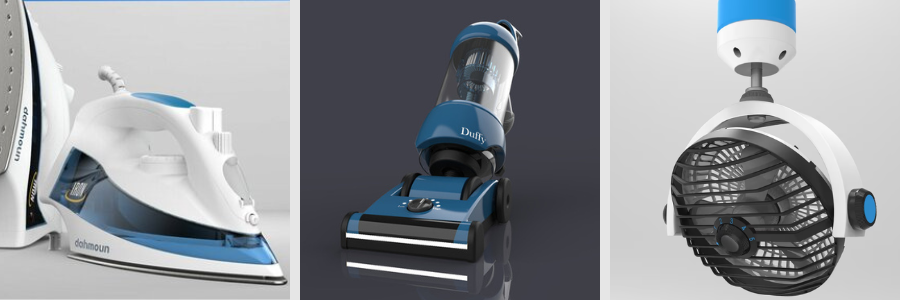
new product design services

It’s a systematic method that engineers and designers follow to develop a functional product that solves (presumably) a complex problem. This makes good sense because if the problem is anything but complex and intricate, there’s little point in spending time, money, and effort on the whole exercise. Say a toy car makes squeaky noises each time you open and close one of the doors. It doesn’t take a licensed engineer to determine that the hinges need some lubrication. When you’re talking about the engineering design process, the “identified problem” is likely a whole lot more complicated than that.

It’s worth noting that the engineering design process is often collaborative and multidisciplinary. You’ll need input from an industrial designer, a prototype fabricator, a programmer if the product is an electronic device, a market researcher, and even the manufacturer to help optimize the design for mass production. Customers might also be directly involved in beta testing and feedback generation. 

In what ways is it important?

Much of the engineering design process, no matter what specific product you want to build, revolves around four major steps: discovery, ideation, development, and optimization. One of the key elements of the entire process is iterative design. The product development team has to repeatedly re-evaluate and refine the prototype until they build a truly optimized solution. They learn from every test result and mistake in every iteration, so they adjust the approach to better suit the goals. Sometimes, and probably more often than not, this iterative loop presents one or two unexpected issues with the design.

This isn’t entirely bad, because you can then ensure the next prototype iteration won’t carry the same surprises. The engineering design process is important to product development in many ways. Everything you do across the steps outlined above contributes to product quality, budget efficiency, and your chances of commercial success after launch. Here are just a few examples of how it can help you set the course for the project.

RELATED: 7 Steps of the Engineering Design Process Used by Freelance Engineers & Companies

Decide which design approach is best

In nearly all cases, a modern-day product development project can be categorized under one of the following three approaches.

Adaptive design A great portion of your work in an adaptive design approach will be about creating an adaptation of an existing product. Still remember why the problem exists? And that there have been some attempts to offer a solution, but none have worked quite as well as expected? There are plenty of product categories in which manufacturing and engineering development have practically ceased, leaving you with hardly anything to do but make minor changes to the already-established form.
An easy example of such a product is the claw hammer, which has remained essentially the same since the 1920s, maybe even earlier. Seriously, what can you do to improve the design? Maybe you can introduce a new material or a handle with a unique ergonomic shape, but other than those, nothing really. Another example is the modern laptop, with its recognizable clamshell design developed mainly in the 1980s – 1990s. Several decades after the first PowerBook came to market, laptop design hasn’t changed much since.
The work is somewhat easy with adaptive design, mostly because you’re using an already-established basic conceptual design and only making changes wherever possible. Changes can be in the form of dimensions, power specifications, and aesthetics. But no matter what modifications you propose, the final product should not look strikingly different from the existing ones.
Development design You also start with an existing idea. However, a development design approach requires you to build a product that’s markedly different from the initial concept. We’re pleased to say that the best examples of such an approach were Nokia phones from the past. Nokia made dozens of mobile phone models, including the bar, flip, leaf-shaped, the slider, the twist, the camcorder look-alike, the gamepad aesthetic, and so on. Underneath, most of those models ran the same operating system, but the shapes were unique enough that you could easily tell them apart from miles away.
Another example could be CRT monitors, which have now been replaced by thin plasma or LED screens. Cars can also make the case for development design. The exterior might be all about aesthetics, but powertrain technology has advanced so much that you now have electric and hydrogen-fueled models. Some cars are hybrid, combining internal combustion and electric motors to power the drivetrain.
So, development design means you take an existing product and build a distinct variety based on that. This new variety has to have unique characteristics to the point where you can objectively call it “different.”
New design It’s the most difficult design approach of them all. Very few, if any, product developments are actually a new design. It takes some real ingenuity, scientific insight, great foresight, and a good chunk of imagination. Think of the invention of the wheel, the first general-purpose computer, and the Benz Patent-Motorwagen. What do you think is the latest genuinely original physical product design? It’s probably something invented decades ago, maybe centuries even. 

RELATED: How Do Engineers Evaluate Different Design Ideas?
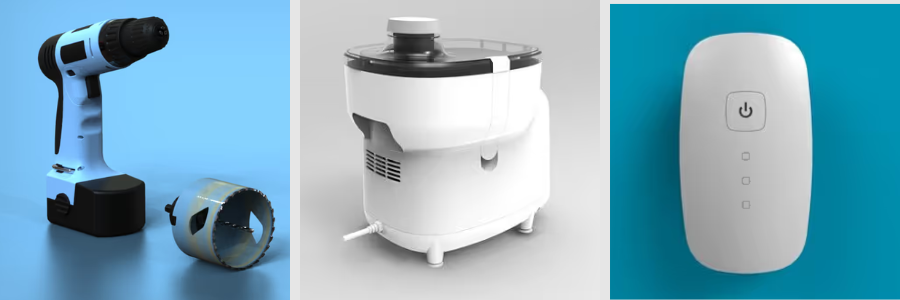
consumer product design firm

Every problem can have one or more possible solutions. And there can be different ways to develop the most efficient solution when it comes to product concept design services. For instance, you discover that the typical lawn mowers use blades that need sharpening every 20 hours or so of usage. You can either focus solely on the blade (adaptive design), create a new lawn mower model to accommodate the new blades (development), or build entirely new equipment for cutting grass (new design).

Although all the approaches share the same goals (that is, providing a more user-friendly way to cut grass and maintain a lawn mower), each has a different difficulty level, with “new design” being the most challenging. The best design approach is always the one you feel most comfortable with, both in terms of technical capabilities and budget.

Understand the competitions

Any information you can get about products similar to your idea can play a huge role in how you proceed with product development. This is not to say that you’ll end up copying some design elements. Quite the contrary, you may want to avoid having any resemblance to the competitors for both legal and technical reasons. Some companies include a “patent attorney” in the new product development team for one purpose: making sure that any part of the product idea isn’t a copy of an already patented design. This way, they don’t have to pay royalties to the patent holder.

RELATED: Top 101 Sites for Freelance Engineering Jobs, Mechanical Design Projects, & Remote Work

From a technical perspective, the information should contain a list of all the available design solutions (to the identified problem you’re trying to solve). There might be one or two competitors selling similar products. Even if your idea isn’t identical to those products, your design may come across as unoriginal. We’re not saying you won’t make a sale for that reason alone because it’s simply untrue. Case in point: smartphones. Every single one of them looks pretty much the same at a glance, and yet millions of people still rush to buy the latest fad every few months.

But that’s more like an exception than the rule, so tread with caution. For a lot of other products, however, knowledge of existing designs will prevent you from pursuing some kind of an imitation of a solution that has been attempted before. It also must have been an ineffective solution; you wouldn’t have discovered the problem in the first place. But why waste time and money making a copy? Making a unique alternative would be a better use of your creativity and resources.

Focus on the “functions”

Anybody would expect that “goals” and “functions” are basically the same, but this isn’t always the case. If the goal of a product development is, for instance, to build a safe stepladder, it only makes sense to say that the ladder in question must work or function safely. While it’s true to a certain degree, the engineering designer can make you understand that there’s a real difference between the two.

RELATED: IoT Electronic Device Design Tips for Startups Working With Electronics Engineering Companies

A goal is often stated in a general fashion. It’s the final objective, so no matter what you do in the development work, the end product has to fulfill that very purpose. At the same time, the engineering design process is all about doing experiments with all sorts of design options until you get everything right. The experiments only end when the design meets the objective. But the good thing is that it’s not a freestyle experiment in the sense that you have guardrails and constraints to keep it focused on the main goal.

Function is all about “what the product can do to make it safe” for users. And it turns out there’s a lot it can do. Say the spreaders have a locking mechanism that prevents the rails from snapping together while in use. You can also include anti-slip feet so the stepladder doesn’t move around as easily. A tool tray may seem like an add-on rather than a main feature, but it improves safety by giving users a convenient place to put their hammers and spanners. Perhaps you want to use safety handrails or rear braces for certain designs, too.

Such a technique opens the door to greater creativity, too. Referring back to our previous example of a lawnmower, the goal for a product designer is to make a more user-friendly version of the equipment with less frequent blade sharpening. If you’re stuck with designing new blades and using a peculiar onboard sharpening mechanism, you’ve practically enforced an unnecessary constraint that limits design exploration. Constraints are useful in many cases, but not when the development is still in its early phases. Keep in mind that the main function of a lawn mower is to cut grass.

Would it be possible to use non-metal blades? Does adding a string trimmer attachment make sense? The engineering design process helps you focus on functions that enable the product to meet its objectives. It converts a general statement of goals into a much more specific to-do list. If you have a particularly big team, you can probably even run a simultaneous (as opposed to sequential) design development.

RELATED: Top 32 Sites for Freelance PCB Designer Jobs & Remote Electronics Engineer Work Projects 
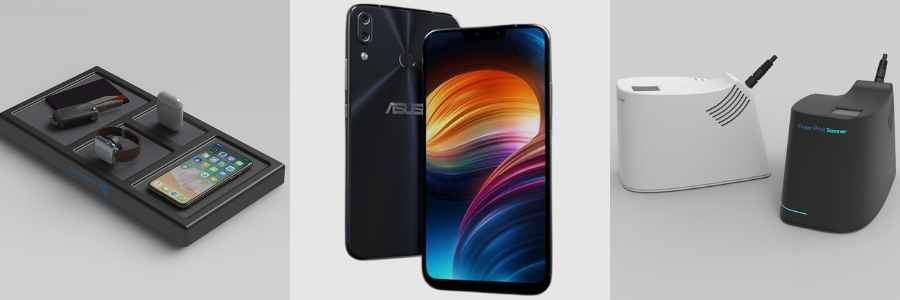
electronics design firm

Avoid disasters

Not every product development effort succeeded. In fact, many of them proved disastrous enough that the makers had to face costly consequences.

  • Remember the Concorde? The spectacular crash in 2000 led the authorities to strip the supersonic passenger plane of its airworthiness. Long story short, it’s no longer produced.
  • What about the exploding Samsung battery? Manufacturing defects caused many Galaxy Note 7 units to overheat and explode. Samsung was forced to recall the units, causing an estimated revenue loss of US$17 billion.
  • Lancia Beta, anyone? The exotic, terminally rust-prone car cost the company a fortune through a buyback program. But even after spending a tremendous sum of money, Lancia never fully recovered from the PR disaster caused by the poorly built model.

Catastrophic failures can happen for many different reasons, however, can be avoided with the help of the right design engineering firm at your side. Failures can happen due to the lack of understanding of the problem, incorrect design requirements, incomplete market research, inadequate testing and evaluation, faulty assembly, manufacturing defects, and so forth. An engineering design process, thanks to its iterative and collaborative nature, should at least minimize the risk of mistakes. This doesn’t suggest in any way that those companies failed to follow their own engineering design process. It’s just that the products were so complex, it’s possible that at some point in the development, somebody didn’t think something through and started a daisy-chain of issues.

RELATED: Key Factors to Consider When Vetting Engineering Firms for Design & Consulting Services

Closing thoughts

An engineering design process is more than just a simple checklist you need to go through in a product development project. It is a checklist, alright, but more importantly, every item on the list keeps you on the right track while giving you the freedom to be just playful enough with your creative engineering side. It’s a systematic problem-solving method used by companies everywhere to decide what to make next and how to build it as efficiently as possible.

There might be some little variations in how different design for manufacturability (DFM) companies handle the process, but for the most part, it’s fundamentally the same. They discover problems, set out to develop a solution, test it, find mistakes, go back to the drawing board, and repeat until they iron out all the details. One of the biggest differences, in fact, lies in those companies’ abilities to put the engineering design process to good use. Some companies do an excellent job at discovering problems and market research, but are terrible at prototyping and optimization. A few have what it takes to take a “new design” approach, while others are experts in adaptive design.

RELATED: Top 33 Electronic Device Design Services Companies for Engineering & Product Design Firms

How Cad Crowd can help

Very rarely is a product development firm perfect in everything, and this is where Cad Crowd comes as a balancing force. It doesn’t really matter if you’re a small 3D design firm trying to break into the market with a new product, an established company looking to bring on board specialists’ perspectives, or anything else in between; you can always count on Cad Crowd to connect you with the best talents to boost your engineering design process. With flexible hiring options, an easy project management dashboard, and a massive network of experienced professionals, it’s safe to say that you can always find qualified engineers and designers on the platform to reinforce your team. Contact us for a quote.


author avatar

MacKenzie Brown is the founder and CEO of Cad Crowd. With over 18 years of experience in launching and scaling platforms specializing in CAD services, product design, manufacturing, hardware, and software development, MacKenzie is a recognized authority in the engineering industry. Under his leadership, Cad Crowd serves esteemed clients like NASA, JPL, the U.S. Navy, and Fortune 500 companies, empowering innovators with access to high-quality design and engineering talent.

Connect with me: LinkedIn ✦ X ✦ Cad Crowd

Important Advice for A-Frame Home Design Plans When You Hire an Architectural Design Firm


If you are not yet a fan of A-frame houses, then you are in for a big surprise. For those of you who might not be familiar with it, an A-Frame house is such a sun-blessed buddy who arrives at your summer barbecue wearing hiking boots, a luau shirt, and a big smile. The buddy may spill salsa on the picnic mat, but everyone just laughs. That is what A-Frames do. They are loudly unconventional, with their big roof lines and triangular shape that tips its hat to tradition.

They’re so popular because they whisper adventure and coziness simultaneously. It is half cabin retreat, half work of art, half snuggly reading den. If your fantasy is a secluded woods retreat, a lake house, or a show-stopping main home, an A-Frame guarantees personality. But before you can do any of that, you have to let your imagination run wild like a caffeine-fueled golden retriever; you need one crucial ingredient: a good architectural design firm that can make your triangle fantasy stand up on its own without overflowing like a stack of pancakes.


🚀 Table of contents


Choose a company that is on your vibe (and does not roll its eyes at your oddball ideas)

Hiring an architectural design firm is like selecting a trail companion. You don’t want to invite one who huffs and puffs, complains about the path, and calls your pack ugly. You want one who keeps up with you, encourages your wild ideas, and quietly prevents you from falling over the edge.

A-frames are personality statements. If your pulse quickens at cabin living unadorned, you require an agency that can tap into that excitement. If in your mind’s eye your dream home is a slim black triangle with floor-to-ceiling glass perched at the end of a cliff, don’t hire a company whose portfolio includes “grandpa’s ski lodge, 1978.”

Cad Crowd is a great place to begin. The site boasts freelance CAD designers and companies from around the globe. Surfing through their portfolios is window shopping for ideas, only the windows are lined with houses cooler than anything you’ve seen last weekend on HGTV. Cad Crowd’s diversity allows you to refine your own aesthetic and generates new concepts you could have never thought of.

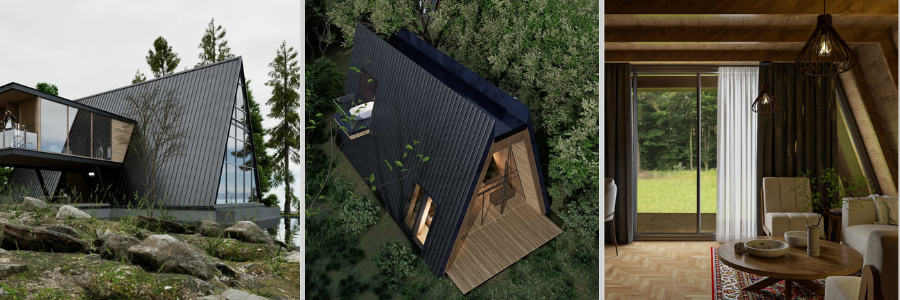
a-frame designs including interiors by Cad Crowd architectural design experts

RELATED: Strategic benefits of outsourcing architectural 3D rendering & critical scenarios for firms

Brace yourself for the budget rollercoaster

You’ve been there: browsing Pinterest, you come across an A-Frame with ginormous cathedral windows, a deck that can fit an entire rock concert, and a hot tub on the roof. You pin it and breathe, “This is the one.” Then you sit down with an architect and discover your dream build costs about as much as a small island.

An older and wiser company will assist you in reconciling your vision with economic reality. Be honest about your budget. Otherwise, the disillusionment later on will be akin to discovering your fantasy getaway is really in your cousin’s backyard kiddie pool. Architects can come up with creative substitutions: smaller windows, locally procured materials, or a deck design that can be added upon later. Such compromises save dollars without scrimping on magic.

Fun pro tip: name your budget after your pet. Naming it “The Mighty Unicorn Fund” might make the discussions easier to digest.

The location test: Where will your triangle thrive

Your A-Frame isn’t a house. It’s tied to the land that includes it. Build on a slope, and you’ll probably require sophisticated foundations. Put it in a snow-prone area, and that swooping roofline suddenly is your best friend ever, with its ability to facilitate the snow sliding off. Build on the coast, and you’ll have to factor in salt air corrosion.

Good architectural planning and design firms will also address codes and zoning regulations. There is no mood killer like finding your ideal A-Frame breaks a height limit regulation or destroys your neighbor’s view. Cad Crowd designers’ network is well-versed in local codes. Their expertise can prevent headaches, penalties, or a bad experience with the neighbor whose view you inadvertently chopped down.

A-frame living: Make it comfortable year-round

A-Frames begin as a weekend retreat, and individuals soon discover they wish they lived there year-round. To make that a possibility, your design must cover insulation, heating, and ventilation. There’s something stunning about those vaulted ceilings, but they’ll retain heat where you don’t need it and lose it when you do.

Your company may recommend radiant ground heat or Energy Star windows. Ceiling fans create air movement, and strategically placed venting ensures the entire room is comfortable. Without a professional’s planning, you’ll be sweaters-deep in January or relocate your chair halfway across the room in July to avoid the sunbeam that feels like a magnifying glass.

Light: The drama queen of your A-frame

Light can break or build your A-Frame atmosphere. Big windows overwhelm the house with light, but too much will bleach your furniture or heat up the interior. A competent architectural design firm can recommend overhangs, exterior shutters, or landscaping stunts to balance natural light.

Inside, lighting design services are more important than you realize. Slanted ceilings can make a typical chandelier an afterthought. Pendant lights on long cords, basic track lighting, or unobtrusive LED strips can fill the bill without overwhelming it. Ask your designers to duplicate smart solutions they’ve utilized previously. A clever lighting plan can turn your A-Frame into a fairy-tale cabin at dusk.

RELATED: 5 reasons to get as-built drawings for architectural design and engineering firms

Storage: The silent hero

Triangular walls are great to look at in photos, but they and furniture are not friends. Storage is the unsung hero that works behind the scenes to allow your home to be habitable. Under-stair cupboards, made-to-measure loft shelving, and multi-purpose pieces of furniture can be a savior.

Discuss openly with your design company your storage requirements. If you’re a weekend skier, biker, or board game aficionado, your house has to accommodate your lifestyle. A good company will design unobtrusive storage that hides clutter from view and makes your A-Frame appear like a clean minimalist magazine page, even though you’ve got seventeen blankets and five sets of snowshoes stored away.

Learn to love the quirks and laugh in the process

One of the joys of an A-Frame is its eccentricities. Angle walls encourage you to think creatively about where to place paintings or bookshelves. The loft bedroom can be cozy, but it necessitates the strategic placement of ladders or stairways. The dramatic steep roofline is beautiful, but it also complicates gutter cleaning.

Work with an organization that appreciates these idiosyncrasies rather than trying to battle them. Oftentimes, the answer is a one-of-a-kind piece of furniture or innovative design. Cad Crowd’s freelance architectural designers usually have worked with these quirky rooms before and can turn a constraint into a special characteristic.

Collaboration: The great design dance

Your A-Frame is a collaboration. You contribute the vision, the Pinterest dream, and the tales of that ideal cabin you experienced on a drive. The company contributes technical expertise, coding approval, and the means to avoid design catastrophes such as a front door opening into a restroom.

Hear them out. They may gently inform you that a 30-foot glass wall on the hurricane-exposed coast won’t work. The sorcery is in when both sides hear one another out. The collaboration should be a waltz, with the occasional chuckle and perhaps even the occasional spin when the design becomes reality.

Use 3D visualizations to steer clear of “Oops” moments

No one needs to look at a flat sketch and wonder how a room would be. Most companies now offer 3D plans or virtual tours. Those programs of software can expose the fact that a window would be too small, the railing in the loft is too low, or the deck would be better on the opposite side of the house.

Cad Crowd employs 3D model experts who specialize in creating stunning 3D models. Viewing your next home virtually is thrilling and can prevent costly mistakes. It is easier to adjust your ideal on-screen than to move the entire wall once construction starts.

Plan for the future, not just the weekend

A-frames never go out of style, but your life might. Perhaps you’re constructing a weekend cabin today, but someday down the road, you could use a larger common area for reunions or to rent it as a vacation rental property.

Discuss flexibility with your design company. Is a small loft usable as a future guest room? Will the foundation bear an expansion of the deck in the future? Planning ahead saves dollars and worries down the road.

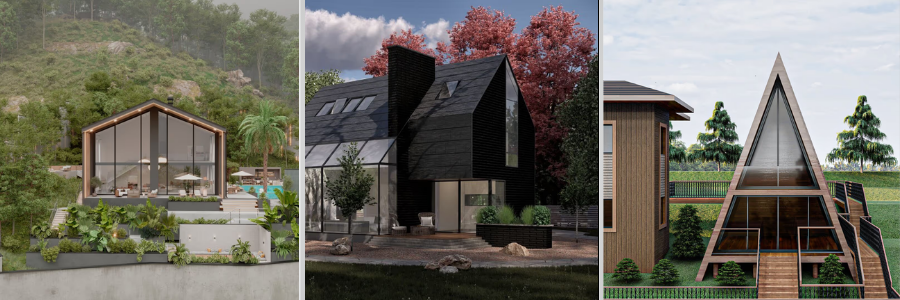
Home designs and luxurious modern a-frame homes by Cad Crowd architects and freelance experts

RELATED: How 3D rendering and animation affect construction drawing costs at CAD services firms

Personal touches make the triangle sing

The ultimate A-Frame is more than a tastefully styled dwelling. It has to be personal. Add that which is meaningful to you. Perhaps it is a front door of a rich green, which is your favorite color, or a reused window frame from your granddaddy’s barn. Perhaps it is a mural painted by a local artist or a whimsical weather vane in the shape of a fox.

By introducing these concepts early on, your architectural design and drafting firm can seamlessly integrate them. These small gestures incorporate your A-Frame from a fashionable home to turn it into a heartfelt home.

Cad Crowd: The treasure chest of talent

It is difficult to choose the right company, particularly if you are inexperienced in building a home. Cad Crowd makes it easier for you. Their platform presents you with architectural design companies and freelance professionals who understand A-Frame idiosyncrasies, budget restrictions, and innovative solutions.

You can go to portfolios, look at reviews, and even have design contests to see who has your vision. Cad Crowd’s pool of talent allows you to not be bound to local designers. You could just discover your perfect designer halfway across the globe who has your dream triangle in precisely your vision.

The joyful finish line

Constructing an A-Frame is more than a building project. It’s a process that combines imagination, functionality, and a shot of guts. You’re building a house where memories will accumulate: winter mornings curled up beside the window with coffee, summer evenings racing fireflies on the deck, and still moments when the boxy walls envelop you in a snug intimacy.

Select a company with the same level of enthusiasm, your same budget respect, and A-Frame simple joy and delight. Communicate openly, adopt 3D visualization, and expect storage, lighting, and growth. Above all, enjoy yourself. Laughter, minor mistakes, and thrilling moments of clarity are all part of the experience.

If you are willing to turn your A-Frame dream into reality, a beautiful home, seek the services of architectural design companies and freelance experts on Cad Crowd to assist you in turning your dream into reality. Your smiley triangle is worth it. Request a quote today.

author avatar

MacKenzie Brown is the founder and CEO of Cad Crowd. With over 18 years of experience in launching and scaling platforms specializing in CAD services, product design, manufacturing, hardware, and software development, MacKenzie is a recognized authority in the engineering industry. Under his leadership, Cad Crowd serves esteemed clients like NASA, JPL, the U.S. Navy, and Fortune 500 companies, empowering innovators with access to high-quality design and engineering talent.

Connect with me: LinkedIn ✦ X ✦ Cad Crowd

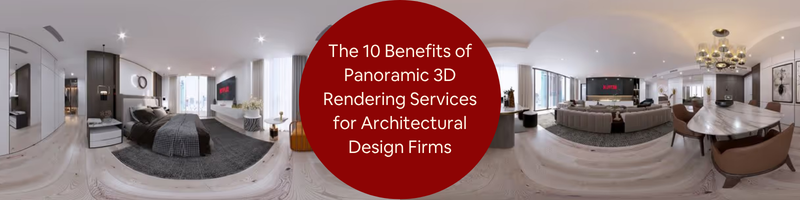
The 10 Benefits of Panoramic Rendering Services for Architectural Design Firms


In today’s post, we’re exploring the benefits of panoramic rendering services for architectural design firms. It’s so hard to understand and imagine buildings or any ideas that concern any architectural projects if we don’t see the whole picture or even its precise designs. In the past, designers relied only on drawings and standard 3D models to present their ideas and show the full picture. However, it doesn’t guarantee all the details, as it leaves clients confused and unable to recreate the exact experience from looking at it. They want to understand the space and the design, not just look at its sketch.

Benefit one: exploration through an immersive experience

Although these tools worked, yes, they lack the in-depth presentation, like how panoramic rendering services present its digital spaces to the clients. Instead of viewing a single image, clients can explore the entire environment through this, which means the design already explains itself. By placing viewers inside a creatively built digital environment, they remove the guesswork and make it easy for clients to understand every detail and view every angle at once.

The design communicates clearly on its own, making it so that architects no longer need lengthy explanations in every presentation. It helps create more confident approval and an engaging process in presenting plans and innovation to every project. Through panoramic rendering, which provides a 360-degree view, clients can explore ideas and feel more confident in their choices.

RELATED: Camera Angles in the 3D Architectural Visualization Realm for Your Projects

Benefit two: Enhancing client communication

It can be a challenge for architects or technical designers to present their ideas and projects to clients, especially when they only show drawings and models, since this doesn’t help clients understand or explore every detail. But with panoramic rendering, clients no longer need to imagine what the outcome will be after the project is done.

Through this, they will be able to experience how exactly it will look and how it feels to be there inside, since they can move through the design, look around, and understand how everything just works together. What’s nice about this is that clients are more involved, since they can try design options on their own. They can try out colors, compare materials with one another, and even move furniture inside it. Truly, the confusion can no longer find its place through this panoramic rendering.

Somehow, architects also benefit from it because once the client finally experiences its design, they can spot problems early and cannot make the production complicated since they can fix it as early as they can. It avoids costly damage and can really save time, as it also delivers quality results. Through the 3D rendering design process, everything becomes simpler and more enjoyable for everyone to feel involved in. A design that is smoothly processed from the very beginning up until the end.

Benefit Three: showcasing projects Globally

Showing design is no longer just about presenting static images, especially now that architectural firms are competing on a global level. And in presenting their projects to potential clients and investors, it’s very traditional to just bring sketches and images. Now that we are very technology-advanced, designers can no longer be limited to whom and where they provide their projects, since investors can already be found anywhere in the world.

RELATED: Learn About the Types of Architectural Rendering Services Available for Your Company

 With panoramic rendering, these 3D architectural rendering designers can present projects not only at a local scale but also reach opportunities across different countries. Virtual walkthroughs make presentations more experience-based and engaging, helping clients to easily remember every detail since they feel more involved through this interactive experience. By using panoramic renderings, firms and businesses can convey a clear message, help clients understand what they are trying to achieve, and lead them to the goal of a specific project that helps it stand out in the competitive global market today.

Benefit four: streamlining design approval

Getting designer approvals usually takes a lot of time, effort, and multiple meetings with clients and designers, providing repeated explanations and sketches, models, and digital pictures of what the project is trying to convey. But with the help of panoramic rendering, everything just becomes so easy and smoothly flowing, especially in today’s technical world. Instead of all those long meetings, clients can already imagine the project designs through this 360-degree view that allows them to explore the space and takes the confusion away. It helps make decisions easier and saves time throughout the approval process.

And even after the approval, this virtual model stays relevant since it acts as a reference for everyone that they can go back to anytime, as they can still have access to it, which makes every detail change, and they can provide updates more easily if they need to change something with it. Thus, it reduces revisions and makes the team work efficiently while keeping everything updated, and provides a smoother workflow for the entire production team.

3d interior rendering services

Benefit five: enhancing marketing and presentation materials

The best way to market any architectural designs is to provide something that will leave people interested. Traditional images and designs can only show a little look nowadays, since everything is all about creativity that exceeds our imagination. In panoramic rendering, you could go further by even feeling that you are involved in a specific design. They let potential clients see how everything goes on and make everything easy to understand, which makes it a very effective way in marketing and promoting business designs. They hooked.

People with interactive presentations that will lead them to explore more into these virtual tours, unlike those typical images and long descriptions designs. This kind of creative content from expert 3D rendering designers doesn’t just show skills, but also a modern way of innovating something that keeps up with the modern world. With the help of this strong impact, they easily win over clients who value creativity that helps their brand stand out and can help them all throughout the way.

RELATED: How to Create a Virtual Tour of Homes with 3D Rendering Services

Benefit six: reducing construction errors

A lot of construction problems in creating a project, especially in terms of the rooms or buildings that it needs, are rooted in how the details are presented. It usually comes from confusion or something that is a miscommunication between the construction team and the 3D design teams. But with the help of panoramic rendering, it saves everything and everyone their time and effort, since through this you can view the project more clearly, for it shows you a clear virtual view of every detail, materials, and a more accurate quality in every space.

The early accuracy of the project presentation helps everyone with the planning to become more solid since it guides decisions and confirms little details, as it aligns everyone to be on the same track. Trades easily coordinate their work, making it less likely to encounter risks and errors along the way of constructing it. This result is best for the construction teams, for it will result in fewer delays and better quality, and everyone will be satisfied and happy with the process.

Benefit seven: supporting sustainable design

Sustainability is very important in creating design works, and it all starts with good choices. And with the help of panoramic rendering from 3D visualization designers, architects can have better and best choices for day percentages, real conditions as to how a certain project is going to be, just like how a building reacts to real sunlight and heat. They can test window positions, materials being used, and just using a virtual space, all before the construction starts. What’s amazing about this is that it really helps everyone involved. more satisfied since it tests ideas before anything is built.

It provides a realistic explanation as to how something behaves during different weather or times of the day. It makes the choice of what specific materials to use, what windows, what shading, and if any problems arise during the process, they can be fixed early on, for everyone to save energy, time, and costs. We really can see how sustainable features can work through this advanced presentation of a project, building everyone’s trust and showing that the firm really cares about providing valuable and responsible design that values sustainability and innovation.

RELATED: Selling Homes Remotely Using VR Architectural Services to Create Virtual Tours

Benefit eight: facilitating client customization

Every client has their own style, ideas, and preferences that greatly help in the process of building the design that they have envisioned in their mind. Through panoramic rendering, they are allowed to explore and test those ideas as they move through virtual spaces in their own space. They can just choose or test colors, layouts, even materials, and then they can see how it affects the space or the room of the project that they are about to build.

What’s nice about this as well is that they have more freedom this time, but also with the fact that they are not slowing the project down. This allows both the client and 3D designers to work collaboratively. As they don’t just focus on approving images, but also provide what will make the design appropriately aligned to what they want it to be. Architects also benefit from it since they can spot problems and issues early on, before construction begins. This all makes the process smoother, faster, and more affordable, which keeps track of both budget and time.

Benefit nine: improving team collaboration

In creating big architectural projects, a lot of professionals are involved, such as designers, constructors, engineers, consultants, and it just makes everything hard to communicate with one another since everyone has their own time and ideas, though specified within their own field. And undeniably cause miscommunication that will lead to delays. But through panoramic rendering, things are easily shared by the use of visual tools for the entire team. Everyone can explore the same space together, check designs, details, and plan construction steps early on.

With a 360-degree model, these professionals can have a look at themselves, wherever they are. Engineers can have a look at the structure. The designers can see through every furniture design. The constructors can be flexibly organized. And just by the use of one clear, interactive visual view, the mistakes can be lessened, decisions can be made, and the project moves smoothly. And that’s what makes this design tool a better choice for everyone, for it’s a platform that aligns architectural design teams all throughout the project.

RELATED: Virtual Tours vs. Static Renders: Which to Use for Your Real Estate Marketing

Benefit ten: standing out in a competitive market

Architecture is undeniably a competitive industry. Providing a design that stands out from everyone else is very important. It needs your design to catch attention. It leaves an impact on potential clients. And panoramic rendering helps these professionals to turn their traditional presentations into an interactive and impressive project that provides presentations that will really leave a memorable impact on potential clients.

By the use of virtual walkthroughs from walkthroughs professionals, clients can have a more involved and stronger impression of the creative. put together, unlike the usual static images or blueprints that are handed out. Using panoramic rendering makes every project firmer and modern. It attracts talented designers and wins projects in many cases. It really is true that this technology sets firms apart, stands out, and makes them unique, as they don’t rely on methods that are already outdated and not modern.

Conclusion: embracing the future of architectural visualization

In today’s modern world, where everything keeps on advancing, especially in the world of architecture, it’s really important to keep up with its technicality in order to provide clients with high-quality and accurate project designs. Panoramic rendering is essential for these modern design projects. It is a must-have tool for every architect nowadays since it helps clients to experience these specific designs before even finally having a touch of its outcome and before deciding to build or start the construction process.

It also supports marketing and client engagement since it doesn’t just stick to the usual static images or sketches that were provided in every repeated meeting. and long descriptions that are now too boring to present to clients, especially since they usually lead to miscommunication and errors in the long run. What’s really amazing about 3D photorealistic firms using panoramic design is that it lets the clients walk through a specific room, even just virtually. It creates accurate and easy-to-understand ideas, which leaves everyone in confusion. 

RELATED: 5 Types of 3D Visualization Used by Architectural Design Firms for CGI Projects

Through panoramic rendering, clients can see the colors, layouts, materials, and furniture, and can even spot design issues early on, which could help in saving both time and money in the long run. Truly, it helps attract talented designers and freelancers. Who wants to experience what it’s like to work with a firm that does not just provide quality designs but also embraces the modern tools that are very important today?

Firms and businesses that use panoramic rendering make presentations more impressive than their competitors. It attracts more clients and skilled talents, which helps them build a strong brand reputation in every project that they undertake. Panoramic rendering technically just turns your ideas into a more experienced flow. and demonstrates innovation with technological sophistication.

You don’t just provide clients with easy-to-understand projects, but ensure that every decision is made with confidence, and you make them feel involved in every part of it as they gain a clear advantage from these realistic experiences. And actually, these renderings are more than just creating visuals. They aim to communicate the intentions of every design, ensuring to enhance every step and stage as they go through the project.

How Cad Crowd can help

From reducing errors and developing marketing materials, which ensures a clear return on investment, it is clear that the process is ongoing. For any business firms that look for the best choice in elevating their designs and attracting clients through panoramic rendering services, they can explore CAD Crowd in order to be linked to multiple skilled architectural design freelancers across the world who could technically bring their visions to life in a more interactive and high-quality project.

They will never go wrong with CAD Crowd since it leads you with clear steps with smooth communication and collaboration for a secure place in the architectural market. Through 360-degree scenes that are creatively made by these experts, you can guarantee a top-notch service all throughout the process of bringing your concepts to life. Contact us for a free quote.

author avatar

MacKenzie Brown is the founder and CEO of Cad Crowd. With over 18 years of experience in launching and scaling platforms specializing in CAD services, product design, manufacturing, hardware, and software development, MacKenzie is a recognized authority in the engineering industry. Under his leadership, Cad Crowd serves esteemed clients like NASA, JPL, the U.S. Navy, and Fortune 500 companies, empowering innovators with access to high-quality design and engineering talent.

Connect with me: LinkedIn ✦ X ✦ Cad Crowd

Reasons Why Clients Reject 3D Renderings for Architectural, Engineering & Construction Projects


In modern times, 3D rendering design services are a great way to help any client have a look at how a project will be before construction. In the industry of engineering, architecture, and construction, images play a great role since they allow for easy understanding within the process. A 3D rendering is an effective tool that lets the client view their project before construction starts. By using it, the project can be improved, and mistakes can be avoided, which could result in client satisfaction.

Before that, let me give you a scenario about it. An architect or an engineer makes a project that is in line with what the client wants to happen. Carefully plotting every design and component to make it look right. In the architect’s mind, it is already perfect as it saves the design on a render. It is a fantastic and one-of-a-kind one that makes you sigh, as it is already finished.

Yet when it is time to let the clients see it, they have a lot of revisions about the projects, making you think where all the efforts poured went. Even though the process, together with the designs and images, is explained carefully to clients, clients often do not fully accept the 3D renderings. Do you wonder how and why this happens?

The following are the most common reasons as to why it happens: 


🚀 Table of contents


The paradox of perfection

The funny thing about renderings is that the more the project seems to be perfect and the best, the more the client tends to seek more. They would want to revise, upgrade, and change every part that does not seem right for them, even choose a new photorealistic rendering service, even if all their visions are carefully rendered. Perfect 3D renderings would appear to be so perfect that in the real world, when construction begins, it would be difficult to achieve them. 

The irony of perfection in 3D renderings could be so perfect that it would lead to rejection, where it may feel impossible. Clients would want to feel that their project is something that is attainable and has a connection with them. 

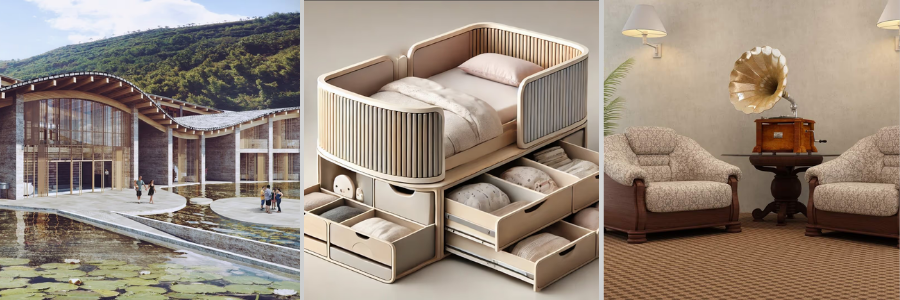
product and interior design of consumer products furniture and electronic shave by Cad Crowd freelance experts

RELATED: The power of 3D visualizations in improving construction safety and project efficiency

The client’s vision is not reflected in the design

Despite all the perfect renderings, oftentimes, clients do not easily communicate what they would want in a project. Ideas might feel like a tangled yarn that cannot be easily comprehended and is difficult to express. Although this client has a specific idea, they still fail to communicate it to the designers or experts. 

It is important that clients feel that they are seen, as they would want to make their ideas be in the process of moving forward to construction. If rendering fails to do the task, clients would be disappointed that their visions are so far from the render being made. Moreover, both the experts, such as 3D model design experts, architects, or even engineers, should meet in the middle and agree on the process together so that the expectations of clients are met. 

It lacks realism

Sometimes the usage of new technology makes things appear unreal. Even if it is a touch of a human, it may still lead to something that a client would not want to do. If the 3D renderings look fake, clients would want to reject the design because it lacks the emotion that a client would want to feel. A client would want to feel emotionally connected to even the most basic design in order to put their trust in it that it would be suitable for them.

Missing context 

Some projects or renders sometimes lack context, as they focus only on one concept. It lacks the touch of the surroundings that isolate the idea. The renders should not only focus on the building or the structure, but the touch of nature should also be included. An example of this is when a building plan is rendered, and there is no nearby building or even a tree that is being included. 

Why does missing the context one of the reasons why clients reject the renders? It is due to the fact that clients want to see how the project should fit in the real world, where nature is included, and there is an environment that fits into it. Clients prefer to view the render so that it is not a standalone building or structure. 

Poor color choices

The design of the project is a great deal, but colors play a big role in it. When a color is not suitable for the design or even for the theme that a client wants, clients automatically reject the renders, even if it is the best design that a professional could offer.  Another factor in the poor color choices is when the palette is dull or too light for the preferences of the clients, which makes the materials feel like it is unrealistic.

Colors affect the mood and perception of people. If the colors are different from what the clients would want to see, it automatically rejects the renders. Wrong colors change the entirety of the project design; thus, it is vital to have the exact hues to be used in the renders so that rejecting the render should not occasionally happen. 

Overly optimistic or unrealistic design

If the project tends to be more overpromising, which is impossible to build or something that is difficult to achieve, clients reject the renders even if the project looks good. There are certain factors that could contribute to it as to why it is unrealistic, especially for architectural design services. Such structures and designs that are impossible to make come to life in real life.

It is crucial to have a project and design that is attainable and could bring success. If the designs ignore the limitations of the real world, it will lead to difficulties. It is a must to have something that leans on the practicality rather than a design or a project that is too resource-intensive and so impossible to achieve. 

RELATED: 5 reasons to get as-built drawings for architectural design and engineering firms

Lack of functionality 

It is vital to have a project that tends to be more practical despite the beautiful designs. It is a must that the designs or the layout are utilized carefully. Such space layouts should be used so that they will not be a waste of space in the area. Planning where the windows and doors should be is also a must, as it is important to have access. In addition, unsafe design elements can be a factor, which can be a problem in the long run. 

Every client wants to have a project that is functional and can do all the work that is helpful. Clients do want a project that is designed with function and how the space will work; they do not just care about the appearance of the project. 

Ignoring client feedback

Hearing the feedback of the clients is really important because they are the key to making the renders be in the next processes. The experts should not make decisions or do any revisions without the knowledge of the clients because it could cause trouble during the process. Not only will it become a trouble, but it will also be a waste of time and resources for your architectural or engineering design firm. When clients are not heard and are ignored, they lose trust not only in the project but also in the professionals who are leading the work. 

Trust is really a big deal in the industry and in whatever the field is. When a client’s trust is compromised, the business becomes unstable. The secret to preventing project rejection is to make the clients feel heard and satisfied. It is important to value the trust given by the clients as they allow the company to thrive in the field, and they are the ones who keep the industry alive.

Slow revisions and delays

3D renderings take a lot of time; even so, with the long process, clients tend to reject the project design before it is completed. It is such a big deal to have a good project design that is also accomplished within the time frame given by the clients. There are a lot of factors that could add up to reasons why the client tends to reject the renderings given. Such a thing could not only delay the overall process. It also affects the budgeting of the project, which makes it more delayed than ever. 

Revisions should only occur once or twice, and together with the clients and the professionals in charge of the process of the project should communicate openly in order to produce effective work that shouldn’t be rejected. Resources are wasted when clients reject the 3D renderings produced by engineers, architects, and even builders. Thus, it is important to make sure everything that is associated with the renderings of the project. 

Absence of emotional influence

Clients would want to feel that they are in touch with the building or structure that they want to happen. 3D rendering experts should have a personal touch so that the client can express feelings like happiness and anticipation, find solace in the render, or occasionally look for something that inspires them. With the help of 3D renderings, clients can feel that they are at peace and at home. However, if the 3D render is too plain or does not have something that a client feels, it lacks impact for them. Clients tend not to be impressed with the work of the professionals, leading to rejection of the project. 

Clients certainly have feelings, and they take into account the emotional influence that a building or structure may have, in addition to its design. Clients consider prospective customers in addition to themselves when selecting renders.

Unpredictable style

A professional should create a project design that is consistent throughout, from the simple to the complicated. The interior and external designs should complement one another; otherwise, the clients would reject the project. Not only would it lead to confusion, but it could also create a problem that could delay the project design. It is a must that consistency happens in the different parts of the structure. It should be one. 

Clients consider a design that maintains consistency over time. CAD design professionals should keep in mind that sustaining stability and uniformity in the design process of the project is crucial to ensuring client satisfaction and preventing rejection in the 3D renderings. 

Technicality errors

Despite ensuring that every design is in line, creating 3D renderings can be a challenging procedure. Errors occur during the process, and even little ones can have a significant impact on the project’s design. These mistakes, which include incorrect parts for the component, floating objects, and mismatched texturing, frequently go unreported. Clients may notice these events, but professionals may disregard them. These clients may perceive these professionals as unprofessional and not doing their jobs.

3D rendering examples of furniture and architectural visualization by Cad Crowd freelance experts

RELATED: Design intent in CAD: Communication guidelines for CAD services firms & freelance orofessionals

Inadequate lighting or mood

Lighting sets the tone of the 3D rendering. It should match everything from designing to lights and setting the mood of the project design. The light and mood should also be oriented to the goal and the vision of the client. One instance of this is when a vision is about being in a bright place, and yet the lights set the mood in a dark setting, which is not suitable for the project. 

Clients should be able to perceive that the lights or the mood set by the professionals in the renders. Lighting and mood affect the totality of the performance of the 3D rendering. It is also able to be understood and perceived not only by the clients but also by others. 

Lack of storytelling

Aside from the emotions being brought to the structure or the building. Being able to tell a story coming from it is a big deal. Good project design or a rendering tells a story that can move and help a lot in understanding how it will be beneficial. One addition to it is the space; a good render can show how the space is being utilized, especially for interior design services, which gives an idea to others on making use of it. 

The clients should be able to see and imagine how the spaces in the building or the structure can be a good use for them. The 3D rendering should be seen where it is full of life and does not feel empty. Clients can be able to connect with the structure when it has a touch of life, whereas they may be able to reject it once it is lifeless. A lifeless structure or 3D rendering dissatisfied the clients, leading to its rejection.

How Cad Crowd helps prevent these problems

Cad Crowd is a platform that allows people in need to locate experts, professionals, and even freelancers. These also include engineers and architects who may be able to assist with completing the assigned responsibilities. They are skilled individuals with specialized knowledge and expertise. They provide excellent work that may benefit customers.

How can Cad Crowd be a help to prevent such problems that could lead to rejection of 3D renderings?

Cad Crowd has a massive pool of talent with a portfolio that clients can browse from. This portfolio enables them to identify the best artists, architects, or engineers who are a match for their project that they would want to achieve. By connecting with these experts and facilitating communication so they can comprehend the strategy, Cad Crows assists in issue-solving.

With the use of Cad Crowd, clients do not need to worry about being out of touch with nature or the environment. Professionals in Cad Crowd have a high level of expertise when it comes to problems being raised by the clients; they can solve these without taking too much time, and resources are not wasted. The outcomes are professional and really created with passion.

Crafted by the best experts in the field, companies do not need to hire an internal team that could solve these problems. Cad Crowd is the best way for professionals to be hired on a project-to-project basis. Clients can have access to skilled professionals, which can result in a project design that reduces the chances of having errors and poor quality designs that are not up to the standards of the clients. Request a quote today.

author avatar

MacKenzie Brown is the founder and CEO of Cad Crowd. With over 18 years of experience in launching and scaling platforms specializing in CAD services, product design, manufacturing, hardware, and software development, MacKenzie is a recognized authority in the engineering industry. Under his leadership, Cad Crowd serves esteemed clients like NASA, JPL, the U.S. Navy, and Fortune 500 companies, empowering innovators with access to high-quality design and engineering talent.

Connect with me: LinkedIn ✦ X ✦ Cad Crowd

Top 7 Reasons to Outsource Engineering Design Activities at Your Company for Efficiency


Why is it beneficial to outsource engineering design activities at your company to boost efficiency? Not so long ago, following the rather spectacular burst of the dot-com bubble, “outsourcing” was a pretty dirty word, associated mostly with work not very well done. We’re talking especially about online outsourcing, where businesses and companies sought help from small firms or individual engineering design freelancers they bumped into online to do specific tasks, often for ridiculously low prices.

Back in the early 2000s, you couldn’t realistically expect good quality work done through freelancing, and that’s why you weren’t supposed to outsource high-stakes jobs to complete strangers you barely knew about. Fast forward several years, and the narrative began to shift in the opposite direction to the point where today outsourcing is seen not only as an alternative method to increase productivity, but also as an essential strategy to improve efficiency. The basic tenet of outsourcing remains the same for the most part. You hire someone or a group from outside the company to handle one or more tasks for a fee.

But many things about outsourcing have changed over the last decade. Chief among these is that freelancers are no longer graduate students looking to make some money to fund their hobbies, or people seeking additional income who treat freelancing as a second job at best. Well, a good part of the freelancing world still consists of those groups, but overall, the workforce in the outsourcing environment has improved in many respects. Skillfulness and professionalism included. Many 3D engineering freelancers today are experienced specialists and experts in their respective fields.

RELATED: Why Your Business Needs Product Engineering Services to Innovate & Accelerate 

They see freelancing as a form of professional service that bypasses the typical hiring process. In other words, you don’t have to hire a freelancer as a full-time employee to tap into their expertise. Freelancers today serve almost like subcontractors. And if your company is doing business in the AEC (Architecture, Engineering, and Construction) sectors, you understand how true the statement rings. Furthermore, the sheer number and variety of professional services you can get from outsourcing are pleasantly well-rounded.

It isn’t an exaggeration to say that even if you run a one-person architectural or design company, you’ll be pleased to know that you can practically outsource the entirety of a project’s engineering tasks and activities to design engineering freelancers and still make a good profit margin. The internet is loaded with all sorts of freelancing sites, from the general one-platform-fits-all kind to the trade-specific ones. A general platform likely offers a broad range of services and certainly a large number of freelancers, simply because there’s no limit to the industries they may serve.

A trade-specific platform has a much narrower focus, and in some cases, all the freelancers can be categorized into just a handful of business sectors. As far as specialized platforms are concerned, you really can’t do much better than working with Cad Crowd. Placing a heavy emphasis on the AEC industry, Cad Crowd makes itself home to thousands of the world’s most talented engineers who offer specialized services at competitive rates. Doesn’t matter if you’re renovating homes in an urban area, constructing greenhouses in the middle of a desert, remodeling a kitchen, retrofitting an old farmhouse, building bridges to connect castles, or anything else in between. Cad Crowd always has the right professional to handle the task.

Why outsource at all?

Outsourcing doesn’t mean you’ve given up on an engineering task and decided to spend extra money to have the workload handled by someone else. It isn’t a shortcut for people who don’t have what it takes to do the jobs themselves. Should anybody tell you otherwise, let them know in a calm and humble fashion that there’s something called evaluation and approval. This means that for every outsourced engineering activity, someone from the in-house engineering design team must scrutinize the work before approving it. You’re not simply handing the responsibility over to an external party.

RELATED: Top 30 Recruiters for Electrical Engineers, Staffing Agencies, And Recruiting Companies for US Engineers

You still maintain control and have the final say about the deliverables, in terms of accuracy and overall quality. If this sounds familiar, that’s only because outsourcing is just basically the same as subcontracting. It turns out some people like to point out that the two are quite different. Help yourself, and don’t bother with any of them. The big idea of modern outsourcing goes beyond meeting every deadline. Outsourcing allows you to be flexible and always ready no matter the scope of work the next project throws at you. It gives you the chance to work faster and win more clients without rushing to expand the in-house team.

MEP expert designers

While the payroll and overhead remain largely the same, as does your sanity level, the company becomes competitive enough to play in the bigger league against the bigger names. Even if you only have a small internal team, outsourcing opens the door to a massive network of design engineering experts and specialists ready to lend their expertise, for a reasonable fee of course. In case that’s not specific or convincing enough of a reason, here are some more to get you jumping on the bandwagon.

1. Summer burnout no more

Winter and spring are usually pretty quiet seasons for AEC companies. It’s a long six-month period of nothing but light projects, mostly plumbing repairs, electrical jobs, and landscaping. Not much happens from December to March because it’s difficult to do real construction work while wearing mittens, but things should start to improve in the next three months, despite the occasional rains, in which case using an umbrella makes things cumbersome at the jobsite. Summer, however, tells a different story. The season’s long dry days relieve workers from raincoats and beanies, allowing them to focus on the construction tasks at hand while wearing reflective vests and hard hats.

Summer makes for the ideal weather where all sorts of AEC projects can thrive, from masonry and roofing to excavation and brand-new construction. From winter and spring to summer and fall, most AEC companies experience a transitional period marked by a sudden shift in workload. But this is hardly a surprise. In fact, it’s a very welcome shift of gears and is expected to happen on an annual cycle. You can handle everything just fine during the first six months of the year, and then summer comes and throws too many balls in the air.

RELATED: 15 Engineering Design Constraints that Product Design Companies & Engineering Firms Can’t Avoid

The AEC industry doesn’t get along all too well with a steady workflow. It’s either just another week of renovating a bathroom and kitchen, or a hectic schedule juggling between MEP (Mechanical, Electrical, Plumbing) system overhaul and foundation work. Your CAD engineers have to pull 60-hour weeks, get tuckered out by week three, start making mistakes, and cost you a pretty penny to fix. Outsourcing is the best way to prepare for potential summer burnout and keep everyone in the company levelheaded. Think of it as an overflow in a pool loaded with engineering tasks.

Hiring an external party to handle at least a small portion of the engineering activities can prevent your core team from drowning in an abrupt workload surge. But instead of letting the overflowing tasks fall by the wayside, you have an outsourced professional to help you get things done and keep everyone from panicking. You don’t want one of your senior engineers to get stuck on doing entry-level drafting tasks when there are actual engineering issues that can use a real engineer’s problem-solving skills. And when things are back to normal workload level, you can always scale back the headcount.

2.. An extra set of eyes

Sometimes, the most challenging engineering activity of them all is pointing out your own mistakes. For an AEC team that has been working together for years, it’s only natural for them to get too comfortable with how everyone does things. Being comfortable is good, except when they stop throwing constructive criticism at each other. For instance, a senior MEP engineer loves the Hunter’s Curve too much and has used the method for plumbing design. Everybody finds zero problem with it because it works great each time.

The problem is that Hunter’s Curve is overly conservative. It overestimates water demand even during peak use, leading to oversized pipes. It’s like building a 14-lane freeway in Wyoming. An outsourced engineer can bring fresh eyes to how things are done at your company. Because they’re not part of the groupthink, they have no problem questioning the decision to use the oversized pipes and proposing a more up-to-date calculation method.

RELATED: IoT Electronic Device Design Tips for Startups Working With Electronics Engineering Companies

3. Niche expertise on-demand

The usual take on outsourcing is that you hire a freelancer or a smaller firm to handle simpler engineering tasks on a project. It doesn’t mean your in-house engineer isn’t willing to do the job. You just want their expertise used for the more important engineering activities. For instance, in a construction project where an engineer needs to provide both the HVAC design, 3D drafting & engineering services and plumbing systems with a looming deadline ahead, you don’t want to add “administrative support” to the already demanding workload. While you still see this to be the case today, the outsourcing landscape has changed quite a bit for the better.

Many freelancers and small AEC firms are just as qualified as those working for the big companies. They’re true professionals with respectable experience, portfolios, and specialized expertise. Take, for example, BIM (Building Information Modeling). It has been a while since the industry said that BIM would soon become the be-all and end-all of modern architectural planning. Years have passed, and the truth remains that the vast majority of AEC companies in the country remain reluctant to pursue full adoption. Most small and mid-sized AEC companies don’t have a full-time BIM expert on their payroll.

electrical engineering services

Some may argue that BIM is just another CAD drafting and documentation process, but this claim could only come from people who think they only use 10% of their brains or still believe that Einstein failed math. Quite the contrary, BIM is an integral part of engineering activities in all sorts of construction projects, including the MEP portions. Just about every aspect of architectural planning, from quantity takeoffs and cost estimation to material specification and clash detection, can be neatly handled within a single BIM file thanks to the model’s data-rich nature.

BIM is all that it promises to be. You’ll also be glad to know that there are dozens of BIM software options on the market today. But finding a professional trained to use the software is another matter entirely. BIM professionals are still considered rare in the US, and as the tool becomes more sophisticated, the skill gap in the workforce widens. Small and mid-sized AEC firms might not have the funds to invest in a training program. Not every project needs BIM, indeed, and you can always turn to non-BIM 3D CAD for the simpler visualization. But that would be like playing a shooter game that’s not Call of Duty or using Bing rather than Google. You get something out of it, but still missing a lot of good stuff. 

RELATED: Top 101 Sites for Freelance Engineering Jobs, Mechanical Design Projects, & Remote Work

Thankfully, outsourcing offers an easy solution. Perhaps your in-house structural engineering team excels at designing and constructing a single-family home of any architectural style, and they’ve completed many projects in record time, even during winter. But what happens when a high-paying client comes with an offer for a residential building project? There’s just so much money involved that it would be embarrassing to say you can’t take it because the BIM part is too difficult. Like it or not, BIM is still a niche expertise in the US. And the best place to find an expert with a niche skill set is a niche freelancing platform.

Once again, Cad Crowd easily comes to mind. There might not be tens of thousands of BIM professionals on the platform, but they’re there, at least in the range of hundreds, ready to lend their talents to everyone in need. As a bonus, you get instant credibility in front of the client for the simple fact that you can comfortably punch above your weight. Outsourcing can walk you right to the front door of a high-profile project that you would normally turn down because it seems like you’re biting off more than you can chew.

4. The right people for the right jobs

Still, you don’t want a senior engineer in your team to spend hour after hour every day during a busy summer month converting a technical architectural draft into a 3D floor plan. As important as photorealistic 3D visualization services are for design presentation and client communication, little engineering know-how is required to translate a standard 2D project plan into a more eye-catching photorealistic format. This is not to say that digital artistry is a second-degree expertise in the AEC sector. 3D modeling is a specialized skill that takes years to master, and proper rendering takes an in-depth understanding of CGI wizardry.

That said, it makes sense and is appropriate for your engineers to apply their technical chops to their core responsibilities. Things like designing the structural components of a building, managing the construction process, developing plans for MEP systems, and managing the budget are more right up their alley. Don’t you know they had to go to school to learn the stuff? And remember, you hired them in the first place to take care of those.

RELATED: 7 Steps of the Engineering Design Process Used by Freelance Engineers & Companies

Much of outsourcing revolves around finding the right people for the right jobs without going through the usual tedious steps of a recruitment process. Making a high-level talent also handle entry-level responsibilities is a big waste of brainpower, and outsourcing keeps this tendency at bay, especially in small AEC firms that employ barely enough people to set up a proper division of labor. Engineers, more specifically, the senior ones, should be in charge of projects. They’re supposed to be the problem solvers, idea makers, design planners, supervisors, and leaders, not updating sheet indexes and tinkering with render settings for visualization.

5. Bigger workforce, minimum overhead

AEC business is pricey. Between office rent, software licenses, and high-end hardware to run those tools, the company’s overhead adds up to a sizable amount. Combine everything with employees’ wages in the payroll, and you come to really understand that it takes money to make money. Say you have a structural engineer as a full-time employee at the company. To keep the engineer working to their full potential, you’re paying not only their salary, but also for the tools and equipment necessary for them to do the job. In addition to the workstation and laptop they use, which cost thousands of dollars, there are software subscription fees of several hundred dollars per month.

Let’s not forget about health insurance and a 401k as well. Other recurring expenses include office utilities because they can’t work without electricity, the horrible-tasting coffee they can’t complain about, and, of course, broadband Internet for Windows updates. Hiring another full-time employee, for example, an MEP engineer, would be an invaluable addition to your company. But at the same time, you’ll be spending almost twice as much overhead as before.

HVAC engineering design services

Outsourcing also costs money, but at least the expense isn’t included in the fixed fee you pay every month. In many cases, a freelancer is happy to use their own laptop, so you don’t have to lend them one of yours. And when the project is over or the AutoCAD MEP engineering activities are finished, the overhead associated with the freelancer is no longer incurred. To put it simply, outsourcing is a way to increase your workforce size while keeping overhead at an acceptable level.

RELATED: How Do Engineers Evaluate Different Design Ideas?

6. Moving up the ladder

We’re not saying that hiring another full-time engineer or two is a bad idea. A reinforcement is always a welcome addition. New engineers bring a competitive advantage and allow you to handle bigger projects more comfortably. However, introducing new names to the payroll isn’t the solution to everything, and it doesn’t have to be the first thing to happen tomorrow morning. Scaling up a company isn’t a matter you can take lightly. It takes preparation and a whole lot of considerations to increase headcount, as it directly affects your profit margin on every project.

A professional engineering modeling designer is a qualified employee. And every skilled worker, like an expensive coffee machine, is a high-maintenance asset. An outsourced employee is, by nature, a temporary addition to the in-house team. In this case, “temporary” also means non-recurring overhead. Hiring a freelance engineer instead of a full-time one allows you to convert a fixed fee into a variable cost. During the slow months filled with snowy roads, rainy days, and smaller projects, the team has all the engineering tasks in control, and there’s no work to outsource, hence zero temporary bill.

Outsourcing affords you an easy way to scale up and down as needed. You get to keep the core team tightly small and the overhead manageable, making the company resilient and flexible in times of both downturn and upturn. For a small firm, such flexibility grants the power not to shy away from bigger projects. Even when a project appears to demand more horsepower than your core team has, outsourcing lays the path to immediate reinforcement.

7. Some relief from liability risk

We’re not just talking about reading the clauses in a terms and conditions paper, but the actual risk and liability associated with a project. No one really talks about it, so let us try to simplify the matter for you. In an AEC project, what appears to be a simple typo from the engineering drawing expert or a few millimeters misalignments in the blueprint isn’t always an honest mistake. It might be an honest mistake on your part, but the client has every right to see that as a potential lawsuit. Mistakes can lead to incorrectly sized truss beams, a fire sprinkler system that isn’t code-compliant, sewer odor due to an incorrectly installed plumbing vent pipe, or a failed home inspection that reduces property value.

RELATED: Top 32 Sites for Freelance PCB Designer Jobs & Remote Electronics Engineer Work Projects 

Errors and Omissions insurance is expensive for a reason. You can’t always slip through the cracks of those liability clauses, but if you outsource some engineering activities to an established firm (as opposed to a stranger on Facebook who claims to have done millions of similar projects), you are distributing the risk in the process. Unlike a typical handyman who always skips the T&C page and just clicks the Accept button, a reputable engineering firm, more often than not, carries its own liability insurance, backed by an internal quality-control process.

When you outsource engineering activities to such a firm, all work is covered by the firm’s insurance policies as well. Your engineers get to sleep better at night, if they sleep at all, and you’re somewhat relieved from some of the burden of potential mishaps. 

The bottom line

Engineering activities, no matter how small or trivial they may seem, hold some degree of importance to every AEC project and can definitely affect whether it’s going to be a success, finish as quickly as expected, or get stretched out to several more months because things don’t go quite as planned. Outsourcing helps ensure that every job is handled by the right person and minimizes the chances of your engineers feeling overworked, undervalued, or assigned to the wrong tasks.

Having some engineering activities outsourced to a freelancer or an external firm doesn’t necessarily mean you have an incompetent team. If anything, outsourcing can be one of the most effective ways to give your team the support they need, so they can maintain their focus on what they do best. Think of outsourcing as an affordable and surprisingly comfortable life jacket that prevents you from drowning when the tide is high and the deadline is drawing near.

RELATED: Key Factors to Consider When Vetting Engineering Firms for Design & Consulting Services

How Cad Crowd can assist

Hiring additional brainpower, albeit on a temporary basis, will keep your head above water and the project running at a steady pace without a hiccup. And as the tide recedes from the shore and things are safe, you can take off the life jacket with a great sense of relief. Whether you’re in need of an individual freelancer or an engineering firm to lend a hand and fresh perspective for a project, Cad Crowd is here to help you connect with thousands of talented engineers and experienced architectural firms from all around the world. Contact us for a free quote.

author avatar

MacKenzie Brown is the founder and CEO of Cad Crowd. With over 18 years of experience in launching and scaling platforms specializing in CAD services, product design, manufacturing, hardware, and software development, MacKenzie is a recognized authority in the engineering industry. Under his leadership, Cad Crowd serves esteemed clients like NASA, JPL, the U.S. Navy, and Fortune 500 companies, empowering innovators with access to high-quality design and engineering talent.

Connect with me: LinkedIn ✦ X ✦ Cad Crowd

Cost Comparison for Mechanical Engineering Contractors vs Full-Time Staff for AEC Firms


Architecture, engineering, and construction (AEC) firms depend on technical expertise to create intricate infrastructure projects. Mechanical engineering experts, in particular, play an important role in designing building services that guarantee efficiency, safety, and compliance with regulations. Since AEC firms can’t expect project demands to remain the same all the time, they have to decide whether to hire contractors or full-time staff. 

Understanding the real cost of both staffing models makes it easier for AEC firms to make an informed decision. This blog compares the costs of hiring mechanical engineering contractors versus full-time staff, and how freelance platforms like Cad Crowd can help AEC firms access experts when needed. 


🚀 Table of contents


What is the staffing structure in an AEC firm?

AEC firms often deal with fluctuating timelines, project workloads, and technical requirements. If you have an AEC firm, you should implement staffing strategies that will allow you to complete projects efficiently without facing major financial losses. Choosing the right staffing option is important, as your decision will help you stay competitive in a highly dynamic industry.

Mechanical engineering designs and examples by Cad Crowd expert mechanical engineers

RELATED: How innovative product design simplicity and honesty help your brand grow

Full-time mechanical engineers

AEC firms usually hire full-time mechanical engineers. They are permanent employees who are given a fixed salary and other employment benefits. Since full-time staff usually take care of several projects for extended periods, they develop a better understanding of your design standards and workflows. 

Over time, they gain an understanding relevant to your past projects, company processes, and expectations of clients. This knowledge can help improve efficiency since they don’t have to learn design standards or workflows multiple times. 

Furthermore, they can work closely with civil engineering experts, construction managers, electrical engineers, architects, and other departments in your company. Having an in-house team of professionals streamlines communication and reduces interruptions due to coordination issues.

Full-time mechanical engineers can also help with the company’s strategic growth. It’s common for companies to invest in training to improve the technical capabilities of their employees. However, having a full-time workplace involves a huge cost. 

You need to consider other expenses like retirement benefits, software licenses, payroll taxes, and health insurance. Additional costs can cause financial problems if you are dealing with fluctuating project workloads. 

Mechanical engineering contractors

Unlike a full-time employee, you can hire a contract mechanical engineer for a specific period of time or on a project basis. Contract engineers may work as freelancers through a staffing agency or engineering design consulting company. They are usually paid a fixed project fee, an hourly rate, or a daily rate. Since they work independently, contract mechanical engineers are in charge of their own professional development, benefits, insurance, and taxes. Thus, you are not required to give employee benefits. 

One of the best things about hiring a contract engineer is their flexibility. It allows you to scale your team up or down depending on the number of projects that you have. Contract engineers have specialized skills that you may not be able to get from your existing workforce. 

Some projects call for advanced technical expertise like energy modeling. Instead of hiring full-time staff with niche expertise that you may only need occasionally, you can find mechanical engineering contractors who already have the skills you need.

Furthermore, hiring contractors can help accelerate project timelines. Since they are used to working with different companies, they can quickly collaborate with your project team and start contributing immediately. This is particularly helpful when you are dealing with an increased workload and tight deadlines. 

However, you also need to keep in mind that hiring contractors has certain limitations. They need to learn about your project management tools, internal processes, or design standards before they can contribute to your projects. Since they’re not full-time employees, the insights they get during the project may not stay with your company after their contract ends. 

Operational and financial considerations for an AEC firm’s staffing structure 

The main challenge for an AEC firm is choosing which staffing structure offers the perfect balance between operational effectiveness and financial efficiency. You have to consider various factors when selecting the right staffing structure for your engineering design company.  

An AEC firm with stable workloads and long-term projects benefits from hiring full-time engineers because they can work on different phases of the project. On the other hand, firms with short-term projects can benefit from hiring mechanical engineering contractors with specialized expertise. Apart from gaining the expertise of the contractors, you don’t need to worry about long-term employment commitments. 

If you have an unpredictable project pipeline, you may find it difficult to maintain a permanent workforce. Hiring contractors allows you to keep up with fluctuating market conditions without substantial financial risk.

If you have a project that requires highly specialized skills, look for a mechanical engineering contractor with niche technical skills. However, if your project requires standard building systems, the best option is to form an in-house team. 

What are the benefits of a hybrid staffing model? 

AEC firms usually implement a hybrid staffing model to maintain a stable engineering team and gain access to external expertise anytime. By adopting a hybrid staffing model, you can hire full-time engineers who will manage the main design tasks, supervise project coordination, and maintain rapport with clients. You can hire mechanical engineering contractors to take care of specialized tasks, provide support for big projects, and add more manpower when you have a lot of projects. 

Adopting a hybrid staffing model offers many benefits. One of the best things about this setup is that it helps preserve knowledge within your mechanical engineering firm. It also allows you to respond to changing project demands accordingly. Furthermore, it helps you save money by hiring only a limited number of permanent staff and gaining access to specialized skills when needed. 

Why is it important to make the right staffing decision?  

Your staffing decision is a strategic consideration with a direct influence on the long-term success of your company. Keep in mind that labor cost is a large part of your project expenses. The wrong staffing model can reduce your competitiveness and profitability. The quality of your work has an effect on client satisfaction, project performance, and safety. Thus, you have to make sure that your strategies and decisions will not have a negative effect on your technical excellence. 

Carefully assessing the pros and cons of contractors and full-time staff allows you to create a workforce strategy that matches your project delivery requirements and financial goals. It also helps you balance technical expertise, operational flexibility, and cost efficiency to meet the needs and demands of the construction industry.

Hiring full-time mechanical engineers might seem easy. You get permanent members of your team and pay them a salary. However, the employment cost is higher than the basic pay. Apart from the wages, you need to consider other additional expenses like onboarding costs, employee benefits, human resource and administrative support, paid leave, payroll taxes, office equipment and infrastructure, vacation and professional development, and training. 

Operational overhead, for instance, may add around 25% to your employees’ salaries. Fringe benefits can contribute an additional 30%, while general and administrative expenses may add 22%. These costs, when combined, are called the cost multiplier. This cost differs for each company and type of service (i.e., civil engineering services). 

In some firms, the cost multiplier reaches 1.7 times the basic pay. So, if you are paying $120,000 annually to one mechanical engineer, it may actually cost you around $200,000 every year when you consider all expenses. Some firms underestimate these hidden costs when assessing staffing strategies.

Factors that affect the cost of full-time mechanical engineers 

There are several factors that can affect the cost of full-time staff. One of these factors is the salary. Mechanical engineers usually receive a competitive salary based on geographic location, experience, and certifications. Employee benefits are also one of the additional costs that you must consider. The usual employee benefits include life insurance, paid leave, health insurance, and a retirement plan. You also need to pay payroll taxes, employment insurance andsocial security contributions. 

Furthermore, you have to consider the costs associated with the recruitment and onboarding process. Costs may include recruitment agency and job advertising fees, interview process, and training. In some companies, the recruitment costs can take up to 20% of the staff’s yearly salary.

Full-time mechanical engineers also need access to office space, computers and workstations, IT support, and engineering software. Simulation software and other engineering tools have licensing fees, which can further increase costs. Management oversight, human resources, legal compliance, and accounting can also add to the cost of creating and hiring a full-time staff. 

Factors that affect the cost of mechanical engineering contractors

When you hire mechanical engineering contractors, you are paying for the services they render instead of a salary and benefits. They are compensated through a fixed project fee, daily rate, or hourly rate. The rates of contractors vary depending on their experience, specializationand location. For instance, a mechanical drawing contractor in Eastern Europe may have an hourly rate of $25-$70. If you hire engineers in North America, you may need to pay $100-$200 per hour. 

Since mechanical engineering contractors manage their own professional development, benefits, and insurance, they include these costs in their hourly rate. Their expenses usually include project management, contractor fees, and agency markup if they use a staffing agency. However, unlike full-time engineers, you are not required to give them long-term employment benefits, and this can help you save on costs. 

RELATED: A comprehensive guide to engineering product development services for companies & startups

Comparing the annual cost of hiring mechanical engineer contractors and full-time staff

Costs can differ depending on project requirements, geographic location, and experience level, but it’s important that you understand the financial implications of each staffing model. Let’s say a mechanical engineer earns $125,000 every year. When you hire this professional as full-time staff, you are also required to provide additional employment-related benefits aside from the basic pay. These indirect costs can increase your expenses by around 70%-100% of the basic salary.

Your cost multiplier will be 1.9. If you multiply $125,000 by 1.9, the total cost of hiring a full-time engineer becomes $237,500 a year. Thus, even if the engineer’s basic pay is $125,000, the actual cost to your company is $237,500 annually when you include all indirect costs. Now, what if you hire a contractor? 

Mechanical contractors usually charge an hourly rate that includes their own operational expenses, taxes, and benefits. If they charge $100 hourly and work 2,080 hours yearly, you will spend around $208,000 annually for hiring a contractor. So, if you want a slightly cheaper option compared to hiring a full-time engineer, you should consider hiring a contractor, even for other tasks like electrical engineering services. However, you must also take note of several factors that can affect the final cost of both staffing models. 

One important variable is the actual hours used for work. Remember that you have to pay full-time engineers regardless of the number of hours they spend working. When you don’t have a lot of projects, your staff may spend more time on administrative tasks, internal meetings, and training. 

On the other hand, mechanical engineering contractors receive payment only for the hours they spend working on a specific project. Thus, you can reduce your labor costs by limiting the number of hours that they spend on a project when your workload increases. 

  • Workload stability and project duration

Apart from the number of hours, you must also consider your workload stability and project duration. When you have a consistent project workload, hiring full-time engineers could be cheaper in the long run. They can work on multiple projects without any interruption, which can help reduce your dependence on contractors with high hourly rates. 

Mechanical engineering contractors are often ideal for short-term projects since you don’t need to worry about recruitment costs and other long-term commitments. For instance, if you need support for just three months, hiring contractors allows you to get the necessary skills and knowledge without maintaining permanent positions once the project is complete for the product design company. 

  • Productivity and retention of knowledge

Productivity and retention of knowledge can also affect your overall cost. Full-time engineers already know the requirements of your clients, your project management systems, and the design standards you implement. This knowledge can help lessen the time needed to complete tasks and enhance workflow efficiency. 

On the other hand, mechanical engineering contractors may need additional onboarding time in order to understand how the company works. This could momentarily lessen productivity at the beginning of the project. 

  • Coordination and management costs

You need to consider coordination and management costs as well. Contractors may need extra supervision and insights to make sure that their work is aligned with your project schedule, standards, and expectations. These efforts might seem small, but they still add to the actual cost of hiring contractors for your consumer product company. 

Due to these variables, you have to evaluate your staffing decision based on a more comprehensive total cost of ownership standpoint that involves both indirect and direct costs. 

At the end of the day, the best staffing decision depends on different factors like the level of expertise required, duration of projects, and predictability of the workplace. Most of the time, hiring both contractors and full-time staff can help you enjoy both operational flexibility and cost efficiency. 

Global trends in engineering outsourcing

The outsourcing market has grown significantly thanks to advances in cloud platforms, remote collaboration, and digital engineering tools. Cloud-based systems and software like CAD allow engineers to collaborate no matter where they are. Due to these technologies, a lot of engineering tasks can be done without compromising quality and accuracy.  

Thus, many AECs have started outsourcing mechanical and structural engineering service tasks to countries with lower labor costs, as it allows them to reduce project costs while gaining access to experts. Rates differ across regions due to several variables like cost of living, labor market, and economic conditions. In North America, the typical hourly rate is $100-$200, while it’s $80-$150 in Western Europe. If you’re in Eastern Europe, expect to pay around $40-$70 per hour. 

These cost differences can help you lower costs without compromising technical capability. Outsourcing poses several challenges as well. For instance, you may need to deal with cultural misunderstandings, communication barriers, and language differences. The difference in time zones can also slow down decision-making, particularly when you need to collaborate in real time. Managing a remote team also calls for a clearer communication process and a better project management system.

Regional cost comparison: Mechanical engineering contractors vs full-time staff

The table shows the usual rates charged by contractors and full-time engineers in various regions. Understanding these differences can help you plan your budget much more effectively. 

Region Staffing model Rate
North America Full-time engineer $95,000-$120,000 annually or around $45-$50hourly
Contractor $100-$200 per hour
Western Europe Full-time engineer €80,000-€110,000 annually or around $40-$50 hourly
Contractor $80-$150 hourly
Eastern Europe Full-time engineer €40,000-€60,000 annually or around $20-$30 hourly
Contractor $40-$70 hourly 
Southeast Asia Full-time engineer $20,000-$40,000 annually or around $10-$20 hourly
Contractor $25-$50 hourly 

RELATED: How to improve product development for your company with engineering firms & design consultants

Mistakes to avoid when hiring mechanical engineers

The right workforce can improve the quality of your designs and boost client satisfaction. Here are some mistakes to avoid when hiring mechanical engineers. 

  • Focusing on the price alone 

Don’t just focus on the salary or hourly rate of your staff. Controlling expenses is crucial, but choosing the cheapest option isn’t always the right choice. Those with low rates may produce designs that require revisions. They may also need more supervision and have a longer delivery time. Assess their technical skills, ability to provide quality work, and experience for your design engineering service. 

Experienced engineers may charge higher rates, but they’re often capable of completing tasks faster and working with less supervision and fewer errors. Most of the time, these advantages help reduce the overall project cost. 

  • Hiring without defining project requirements

Problems usually occur when you start the hiring process without defining your project requirements. Since mechanical engineering tasks require technical skills such as building automation, HVAC system design, and energy analysis, hiring talents who don’t match your needs will definitely affect your budget.

So, before you start hiring, you should create a comprehensive description of your project timeline and scope, expected time of delivery, and required software skills to ensure that you recruit the right engineers. 

  • Failure to consider collaboration and communication skills

Apart from technical skills, you should also consider the communication skills of your staff. Remember that mechanical engineers must work with clients, electrical engineers, architects, project managers, and civil engineers. Some companies focus only on the technical aspect and forget about communication and teamwork. 

Misunderstandings may occur when mechanical engineers can’t coordinate with other team members and communicate their insights. This could slow down the progress of your project and cause losses for the company. You should evaluate their communication skills during the interview so that you can build a team that works more effectively, especially for electronic device companies.

  • Failure to retain technical knowledge within the company

Contractors leave once the project is done. Important project knowledge may also leave with them. You can prevent this problem by implementing processes for proper documentation of project workflows, technical solutions, and design decisions. Having an organized record ensures that valuable information will be accessible for internal teams and future projects.

  • Making decisions based solely on immediate needs

Making your staffing decisions based on your immediate project needs can result in unstable workforce strategies in the long run. It’s good for solving short-term workload problems, but you should also consider both your existing and future projects when making your staffing decisions. 

The ideal approach would be hiring both full-time engineers and contractors. The latter offers flexibility when your workloads increase, while permanent staff maintain continuity and retain insights within the company. 

  • Rushed staffing decisions 

Making a quick decision might be necessary when you have deadlines to meet, but rushing the hiring process can lead to choosing applicants who are not qualified for the job. Take the time to verify their skills, review portfolios, and assess past project experiences to avoid costly mistakes. This will increase your chances of finding mechanical engineers who can effectively and efficiently contribute to your projects for your product engineering firm. 

mechanical engineering of parts and hardware by Cad Crowd mechanical engineering and design experts

RELATED: A startup guide to concept design for hardware with product design services companies

Conclusion

The best staffing model depends on various strategic and financial factors. Full-time mechanical engineers provide long-term cost efficiency, stability, and institutional knowledge for companies with stable project workloads. However, aside from the base salary, you also need to consider your administrative and overhead expenses. 

Mechanical engineering contractors offer access to niche expertise, flexibility, and rapid scalability. They may have a higher hourly rate, but they don’t have hidden employment expenses. Moreover, hiring contractors can be a cheaper option if you have short-term projects.

Overall, you must carefully analyze your workload predictability, organizational goals, project duration, and total cost structures before making a decision. If you implement a strategic staffing approach, you will be able to reduce labor costs, enhance operational efficiency, and stay competitive in your industry. 

How Cad Crowd can help

Hiring expert freelance mechanical engineers is a cost-effective option if you are aiming to improve your engineering capabilities without worrying about the costs associated with full-time hires. You will find platforms like Cad Crowd that connect AEC firms with expert mechanical engineers who specialize in CAD modeling, product development, HVAC design, and other technical services. 

Visit Cad Crowd to find experienced mechanical engineers who can help you stay competitive in the engineering industry. Request a quote today.

author avatar

MacKenzie Brown is the founder and CEO of Cad Crowd. With over 18 years of experience in launching and scaling platforms specializing in CAD services, product design, manufacturing, hardware, and software development, MacKenzie is a recognized authority in the engineering industry. Under his leadership, Cad Crowd serves esteemed clients like NASA, JPL, the U.S. Navy, and Fortune 500 companies, empowering innovators with access to high-quality design and engineering talent.

Connect with me: LinkedIn ✦ X ✦ Cad Crowd

Best 50 Platforms to Hire PCB Designers and Freelance Electronics Engineers for Startups


Electronic engineering mostly deals with the design and development of the circuitry or PCB (Printed Circuit Board) of electronic products. On the other hand, electrical engineering services is a field of study that focuses on high-voltage hardware such as transformers, switchgear, alternators, generators, and so forth. According to the U.S. Bureau of Labor Statistics, the work of electrical and electronic engineers may overlap or be at least similar to the point where they often collaborate on the same projects. And one of the overlapping points is PCB design.

This is especially common in small companies and startups, where the design and layout of PCBs are handled by only one engineer of either category. On the subject of hiring PCB designers for startups, the best sites to find the right talent for hardware projects are engineering-specialized freelancing platforms. When compared to their more generalized counterparts, these platforms have an all-around better industry know-how and freelancers vetting process to help narrow down your search from the get-go.

Among the most popular specialized platforms on the web, Cad Crowd comes out at the top of the recommended list for the sheer number of professionals in its network, flexible hiring options, IP protection services, and commendable support. A more detailed overview of both specialized and general freelancing sites where you can hire PCB designers and electrical/electronic engineers is as follows.

RELATED: Top 35 Sites to Hire Freelance PCB Designers & Remote Electronics Engineers for Companies

Specialized freelancing platforms

An obvious advantage of using specialized freelancing platforms is having an already-curated long list of available talents to choose from. Some specialized platforms cater to a broad range of engineering professions, while others focus on specific disciplines. Either way, they help narrow down your search right from the start and are more likely to deliver more accurate results. Here are some of the top engineering-specialized freelancing platforms you should consider.

Cadcrowd

1. Cad Crowd

If your project has anything to do with CAD documentation (whether technical drawings or artistic visualization) and engineering of any kind, and you need to hire a engineering design freelancer or two, you’ll be hard-pressed to find a better platform than Cad Crowd these days. It just has everything you want, from pre-vetted professionals offering their services at affordable rates and flexible hiring options like private projects and open contests, to hourly services for ongoing projects. Let’s not forget about additional features like patent filing and IP protection, among others. And as a bonus, the website is a breeze to navigate, and the sheer availability of design engineering talents you can find on the site is just about second-to-none.

Website: Cadcrowd.com

freelancermapcom

2. Freelancermap

Based out of Nuremberg, Germany, the freelancing platform focuses on four major categories: SAP, consulting and management, graphics and media, and IT architecture. You either post a project and let the professionals apply for it, or search the public freelancers’ directory using the advanced option to look for particular engineering skills, locations, languages, pay rates, and keywords. The basic membership plan is free, for which you get to submit a job offer and search the freelancer database. There’s also a business plan starting from around $100 per month, but the basic account will do for most startups.

Website: Freelancermap.com

remotive logo

3. Remotive

All freelancers registered to Remotive are tech-oriented professionals, including DevOps, software developers, data specialists, and engineers. The interface looks like a plain and simple job board, but it really is as specialized as they come. You can’t search for candidates directly. Instead, you need to post a project and have the platform distribute it to multiple public channels in the hope of getting greater exposure. Remotive says every project is forwarded to its LinkedIn page (the platform has over 450,000 followers, so that’s good), X profile (26,000 followers), and private Slack Community (2,500 members). A single job post costs $299, with which the project remains active for a month.

Website: Remotive.com

Joiner Services

4. Joiner Services

In case you want your freelancer to focus solely on your PCB design and electronic engineering tasks throughout the duration of the project, Joiner Services can be the ideal platform to hunt for the right talent. Joiner Services positions itself as a place where businesses and clients can connect directly with self-employed engineering contractors. The service page for electrical engineering lists specialized skills such as PCB design, product design and development designers, electrical layout and design schematics, test equipment, energy conservation, cost calculation, and more.

Website: Joinerservices.io

RELATED: How Much Does PCB Assembly Cost? 5 Expert Tips to Reduce Rates and Pricing for Design Companies

Taskerplatformcom logo

5. Tasker

A talent-marketplace platform, Tasker caters to a broad range of electrical and electronic engineering skills, including process automation, simulation and analysis, PCB design, feasibility study, technical documentation, mechanical CAD drawings, and project management, among others. Using the platform to post a project is free, but you can’t have direct access to a candidate database. Instead, the platform recommends a short list of engineers considered ideal for the project and the associated cost. There will be no additional fee outside the task price.

Website: Taskerplatform.com

Dice logo

6. Dice

A job for tech professionals, Dice offers you access to talents with qualifications in data science, hardware engineering, software engineering, cybersecurity, and IT management. It currently has more than 3.6 million candidates in the database, and 99% of the profiles include detailed information about their skills, locations, resumes, job titles, and email addresses. Dice says that about 4 in 10 members aren’t found on any general freelancing site. A single job post on Dice costs $399. Subscription fee starts at $415 per month.

Website: Dice.com

Malt logo

7. Malt

A leading freelancing platform in Europe, Malt maintains a presence in Belgium, France, Germany, the Netherlands, Switzerland, the Nordics, the United Kingdom, and the United Arab Emirates. It specializes in the technology industry, connecting clients from startups to international corporations with expert freelancers and executive consultants of various backgrounds. You can either post a job or browse through the database of freelancers to discover the electrical/electronic engineering talents you need. Posting a job is free, but Malt takes a commission (between 10% to 15%) of the project budget if you decide to hire a talent from the platform.

Website: Malt.com

Engineering job boards

One of the biggest differences between freelancing sites and job boards is the interaction between the clients and the job seekers. While this isn’t true for all platforms, most job boards tend to avoid getting involved with project management and communication. With these engineering-focused job boards, however, at least there’s an assurance about the freelancers’ fields of specialization and skill sets. 

Nexxt

8. Nexxt

In short, Nexxt is a multichannel candidate search and job advertising platform with a promising set of features designed for small businesses and startups alike. Nexxt maintains a network of active job boards (each for a specific job category), and it forwards the job post to the relevant partner site on behalf of the clients. For example, most (if not all) of the engineering projects are distributed to TechCareers, a job board for the tech sector, including electronic engineering and PCB design. Nexxt offers premium features such as candidate search, email newsletters, text messaging broadcasts, and custom web pages; all of these features are run as targeted campaigns.

Website: Hiring.nexxt.com

RELATED: Top 51 Websites to Hire Freelance Eagle PCB Designers & CAD Engineers for Electronics Design

Technojobs logo

9. Technojobs

A leading talent recruitment platform in the UK with more than 20 years of experience in the business, Technojobs offers instant access to a CV database of over 200,000 qualified freelancers specializing in IT and tech sectors. It also claims to add around 9,000 fresh CVs every month. Registered employers can target specific niche skills or locations, receive updates of new CVs relevant to the projects, and bulk message potential candidates. Technojobs doesn’t appear to be a free platform, as it offers a “CV database demo,” indicating that there’s a premium option for clients. Pricing information is unclear. 

Website: Technojobs.co.uk

Electronics Weekly

10. Electronics Weekly Jobs

Another UK-based premium job board, Electronics Weekly Jobs, is even more specific about the tech sector it serves. The platform is a place for job seekers to discover employment opportunities in the electronics industry, and nothing else. It says to post only the best range of electronic jobs and career advice for professionals, which makes sense considering the fact that a single job post costs £599 (around $800). At that price, the job post remains active on the site for 28 days, and you get to manage the incoming applications online. It also provides bespoke recruitment solutions. 

Website: Electronicsweekly.com

engineeringjobsnet logo

11. Engineering Jobs

In terms of features and functionality, Engineering Jobs is similar to Technojobs. However, the former covers a much broader engineering skill set in the talent database, and most of the electronics design freelancers are based in the United States. Engineering Jobs is neither a staffing firm nor an employment agency; it’s simply an online space where clients can post their engineering projects and freelancers can apply for jobs. Clients can choose to receive applications via email or route the applications to an ATS. A single job post on the platform costs $199, for which the project remains active for 60 days. 

Website: Engineeringjobs.net

IEEE Jobs

12. IEEE Job Site

When it comes to specialized job boards for engineering projects, it’s surprising how IEEE Job Site still somehow isn’t as frequently mentioned as the alternatives all across the web. In case you haven’t noticed, IEEE (Institute of Electrical and Electronics Engineers) is among the largest and most popular international organizations for electrical and electronics engineering. The job site should be packed with both young and experienced engineers eager to contribute to new, exciting projects. It’s a premium platform; each job post costs $299 with a lot of optional upgrades to increase exposure.

Website: Jobs.ieee.org

NSPE

13. NSPE Career Center

It’s a job board run and maintained by the NSPE (National Society of Professional Engineers). And by “professional,” it means licensed. NSPE Career Center is therefore an excellent resource for professional engineering employment, a place for clients to post projects and for job seekers to discover the next career opportunities. As far as job boards go, the Career Center is ideally sitting up there in terms of popularity with IEEE Job Site, although in reality, both aren’t as widely known as they should be to small businesses and startups alike. Career Center offers more than 3,600 searchable engineers’ resumes. The platform caters to all engineering specialties, but there’s always a filtering option to narrow down your search. Posting a job to the Career Center costs $350 for members, or $425 for non-members.

Website: Nspe.org

RELATED: Best 31 Sites to Hire Freelance KiCAD Designers & PCB Electronics Engineers for Companies

iHire engineering logo

14. iHireEngineering

A platform built to be a space for employers to find engineering design talent, iHireEngineering boasts a massive network of candidates with diverse engineering specialties. The platform claims to maintain a database containing more than 410,000 engineers’ resumes, and over half of them are active job seekers. Nearly all candidates have college degrees and at least 1 year of work experience. Again, the platform covers a broad scope of engineering disciplines, so use the filtering options to find the qualifications relevant to your electronic and PCB design projects. A slot of a job post on iHireEngineering costs $369 per month.

Website: Ihireengineering.com

AISES

15. AISES Career Hub

The idea behind AISES (American Indian Science and Engineering Society) is to promote an increased representation of the indigenous people of North America and the Pacific Islands in STEM (Science, Technology, Engineering, and Math) careers and studies. It’s a nonprofit organization with a built-in job board, called Career Hub, on the website. You can post a project to the hub for $249, and the platform offers various updates to gain access to additional features such as a resume database and targeted email campaigns. 

Website: Careers.aises.org

Tech Jobs For Good

16. Tech Jobs for Good

While the platform doesn’t say anything about electrical/electronic engineering and PCB design, Tech Jobs for Good has at least two relevant categories: Design and Hardware Engineering. Tech Jobs for Good says it has around 260,000 annual job seekers with an average work experience of 7 years. More than half of the job seekers registered on the site are women. The vast majority of the job seekers visiting the platform are based in the United States, yet they’re open to remote roles. A standard job post costs $195, and registered clients are granted access to the candidate database.

Website: Techjobsforgood.com

Engineers Australia logo

17. Engineers Australia

Home to more than 40,000 engineering students and recent graduates, Engineers Australia makes for an ideal place for startups to look for fresh, junior, and relatively affordable PCB design talent from the continent. In Australia itself, it’s a popular platform for companies to fill internship positions and graduate programs. If you’re based in the United States (or anywhere else for that matter) but willing to hire relatively inexperienced remote freelancers for your electronic and PCB design project, Engineers Australia is an excellent platform to attract the right candidates. You can post a job to the platform through Prosple.

Website: Engineersaustralia.org.au

Online engineering communities

It’s a good thing that many online engineering communities host not only industry news, general discussions about the field of study, project ideas, and current trends in the profession, but also job boards maintained by and for members. Job boards within online forums are often free. Some examples are listed below.

Allaboutcircuits

18. All About Circuits

Neither a full-on job board nor a freelancing platform, All About Circuits is an independent online forum for electrical and electronic engineers. It’s a pretty busy platform loaded with discussions about hardware design, test equipment database, embedded software, programming, etc. You can also find an educational podcast channel and video lessons on the site. Under the “community” section of the forum, there’s a job and career advising thread where you can start a discussion about your project and find a potential hiring opportunity. 

Website: Allaboutcircuits.com

RELATED: Best 49 Sites to Hire Altium Designers & Freelance Engineers for Electronics PCB Engineering

EDAboard

19. EDAboard

Another online forum that hosts discussions about all things electronics, EDAboard also has a dedicated section for employers to post freelancing opportunities. Because the forum focuses on Electronic Design Automation (sometimes referred to as ECAD or electronic computer-aided design), every job post about electronic engineering or PCB design projects on the site will almost definitely gain exposure from the right audience. There’s no member and jobseeker vetting process here, so it pays to practice due diligence, such as checking the candidates’ profiles on the site and asking for sample works before hiring. 

Website: Edaboard.com

Upverter

20. Upverter Community – Jobs

A lot of online communities fly under the radar in the freelancing world. Most manufacturing companies, including small businesses and startups, tend to search for talent in general job boards or freelance marketplaces without realizing that thousands of viable candidates find a home in specialized online forums scattered all over the web. The Upverter Community, an online forum for hardware electronics discussion, is no different. The job section isn’t the busiest in the world with new postings every day, but it doesn’t change the fact that your project will be displayed right in front of the ideal crowd here. This is a targeted job posting done in the most practical fashion. Also, the forum mentions that the job section prefers projects by startups.

Website: Forum.upverter.com

EEVblog

21. EEVBlog Electronics Community Forum

Probably best known for its YouTube channel, the EEVBlog maintains a strong online presence through its electronics community forum. You’ll find two employment-related sections: “Jobs” and “Work Wanted” as you scroll down the homepage to the General category. The forum makes clear that it prefers job postings from direct employers. Commercial companies are also welcome, but it won’t accept any talent-scouting posts from recruitment agencies. You can also browse members’ profiles in the Work Wanted section to search for potential candidates. Again, no companies are allowed to offer services here.

Website: Eevblog.com

Ennomotive

22. Ennomotive

Essentially a crowdsourcing platform, Ennomotive allows you to post a project as an open challenge. You can offer a reward in the form of either monetary or a collaboration agreement to any member who solves technical issues or proposes the most viable solution for the project. The platform claims to have on its back a large network of more than 25,000 professionals and startups, all specializing in IoT innovations and mechanical engineering. It’s not a direct hiring platform, but you can use the “open challenge” feature as an effective talent-finding tool. 

Website: Ennomotive.com

hackaday logo

23. Hackaday

There are many things in common between Ennomotive and Hackaday. Both are online communities for 3D engineering professionals and enthusiasts, allowing every member to share a project and invite others to collaborate. Hackaday maintains that the platform is meant to be a repository of open hardware (mostly electronics) projects. The open nature of the platform might not be ideal if you’re posting a project or innovation concepts that are supposed to be proprietary IP, but you can always submit a test challenge to see if any member makes for a potential freelance hire.

Website: Hackaday.io

RELATED: Top 32 Sites for Freelance PCB Designer Jobs & Remote Electronics Engineer Work Projects

Make Projects

24. Make:Projects

Another open, crowdsource-based platform, Make:Projects, welcomes every hardware engineer out there to share ideas for innovations and suggest solutions to technical issues for other members. The platform has direct messaging features and group chat to facilitate easy communication. Since it operates in more or less the same way as either Ennomotive or Hackaday, you can use it as a hunting ground for the freelance electronic engineering talents you need. Make:Projects is the brainchild of the collaboration betweenProjectBoard and Make: Community.

Website: Makeprojects.com

Fedevel

25. Fedevel Forum

The main site of Fedevel is designed to be an educational platform that bridges the gap between electrical engineering knowledge and real-life problems commonly encountered in embedded systems. It features courses and resources in various categories, including PCB design and layout designers, homemade electronic products, circuit simulation, etc. The forum section of Fedevel hosts a “Jobs” category, where clients can post job openings and freelancers can sell their skills and services. You’ll also find tips, career advice, and general discussion about talent hunting in the category. 

Website: Fedevel.com

General job boards

Although there may be some differences in features and user interface, most job boards work more or less the same way. Clients can post projects with specific requirements, and freelancers send job applications through the platforms. Some job boards allow freelancers to apply directly to the employers’ emails. Among the most popular general job boards on the web are as follows.

Working Nomads logo

26. Working Nomads

A single job post on Working Nomads costs $199. It also offers volume discounts if you need to post three or more projects. Every job post is distributed to the platform’s network of social channels, including the LinkedIn profile and 55,000 active email subscribers. Working Nomads claims to attract an estimated 3 million visitors to the site per year. There’s no freelancer vetting process, and because this isn’t a specialized job board for electronic engineers, the responsibility to screen the applicants falls on the clients themselves. 

Website: Workingnomads.com

remotive logo

27. Remotive

With a bold claim of being the only remote-focused global job board for tech startups, Remotive is certainly worth a look in your search for an electronics engineer and PCB design professional. While the freelancers on the site can browse for jobs at no cost at all, employers can’t enjoy the luxury of using a search function to find relevant candidates. But you can post a job, which costs $299, for which the post will stay active on the site for a month. There are multiple optional upgrades to boost job visibility.

Website: Remotive.com

Weworkremotely

28. We Work Remotely (WWR)

The base price for listing a job on We Work Remotely is $299 per month. Similar to Remotive, WWR also offers various upgrades to help your post gain greater visibility on both the main site and the distribution partners’ pages. Much like all other general job boards out there, WWR doesn’t prioritize any specific profession, educational background, location, or experience. It’s just a simple, straightforward platform where you can post a job and receive applications from interested freelancers in your email inbox. We Work Remotely says every job post is reviewed by a real human instead of a bot, and the applicants are filtered according to your job requirements manually as well.

Website: Weworkremotely.com

RELATED: Cost to Design a New Electronic Product, Develop PCB Hardware & Prototype Rates at Firms

RemoteOK logo

29. Remote OK

There doesn’t seem to be any striking difference between Remote OK and We Work Remotely in terms of features and how the systems work on the platforms. Remote OK appears to aggregate job postings from various sites across the web, compiling them together for freelancers to see. On the client’s side, a single standard job post costs $269, and there are plenty of optional upgrades such as displaying your company logo, email campaign, auto talent matching, geo-lock, and more. The homepage says the platform is frequented by more than 3 million remote workers on a monthly basis.

Website: Remoteok.com

FlexJobs logo

30. FlexJobs

If many of the alternatives charge you a fee for every single job post, FlexJobs offers a membership starting at $199 per month, for which you have an unlimited number of job ad inventory, unlimited resume searches, and an easy ATS integration. The account comes with a 7-day refund policy in case your search turns out to be fruitless on the platform. The good thing is that you don’t actually have to purchase the monthly subscription for your first five job postings. FlexJobs is neatly integrated with its sister site Remote.co, meaning your job post will be displayed on the two platforms for additional exposure.

Website: Flexjobs.com

SimplyHired logo

31. SimplyHired / Indeed

Primarily a job search platform built for freelancers, SimplyHired handles its job postings from clients through the Indeed website. Free job posting on Indeed gives you standard visibility, although the site doesn’t really specify what “standard” is. The premium option is called “Sponsored Jobs” with flexible pricing starting at $5 per day to a minimum monthly budget of $150. Keep in mind that it can get expensive because the total fee is calculated from the number of clicks you get. At the same time, the pay-per-click means you only have to pay for every potential candidate visiting your post. 

Websites: Simplyhired.com / Indeed.com

ZipRecruiter Logo

32. ZipRecruiter

You have three employer account plan options on ZipRecruiter: Standard, Premium, and Pro. But no matter which plan you purchase, it comes with flexible daily per-job pricing or a monthly subscription. There’s also a free trial, and you get to make your first job post free of charge. The platform is known for its broad partnerships with dozens of job boards, smart AI matching technology, and a mobile-friendly interface. Your job post will be broadcast to more than 100 partner sites, and you can attach screening questions to filter the candidates from the start. 

Website: Ziprecruiter.com

Glassdoor

33. Glassdoor

It wouldn’t be entirely accurate to say that Glassdoor is a mere job board for employers. The platform is a place where you can promote your companies (instead of projects) to 3D design freelancers and job seekers worldwide with a range of profile-building features. Only when you purchase the premium account do the features to sponsor open jobs become available. These features include premium branded content and advanced insights into job seekers. In short, Glassdoor offers not only an advanced platform to attract freelancers but also an assortment of effective tools to gain insight into the workforce landscape and broadcast your profile to millions of job seekers.

Website: Glassdoor.com

RELATED: Hiring the Best Electrical Engineers & Freelance PCB Designers

General freelancing platforms

Everybody from any educational background and level of experience is welcome. Many general freelancing platforms have low barriers to entry, but a select few implement stricter requirements in the hope of maintaining a high standard of quality for clients. And this is usually reflected in the average pay rate of the freelancers registered to the platforms, as in, you’ll often see high rates from those in the latter category. Some of the most popular options are listed below.

kolabtree logo

34. Kolabtree

What makes Kolabtree a unique proposition as a talent marketplace is that it provides a platform for companies and small businesses alike to hire expert freelancers for short-term projects. The phrase “expert freelancers” in this case refers to certified professionals with a doctorate degree and published research. Kolabtree focuses on such fields of study as healthcare, food & beverage, microbiology, and biotechnology. That said, small businesses are provided with an option to request a specific service not explicitly mentioned on the site, or they can just use the search feature to look for PhD freelancers with the right skills, like electronic engineering or PCB assembly professionals.

Website: Kolabtree.com

LinkedIn logo initial

35. LinkedIn Talent Solutions

Setting itself apart by framing its presence as a professional networking platform, LinkedIn is a busy place frequented by startups, small businesses, large corporations, recruitment agencies, and self-employed professionals. The platform offers a lot of features, both free and premium, for employers to post job opportunities and find talent from any background. For example, the LinkedIn Recruiter feature gives you access to a candidate database with advanced filtering options and intelligent matching. There’s also LinkedIn Jobs, with which you can post jobs and target them only at relevant members. LinkedIn says that a premium job post receives 3x the number of qualified applicants compared to the free option.

Website: Linkedin.com/talentsolutions

workhoppers logo

36. Workhoppers

It’s interesting how Workhoppers says that the talent and job matching algorithm in the platform is built like a dating site with a semantic approach to rank candidates. And the result is a lower likelihood of irrelevant freelancers applying to your job post. Every job post on Workhoppers is broadcast to more than 100 partner job boards and through social media. It’s a premium job site, but currently the employer registration process is handled by freelance.ca and freelance.jobs websites, where basic membership is free.

Website: Workhoppers.com

peopleperhour logo

37. PeoplePerHour

Based in the United Kingdom but with a user base spread across more than 100 countries, PeoplePerHour is one of the better-known general freelancing platforms out there on the interweb. The platform promises that every single freelancer registered to the site has been manually reviewed and approved, but the talent matching service is almost entirely done by AI for efficiency. Posting a job is free, although the platform takes a commission from every project completed through its freelance hiring system.

Website: Peopleperhour.com

Guru logo

38. Guru

Using the freelance search feature on Guru for “electrical engineering” delivers nearly 56,000 relevant candidates, whereas PCB Design gives slightly more than 3,600 profiles. For a general freelancing platform, those are pretty respectable results. You can’t directly hire design engineering freelancers from the search results, but you’re allowed to request a quote from them and approve the proposals afterward. Posting a job on the platform is free.

Website: Guru.com

RELATED: PCB Design Engineering Rates, Costs & Freelance Service Prices for New Company Products

toptal

39. Toptal

Fewer than 3% of all the thousands of freelancers registering with Toptal every month are accepted. This particular general freelancing platform is known for its rigorous vetting and approval processes, which include not only skill assessment but also test projects. Toptal also handles the administrative tasks typically associated with hiring, such as contracts and insurance. It’s a high-premium platform suitable for established companies or at least well-funded startups. 

Website: Toptal.com

Freelancer

40. Freelancer

The platform is popular for its competitive environment, where CAD design freelancers apply for jobs by submitting proposals to outbid competitors. It’s easy to browse freelancers’ profiles by skills or location, and then hire them directly or invite them to place bids for your project. There’s also a crowdsourcing feature through a contest, with which you challenge the freelancers to submit their best works and give a financial reward to the winning deliverable.

Website: Freelancer.com

wellfound logo

41. Wellfound

All the talent-matching process in Wellfound is handled by its proprietary AI system. The platform claims to have more than 10 million talents across a broad range of industries, and all of them are startup-oriented. The basic account is free, for which you get an infinite number of job postings and a lightweight ATS tool to streamline the talent-finding work. Premium accounts are also available for expanded reach and additional management tools, starting from $149 per month.

Website: Wellfound.com

Truelancer logo

42. Truelancer

There’s no way to hire freelancers directly on Truelancer. You have to post a project, review proposals from applicants, and select a freelancer you think is most qualified for the project. While it’s possible to search for freelancers based on their skills, you still have to invite them first to apply for the job before hiring. Truelancer only does a limited vetting process, so you should always check the CAD engineering applicants’ profiles carefully by reading reviews, verifying their credentials, and taking a closer look at their work samples.

Website: Truelancer.com

jooble logo

43. Jooble

Direct job posting on Jooble is available only in select countries, including France, Italy, Sweden, Poland, the Netherlands, and a few others in Asian and South American countries. In the United States, however, the feature isn’t available. One way to get around the limitation is to submit a link to the actual job post and let Jooble index it on your behalf. It’s free, and since Jooble is a global partner of LinkedIn and Google, it’s a practical way to increase exposure to your project, website, and talent search.

Website: Jooble.org

RELATED: The Future of Electronic Design Engineering: Innovations and Trends for CAD Services Companies

Monster logo

44. Monster

When you post a job to Monster, it gets distributed to the CareerBuilder website and other job boards within the platform’s partner network. Monster gives you access to millions of skilled freelancers and an intuitive dashboard to help you connect with the candidates and manage the incoming applications. Pricing is pretty flexible, as you can choose between a pay-as-you-go rate starting at $18 per day or a subscription model from $299 per month.

Website: Hiring.monster.com

Adzuna

45. Adzuna

Acting more like a recruitment agency than a freelancing platform, Adzuna makes sure you utilize all the available online campaign channels to make sure your project gets as much exposure as it takes to pinpoint the ideal candidate. In addition to the social media sourcing to speed up the search process, it also employs a talent matching tool to connect with both passive and active candidates. Adzuna says the system can cut application processing time by 50% and attract more candidates.

Website: Adzuna.com

expert360 logo

46. Expert360 Remote Talent

For every 10 freelancers registering for Expert360, only 1 makes the cut. This is probably why the platform refers to the 3D design freelancers in its database as “experts.” All of them are based in Australia and New Zealand. Expert360 offers an easy-to-use job posting feature, where you get to ask seven questions to determine the candidate requirements and receive no more than two applicants (for efficiency) considered ideal to fill the role in under 48 hours.

Website: Expert360.com

braintrust logo

47. Braintrust

Every employer account in Braintrust is granted access to a database of more than a million talents from over 150 countries. It also includes multiple ATS integrations with candidate scorecards, recommendations, and feedback. Brainstrust is a non-profit entity; that said, there’s a 15% commission (or “success rate” as the platform calls it) billed to the client calculated from the invoice generated by your project. All the talent matching processes in Braintrust are done by AI. 

Website: Usebraintrust.com

hubstaff talent logo

48. Hubstaff Talent

You can browse freelancers in Hubstaff Talent and invite (hire) them to work on your project. Freelancers set their own rates, and the platform charges zero additional markups or extra fees. Hubstaff Talent user interface is a breeze to navigate. You enter relevant keywords into the search bar and filter the results based on skills, availability, pay rates, languages, years of experience, and even age. Posting a job is free.

Website: Hubstafftalent.net

RELATED: How Much Does It Cost to Outsource PCB Design Services & Electronics Engineering Complete Prices for Companies

Upwork-logo

49. Upwork

One of the largest talent marketplaces, Upwork, comes with more than 70 different skill categories and a plethora of project management tools, including milestone-based payments and a work diary for hourly projects. You can post projects and wait for the bids to come in, or skip that process and purchase ready-made project packages directly from the engineering services freelancers. Upwork isn’t free. Its “marketplace” account comes with a 5% service fee, for which you get 30 job invites and project tracking tools. The “Business Plus” tier, where you have access to the pre-screened top talents, costs a 10% service fee.

Website: Upwork.com

fiverr logo

50. Fiverr

In some respects, Fiverr is similar to Hubstaff Talent. Both platforms offer to skip the entire “post a project” step, and instead take you directly to the talent marketplace so you can browse the freelancers, review their profiles, and communicate with them directly on the platform via the messaging feature. Every freelancer offers a project package, but you’re allowed to ask them to make a custom offer based on what you need.

Website: Fiverr.com

Why Cad Crowd is your best choice

Most general freelancing sites and job boards likely have the talents you need for PCB design and electronic engineering projects. However, as the job description gets more specific, you have better chances of finding the right freelancers for the job through specialized platforms. It is for this reason that Cad Crowd sits at the top of the recommended list; not only does it offer easy access to an extensive database of pre-screened freelancers, but it also categorizes their skills and experience.

Cad Crowd helps remove a lot of guesswork typically associated with talent-finding tasks by giving you highly-specific information about each freelancer’s technical abilities in their respective fields of expertise, whether electrical/electronic engineering and PCB design or any other engineering subdiscipline. Contact us for a free quote.

author avatar

MacKenzie Brown is the founder and CEO of Cad Crowd. With over 18 years of experience in launching and scaling platforms specializing in CAD services, product design, manufacturing, hardware, and software development, MacKenzie is a recognized authority in the engineering industry. Under his leadership, Cad Crowd serves esteemed clients like NASA, JPL, the U.S. Navy, and Fortune 500 companies, empowering innovators with access to high-quality design and engineering talent.

Connect with me: LinkedIn ✦ X ✦ Cad Crowd

How Design for Manufacturability (DFM) Services Help with New Product Design at Your Startup


Launching a new product isn’t just all colors and excitement; it also comes with a lot of potential risks, especially for startups. Turning every idea into a manufacturable product can really be full of challenges, as every design choice makes a huge difference throughout the process. In fact, there are a lot of businesses that give more emphasis only on the aesthetic side of the product rather than ensuring how efficient it is to be manufactured at scale.

This is why design for manufacturability services play a very significant role, as they make the process easier by saving time, energy, and money without compromising the product quality. It is indeed helpful for businesses, especially for startups with limited budgets, but that want to create something profitable in the market. A lot of growing companies rely on DFM professionals, and it is really best for beginners to apply in order to strengthen their product development. Cad Crowd really helps in providing skilled professionals with strong experience who are guaranteed to contribute to launching products that will scale successfully.


🚀 Table of contents


What design for manufacturability really is about

Design for Manufacturability (DFM) guarantees a smoother production of the product from the very start until the end. It is a process that gives importance to how everything is made, giving extra care to the smallest to the largest detail. It doesn’t just focus on how the product looks; instead, it digs deeper into every intricate part of it, considering every idea and design choice before assembling it.

It is, in fact, a very purposeful engineering approach since it delivers a practical yet quality-based outcome, making everything worth the effort and time. One thing that sets it apart is that it truly saves a lot of time and energy. Instead of hopping straight to how it will look after it’s done, it thoroughly designs a specific product while also thinking of how it will be manufactured. It is not designed to just create a product and then let things get complicated later on; it ensures it considers the manufacturing flow throughout the process.

products designed for manufacturing and parts by Cad Crowd DFM experts and freelancers

RELATED: Why Design for Manufacturability (DfM) is essential for product success when hiring a design firm

Production in mind

By integrating design for manufacturing and assembly services in designing your product, you can see through different sides of planning and be informed of any risk management following it, since every startup needs to be extra mindful as they go through the process of creating the product that they have in mind. And for a young brand to grow, it needs to have a wise engineering approach for it to be credible and efficient, not just for today, but as it sustainably grows throughout the journey of its venture. Also, through this, designers and manufacturers get to lower the costs and save a lot of hassle as they go through the entire production.

DFM emphasizes creating products that are not just easy to produce but also have a top-notch quality. That is why it is especially needed for businesses that are just starting. Aside from a limited budget, they also have a small team that operates. A smaller scope of people to do the job and go through the entire process, all at hand. It is undeniable that in creating a product, possible issues will somehow be faced later on, but with the help of DFM, these issues will most likely be prevented or minimized. And if issues are identified early, then startups can greatly avoid expensive redesign in the long run. 

It also enables the designers to evaluate if a certain design will be easy to manufacture or not before taking a step in making it. Because as we know, every product is far from every drawing design when built, yes, the idea and creativity are there, but many overlook the importance of the manufacturing process. In fact, many business owners pour most of their energy into innovating something that they believe will turn out to be something people would love to buy, without digging into the fact that the process of making it can be a lot more complicated and costly than they imagined it to be, and that’s where most of the issues are coming from. Thus, to avoid more errors and to help save a lot of factors, startups must give Design for Manufacturability a try. 

Smart approach 

What makes this approach beneficial to the manufacturers is that it is highly involved in selecting the perfect materials to be used, specifying the standard components, curating the right parts, and designing for an easier way of finalizing it. Its main goal is to prevent potential issues that may arise along the way, like specific parts that don’t fit, colors that don’t match, complicated shapes that are hard to fix, or even costly materials that are difficult to buy. These kinds of issues are what make the production run slow and delay the launch. And when the launch is delayed, it could affect a lot of factors in the business, especially for those who are just about to start this venture. A lot of worse things may happen, such as losing investors or partners’ trust, for it signals poor planning.

Launch delays impact

Also, if delays keep happening, there’s a possibility that the product may lose its demand season. It can also be a reason where the trust of the people slowly vanishes when they find that a brand is not true to their words, and they find it not worth the try since it already fails in initial planning, how much more in the long run for engineering design firms.

We cannot really predict people’s comments and views about a certain product, although we cannot please them all. Still, it is important to meet them where they are coming and resolve issues early before they even spot bigger issues from it. After all, it is how you protect your brand’s dignity and save yourself from a larger problem throughout the business journey. That is why with the help of design for manufacturing, products are promised to be production-ready and guarantee long-term success in the market for product design companies.

Financial challenge

Moving forward, let’s talk about the financial health of a business, especially when everything is just about to start. You’ll get to source a lot of materials for your project, deal with a lot of people, pay your team, and especially the designers and the manufacturers, and other important people who will help you get through the process, just so you can launch on the very exact date of your announcement.

So your finances will really be put to the test, and you cannot afford delays because these people depend on you. And the investors are rooting for you, and they need transparency just so they cannot feel like they are being betrayed, too, or that internal planning is a failure in your business. So to make everything clean and smooth, DFM is really a wise choice. It avoids these potential risks or even minimizes whatever challenges that may arise throughout the manufacturing process. 

RELATED: Low-volume, cost-effective alternatives to injection molding with manufacturing firms & product designers

Strategically wise

So, technically, you need to choose the wise option and be strategic in making everything happen, especially when you want to pull trust from people that invests on it, because when production schedules are disrupted, and the timelines of your launch keep on shifting, then this trust gradually weakens, putting you on the edge of frustration. And it is really hard to manage this kind of problem as a startup business owner because in every step throughout the production, there will really be a lot of factors you need to consider, because after all, it’s not just all about you, it’s all about every person that helps you in making it work. So you need to listen, not only to your internal ideas, but also to other people’s suggestions and ideas. And if that one idea leads you to opening your arms for DSM, then you need to hop on this approach so you will be guaranteed a full-force creation of your product that is ready for a successful launch.

Avoiding overcomplication

Another important aspect of DFM is that it avoids overcomplication. It helps manufacturing design experts evaluate products’ intricate details, making sure to do it the easier way, but assures reliability. From looking through every side of it up until assembling it, everything is really strategically demonstrated to meet the expectations of the designer. Yes, complex designs are undeniably impressive to look at, especially at first glance, but the challenge there is how to make it a real thing, what materials it will need, and when it will be finished. 

So, there are a lot of aspects to consider, since complex designs require a thorough process. By simplifying it without compromising its thought and quality, everything will for sure be set for the success of any product that will be processed along the way. It is important to note that complicated ideas don’t need to be built in a complicated way for them to be effective. Because if a project is very complicated, it will be hard for the people to bring it to life, especially with a limited budget and for a business that is yet to start, since factors around it will really need to be considered, since you aren’t just paying for the materials, you also pay for the labor, for the assembling, and for the many parts of it. 

So, in able to lessen the cost, you really need to accept that you don’t have to complicate things, you just need to be wiser in choosing what could be the best alternative for you to not spend much, but the quality must remain and your idea will still be intact and addresses the story behind the product that you are about to implement. The best product is made with proper planning and undergoes a strategic process while making sure it functions well and is sellable to the market. Only then will it be effective when people find it durable and, of course, for owners to have a justifiable profit from it as well.

Startups common mistakes

Some common mistakes of startups is they avoid DFM, leading them to overspend on redesigning over and over again. They focus on how the product will be designed, not on the manufacturing process, often skipping consultations with manufacturers. This usually leads to major revisions, and when that happens, it also requires a major solution with high cost and energy.

It doesn’t really help for startups and new product development companies to be one with their thoughts alone. They also need to do thorough research and apply what is necessary for them to grow and for their product to be led to the right path and not to revising it over and over again so that they will know what are the practical ways and more efficient ways for their product to bloom and for it to be designed in a way where they don’t need to cost much without compromising its quality. What they don’t know is that it is not practical to overdesign products without thinking of how it will be during the process. Others even choose those fancy materials that don’t even add up to its quality, and just make everything so costly. 

And what’s even more overlooked is the part where they mostly skip the fact that it is important to see through manufacturer input. After all, there is no harm in trying, and if startups venture into this very effective approach, then they will see for themselves how it will greatly contribute to the success of their product as it blooms in the long run. Yes, doubts and confusion are there at first, but you cannot know the outcome if you don’t give a chance to something new in the innovation world. And in order to grow in the business industry, it is a must to be open to what’s new around and apply it in your process, especially when it is promised not to harm you but help you in so many ways.

Potential challenges when skipping DFM

There are a lot of cases already where startup businesses failed to provide a quality product on their first launch. Although things are open for feedback and reviews, the damage has still been done, and the image of it is somehow being tainted, which can cause early loss of interest. But by being open to applying DFM, there is a high chance that the product will be efficient and functional, and most likely meet their timeline while also not wasting time and money that much.

It may be a risky step for beginners, especially when they don’t know yet what this process can do to their business, but with proper information and guidance from other experienced companies, they will surely put their trust in it. It may be a first hop of leap into this kind of business, but surely they will not regret applying this approach since it guarantees to provide a quality and ready-for-production product, especially when done by the right experts. 

hexapod robot design for manufacturing and assembly by Cad Crowd freelance design experts

RELATED: How is product design different from industrial design services companies?

Professional support’s importance

These business startups only want to get work done and just launch the product without considering how the process will be such a time-consuming part. It is so crucial to seek experts who will truly guide you in venturing into new businesses and listen to their creative and technical advice, because not all the time will your ideas prevail. You also need to be open and accept that there are a lot of approaches out there that need to be applied in order for your business to grow and excel in the competitive world of consumer product firms. Through integrating DFM, you are also opening your doors to the possibility of long-term success and a smoother flow of running a business, especially when you want your product to be one of the leading items in the market.

Choosing the brilliant way

Design for Manufacturability is truly a very brilliant solution because it is not just a technical process but also a strategic mindset that really contributes to the manufacturing process of a certain product. It is practical but still delivers the creativity you have in mind that keeps your product brimming with quality. It is really essential, especially for those startups that want to lead in the market but have a limited budget and timeline. It protects you from harm and financial challenges, making sure that you both successfully launch your product and make a profit in a sensible way. 

Imagine trying to build a new product, wanting to turn your every idea into a salable item, but getting frustrated by every process that you are gonna go through. And it is not easy, especially when all you want to see is an outcome that best justifies what the market would really love. So, you try to meet both your expectation and the market’s wants, but with only a starting budget, so you really cannot afford to repeat processes over and over again, and are not sure if it will work by the time of the final launch. 

And you don’t want it, especially when you want to gain trust from investors, since they look through your management style and how effective you are as a partner in this venture. They can’t afford to invest in a product that is unsure of what it provides to the public and doesn’t have a clear production process. That is when DFM gets in; it will make the process easier and smoother, and help you deliver a product that will not cost you so much over and over again. 

This approach leads to fewer defects and fewer or no revisions, making you satisfied and happy with its outcome. It sees early signs of errors and identifies potential waste even before the design is started. This is really a wise strategy to apply since it keeps your brand building successfully, especially when you are just starting. You will be able to build a reputation that will make a mark in the industry and increase credibility in the market for product engineering services. 

At its core, making an important decision comes with deep planning by the team. In businesses, confusion and uncertainty will never be gone, but with the help of DFM, things will surely run smoothly. Especially when you find the best professional to handle the work for you. They analyze the design you want to be turned into a reality and suggest ideas that will help you better every part of it. These skilled people will not just give you initial planning but will walk you through the entire production, helping you meet the expectations you have in mind or even exceed them.

Why Cad Crowd is the best choice

What’s also beneficial in hiring these professionals is that you minimize the entire expenses in your product since they are guaranteed to know what works best and what’s a better option to use that will help you cut costs wisely and help you save money in the entire manufacturing process. They are trained for this specific work; thus, you can confidently trust them in improving your product quality. 

In essence, DFM is a wise choice, making you build a brand that will not just grow but last through time. It will help you be confident by transforming your product into something that will be loved by many. Aside from choosing the best product design experts, you also need to know the best place to choose, and it’s on a platform that has a heart to provide you with only the best. In Cad Crowd, smoother flow is just an understatement since all you have to do is wait and see how they perform and give you the people who will create your ideas into a reality product you can confidently showcase to the market world.

RELATED: The benefits of outsourcing custom CAD draafting services for manufacturing firms

Choose the smarter way, with Cad Crowd all the way

In conclusion, launching a product takes so much time and effort, and bravery to weather all the challenges along the way. Because it really is a complex process that demands you to have a wiser mindset and functional strategy as you plan and understand how the design decisions affect the manufacturing process. And as a startup, you do need to be mindful as every mistake covers costly price, which can somehow lead to financial drain and can affect all your resources. 

So, with Design for Manufacturability, experts help the business in many ways. They make sure that everything is efficiently taken care of and thoroughly guide manufacturers in the process of creating the product. That is why it is also important to choose the best expert to help you with the process. And it can be taskful to look for one, especially when you are just starting and have no idea as to where to find or how to spot the best one. 

Through companies like Cad Crowd, they ensure to provide you with people who will be of help in turning your ideas into a real-life product. While you overthink whether your ideas will be justified, they look through great experts for you, ensuring they will help you to bring your ideas to life. They are proven by a lot of manufacturers and designers already. 

Cad Crowd really stands out among others since they do the work smoothly in finding freelancers for you, through their website, where you can just tell what you need, and a pool of skilled freelancers across the globe will be presented, ready for you to discuss your plans and for them to turn them into a reality. So, if you want a hassle-free transaction and a product that will outshine others positively, then Cad Crowd is a hand you can rely on. Request a quote today.

author avatar

MacKenzie Brown is the founder and CEO of Cad Crowd. With over 18 years of experience in launching and scaling platforms specializing in CAD services, product design, manufacturing, hardware, and software development, MacKenzie is a recognized authority in the engineering industry. Under his leadership, Cad Crowd serves esteemed clients like NASA, JPL, the U.S. Navy, and Fortune 500 companies, empowering innovators with access to high-quality design and engineering talent.

Connect with me: LinkedIn ✦ X ✦ Cad Crowd

How Construction Drawings Enhance Safety and Efficiency with CAD Design Companies


In so many different lines of work, you aren’t really good at what you do if you have to take a glance or twice at the “how-to” guide. Think of it this way: would you get on a plane knowing that the pilot was just reading a manual on how to make a proper landing on the way to the cockpit? As if that’s not bad enough, the manual is in broad pages and heavily illustrated with fun colors; you can spot it from the parking lot. Guess what, this notion that a true expert needs no notes doesn’t apply at all in architectural work, where construction drawing services are the definitive how-to guide.

We understand some people aren’t too fond of professionals who still need manuals with pictures, but that’s how the architectural industry has been done for more centuries than you think. An architectural project without a construction drawing is like a LEGO set without instructions. You can just wing it and put the pieces together while hoping for the best, but what usually happens is the complete opposite. Things don’t look like what you imagine. Some pieces won’t fit because there’s not enough room; many more are hiding under the carpet waiting for you to step on them, shouting, and the assembled bricks shatter at the slightest bump.



Those are exactly what you can expect to happen in a construction site without a proper drawing to let the contractors and workers know when, where, and how to do their jobs. Except in a real-world project rather than LEGO, everything is much more dangerous and expensive. Mistakes can lead to accidents and costly reworks. Construction drawings prevent a job site from turning into absolute chaos. They save time, money, and even lives. 

Mind you that construction drawings aren’t just fancy shapes and lines on a piece of paper (or in a CAD file, more realistically). There’s a big difference between architectural visualization services and drawings. The former is a photorealistic image of how the buildings or structures should look when the project is complete, whereas the latter shows how they should be constructed. Construction drawing experts must represent every detail of the structure, from rebar placement and intersecting trusses to roof design and plumbing lines. This is why a single project needs multiple sheets of construction drawings, sometimes dozens of them, depending on project size.

Construction drawings must bridge the gap between the ideas in the architect’s mind, the problem-solving techniques of an engineer, and the actual physical works done on site. It takes real expertise to produce accurate construction drawings because they must be treated as technical illustrations. Expertise you can source with confidence from Cad Crowd, a freelancing platform that specializes in the AEC industry and is populated with thousands of qualified draftspersons to help transform an architect’s ideas, and maybe even yours, into a workable plan.


🚀 Table of contents


Safety and efficiency

Not only are construction drawings a workable plan, but an understandable one at that. OK, it’s at least understandable to the construction workers, who technically include contractors, subcontractors, and builders. To a typical client, as in the project owner, getting a good grasp of construction drawings and everything that the documents might entail often seems like a tall order, but only because it actually is. That’s what photorealistic visualization services are for. They allow the client to imagine and understand what’s being built. 

When the construction drawings are accurate and plain as day for the workers, the project itself gains major benefits in the form of enhanced safety and efficiency. Here’s how it happens.

construction drawing and plans examples by Cad Crowd design experts and freelancers

RELATED: Understanding real-time rendering, how it works, and benefits for architectural companies

Clear view of point of hazards

Just about the entirety of a construction site is a safety hazard, and that’s why contractors don’t take their children to a picnic in one. It’s full of trenches filled with dirty water, allergy-causing dust, noises from heavy machinery, and unsightly porta potty. So, not that much of a difference from parks, then.

The most dangerous hazards of all are those you can’t see. Still remember about a LEGO piece hiding under the carpet? A lot of things are sneaky like that in a construction site, but much more lethal. We’re talking about high-pressure gas mains, enormous water pipes, electrical lines bigger than a rebar, and the like. If, and only if, a construction worker fails to notice one of those hazards, gets carried away with breaking a pile of hard soil, and swings his cutter mattock an inch deeper than he should, things can go horribly wrong. It’s a little over specific, admittedly, but that’s a possible nightmare scenario when people take construction drawings for granted.

Detailed construction drawings from architectural design firms can show you where the existing utilities are located. This isn’t just about avoiding headaches with the insurance company, but making sure that no one gets electrocuted or experiences the horror of witnessing an exposed septic tank. Accurate drawings can’t make a construction site any safer or riskier than it already is, but they do tell workers how deep they should dig, especially when using heavy machinery.

Finding ways around the danger zones

It sounds like what a map does in a battlefield, but it’s also one of the benefits you get from construction drawings on a jobsite. Give the safety officers a minute or two with a site plan, then lo and behold, they can immediately tell what safety plans to use and where. Well, they should. That’s their job. It’s in the name. Doesn’t really matter if they have to summon Merlin to cast a safety spell to the site or do a proper Job Hazard Analysis. Unlike what the term may suggest, the analysis covers both the identification of existing hazards and, more importantly, solutions to minimize risks.

Based on the site plan (in case we haven’t mentioned, it’s a type of construction drawing), the safety officers can figure out the kind of work activities being done on the site, the tools and materials used for those tasks, what and where the hazards are in the environment, and finally determine how to get the construction work done safely. 

Those are quite a lot of words to describe a job, but to put it simply, safety officers use construction drawings as a basis to devise some methods to keep everyone reasonably safe while they’re working. For example, if there’s a deep well somewhere on the jobsite, they have some tall fencing made around it so that no one accidentally drops a helmet into the hole. Simple, isn’t it? In the real world, things aren’t that simple, unfortunately, but you get the idea. A site plan isn’t photorealistic, but you can trust safety officers because they’re trained professionals with the power to see technical drawings in 3D mode. Evel Knievel also had safety officers, maybe. They don’t eliminate the risk, only minimize it as best they can.

Defying gravity

Nothing technically “defies” gravity. Hot air balloons and even the light bulb that suddenly appears above your head each time an idea comes by are subject to gravity. But humans, since the dawn of civilization, have been playing tricks to try to prevent gravity from messing around too much with their lives. Some people even travel far away to space to avoid it. At least from that perspective, architectural design services are better than astronauts because they don’t need fancy suits and expensive rockets to defy gravity. No, they use construction drawings to devise some clever plans to make sure that a structure doesn’t crumble and fall to the ground.

No matter where you are on Earth, gravity always tries to pull you downward. It even happens underwater. If you’re smart like architects and engineers are, you’ll know what to do to make structures, especially tall ones, strong enough that they can withstand the force of gravity. Things might be easy if you’re constructing a small, plain, boxy structure. Just use four massive columns, some beams, and joists to support the roof, and you’re good to go. But not every construction project has the luxury of simple structures. Lots of different building designs are pretty complex; they also require sophisticated engineering concepts and solutions.

Construction drawings translate all those engineering ideas into a technical illustration. Everything is heavily annotated in case the architect forgets what those lines and shapes should represent in the drawings, and their dimensions too. This brings us back to the notion of construction drawings serving as instruction manuals. They tell the contractors and subcontractors how to build the structure, so it has a good fighting chance against the mighty force of gravity, not only in the short term after the project is done, but also throughout decades and centuries of use.

Contractors shouldn’t have to guess how the frame of a structure must be assembled. Construction drawings specify the columns, footings, foundation, reinforcement bars, concrete pour, primary and secondary beams, trusses, bolts, welding, and the lot. Based on each component’s specifications, the architect can identify the load-bearing components and calculate their maximum capacities.

More often than not, it actually is the drafter who takes on the responsibility to come up with the right calculation. Architect’s approval is still required for everything, but a good draftsperson plays an important role in improving construction safety and efficiency. It’s not that difficult a safety concept, really. If the (unfinished) structure stands still, the workers can move about with their heads held up high.

RELATED: How plumbing engineers benefit from CAD drafting and design services

Buying only what’s necessary

Professional architects and engineering design experts probably don’t suffer from the tendency to buy more materials than what the job needs. Just because suppliers offer free returns and a money-back policy doesn’t mean anyone enjoys doing it. One of the hallmarks of an efficient construction project is the absence of unused materials on site. It’s an unnecessary mess and certainly a sign of money not well spent at all. But the opposite is also true. Ordering less material and still wanting to get the structure properly built are foolish ideas. For instance, having fewer nails and screws is just a disaster waiting to happen. Sure, the hammer and the drill bit suffer from less wear and tear, but it’s not really worth the risk.

In this specific example, construction drawings are like a recipe card. Say you want to make an apple pie this Sunday evening, so when things go horribly wrong on Monday, at least you have something reliably good to turn to at the end of the day. You need to get all the right ingredients in the right amount and follow the directions in the right order to make the right apple pie. If one ingredient is missing or is nowhere near enough, you can just borrow some from the neighbor. Now, imagine that instead of one or two eggs or a measuring cup, it’s 20 tons of lumber or a couple of dozen custom-sized glass windows. Can you call a neighbor and have them ready by the door when you get there? Nope. The more likely outcome is a one-week project delay because the lumber and windows must be sourced and fabricated first.

We’ve mentioned before that construction drawings, or at least some of them, are heavily annotated. Material take-off is technically an annotation, but it’s often too long that it needs separate sheets. Material “take-off” sounds a little scary, although it’s just a fancy term architects like to throw around to say something about counting the materials correctly. Not just the big stuff like concrete mix, reinforcement bars, masonry, and prefabricated components, but also small items like nails, screws, binding wires, and everything else in between. It shouldn’t come as a surprise that a task well done can be a massive efficiency booster.

When you order just the right amount of materials, and at the right time, there’s no sitting around and taking selfies while waiting for the concrete mixer that never fails to arrive late, or sending someone to the nearest hardware store during rush hour to buy more plumbing pipes. And if this person has to stop for fuel, that’s additional time not used wisely. Time that the plumbing contractors can otherwise use to actually install the pipes. And since you don’t overorder, you don’t have piles and boxes of unused materials cluttering the site. Even an unassuming item like a leftover timber and an empty barrel can cause someone to trip, fall, get hurt, and claim insurance money. If you only have what you need on a construction site, things are more likely to stay organized and the logistics well-managed.

Egress planning

Construction drawings don’t just go and end their useful life when the project or working with architectural design and drafting services is done. People whose jobs revolve around the maintenance and management of a building use the drawings as guidelines to perform their duties. A big part of this management task is to mark the locations of the fire exits. 

Nobody expects a building to catch fire just so they can follow the ubiquitous arrows pointing at the escape route. But if things do go wrong and the fire sprinklers suddenly burst out water on your laptop, followed by an annoying alarm sound, you don’t want anybody to wonder where to go and run for their lives. Using construction drawings, architects and drafters detail the locations of fire exits, emergency paths, and stairs in the building.

The “egress” (another fancy word, this time for “getting out as quickly as you can”) planning is meticulously crafted to make sure that no matter where you’re in the building, it’s never too far away from a safe exit. The planning part includes the use of fire-rated walls, the number and locations of fire sprinklers, and the positioning of emergency lighting.

And from an efficiency perspective, a properly laid-out emergency exit helps, in a small way, prevent the city inspector from coming to the construction site and shutting down the project because you don’t have enough doors leading directly to the outside. Of course, it’s also cheaper and much more practical to draw a massive door than to cut through a concrete wall later on.

construction design and 3D rendering of modern homes by Cad Crowd architectural design experts

RELATED: CAD outsourcing: Architecture & BIM drafting strategies for architectural design firms

Takeaway

A safe construction site is an efficient workspace. Construction drawings help you achieve both, as they give you enough time and freedom to design and plan the project on paper long before the physical work begins. Think of the drawings as an action plan to remind you what to do and when, in the safest and most efficient ways possible. From ordering the right amount of materials and devising safety precautions in danger zones to ensuring structural integrity and mapping the fire exit, construction drawings have it all.

How Cad Crowd can help

Every good architect develops a proper construction plan and hires a professional draftsperson to translate it into detailed technical drawings. The headache should be kept strictly to the planning phase, not during construction. As for the whole “translation” thing, it’s actually more like adding all the necessary details and transforming sketches into a comprehensive architectural plan. Cad Crowd is home to thousands of professional drafters, experienced in architectural projects big and small. With flexible hiring options and an accuracy guarantee from Cad Crowd, you can work with any drafter on the site with confidence and peace of mind, knowing that the task is being handled by some of the most qualified talents in the country. Request a quote today.

author avatar

MacKenzie Brown is the founder and CEO of Cad Crowd. With over 18 years of experience in launching and scaling platforms specializing in CAD services, product design, manufacturing, hardware, and software development, MacKenzie is a recognized authority in the engineering industry. Under his leadership, Cad Crowd serves esteemed clients like NASA, JPL, the U.S. Navy, and Fortune 500 companies, empowering innovators with access to high-quality design and engineering talent.

Connect with me: LinkedIn ✦ X ✦ Cad Crowd

Anthony Frausto-Robledo on ARES 2027 in Architosh: AI, Automation, and BIM-to-DWG Workflows


Architosh periodically publishes Deep Dives: in-depth product reviews examining CAD, BIM, and 3D technologies. In the newest one, “ARES 2027 Deep Dive: AI, Automation and BIM-to-DWG Workflows,” Architosh’s Anthony Frausto-Robledo explores how ARES 2027 is expanding what DWG-based CAD can become in an AI-accelerated, cloud-connected era. As he writes, “The larger story in this release is AI,” with the ARES AI Assist feature, known as A3, evolving from a help assistant into “an active participant in the CAD workflow.”

Anthony also highlights the strength of Graebert’s Trinity strategy, noting that ARES delivers a unified “One CAD” experience across desktop, web, and mobile — including Windows, macOS, Linux, browsers, tablets, and smartphones. This consistency helps teams keep working in all locations, and across all kinds of devices, while staying connected to the same DWG workflows.

Beyond AI, the article takes a closer look at online Drawings Automation, BIM-to-DWG improvements, Autodesk Forma integration, and the growing capabilities of ARES Kudo Professional. As Anthony concludes, “ARES 2027 demonstrates how a focused [Autodesk] competitor can move quickly, differentiate boldly, and continue expanding what native DWG CAD can become.”