AI Scammers Are Better at Building Trust Than Humans


The notion that scammers can use AI to sharpen their deceptions, polish their language, and lubricate their banter with victims is now a reality for anyone fighting the fraud operations that steal tens of billions of dollars a year worldwide. But can AI fully replace a human scammer, autonomously building the web of deception leading up to the fake investment that defrauds the mark? One study’s experiment suggests that it can—and may even be able to carry out the majority of that long con more effectively than humans.

Researchers from four universities—Amrita Vishwa Vidyapeetham in India, Foscari University of Venice, the University of Melbourne, and Ben Gurion University of the Negev—carried out a broad study on the use and potential of generative AI chatbots in the growing scam industry centered around a form of fraud known as “pig butchering,” text-based romance scams that eventually shift to fake crypto investments that steal as much as six-figure sums from victims. In their study, the researchers pitted AI chatbots directly against humans in a simulation of the scamming process—or more specifically, the long, trust-building conversations that eventually lead up to soliciting a fake investment from the scam’s target.

They found that for the relationship-establishing stages of the scam—the stage that in real-world scams typically represents the longest part of the interactions with the victim, often stretching to months—an AI chatbot performed remarkably effectively, successfully impersonating a human and by some measures outperforming the real human “scammers” in their experiment.

After a week of talking to 22 test subjects who were recruited to unwittingly serve as “victims,” the chatbots and human scammers were assigned to ask the victim to either download an app or play an online game as a proxy for their willingness to fulfill the scammer’s request. Nearly half of the test subjects fulfilled that request for the AI chatbot, while fewer than one in five took the bait when talking to a human. The subjects also graded their level of trust with each “person” they were texting with and gave significantly higher scores to the AI bot.

That suggests, the researchers argue, that AI chatbots could soon take over much of the scam process as fully independent fraud agents—even replacing the staffers, often forced-labor human trafficking victims, working in scam operations primarily across Southeast Asia. To avoid triggering the safeguards built into large language models to detect scamming, a human scammer would take over the conversation in just the final stage of the process to direct the victim toward a fake investment app or website.

“By having the full first stage of the scam performed automatically with LLMs at scale, you bring the victim up to this point where they have a very high level of trust. Then by transitioning it over to the human scammer at the end, this completely bypasses any vendor safeguards,” says Yisroel Mirsky, a computer science professor at Ben Gurion University of the Negev focused on AI security. “With relatively little effort, we’re able to make an agent that can outperform a human at building this exploitable emotional trust.”

Hook, Line, and Sinker

To understand how pig butchering works in practice, the researchers interviewed 145 former scam workers, including human-trafficking survivors who had been forced to work in scam compounds in Cambodia, Myanmar, and Laos. Based in part on those interviews, as well as scam transcripts and guides the former scam workers provided, the researchers describe a model for how scamming works they call “hook, line, and sinker.” A victim is hooked with an initial intriguing message, reeled in with long-term, relationship-building conversation, and only at the end of that process tricked into making a fake investment. (The term “pig butchering” itself describes the same system but with the metaphor of fattening “pigs” by building trust before “butchering” them with the investment fraud—though the term is often discouraged due to its pejorative reference to victims.)

In that system of scamming, the researchers realized, the vast majority of scammers’ work is innocuous friendly or romantic conversation. That’s a task, they speculated, that an LLM might be capable of doing just as well as a human. The scam workers the researchers interviewed confirmed that they often used AI to refine their language and conversation, for translation, to make the fake personae they played more convincing, and for video deepfakes. But the researchers decided to test whether an LLM alone could autonomously carry out the conversational phase of the scam with no human in the loop.
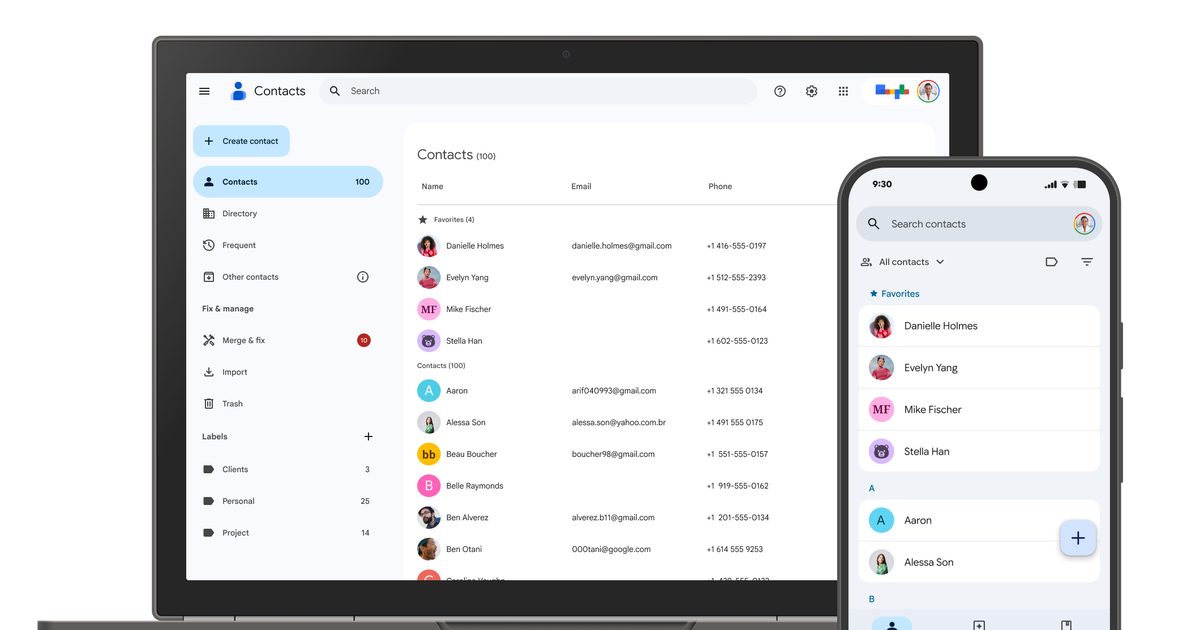
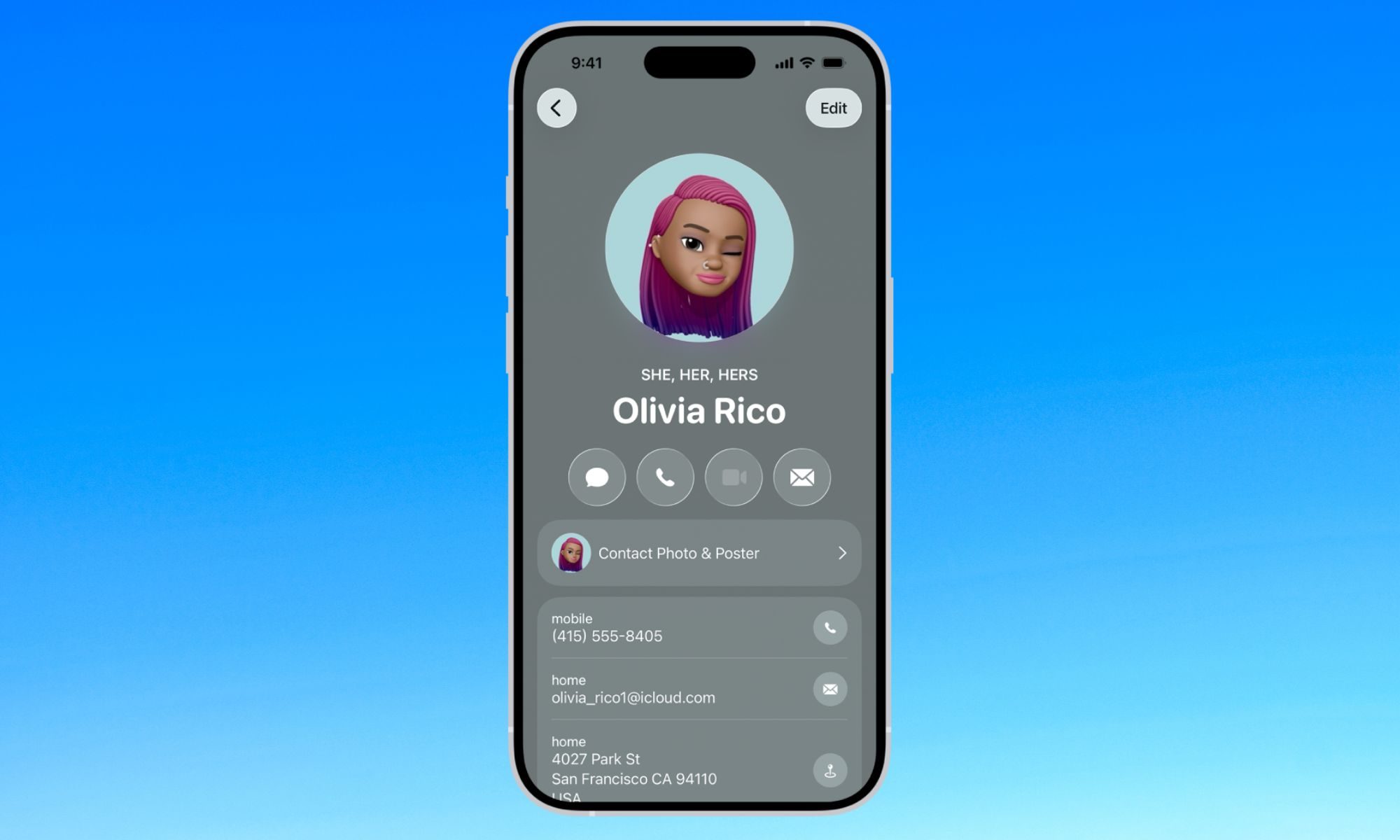
Google Contacts borrows a handy iPhone trick to make sharing your number easier


Google is rolling out a small but useful update to the Contacts app on Android that makes it much easier to find and share your own contact details. Instead of digging through settings or creating a separate contact for yourself, you’ll now see a dedicated ‘Your Info’ card at the very top of your contacts list.

The feature gives you quick access to your phone number, email addresses, and other personal details while also adding a faster way to share them with others. The update is arriving with Google Contacts version 4.83.13.940538822 and is rolling out widely (via 9to5Google).

What does the new ‘Your Info’ card do?

Tapping into the Your Info card pulls up your profile picture, phone numbers, email addresses, and any other details you have chosen to add. If your device has a number tied to it, that one gets labeled as your device number and automatically appears first in the list. Right next to your info sits a dedicated share button, letting you send your contact card as a VCard file to anyone who needs it.

You also get to pick exactly what information shows up before sharing, so you are never forced to hand over more than you intend to. By default, only your device number gets shared automatically, keeping the rest of your details private unless you choose otherwise.

Why does this update feel familiar?

If this setup sounds a lot like something you have seen before, that is because it basically is. iPhone users have had a nearly identical feature for years, called My Card, which also sits at the top of the Contacts app for quick access

This follows Google’s earlier rollout of the Calling Card feature, which lets you personalize how your own contact photo and name appear during calls. Google has also published a support page explaining how the feature works as it rolls out to more Android users.

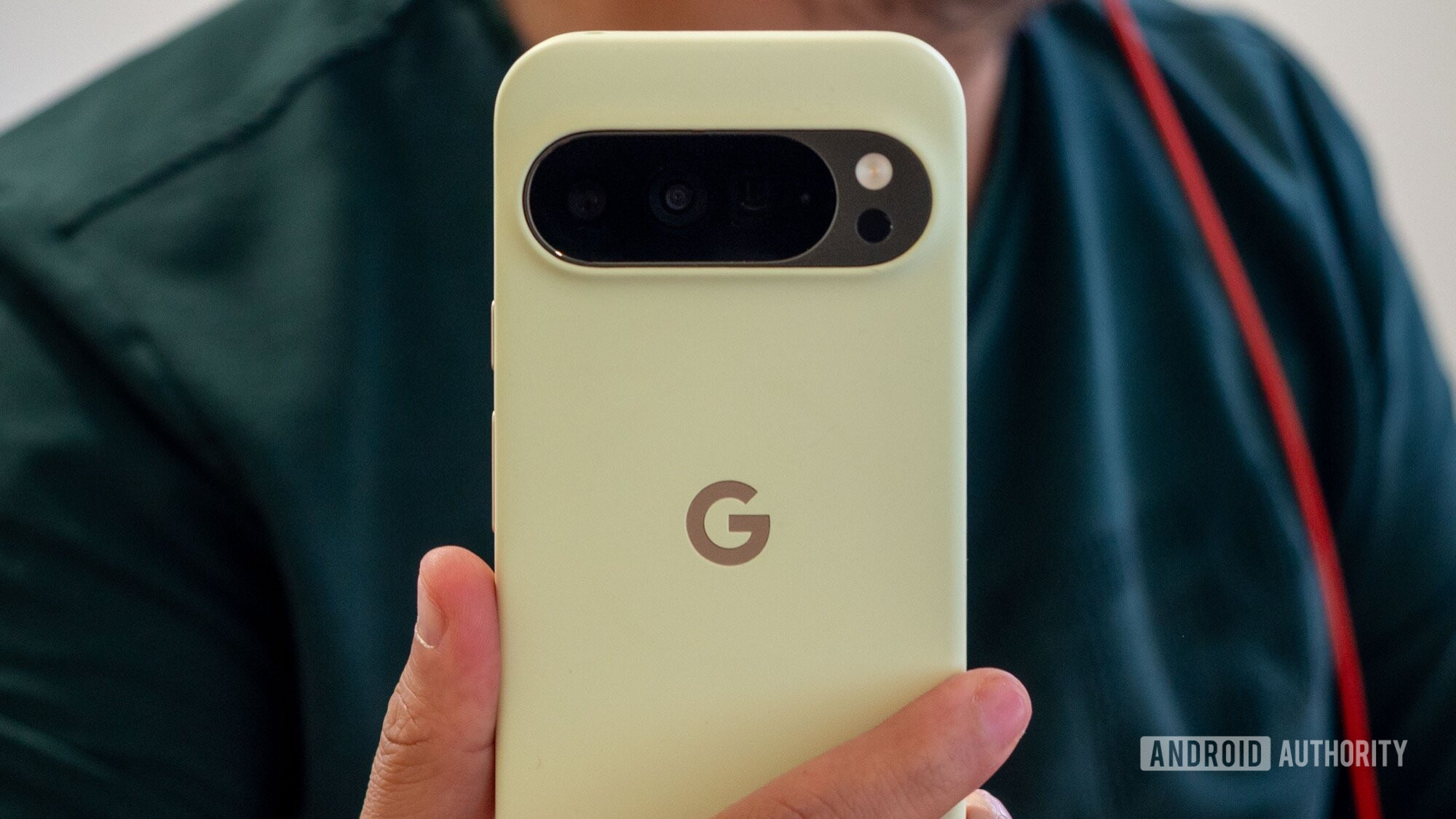
The Pixel 10 Pro XL isn’t giving most of you issues, poll finds


google pixelsnap pixel 10 pro xl case 5

Rita El Khoury / Android Authority

It feels like we can’t go more than a few days without hearing about some new problem Pixel phones are having; judging by user reports online, you’d think Google’s hardware is barely functional. But a lot of us use Pixel phones every day without incident, which makes it hard to gauge how widespread issues that crop up in places like Reddit really are.

In a poll running on Android Authority for the past couple of weeks, we asked readers about their experience with Google’s latest Pixel 10 Pro XL. Thousands of people responded — and it turns out that most of them haven’t had any significant problems with the phone. “There’s always background noise with Pixels,” our own Stephen Radochia wrote about his months-long experience using the Pixel 10 Pro XL, “but most of it is overblown.”

As Stephen tells it, though, he hasn’t had any real issues with the 10 Pro XL to speak of. Nearly 6,000 people responded to a survey running in his write-up, with more than 70% saying their experience lines up with Stephen’s: 4,110 respondents indicated that their experience with the Pixel 10 Pro XL has been “excellent.”

That leaves about 29% of respondents that have had real issues with the Pixel 10 Pro XL (the survey response specifically called out overheating, bugs, and poor performance). That’s nearly a third of a fairly large sample size, but it’s still hard to say what 1,700 people indicating they’ve had some combination of issues with a mass-market product really means for average users.

I haven’t used a Pixel 10 Pro XL at all, personally, but I’ve been using a Pixel 9 Pro for almost two years now, and I haven’t had any serious issues with it. I’ve had similar experiences with several prior models, too — but maybe I’m just lucky.

Have you had a good run with Pixel phones? Do you think online discourse over Pixel issues has gotten out of hand? Tell us about it in the comments.

Thank you for being part of our community. Read our Comment Policy before posting.

New Google commercial imagines a Declaration of Independence written with help from AI


Two hundred and fifty years after the signing of the Declaration of Independence, a new commercial from Google asks: What if the Founding Fathers had access to Google Workspace?

With the tagline “Group project, but make it 1776,” the ad depicts a largely unseen Thomas Jefferson mid-draft when he gets a nagging text from Ben Franklin, leading to a very Google-centric collaboration process. Edits are suggested in Google Docs, a meeting gets scheduled in Google Calendar and conducted remotely via Google Meet (with every single attendee apparently turning their camera off?), then the whole thing is finalized with e-signatures; cue the fireworks.

Of course, since this is an ad from a tech company in the year 2026, AI has a role to play. The fictionalized founders use Google’s “help me visualize” AI tool to try out different animals on the national seal, Gemini takes notes on the meeting, and the founders also ask the chatbot for advice before declining King George III’s document access request.

The whole thing is very tongue-in-cheek (at one point, Sam Adams asks, “Can we settle this over beers?”), and the AI evangelism is relatively discreet when compared to many other recent ads. And unlike that infamous Google commercial in which a father uses Gemini to write a fan letter for his daughter, this one shies away from any suggestion that the actual text of the Declaration of Independence would be improved with AI. Perhaps the most AI-forward element of the ad is the footage itself, which to my eye has the uncanny glow of AI-generated video.

While viewer comments on YouTube and Instagram appear to be mostly positive, you may not be surprised to learn that the response on Bluesky has been far more critical. Posters declared the commercial “cringey” and “stunningly tone deaf,” and the AI angle was the biggest target — even as many users, including historian Angus Johnston, noted that it’s “amazing how little of this is actually AI.”

“Even in a corny fantasy joke, it’s impossible to make the case that AI is a useful tool for political organizing, writing, or human collaboration,” Johnston said.

When you purchase through links in our articles, we may earn a small commission. This doesn’t affect our editorial independence.


Google DeepMind Unionization Talks Are Off to a Rocky Start


Negotiations between Google DeepMind and its London-based employees over the possibility of unionization stumbled this week, after initial talks left union representatives feeling they had wasted their time, WIRED has learned.

In May, DeepMind employees asked Google to recognize the Communication Workers Union and Unite the Union as joint representatives. The company later denied that request, but agreed to participate in negotiations arbitrated by a third-party body.

An initial meeting on Wednesday was attended by union officers, DeepMind employees involved in the unionization push, the third-party arbitrator, and DeepMind HR representatives. Those advocating for unionization were left frustrated by the absence of DeepMind leadership figures.

“Recognition talks not being attended by senior management at the opening stage is a leading indicator that a company isn’t engaging in good faith. It’s just a time-wasting exercise,” claims John Chadfield, a CWU officer, who attended the meeting. “Negotiations have stalled at an early stage.”

DeepMind denies that negotiations have stalled. “The first step in the process is to define who the unions want to represent and the parties agreed on next steps to do this,” says Al Verney, a Google DeepMind spokesperson. “The appropriate representatives attended this initial meeting.”

During the meeting, a DeepMind employee read out a prepared letter on behalf of colleagues that support unionization, reviewed by WIRED. “Instead of having meaningful dialogue with its employees about our concerns, Google DeepMind workers have been treated as a problem handed off to HR,” the letter states. The employee reading the statement was interrupted on two occasions by DeepMind HR representatives, according to multiple sources with knowledge of the meeting.

The letter goes on to allege that Google has attempted to quash open dialogue between DeepMind employees and crack down on dissent, by shutting down or reconfiguring internal chat venues, and preventing staff from responding to company-wide communications about the unionization bid. Employees that sought to dance around restrictions were “reprimanded” by HR, the letter alleges.

“The intention was to intimidate,” claims a DeepMind employee involved in drafting the letter, who asked to remain anonymous because they are not authorized to speak to the media. “These are well-established union-busting techniques.”

“We’ll continue to engage constructively in the…process and have open dialogue with employees,” says Verney. “For topics outside of this, we continue to offer employees a variety of other channels and opportunities to discuss their views.”

The push to unionize at DeepMind began in February 2025, when Google’s parent company Alphabet removed a pledge not to use AI for purposes like weapons development and surveillance from its ethics guidelines, WIRED previously reported.

“Those principles were a big part of why I joined DeepMind,” says a second DeepMind employee, who asked to remain anonymous for the same reason. “We basically just got rid of them all.”

Google’s latest Android 17 QPR1 Beta 5 release is out for testers


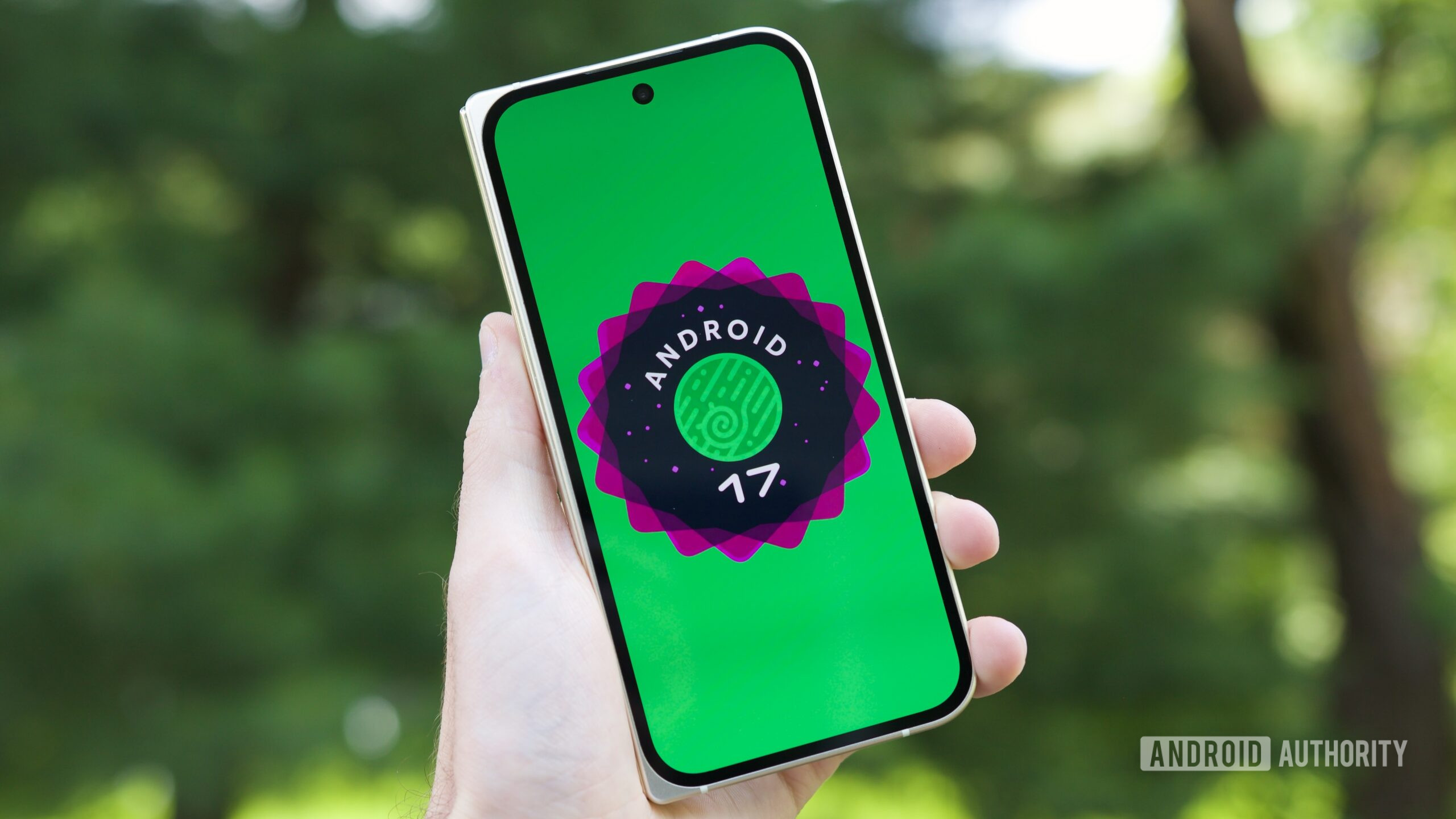
Android 17 logo on a Pixel phone.

Joe Maring / Android Authority

TL;DR

  • Two weeks following the release of Android 17 QPR1 Beta 4, today Beta 5 becomes available for testers.
  • While Beta 4 skipped Pixel 6 and 6 Pro support, they’re now once again included.
  • Google’s changelog largely consists of bugfixes.

Last week marked a major milestone for Android releases, with Android 17 finally hitting stable and starting to go out to Pixel devices everywhere. As much as we were looking forward to that release, testers are already onto the next big update beyond that one, with Google’s Android 17 QPR1 Betas giving them a taste of the changes set to land with the September Feature Drop. After QPR1 Beta 4 landed two weeks back, Google’s now ready to move on to QPR1 Beta 5.

Google’s Mishaal Rahman shares the good news over on X, confirming that build CP31.260608.007 is incoming for testers on Pixel 6 and later devices. That’s important because last time the Pixel 6 and 6 Pro were explicitly excluded — although Google promised we’d see support for those older models returning with this new release.

As you should probably expect from a Beta 5, at this point Google’s largely in cleanup mode — and that spells a whole lot of bugfixes. Here’s what Google shares to expect:

  • An issue in the Game Dashboard where users were unable to stop screen recordings or save video files. (Issue #296368569, Issue #328539170)
  • An issue where the camera app temporarily freezes or stutters shortly after being opened from an idle state. (Issue #330488811)
  • An issue that caused the screen to freeze with a pixelated bottom bar when waking the device from Always-On Display. (Issue #515393542, Issue #515497396)
  • A timeout issue where the Download Manager failed to complete downloads when excluded from an active VPN connection. (Issue #475985649)
  • An issue causing inconsistent charging completion time estimates to display on the lock screen versus the charging screensaver. (Issue #489503595)
  • An issue causing the Private Space UI to crash and locked private apps to improperly appear in launcher search results. (Issue #515631415)
  • A system crash and device hang that occurred when downloading games. (Issue #515364954)
  • An issue where a non-functional bubble option incorrectly appeared in the context menu of archived apps. (Issue #514585702)
  • A system-level WebView rendering regression that caused Monopoly Go to freeze and crash when attempting to open mini-games. (Issue #516576731)
  • Home screen widgets would disappear or become unavailable in the widget picker after a device reboot. (Issue #488125748, Issue #505117543, Issue #505671079, Issue #497140330, Issue #506685943, Issue #510967059)

One very nice change Rahman confirms is the addition of a new “don’t ask me again” toggle when turning on mobile data:

qpr1 mobile data

If you’re curious to try QPR1 for the first time, you can get started by registering your Pixel device in Google’s Android Beta Program.

On the flip side, if you’ve been testing the Android 17 Beta and would rather just make the move to stable without having to wipe all your device’s data, Google warns that you should not install QPR1 Beta 5, and instead proceed to opt out of the program.

Thank you for being part of our community. Read our Comment Policy before posting.

Google just made switching password managers a whole lot easier


google password manager play store listing

Megan Ellis / Android Authority

TL;DR

  • Google is finally making password manager switching easier by letting users securely import and export passwords and passkeys between Google Password Manager and third-party apps.
  • The new Credential Exchange standard eliminates reliance on insecure CSV exports, creating a safer way to move sensitive login data across platforms.

Don’t want to miss the best from Android Authority?

google preferred source badge light@2xgoogle preferred source badge dark@2x

This may seem like a very niche update at first glance. In fact, it solves an age-old problem that has kept many users locked into a particular password manager.

With passkeys becoming more common on Android, iOS, and the web, password managers are becoming more important. Passkeys are more secure and resistant to phishing attacks than traditional passwords.

The downside is that it hasn’t always been easy to port your credentials from one service to another. In many cases, users were forced to use proprietary export formats, manual transfers, or incomplete migration tools.

Google’s latest move is intended to make that process a lot easier. By adopting the Credential Exchange standard, users can transfer both passwords and passkeys between Google Password Manager and supported third-party alternatives without being tied to a single ecosystem.

Thank you for being part of our community. Read our Comment Policy before posting.

Alphabet plans to raise $80 billion to pay for AI buildout


Google parent company Alphabet said Monday that it plans to raise $80 billion to help pay for the massive AI infrastructure buildout it has planned. Alphabet will sell off that amount in stock, and will then use the funds to pay for “general corporate purposes, including capital expenditures to scale AI infrastructure and global compute,” the company said in a statement.

Part of the plan involves selling $10 billion in stock to Berkshire Hathaway, the massive global holding company formerly led by Warren Buffet.

“The company is experiencing strong demand for its AI solutions and services from enterprises and consumers, at levels that are exceeding the company’s available supply,” Alphabet said in its statement. “By scaling its investments, the company seeks to expand its foundational infrastructure to support the significant growth opportunity ahead.”

The company added that the stock plan represented a way to “fund its investments in a balanced way while retaining a healthy balance sheet.”

Like other tech giants, Google has announced plans for a massive investment in compute this year, the likes of which will be used to support a flurry of new AI services. At Google I/O last month, CEO Sundar Pichai said that the company expects to spend between $180 and $190 billion on capex before the year is out. Google and other tech giants are expected to spend as much as $700 billion this year on AI capex.

The EU Is Going Through a Trump-Fueled Breakup With Big Tech


As tensions between President Donald Trump and Europe continue to simmer, the continent is accelerating its moves to reduce its addiction to US technology. Cities and governments are ditching Microsoft Office for open-source alternatives, shifting to European cloud hosting for local AI, and moving defense data to systems without American involvement. Nowhere has this been more clear than in France.

Over the last few months, the French government has sped up its efforts to develop and deploy its own technology for government officials. The country has, arguably, emerged at the head of Europe’s growing digital sovereignty push, which aims to cut some reliance on US-based technology over concerns around data security, the Trump administration’s unpredictability, and changing prices. French budget minister David Amiel recently called for the state to “break free” from American systems and use those it can control.

“We are not just explaining what we want to do,” Stéphanie Schaer, the head of DINUM, France’s digital transformation ministry, tells WIRED over a call on the nation’s video-calling platform Visio. “We already did it in a few matters.” So far, more than 40,000 French government staff have started using the home-grown video platform, while the rest will move away from Zoom, Microsoft Teams, and others by 2027. “We are confident enough to use it every day and we are not dependent on just one actor that will tell us you have to use my video conference,” Schaer says.

Across France’s central government agencies and vast civil service, officials plan to shift to as many French, European, and open source technology alternatives as possible in the coming years. Schaer says it is important for the French government to be in control of the technology that it is using, with data being stored locally in the country, not abroad.

As part of this, DINUM has been developing a set of productivity tools, collectively called “LaSuite,” since at least 2023. As well as Visio, it includes instant messaging app Tchap, Messagerie instead of Gmail or Outlook, Fichiers for documents and file sharing, plus text editing software Docs, and Grist for spreadsheets. Some of the software is still in beta and has not been fully rolled out to French officials yet. However, Tchap already has 420,000 active users, Schaer says, with 20,000 civil servants adopting it each month.

“We are based on open source software. So we don’t develop all the code,” Schaer says. There are public plans for new features, although code is published on Microsoft-owned Github. All data handled by the alternatives has to be processed in France and stored with providers who have approval from the country’s cybersecurity agency ANSSI. Earlier this month, the Dutch government moved its open-source code off of GitHub and onto a Forgejo instance hosted on government-owned servers.

While open source is key, the French government is also working with other countries and private firms on the development of its tools. “We can reuse what has been developed by the community and we contribute to this community,” Schaer says. For instance, Visio, which can host calls of up to 150 people and has AI transcription of calls, is built on technology from French firms Outscale and Pyannote.

While Schaer’s department is aiming to lead by example, all of France’s central government agencies have to come up with plans to move away from US tech—across office software, antivirus, AI, databases, and more—by this fall. On April 23, French officials also announced the country will move its health data platform away from Microsoft to local cloud provider Scaleway, after a years-long decision process.

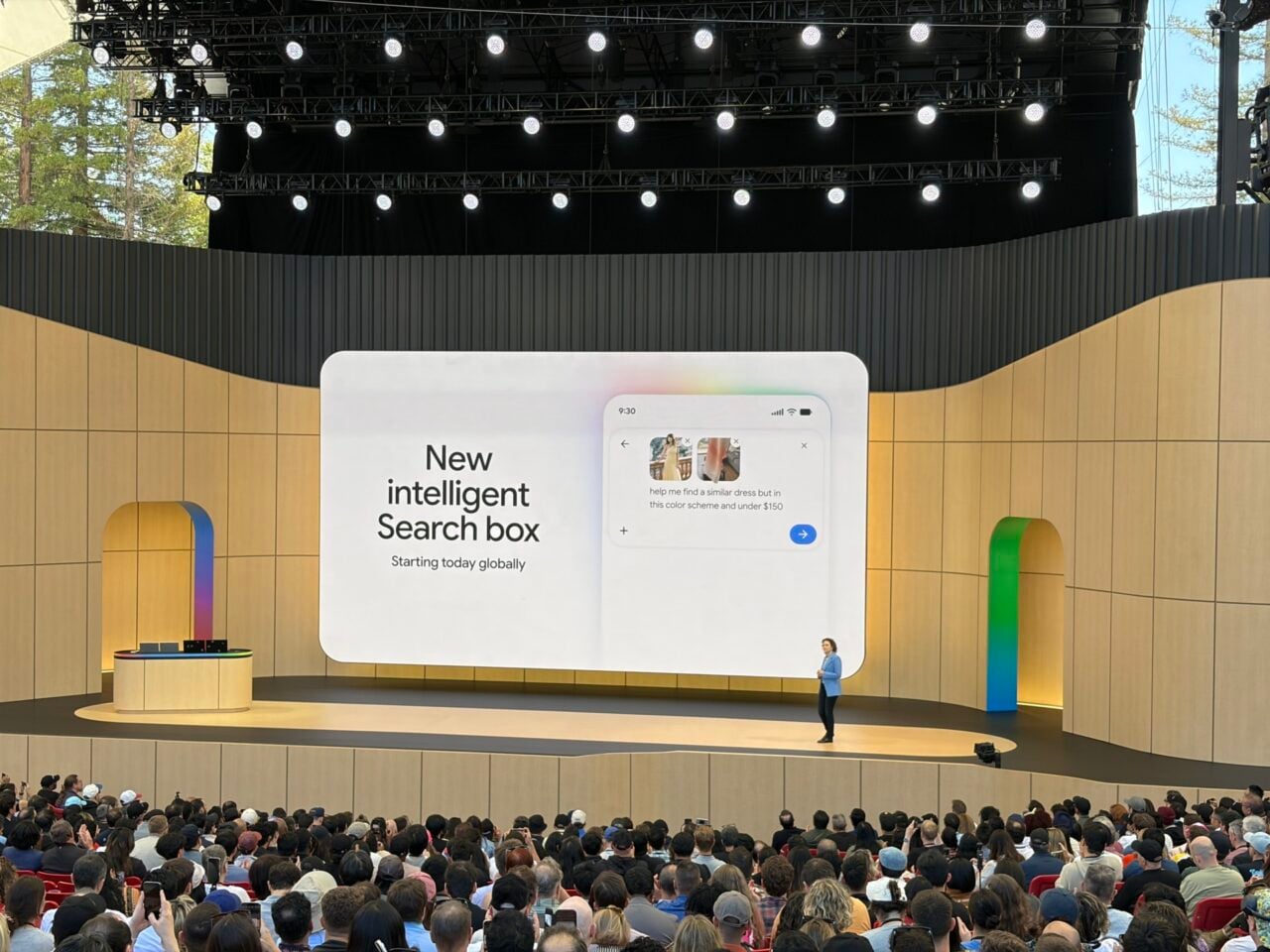
Google Is Slopping Up Search and It Wants You to Talk to the Ads


Worried that the ongoing embrace of artificial intelligence and the acceleration of late-stage capitalism will continue to leave people isolated from each other? Don’t worry, you can talk to ads now! According to a report from Search Engine Land, at this year’s Google Marketing Live event, the company announced a new generation of “conversational” advertisements that will soon start to populate search results.

Google will be rolling out several new ad experiences that will pair with the company’s re-imagined and AI-centric search. That includes “Conversational Discovery” ads, which Search Engine Land reports are sponsored results that are designed to look like an answer to a person’s query. It’ll appear in AI Mode within Google Search and will produce tailored responses with the company’s Gemini AI model. So if you’ve ever found yourself wanting to talk to an advertisement, congratulations, because your strange, specific desire is about to be fulfilled.

In addition to the chatty ads, Google will also introduce “Highlighted Answers,” which will offer highly relevant promotions that will be displayed in a recommendation list. That, too, will be powered by Gemini and will reportedly appear in Google’s standard Search experience. On the consumer side, it’s probably just going to feel like more ads. On the business side, Search Engine Land reports that it’ll make advertisements more dynamic and targeted instead of static and locked to specific keywords and pre-made copy.

While Google is actively trashing its flagship Search product in pursuit of pumping as much AI slop into it as possible, the Wall Street Journal reported that Gemini itself will remain ad-free for the time being. But you’d have to be pretty naive to think that’ll remain the case. We’re already seeing other companies trying to slip ads into their chatbot interfaces.

OpenAI did it, though the results of that experiment would generously be described as mixed and more accurately described as a failure. Turns out corporations are thrilled to pay high rates for ad placements that don’t actually seem to get any attention. Of course, Google has been in the ad game for much longer and has a lot of dark arts to tap into that an upstart like OpenAI can’t—like, say, a digital advertising monopoly.

Search Engine Land said that Conversational Discovery ads and Highlighted Answers are already being tested on users in the United States and will appear on both mobile and desktop. More AI-powered features for advertisers are expected to roll out later this year. So get ready for the web to get even worse.