AMD and NVIDIA could be on a collision course for CES. AMD CEO Lisa Su has confirmed for the first time that the company is set to release its next-gen PC GPUs early next year.
“In gaming graphics, revenue declined year-over-year as we prepare for a transition to our next-gen Radeon GPUs based on our RDNA 4 architecture,” Su told investors on AMD’s third-quarter earnings call. “In addition to a strong increase in gaming performance, RDNA 4 delivers significantly higher ray-tracing performance and adds new AI capabilities. We are on track to launch the first RDNA 4 GPUs in early 2025.”
The timing very much suggests that AMD will reveal those RDNA 4-based graphics cards at CES in early January. It’s rare for the company to unveil desktop GPUs at the trade show (laptop cards are generally the order of the day for AMD at that event). However, it’s widely expected that NVIDIA will use its CES keynote to debut its next-gen 50-series GeForce RTX GPUs. We might get a little more clarity on that front when NVIDIA announces its own Q3 earnings results on November 19.
As PCWorld notes, AMD’s first RDNA 4 GPUs are expected to deliver mid-range performance at an equivalent price point in a bid to increase its market share. AMD’s gaming business (which includes the company’s GPU division) saw a 69 percent year-over-year drop in revenue to $462 million in Q3.
One thing I did not foresee happening this year was us getting a new entry in Jeff VanderMeer’s Southern Reach series. But the author announced exactly that back in April, and I’ve pretty much been counting down the days until the book’s release ever since. Absolution, the fourth novel in what previously stood as a trilogy, hit the shelves this week and it takes us back to the beginning of Area X and the ill-fated first expeditions to explore it.
For the uninitiated, the series deals with a strange coastal region in the US that’s inexplicably been shut off behind an invisible border and has returned to a wild state. A shady government agency has been tasked with studying it, but the people who set out on those exploration missions either never come back out, or come back different. The series includes Annihilation (which inspired the 2018 movie starring Natalie Portman), Authority and Acceptance.
Ten years after the series was originally released, a prequel feels like the perfect way to dive back into the mysteries of Area X and the Southern Reach. The trilogy concluded in a way that answered some questions but also left so much else up in the air. And while you probably shouldn’t expect Absolution to neatly wrap it all up, it does give us more insight on the early days of the anomaly and the perspective of key characters in that timeline, like Lowry. Absolution is hefty — it’s structured so there are three novella-like parts, and is nearly 500 pages long in all. Which is great, because I can’t get enough of Area X.
Google is reportedly working on a new Android API for what it’s calling Rich Ongoing Notifications, which would allow apps to display at-a-glance information in a status bar much like Apple’s Live Activities in the Dynamic Island on iPhone. This is according to journalist , who spotted the code in the Android 15 QPR1 Beta 3 release. It could work a lot like the time tracker that currently appears when you’re on a phone call, with a bit of text in a bubble at the top of the display that you can tap to open the app for more details.
Writing for Android Authority, Rahman says the API “will let apps create chips with their own text and background color that live in the status bar.” It could be especially useful for things like transit updates, allowing users to keep track of pertinent information like departure times or an Uber’s ETA while using other apps. The feature isn’t yet complete, though, and it could still be some time before we see it. Rahman predicts it’ll arrive with Android 16.
Arm has taken its feud with Qualcomm to the next level, two years after filing a lawsuit against its former close partner. According to Bloomberg, the British semiconductor company has canceled the architecture license allowing Qualcomm to use its intellectual property and standards for chip design. As the news organization notes, Qualcomm, like many other chipmakers, uses Arm’s computer code that chips need to run software, such as operating systems. Arm has reportedly sent Qualcomm a 60-day notice of cancelation — if they don’t get to an agreement by then, it could have a huge impact on both companies’ finances and on Qualcomm’s operations.
The SoftBank-backed chipmaker sued Qualcomm in 2022 after the latter purchased a company called Nuvia, which is one of its other licensees. Arm argued that the US company didn’t obtain the necessary permits to transfer Nuvia’s licenses. As such, Nuvia breached their contract and it had terminated its licenses, Arm explained in its lawsuit. Qualcomm has been using Nuvia-developed technology in the chips designed for AI PCs, such as those from Microsoft and HP. But Arm wants the company to stop using Nuvia-developed tech and to destroy any Arm-based technology developed prior to the acquisition.
Qualcomm will have to stop selling most of the chips that account for its $39 billion in revenue, Bloomberg says, if the companies don’t resolve the issue within the next 60 days. It seems the US chipmaker believes this is a tactic by Arm to threaten its business and to get higher royalties, because its spokesperson told Bloomberg and the Financial Times: “This is more of the same from Arm — more unfounded threats designed to strong-arm a longtime partner, interfere with our performance-leading CPUs, and increase royalty rates regardless of the broad rights under our architecture license.” Qualcomm also accused Arm of attempting to disrupt the legal process, called its grounds for licensing termination “completely baseless” and said that it’s confident its “rights under its agreement with Arm will be affirmed.”
Meanwhile, an Arm spokesperson told us: “Following Qualcomm’s repeated material breaches of Arm’s license agreement, Arm is left with no choice but to take formal action requiring Qualcomm to remedy its breach or face termination of the agreement. This is necessary to protect the unparalleled ecosystem that Arm and its highly valued partners have built over more than 30 years. Arm is fully prepared for the trial in December and remains confident that the Court will find in Arm’s favor.”
Update, October 23, 2024, 11:33PM ET: This story has been updated to add Arm’s statement.
It’s a slower October than usual in the tech industry, thanks mostly to Google and Microsoft having held their typical fall hardware announcements earlier this year. Still, we’ve seen a fair number of companies reveal new devices in the last two weeks, while Amazon’s October Prime Day raged on. Whether you were busy shopping or watching Elon Musk talk up robotaxis and cybervans, the Engadget team continued to review recently (and not-so-recently) launched products. As usual, this bi-weekly roundup is here to help you catch up, though because I missed last week’s edition (as I was out on time off), the cadence is just a bit off.
From Meta’s Quest 3S VR headset and the DJI Air 3S drone, to Sony’s midrange suite of audio gear, these weeks have coincidentally been about the less premium, more affordable “un-flagships,” if you will. And it turns out you don’t have to throw chunks of your retirement savings at companies to get solid devices that are well worth the money.
Sony LinkBuds Fit and LinkBuds Open and Bose QuietComfort Earbuds reviews
by Billy Steele
Sony
Sony flexes its mobile audio muscle on the LinkBuds Fit, combining great sound with tons of features.
The main thing I learned from Billy’s recent reviews of Sony and Bose headphones is that flagship, premium-level noise cancelation is making its way down to the midrange products. And I, for one, am happy about it. Looks like most of the things you’ll miss if you opt to save some money are features like spatial audio, head-tracking and stuff that’s supposed to be make for a more immersive, intuitive listening experience. Personally, I’m okay missing out on those things for now — I really just want decent sound, good voice quality and competent reduction of background noise.
Definitely check out Billy’s review of Sony’s LinkBuds trio of devices even if you’re not in the market for headphones, because he put his ears through literal pain to test the strangely designed earbuds for us. In fact, a rejected headline for the review was “Why am I in pain?” We salute you, Billy.
by Devindra Hardawar
Meta
The Meta Quest 3S delivers immersive virtual reality for just $300. It’s fast, comfortable to wear and it has a wealth of games and VR experiences to choose from.
The Quest is arguably the industry’s leading VR headset for consumers, especially considering it costs a fraction of alternative options while offering a relatively high-quality immersive experience. Unlike the Apple Vision Pro, which costs $3,500, the new Quest 3S is much more palatable at $300. And, as Devindra observes in his review, it’s comfortable, fast and allows wearers to access Meta’s large library of VR apps and content. To quote Devindra, “It’s not Meta’s first $300 VR headset, but it’s still a tremendous accomplishment.”
DJI Neo and DJI Air 3S reviews
by Steve Dent
DJI
DJI’s Air 3S is the company’s first consumer drone with LiDAR designed to make it safer to fly at night.
Continuing in the trend of excellent products that cost less than usual, the DJI Neo is an excellent drone for just $200. Calling it the best $200 drone ever made may sound hyperbolic, but we truly can’t think of any other drone that cost the same that came close to delivering similar performance as the Neo. And though one of its main drawbacks, according to our reviewer Steve, is that it sounds like a banshee, I honestly think that would be a pro for me just for the pure comedy of it all. I never thought I’d be in the market for a banshee-sounding drone but here I am thinking $200 would be a fair price to pay for the aerial videos I could get, and I could easily lay upbeat, operatic singing over the footage anyway.
On the other end of the spectrum, Steve’s also tested the higher-end DJI Air 3S drone and Canon’s EOS R5 II, both of which will cost you a lot more money. The good news is that Canon’s EOS R5 II is now so much improved that it better takes on Sony’s rival offerings, while bringing intriguing features like eye-control autofocus. Sure, it’s still too early to be reliable. But if you have the money for these premium products, you’ll get to experience bleeding-edge tech, maybe part of the appeal is that they may not always work well.
by Dan Cooper
reMarkable / Engadget
reMarkable adds a color screen to its e-paper tablet, creating a best-in-class distraction-free writing experience.
I know Dan was a bit worried about giving a device as niche as the reMarkable Paper Pro such a high score, but after some discussion, we both agreed it fit. As it stands, the reMarkable Paper Pro is arguably the best e-paper writing tablet with a color screen, even after this week’s announcement of Amazon’s first color Kindle. Per Dan’s review, the Paper Pro not only levels up with the addition of color, but also got much faster and reliable in the process.
I particularly enjoy how much care has been taken to more seamlessly blend handwriting and typed text for a more natural note-taking and annotating experience. And though it falls outside this edition’s general theme of being a less-expensive product with premium specs, I’m still incredibly tempted to find ways to cough up the $600 or so needed to bag myself a Paper Pro with the accessories Dan recommends.
Phoenix Springs and Neva reviews
by Jessica Conditt
I’m not the most engaged gamer, but I love learning about games from Jess. She recently reviewed sci-fi mystery Phoenix Springs and dreamy platformer Neva, with pieces written so beautifully that I can’t help but itch to check out each title so I can feel the way she clearly does about them. Phoenix Springs even follows a technology reporter and covers my favorite genres (science fiction and mystery), while Neva’s art looks simply gorgeous. I don’t yet know if I’ll ever find the time to play new games, but these two have certainly been added to my list.
Upcoming reviews: On the horizon
The Engadget team geeks out about a multitude of things, and as we get started on our holiday gift guide writing, we’re thinking about products we like for ourselves and our loved ones. Many of us love e-readers and writing tablets. I certainly have my eye on one of the new Kindles that were announced this week, particularly the new Kindle Scribe and possibly the Colorsoft. Those won’t be available until later this year, so for now I’ll keep hungrily eyeing the reMarkable Paper Pro. I’ll also be wondering what Amazon hardware chief Panos Panay has up his sleeves, other than cans of Diet Coke — something I learned he (like many people) enjoys when I got the chance to speak with him in an interview this week.
Many of us are millennials and have gigantic soft spots for retro gaming. Our executive editor Aaron Souppouris talked to the folks at Analogue, and you can read his beautifully constructed piece to learn more about the upcoming Analogue 3D.
This week, Apple sort of surprised us by announcing the new iPad mini, which has been tweaked to offer more storage and power with an A17 Pro processor. It’ll also support Apple Intelligence, of course, and though it seems like a minor update, some of my coworkers and I still love the idea of a small tablet. If only it had a better screen.
All of those recently announced things are on our review roster, alongside things like the Google TV Streamer and Samsung Galaxy S24 FE that launched in the last few weeks. As we approach November and all the holiday shopping that brings, hopefully the hardware launches properly slow down. We’re still anticipating an Apple event for Macs, and can still remember being surprised by the announcement of Humane’s AI Pin late last year. But for now, we’re chugging along while occasionally bathing in nostalgia and longing for a simpler time.
The Apple TV is one of the best streaming devices you can get right now to add Netflix, Disney+, Max and other streaming apps to your boring old TV. It costs more than the competition, but it offers a more polished experience (the screensavers are worth the price of admission) as well as more privacy protections. But you may not know that, with a VPN, you can use your Apple TV to access even more content. By downloading one of several VPN apps directly to the Apple TV, you can spoof your IP address, tricking your system into thinking you’re in a different country. And because most streaming services license different shows in different territories, flipping the VPN to an international location lets you access a wider array of content. Here’s how to use a VPN on your Apple TV and why you might want to install one.
How to use a VPN on Apple TV
As of the September 2023 release of the tvOS 17 software update, the Apple TV platform supports third-party VPN apps. Setting them up is easy; just follow these steps (these may vary slightly between VPNs):
In the Apple TV App Store, search for the VPN you want to download or search for the keyword “VPN” to see your options.
Download and install your chosen VPN.
Sign up or log in.
We have a comprehensive guide on how to stream video to your TV using a VPN, which covers Apple TV installation and provides alternative methods for connecting a VPN to your Apple TV.
Why you should use a VPN on Apple TV
As previously mentioned, using a VPN on your Apple TV allows you to change your IP address to make it seem like you’re browsing from a different country. This happens as the VPN encrypts your connection and tunnels it through the VPN’s digital or physical servers located in other countries. So if you’re in the US and tunnel to a UK VPN server, you’ll be able to access the UK Netflix content library and watch shows on UK-only services like BBC iPlayer.
VPNs can also be essential security tools, although their features apply best when you’re using them on a smartphone or PC where you do most of your internet browsing. If you purchase a VPN subscription with your Apple TV in mind, we recommend using it on your smartphone and laptop, too. A VPN can help keep you anonymous online and protect your data from malicious parties or advertising networks. If you care about digital privacy and anonymity, it’s good practice to use a VPN across all devices with internet connectivity.
Choosing the right VPN
Apple TVs only work with a limited number of VPNs. Although that seems like a hindrance, Apple vets the VPNs it allows on its App Store, and you can feel reassured knowing they’re trustworthy options. Every one of the top picks on our best VPNs list is on the Apple TV app store.
We encourage you to do your own research when choosing a service. Although each VPN has the same basic functionalities, their price and extra features vary. Before deciding which one is right for your needs and the devices you have, take some time to look at what each one offers and see what other users have to say.
VPN options for other streaming platforms
Don’t have an Apple TV? Good news: Robust VPN options (or alternatives) exist for the other major streaming platforms, too.
It’s been a while since we’ve seen much from Wizards of the Coast and Archetype Entertainment’s Exodus, the upcoming sci-fi role-playing game from former BioWare developers. Sure, the studio has been dropping lore and concept art since revealing Exodus at last year’s The Game Awards, but a new trailer for the game released Wednesday offers a much-needed reminder of Archetype’s upcoming project.
Archetype’s latest reveal for Exodus is timed to Spooky Season — and is thus appropriately terrifying. The game’s new cinematic trailer introduces the Mara-Yama, an alien threat that travels in fleshy ships and relentlessly pursues and overwhelms its victims. Think Star Trek’s the Borg, but instead of voyaging through space in black cubes, Exodus’ unrelenting predator species gets around in ships that use grotesque extremities like a physical tractor beam.
According to some moody narration, courtesy of actor Matthew McConaughey (Interstellar), the Mara-Yama “feed on fear, delight in cruelty, and revel in the agony of their prey. They aren’t just hunters — they are sadistic predators who savor every moment of psychological torment they inflict.” The name Mara-Yama is a reference to the deities Mara and Yama, representations of death and the underworld in Dharmic religions.
While these cosmic horrors may not be appealing, necessarily, they have stoked my interested in Exodus. I’m digging the coldness-and-cruelty-of-space-demons thing that McConaughey’s vibing about here.
Apparently, we’re going to be hearing a lot more from McConaughey; he’s portraying a character named C.C. Orlev for Exodus. The developer describes him as a “self-proclaimed spokesman” for Exodus, and an infamous character in the game’s fiction.
Exodus does not have a release date. It’s currently in development for PlayStation 5, Windows PC, and Xbox Series X, and, according to executive creative director James Ohlen, is just the start of a new universe.
Archetype’s debut title is part of a billion-dollar bet on internal game development at parent company Hasbro. In addition to Archetype Entertainment, Hasbro has Atomic Arcade, which is working on a G.I. Joe game starring Snake Eyes; Invoke Studios, which is developing a Dungeons & Dragons game; and Skeleton Key, which is working on “something spooky.”
Sonos must feel its companion app is in good enough shape, because today the company is launching two new products just a couple of months after it delayed them to fix its software. On Tuesday, Sonos announced the Arc Ultra and Sub 4. The former replaces the $899 Arc as the company’s new flagship home theater product.
It’s the first Sonos soundbar to include its new Sound Motion technology. The company says the tech allowed it to “drastically” reduce the size of the Arc Ultra’s transducer without sacrificing bass output. In fact, Arc Ultra can produce up to twice as much bass as its predecessor, according to Sonos. In all, the soundbar features 14 drivers, including a set of tweeters on both ends of the device, allowing it to deliver 9.1.4 spatial audio.
Other notable features include a Speech Enhancement tool Sonos says will allow users to decide how clear they want dialogue to sound. On the connectivity front, the soundbar includes an HDMI eARC port, as well as Wi-Fi 6 and Bluetooth 5.3 support. AirPlay 2 connectivity is also included, as is support for optical audio — though the latter requires an adapter. For the first time, Sonos will also make its handy Trueplay tunning feature available to Android users. The Arc Ultra will cost an eye-watering $999 when it arrives on October 29. For now, Sonos will continue to sell the Arc for $899.
As for the Sub 4, Sonos calls it its most advanced subwoofer to date. The Sub4 features more processing power and additional RAM, as well as a new Wi-Fi radio to offer stronger connectivity. At the same time, Sonos made the device more efficient, with the company claiming an almost 50 percent reduction in idle power consumption. Like the Arc Ultra, the Sub 4 will go on sale on October 29. It will cost a slightly more palatable $799.
With today’s announcement, Sonos says a new software update is also on the way. The company claims the release will improve performance relative to its previous app. Expect refinements to system identification, speaker grouping and setup. For current users, the update will bring back 90% of the features the new app has been missing since it replaced the company’s old software.
“We’ve worked tirelessly to resolve the most critical app issues and most requested legacy features. We have reached a level of quality that gives us the confidence to launch our extraordinary new products,” said Sonos CEO Patrick Spence. “As we laid out in our commitments we will continue to improve the software regularly, and are determined to make the Sonos experience better than it’s ever been.”
If you buy something through a link in this article, we may earn commission.
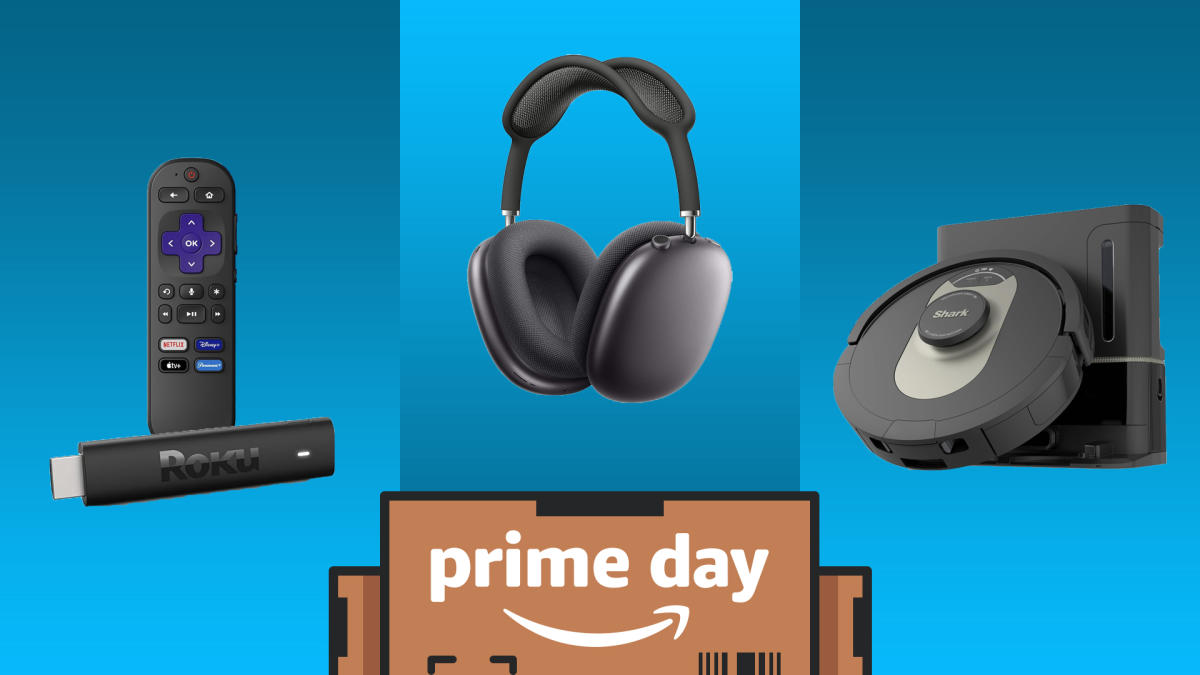
Another October Prime Day is in the books, but all of the deals haven’t disappeared from Amazon’s site just yet. This year’s Fall Prime Day brought a bunch of discounts on smartphones, speakers, wearables, robot vacuums and more tech, and you can still grab some of the sale prices right now even after the event has officially ended. While it’s possible we see some of these deals come back in a month during Black Friday, it’s a good idea to pick up your top items now if you’re keen on getting some of your holiday shopping done early. Here are the best Prime Day deals you can still get today.
Best Prime Day deals you can still get: Engadget’s top picks
Best Prime Day Apple deals
Photo by Nathan Ingraham / Engadget
Apple deals can be hit or miss during Amazon Prime Day, but we saw a number of good ones this time and many of them are still available. Whether you’ve been on the hunt for a new Apple device for yourself or you know you want to pick one up as a gift, you can save a bit of cash if you do so now.
Apple 10th-gen iPad for $299 ($50 off): The new, baseline iPad updates a familiar device with a fresh design, improved performance, USB-C charging and a better battery life.
Apple 9th-gen iPad for $224 ($105 off): This model is on its way out, but $224 for an iPad is a solid price. This slab has a 10.2-inch display, an A13 Bionic chip and 64GB of storage — plus the antiquated physical Home button.
Apple AirPods Max for $449 ($100 off): These expensive cans are a much better buy when on sale, and they boast excellent sound quality, good ANC, a luxe design and a solid battery life. They’re available in Lightning or USB-C.
Apple AirPods 4 for $119 ($10 off): This modest discount has been available for a few weeks now, but it’s still worth highlighting given that Apple only launched its new wireless earbuds last month. We gave the pair a review score of 88, praising its improved fit, comfort and overall sound quality. This model doesn’t include active noise cancellation or wireless charging, however.
Apple Watch SE (2nd gen, GPS) for $189 ($60 off): The entry-level Apple Watch remains a fine choice for first-time smartwatch buyers, so long as you can live without the larger always-on display and more advanced health features of the pricier Series 10. It’s not as low as the 40mm model dropped on Prime Day, but it’s still less than you’d pay at the Apple Store.
Apple 13-inch MacBook Air M2 for $749 ($250 off): Despite having a slightly older chipset, the M2 MacBook Air remains a great budget option for most anyone, save those who regularly push their daily driver to the limit with activities like video editing.
A number of Lego sets are still on sale post October Prime Day. Some of our favorites come from the Star Wars, Super Mario and Harry Potter lineups, and you’ll find savings up to 41 percent on those.
Best Prime Day deals on tech
Will Lipman Photography for Engadget
Yes, Black Friday is right around the corner, but it would be unwise to sleep on these Prime Day tech deals that you can still get today. We’re seeing steep discounts on headphones, TVs, streaming devices, gaming gear and more, making it a good time to pick up something for yourself or cross a few items off your holiday shopping list early.
Sonos Era 100 for $199 ($50 off): This is one of our favorite smart speakers thanks to its excellent sound quality, Trueplay tuning and Bluetooth support. Plus, if you have two of them, you can pair them for a stellar stereo sound experience.
Roku Ultra (2024) for $79 ($21 off): The brand new Ultra is 30 percent faster than the previous model, and it supports Dolby Atmos, Dolby Vision and Wi-Fi 6.
LG 55-inch C4 evo OLED smart TV for $1,196 ($800 off): LG’s midrange OLED sets, the C4 family includes upgraded Alpha 9 Gen 7 chip, improved brightness and a 144Hz max refresh rate. Most sizes are discounted at the moment.
Crucial X9 Pro portable SSD (1TB) for $85 ($10 off): The X9 Pro is the top pick in our guide to the best portable SSDs, combining dependable performance with a rugged compact design. We’ve seen this 1TB model go for much less in previously sales, but it’s sat in the $90 to $100 range for almost all of the past year. This discount marks the lowest price we’ve seen since January.
Shark AI Ultra robot vacuum cleaner for $300 ($119 off): Shark’s robo-vac can clean both carpet and hard floors well and maps your home while it cleans so you can more easily send it to specific rooms and areas when you want. Its self-emptying base can also hold up to 60 days worth of debris.
SanDisk Ultra microSD card (1.5TB) for $90 ($60 off): If you don’t care about performance so much and just want a big chunk of space for as little cash as possible, this deal should work. You’ll have to deal with slower transfer speeds, but the discount takes roughly $20 off this 1.5TB card’s typical going rate in recent months.
Dyson V15 Detect Plus cordless vacuum cleaner for $696 ($54 off): This version of our top pick in our best cordless vacuum cleaner guide has superior suction power and can handle pet hair without breaking a sweat, plus it has 60 minutes of run time and comes with a number of cleaner-head accessories.
Ninja DualZone air fryer for $168 ($32 off): This 8-quart model of one of our favorite air fryers can cook two totally different foods at the same time, and you can set it up for both foods to be done cooking at the same time. The larger, 10-quart model is $50 off and down to $200.
Follow @EngadgetDeals on Twitter for the latest tech deals and buying advice, and stay tuned to Engadget.com for all of the best tech deals coming out of October Prime Day 2024.
Marriott International is being taken to task after the hotel chain suffered multiple data breaches that exposed sensitive information for more than 344 million customers around the world. First, Marriott agreed to a settlement of with a group of 50 US attorneys general. According to Connecticut Attorney General William Tong, 131.5 million hotel customers in the states had their information compromised in the attacks on the hotels.
Second, a settlement with the Federal Trade Commission will require Marriott and its Starwood Hotels & Resorts subsidiary to implement a new information security system to protect against future data exposures. The FTC agreement includes measures such as data minimization, account review tools for its loyalty rewards programs and a link for guests to request deletion of their personal information.
Today’s settlements center on three separate data breaches at Marriott and Starwood between 2014 and 2020 that allowed malicious actors to access passport information, payment card numbers, loyalty numbers, dates of birth, email addresses and other personal information. But cybersecurity issues have been an ongoing concern for these two businesses over the past decade. Hackers used “social engineering techniques” to access an employee computer and steal about . Marriott was also part of a larger attack in 2019. Starwood was victim of discovered in 2018; the company faced a fine of about in the UK for that incident.