Tesla says ‘Full Self-Driving’ will be ready for Europe and China in early 2025


Tesla has tweeted its roadmap for the remaining months of 2024 and early 2025, revealing that Full Self-Driving could be available in Europe and China in the first quarter of next year, if it gets the proper approval from each region’s respective regulators. Company chief Elon Musk previously said that he expects to receive regulator clearance from the regions by the end of the year. The Wall Street Journal reported in April that authorities in China had already tentatively approved the launch of Tesla’s Full Self-Driving software in their country. It’s not quite clear where the company stands with European Union regulators at the moment.

In a response to the original post, Musk added that he’s hoping for FSD to be approved in Right-Hand Drive markets by the end of the first quarter or by early second quarter next year. Since he’s presumably talking about RHD markets in Europe and China, then he’s pertaining to the UK, Hong Kong and Macau.

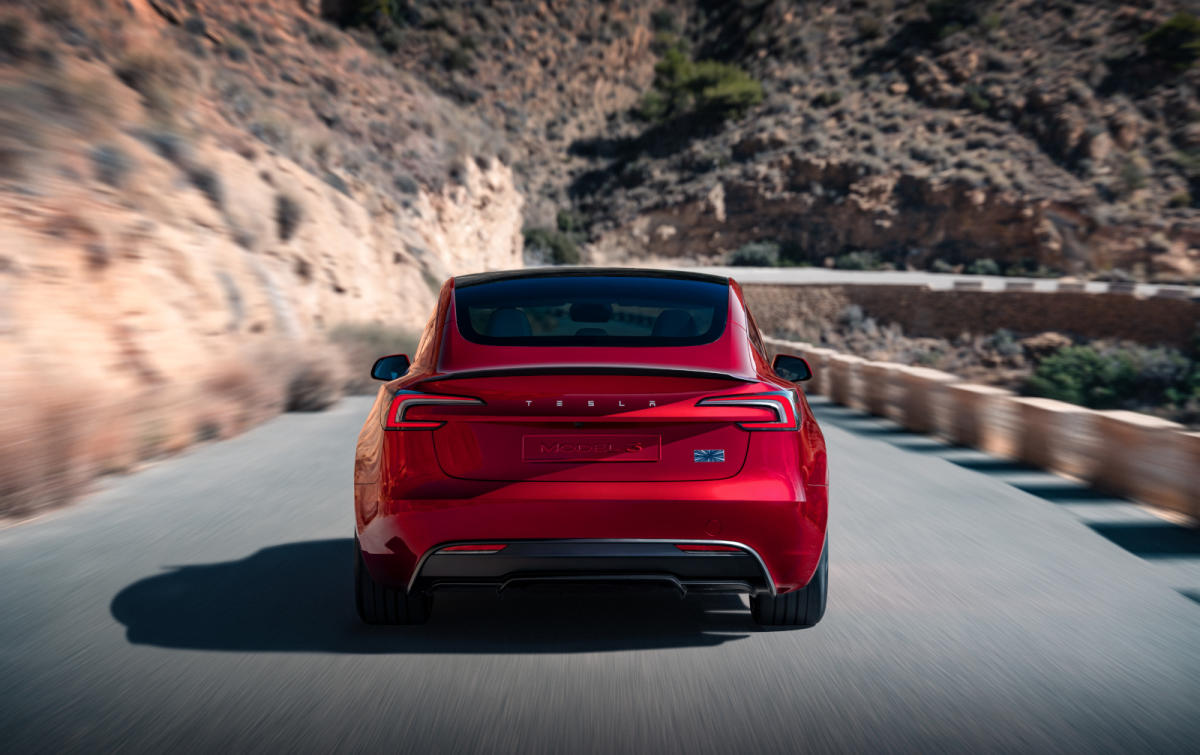
The automaker has also revealed that Full Self-Driving will be available for Cybertrucks sometime this month, along with the Autopark capability. In October, Tesla is adding unpark, park and reverse functions to FSD, as well. The FSD software isn’t free, and buyers will have to pay to be able to unlock its semi-autonomous driver assistance capabilities. In the US, Tesla owners can buy the software outright for $8,000, though they can also pay a $99-per-month subscription fee for the supervised version of the feature.

This article contains affiliate links; if you click such a link and make a purchase, we may earn a commission.


Devil May Cry, Dragon’s Dogma director leaves Capcom after 30 years


Hideaki Itsuno, one of Capcom’s most experienced and successful designers, has left the company after working there for over 30 years. Itsuno was a key steward of the Devil May Cry series and the creator and director of Dragon’s Dogma and its recent sequel, Dragon’s Dogma 2; his departure leaves a question mark hanging over the future of both series, but particularly Dragon’s Dogma, a unique take on action role-playing games guided by Itsuno’s distinctive vision for the genre.

“I have an announcement for all my followers,” Itsuno posted to X. “At the end of August 2024, I will be leaving Capcom after 30 years and 5 months. Thank you for your long-term support of the games and characters I have been responsible for. I hope you will continue to support Capcom’s games and characters.

“From September, I will start developing a new game in a new environment. I hope to create fun, beautiful games that are as memorable as, or even more memorable than, the ones I have created so far. Please stay tuned for my next creation!”

Like many at Capcom, Itsuno was a fighting game enthusiast who cut his teeth on the genre before moving on to different styles of game; among other fighting games, he led development on cult favorites Rival Schools and Power Stone. In the early 2000s he was parachuted in to save development of the struggling action game sequel Devil May Cry 2, with mixed results. But he would end up staying on to direct Devil May Cry 3, 4, and 5, all well received by fans, as well as oversee the development of Ninja Theory’s DmC: Devil May Cry. Itsuno essentially took the series, which had been created by Capcom legend Shinji Mikami, and made it his own.

In between the fourth and fifth Devil May Cry games, Itsuno was given the chance to realize a long-held dream project, which became the first Dragon’s Dogma. Combining the freedom of Western RPGs like The Elder Scrolls 4: Oblivion with Capcom-style action combat and a unique system of AI companions called pawns, Dragon’s Dogma initially met with confusion on its release in 2012, but its reputation and following grew such that a sequel was greenlit. Dragon’s Dogma 2 launched in 2024 to critical acclaim — and still more confusion from new players surprised by its hands-off design ethos.

As one of Capcom’s most distinctive creators of the modern era, Itsuno’s next move will be watched with great interest.

Judge denies Media Matters’ motion to dismiss X’s not-libel lawsuit


A Texas judge denied Media Matters for America’s request for a dismissal on Thursday allowing X’s lawsuit over alleged anti-semitic and racist content. The Verge reported that Northern District of Texas Judge Reed O’Connor dismissed the request for a dismissal paving the way for X’s lawsuit against Media Matters to continue.

Media Matters submitted its dismissal request in early March on the grounds that X’s case lacked “personal jurisdiction,” an “improper venue” and the “failure to state a claim.” O’Connor dismissed all of those claims, according to court records.

The lawsuit filed last year in federal court seeks damages from the media watchdog group over “maliciously manufactured” images reporting that X’s platform placed Neo-Nazi and white-nationlist content next to advertisers’ images causing advertisers to flee the site. The images Media Matters used weren’t manufactured but X’s claim is that its dogged pursuit of ads’ placement with racist content by using certain accounts to bypass ad filters caused irreparable harm to the social media giant.

X owner Elon Musk’s other companies are located in Texas but aren’t directly connected to the Media Matters lawsuit. X closed its San Francisco offices earlier this month and owner Elon Musk announced in July that X’s headquarters will move to Austin. Tesla moved its headquarters from California to the Lone Star State in 2021 and SpaceX from Delaware earlier this year when a judge threw out a $56 billion pay package from the state.

However, in dismissing the personal jurisdiction argument, O’Connor noted that two of X’s “blue-chip” advertisers like AT&T and Oracle included in Media Matters’ coverage are based in Texas. He cited the landmark 2002 Internet defamation case Revell v. Lidov quoting the 5th Circuit Court of Appeals’ assertion that “if you are going to pick a fight in Texas, it is reasonable to expect that it be settled there.”

Brazil bans X for refusing to comply with Supreme Court order


Brazilian Supreme Court Justice Alexandre de Moraes has ordered the nation’s internet service providers to block the social media platform X. The New York Times reports that the order stems from owner Elon Musk’s refusal to appoint a legal representative for his case and comply with Moraes’ order to shut down X accounts he deemed as harmful to the democratic process. The order has been published online by Brazilian news site Poder 360.

The justice issued a deadline to telecom companies and tech giants to remove the X from its app stores and platforms. Apple and Google have five days to take down the social media app from its app stores. Brazil’s telecommunication’s agency Anatel has confirmed it has received the order, and ISPs in the country have just 24 hours to comply with the order.

Justice Moraes’ order doesn’t just block the country’s access to X. It also makes it a crime to use the app through a virtual private network (VPN). Anyone caught accessing X with a VPN could face a daily fine of 50,000 Brazilian Real (around $8,900).

Justice Moraes also froze the Brazillian bank accounts of SpaceX’s Starlink internet service provider on Thursday to further pressure Musk to comply with the court’s order. SpaceX, like X, is a private company majority owned by Musk, and X has $3 million in unpaid fines related to its case in the country. The day before, Justice Moraes issued a threat to ban the X platform entirely across Brazil if the social media company did not appoint a legal representative in the country. The deadline passed without any change to the court’s docket so the judge followed through on his promise.

Starlink expressed its disapproval with the order, vowing to fight the ruling. It even threatened to make its services free to customers to subvert the justice’s order.

The legal fight between Justice Moraes and Musk has been fuming for months. The Supreme Court Judge is also Brazil’s electoral authority and has been monitoring and issuing orders to candidates to steer clear of spreading false information through internet and social media channels.

Brazil’s 2022 presidential election between infamous incumbent Jair Bolsonaro and challenger and former President Luiz Inácio Lula da Silva was reportedly filled with attempts to present voters with false information. Justice Moraes was, until recently, president of the nation’s Superior Electoral Court, which gave him the power to order takedowns of content that violated previous court orders. The judge issued a similar block of the messaging app Telegram for failing to freeze offending accounts, which was lifted after compliance.

Musk characterized Moraes’ directives to take down or freeze similar misinformation accounts from X as “censorship orders.” Earlier this month, Musk expressed his continued refusal to comply with the court by closing X’s Brazilian office in order “to protect the safety of our staff.” X’s Global Governments Affairs team also promised to publish all of “Judge de Moraes’ illegal demands and all related court filings.”

The retro Barbie flip phone arrives in October, only 15 months after the movie


HMD’s Barbie Phone, the novelty device for Y2K-nostalgic hot pink aficionados, finally has pricing and release info. The Mattel-sanctioned champion of tardy movie tie-ins launches in October — only 15 months after Greta Gerwig’s movie hit theaters! — for $129.

The handset is the creation of Human Mobile Devices (HMD), which currently owns the branding rights to Nokia phones. Rather than a smartphone replacement, the Barbie Phone is a retro-styled flip phone (positively Nokida-esque) with a T9 keyboard and no third-party apps in sight. The company pitches it as “the perfect tool to live your best life and take a vacation from your smartphone.”

You won’t find any social media apps, but the phone still makes calls and sends texts. When powering the handset up, you’ll be greeted by a “Hi Barbie” voice before you fire up Malibu Snake for a tribute to OG mobile gaming. Its keypad (in “Barbie pink,” of course) has hidden designs like palm trees, hearts and flamingos that light up in the dark. Because why the hell not?!

The Barbie flip phone: closed (left) leaning against opened (right).The Barbie flip phone: closed (left) leaning against opened (right).

HMD

The Barbie Phone has a 5MP camera with a flash that “delivers authentic Y2K style images.” It ships with two alternate covers in addition to the standard one. The two plates include one honoring “the brightly colored swirls of the 1992’s iconic Totally Hair Barbie doll” and another with a shooting-heart design.

Also in the box is a pastel-beaded phone strap that you can adorn with charms like a tiny roller skate or a “Barbie doll-sized ice cream.” You’ll also get sparkly stick-on gems and retro vintage Barbie stickers (including flowers, flamingos and rainbows) to decorate the phone to your heart’s content. It even has a pink USB-C charger.

Naturally, the phone has a Barbie-themed user interface (described as “achingly easy to navigate”), themed wallpapers and app icons. Since HMD is branding the handset as a vacation from smartphone hell, it even includes a digital well-being app.

The Barbie Phone will be available on October 1 for $129. It will ship unlocked and ready to activate on AT&T, T-Mobile and Verizon networks. You can pre-order it from HMD’s website beginning on September 23.

Threads is testing disappearing posts that expire after 24 hours


Threads is testing the option for users to put a 24-hour expiration timer on their posts, after which the post and all replies would disappear, Stories-style. A spokesperson confirmed to that the feature is being tested among a group of users after it was first spotted earlier this summer by developer . It sounds a lot like pre-X Twitter’s Fleets, . But, the ephemeral format could save habitual post-deleters some trouble.

It comes a few months after Instagram head Adam Mosseri shared that Threads was . That optional feature would let users designate a date for their posts to be hidden from the feed. But Threads users in the past have indicated that they of automatic archiving, and such a feature hasn’t yet shown up on a wider scale. Threads at the beginning of August, and recently introduced an for users — particularly those with large followings — to keep track of their account’s performance. Meta also said the option to schedule posts is on the way.

Starliner astronauts will come home in February on a SpaceX Crew Dragon


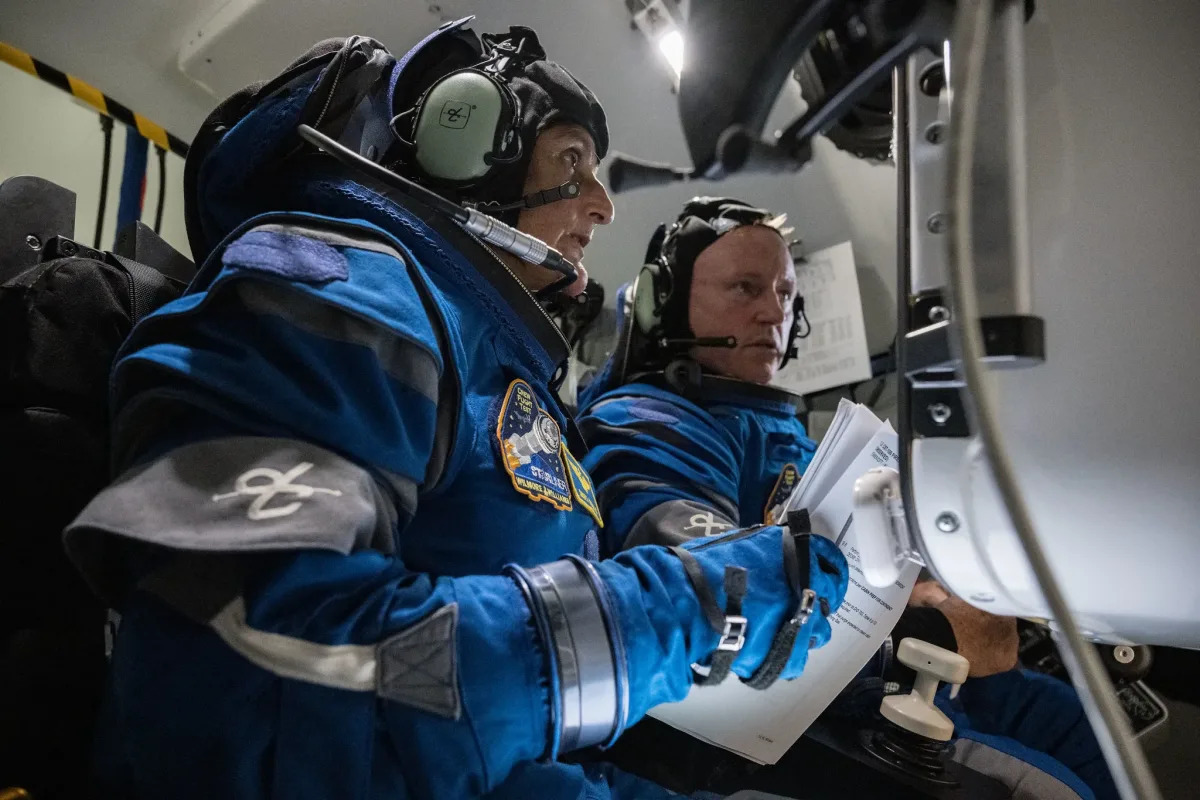
After more than two months of tests and discussions, NASA has decided that astronauts Butch Wilmore and Suni Williams will come home in February 2025 on a SpaceX Crew Dragon, and the Boeing Starliner they flew to the International Space Station on in June will return uncrewed. In a press conference on Saturday, Steve Stich, manager for NASA’s Commercial Crew Program, said “there was too much uncertainty” around the predictions for Starliner’s thrusters to move forward with a crewed return flight.

The plan now is that Starliner’s first crew will return with SpaceX’s Crew-9, which is scheduled to launch to the ISS at the end of September. Crew-9 was initially supposed to carry four crew members, but will instead have to go ahead with two, so as to make room for Wilmore and Williams on the way back. That spacecraft is being reconfigured with seats for the two astronauts, and Dragon spacesuits will be added to its cargo for them to wear home. By the time Wilmore and Williams depart, the duo will have been on the space station for about eight months. The Starliner flight test was only supposed to last a little over a week.

The next step is to get Starliner ready for undocking and wrap up as an uncrewed flight test. The agency plans to conduct the second part of its readiness review for the process this coming week, and expects undocking to take place around early next month. “We are changing the separation sequence that we planned and we will review those aspects at the readiness review,” Stich said. “We’re going to go with a simplified separation technique to get away from the station a little more quickly.”

The issue with Starliner’s thrusters has been “very complex,” Stich said, and their performance has been “challenging to predict.” Without being able to accurately predict how the thrusters would perform from undocking through the deorbit burn, the potential risks for the astronauts were just too high, he explained.

“We have had mistakes in the past,” said NASA Administrator Bill Nelson. “We have lost two space shuttles as a result of there not being a culture in which information can come forward.” With that context looming over the discussions, he said, “We have been very solicitous of all of our employees that if you have some objection, you come forward. Spaceflight is risky, even at its safest and and its most routine, and a test flight by its nature is neither safe nor routine. And so the decision to keep Butch and Suni aboard the International Space Station and bring the Boeing Starliner home uncrewed is the result of a commitment to safety.”

Microsoft’s revised Recall AI feature will roll out to beta testers in October


Microsoft’s Windows Recall feature, which stores a timeline of activity snapshots on your PC, has a new release date for Windows Insiders. Microsoft unveiled the feature to much fanfare in May, only to delay it indefinitely (after blowback from security researchers) a few weeks later. After taking time to recalibrate, the company said on Wednesday it will roll out Recall to beta testers using Copilot+ PCs in October.

Windows Recall stores snapshots of everything you do on your PC. Designed as a “photographic memory” for your PC activity, it lets you revisit things like products, emails, documents or chats shown on your screen. The feature’s perks are easy to see, especially for those who spend long hours on their PC (or those with foggy memories).

But if that also sounds like a privacy nightmare, security researchers thought so, too. Despite safety assurances from Microsoft during its announcement at Build 2024, cybersecurity and privacy experts sounded the alarm. The fundamental problem was that intruders wouldn’t only get goodies from your traditional file system if they accessed your PC. In addition, they could see anything you’ve done on your computer from the moment you activated Recall to the present. That’s because Microsoft — for reasons we can’t quite comprehend (other than put AI in all the things as quickly as possible) — left Recall’s data unencrypted.

As security expert Kevin Beaumont detailed, Recall didn’t hide sensitive information like passwords or banking details. Sure, your timeline was theoretically safe as long as nobody could access your PC. But if you accidentally installed malware or let an intruder in through other means, they would find a motherlode of sensitive — unencrypted — data.

Screenshots of Windows Recall, showing a PowerPoint slide (Screenshots of Windows Recall, showing a PowerPoint slide (

Microsoft

In response to the blowback, Microsoft added some common-sense security features that left us wondering why they weren’t there in the first place. Again, it’s hard to decipher the company’s motives for that omission when the feature was announced — other than speculating that it wanted to prioritize a seamless user experience over tight security.

These security changes included making the feature opt-in instead of enabled by default when setting up a Copilot+ PC. In addition, Microsoft said the feature would require Windows Hello — a face or fingerprint scan — and deploy “just in time” decryption (only unlocked through Hello). That means if a hacker gains access to your computer, your screenshot timeline should remain encrypted unless you lend your face or finger to unlock it (or they somehow find a way around Hello’s encryption).

Microsoft says it will publish a new blog post when the feature is available in October through the Windows 11 Insider Program. The feature will require a CoPilot+ PC (the first of which launched in June) with a compatible chip. That chip list includes Qualcomm’s Snapdragon X Plus and Snapdragon X Elite, although Intel may have its first CoPilot+ chips out in the wild when the feature finally arrives in preview.

The US lays out a road safety plan that will see cars ‘talk’ to each other


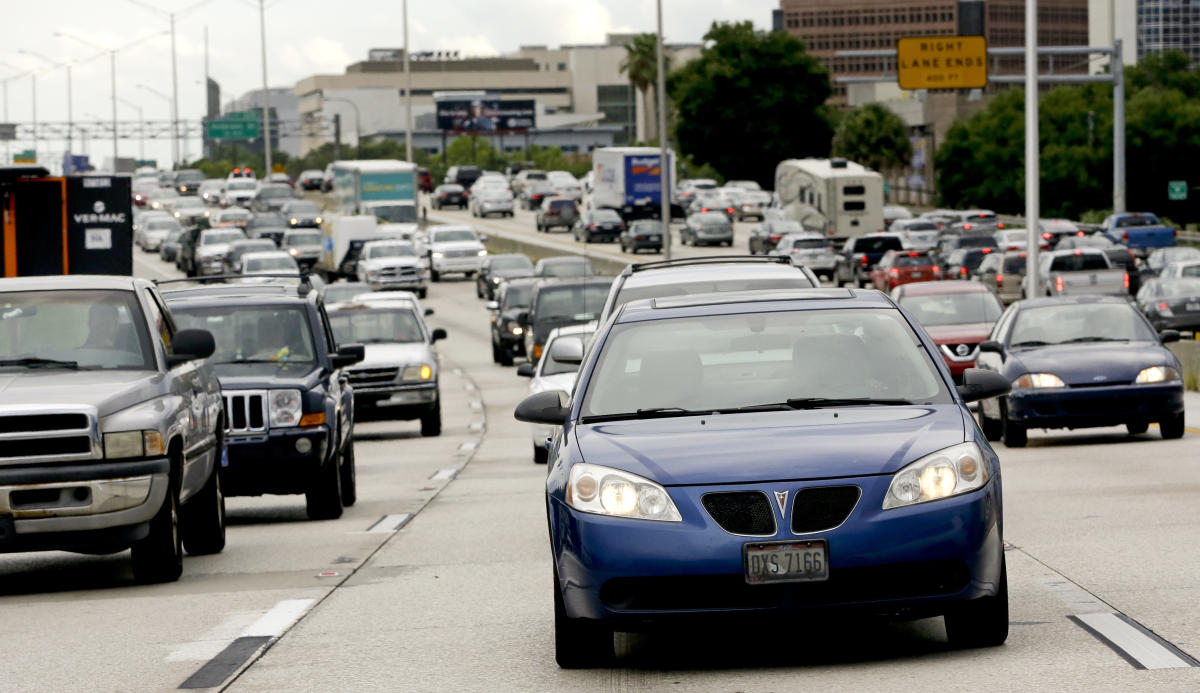
The US Department of Transportation has laid out a nationwide road safety plan [PDF] that will lead to cars communicating with each other. The agency is hoping that broadly deploying vehicle-to-everything (V2X) tech will boost its “commitment to pursue a comprehensive approach to reduce the number of roadway fatalities to zero.” The National Highway Traffic Safety Administration estimates that 40,990 people died in motor vehicle crashes last year.

V2X enables vehicles to stay in touch with each other as well as pedestrians, cyclists, other road users and roadside infrastructure. It lets them share information such as their position and speed, as well as road conditions. They’d be able to do so in situations with poor visibility, such as around corners and in dense fog, NPR notes.

A US-wide rollout will require an array of mobile, in-vehicle and roadside tech that can communicate efficiently and securely while protecting people’s personal information, the DoT said in its National V2X Deployment Plan. The agency said smaller-scale deployments of V2X across the country have demonstrated safety benefits. Safety advocates claim the tech could prevent hundreds of thousands of crashes and mitigate the impact of collisions that do occur by reducing the speed of impact.

The timeline for the DoT’s plan extends to 2036, by which time it hopes to have fully deployed V2X across the National Highway System, for the top 75 metro areas to have the tech enabled at 85 percent of signalized intersections and to have 20 vehicle models that are V2X capable. In the shorter term, the agency aims to have V2X tech installed across 20 percent of the National Highway System and 25 percent of signalized intersections in major metro areas by 2028.

It won’t be an easy task, as a wide range of stakeholders have to play a part, including the Federal Communications Commission, which the DoT says will have to determine rules about spectrum allocation. Automaker suppliers (which will build V2X-enabled components), freight operators and app developers are also players in the DoT’s vision.

There are some concerns, particularly in terms of cybersecurity and how to cover the costs of rolling out the tech (though the Federal Highway Administration recently announced nearly $60 million in grants related to V2X). But V2X has the potential to prevent thousands of deaths and serious injuries.

“The Department has reached a key milestone today in laying out a national plan for the transportation industry that has the power to save lives and transform the way we travel,” Secretary of Transportation Pete Buttigieg said in a statement. “The Department recognizes the potential safety benefits of V2X, and this plan will move us closer to nationwide adoption of this technology.”

“This plan is a vital first step towards realizing the full lifesaving potential of this technology — technology that could prevent up to 615,000 crashes,” National Transportation Safety Board Chair Jennifer Homendy said. The NTSB has determined that V2X deployments could have prevented many fatal crashes over the last few decades, Homendy noted. The agency has been advocating for the tech since 1995.

As you might imagine, then, V2X is hardly a new concept. Several automakers — including Audi, Toyota and Volkswagen — have long been working on ways for their cars to communicate with each other and city infrastructure, in part because that plays a factor in autonomous driving.

There were efforts under the Obama administration to make vehicle-to-vehicle (V2V) communication a mandatory feature of new cars. However, the National Highway Traffic Safety Administration scuttled that plan during the Trump administration.

The rollout of V2X has been slowed by “regulatory uncertainty,” said John Bozzella, president and CEO of the Alliance for Automotive Innovation, an automaker trade group. “This is the reset button,” Bozzella added, according to NPR. “This deployment plan is a big deal. It is a crucial piece of this V2X puzzle.”
X adds passkey logins for Android users


X today that it is rolling out support for passkeys on its Android app. The social media platform formerly known as Twitter introduced this security option for iOS users in January, then in April.

Passkeys started to take off as an option from tech companies and online services last year. We have a detailed , but in short, this approach to protecting an account creates a digital authentication credential. It’s a stronger alternative to passwords, which can be guessed or stolen. Even have been moving to offer a passkey option for customers.

For X users, you’ll still need a password in order to create an account. But once you’re in the app, you’ll need to click through some menu options to a passkey. It’s listed under “Additional password protection” in the Security tab.